
 Younes Rabeh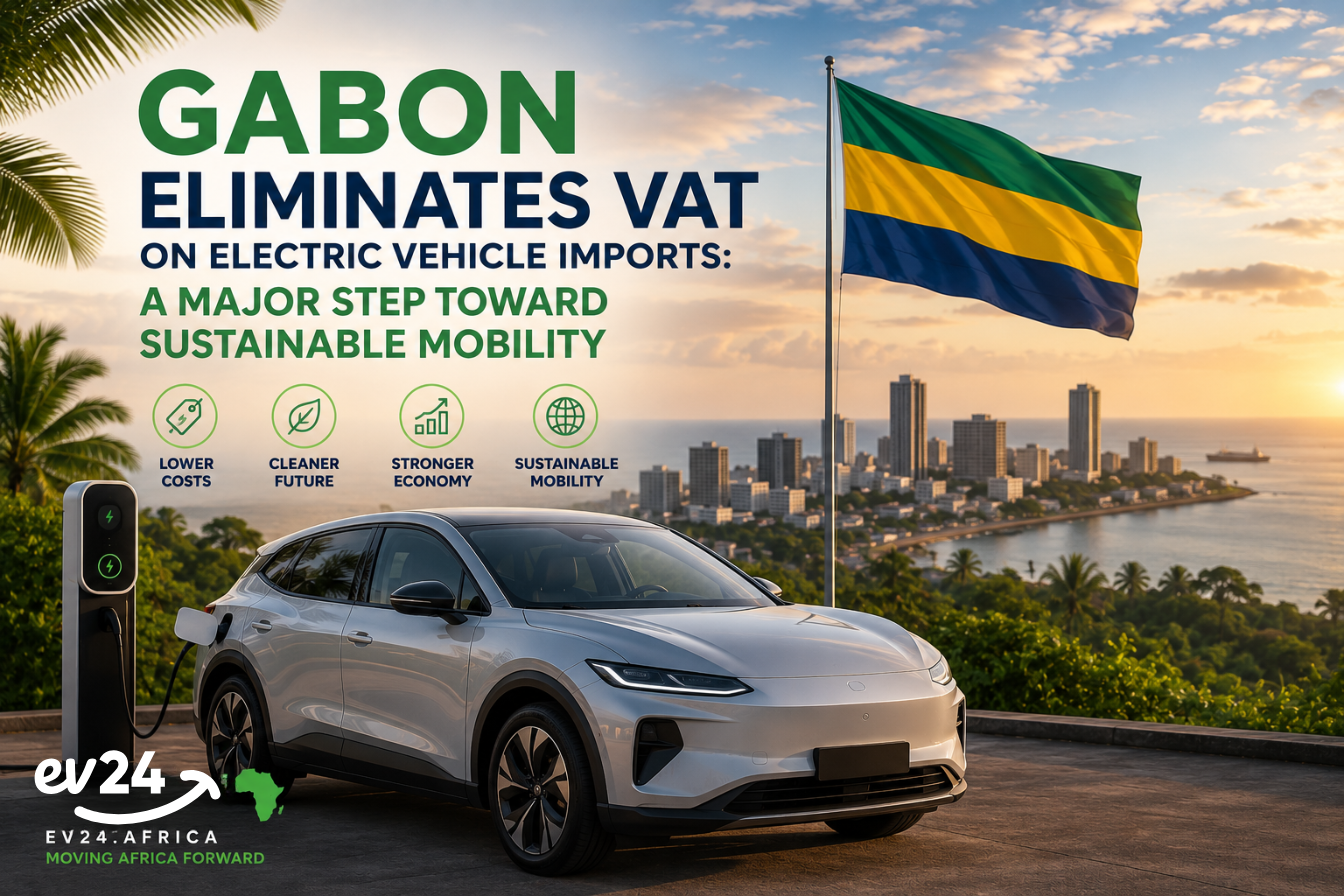
Published by EV24.africa
Category: EV News • Africa • Government Policy • Electric Mobility
⚡ Key Takeaway: Gabon has officially removed VAT on the importation and commercialization of fully electric vehicles, making EVs significantly more affordable and reinforcing its commitment to sustainable transportation.
Why This Matters
The Government of Gabon has introduced one of the country’s most significant incentives for electric mobility by approving a 100% exemption from Value Added Tax (VAT) on the importation and commercialization of fully electric vehicles.
The measure, included in the 2026 Amended Finance Law, is expected to reduce acquisition costs for electric vehicles, improve accessibility for businesses and individuals, and accelerate the country’s transition toward cleaner transportation.
According to Sika Finance, this fiscal reform forms part of Gabon’s broader environmental and economic strategy aimed at promoting sustainable development while reducing dependence on fossil fuels.
🔗 Official Source: https://www.sikafinance.com/marches/gabon-les-vehicules-electriques-totalement-exoneres-de-tva-a-l-importation_62844
🚗 What Does the VAT Exemption Mean?
Removing VAT means that buyers importing fully electric vehicles into Gabon will no longer pay this tax during importation or commercialization.
For consumers and fleet operators, this translates into:
✅ Lower purchase prices
✅ Improved return on investment
✅ Faster fleet electrification
✅ Greater accessibility to modern mobility solutions
While customs duties and other import-related charges may still apply depending on the vehicle category and applicable regulations, eliminating VAT represents one of the most impactful fiscal incentives introduced for the EV sector in Gabon.
🌍 Gabon Strengthens Its Position in Africa’s EV Transition
Across Africa, governments are increasingly adopting policies designed to accelerate the deployment of electric vehicles.
These initiatives generally include:
- ⚡ Tax exemptions
- 🚙 Reduced import duties
- 🔋 Investment in charging infrastructure
- 🌱 National climate strategies
- 🏛️ Public fleet electrification
- 💰 Incentives for private investment
By implementing this VAT exemption, Gabon joins the growing number of African nations encouraging cleaner transportation through targeted fiscal measures.
💼 A Strong Opportunity for Businesses
The new policy creates attractive opportunities for companies operating vehicle fleets across multiple industries.
These include:
- Logistics companies
- Ride-hailing operators
- Government agencies
- Mining companies
- NGOs
- Corporate fleets
- Delivery services
- Energy companies
Lower acquisition costs improve the business case for electric mobility while reducing long-term operational expenses.
🔋 Lower Total Cost of Ownership
Electric vehicles already provide several economic advantages compared with conventional combustion vehicles.
These include:
💰 Reduced Energy Costs
Electricity generally costs less than gasoline or diesel for equivalent distances traveled.
🔧 Lower Maintenance
Electric vehicles have fewer moving parts, require less routine servicing, and eliminate many traditional maintenance items such as engine oil changes.
📈 Better Fleet Economics
For organizations operating large fleets, lower fuel and maintenance expenses can significantly reduce the total cost of ownership over the lifetime of the vehicles.
🌱 Environmental Benefits
Beyond financial savings, electric vehicles contribute to broader sustainability objectives.
Their adoption helps:
🌍 Reduce greenhouse gas emissions
🍃 Improve urban air quality
🔇 Lower noise pollution
⚡ Increase energy efficiency
♻️ Support national climate commitments
Policies such as Gabon’s VAT exemption encourage cleaner transportation while supporting long-term environmental goals.
📊 A Positive Signal for the Automotive Industry
Fiscal incentives send an important message to the global automotive ecosystem.
Lower taxes improve market attractiveness for:
- Vehicle manufacturers
- International distributors
- Fleet operators
- Mobility startups
- Charging infrastructure providers
- Financial institutions
- Leasing companies
As demand increases, investment in the country’s electric mobility ecosystem is also likely to grow.
🚢 How EV24 Supports Electric Mobility Across Africa
At EV24.africa, we believe that policy initiatives like Gabon’s VAT exemption are essential to accelerating the adoption of electric mobility across the continent.
EV24 provides comprehensive mobility solutions, including:
🌍 Vehicle delivery across Africa
🚢 International sourcing and logistics
🚗 Access to more than 200 electric, hybrid, and plug-in hybrid models
🏢 Fleet solutions for public and private organizations
💳 Financing support through selected partners
🔧 After-sales assistance and technical support
Whether you’re looking for passenger vehicles, pickups, SUVs, vans, buses, or commercial fleets, EV24 supports customers from sourcing to final delivery.
🚀 Looking Ahead
The removal of VAT on electric vehicle imports represents more than a fiscal reform.
It demonstrates Gabon’s ambition to position itself as an emerging player in Africa’s transition toward cleaner transportation.
As governments continue introducing supportive policies across the continent, electric mobility is becoming increasingly accessible for businesses, institutions, and private consumers alike.
At EV24, we remain committed to supporting this transformation by delivering reliable electric vehicles, trusted logistics solutions, and end-to-end mobility services throughout Africa.
The future of transportation in Africa is electric—and Gabon has taken another significant step toward that future.
📚 Source
Sika Finance
Article: Gabon: Electric Vehicles Fully Exempt from VAT on Importation
About EV24
EV24.africa is a leading African electric vehicle marketplace connecting customers across the continent with over 200 EV, Hybrid, and Plug-in Hybrid models from leading global manufacturers.
From sourcing and international logistics to financing and after-sales support, EV24 helps businesses, governments, and individuals accelerate their transition to sustainable mobility.