
 Thabo Nkosi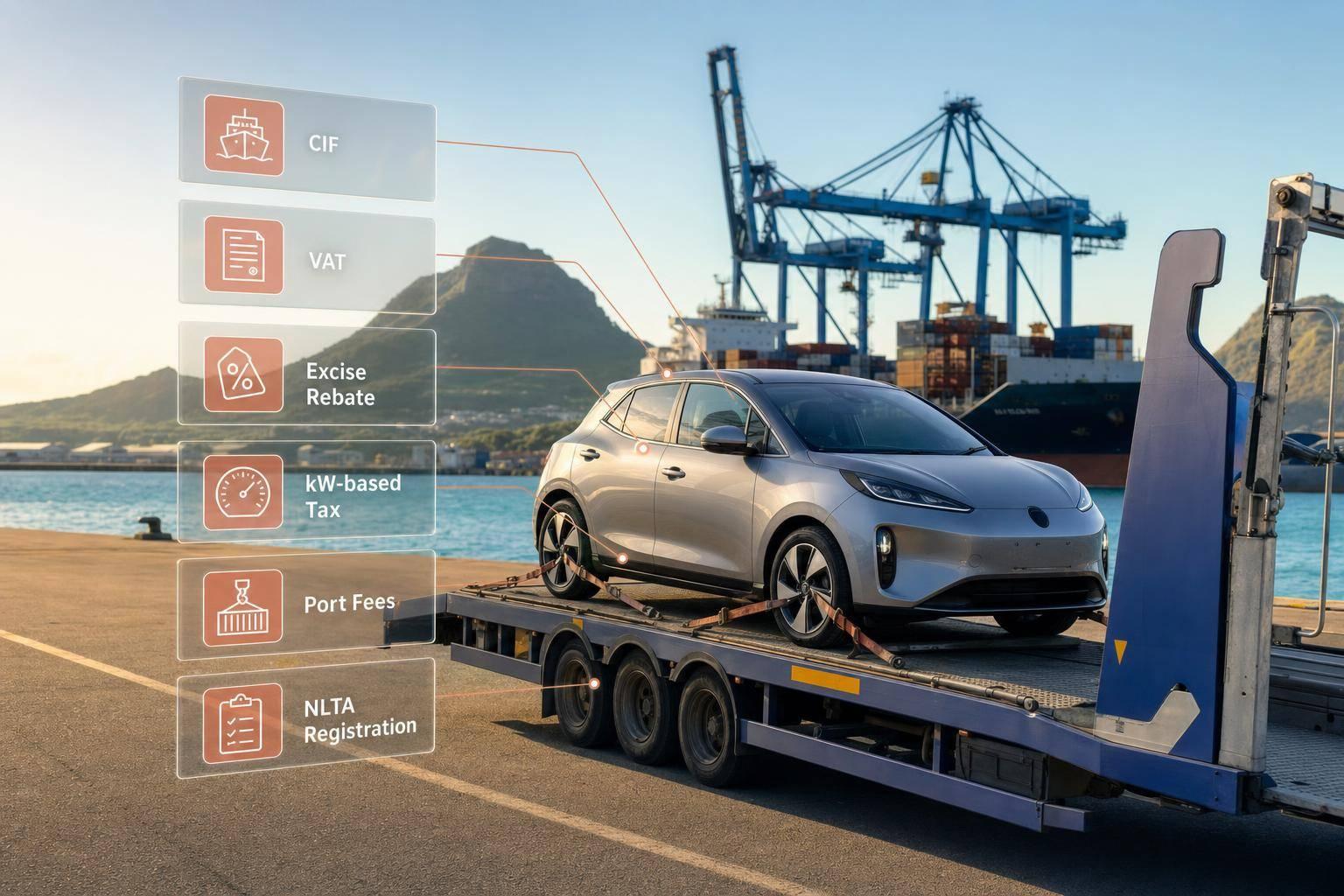
If I import an EV into Mauritius in 2026, I need to budget for more than the car price. The main costs are CIF (car price + shipping + insurance), excise duty, 15% VAT, port and inspection fees, and NLTA registration. EVs and hybrids are still listed as 0% customs duty since the July 2022 rule change, and an individual buyer may get a 10% excise-duty rebate, capped at about $4,500.
Here’s the short version:
- Customs duty for EVs: 0%
- VAT: 15% on CIF + excise duty
- Excise rebate for individuals: 10%, up to about $4,500
- Charging equipment: exempt from customs duty and VAT
- Other costs still apply: port charges, inspection, fitness, and registration
- Before shipping: check permit rules, vehicle eligibility, and the car’s kW rating
- After arrival: clear customs, pay assessed charges, then complete fitness testing and NLTA registration
The part I’d check first is the kW rating. That figure can change how the EV is taxed, so two cars with close sticker prices may end up with different landed costs.
| Item | 2026 treatment in Mauritius |
|---|---|
| EV customs duty | 0% |
| VAT | 15% |
| Excise rebate | 10% for individuals, capped at about $4,500 |
| Charging equipment | Customs duty-free and VAT-free |
| Main landing costs | CIF, excise, VAT, port fees, inspection, registration |
If I were buying now, I’d confirm the latest tax treatment with the Mauritius Revenue Authority, line up all shipping papers before the car leaves, and estimate the full landed cost before paying the seller.
Mauritius EV Import Rules, Taxes, and Incentives in 2026
How Electric Cars Are Classified for Customs and Excise
For 2026 buyers, the tax side of an EV import comes down to three main items: excise duty, VAT, and any relief you may be able to claim. The EV-specific item most people look at first is the 10% excise duty rebate for individual buyers, subject to a cap of about $4,500.
There’s also a separate tax break for EV charging gear. EV charging equipment is exempt from customs duty and VAT.
Import Charges That Apply: Customs Duty, Excise Duty, VAT, and Other Levies
Mauritius gives electric and hybrid vehicle imports duty-free treatment. On top of that, individual buyers may claim the 10% excise duty rebate, capped at about $4,500.
Here’s the breakdown:
| Charge | Rate / Treatment for EVs | Notes |
|---|---|---|
| Customs Duty | 0% | Applies to hybrid and electric vehicles since July 2022 |
| Excise Duty Rebate | 10% rebate, capped at about $4,500 | Available to individual buyers |
| VAT | 15% on CIF value plus excise duty | Applies to all vehicle imports; no EV-specific exemption |
| Charging Equipment | Customs duty and VAT exempt | Applies to EV charging equipment |
That said, duty-free doesn’t mean cost-free. Port handling fees and inspection charges still apply when the vehicle arrives, and those are billed separately from customs duty, excise duty, and VAT.
Duty Relief for Returning Residents and Time-Sensitive Incentives
Returning residents may qualify for relief under the Returning Citizen scheme, which can reduce the landed cost. But this part can get tricky fast. The timing rules and ownership conditions are strict.
Because of that, it’s smart to check the current status of both the 10% excise duty rebate and any returning-resident relief directly with the Mauritius Revenue Authority (MRA) before you ship the car. Once the tax side is sorted, the next step is getting the import permit in place before shipment.
sbb-itb-99e19e3
Import Electric Cars to Mauritius Duty Free
Step-by-Step: How to Import an Electric Car Into Mauritius
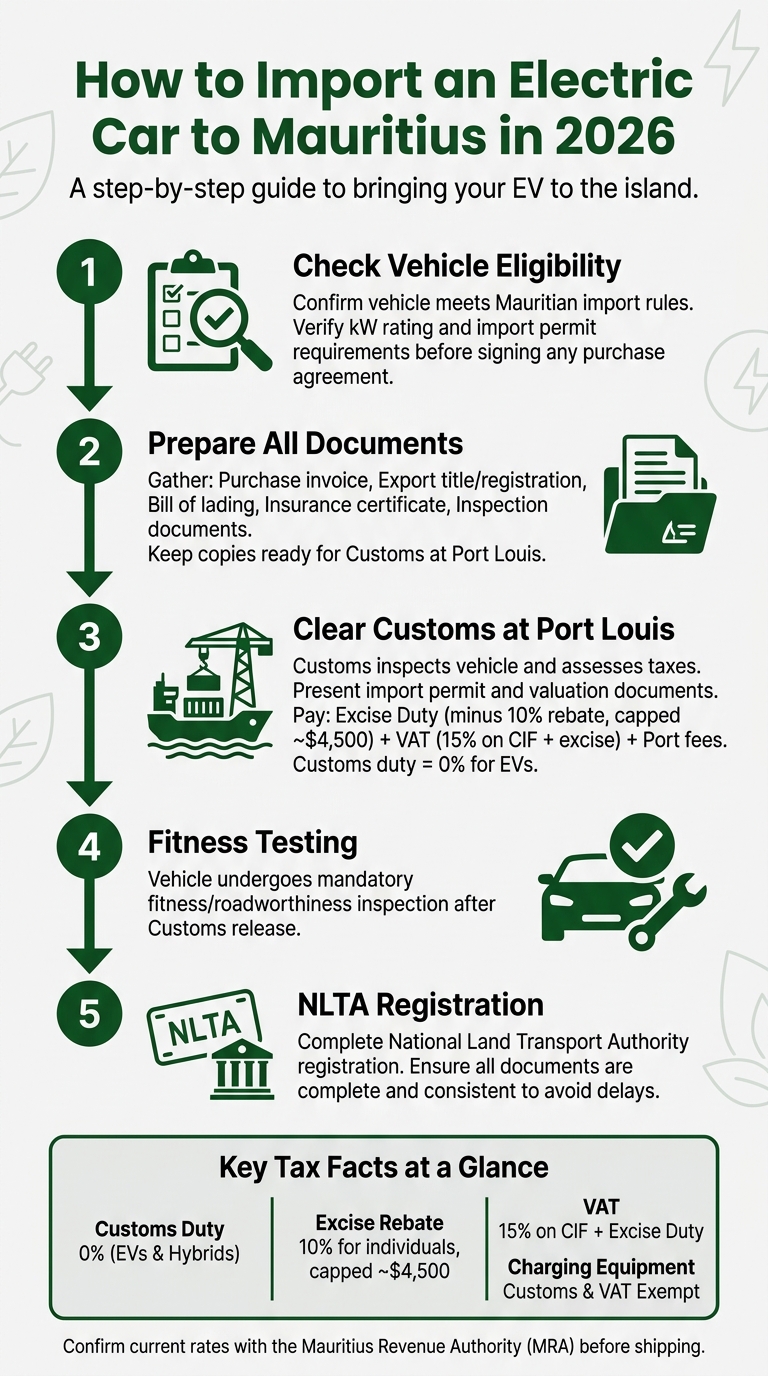
How to Import an Electric Car to Mauritius in 2026: Step-by-Step Guide
With the tax rules sorted, the next move is getting approval and paperwork in place before the car ships.
Step 1: Check Vehicle Eligibility and Confirm Required Approvals Before Shipping
Before you pay or sign a purchase agreement, make sure the vehicle meets Mauritian import rules. Check whether you need an import permit, and confirm that the car’s kW rating lines up with the rebate rules before shipping.
This part matters more than it might seem. If the vehicle doesn’t qualify on paper, fixing the issue after it arrives can turn into a headache.
Step 2: Prepare Purchase, Inspection, and Shipping Documents
Paperwork mistakes can slow EV clearance at the port. Before shipment, get the purchase invoice, export title or registration, bill of lading, insurance certificate, and any required inspection documents ready.
Keep copies of every document on hand for Customs at Port Louis.
Step 3: Clear Customs on Arrival and Pay the Assessed Taxes
At Port Louis, Customs inspects the vehicle, assesses taxes and fees, and releases it after payment. You’ll need to present the import permit and valuation documents so Customs can calculate duty, VAT, and port charges correctly.
Once Customs releases the car, it moves on to fitness testing and registration.
How to Calculate the Total Import Cost for an EV in Mauritius
Once Customs has assessed the vehicle, you can use those same numbers to estimate your total landed cost.
From Purchase Price to Landed Value
Start with the CIF value: purchase price + shipping + insurance. Then add excise duty after any rebate, VAT, port charges, and registration fees to estimate the landed cost.
Put simply, the purchase price is only the starting point. The final amount due comes from the taxes and fees added on top of the CIF value.
Tax Formulas for EVs: Excise Duty, VAT, and Total Landed Cost
EVs are exempt from customs duty. Individual buyers may get a 10% excise-duty rebate, capped at about $4,500 (around Rs 200,000).
VAT still applies, so your final bill depends on:
- The CIF value
- How the excise rebate is applied
- The vehicle’s kW rating
That kW rating matters more than many buyers expect. A car may look like a good deal at first glance, then land in a higher excise band because of its power output.
After you calculate the landed cost, the next steps are fitness testing and registration.
Cost Scenarios for Popular Imported EV Models
It’s smart to compare lower-kW and higher-kW models side by side before you buy. Two EVs can seem close in price, but their power ratings can put them in different excise brackets.
That shift can push up the final landed cost, which means the higher-kW model may cost more than expected by the time it reaches the road.
Registration, Licensing, and Using EV24.africa to Source Your EV
NLTA Registration After Customs Clearance
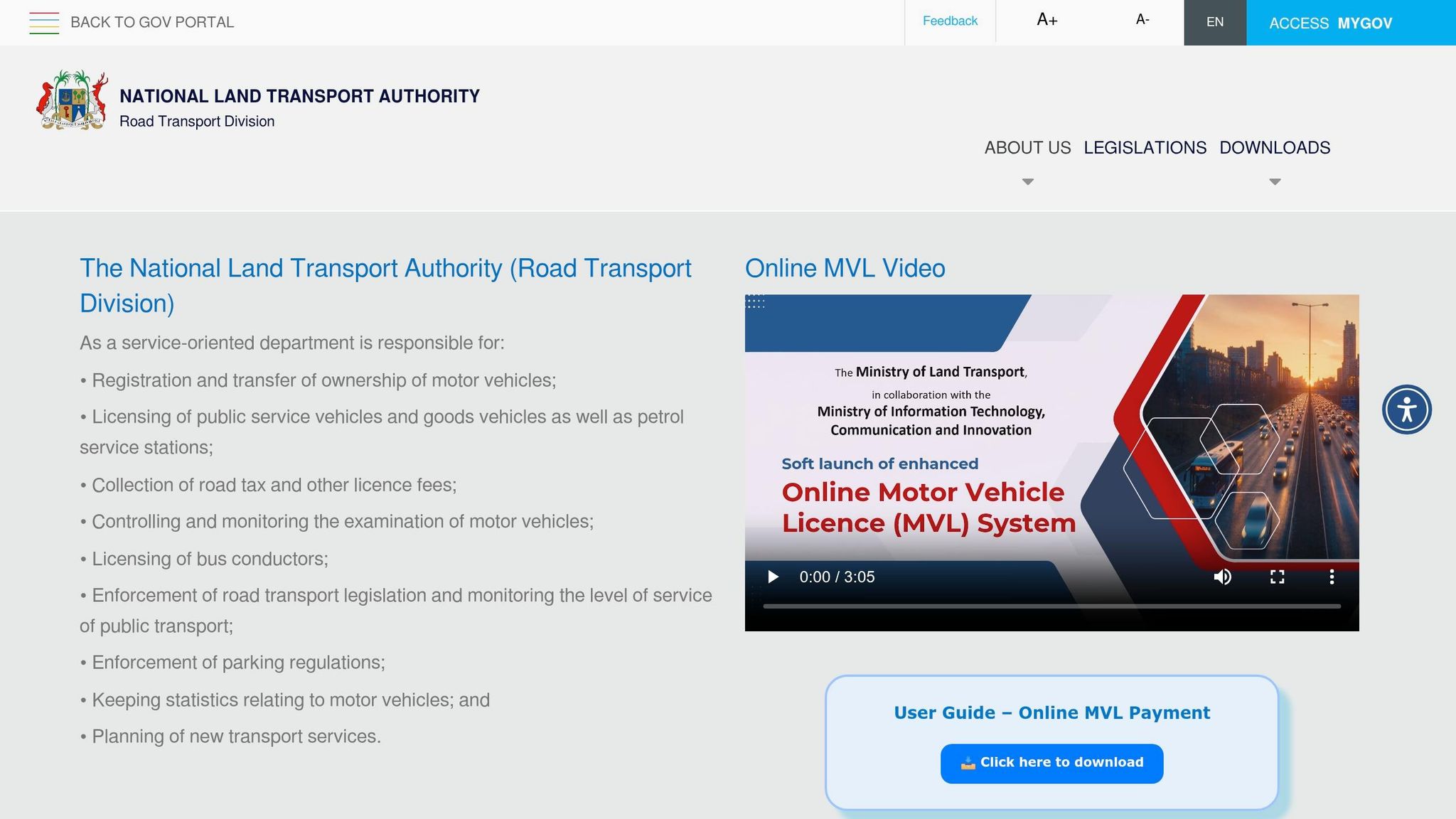
Once Customs clears the vehicle and you’ve paid the taxes, the last step before you can use the car on the road is NLTA registration. At that point, don’t wait around. Start the NLTA process as soon as Customs releases the vehicle.
One thing matters a lot here: your paperwork needs to be complete and consistent. If documents are missing, or if details don’t match across forms, approval can get delayed.
How EV24.africa Helps With Vehicle Selection, Pricing, and Delivery to Mauritius
If you’re still deciding which EV to import, it helps to compare the total landed cost before you commit. A low sticker price can look good at first glance, but the full import cost is what tells the real story.
EV24.africa can help you:
- compare vehicle listings
- confirm landed cost
- coordinate delivery to Port Louis
- check the vehicle’s kW rating before purchase
That last point matters more than many buyers expect. If the kW rating isn’t checked early, you can end up with pricing or import assumptions that don’t line up later.
Conclusion: Key Checks Before You Commit to an Imported EV
Before you buy, confirm the current tax treatment, finish the paperwork, and verify the car’s kW rating, landed cost, and registration path.
FAQs
How do I estimate my total landed cost before I buy?
Add the vehicle’s FOB value, shipping, transit insurance, and customs clearance and documentation charges.
Then apply 15% VAT to the vehicle’s assessed value after customs.
You should also include excise duty:
- 15% for vehicles up to 180 kW
- 25% for vehicles above 180 kW
On top of that, factor in the 30% increase in first-time registration fees and annual RMVL fees ranging from Rs 200 to Rs 4,000.
Does the EV’s kW rating change the taxes I pay?
Yes. In Mauritius, your EV’s power output sets the excise duty rate:
- Up to 180 kW: 15%
- Over 180 kW: 25%
On top of that, a 15% VAT applies after customs, no matter what the vehicle’s kW rating is.
What documents do I need before shipping my EV to Mauritius?
Before you ship an electric vehicle to Mauritius, you need an import permit from the Ministry of Commerce and Consumer Protection. This matters even more if the car is used, so don’t leave it until the last minute. Start the application 4 to 6 months ahead.
You also need to register with the Mauritius Revenue Authority and the Customs Department before the vehicle arrives.
The paperwork usually includes:
- Commercial invoice
- Export certificate
- Bill of Lading
- Insurance certificate
- Proof of ownership
- Vehicle MSDS
- UN38.3 test report for battery standards
If even one document is missing, the process can slow down fast.