
 Younes Rabeh
2026 Is the Year Electric Mobility Becomes a Strategic Reality in Africa
For more than a decade, electric mobility in Africa was discussed through the lens of potential: potential environmental benefits, potential cost savings, potential industrial development. Yet adoption remained slow, fragmented, and often symbolic.
2026 changes everything.
Electric vehicles (EVs) are no longer entering African markets as pilot projects or isolated initiatives. They are now supported by policy reforms, tax incentives, fleet economics, and institutional demand. This shift marks Africa’s transition from experimentation to execution.
At the center of this transformation, EV24.africa operates as a pan-African electric mobility platform, enabling governments, fleets, corporates, and partners to deploy EVs at scale — efficiently and sustainably.
Why 2026 Is a Historic Turning Point for EV Adoption in Africa
Three structural forces are converging simultaneously across the continent:
1. Governments Are Rewriting the Rules
African policymakers are no longer asking whether EVs are viable. They are now focused on how fast adoption can be accelerated.
Key policy shifts observed in 2025–2026 include:
- Reduced or zero import duties on EVs
- VAT exemptions or reductions on electric vehicles and charging equipment
- Preferential treatment for electric fleets and public transport
- Integration of EVs into national energy and climate strategies
These reforms send a clear signal: EVs are becoming instruments of economic policy, not luxury imports.
2. Economics Now Favor Electric Over ICE
Fuel volatility, maintenance costs, and operational downtime have reshaped mobility economics.
In 2026:
- Total Cost of Ownership (TCO) increasingly favors EVs
- Maintenance costs are significantly lower
- Energy costs are predictable and local
- Vehicle uptime improves for fleet operators
This is why fleets — not private buyers — are leading Africa’s EV adoption.
3. Infrastructure and Financing Are Catching Up
Charging and financing were once seen as the biggest barriers. In 2026, they are becoming competitive advantages for early movers.
Country-by-Country: Where Policy Meets Opportunity
🇲🇦 Morocco — The North African EV Anchor
Morocco is positioning itself as a regional EV gateway:
- Alignment between EV imports, renewable energy, and industrial policy
- Progressive discussions around VAT and customs facilitation
- Mature automotive ecosystem and export infrastructure
Morocco is no longer just adopting EVs — it is preparing to anchor EV value chains.
🇬🇭 Ghana — West Africa’s EV Logistics Hub
Ghana’s EV strategy focuses on scale and access:
- Active discussions on EV duty relief
- Pilot programs for ride-hailing, logistics, and corporate fleets
- Strong ambition to position Tema and Accra as regional EV entry points
Ghana is transitioning from a consumer market to a logistics and distribution hub.
🇰🇪 Kenya — Policy-First Electrification
Kenya continues to lead Sub-Saharan Africa on EV policy:
- Reduced excise duties on EVs
- Government-backed electrification programs
- Rapid growth in electric motorcycles, buses, and passenger vehicles
Kenya proves that clear regulation accelerates private investment.
🇷🇼 Rwanda — Africa’s Regulatory Benchmark
Rwanda remains the gold standard:
- Zero import duties on EVs
- VAT exemptions on vehicles and charging equipment
- Streamlined registration and approval processes
Rwanda shows that simplicity and speed are among the strongest EV incentives.
🇳🇬 Nigeria — The Sleeping Giant
Nigeria holds Africa’s largest untapped EV demand:
- Massive ride-hailing and logistics ecosystems
- Growing state-level EV pilot projects
- Increasing pressure to lower import and tax barriers
If fiscal reforms accelerate, Nigeria could become Africa’s largest EV market within a few years.
EV Demand in Africa: Why Fleets Lead and Retail Follows
Fleet Electrification Is Driving Scale
In 2026, the strongest EV demand comes from:
- Ride-hailing and taxi operators
- Corporate fleets
- Logistics and last-mile delivery
- Government and municipal programs
Fleet operators prioritize:
- Cost predictability
- Vehicle uptime
- Maintenance simplicity
- Asset financing
Private consumer adoption follows once fleets normalize EV usage.
Charging Infrastructure: From Constraint to Strategy
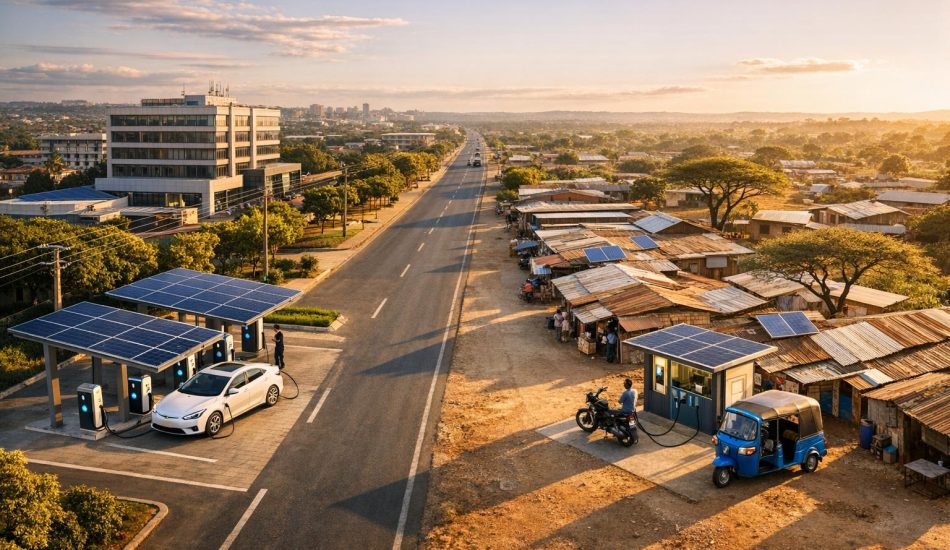
Charging in Africa is evolving differently than in Europe or North America.
2026 infrastructure trends:
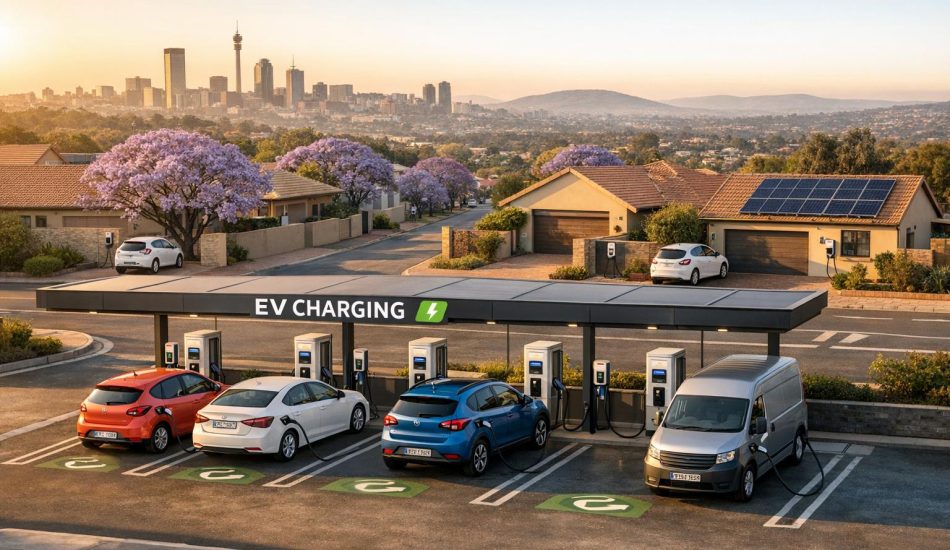
- Fleet-owned private charging depots
- AC charging as the operational backbone
- DC fast charging for uptime-critical use cases
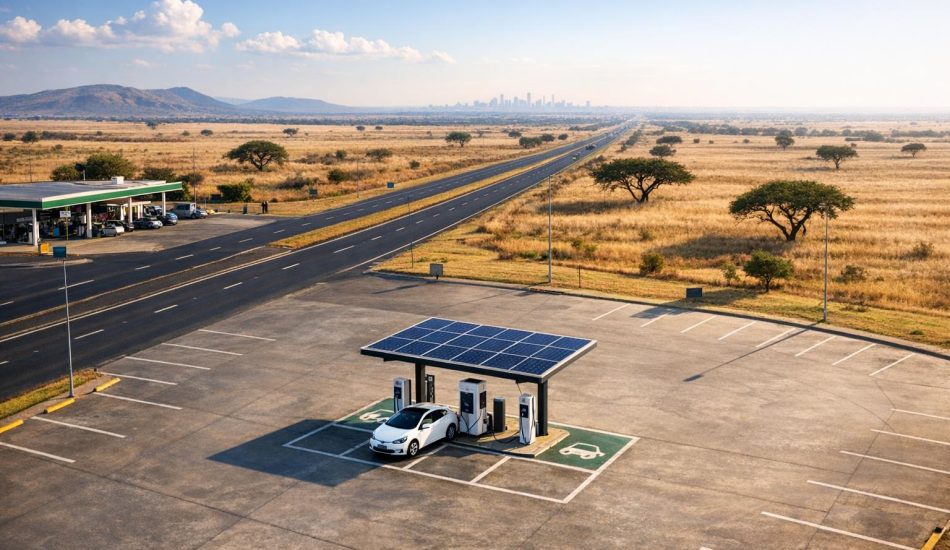
- Solar-powered and hybrid energy solutions
Charging is no longer a visibility exercise — it is an operational tool.
Financing: The Key to EV Scale in Africa
EV adoption accelerates when vehicles become financeable assets.
In 2026:
- Leasing models adapt to EV depreciation curves
- Banks gain confidence in battery warranties
- Asset-backed financing replaces cash purchases
- Fleet EVs outperform ICE vehicles financially
Electric mobility is becoming bankable, not experimental.
EV24.africa’s Role in 2026: From Marketplace to Execution Platform
As the ecosystem matures, EV24.africa evolves beyond a listing platform.
Its 360° model supports:
- Multi-origin sourcing (Asia, Europe, Middle East)
- FOB and CIF logistics across African ports
- Regulatory and customs alignment
- Fleet structuring and financing facilitation
- After-sales, diagnostics, and ecosystem partnerships
The mission is clear: turn policy momentum into vehicles on the road.
Africa Will Build Its Own EV Model
Africa will not replicate Europe, China, or the US.
Its EV model will be:
- Fleet-led, not retail-first
- Cost-driven, not subsidy-dependent
- Pragmatic, not experimental
2026 is the year Africa stops catching up — and starts designing.
Looking Ahead: 2026 and Beyond
The success of Africa’s EV transition will depend on:
- Governments that reduce friction
- Partners that invest long-term
- Platforms that execute at scale
✨ As 2026 begins, EV24.africa extends its best wishes to all partners, clients, and ecosystem players for a year of growth, deployment, and impact.
Africa’s electric future is no longer coming.
It is being built — right now. ⚡🌍