
 Thabo Nkosi
The South African EV market is becoming more affordable, with options now available under R500,000. Two standout models, the Dayun Yuehu S5 and BYD Sealion 5 PHEV, are reshaping the landscape by competing with traditional vehicles in both price and features. Here’s a quick look:
- Dayun Yuehu S5: Fully electric, priced at R399,900, offering a 330 km range, low running costs, and compact design for urban use.
- BYD Sealion 5 PHEV: Priced at R499,900, combines electric and petrol power with 156 kW output, ideal for families and longer trips, plus features like V2L for power outages.
Quick Comparison:
| Feature | Dayun Yuehu S5 | BYD Sealion 5 PHEV |
|---|---|---|
| Price | R399,900 | R499,900 |
| Power | 35 kW | 156 kW |
| Range (Electric) | 330 km | 52 km |
| Charging | DC fast charging | 3.5 kW wallbox included |
| Best For | Urban commuting | Families & long trips |
These models cater to different needs: the Yuehu S5 is perfect for city driving on a budget, while the Sealion 5 offers versatility and power for diverse conditions. Both are helping make EVs more accessible in South Africa.
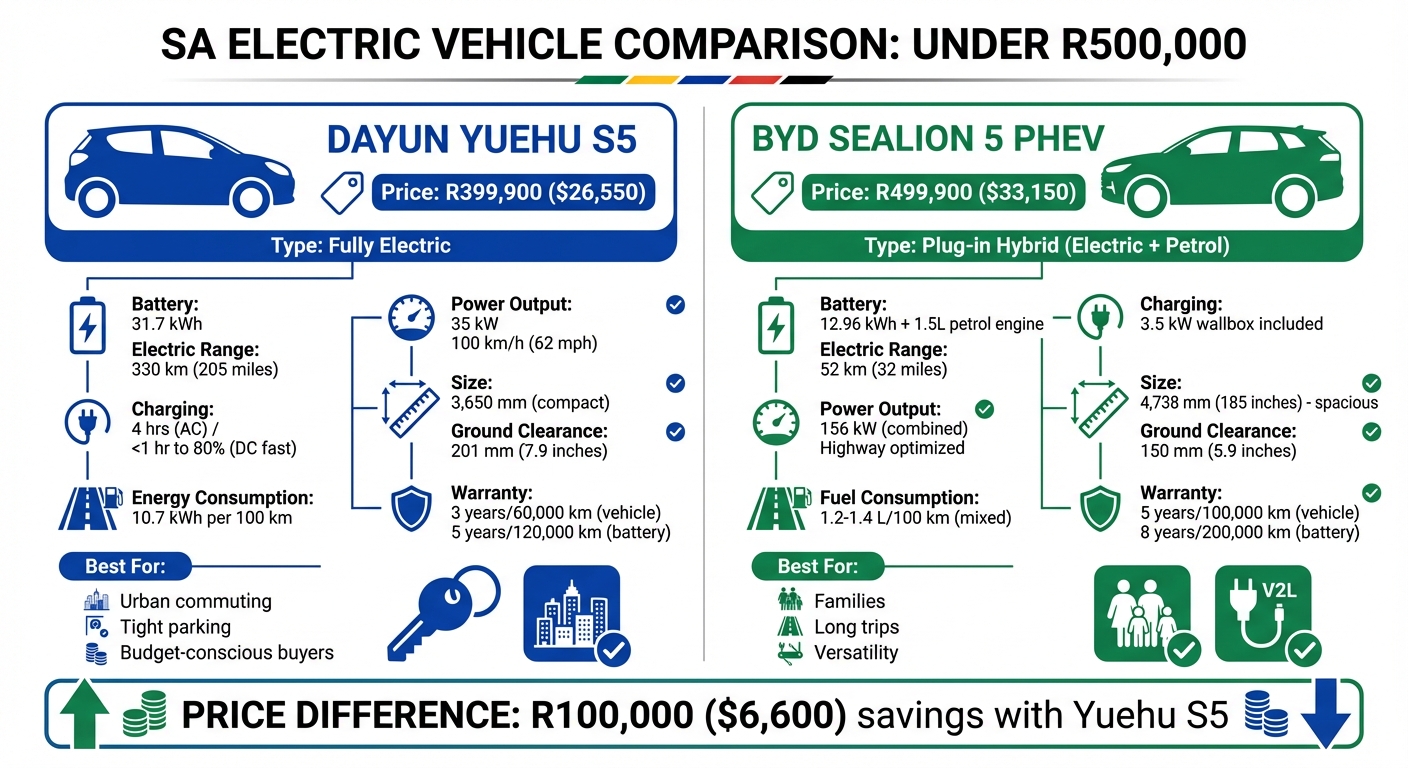
Dayun Yuehu S5 vs BYD Sealion 5 PHEV: Complete Comparison Under R500,000
1. Dayun Yuehu S5
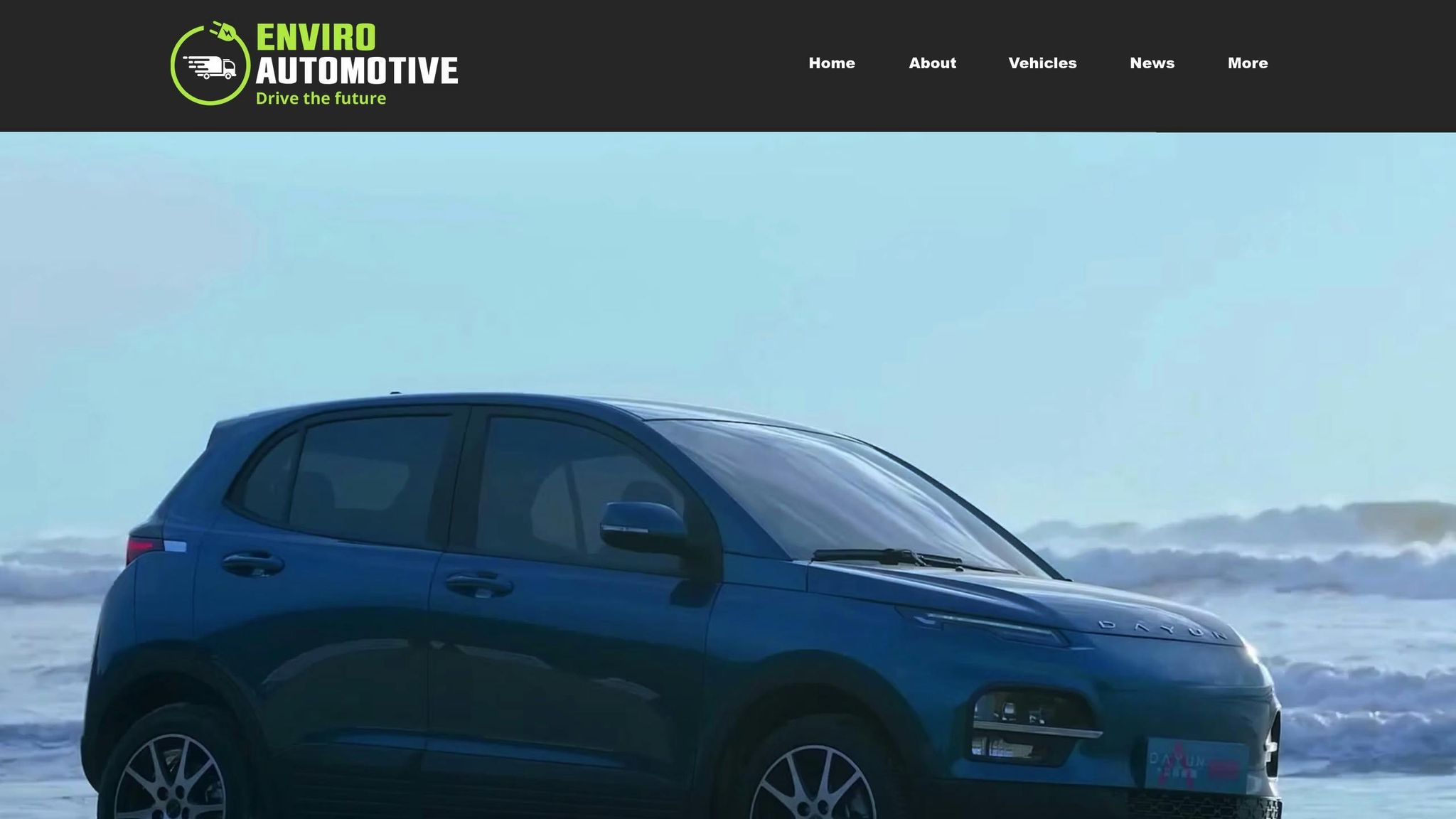
Price and Affordability
The Dayun Yuehu S5 offers a competitive entry point into the EV market, with the Standard trim priced at $26,500 (R399,900) and the VIP variant at $29,800 (R449,900). This positions it as a more budget-friendly option, undercutting the BYD Dolphin by $9,300 (R140,000) and the Mini Cooper SE by $19,000 (R286,000). Both trims come with solid warranty coverage: a 3-year/37,282-mile (60,000 km) mechanical warranty and a 5-year/74,565-mile (120,000 km) battery warranty.
What makes the Yuehu S5 even more appealing is its energy efficiency. It consumes just 10.7 kWh per 100 km, keeping running costs exceptionally low. This is particularly attractive to South African buyers who have embraced solar-powered energy solutions at home.
"In a country rapidly adopting alternative energy solutions, like solar panels, inverters and battery packs at home, the Dayun Yuehu S5 provides significant savings." – Gawie Brink, Technical Director at Enviro Automotive
Range and Charging Capability
Equipped with a 31.7 kWh ternary lithium-ion battery and a 35 kW motor producing 105 Nm of torque, the Yuehu S5 delivers a claimed range of 330 km (205 miles) per charge. Charging is straightforward: using a standard 220V outlet takes around 4 hours, while a DC fast charger can boost the battery from 20% to 80% in under an hour. These features make it a practical choice for urban driving and short trips.
Practicality for South African Conditions
With a compact length of 3.65 meters (145 inches), the Yuehu S5 excels in navigating crowded city streets and tight parking spaces. Its top speed of 115 km/h (71 mph) is adequate for urban and suburban driving, while features like Hill Start Assist and Slope Descent Control ensure smooth handling on South Africa’s unpredictable roads. The 7.9-inch (201 mm) ground clearance is another plus, helping it manage potholes and uneven surfaces with ease.
"At just 3.65 metres long, the Dayun Yuehu S5 is perfect for daily urban commutes, navigating congested city streets, and fitting into tight parking spots." – Gideon Wolvaardt, Managing Director of Enviro Automotive
Since its debut in 2017, the Yuehu S5 has proven its reliability, with over 35,000 units sold in 20 countries worldwide.
sbb-itb-99e19e3
2. BYD Sealion 5 PHEV
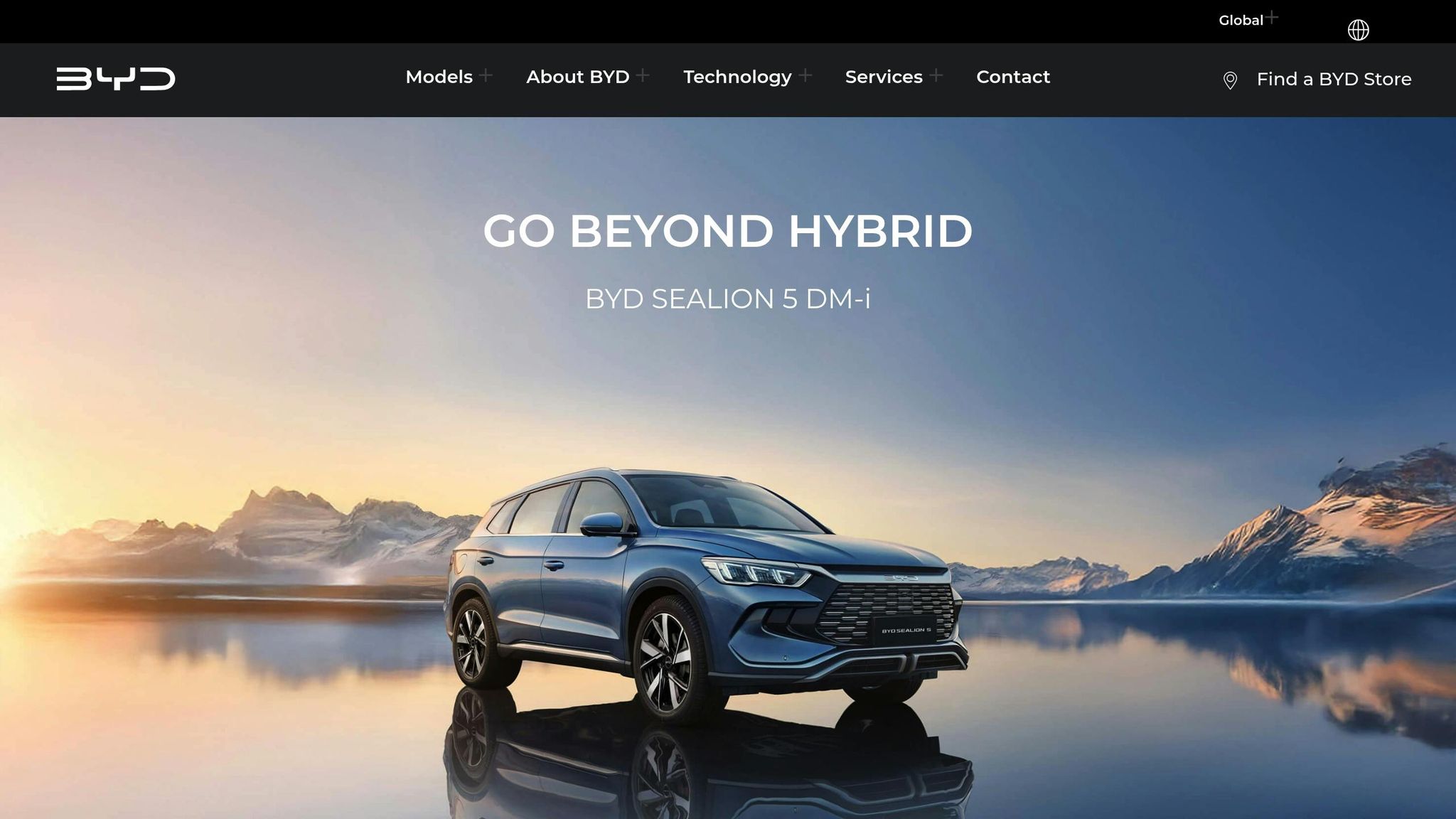
Price and Cost Effectiveness
The BYD Sealion 5 PHEV stands out as South Africa’s most affordable plug-in hybrid, with the base Comfort trim starting at $33,150 (R499,900). For those seeking added features, the Dynamic variant is priced at $37,800 (R569,900) and includes upgrades like a sunroof, electric tailgate, 360° camera, and electric seats. This places it in competition with models like the Toyota Corolla Cross Hybrid. However, the Sealion 5 offers significantly more power – 156 kW compared to the Corolla Cross Hybrid’s 90 kW – and boasts a larger body, measuring 185 inches (4,738 mm) compared to the Corolla’s 175 inches (4,460 mm).
"With the Sealion 5 starting at just R499 900, we’re not just launching a new car; we’re redefining value in the SUV market." – Steve Chang, Managing Director, BYD South Africa
The Sealion 5’s appeal is further bolstered by its impressive fuel efficiency. BYD reports a consumption rate of just 0.32–0.37 gallons per 100 miles (1.2–1.4 L/100 km) under mixed driving conditions. Even when the battery is depleted and the 1.5L petrol engine takes over, real-world consumption remains efficient at 1.3–1.4 gallons per 100 miles (4.9–5.2 L/100 km). Buyers also benefit from added perks: a 3.5 kW wallbox charger, a vehicle-to-load (V2L) adapter, and a robust warranty package – five years or 62,137 miles (100,000 km) for the vehicle, four years or 37,282 miles (60,000 km) for servicing, and eight years or 124,274 miles (200,000 km) for the battery.
Range and Charging Capability
The Sealion 5 is equipped with a 12.96 kWh battery pack, providing an electric-only range of up to 32 miles (52 km). This range is ideal for daily urban commutes, ensuring that most short trips can be completed without relying on the petrol engine. When the battery runs out, the 1.5L petrol engine steps in to extend the range seamlessly. Additionally, the car’s V2L functionality allows it to act as a mobile power source, a particularly handy feature during South Africa’s frequent load-shedding events. To further enhance convenience, BYD plans to establish 200–300 fast-charging stations across the country by the end of 2026, working in collaboration with Eskom to ensure strategic placement.
Practicality for South African Conditions
The Sealion 5’s DM-i hybrid technology emphasizes electric drive for urban settings, offering a quiet and smooth driving experience. Its combined power output of 156 kW ensures responsive performance, though the CVT transmission can produce noticeable engine noise during heavy acceleration. The spacious 185-inch (4,738 mm) body provides ample room for families, while features like ventilated and heated front seats help tackle South Africa’s varying temperatures. However, the car’s 150 mm (5.9-inch) ground clearance may limit its ability to handle rough rural roads, and the lack of a spare wheel could pose challenges on poorly maintained routes. These factors make the Sealion 5 particularly well-suited for urban and suburban driving.
"The Sealion 5 delivers that balance. It’s built for the realities of our market and shows how new-energy technology can be practical for everyday family life." – Mark Handley, Commercial Director, BYD South Africa
TCS | We test drive South Africa’s cheapest electric car
Pros and Cons
Here’s a breakdown of the standout features and trade-offs between the two models, based on the earlier comparisons.
Both vehicles bring their own strengths to the table, catering to different priorities like budget and driving style. The Dayun Yuehu S5 is priced about $6,600 (R100,000) less than the BYD Sealion 5 PHEV, making it a more budget-friendly option. As a fully electric vehicle, the Yuehu S5’s simpler design could mean lower maintenance costs in the long run. Its claimed range of 205 miles (330 km) makes it a great fit for daily urban commutes.
On the other hand, the Sealion 5 PHEV is built for power and versatility. With a combined power output of 156 kW – far surpassing the Yuehu S5’s 35 kW motor – it’s better suited for highway driving and diverse terrains. Its electric-only range of 32 miles (52 km) is complemented by a 1.5L petrol engine, which extends its range when needed. Plus, the Sealion 5 comes with extras like a 3.5 kW wallbox charger and a V2L adapter, along with a robust warranty: five years or 62,137 miles (100,000 km) for the vehicle and eight years or 124,274 miles (200,000 km) for the battery.
Here’s a quick comparison of the two models:
| Feature | Dayun Yuehu S5 | BYD Sealion 5 PHEV |
|---|---|---|
| Starting Price | $26,550 (R399,900) | $33,150 (R499,900) |
| Power Output | 35 kW | 156 kW |
| Electric Range | 205 miles (330 km) | 32 miles (52 km) |
| Top Speed | 62 mph (100 km/h) | Optimized for highway use |
| Charging | 4 hrs (AC) / <1 hr to 80% (DC) | 3.5 kW wallbox charger included |
| Ideal For | Urban commuting | Family use & long trips |
The Yuehu S5’s top speed of 62 mph (100 km/h) reinforces its role as a city-focused vehicle. Meanwhile, the Sealion 5, with its larger size – approximately 185 inches (4,738 mm) in length and 5.9 inches (150 mm) of ground clearance – offers spacious interiors, making it a better choice for families. However, its size might pose challenges on rough rural roads.
Charging is another area where the two differ. The Yuehu S5 supports fast DC charging, reaching 80% in under an hour, which is ideal for quick recharges during busy days. The Sealion 5, being a plug-in hybrid, switches to its petrol engine seamlessly once the battery depletes, ensuring you’re never stuck without power.
Ultimately, these differences highlight how each model is tailored to specific needs, showcasing the growing options for affordable electric mobility in South Africa.
Conclusion
The Dayun Yuehu S5 and BYD Sealion 5 PHEV are paving the way for electric mobility in South Africa, each catering to distinct needs. The Yuehu S5, with its compact size of 3,695 mm, is ideal for city driving, making it a practical choice for navigating tight urban spaces. This model reflects a growing trend toward more accessible electric options in the region.
On the other hand, the BYD Sealion 5 PHEV is tailored for families and drivers who value extended range and versatility. As Steve Chang, Managing Director of BYD South Africa, explains:
"The Sealion 5 is aimed squarely at mainstream buyers who want hybrid efficiency without premium pricing".
This plug-in hybrid combines electric and petrol power, effectively addressing range anxiety for South African drivers.
For budget-conscious urban commuters, the Dayun Yuehu S5 stands out as an appealing choice. Meanwhile, the BYD Sealion 5 PHEV appeals to those looking for a vehicle capable of longer journeys. Its features, such as a 3.5 kW wallbox charger, a V2L adapter for powering external devices, and an 8-year/124,274-mile (200,000 km) battery warranty, add significant value. Additionally, its fuel efficiency in mixed driving is approximately 1.2 L/100 km (0.32 gallons per 62 miles).
BYD’s ambitious plan to establish 30 dealerships and 200–300 charging stations by the end of 2026 underscores the growing commitment to electric mobility in South Africa. As these models gain popularity, they are setting the stage for broader adoption of electric vehicles across the country.
FAQs
What are the main differences between the Dayun Yuehu S5 and the BYD Sealion 5 PHEV?
The Dayun Yuehu S5 is a fully electric compact SUV, while the BYD Sealion 5 is a plug-in hybrid (PHEV) that blends an electric motor with a gasoline engine. If you’re looking at price tags, the Yuehu S5 starts at approximately $21,000, making it the more economical choice. It comes equipped with a 31.7 kWh battery, offering an estimated electric range of 205 miles and a top speed of 62 mph. On the other hand, the Sealion 5 is priced at about $26,000. It pairs a 12 kWh battery with a hybrid system, delivering an electric-only efficiency of 196 mpg and the versatility needed for longer trips.
The Yuehu S5 is tailored for urban life. Its compact size and lower running costs – just 10.7 kWh per 62 miles – make it a practical option for city dwellers. Plus, it supports fast charging, allowing the battery to go from 20% to 80% in under an hour. Meanwhile, the Sealion 5 leans into a more upscale experience. It includes features like heated and ventilated front seats, wireless charging, a 360° camera, and vehicle-to-load (V2L) functionality, which lets you power external devices from the car.
In short, the Yuehu S5 is perfect for eco-conscious drivers seeking affordability and efficiency in city settings. The Sealion 5, however, offers a mix of electric efficiency, gasoline-powered range, and a touch of luxury for those who want more comfort and flexibility.
How do the running costs of EVs compare to gas-powered cars in South Africa?
Electric vehicles (EVs) are much more affordable to run compared to traditional gas-powered cars in South Africa. Charging an EV costs, on average, R5.15 per kWh, which works out to about R0.93 per kilometer. In contrast, gas-powered vehicles average around R24.00 per liter, with operating costs of around R2.40 per kilometer. That’s a whopping 61% lower operating cost for EVs.
Let’s break it down: if you commute 50 km daily (roughly 18,250 km a year), switching to an EV could save you close to R26,900 annually – and over R134,000 in just five years. And it doesn’t stop there. EVs also come with lower maintenance costs. For instance, over five years, maintaining an EV like the BYD Atto 3 might cost around R12,000, compared to R45,000 for a gas-powered alternative such as the Toyota Corolla Cross. These savings make EVs a smart, budget-friendly choice for South African drivers.
What plans are in place to expand South Africa’s EV charging infrastructure?
South Africa is making strides in building up its EV charging infrastructure, guided by the government’s EV White Paper released by the Department of Trade, Industry, and Competition in December 2023. The plan focuses on several key areas: installing public fast-charging stations along major highways, incentivizing private investment in charging networks, and promoting home charging setups powered by renewable energy. The ultimate goal? To establish a dependable, nationwide charging network that supports affordable electric vehicles priced under R500,000 and eases drivers’ concerns about range limitations.
Major cities like Cape Town and Johannesburg are already seeing progress, with charging networks steadily expanding. Over time, this growth is set to reach additional urban centers and important intercity routes, ensuring South Africa is prepared for a future where affordable EVs are the norm.