
 Thabo Nkosi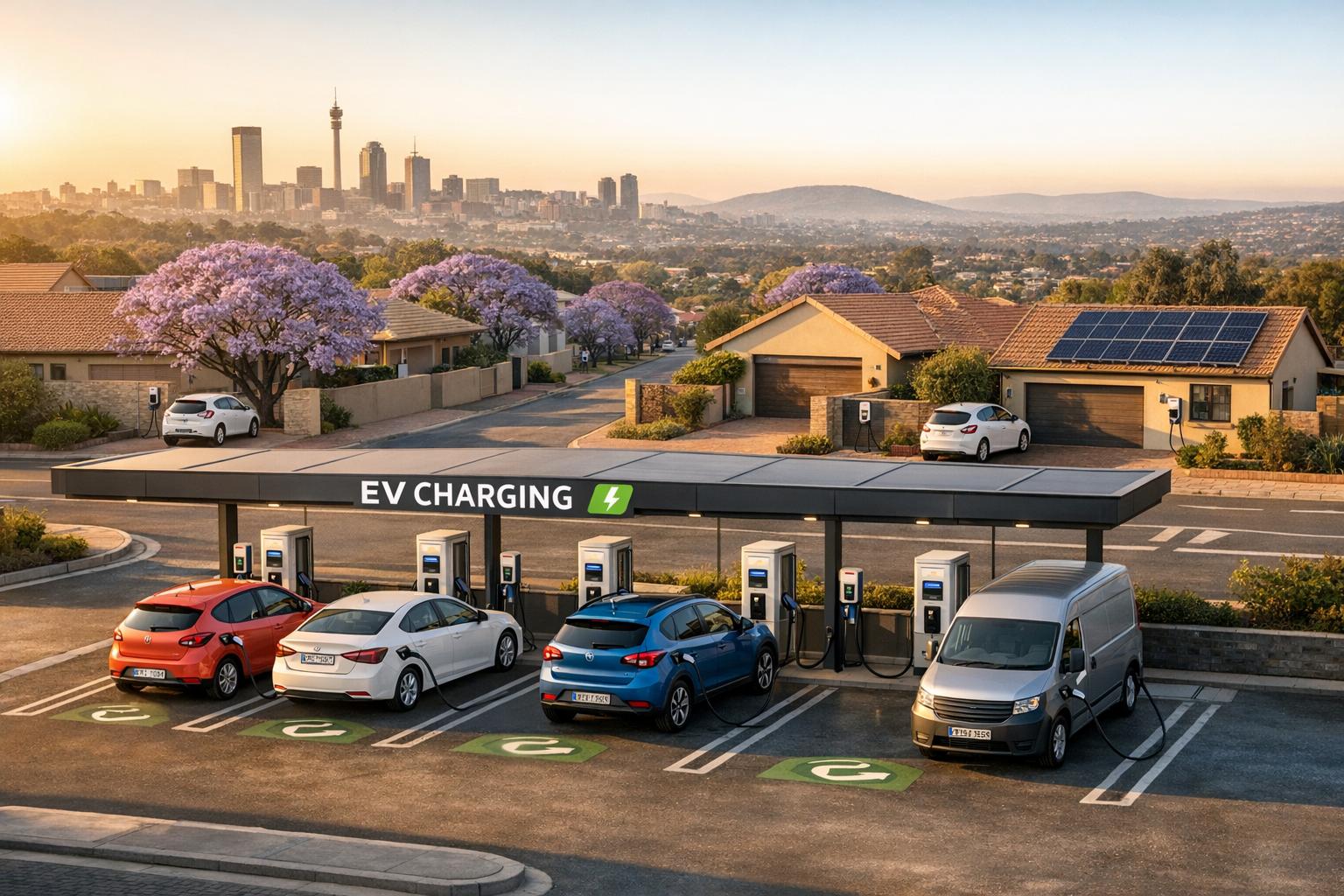
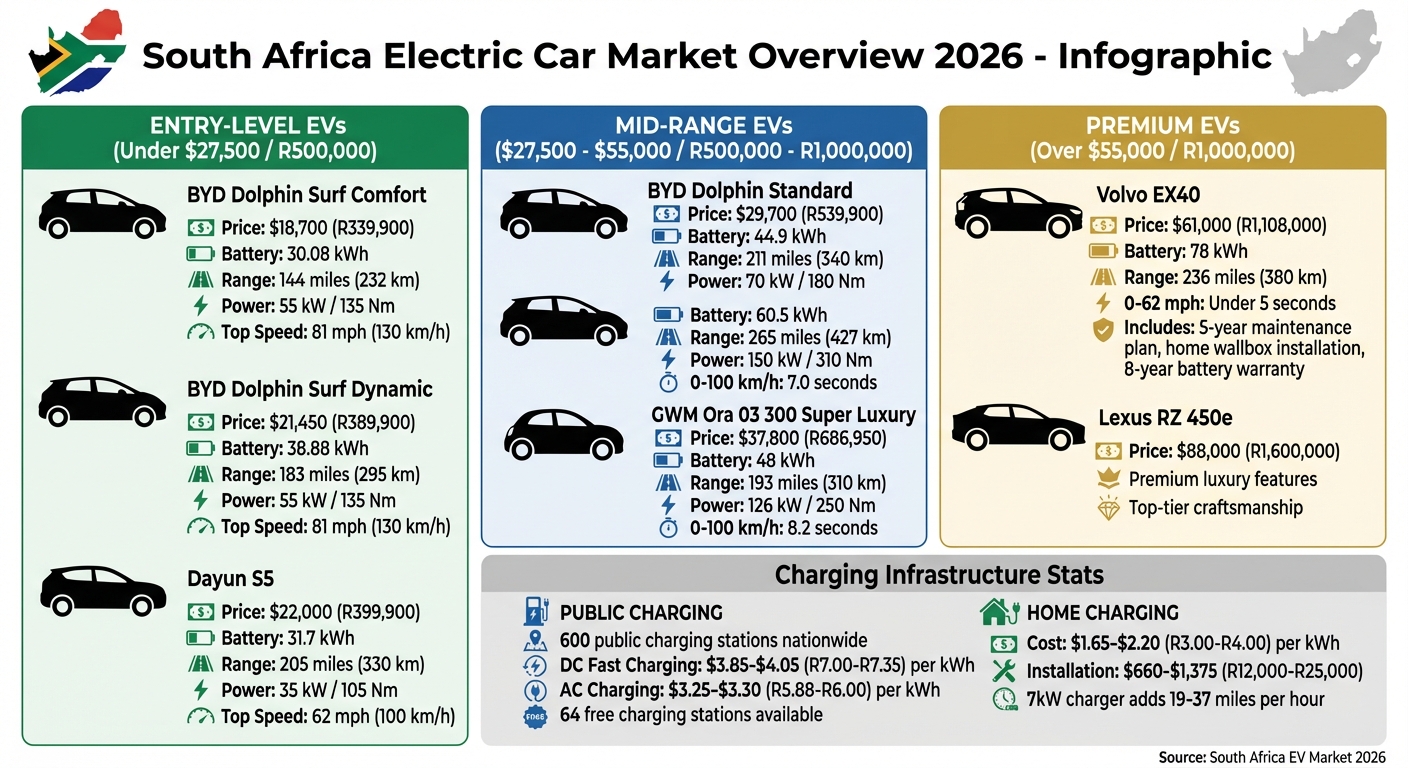
Electric cars in South Africa have become more affordable and diverse in 2026, thanks to government incentives and the entry of Chinese manufacturers like BYD, Dayun, and Dongfeng. Models now cater to various budgets, from compact city cars under $27,500 (R500,000) to premium EVs over $55,000 (R1,000,000). Charging infrastructure has also expanded, with 600 public stations and affordable home charging options.
Key Highlights:
- Entry-level EVs: BYD Dolphin Surf starts at $18,700 (R339,900), offering a range of up to 183 miles.
- Mid-range EVs: BYD Dolphin Extended delivers 265 miles for $29,700 (R539,900).
- Luxury EVs: Volvo EX40 starts at $61,000 (R1,108,000) with a 236-mile range.
- Charging: Home charging costs $1.65–$2.20 per kWh, while public DC fast chargers cost $3.85–$4.05 per kWh.
South Africa’s EV market is evolving rapidly, with more choices, better pricing, and growing charging networks making electric mobility a practical option for many.
South Africa Electric Car Price Comparison 2026: Entry-Level to Premium EVs
Driving Change: Winstone Jordaan on South Africa’s Electric Future
sbb-itb-99e19e3
Electric Cars Under $27,500 (R500,000)
South Africa’s electric vehicle (EV) market is expanding, and affordable options are becoming more accessible. With three Chinese-built models now priced under R500,000 ($27,500), budget-conscious buyers have excellent choices for urban commuting and cutting down on fuel expenses. Here’s a closer look at the standout models in this price range.
BYD Dolphin Surf
The BYD Dolphin Surf takes the crown as South Africa’s most affordable EV, starting at R339,900 ($18,700) for the Comfort trim and R389,900 ($21,450) for the Dynamic version. The Comfort model features a 30.08 kWh battery offering a range of 232 km (about 144 miles), while the Dynamic trim upgrades to a 38.88 kWh battery with a range of 295 km (roughly 183 miles). Both versions deliver 55 kW of power and 135 Nm of torque, with a top speed of 130 km/h (81 mph).
"The BYD Dolphin Surf represents a pivotal moment for electric mobility in South Africa. We are bringing a truly affordable and well-equipped urban electric vehicle to the mass market."
- Ming Xing, Brand and Marketing Manager, BYD South Africa
What sets the Dolphin Surf apart is its Blade Battery, a cobalt-free design known for its resistance to punctures and fire. A 7 kW home wall-box charger comes standard, eliminating a common upfront expense for new EV owners. The Dynamic model also adds Vehicle-to-Load (V2L) capability, letting you power external devices directly from the car. With a tight turning radius of 16 feet and a cargo space ranging from 230 liters to 930 liters, it’s built for city life and daily errands. The car includes a 3-year/60,000-mile service plan, a 3-year/100,000-mile vehicle warranty, and an 8-year/200,000-mile battery warranty.
"Doing it the way most owners will do from home, a kWh of electricity should cost you around R4, and then a full charge comes in at R150. For this money, if you convert to liters per 100 km, you are getting close to 2.5 liters per 100 km."
- Mark Jones, Road Test Editor, The Citizen
Dayun S5
The Dayun S5, priced at R399,900 ($22,000), offers an impressive range of 330 km (approximately 205 miles) from its 31.7 kWh battery, even with a smaller motor. It delivers 35 kW of power and 105 Nm of torque, with a top speed of 100 km/h (62 mph). While not built for speed, the S5 focuses on efficiency and practicality for urban driving. Standard features include electric front seats, automatic climate control, 15-inch wheels, an 8-inch digital driver display, a 7-inch infotainment screen, and a rearview camera.
Dongfeng Box E1 330
Rounding out the budget-friendly options is the Dongfeng Box E1 330, priced at R459,000 ($25,300). Though detailed performance specs are limited, this model is geared toward those seeking a slightly more refined EV experience without stepping into higher price brackets. Its design and features cater to urban drivers looking for convenience and ease of maneuverability.
| Feature | BYD Dolphin Surf (Comfort) | BYD Dolphin Surf (Dynamic) | Dayun S5 |
|---|---|---|---|
| Price | R339,900 ($18,700) | R389,900 ($21,450) | R399,900 ($22,000) |
| Battery | 30.08 kWh | 38.88 kWh | 31.7 kWh |
| Range | 232 km (144 mi) | 295 km (183 mi) | ~330 km (205 mi) |
| Power/Torque | 55 kW / 135 Nm | 55 kW / 135 Nm | 35 kW / 105 Nm |
| Top Speed | 130 km/h (81 mph) | 130 km/h (81 mph) | 100 km/h (62 mph) |
| DC Fast Charging | 30 kW | 40 kW | Not specified |
Mid-Range Electric Cars ($27,500 to $55,000)
Mid-range electric vehicles (EVs) strike a balance between affordability and performance, offering extended ranges, better power, and advanced safety features. With ranges between 193 and 265 miles (310 to 427 km), these cars are versatile enough for both city commutes and occasional inter-city travel. This segment highlights the industry’s shift toward vehicles that combine practicality with enhanced technology. Let’s dive into the details of three standout models in this category.
BYD Dolphin
Starting at R539,900 ($29,700), the BYD Dolphin comes in two versions. The Standard model features a 44.9 kWh battery, delivering a range of 211 miles (340 km) with 70 kW of power and 180 Nm of torque. For those seeking more, the Extended version upgrades to a 60.5 kWh battery, offering a 265-mile (427 km) range and a more powerful 150 kW motor with 310 Nm of torque. This version accelerates from 0 to 100 km/h in just 7 seconds.
Both models include BYD’s Blade Battery technology and a 12.8-inch rotatable touchscreen. Safety is a strong suit, with features like emergency steering assist and front/rear cross-traffic alerts. The Dolphin has earned 5-star safety ratings in both Euro NCAP and Australian NCAP tests. It also comes with a 3-year/100,000 km warranty, an 8-year/200,000 km battery warranty, and a 5-year/100,000 km maintenance plan.
GWM Ora 03
The GWM Ora 03 300 Super Luxury, priced at R686,950 ($37,800), blends retro styling with modern tech. It packs a 48 kWh battery that provides a 193-mile (310 km) range, supported by 126 kW of power and 250 Nm of torque – nearly double the power of entry-level EVs. It can hit 100 km/h in 8.2 seconds and has a top speed of 99 mph (160 km/h).
This model includes seven airbags, a 360-degree camera, and an 11 kW AC charging system that fully charges the battery in 5.5 hours. It boasts a 5-star ANCAP safety rating and offers a 7-year/200,000 km vehicle warranty.
"For the ‘bang for buck’ performance and safety buyer: The GWM Ora 03 300 Super Luxury is the best car from a technical standpoint."
- Sean Nurse, Motoring Journalist
Geely E5
Rounding out the lineup is the Geely E5, starting at R699,999 ($38,500). While full specifications are still being revealed, the E5 is positioned as a practical upgrade over entry-level EVs, offering improved performance, range, and overall refinement. It’s a solid choice for those stepping up from budget options.
Key Specifications Comparison
Here’s how the three models compare on key features:
| Feature | BYD Dolphin Standard | BYD Dolphin Extended | GWM Ora 03 300 Super Luxury |
|---|---|---|---|
| Price | R539,900 ($29,700) | Not specified | R686,950 ($37,800) |
| Battery | 44.9 kWh | 60.5 kWh | 48 kWh |
| Range (WLTP) | 340 km (211 mi) | 427 km (265 mi) | 310 km (193 mi) |
| Power/Torque | 70 kW / 180 Nm | 150 kW / 310 Nm | 126 kW / 250 Nm |
| 0-100 km/h | Not specified | 7.0 seconds | 8.2 seconds |
| DC Charging | 60 kW | 80 kW | 64 kW |
These mid-range EVs showcase a mix of performance, safety, and advanced features, making them attractive choices for drivers looking to step up from entry-level options.
Premium Electric Cars Over $55,000 (R1,000,000)
After exploring affordable and mid-range options, it’s time to look at premium electric vehicles (EVs) that take things to the next level. These cars combine luxury, performance, and cutting-edge technology, offering ranges between 280 and 410 miles (450 to 660 km). Beyond the impressive specs, they often include ownership perks like home charging installations, extended warranties, and maintenance plans – helping offset their higher price tags. This shift highlights South Africa’s growing focus on making advanced electric mobility more appealing.
Volvo EX40
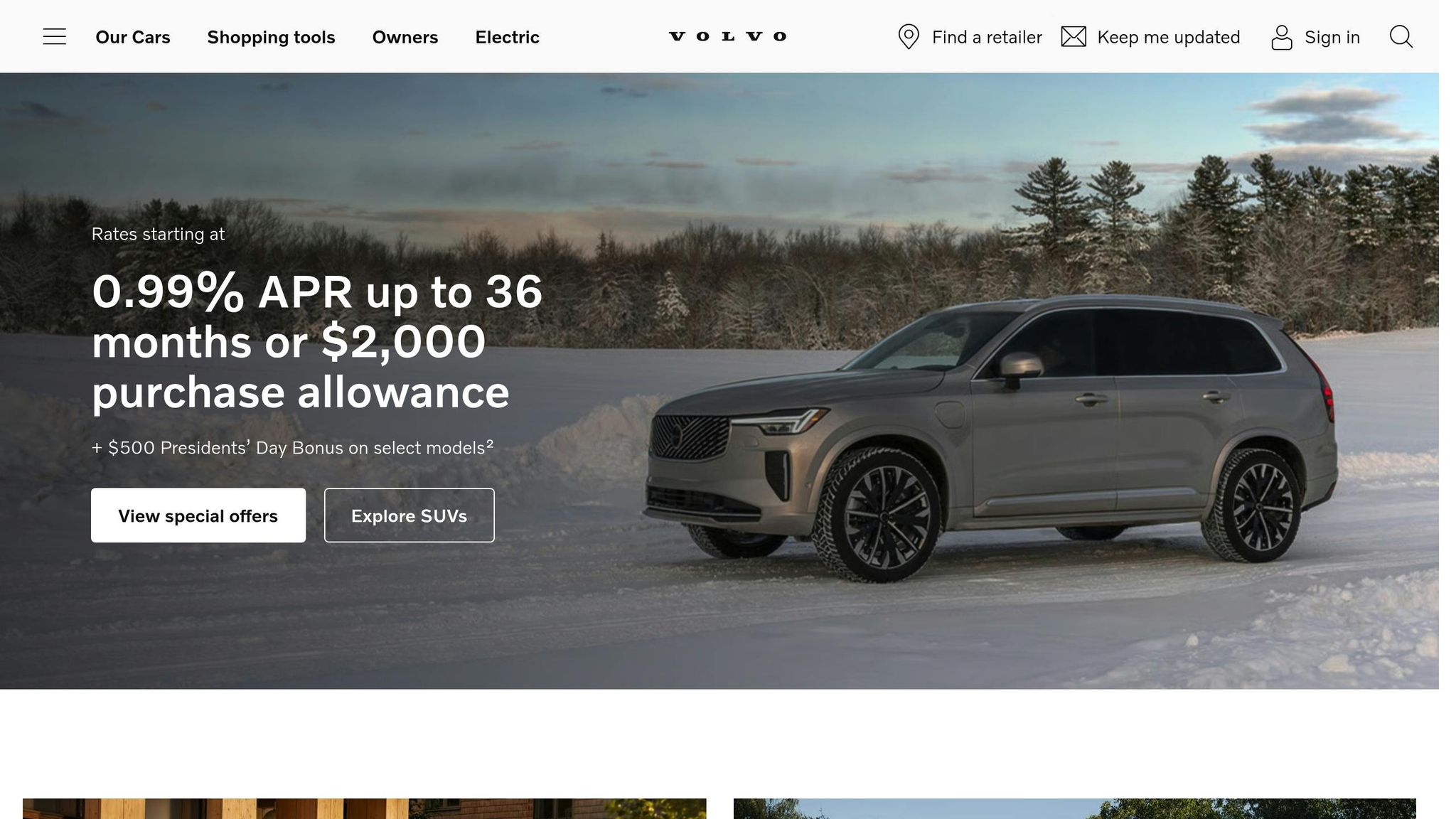
The Volvo EX40 (previously known as the XC40 Recharge) starts at R1,108,000 ($61,000) and delivers a blend of Scandinavian design and sustainable luxury. Powered by a 78 kWh battery, it offers a range of 236 miles (380 km) and can accelerate from 0 to 62 mph in under 5 seconds, thanks to its dual motors. It’s a vehicle that balances practicality with a bit of excitement behind the wheel.
What makes the EX40 stand out is Volvo’s comprehensive ownership package. Buyers receive a five-year maintenance plan and warranty, a home charging wallbox with installation, and a public charging cable. These features address key concerns, especially in South Africa, where charging infrastructure is still developing. On top of that, the EX40 includes an eight-year battery warranty, offering added reassurance for long-term ownership.
"The C40 Recharge is all about effortless luxury and comfort… a car that doesn’t go unnoticed but is never flashy or in your face."
- Ané Albertse, Journalist, AutoTrader
Lexus RZ 450e
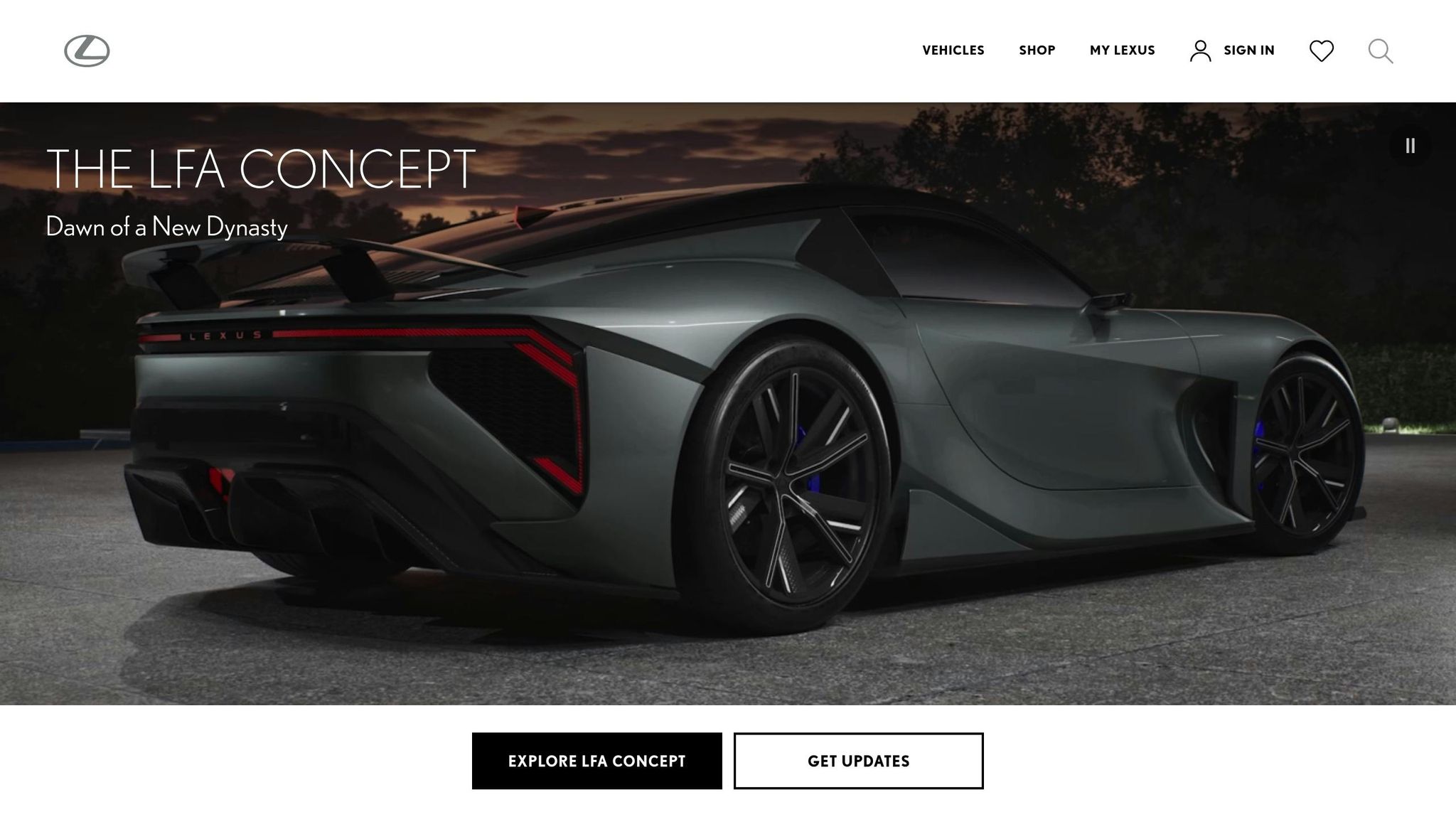
With a price tag of R1,600,000 ($88,000), the Lexus RZ 450e is positioned at the top tier of South Africa’s luxury EV market. This model is all about refined craftsmanship and advanced features. While some details are still being finalized, the RZ 450e is designed to compete directly with premium European EVs, delivering the meticulous build quality and attention to detail Lexus is famous for.
One of the major advantages of premium EVs is their lower running costs. In South Africa, electricity is cheaper than gasoline or diesel, making these vehicles more economical over time. For buyers willing to invest over R1,000,000, these EVs offer more than transportation – they provide a seamless, luxurious ownership experience. Together, they represent the pinnacle of South Africa’s growing EV market.
Charging Infrastructure in South Africa
South Africa’s charging infrastructure is steadily growing to keep up with the increasing variety of electric vehicles (EVs) on the market. By early 2026, there are approximately 600 public charging stations, with most located in Gauteng, the Western Cape, and KwaZulu-Natal, particularly in urban hubs like Johannesburg, Cape Town, and Durban. Though the number may seem small, it’s sufficient to maintain a favorable EV-to-charger ratio for early adopters.
Charging Networks
GridCars leads the way with the largest charging network, spanning most provinces through strategic partnerships. Meanwhile, CHARGE (previously Zero Carbon Charge) is developing 120 solar-powered ultra-fast charging hubs along national and provincial highways. These hubs, spaced roughly 93 miles (150 km) apart, aim to sidestep reliance on the national grid and minimize power disruptions. Other players like Rubicon and Chargify are teaming up with automakers to expand public charging options. Additionally, the Jaguar Powerway network covers major routes such as the N1, N2, and N3, offering discounted rates of about $1.65 (R3.00) per kWh exclusively for Jaguar Land Rover drivers.
Since no single app covers all networks, EV owners often rely on network-specific apps like GridCars or community-driven platforms such as PlugShare to find available chargers. Payments generally require an RFID card or a mobile app with a prepaid balance. South Africa uses the Type 2 charging standard, ensuring compatibility with most EV models on the market.
Home Charging
For everyday use, home charging is the most convenient and cost-effective option, with costs ranging from $1.65 to $2.20 (R3.00–R4.00) per kWh. This is significantly cheaper than public DC fast charging, which can cost 75% to 140% more per kWh. Many South African households opt for a 7kW single-phase charger, which adds about 19–37 miles (30–60 km) of range per hour and can fully charge a 60 kWh battery in 6–8 hours. Homes with three-phase power can upgrade to 11kW or 22kW chargers for faster charging, though this setup is more common in newer or high-end properties.
Installing a home charger costs between $660 and $1,375 (R12,000–R25,000), covering equipment, labor, and a mandatory Certificate of Compliance. Installations must be done by registered electricians following SANS 10142-1 standards, including the use of a Type B RCD for earth leakage protection and an appropriate circuit breaker. Households with solar panels can further reduce costs by charging during daylight hours. For those living in complexes, installation approval from the body corporate typically takes 2–6 weeks, provided the owner covers the expenses.
Public Charging Costs and Locations
Public charging costs vary based on the type of charger. DC fast chargers (60kW–200kW) are priced between $3.85 and $4.05 (R7.00–R7.35) per kWh, while AC chargers (up to 22kW) cost around $3.25 to $3.30 (R5.88–R6.00) per kWh[25,27]. Premium locations, such as BMW Menlyn, charge as much as $6.50 (R11.76) per kWh. Encouragingly, 64 public charging stations now offer free charging – a 36% increase since late 2024. These free chargers are often found at BMW dealerships, shopping centers like Menlyn Mall and V&A Waterfront, and airports such as OR Tambo and King Shaka International.
"DC chargers have two purposes: speed and convenience, with current-gen chargers being able to handle 200km in 20 minutes, which is suited for when you are far from home or doing extensive intercity travel." – Winstone Jordaan, MD, GridCars
Drivers can also save money by using network-specific apps. For instance, charging at certain Rubicon stations costs $3.85 (R7.00) per kWh through the Rubicon app, while a GridCars wallet charges $4.55 (R8.24) per kWh. Even with the higher costs of public charging, EVs remain significantly cheaper to operate – typically one-third to one-half the cost of comparable gasoline-powered vehicles, even when relying solely on public infrastructure. This combination of affordability and expanding infrastructure continues to strengthen the appeal of EVs in South Africa.
Buying Electric Cars on EV24.africa
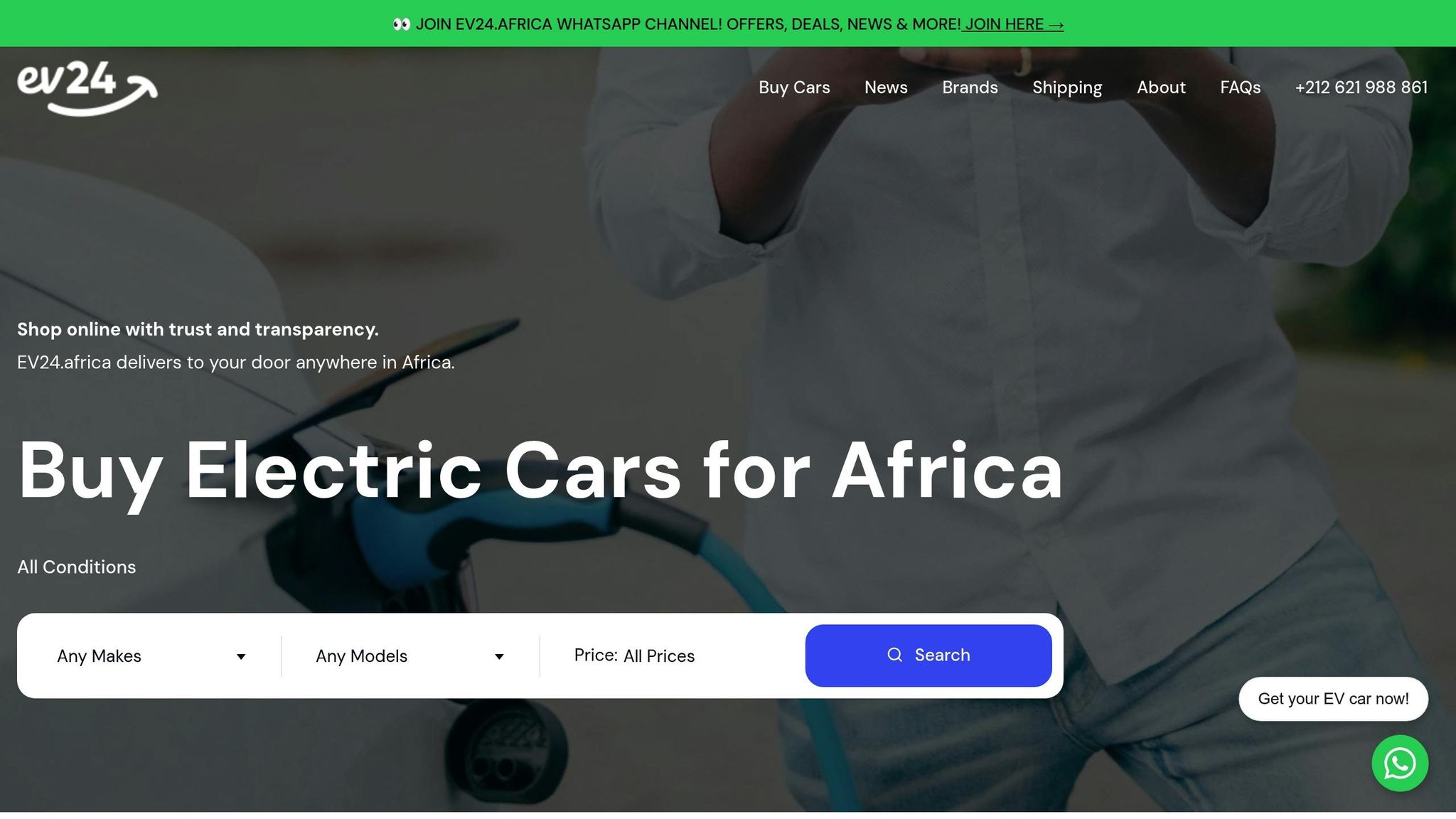
As electric vehicles (EVs) gain traction, EV24.africa provides a streamlined way for South African buyers to explore and purchase EVs. Acting as a bridge between local buyers and top global suppliers, the platform features a wide range of brands, including Tesla, BYD, Leapmotor, Changan, Peugeot, Fiat, Dongfeng, Geely, Nio, XPeng, Volkswagen, and Citroën. Whether you’re in the market for a compact city car or a light commercial vehicle, EV24.africa offers options like Battery Electric Vehicles (BEVs), Plug-in Hybrid Electric Vehicles (PHEVs), Range-Extended Electric Vehicles (REEVs), and Light Commercial EVs (LCVs). Shoppers can choose between brand-new models or certified pre-owned vehicles.
EV Listings
The platform makes it easy to find the right car with tools that let buyers filter by budget, battery range, charging type, and intended purpose – whether for personal use or business fleets. Each listing provides detailed specifications, including battery capacity, charging speeds, and range estimates tailored for South African conditions. For those specifically looking for local pre-owned vehicles, a certified section is available. Buyers can also stay in the loop through a dedicated WhatsApp channel that shares updates on special offers and new arrivals.
Financing and Delivery
EV24.africa collaborates with financial institutions to provide leasing and loan options for both individuals and businesses. Payments can be made via bank transfer, mobile money, or even cryptocurrency. An Auto Loan Calculator on the platform helps estimate monthly payments based on factors like loan terms, down payments, and interest rates. The total price includes the vehicle cost, import duties, and logistics fees, but buyers are encouraged to request a detailed quote for a clear breakdown of South African taxes.
The platform also simplifies the import process. From shipping and customs clearance to vehicle registration, everything is handled in-house. Buyers can choose between port-to-port delivery (usually through Durban) or a door-to-door service anywhere in South Africa. Delivery typically takes 4 to 8 weeks, and real-time tracking ensures buyers can follow their vehicle’s journey.
Support and Services
Expert support is available throughout the buying process, offering in-depth vehicle details and customer reviews. A dealer rating system, with scores ranging from 2.4 to 4.9 stars, helps buyers identify trustworthy sellers. Additionally, EV ownership in South Africa is notably more affordable, costing around $50–$77 (R900–R1,400) per month – saving approximately $103–$111 (R1,875–R2,025) compared to similar gasoline vehicles. With transparent pricing and user-friendly financing tools, EV24.africa makes it easier for buyers to calculate their long-term savings.
Conclusion
South Africa’s electric vehicle (EV) market has grown from a niche offering luxury imports to a vibrant landscape with options for nearly every budget. The introduction of models like the BYD Dolphin Surf, priced at $18,700 (R339,900), has significantly lowered the entry point, while premium EVs now exceed $55,000 (R1,000,000). Chinese automakers such as BYD, Dayun, Dongfeng, and Geely have been instrumental in making EVs more accessible. As Tadek Szutowicz puts it, "2026 marks the first real era of price compression at the entry level”. These developments highlight a market that is becoming increasingly diverse, supported by both government initiatives and industry efforts.
Charging infrastructure has also kept pace with the growing number of EVs. Home charging installations now range from $660 to $1,375 (R12,000–R25,000) for a complete setup, while public charging networks have expanded considerably. Impressively, 78% of South African EV owners manage to charge their vehicles between load shedding cycles.
Amid these advancements, EV24.africa has emerged as a crucial player in simplifying the EV buying journey. The platform connects South African buyers with global EV suppliers, handling everything from importing and financing to delivery. With transparent pricing that accounts for import duties and logistics, EV24.africa ensures a smoother experience. Whether you’re exploring budget-friendly city cars, feature-rich mid-range SUVs, or high-end premium EVs, the South African market now offers options across all segments, supported by an increasingly reliable charging network. These changes signal a promising future for electric mobility in South Africa.
FAQs
Which EV is best for my daily driving distance?
Choosing the right EV for daily driving in South Africa depends on how far you need to travel and your budget. If you’re covering longer distances, the Volvo EX30 is a great option. It offers an impressive range of about 310 miles (500 km) and supports fast charging, making it perfect for extended commutes.
For shorter trips, the BYD Dolphin is a budget-friendly alternative. With a range of up to 183 miles (295 km) and a starting price of approximately $18,800, it’s a practical and economical choice for everyday use.
How does load shedding affect EV charging at home?
Load shedding in South Africa creates challenges for home EV charging by causing power outages, which can disrupt or entirely prevent charging during those times. To work around this, it’s a good idea to charge your vehicle during hours when power is available. Another option to consider is investing in backup power solutions, like solar panels or battery storage, to ensure you can charge your EV even during outages.
What taxes and fees are included when importing an EV?
Importing an EV to South Africa comes with several added costs. There’s a 25% import duty on the vehicle’s value, along with a 14% VAT. For high-end vehicles, you might also face luxury taxes that can go up to 30%. These charges can make a big difference in the overall cost, so it’s crucial to factor them into your budget when considering an EV purchase.