
 Thabo Nkosi
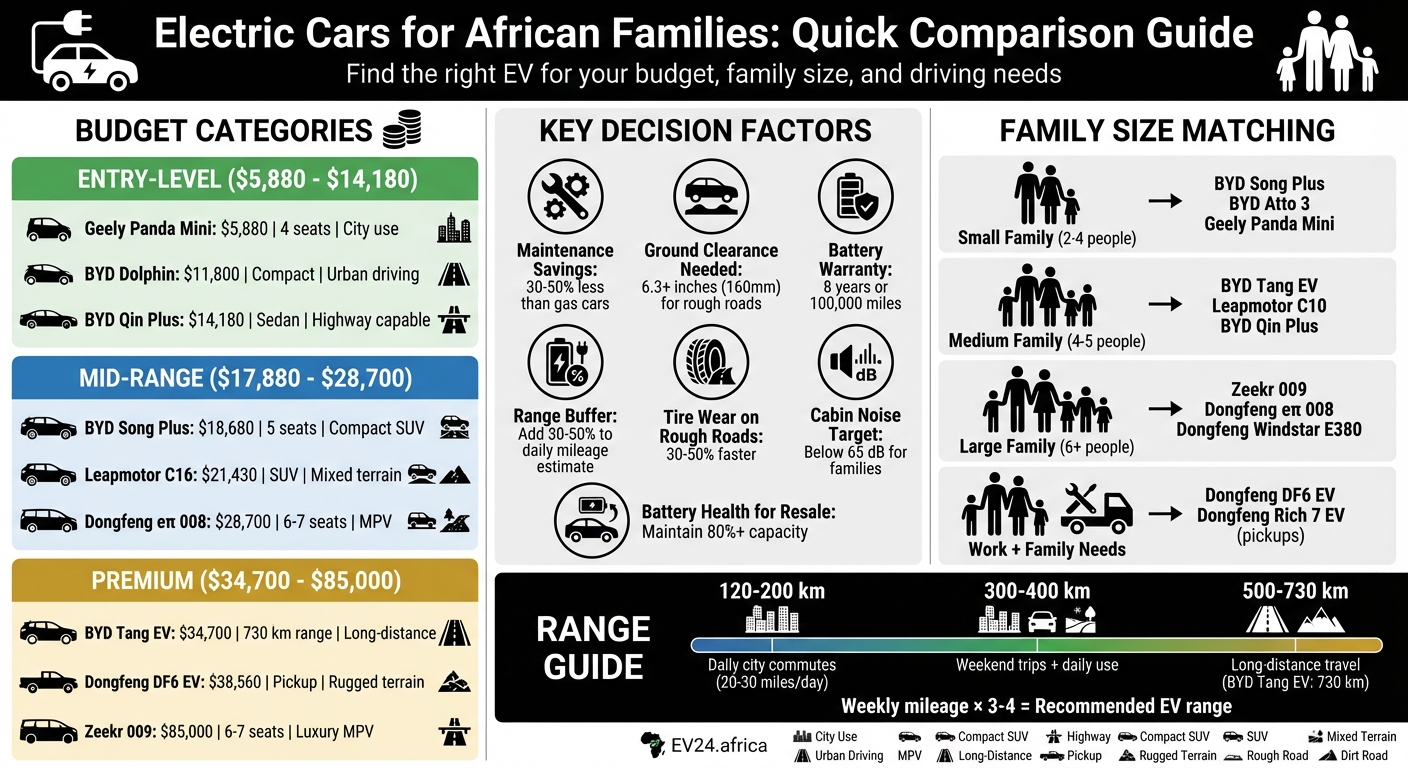
Electric vehicles (EVs) are becoming a practical choice for families across Africa, offering options that cater to various budgets, driving needs, and road conditions. From compact city cars like the Geely Panda Mini ($5,880) to long-range SUVs like the BYD Tang EV (730 km range, $34,700), families now have access to affordable, durable, and efficient EVs. Key considerations include:
- Budget: Prices range from $5,880 for entry-level models to $85,000 for premium options. Financing plans and government incentives can help reduce costs.
- Family Size: Compact SUVs like the BYD Song Plus ($18,680) suit small families, while MPVs like the Zeekr 009 ($85,000) accommodate larger groups.
- Road Conditions: SUVs and pickups with high ground clearance handle Africa’s mixed terrains better than sedans or hatchbacks.
- Energy Needs: Home charging, solar setups, and public fast chargers are essential for reliable EV use, especially in areas with inconsistent electricity.
- Maintenance: EVs typically cost 30–50% less to maintain than gas-powered cars, with warranties covering major components like batteries.
Platforms like EV24.africa simplify the buying process, offering transparent pricing, delivery to all African countries, and support for local registration. With careful planning – considering range, seating, and charging infrastructure – families can confidently choose an EV that suits their lifestyle and driving patterns.
Electric Vehicle Comparison Guide for African Families by Budget and Range
Family Needs and Daily Usage
Seating and Space
Think about your family size and space needs. For a family of four, you’ll want a car with ISOFIX/LATCH points for child seats and enough trunk space for daily essentials. A compact SUV like the BYD Song Plus (priced at $18,680) offers five seats and a practical trunk, making it a solid choice. Larger families, with six or more members, should consider MPVs such as the Zeekr 009 ($85,000) or the Dongfeng eπ 008 ($28,700). These vehicles provide seating for 6–7 passengers along with expanded cargo areas, perfect for weekend trips or hauling extra luggage.
Cargo flexibility is key for day-to-day practicality. Look for rear seats that fold flat or split 60/40, giving you the option to carry both passengers and bulky items like sports equipment or groceries. If your family frequently travels between cities, roof rails can be a lifesaver for additional storage. On a budget? The Geely Panda Mini (just $5,880) is great for quick school drop-offs in crowded urban areas, but keep in mind it has limited space – only four seats and a small trunk.
Once you’ve considered seating and storage, think about your driving habits to match the vehicle’s range to your needs.
Driving Patterns
Match your car’s range to your weekly mileage. For short daily drives – like school runs, errands, or commutes – covering 20–30 miles, a car with a range of 120–200 km should work just fine. A compact EV like the Geely Panda fits this bill. But if your family enjoys weekend getaways or visits relatives in rural areas, you’ll need a longer range – something in the 400–500 km range. The BYD Tang EV ($34,700) offers an impressive 730 km range, making it ideal for longer road trips or countryside drives.
Think about the terrain you drive on, too. If your routes include unpaved village roads, farm visits, or rough terrain, steer clear of low-slung sedans. Instead, opt for vehicles like the Dongfeng DF6 EV ($38,560). This electric pickup combines a five-seat cabin with an open cargo bed, making it versatile enough for both family outings and hauling heavy loads over uneven surfaces.
Road and Climate Conditions
Consider the road conditions and climate challenges where you live. Many African roads are riddled with potholes, speed bumps, and gravel. For these conditions, you’ll want a vehicle with at least 6.3 inches (160 mm) of ground clearance. The BYD Atto 3, with its 6.9 inches (175 mm) of clearance and reinforced suspension, is a great choice for handling mixed road conditions. Keep in mind that rough roads can wear tires out faster – by as much as 30–50%. Models like the Geely Geometry C, which includes off-road driving modes, can help ensure durability and keep your family safe.
In hot climates, prioritize vehicles with strong air conditioning and battery cooling systems. These features are crucial for maintaining performance in high temperatures. For areas prone to heavy rains or flooding, look for cars with good wading depth, traction control, and anti-lock brakes. Vehicles with higher ground clearance are better equipped to handle standing water and muddy roads than low-clearance city cars.
Budget and Total Cost of Ownership
Purchase Price and Financing
When planning your budget, remember that the sticker price is just the beginning. You’ll also need to account for shipping, customs, and registration fees. To avoid surprises, request a detailed quote that includes every fee. Platforms like EV24.africa make this easier by offering clear pricing and installment plans, ensuring you know exactly what you’re paying for.
Electric vehicles (EVs) come in a range of options to suit different family needs – entry-level models, mid-range choices, and premium options. If you’re considering a used EV to save money, make sure to check the battery’s health and see if any warranty coverage remains.
Flexible payment options are another key consideration. EV24.africa provides various financing plans, so you can find one that fits your budget. Just be sure to review the terms carefully to balance affordable monthly payments with the overall cost. Once that’s sorted, it’s time to estimate recurring expenses to build a complete ownership budget.
Electricity and Maintenance Costs
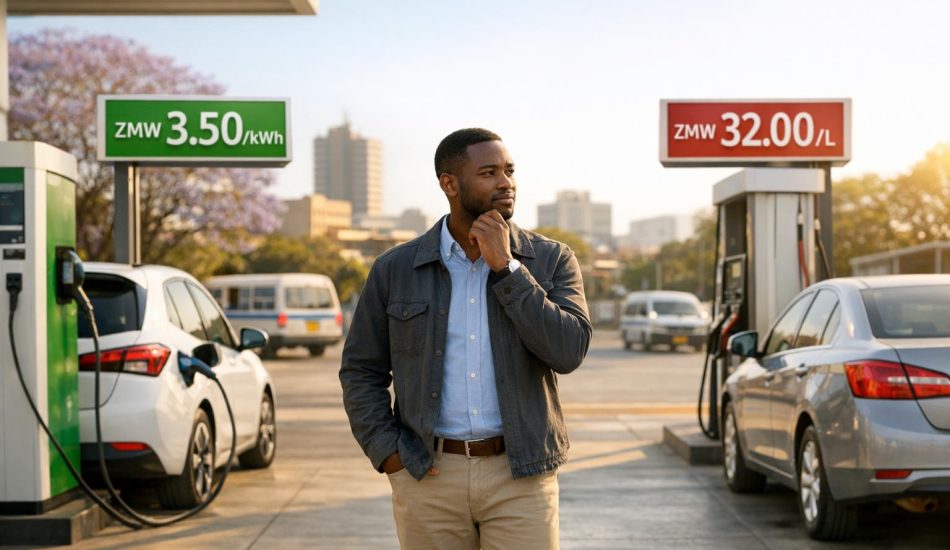
Charging an EV at home is typically much cheaper than filling up a gas tank. However, the exact savings depend on your local electricity rates. Beyond fuel savings, EVs generally cost less to maintain compared to traditional vehicles. While you’ll still need to handle routine tasks like tire rotations, cabin air filter replacements, and brake fluid checks, annual maintenance costs are usually 30–50% lower for EVs.
Most EVs also come with a battery warranty that covers around 8 years or 100,000 miles, offering peace of mind during the car’s most active years. This warranty can be a financial lifesaver if any major issues arise. And don’t forget to factor in any government benefits, which we’ll cover next.
Government Incentives and Tax Breaks
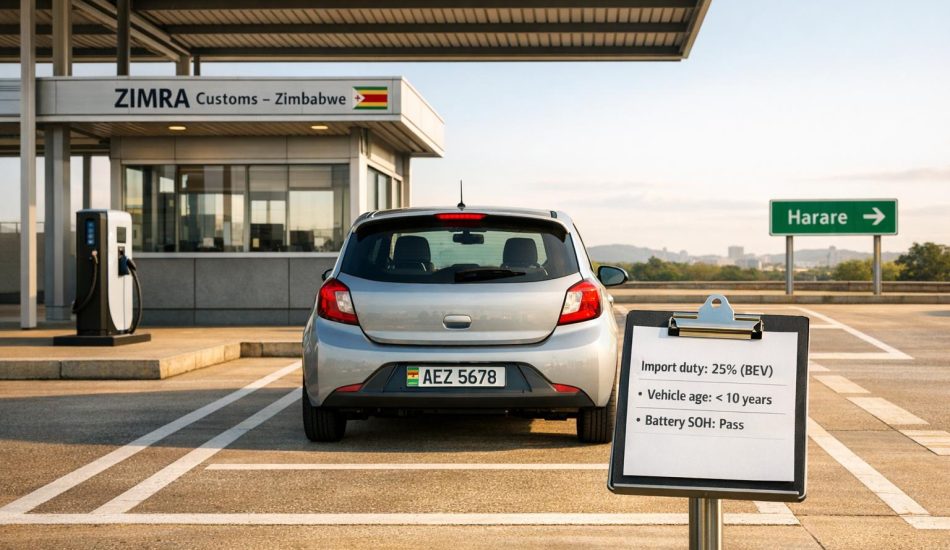
Look into local incentives that could lower your costs, such as reduced import duties or VAT exemptions. These benefits vary significantly across African markets, so it’s crucial to confirm what’s available in your specific region before making a final decision.
Using a platform like EV24.africa can simplify the process. They provide end-to-end support, handling everything from customs clearance to local registration. This not only saves you time but also ensures you take full advantage of any incentives you’re eligible for.
Charging and Range Requirements
Home and Public Charging
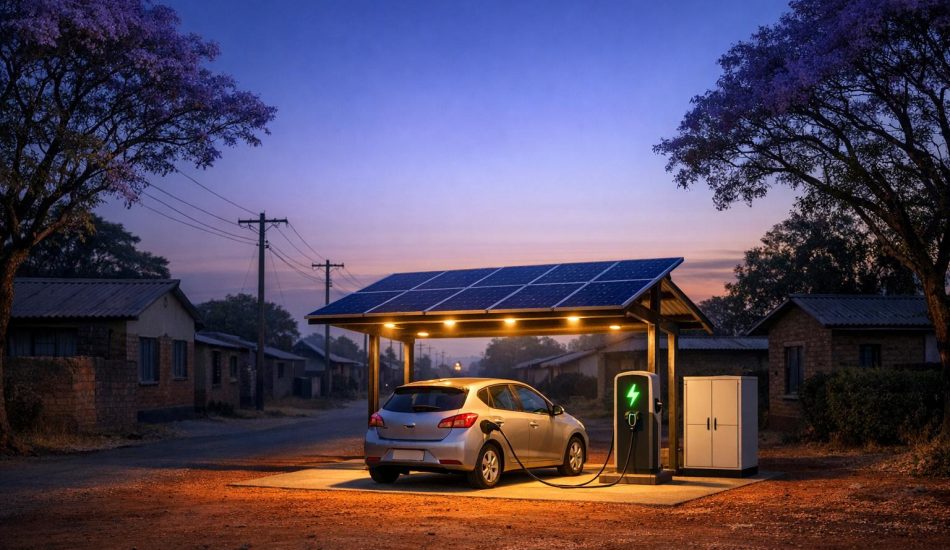
If you have a stable home power supply, a standard home charger can easily meet most daily driving needs. Charging your EV overnight typically provides enough power for commutes of around 50–80 miles (80–130 km). However, for families living in areas with frequent power outages, combining your home charger with a solar panel and battery system can keep your EV ready to go, even during blackouts. The size of the solar setup you’ll need depends on your driving habits and the amount of sunlight in your area, but even a modest system can handle daily charging demands. This setup isn’t just about convenience – it also plays a big role in managing the overall cost of owning and operating an EV.
Public charging infrastructure varies significantly across African cities. Before purchasing an EV, take time to locate fast chargers near you – these are often found at shopping malls, office parks, or some fuel stations. Check both the type of plugs and the charging speed; for example, a 50 kW DC fast charger will recharge your vehicle much faster than a standard AC unit. Compatibility is key, so ensure the plugs match your EV. If you’re planning highway trips between cities, map out charging stations along your route and verify their functionality using apps or by contacting the locations directly.
Range and Travel Needs
Once your charging setup is sorted, it’s important to match your EV’s range to your typical travel patterns. Start by estimating your weekly mileage. For example, if your family drives about 35 km on weekdays and 60 km on weekends, that adds up to roughly 235 km per week, or an average of 30–50 km per day. Keep in mind that factors like using air conditioning or heating, heavy traffic, and carrying passengers can reduce your EV’s range. To account for these, add a 30–50% buffer to your daily range estimate. So, if your average daily distance is 50 km, look for an EV with at least 75 km of range per day.
Experts often suggest choosing an EV with a real-world range that’s 3–4 times your daily average if you have access to reliable home or workplace charging. This way, you only need to charge every few days instead of every night, making your routine less stressful. For those living in hot climates or highly congested urban areas, it’s wise to aim for an even larger range buffer. Stop-and-go traffic and full passenger loads can drain an EV’s battery much faster than steady highway driving.
Long-Distance and Remote Area Travel
While daily charging covers routine trips, long-distance travel requires extra planning. Start long trips with a full charge and avoid letting your battery drop below 10–15%, especially in areas with limited charging options. Plan your route in advance, pinpointing charging stations and backup options. If real-time charger data isn’t available, confirm their functionality by contacting your destination ahead of time. Be prepared to add extra time to your schedule, as charging from standard wall outlets in rural areas can take hours.
For remote travel, portable charging equipment is a must. A mobile EVSE (Electric Vehicle Supply Equipment) that works with household outlets gives you flexibility, and having adapters for different outlet types expands your options. In areas where guesthouses rely on solar or generators, a charger with adjustable current limits can help you charge slowly without overwhelming their system. Pack a durable extension cord and basic safety gear, like gloves and cable locks, since rural charging setups are often improvised rather than purpose-built.
When purchasing an EV through platforms like EV24.africa, ask about available charging support, solar setup options, and examples of how other families manage long trips. These preparations ensure that your EV is reliable for everything from daily commutes to extended road trips with your family.
Vehicle Features and Performance
Body Style Options
Choosing the right body style depends on how much space you need for passengers and cargo. If you’re looking for flexibility, SUVs and crossovers like the BYD Atto 3, BYD Song Plus, and Leapmotor C10 are solid options. They offer spacious seating, higher ground clearance for rough roads, and enough room for your gear. For bigger families, MPVs like the Zeekr 009 and Dongfeng Fengon Windstar E380 provide seating for 6 to 7+ people, making them ideal for larger groups. On the other hand, electric pickups such as the Dongfeng DF6 EV ($38,560) and Dongfeng Rich 7 EV ($41,700) combine family-friendly 4-door crew cab designs with the toughness needed for rougher terrains.
For smaller families or as a second city car, hatchbacks and compact cars are worth considering. Budget-friendly options like the BYD Dolphin ($11,800) and Geely Panda Mini ($5,880) are great for urban driving on smooth, paved roads. Meanwhile, sedans like the BYD Qin Plus ($14,180–$17,880) and Geely Emgrand EV offer a comfortable ride and decent range for highway travel, but they might not be the best fit for families who frequently encounter bumpy or unpaved roads.
Once you’ve narrowed down your options, it’s essential to evaluate how well each vehicle can handle Africa’s tougher road conditions.
Durability and Ground Clearance
Ground clearance plays a huge role in protecting your EV’s battery pack, especially when you’re dealing with potholes, speed bumps, or gravel roads. Sedans generally provide 4.7–5.9 inches (120–150 mm) of clearance, making them more suited for smooth, paved surfaces. If you need something more rugged, SUVs and pickups are the way to go. Models like the BYD Tang EV ($34,700) and Leapmotor C16 ($21,430) are built to handle uneven terrain, while the Dongfeng DF6 EV pickup offers even more durability for families living in rural or semi-urban areas.
For those on a tighter budget but still needing a bit more clearance than a mini-EV offers, the Geely Panda Knight ($7,400) stands out as an affordable, tough option with a sturdy design.
Interior and Technology
The design of a vehicle’s interior can make or break its usability for family life. Prioritize features that enhance comfort and safety. Rear AC vents are a must for keeping back-seat passengers cool in hot climates, and having at least 4 USB ports ensures everyone can charge their devices during long drives. Infotainment systems should sync easily with your smartphone, and practical features like parking sensors or rear cameras are invaluable for navigating busy city streets or tight parking spaces.
Driver-assistance features like adaptive cruise control can make long trips less tiring, while flexible seating arrangements allow you to adjust for more passengers or extra cargo. All the electric vehicles listed on EV24.africa come with automatic transmissions, making them easier to drive for everyone in the family. When comparing models, focus on the features that meet your family’s specific needs and skip paying for extras you won’t use.
sbb-itb-99e19e3
Service, Support, and Resale Value
Local Maintenance and Support
While EVs are known for their durability and advanced features, ensuring reliable local maintenance is key to keeping your vehicle safe and functional for years to come. Before buying, check if certified EV service centers are located within 50 to 150 miles of your home. Ask dealers about their experience with EV repairs, how many EVs they service regularly, and whether their technicians are trained to handle high-voltage systems. It’s also worth inquiring about repair times for common issues like inverter faults or charger malfunctions, as well as the availability of essential parts like battery modules, brake pads, suspension components, and cabin filters.
Another important feature to look for is whether the EV supports over-the-air (OTA) software updates and remote diagnostics. These capabilities can help resolve software bugs and optimize performance, especially for long drives or challenging weather conditions.
By addressing these service factors, you’ll not only ensure smooth day-to-day operation but also help maintain your EV’s value over time, which brings us to resale considerations.
Resale Value and Future Upgrades
As mentioned earlier in the budgeting discussion, maintaining your EV’s resale value can significantly lower its overall cost of ownership. Proper care, especially of the battery, plays a huge role here. Avoid overusing fast chargers and fully draining the battery too often, as vehicles with at least 80% battery capacity after several years tend to fetch better resale prices. Additionally, a strong brand reputation and easy access to parts and service can further reinforce the vehicle’s value.
To get a sense of potential resale value, compare prices for similar used models in your area through local classifieds or platforms like EV24.africa. You can also consult dealers and financial institutions for advice on which EVs are more likely to retain their worth, particularly those still covered by transferable warranties.
Planning for an upgrade? EV24.africa makes it easier by offering a wide selection of new and used EVs from trusted brands. The platform provides detailed insights into each vehicle’s battery health, mileage, and overall condition, helping buyers and sellers agree on fair prices. Tools like saved searches and price alerts can also help you keep track of depreciation trends and make informed decisions when it’s time to upgrade.
Before finalizing a purchase, it’s essential to ensure the buying platform is reliable and offers strong support services, which leads us to the next point.
Trusted Buying Platforms
When purchasing an EV, trust is critical. EV24.africa takes the stress out of the process by verifying every listing. They check seller identities, vehicle documentation (including VIN or chassis numbers), and ensure transparent pricing that includes all fees and duties. This attention to detail ensures a smooth buying experience and dependable after-sales support.
For families thinking about cross-border purchases, it’s important to ask about total landed costs, delivery timelines, insurance during transit, and the level of after-sales support available once the vehicle arrives. EV24.africa benefits from the expertise of its sister platform, AUTO24.africa, which has earned a reputation for reliable warranty programs and efficient logistics in countries like Morocco, Senegal, Côte d’Ivoire, Rwanda, and South Africa. This experience strengthens EV24.africa’s ability to provide top-notch service to its customers.
Test Drive and Final Purchase
Pre-Purchase Inspections
Before committing to a used EV, take the time to thoroughly inspect it. Start by checking the battery health – it should be at least 80%. Review the mileage and service records to confirm authenticity and look for details about suspension upgrades, thermal management system maintenance, and software updates. For family-focused models like the Hyundai Kona EV or Geely Geometry C, which are listed on EV24.africa, ensure the service history includes any off-grid charging modifications and proof of genuine parts used in high-voltage component repairs.
Make sure the seller’s identity is verified and that all documentation is complete and accurate. If you’re buying across borders, confirm the total landed cost, delivery timeline, and insurance coverage during transit. These steps ensure you’re making a well-informed decision and pave the way for a meaningful family test drive.
Family Test Drives
A family test drive is essential. Spend 30–60 minutes with everyone on board to get a real sense of how the EV performs in everyday scenarios. Test it on uneven roads and in high temperatures to evaluate handling and comfort. Pay attention to cabin noise – aim for levels below 65 dB, especially if you have young kids. Test the ISOFIX system to ensure child seats can be installed easily and securely. Also, take note of how smooth the acceleration feels and whether regenerative braking is comfortable for passengers, as abrupt stops can be unsettling for children.
Simulate your typical driving patterns. Take the car on school runs through city traffic, weekend trips on rural roads, or longer highway drives. While models like the BYD Atto 3 might offer spacious interiors, only a full-family test drive can confirm whether seating, climate control, and cargo space meet your specific needs.
Final Suitability Check
After inspections and test drives, take a step back to reassess. Does the EV’s range comfortably cover your weekly driving needs with some extra buffer? Are you satisfied with your charging plan? Review your budget, factoring in financing, electricity costs, and any available incentives.
Think about how the EV fits into your family’s future. Will you need more room in a few years? Is the model’s resale value strong in your area? Platforms like EV24.africa, with their transparent pricing and detailed listings, make it easier to compare options. Once you’re confident that the EV aligns with your daily routine, long-term goals, and budget, you’ll be ready to finalize your purchase with peace of mind.
BYD Dolphin Review: Is This SA’s Best Value EV?
Conclusion
Choosing the right electric vehicle (EV) for your family in Africa is all about balancing your practical needs with the realities of your local environment. Think about your daily driving habits, how much seating you need, and the types of roads you’ll be navigating. Whether you’re looking for a car to handle short commutes or longer trips between cities, make sure the EV you choose has the range to match. And don’t forget: the cost of owning an EV goes beyond the price tag. Be sure to factor in electricity expenses, potential savings on maintenance, financing options, and any government incentives available in your country.
Beyond these key considerations, reliable access to charging is essential – whether at home or through public stations. It’s also wise to opt for EV models with dependable service networks in your area. Platforms like EV24.africa make the process much easier by offering transparent pricing in USD, delivery to all 54 African countries, and a range of options from budget-friendly models to family SUVs and high-end vehicles.
"At EV24.africa, we simplify the process of importing and buying electric vehicles in Africa. Our expertise ensures a seamless, transparent, and stress-free experience." – EV24.africa
With these tools and insights, you can approach your purchase with confidence. Take the time to arrange pre-purchase inspections, schedule test drives that involve the whole family, and assess whether the vehicle will meet your needs in the long run. Don’t hesitate to use expert resources – like WhatsApp consultations – for personalized, market-specific guidance. With careful planning, you’ll find an EV that fits your family’s lifestyle now and into the future.
FAQs
What should families in Africa consider when buying an electric car?
When selecting an electric car for your family in Africa, there are several important aspects to keep in mind. Start with the battery range – make sure it’s sufficient for your daily travel requirements. Next, think about seating capacity to ensure everyone in your family can ride comfortably. Affordability is another crucial factor, so explore financing options that align with your budget.
You’ll also want to consider the availability of charging stations in your area, as this can greatly impact convenience. Check the car’s durability, especially in terms of how well it can handle local roads and weather conditions. Prioritize safety features to protect your loved ones. Finally, confirm that local service centers and spare parts are readily accessible to keep your car in good condition over the long run.
What can families do to charge their electric vehicles reliably in areas with unstable electricity?
Families living in areas with unreliable electricity can take practical measures to keep their electric vehicles (EVs) charged and ready to go. One smart option is installing a solar-powered home charging station. This setup not only provides a renewable energy source but also reduces reliance on the grid. For added peace of mind, portable or backup batteries can be a lifesaver during power outages, ensuring you’re never left stranded.
Another tip is to opt for EVs with larger or more efficient batteries. These vehicles can go longer distances on a single charge, meaning fewer trips to the charger. Timing your charging sessions during off-peak hours, when the electricity supply tends to be more stable, is another way to improve reliability. By following these strategies, you can keep your EV ready for family adventures, even in areas where power supply can be unpredictable.
What government incentives are available for electric car buyers in Africa?
Government incentives for electric vehicle (EV) buyers across Africa differ from one country to another, but they often include tax reductions, import duty waivers, subsidies, and discounted registration fees. These measures are designed to lower the cost of EVs, making them a more viable option for individuals and families.
If you’re thinking about buying an electric car, take some time to explore the policies in your country. This way, you can make the most of the benefits available to you.