
 Thabo Nkosi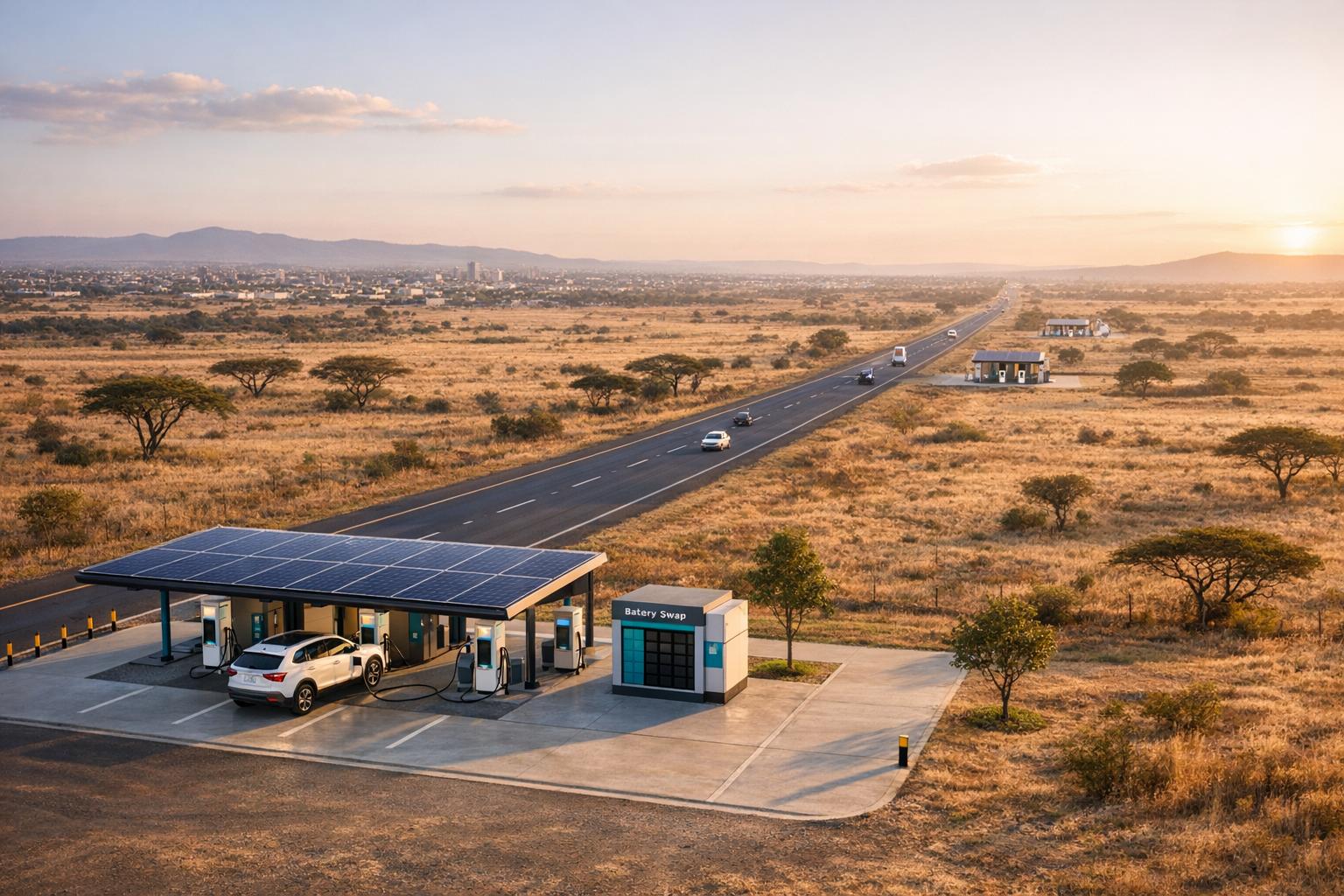
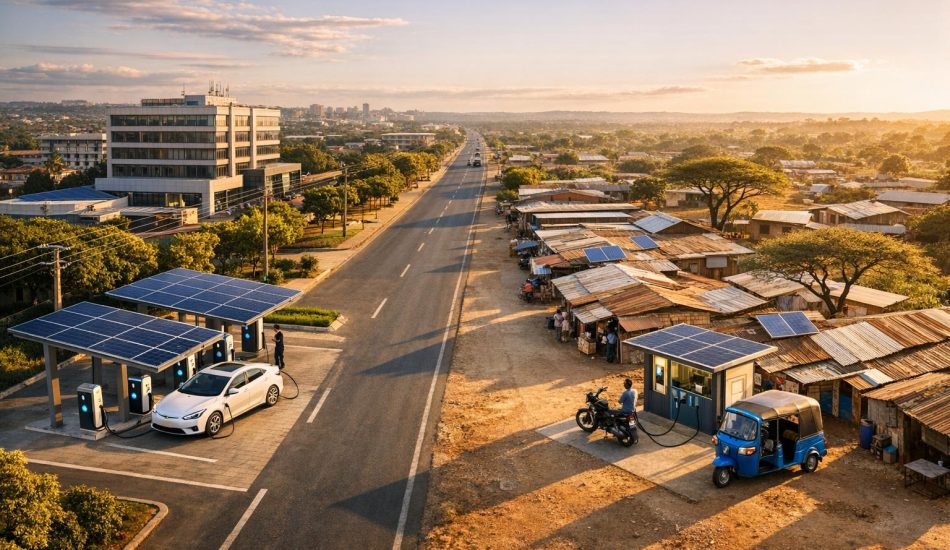
Africa’s electric vehicle (EV) charging network is expanding, but it remains uneven. Here’s a quick snapshot:
- South Africa: Leads with 300+ public stations, supported by projects like the "Electric Highway."
- Rwanda: Focuses on e-motorcycles with ~200 stations, 165 tailored for bikes.
- Kenya: Rapid growth with ~50 stations in major cities and plans for 1,000 by 2027.
- Egypt: Cairo has ~150 stations, with more planned nationwide.
- Nigeria & Morocco: Gradually developing urban and highway networks.
Challenges include limited rural coverage, grid instability, and compatibility issues. Off-grid solar stations and battery swapping are emerging as practical solutions, especially for motorcycles. Tools like EV24.africa help drivers locate chargers and plan routes efficiently. While progress is steady, reliable infrastructure and government support are key to accelerating EV adoption across Africa.
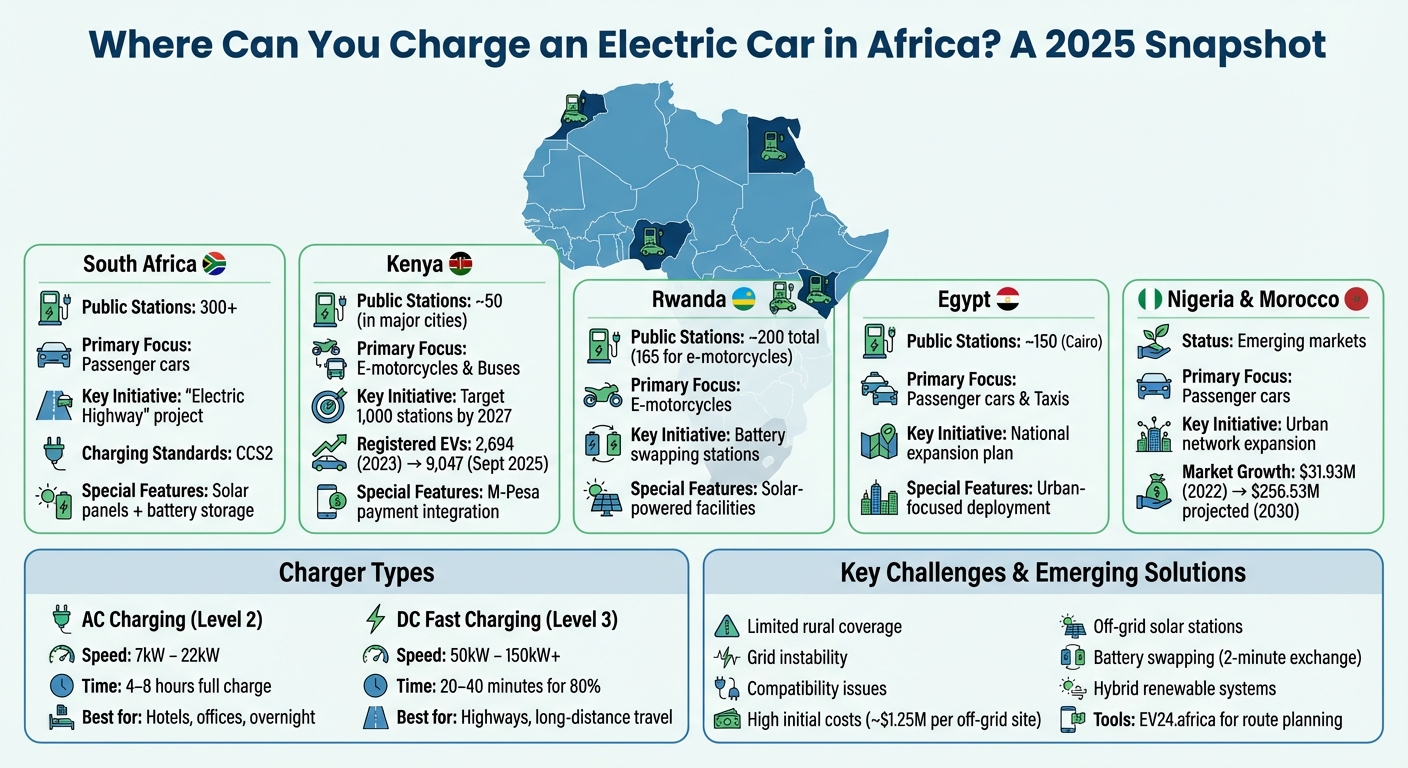
EV Charging Infrastructure Across Major African Countries 2025
We visit South Africa’s first completely off-grid EV charging station
sbb-itb-99e19e3
Major EV Charging Networks in Africa
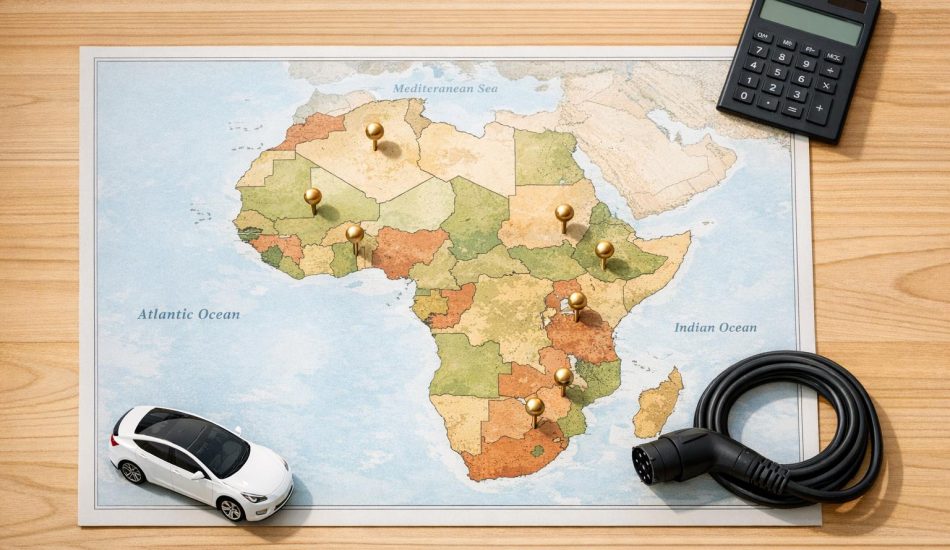
Africa’s electric vehicle (EV) charging infrastructure is growing, but the development is uneven. Countries like South Africa, Kenya, and Egypt have made strides in building practical networks, while markets such as Nigeria and Morocco are gradually expanding their coverage in urban areas and along major transport routes.
South Africa’s Expanding Charging Network
South Africa leads the continent with the most developed EV charging network, boasting over 300 public stations located along key highways and in major metropolitan areas. This network supports intercity travel and is a cornerstone of the "Electric Highway" project, which links South Africa’s major cities. The infrastructure primarily caters to passenger vehicles and uses the CCS2 charging standard.
The network includes a mix of AC chargers (7 kW–22 kW) for slower, destination-based charging at locations like hotels and shopping centers, and DC fast chargers (50 kW–150 kW+) positioned along highways to enable quicker recharges during long trips. Many stations incorporate solar panels and battery storage to address challenges posed by unreliable power grids.
Kenya’s Rapid Growth in EV Charging
Kenya’s EV charging network is expanding quickly in key cities such as Nairobi, Mombasa, Kisumu, and Nakuru. The number of registered EVs in the country surged from 2,694 in 2023 to 9,047 by September 2025. To support this growth, Kenya Power has committed $1.9 million (258 million Kenyan shillings) to install 45 new charging stations over the next three years. The government has also set ambitious goals to establish 1,000 charging stations by 2027 and 10,000 by 2030.
One standout feature of Kenya’s network is its seamless payment integration, with M-Pesa widely accepted at charging stations. Additionally, the Energy and Petroleum Regulatory Authority has introduced special e-mobility tariffs, with rates of approximately $0.12 per kWh during peak hours and $0.058 per kWh during off-peak hours. This pricing structure encourages drivers to charge their vehicles at night, offering significant savings. Companies like Nairobi-based BasiGo are also contributing by developing 16 electric bus charging depots along major routes to support the electrification of public transit.
Charging Networks in Nigeria, Egypt, and Morocco
Egypt has focused its efforts on Cairo, which serves as the country’s main EV hub. The city currently has around 150 public charging stations, and the government is pursuing a national plan to install thousands more chargers to promote electric mobility. These stations primarily serve passenger vehicles and taxis in urban areas.
Meanwhile, Nigeria and Morocco are emerging as key players in Africa’s EV landscape. Both countries are seeing steady investment from public and private sectors to expand charging networks in urban centers and along transport corridors. The broader African EV charging market reflects this momentum, with its value growing from $31.93 million in 2022 to a projected $256.53 million by 2030.
| Location | Total Public Stations | Primary Vehicle Focus | Key Initiative |
|---|---|---|---|
| South Africa | 300+ | Passenger cars | "Electric Highway" connecting major cities |
| Kenya | ~50 in key hubs | E-motorcycles, Buses | Electric bus fleet programs and rapid growth |
| Cairo, Egypt | ~150 | Passenger cars, Taxis | National plan for thousands of chargers |
| Nigeria & Morocco | Emerging | Passenger cars | Expanding networks in urban areas |
Charging Solutions for Areas with Limited Grid Access
Off-Grid Solar Charging Stations
Solar-powered charging stations, equipped with photovoltaic panels, are becoming a lifeline in areas where grid access is unreliable or nonexistent. These stations often operate as hybrid systems, prioritizing solar power whenever it’s available and storing energy for later use.
Over the past decade, the cost of solar PV systems and batteries has dropped by about 90%, fueling a wave of exciting projects across Africa. For example:
- South Africa: Zero Carbon Charge is setting up 120 fully off-grid charging stations in remote areas by September 2025.
- Nigeria: MAX introduced West Africa’s first solar-powered EV battery swap station in 2025, featuring advanced solar and battery technologies.
- Kenya: Ampersand and CrossBoundary Energy piloted a 37 kWp solar system in September 2024, supporting 36 chargers and 150 batteries. Spiro, in partnership with the Catholic Church, is expanding solar-powered battery swap stations across the country by September 2025.
- Rwanda: Kabisa launched the "Kabisa EV House" in Kigali in 2025, a solar-powered facility dedicated to EV charging.
In addition to these advancements, battery swapping is proving to be a game-changer for electric motorcycles in areas with unstable grids, offering a quick and efficient alternative to lengthy charging times.
Battery Swapping and Hybrid Renewable Energy Systems
Battery swapping is particularly effective for electric motorcycles in East and West Africa, where power grid reliability can be a challenge. This system allows riders to exchange a drained battery for a fully charged one in under two minutes, avoiding the typical 6–8 hour charging wait. For commercial drivers, this rapid process minimizes downtime and boosts productivity. Plus, the environmental impact is significant – electric motorcycles powered by renewable energy produce 98% fewer emissions than their gas-powered counterparts.
In Uganda, the startup Zembo is leading the way with 27 battery-swap stations: 20 connected to the grid, 3 solar-hybrid, and 4 fully off-grid. The company plans to expand to 60 stations, adding 20 hybrid and 10 off-grid locations to link key urban routes. Zembo‘s model also supports drivers financially – those using their electric motorcycles can earn up to $7 more per week, a 50% income boost compared to traditional motorcycle taxi drivers. Additionally, the high cost of EV batteries (up to $1,000) makes battery-as-a-service leasing an affordable and practical alternative.
Rwanda is also embracing this approach. In March 2024, the government partnered with the United Nations Development Programme to convert gas-powered motorcycles to electric ones. By utilizing battery swapping stations, the initiative addresses power supply challenges while accelerating the transition to cleaner transportation solutions.
How to Plan Your EV Charging Route in Africa
Tools to Find Charging Stations
Making sure you find a working charger before your battery runs low is key. One of the best tools for this is EV24.africa, which acts as a one-stop platform for locating charging stations and staying updated on Africa’s growing EV infrastructure. It gives real-time updates on station locations, operational status, and available charger types.
Before hitting the road, double-check the station’s operating hours since not every charger operates around the clock. Also, confirm that the charger is compatible with your vehicle’s plug type. Across Africa, CCS2 is becoming the standard, making cross-border travel easier. If you’re driving through South Africa, it’s a good idea to check loadshedding schedules, as many charging apps now include power outage updates.
By using EV24.africa to monitor charger availability and plan ahead, you can confidently navigate areas where charging options may be limited.
Driving in Areas with Few Charging Options
Traveling through regions with limited charging infrastructure requires extra planning. Break your trip into smaller segments and prioritize stations with solar-powered backups to avoid issues caused by grid instability. DC fast chargers are a game-changer for long trips, delivering up to 80% charge in under an hour, especially along main highways. For overnight stays, look for hotels or resorts that offer "destination charging", so you can fully recharge your EV while you rest.
In places without dedicated charging stations, carrying a standard three-pin wall socket adapter for Level 1 charging can be a lifesaver for overnight top-ups. For riders using two-wheeled EVs in East Africa, battery swapping stations are a quick and practical solution, letting you exchange an empty battery for a fully charged one in just a few minutes.
| Charger Type | Typical Speed | Charging Time | Best For |
|---|---|---|---|
| AC Charging (Level 2) | 7kW – 22kW | 4–8 hours for full charge | Home, office, hotels (overnight) |
| DC Fast Charging (Level 3) | 50kW – 150kW+ | 20–40 minutes for 80% charge | Long-distance travel, quick top-ups |
Conclusion: What’s Next for EV Charging in Africa
The EV charging network in Africa is steadily growing, though plenty of hurdles remain. South Africa now boasts over 300 public charging stations, Kenya is building fast-charging networks tailored for light electric vehicles, and nations like Nigeria, Egypt, and Morocco are expanding their charging infrastructure.
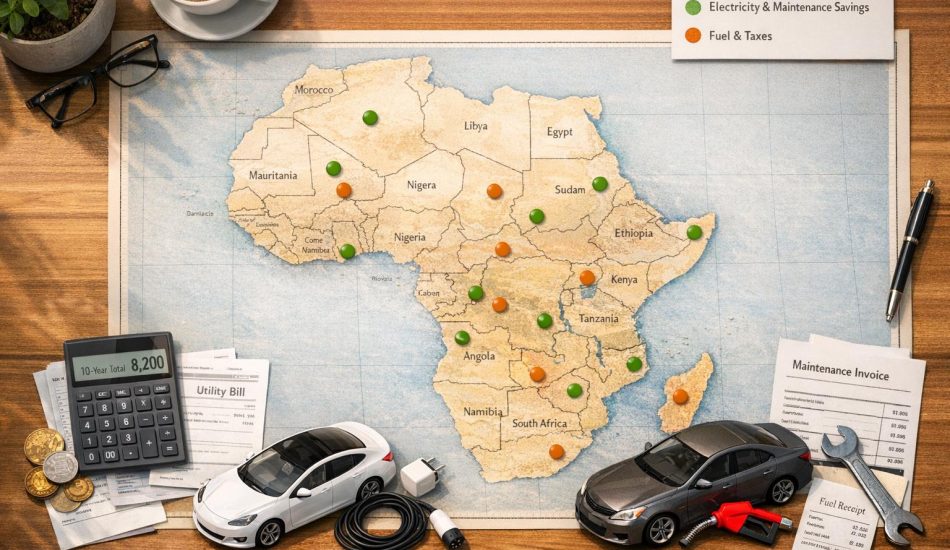
In January 2026, a major milestone was achieved when Zero Carbon Charge successfully powered heavy-duty trucks using solar energy along South Africa’s N3 highway. By June 2026, two commercial stations – spaced roughly 93 miles apart – are expected to be operational. However, challenges like unreliable power grids, steep initial costs (around $1.25 million per off-grid site), and regulatory delays continue to slow progress. In 2025, battery electric vehicles made up just 0.17% of vehicle sales in South Africa. Still, dropping prices for solar panels, batteries, and EVs are speeding up adoption. Research indicates EVs could reach cost competitiveness across 52 African countries before 2040.
"Government doesn’t need to build the network, but it must create the conditions." – Joubert Roux, CHARGE co-founder
South Africa’s introduction of a 150% tax reclaim on EV manufacturing investments starting March 1, 2026, is a step in the right direction. But more is needed – clarity on VAT for electricity sales, renewable energy incentives, and lower import duties could make a big difference. While private companies are ready to build the infrastructure, they rely on governments to clear financial and regulatory barriers. These changes will help EV owners feel more confident navigating the evolving charging landscape.
Tools like EV24.africa are making life easier for EV drivers, offering features to locate chargers, plan routes, and stay updated on new stations. With continued advancements in solar technology, stronger policy support, and growing private investment, EV charging in Africa is becoming increasingly dependable. As the infrastructure improves, platforms like EV24.africa will remain essential for guiding drivers across the continent.
FAQs
What charger plug types does my EV need in Africa?
In Africa, the majority of electric vehicles (EVs) rely on Type 2 or CCS (Combined Charging System) plugs. These are the dominant standards across the continent. To ensure seamless access to charging stations, double-check that your EV supports one of these plug types.
How do I avoid getting stranded when the grid is down or unreliable?
To steer clear of getting stranded, it’s crucial to plan ahead and make the most of available resources. Here are some key strategies to consider:
- Rely on home charging: When the power grid is stable, charging at home can be your most dependable option.
- Use apps to find charging stations: Apps can help you locate reliable charging points, saving time and stress.
- Take advantage of solar-powered stations: If they’re available in your area, solar-powered stations can be a great alternative.
For longer trips, careful route planning is essential. Include backup charging options along your route and stay updated on new infrastructure developments. These steps can help minimize risks, especially in regions where charging options are limited or less reliable.
Is battery swapping a better option than charging for e-motorcycles?
Battery swapping is an excellent solution for e-motorcycles in Africa, providing a quick way to exchange depleted batteries for fully charged ones. This approach significantly cuts down on waiting time and tackles the challenges posed by limited or unreliable charging stations. While traditional charging works efficiently in urban areas with established infrastructure, swapping offers a faster and more convenient alternative for riders who need to get back on the road quickly.