
 Thabo Nkosi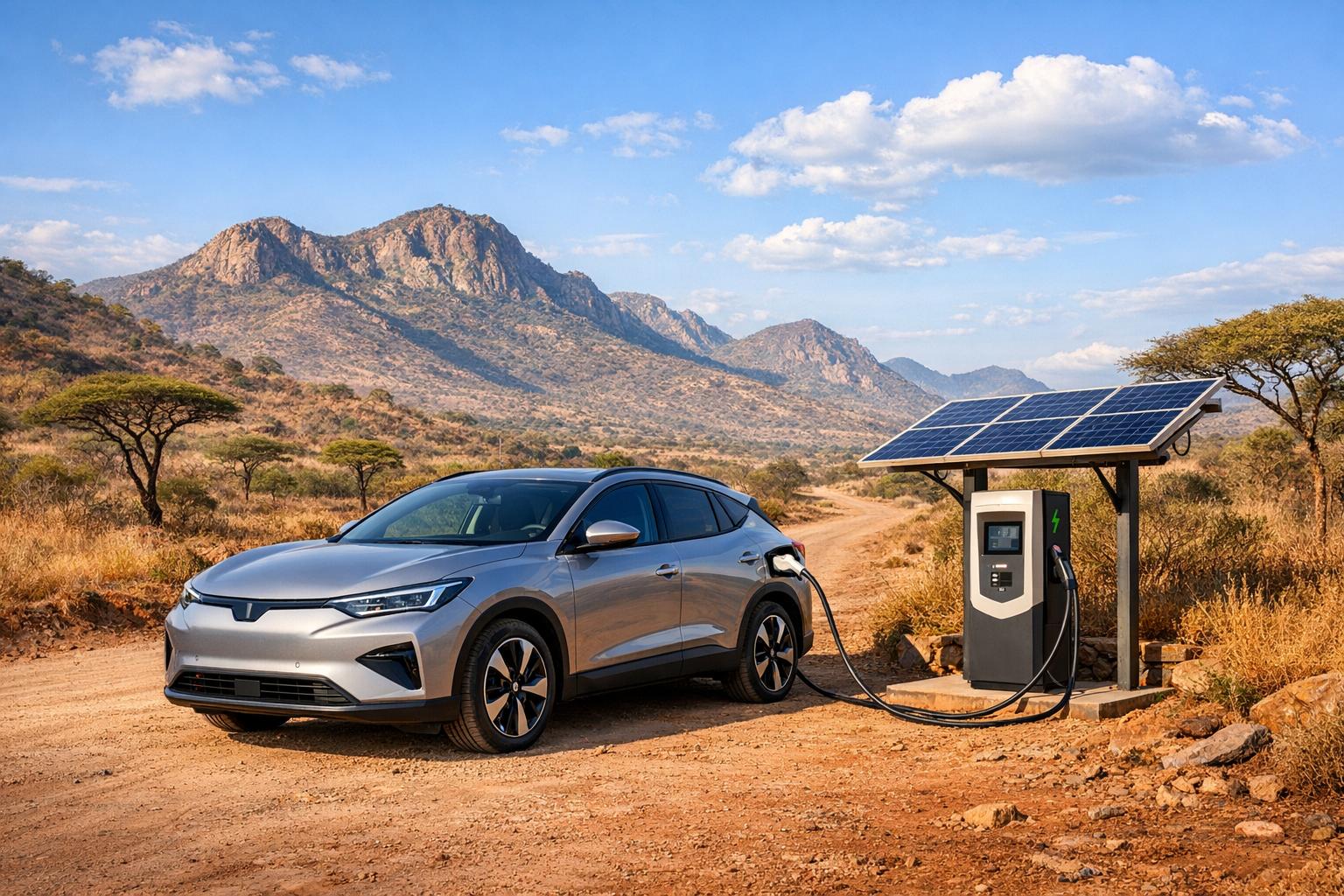
Electric vehicles (EVs) are transforming transportation in Africa. They’re cheaper to run – charging costs 50–70% less than fueling a gas car – and require less maintenance. Countries like Rwanda are eliminating import taxes on EVs, while solar-powered charging solutions are addressing unreliable electricity in rural areas. With over 30,000 EVs on the continent as of May 2025, drivers are saving money and reducing emissions.
Key points for first-time EV drivers in Africa:
- Cost Savings: Driving 100 km in an EV costs as little as $0.62 in Kenya, compared to $6.62 for a gas car.
- Charging: Urban areas have growing infrastructure, while rural drivers rely on solar or home charging.
- Road Conditions: Choose EVs with high ground clearance and heat-tolerant batteries for rough terrain.
- Top Models: BYD Atto 3, Hyundai Kona Electric, and budget-friendly options like Leapmotor T03 are popular picks.
Switching to an EV in Africa is more accessible than ever, thanks to government incentives, affordable models, and expanding charging networks.
We Drove 3,000KM Across South Africa In An Electric Car – Here’s What Happened!
Africa’s EV Charging Infrastructure
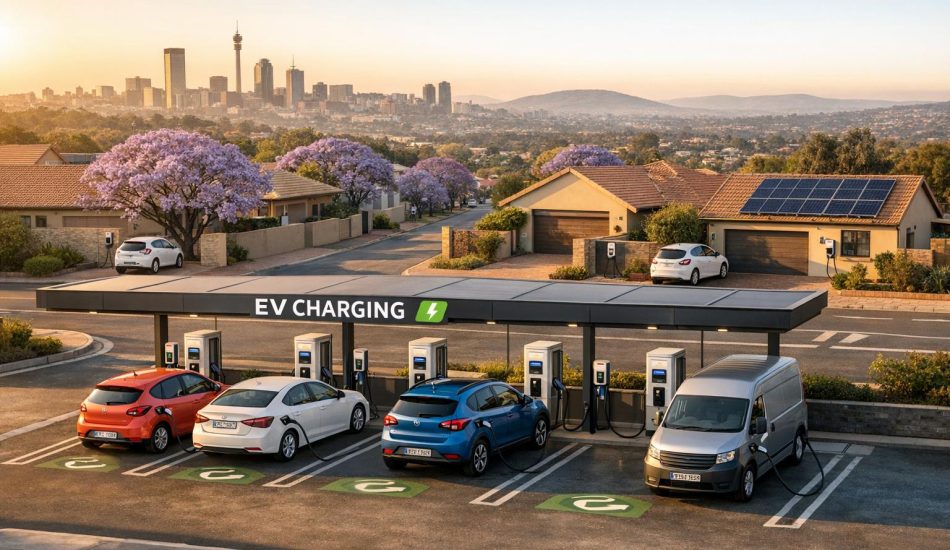
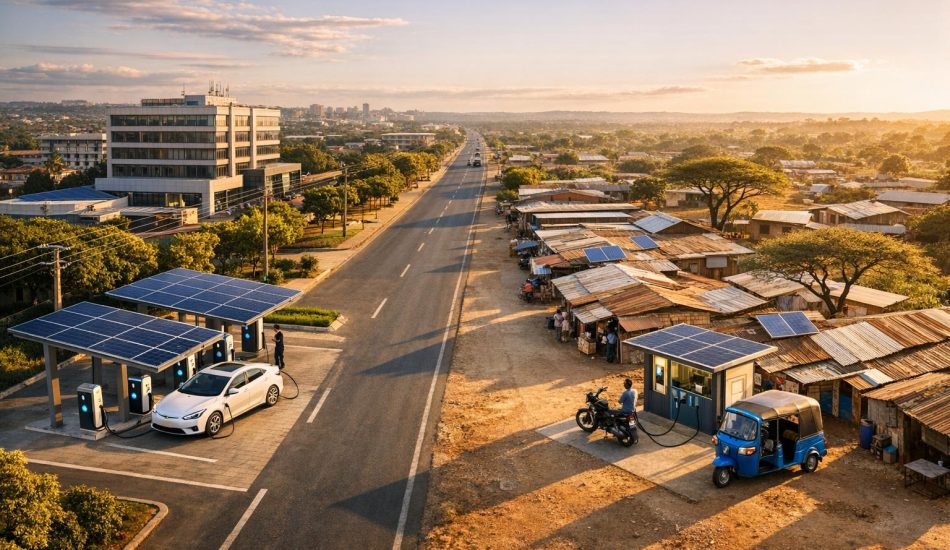
As of May 2025, Africa’s 30,000+ active electric vehicles operate with charging infrastructure that varies significantly by region. East Africa is leading the charge for electric motorcycles and three-wheelers, with countries like Tanzania, Kenya, and Uganda focusing on charging solutions tailored to commercial riders. South Africa stands out for passenger EVs, boasting the continent’s most extensive private vehicle charging networks. Meanwhile, North Africa, especially Egypt, is expanding charging depots for electric buses. This regional diversity calls for customized charging solutions to meet the unique needs of urban and rural areas.
Infrastructure development is primarily geared toward commercial use. Major cities like Cairo, Nairobi, Lagos, and Johannesburg are prioritizing charging stations for e-buses, ride-hailing fleets, and delivery bikes, as these vehicles operate throughout the day and generate enough revenue to justify the investment. In May 2025, BasiGo secured $42 million to deploy 1,000 electric buses across Kenya and Rwanda, with centralized charging hubs at bus depots. For personal EV owners in urban areas, most rely on Level 1 or Level 2 charging at home or work – slower options but sufficient for daily commutes under 62 miles (100 km).
Charging Networks in Major Cities
South Africa leads the way for four-wheel passenger EVs, with a high number of Level 2 home chargers and a growing network of public charging stations. In Kenya, electric two-wheeler drivers benefit from battery-swapping stations, where a depleted battery can be replaced with a fully charged one in under five minutes. Uganda has also made significant investments in its e-mobility ecosystem, spending $160 million between 2018 and 2024 to deploy solar-powered charging kiosks for motorcycle riders.
The cost savings for EVs in Kenya are impressive: driving 62 miles (100 km) costs between $0.62 and $0.92, compared to $6.62 for a gasoline vehicle – a savings of 47% to 83%. However, range anxiety remains a major concern. Roughly 90% of vehicle owners in Nigeria and Kenya cite the fear of running out of charge without access to a station as their top barrier to EV adoption. This concern explains why infrastructure development is concentrated in capital cities and along major commercial routes, while rural areas struggle with limited access.
Charging in Remote and Rural Areas
In rural and remote areas, charging infrastructure is often scarce or entirely absent. Sub-Saharan Africa’s frequent power outages – reflected in a SAIDI of 39.30 compared to just 0.87 in OECD countries – highlight the urgent need for off-grid charging solutions. In 34 surveyed African countries, fewer than half of grid-connected households have reliable electricity.
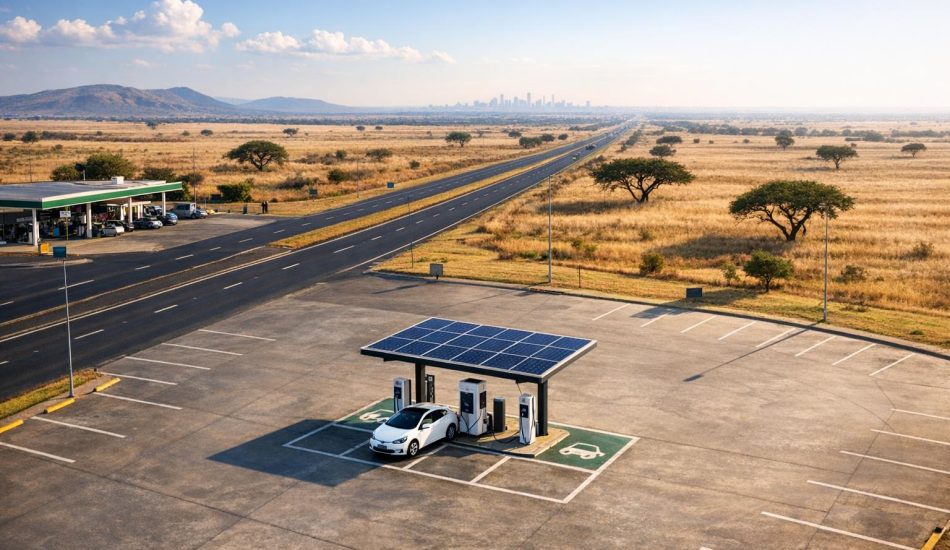
To address these challenges, solar-powered charging kiosks and off-grid battery-swapping stations are becoming more common. In remote areas, most drivers rely on Level 1 charging through standard household outlets, which can take 12 to 24 hours for a full charge. For those traveling long distances, carrying a portable charging cable is essential, though standard extension cords should be avoided due to fire risks. For a faster solution, installing a Level 2 wall-box charger (charging in 4 to 8 hours) or adopting a solar-plus-storage system can provide greater reliability.
Selecting the Right EV for African Roads
African roads are a mix of challenges: pothole-ridden urban streets, rugged rural paths, and scorching heat. Choosing an electric vehicle (EV) that can handle these conditions while minimizing wear and tear is essential. Here’s what to keep in mind when selecting an EV for Africa.
Ground clearance is a top priority. A clearance of at least 7 inches (180 mm) is ideal to avoid scraping the undercarriage on uneven terrain. For instance, the BYD Atto 3, with 6.9 inches (175 mm) of clearance and a sturdy chassis, is a favorite in countries like South Africa and Nigeria, where city drives often turn into rural adventures. In comparison, the Tesla Model Y offers 6.6 inches (167 mm), and the Hyundai Kona Electric stands at 6.2 inches (158 mm) – suitable for smoother city roads but less forgiving on rougher surfaces.
Battery durability is another critical factor. Many affordable EVs now come with liquid-cooling Battery Management Systems, which help maintain optimal temperatures in extreme heat, preserving battery performance and lifespan. Look for models with LFP (Lithium Iron Phosphate) batteries, known for their heat tolerance and long warranties – typically 8 years or 93,000 miles (150,000 km).
Access to spare parts can make or break your EV ownership experience. Brands like BYD, Geely, and Leapmotor are setting up local assembly plants in Africa, reducing import costs and improving service availability. In South Africa, only right-hand drive (RHD) EVs can be imported and registered, requiring permits and inspections. Opt for brands with established dealer networks, such as Toyota and Suzuki, for better support.
Recommended EV Brands and Models
Considering Africa’s unique road conditions, these EV models stand out for their performance and reliability. Platforms like EV24.africa offer a wide selection of vehicles specifically suited for the region, including options from Tesla, BYD, Leapmotor, ROX, Dongfeng, Geely, Hyundai, Toyota, and Suzuki. These range from budget-friendly city cars to robust SUVs built for tougher terrains.
For those balancing city commutes with occasional rural trips, the BYD Atto 3 delivers approximately 217 miles (350 km) of range under African conditions, factoring in heavy air conditioning use and rough roads. Prices start around $25,000 to $30,000. The Hyundai Kona Electric offers a similar package, with a 186-mile (300 km) range and a price tag of roughly $35,000. Both models support fast charging, reaching 80% charge in 30 to 60 minutes at DC stations.
Budget-conscious buyers might consider the Leapmotor T03, priced around $10,000 and offering a 250-mile (403 km) range with ground clearance suitable for mixed terrain. Another option is the Geely Panda Mini, starting at about $5,880 with a 124-mile (200 km) range – perfect for short urban trips in areas with reliable charging infrastructure. For those seeking premium performance, the Tesla Model Y provides a range of around 248 miles (400 km) in African conditions but comes with a higher price tag of over $40,000.
Chinese brands dominate the affordable EV market, often tailoring their models for emerging regions. The MG4 Electric and BYD Dolphin, for instance, include Vehicle-to-Load (V2L) technology, allowing the car’s battery to power external devices during outages. Meanwhile, Toyota and Suzuki are leveraging their established networks to introduce rugged EVs built on trusted platforms.
What to Look for When Buying an EV in Africa
Beyond individual models, certain features are essential for ensuring your EV thrives in Africa’s challenging environment:
- Battery life and maintenance: Choose models with regenerative braking systems to recover energy while slowing down, extending range, and reducing brake wear. A liquid-cooling Battery Management System is also crucial for preserving battery health in extreme heat.
- Service and parts availability: Check for nearby certified technicians and service centers. Local assembly operations often mean better access to parts and faster repairs. While platforms like EV24.africa handle customs and compliance, ongoing support depends on local infrastructure.
- Battery health for pre-owned EVs: If buying a used EV, request the State of Health (SOH) report, which shows the battery’s remaining capacity. For example, an SOH of 85% means the battery holds 85% of its original charge, directly affecting the range. Replacing a degraded battery can cost anywhere from $5,000 to $15,000.
- Solar compatibility: If your area has unreliable grid power, consider models that can integrate with solar systems. This allows your EV to double as a mobile power source during outages, adding a layer of convenience.
Driving on African Roads and Extending Battery Life
Handling Rough Roads and Extreme Weather
Driving on African roads demands a different approach compared to cruising on smooth highways. One key factor to consider is that electric vehicles (EVs) are heavier than traditional gasoline cars, thanks to their battery packs. This extra weight accelerates tire wear on rough terrains and increases energy use, especially on steep or unpaved roads.
Start with your tires – they’re critical. Check tire pressure regularly with a digital gauge. Under-inflated tires can drain your battery faster. Choose EV-specific tires that have a higher load index and low rolling resistance to better support the vehicle’s weight. If you’re driving on rural or unpaved roads, go for tires with "all-terrain" or mixed-use treads for better grip and safety.
Heat is another challenge. Africa’s high temperatures can lead to battery overheating, particularly during fast charging or when driving on demanding terrain. To combat this, park in shaded areas or use reflective sunshades to keep your car cool. After a DC fast-charging session, allow your EV to cool down before tackling tough roads. As James Mwangi from AutoMag.co.ke puts it, "Reducing heat exposure is one of the easiest ways to extend battery life".
Avoid overloading your vehicle, as extra weight increases the energy needed for rough or hilly terrains. In regions like Limuru or Eldoret, take advantage of regenerative braking when going downhill to recover energy and reduce brake wear. Don’t forget to keep your EV’s software updated – manufacturers often release updates that improve thermal management and battery efficiency. These small adjustments can protect your tires and battery while also helping you get more range out of your EV.
How to Maximize Your EV’s Battery Range
Improving your EV’s range starts with smart driving and charging habits. Keep your battery charge between 20% and 80% to minimize chemical stress and extend its lifespan. Charging from 80% to 100% often takes as long – or longer – than charging from 20% to 80%, so stopping at 80% can save you time during road trips. Also, maintaining a 20% charge buffer can help prevent unexpected battery drains when navigating rough roads or heavy traffic.
Use "Eco" mode whenever possible to conserve energy. Unlike gasoline cars, EVs are highly efficient in stop-and-go traffic, which is common in African cities. Regenerative braking is especially useful in these conditions, turning kinetic energy into stored battery power. This not only boosts your range but also reduces wear on your brake pads.
Before setting out on long trips, use mobile apps to locate and confirm the status of charging stations along your route. In areas with limited charging infrastructure, always have a backup plan in case a station isn’t operational. For daily use, Level 2 chargers at home or work are ideal, providing about 15 to 25 miles (25 to 40 km) of range per hour. These strategies can help you make the most of your EV while navigating the unique challenges of African roads.
sbb-itb-99e19e3
EV Ownership Costs and Benefits
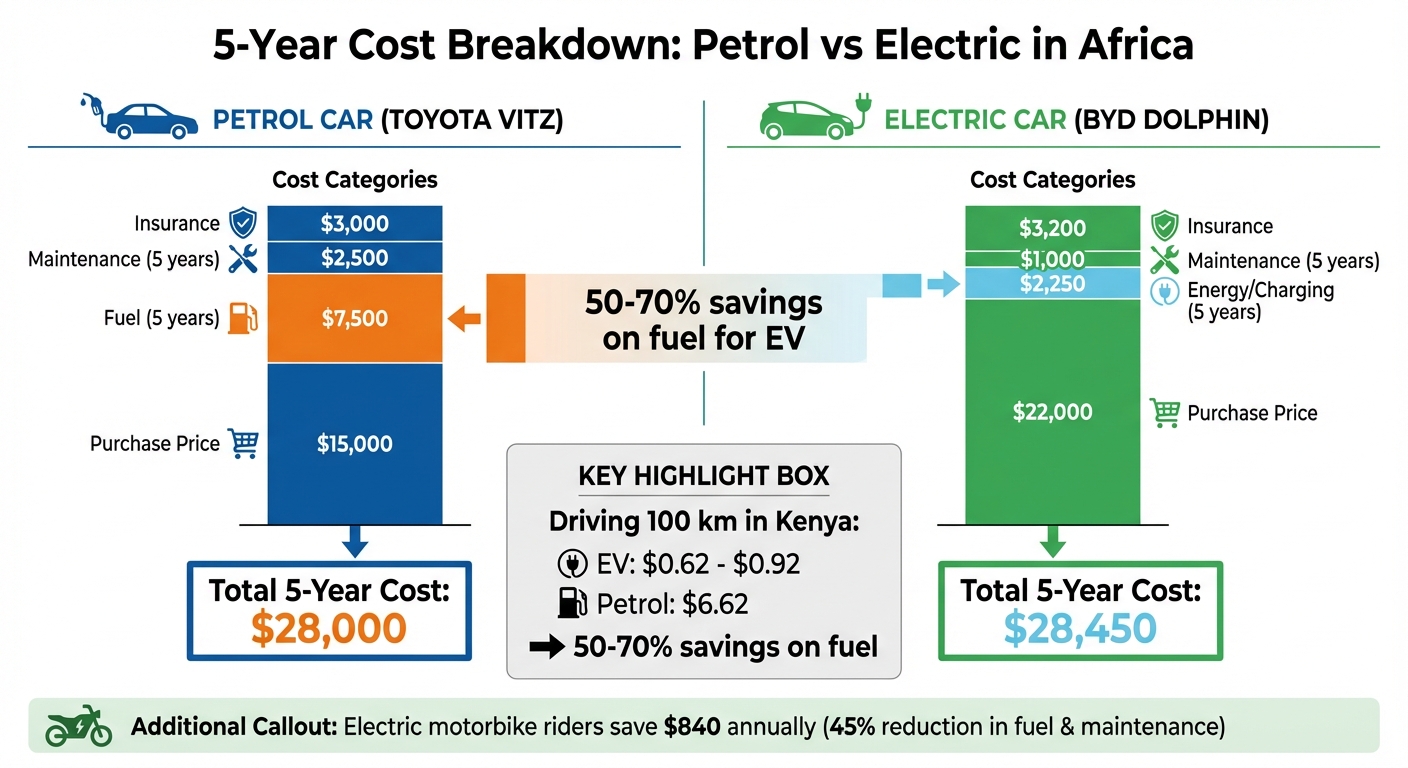
5-Year Cost Comparison: Electric vs Gasoline Vehicles in Africa
Understanding the financial and practical perks of owning an electric vehicle (EV) can help new drivers in Africa make smarter decisions, balancing their budgets with the unique challenges of the region’s transportation landscape.
EV Running Costs vs. Gasoline Vehicles
While EVs often come with a higher upfront price tag, their lower operating costs can level the playing field – and sometimes even tilt it in their favor – over a five-year period. When you look at the Total Cost of Ownership (TCO) over five years, the difference between electric and gasoline-powered vehicles narrows significantly. In many cases, EVs end up being the more economical choice.
Here’s a five-year cost breakdown:
| Cost Factor | Petrol Car (e.g., Toyota Vitz) | Electric Car (e.g., BYD Dolphin) |
|---|---|---|
| Purchase Price | $15,000 | $22,000 |
| Fuel/Energy (5 years) | $7,500 | $2,250 |
| Maintenance (5 years) | $2,500 | $1,000 |
| Insurance | $3,000 | $3,200 |
| Total 5-Year Cost | $28,000 | $28,450 |
Even with a $7,000 higher purchase price, the BYD Dolphin nearly matches the Toyota Vitz in total costs over five years. Charging an EV is significantly cheaper than fueling a gasoline car. For example, driving 100 km (about 62 miles) in Kenya costs between $0.62 and $0.92 in an EV, compared to $6.62 for a gasoline vehicle.
Maintenance is another area where EVs excel. Electric motors are far simpler than combustion engines, with far fewer moving parts – no oil changes, no spark plugs, no exhaust system repairs. This simplicity translates to major savings. For example, electric motorbike riders save around $840 annually, cutting fuel and maintenance expenses by 45%.
Government incentives can make EVs even more appealing. Rwanda, for instance, has eliminated VAT, import duties, and excise taxes for EVs, while in other African nations, import duties can add 25% or more to a vehicle’s price. If you’re considering an EV, check out local tax breaks – they could save you thousands of dollars.
Beyond the financial benefits, EVs bring other advantages that go beyond just saving money.
Other Benefits of Owning an EV
Aside from lower running costs, EVs offer environmental and operational benefits. By driving an EV, you’re actively reducing your carbon footprint. Widespread EV adoption could cut Africa’s annual carbon emissions by 20-25% by 2040. For cities battling poor air quality, transitioning from gas-powered cars to EVs can make a noticeable difference in air pollution levels.
EVs also promote energy independence. Charging your car at home means less reliance on imported fuel, which can strengthen local economies.
"The big question about electric mobility in Africa is no longer if it will happen, but when and how." – Younes Rabeh
Pairing your EV with a home solar system takes this a step further. You could power your vehicle with clean, free energy while avoiding the headaches of grid instability.
Battery warranties add another layer of reassurance. Most EV batteries come with warranties lasting up to 8 years or 93,000 miles (150,000 km). Data from models like the Tesla Model S and Nissan Leaf shows these batteries typically retain 80% of their original capacity after 93,000 miles. When it’s time to sell, your EV’s resale value will largely depend on its battery health. To get an accurate picture, request a battery health report to gauge its State of Health.
Locating Charging Stations and Charging Options
Having dependable charging options is key to making the most of your EV, especially when traveling across Africa’s varied landscapes. With the right apps and tools, you can easily find charging stations, check their availability in real-time, and even handle payments. For those heading into remote areas, solar-powered charging can be a lifesaver when grid power is unreliable or unavailable.
Apps and Tools for Finding Charging Stations
Start with PlugShare, a highly-rated app (4.7/5 from 133,000 users) that consolidates charging station data across Africa. Its PlugScore feature uses community reviews to help you assess the reliability of chargers. Before relying on individual network apps, it’s worth checking PlugShare first.
For region-specific solutions, ChargePocket is a top choice in Southern Africa. It lets you remotely control charging sessions and manage payments via PayFast. In Kenya, EVChaja stands out as the country’s first dedicated EV charging network app, offering real-time updates, route planning, and even rewards for members. On a larger scale, the Electrify Africa App covers multiple countries, helping you locate public chargers and manage portable power options, including solar-integrated solutions. Electrify Africa aims to install over 10,000 EV chargers across the continent by 2030.
Always check the real-time status of a station before heading out. Apps can show whether a charger is "Under Repair" or "Coming Soon." You can also filter options by plug type (like CCS, CHAdeMO, or Tesla) and charging speed (Level 2 or DC Fast) to ensure compatibility with your vehicle. Many EV manufacturers offer their own apps, which can guide you to compatible chargers and monitor your car’s range.
When conventional networks don’t meet your needs, solar charging steps in as a reliable alternative.
Solar Charging for Remote Locations
Africa’s wealth of sunshine – over 3,000 hours annually – makes solar charging an excellent option. In areas with unreliable or nonexistent grid power, solar charging stations operate independently, ensuring you’re never left stranded during outages or load shedding.
In September 2024, Ampersand and CrossBoundary Energy launched a pilot solar EV charging project in Nairobi, Kenya. This initiative includes a 37 kWp solar array, 36 charging units, and 150 lithium-ion batteries. Meanwhile, Zero Carbon Charge is developing 120 off-grid, solar-powered EV charging stations across South Africa, specifically for remote regions. These stations use smart monitoring systems (OCPP 1.6), allowing users to check their status remotely via 4G or Wi-Fi apps.
For the best results, aim to charge during peak sunlight hours – late morning to mid-afternoon – when solar panels are most efficient. When selecting solar chargers, ensure they have at least an IP54 rating to withstand Africa’s challenging conditions, such as dust and heat.
"Solar-powered stations expand EV accessibility in rural regions." – Clean Energy Expert
Conclusion
Owning and driving an electric vehicle (EV) in Africa is no longer just a vision – it’s happening. As of May 2025, there are over 30,000 EVs on the continent, and the supporting infrastructure is steadily growing. Governments are stepping in with policies like reduced import duties, while more affordable EV models are entering the market. These changes are making EVs more accessible and lowering the cost of ownership.
Charging an EV is significantly cheaper than fueling a gasoline car – typically 50% to 70% less for the same distance. Over a five-year period, the total cost of owning an EV becomes increasingly competitive, especially with incentives like Rwanda’s removal of VAT and import duties. Options like solar-powered and home charging further enhance the affordability and environmental benefits of EVs.
Whether you’re navigating the bustling streets of Nairobi, handling rugged terrain in rural Tanzania, or simply looking to save on fuel costs, there’s likely an EV that fits your lifestyle. The key is understanding your driving habits, exploring local incentives, and choosing a model designed for African conditions. When you account for the financial savings and practical advantages, going electric makes a lot of sense.
If you’re ready to take the next step, EV24.africa is here to make the transition simple. From browsing certified models to managing shipping and customs, they handle it all. Explore top brands like Tesla, BYD, Geely, and Hyundai, compare transparent pricing, and get expert guidance throughout the process. Switching to electric has never been easier.
FAQs
What should I consider when choosing an electric vehicle for African roads?
When choosing an EV to tackle Africa’s diverse road conditions, it’s essential to weigh cost, range, and durability. Entry-level EVs start at approximately $4,800, while midsize models fall between $23,300 and $47,500. Most EVs deliver a driving range of 200–250 miles per charge, making them ideal for daily commutes and shorter regional trips.
Prioritize vehicles with higher ground clearance – typically between 5.5 and 6.2 inches – and robust suspensions to handle potholes, uneven terrain, and unpaved roads. Heat-resistant batteries and dust-proof systems are also key for dependable performance in hot, dusty environments.
Another critical factor is the availability of charging options in your area. If public charging stations are scarce, plug-in hybrids (PHEVs) or hybrid electric vehicles (HEVs) might be more suitable. On the other hand, battery-electric vehicles (BEVs) work best in urban areas with reliable charging infrastructure. Also, take a close look at home charging solutions and consider how import duties might influence the overall cost.
How can I manage range anxiety while driving an EV in Africa?
Managing range anxiety begins with thoughtful planning. Use tools that help you locate charging stations along your route and calculate your vehicle’s range based on your driving patterns and the local road conditions. If you’re traveling in areas where public charging stations are scarce, portable charging solutions like off-grid solar chargers or mobile units can be a practical backup. For extended trips, a range-extended EV (REEV) – which pairs electric power with a backup fuel system – can offer extra reassurance.
At home, having a reliable charging setup is key. Installing a home charging station, particularly one powered by solar energy, ensures your EV is always ready for the road. By preparing in advance and understanding your vehicle’s capabilities, you can confidently explore Africa’s varied terrains in your EV.
What are the advantages of using solar-powered chargers in remote areas?
Solar-powered chargers offer a dependable way for EV drivers to stay powered up, especially in remote or off-grid areas. These chargers let you charge your vehicle without needing to rely on unpredictable power grids, making them a smart choice for places where traditional electricity access might be limited.
By tapping into solar energy, you can cut down on greenhouse gas emissions, shrink your reliance on fossil fuels, and even save on charging costs over time. This environmentally friendly option works particularly well in sunny regions, providing an efficient way to keep your EV ready to go, no matter how far off the beaten path you are.