
 Thabo Nkosi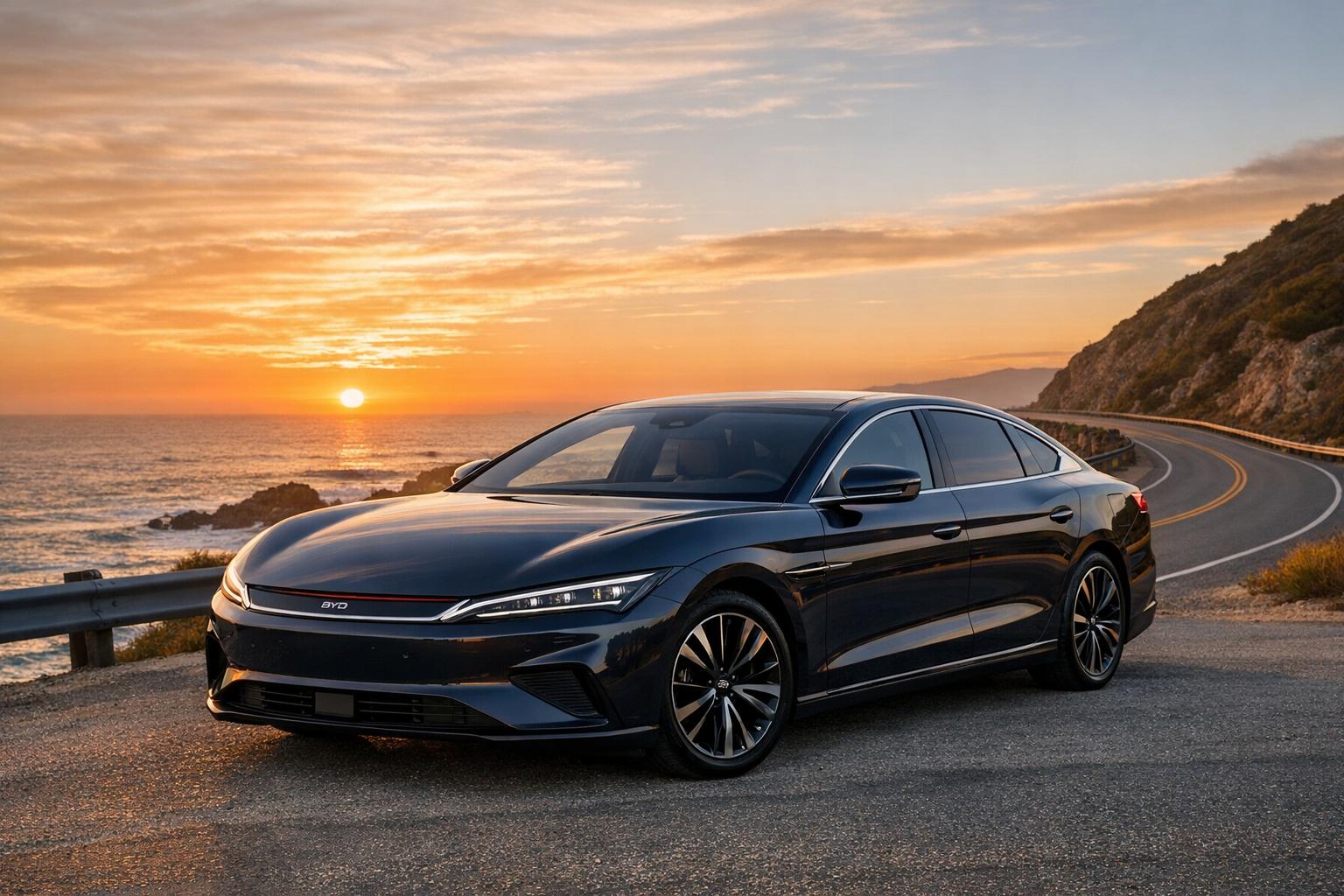
The BYD Han EV is a luxury electric sedan that competes with the Tesla Model 3 and Hyundai Ioniq 6. It combines a sleek design, advanced features, and strong performance at a competitive price point. With a range of up to 375 miles, a 0-60 mph time of 3.9 seconds, and a starting price of $37,300, it offers a mix of affordability and premium appeal. Key highlights include a rotating 15.6-inch touchscreen, a quiet cabin, and V2L technology for powering external devices. However, its slower charging speed and limited trunk space may be drawbacks compared to rivals.
Key Features of the BYD Han EV:
- Performance: Dual-motor system with 517 hp, 0-60 mph in 3.9 seconds.
- Range: Up to 375 miles with an 85.4 kWh battery.
- Interior: Nappa leather, wood accents, rotating 15.6-inch touchscreen, and rear passenger controls.
- Price: Starting at $37,300, undercutting competitors in the luxury EV segment.
- Charging: DC fast charging up to 120 kW; slower compared to rivals.
- Unique Offering: V2L capability to power external devices, useful for camping or emergencies.
While the Han EV excels in comfort and affordability, the Tesla Model 3 offers better charging infrastructure and software, and the Hyundai Ioniq 6 leads in charging speed and efficiency. Each car brings its own strengths, catering to different buyer preferences.
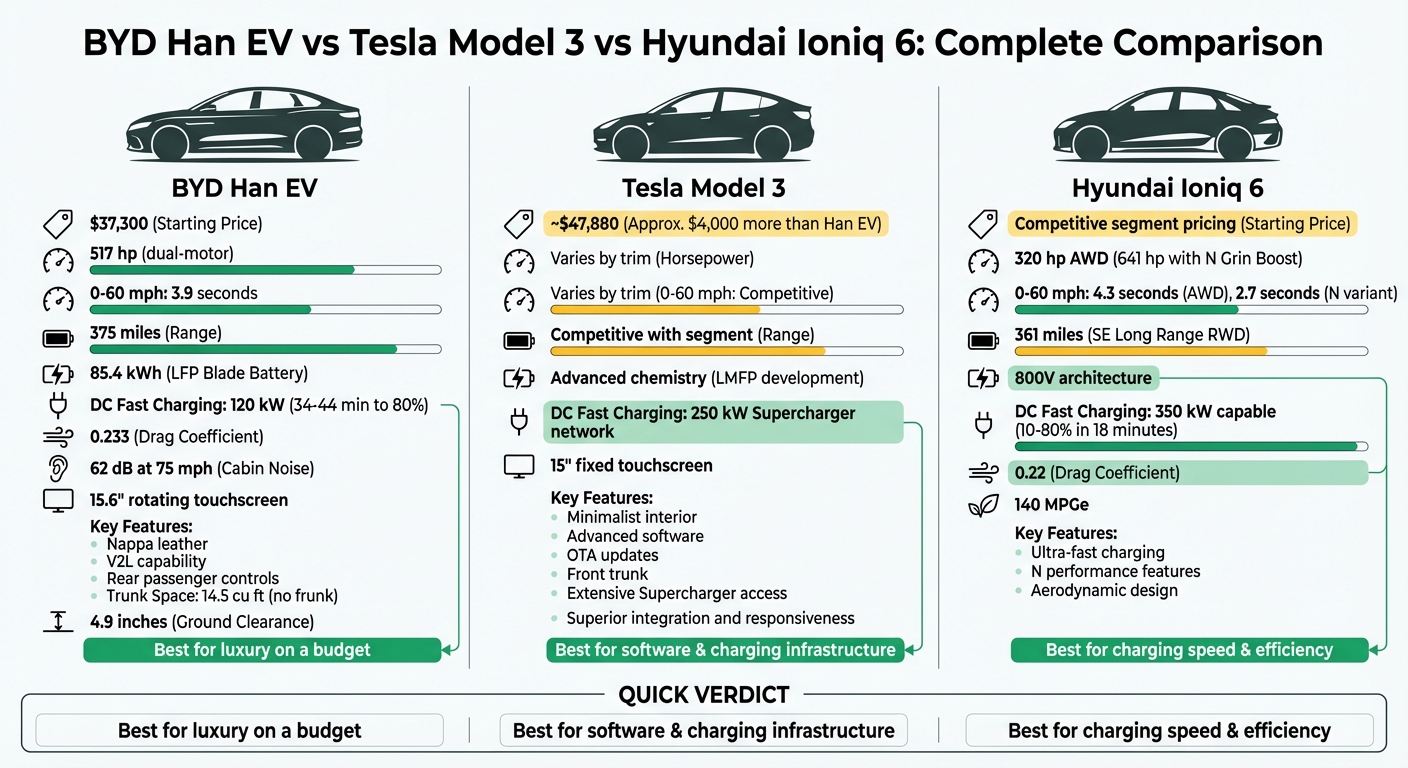
BYD Han EV vs Tesla Model 3 vs Hyundai Ioniq 6 Comparison
1. BYD Han EV
Design and Exterior
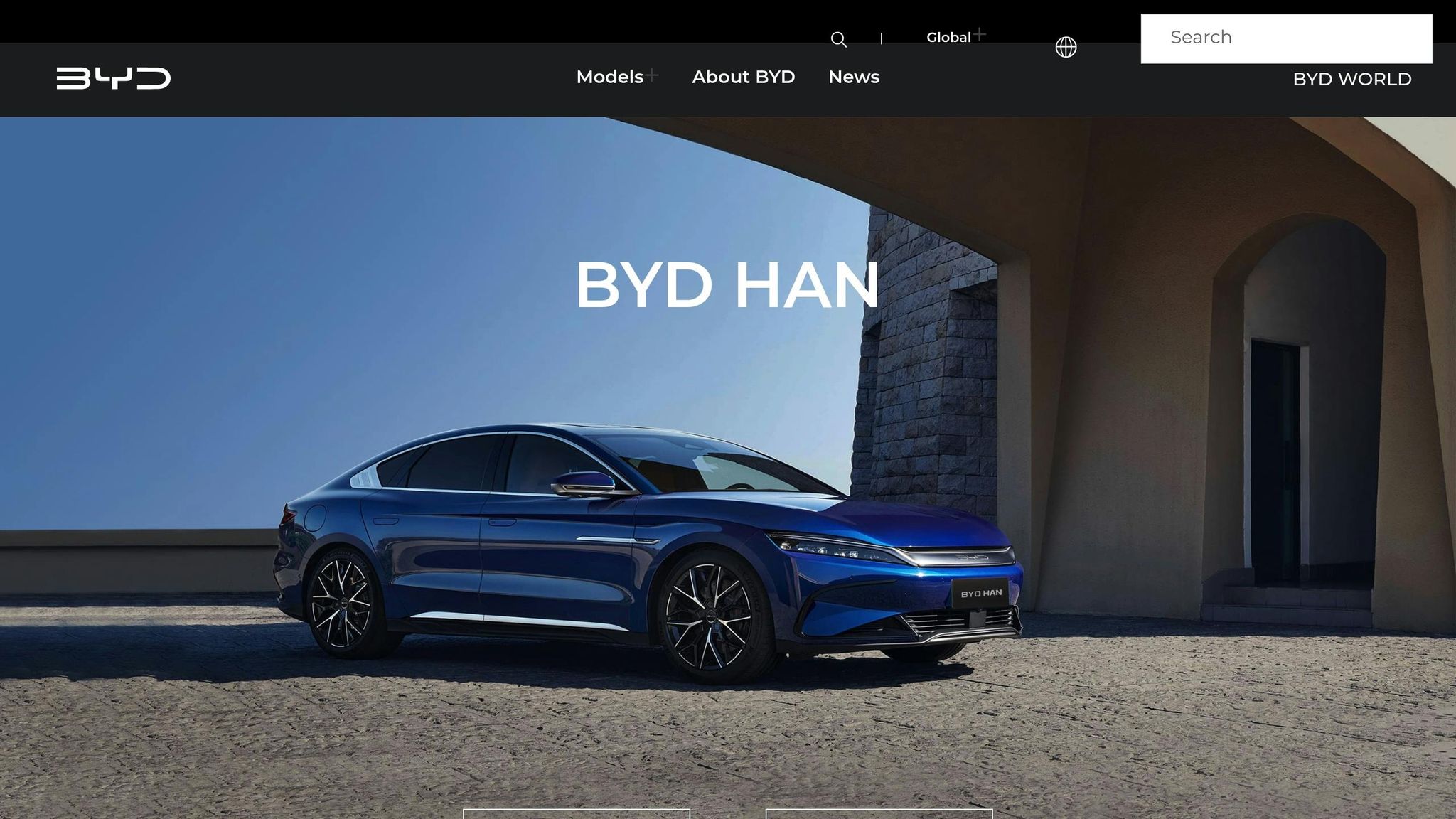
The BYD Han EV showcases the brand’s striking "Dragon Face" design, crafted by Wolfgang Egger. This design masterfully combines sleek modern lines with dragon-inspired elements, earning it the prestigious iF Design Award. By blending traditional Chinese influences with contemporary aesthetics, the Han EV stands out from the minimalist styling often seen in Western electric sedans.
Aerodynamics are a key focus here. With a drag coefficient of just 0.233, the Han EV is engineered to glide through the air efficiently. This streamlined design not only boosts performance but also ensures a quiet ride – inside the cabin, sound levels remain as low as 62 decibels even at 75 mph.
The car’s futuristic vibe is amplified by its "crystal streamer" LED headlights and a full-width rear light bar featuring the bold "Dragon Claw" motif. Other standout features include 19-inch dual-color aluminum alloy wheels and Brembo racing-grade front brake calipers. Measuring about 196.7 inches in length with a 114.9-inch wheelbase, the Han EV commands attention with its impressive size and presence on the road.
Interior and Technology
Step inside, and the Han EV greets you with an opulent interior crafted from premium materials like Nappa leather, wood, aluminum, and carbon fiber. At the center of the dashboard is a 15.6-inch touchscreen that can rotate between portrait and landscape modes – a feature BYD introduced before rivals like the Fisker Ocean. This works seamlessly with a 12.3-inch digital instrument cluster and a head-up display on the windshield for a tech-forward experience. For audiophiles, the Dynaudio premium sound system with 12 speakers ensures a rich, immersive audio experience.
The car caters especially to those who prefer to be chauffeured. The right rear seat, dubbed the "prime position", includes a "boss key" feature that lets passengers move the front passenger seat forward for extra legroom. Rear passengers also get their own dedicated touchscreen in the armrest to control seat adjustments, the panoramic sunroof, ambient lighting, and dual-zone climate settings. All main seats come equipped with heating and ventilation, while the front seats add electric lumbar support and memory functions for added comfort.
Wellness features are also thoughtfully included. A PM2.5 high-efficiency filter, a negative ion generator, and an air purification system monitor and display real-time air quality inside and outside the cabin. For added utility, the Han EV offers V2L (Vehicle-to-Load) technology, allowing it to power external devices up to 3.5 kW – perfect for camping trips or emergencies.
These luxurious and practical features make the Han EV as comfortable as it is advanced.
Performance and Driving Dynamics
When it comes to performance, the Han EV doesn’t hold back. Its dual-motor all-wheel-drive setup delivers a robust 517 hp and 517 lb-ft of torque, enabling it to sprint from 0 to 60 mph in just 3.9 seconds. For those seeking even more power, the 2025 Han L variant ups the ante with a staggering 1,086 hp, rocketing from 0 to 60 mph in a mere 2.7 seconds. This places it in the realm of supercars – offered at a price that challenges conventional expectations.
The car’s adaptive air suspension, paired with balanced weight distribution and Bosch‘s integrated brake control system, ensures precise handling and smooth braking. Drivers can choose from multiple modes – Sport, Eco, Normal, and Snowfield – to adapt to different road conditions and preferences. Additionally, advanced Silicon Carbide (SiC) MOSFET technology enhances motor efficiency, optimizing the vehicle’s overall performance.
Range and Charging
The Han EV Flagship trim is powered by an 83.2 kWh Blade Battery built on Lithium Iron Phosphate (LFP) chemistry, known for its superior thermal stability and safety. While its DC fast charging capability tops out at 120 kW – a figure some critics find modest for a luxury EV – the 2025 Han L variant takes a giant leap forward with 1,000 kW ultra-fast charging. This groundbreaking feature can add approximately 248 miles of range in just 5 minutes. A high-efficiency heat pump system also comes standard, helping to conserve range during colder weather.
With its blend of cutting-edge technology, luxury, and performance, the Han EV redefines what an electric sedan can offer.
2. Tesla Model 3
Design and Exterior
The Tesla Model 3 embraces a sleek, streamlined design, standing in stark contrast to the BYD Han EV’s intricate Dragon Face styling. Tesla focuses on aerodynamic efficiency with smooth, clean lines. While the BYD Han stretches to about 196.7 inches in length – putting it closer in size to the Tesla Model S – the Model 3 is a more compact mid-size sedan, catering to different size preferences.
The Model 3’s exterior features subtle LED lighting elements that integrate seamlessly into its body design. A practical bonus is the inclusion of a front trunk (commonly known as a "frunk"), offering additional storage space – a feature the BYD Han lacks. This design philosophy sets the tone for Tesla’s unique blend of practicality and performance.
Interior and Technology
Step inside, and the differences become even more pronounced. Tesla’s interior is defined by its minimalist aesthetic, featuring synthetic materials and a clean, uncluttered layout. On the other hand, the BYD Han leans into a more luxurious vibe, offering Nappa leather, real wood accents, and aluminum finishes that give it a premium feel. Many owners note that the Han feels sturdier, with higher-quality upholstery and craftsmanship compared to the Model 3.
At the heart of the Model 3’s cabin is a fixed 15-inch touchscreen that handles nearly every function, while the BYD Han opts for a 15.6-inch rotating display. Tesla’s system is known for its instant activation upon entry, while the Han’s interface can take up to a minute to fully boot. Rear passengers in the Han enjoy added convenience with a dedicated touchscreen in the armrest – something the Model 3 doesn’t offer. Tesla’s streamlined approach caters to drivers who value simplicity and quick responsiveness over traditional luxury features.
Performance and Driving Dynamics
When it comes to driving, the Tesla Model 3 and BYD Han EV offer distinct experiences. The Han EV delivers an impressive 517 horsepower, but reviews often highlight the Model 3’s sharper throttle response and exhilarating bursts of power. Tesla has engineered the Model 3 for agility and a driver-centric feel, while the Han prioritizes comfort and a more relaxed driving style.
Range and Charging
Tesla’s charging network is a game-changer for practical use, giving the Model 3 a clear edge in long-distance travel. The BYD Han EV supports a maximum of 120 kW DC fast charging, though it often averages just 70–80 kW in warmer conditions. Its single-phase AC charging further limits its capabilities on extended trips. In contrast, the Model 3 boasts stronger charging performance and benefits from Tesla’s extensive Supercharger network. Tesla is also advancing battery technology, including lithium manganese iron phosphate (LMFP) cells, to push performance even further.
In terms of software, Tesla also has the upper hand. The Han’s system struggles with issues like inconsistent English translations and spotty support for smartphone integration, such as Apple CarPlay and Android Auto, in certain versions. Tesla’s software, by comparison, is more refined and user-friendly, adding to the overall driving experience.
3. Hyundai Ioniq 6
Design and Exterior
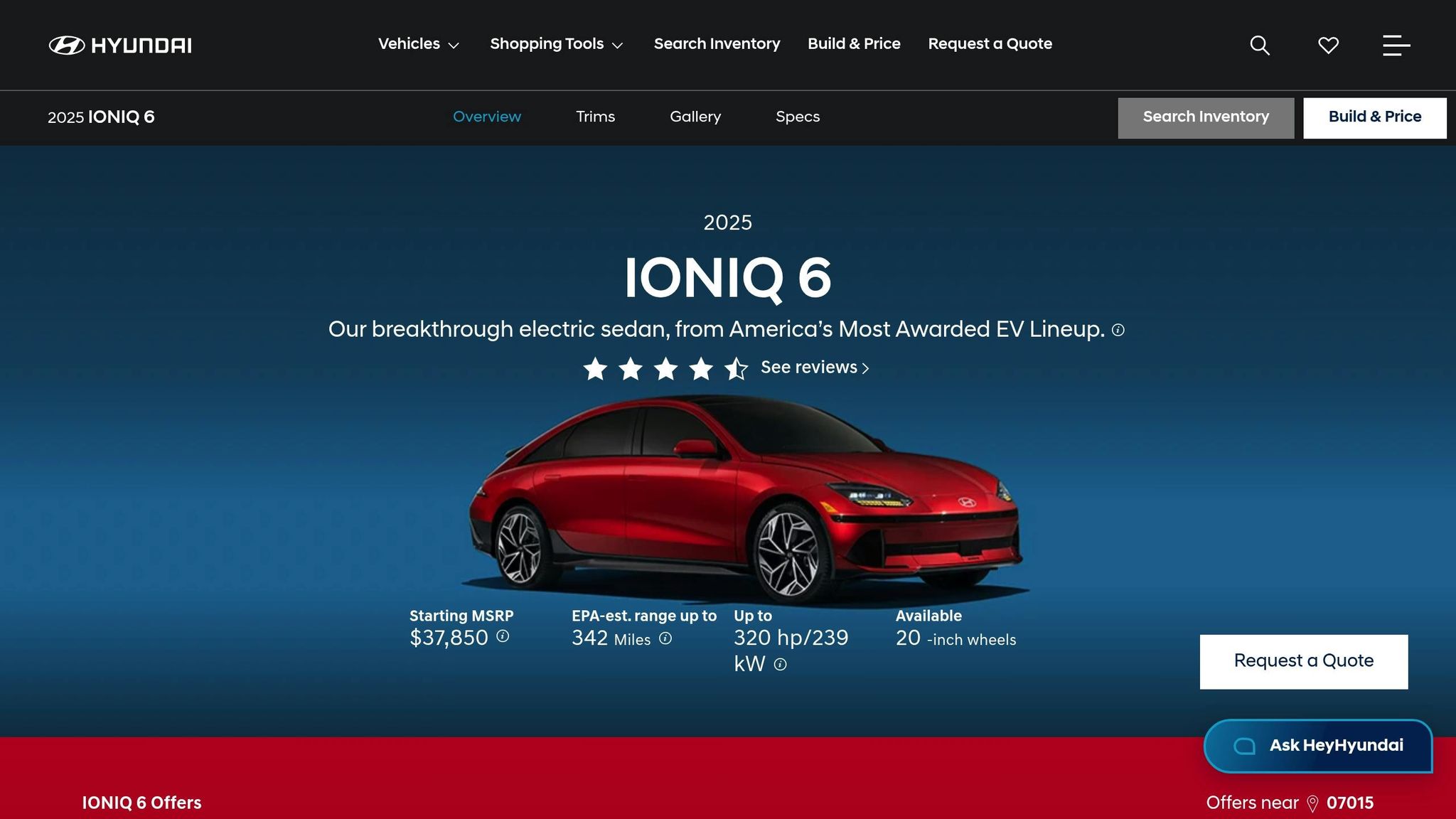
The Hyundai Ioniq 6 takes a different approach to design compared to the BYD Han EV’s bold "Dragon Face" styling. While the Han leans into a mix of traditional elegance and sporty fastback lines, the Ioniq 6 prioritizes aerodynamics. Its sleek shape achieves an impressive 0.22 drag coefficient, which directly contributes to better range and efficiency.
Interior and Technology
Step inside, and the differences between these two sedans become even more pronounced. The BYD Han exudes luxury, offering Nappa leather seats, real wood accents, a 15.6-inch rotating touchscreen, and even a multifunctional rear armrest control panel . The Ioniq 6, on the other hand, especially in its performance-oriented N trim, is all about the driving experience. Features like N e-Shift simulate gear changes by manipulating motor torque, while N Active Sound+ delivers performance-tuned audio for a more immersive drive. The N Ambient Shift Light visually signals optimal shifting points, and the red N Grin Boost button on the steering wheel unleashes up to 641 hp for a thrilling 10-second burst.
While the BYD Han is praised for its whisper-quiet cabin – measuring just 62 decibels at highway speeds – the Ioniq 6 N intentionally enhances the sensory experience. It uses sound and tactile feedback to keep the driver engaged, emphasizing performance over serenity.
Performance and Driving Dynamics
When it comes to performance, these two EVs cater to very different audiences. The BYD Han L’s dual-motor system generates a staggering 1,086 hp, propelling it from 0 to 60 mph in just 2.7 seconds. The standard Ioniq 6 AWD, with 320 hp and 446 lb-ft of torque, takes about 4.3 seconds to hit the same mark. However, the Ioniq 6 N levels the playing field with its Grin Boost feature, which temporarily boosts output to 641 hp, delivering a more dynamic, race-inspired experience.
While the Han focuses on smooth, refined comfort, the Ioniq 6 – particularly the N variant – delivers a drive that’s designed to excite and engage, appealing to those who crave a more spirited ride.
Range and Charging
The Ioniq 6 not only impresses with its design and performance but also shines in terms of range and charging capabilities. The SE Long Range RWD version offers an EPA-estimated 361 miles on a single charge and achieves a combined efficiency of 140 MPGe. Thanks to its 800V architecture, it supports ultra-fast charging, going from 10% to 80% in just 18 minutes using a 350kW DC charger.
In comparison, the standard BYD Han models require about 44 minutes to achieve a similar charge at their 120kW maximum rate. However, the upcoming 2025 Han Long Range edition will adopt an 800V platform for faster charging . For now, the Ioniq 6’s compatibility with 350kW chargers provides a clear edge in areas where ultra-fast charging infrastructure is available .
sbb-itb-99e19e3
BYD Han L: Faster Than A Ferrari (But Why?)
Pros and Cons
Looking at the detailed reviews above, here’s a breakdown of the standout features and limitations of each vehicle.
The BYD Han EV impresses with its upscale interior, featuring Nappa leather and European wood accents. Its cabin remains quiet, registering just 62 decibels at 75 mph, and the 12-speaker Dynaudio system delivers an immersive audio experience. At around $72,000, it offers high-end materials at a competitive price point. However, its DC charging speed is capped at 120–150 kW, meaning it takes roughly 34–44 minutes to charge from 30% to 80% . Storage is somewhat limited with a 14.5-cubic-foot trunk and no front trunk, while the 4.9-inch ground clearance when fully loaded could make rough terrain tricky.
The Tesla Model 3 stands out for its advanced software and access to Tesla’s 250 kW Supercharger network. Its minimalist interior design is sleek but may not appeal to drivers who prefer physical buttons and controls.
The Hyundai Ioniq 6 offers ultra-fast charging thanks to its 800V architecture, reaching 80% in just 18 minutes. It boasts an EPA-estimated range of 361 miles in the SE Long Range RWD trim, though its aerodynamic design might not be everyone’s favorite.
Here’s a quick comparison of the key advantages and drawbacks for each model:
| Vehicle | Key Advantages | Key Disadvantages |
|---|---|---|
| BYD Han EV | High-end materials (Nappa leather, wood) ; Comfortable rear seating; Competitive price (~$72,000); V2L capability | Slow DC charging (120–150 kW); Small trunk (14.5 cu ft, no frunk) ; Low ground clearance (4.9 in); Limited service network |
| Tesla Model 3 | Extensive Supercharger network (250 kW); Advanced software with OTA updates; Impressive acceleration across trims | Minimalist interior lacks physical controls; No dedicated instrument cluster |
| Hyundai Ioniq 6 | Extremely fast charging (18 minutes to 80%); Outstanding efficiency (140 MPGe); Long range (361 miles EPA-estimated); 800V charging architecture | Controversial exterior styling |
The BYD Han EV also earned an iF Design Award for its blend of luxury and aesthetic appeal. However, it received a 5.5/10 rating from EV Car Latest, mainly due to its slower charging capabilities and limited trunk space, which seem disproportionate to the car’s size.
Conclusion
The BYD Han EV presents a compelling choice for those seeking luxury and comfort without breaking the bank. Priced at approximately $43,880 – around $4,000 less than the Tesla Model 3 – it offers standout features like Nappa leather upholstery and solid wood accents. BYD President Wang Chuanfu highlighted the vehicle’s development journey, stating:
"The Han has taken ten years from the concept stage to formal mass production… Through our leading technologies, we have created three benchmarks for flagship EVs in terms of safety, performance, and luxury."
Globally, and especially in markets like Africa, the Han EV gains an edge with its Blade Battery technology. The battery’s LFP chemistry ensures stability, while its V2L capability provides practical mobile power solutions.
From a performance perspective, the Han EV impresses with a quick 3.9-second 0–62 mph acceleration and a whisper-quiet cabin, registering just 62 decibels at 75 mph. However, its slower DC charging times – taking 34–44 minutes to go from 30% to 80% – might lead some buyers to consider alternatives like the Tesla Model 3 or Hyundai Ioniq 6, which offer faster charging networks.
Still, the Han EV’s combination of competitive pricing and a refined interior experience makes it a strong contender. For urban professionals in search of a luxury executive sedan, it offers lower maintenance costs, estimated at $300–$400 annually, compared to $700–$1,000 for similar gas-powered models. While its 4.9-inch ground clearance may not suit off-road adventures, the Han EV strikes the right balance between luxury, performance, and practicality. It stands out as an excellent choice for buyers who value executive comfort alongside modern, functional innovation.
FAQs
What are the standout features of the BYD Han EV’s design and technology?
The BYD Han EV stands out with its sleek, aerodynamic design that masterfully combines sporty flair with touches inspired by Chinese artistry. Details like the full-width LED rear light bar and crystal-streamer headlights give it a bold, futuristic vibe. Inside, the cabin feels luxurious, with features like a dragon-themed gear lever and stitched leather finishes that elevate the experience.
On the tech front, the Han EV doesn’t disappoint. It boasts a 15.6-inch rotating touchscreen compatible with Apple CarPlay and Android Auto, an advanced voice-control system, and a 12-speaker audio setup that delivers an immersive sound experience. Safety and convenience are well-covered with its robust ADAS suite, which includes adaptive cruise control, lane-keeping assist, and a 360-degree camera. Plus, the fast-charging Blade Battery technology can get you up to 80% charge in about 30 minutes, making it a highly practical choice for daily driving.
How does the BYD Han EV perform compared to other luxury electric sedans?
The BYD Han EV delivers standout performance for a midsize luxury sedan. The standard model boasts 517 horsepower (380 kW) and is equipped with an 85.4 kWh battery, offering an estimated range of around 324 miles. This combination of power and range makes it a solid competitor among premium electric sedans.
If you’re after jaw-dropping performance, the Han L variant ups the ante with a staggering 1,100 horsepower (810 kW) and acceleration that can rival some supercars. Whether your preference leans toward refined luxury or adrenaline-pumping speed, the BYD Han EV offers a compelling choice in the luxury EV segment.
What are some potential downsides of the BYD Han EV?
While the BYD Han EV boasts an array of impressive features, there are a few aspects that might give potential buyers pause. For starters, BYD is still establishing its reputation in many markets, which means its service network isn’t as widespread as those of long-standing competitors. This could make routine maintenance or repairs a bit less convenient for some owners.
Another point of concern is the infotainment system. While the interior of the Han exudes luxury, the touchscreen controls have been noted by some users as overly complicated, possibly detracting from the overall experience.
Additionally, there are questions about long-term battery performance, as well as occasional software issues reported in other BYD models. These concerns might also extend to the Han, making them important considerations for anyone eyeing this premium electric sedan.