
 Thabo Nkosi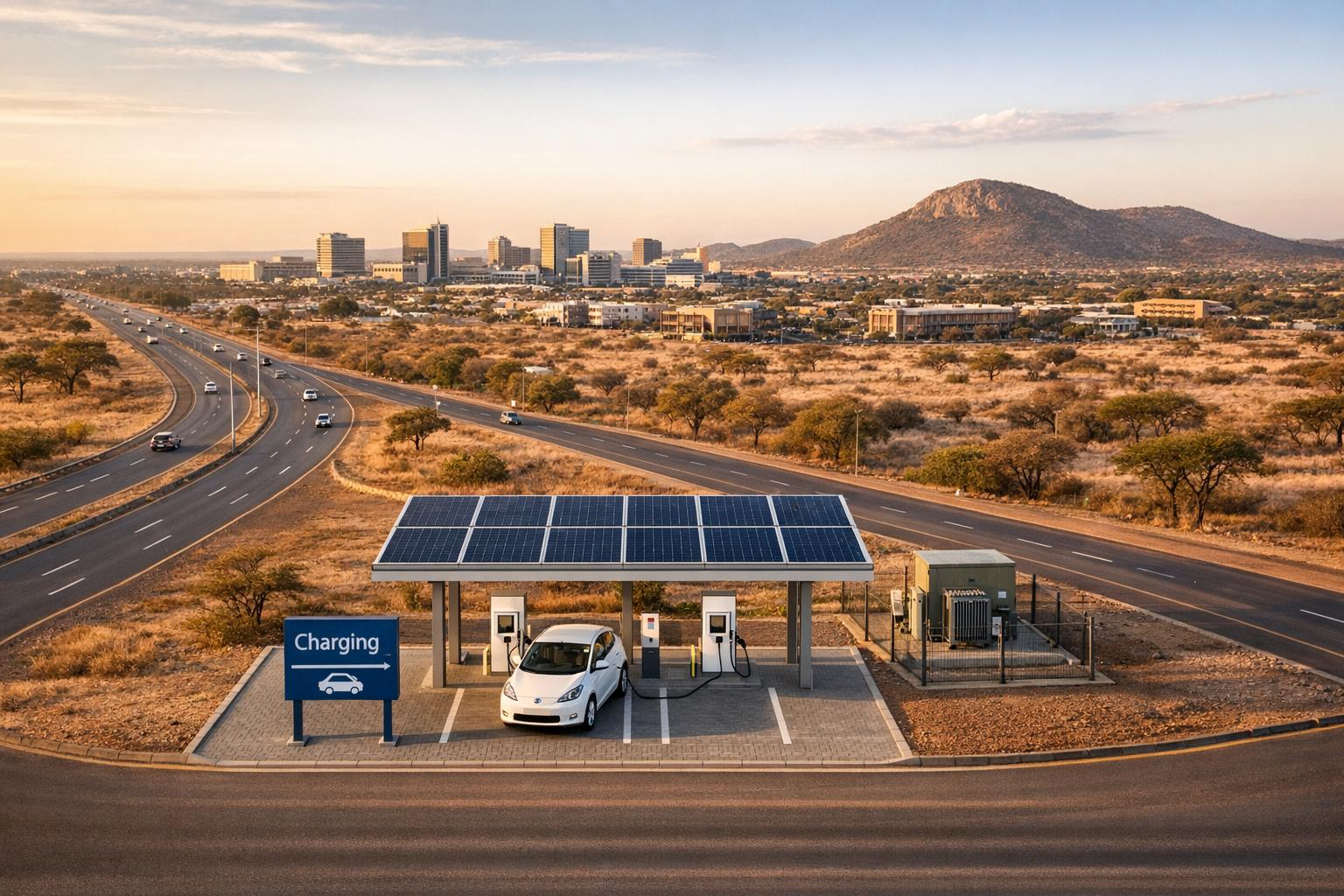
Botswana is making progress toward adopting electric vehicles (EVs), but challenges remain. Here’s a quick look at the situation:
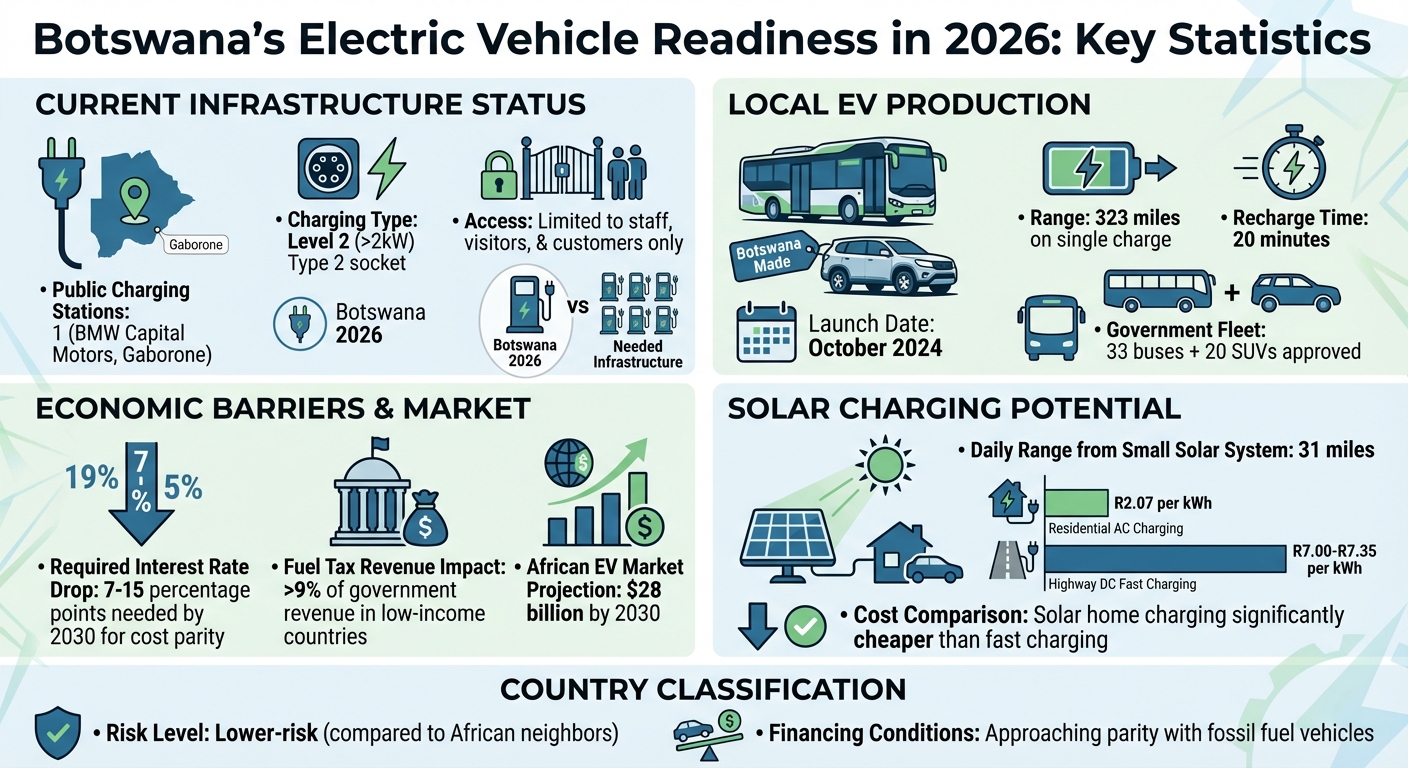
- Local EV Production: In October 2024, Botswana’s BITRI introduced locally assembled electric SUVs capable of traveling 323 miles on a single charge and recharging in 20 minutes.
- Infrastructure Gaps: As of April 2026, there is only one public charging station in Gaborone, limiting convenience for EV owners.
- Power Grid Issues: The national grid’s reliability is a concern, but solar-powered charging solutions are being explored as a viable alternative.
- Government Initiatives: Policies and projects include local EV manufacturing partnerships and the purchase of electric buses and SUVs for public use.
- Economic Barriers: High upfront costs and financing challenges hinder EV adoption, though conditions are improving.
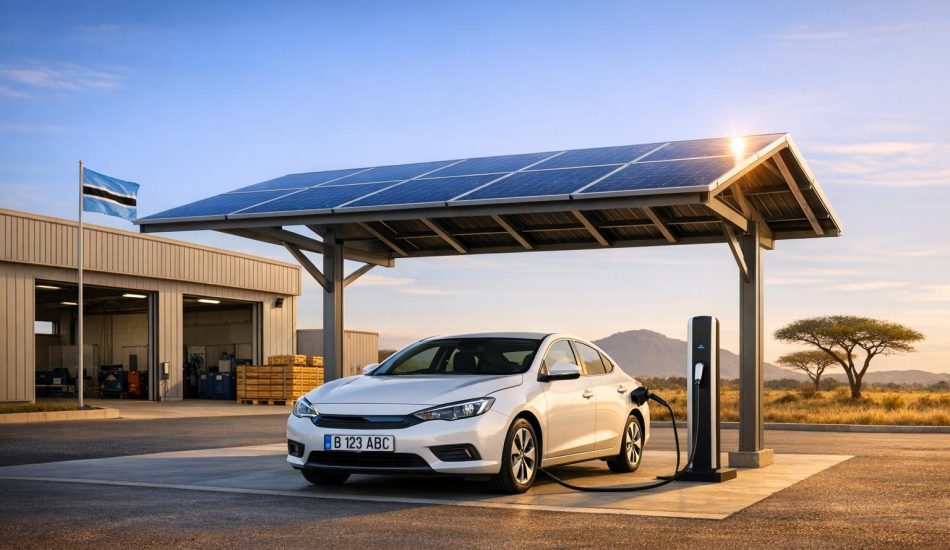
- Renewable Energy Potential: Botswana’s abundant sunlight makes solar-powered EV charging a promising solution.
While Botswana has taken steps to position itself as a regional eMobility hub, success will depend on overcoming infrastructure, policy, and financing challenges.
Botswana EV Readiness 2026: Infrastructure, Costs, and Opportunities
Current EV Infrastructure in Botswana
Charging Station Availability
Botswana currently has just one public charging station. As of April 2026, records indicate this single station is located at BMW Capital Motors on Plot 1279 Luthuli Road in Gaborone. It features a Level 2 (Medium, >2kW) Type 2 socket, but access is limited to staff, visitors, and customers.
This scarcity of public charging points poses a major challenge for potential EV owners, particularly those without private charging setups. The limited infrastructure not only restricts convenience but also diminishes the appeal of owning an electric vehicle. Most existing charging facilities are situated on private business properties, making them impractical for everyday use. Combined with concerns about the reliability of the national power grid, these factors significantly hinder Botswana’s readiness for widespread EV adoption.
Power Grid Reliability
Power grid stability remains a concern across Africa, and Botswana is no exception. While the country benefits from relatively stable financing conditions compared to some of its neighbors, the grid’s ability to support large-scale EV adoption is uncertain. This becomes especially critical when factoring in the high energy demands of fast-charging stations, which require a consistent and robust power supply.
Government officials acknowledge these challenges. Minister of Communication, Knowledge, and Technology Thulagano Segokgo has stated that "by investing in eMobility and sustainable energy sources, government was laying the groundwork for a greener and smarter Botswana". However, turning this vision into reality – complete with a reliable grid capable of supporting thousands of EVs – will demand significant time and investment. These hurdles have prompted a shift toward exploring solar-powered charging solutions.
Solar-Powered Charging Options
Given the limitations of the existing grid, Botswana is actively looking into solar energy as an alternative. Research from the Paul Scherrer Institute suggests that off-grid solar systems can often outperform existing electrical grids in terms of reliability in many African regions. Christian Moretti, a research scientist at the institute, remarked:
"Even we were surprised by the results: these systems are significantly cheaper than is often assumed, and in many contexts they are even more reliable than the existing electrical grid".
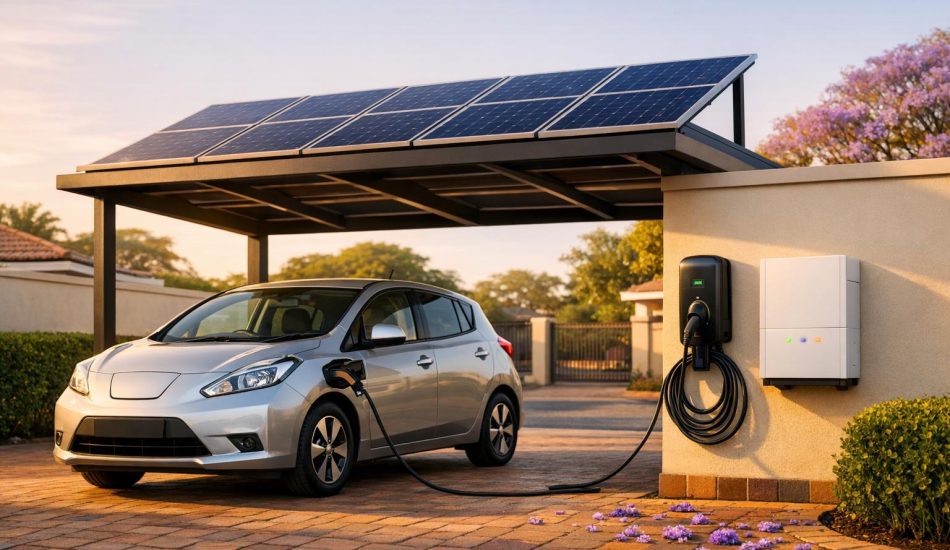
A small-scale solar system is capable of powering an electric vehicle for an average daily commute of 31 miles. In March 2026, a test in Gaborone showed that slow AC charging at a residential setup cost R2.07 per kWh – much cheaper than highway DC fast chargers, which range from R7.00 to R7.35 per kWh. With Botswana’s abundant sunlight, solar-powered home charging presents an appealing and cost-effective option for EV owners. Bessie Noll, senior researcher at ETH Zurich, highlighted the potential of this approach:
"e-mobility is feasible sooner than many people think… just as long as charging infrastructure is developed and geared specifically towards solar powered off-grid systems".
sbb-itb-99e19e3
Government Policies and Support for EVs
Policy Gaps and Regulatory Issues
Botswana’s approach to electric vehicles (EVs) is still a work in progress. While the government has introduced some initiatives, a cohesive national strategy covering crucial aspects like standardized charging infrastructure, tax reforms, and long-term revenue planning is missing. This is a pressing issue, especially since fuel taxes contribute over 9% of total government revenue in many low-income countries. As EV adoption grows and traditional fuel consumption declines, finding alternative revenue streams will become increasingly important.
Interestingly, the Road Traffic Act does not restrict vehicles based on their drive configuration. This regulatory gap has allowed a variety of EV models to enter the market, but without consistent standards for charging infrastructure, safety certifications, or import guidelines. Experts stress the importance of proactive policies to establish public charging standards and address the inevitable decline in fuel tax revenue.
To tackle these challenges, the government has rolled out several targeted initiatives.
Current and Planned Initiatives
Under the national e-Mobility Project, the government approved the purchase of 33 buses and 20 SUVs through Presidential Directive CAB 5EX0/2024. By March 2025, Minister of Communications and Innovation David Tshere confirmed that BITRI had taken over management of this fleet.
Efforts are also underway to boost local EV manufacturing. During the Forum on China-Africa Cooperation (FOCAC) in September 2024, President Dr. Mokgweetsi Masisi met with Chinese investors to finalize plans for two manufacturing plants in Botswana. Collaborations with companies like Skywell and CHTC Kinwin aim to enhance local EV production while sharing intellectual property. As Dr. Ecco Maje, National e-mobility Coordinator, explained:
"The initial IP is definitely theirs but any new innovation we do together will have a joint IP and they are ready to share it with us".
This joint IP arrangement is expected to speed up local manufacturing, enabling Botswana to develop its own innovations and build technical expertise. To support this, the government has initiated overseas training programs to develop skills in EV manufacturing and maintenance. President Masisi emphasized:
"We do not want to be just a consuming customer, we want to create what we consume and have the capacity and skills to develop our own technology".
The long-term plan includes moving from semi-knock-down assembly to complete knock-down manufacturing, with the goal of eventually producing all components locally. These initiatives, alongside regulatory updates, aim to boost investor confidence and address the infrastructure and market challenges previously identified.
Economic and Market Barriers to EV Adoption
High Purchase Prices
The upfront cost of electric vehicles (EVs) remains a significant obstacle for buyers in Botswana. While EVs can be competitive when purchased outright, financing often pushes them out of reach. High interest rates, steep risk premiums, and financial institutions’ limited familiarity with EVs make it difficult for consumers to secure long-term credit. Adding to the challenge, currency volatility and local economic risks further drive up costs, creating a financial hurdle that many potential buyers struggle to overcome.
Financing Options and Interest Rates
In Botswana, financing conditions have started to narrow the cost gap between EVs and fossil fuel vehicles, signaling progress. However, researchers Christian Moretti and Bessie Noll from ETH Zürich highlight a persistent issue:
"In lower-risk countries such as Botswana, Mauritius and South Africa, the financing conditions today are already close to making costs the same for electric and fossil fuel cars."
They emphasize the real challenge lies not in the technical feasibility of EV adoption but in scaling financing solutions effectively. Despite these relatively favorable conditions, financing costs in more than half of African nations still need to drop by 7 to 15 percentage points for EVs to achieve true cost parity with conventional vehicles by 2030.
To address this, strategies like credit guarantees, concessional loans, and loan securitization could help lower interest rates for consumers while attracting institutional investors. These financial tools could play a pivotal role in making EVs more accessible across the continent.
Dependence on Imported Vehicles
Another factor impacting EV affordability in Botswana is the heavy reliance on imported vehicles. The market currently depends on imports from manufacturers like Great Wall Motor, Chery, and JAC in China. This dependence exposes buyers to international pricing fluctuations and currency risks, adding another layer of complexity.
However, there are signs of progress. In March 2026, Muyapo Lesetedi, a Sales Executive at Motor Holdings Francistown, described the growing demand for EVs:
"The moment an EV arrives at our showroom, it is taken by the first customer."
To reduce import reliance and stabilize prices, Botswana is shifting toward local assembly. Partnerships with companies like Skywell and CHTC Kinwin aim to establish local production capabilities, which could help lower costs and make EVs more affordable for buyers in the future.
Renewable Energy Integration for EV Charging
Solar Energy for Charging
Botswana’s abundant sunshine offers a practical solution to one of the key obstacles to electric vehicle (EV) adoption: an unreliable electrical grid. With off-grid solar charging systems, EVs can bypass the national grid entirely, ensuring more consistent energy supply for drivers.
Christian Moretti, a Research Scientist at the Paul Scherrer Institute PSI, shared insights on the affordability of these systems:
"Even we were surprised by the results: these systems [off-grid solar] are significantly cheaper than is often assumed, and in many contexts they are even more reliable than the existing electrical grid."
Thanks to falling costs of solar panels and batteries, solar-powered EV charging is becoming a competitive option. Botswana’s classification as a "lower-risk" country further enhances the economic feasibility of these systems compared to many neighboring nations. Studies predict that combining EVs with solar-powered off-grid charging will reach economic competitiveness in several African countries well before 2040.
Reducing Fuel Imports with EVs
Beyond the promise of solar energy, EV adoption presents an opportunity for Botswana to tackle its dependence on imported petroleum. Transitioning to solar-powered EVs could significantly cut fuel imports. However, this shift comes with a fiscal challenge: as fuel imports decline, early tax reforms will be essential to address potential revenue shortfalls.
The advantages of EVs extend beyond energy independence. Gaone Majere, Mayor of Francistown, emphasized the operational benefits:
"The cost of energy, or cost of electric refueling, is much cheaper, while the range is longer, adding that the maintenance expense for EVs is lower compared to that of vehicles with internal combustion engines."
With the African EV market projected to hit $28 billion by 2030, Botswana’s focus on solar-powered charging infrastructure not only reduces reliance on volatile global oil markets but also positions the country to benefit from the growing demand for EVs across the continent.
Botswana Launches First Locally Manufactured Electric Vehicles | SnapFlash News
How EV24.africa Supports Botswana’s EV Transition
With infrastructure and regulatory hurdles in place, Botswana’s shift to electric vehicles (EVs) depends on practical solutions that address the local market’s unique needs.
EV Options Tailored for Botswana
EV24.africa offers a carefully curated selection of EVs designed to meet Botswana’s specific requirements. The platform highlights Chinese brands such as BYD, Great Wall Motor (GWM), Chery, and Anhui Jianghuai Automobile (JAC), known for their affordability and environmentally conscious designs. This approach aligns with Botswana’s vision of increasing EV adoption and potentially supporting local production. To further enhance accessibility, the platform facilitates local assembly through partnerships with Chinese manufacturers, making parts and services more readily available.
For those concerned about charging infrastructure, plug-in hybrid electric vehicles (PHEVs) provide a practical solution during the transition phase from traditional vehicles. Buyers seeking premium options can explore Tesla models, alongside other well-known brands like Hyundai and Toyota. Additionally, Botswana’s flexibility in allowing both left-hand and right-hand drive vehicles broadens the range of available EVs, giving buyers access to a diverse global inventory.
Financing and Delivery Made Simple
High upfront costs and limited financing options have been significant barriers to EV adoption. EV24.africa addresses this by offering tailored financial solutions that cater to Botswana’s market. With the country approaching financing conditions similar to those for traditional vehicles, the platform provides loan options designed to make EV ownership more achievable.
EV24.africa also handles vehicle delivery across all 54 African countries, including Botswana. By managing logistics and navigating complex import processes, the platform ensures that vehicles arrive ready for registration and use, streamlining the entire purchasing experience.
Transparent Pricing and Comprehensive Support
Building trust is crucial in a market where many buyers are new to EV technology. EV24.africa emphasizes clear pricing, eliminating hidden fees and making it easier for customers to compare options. Each vehicle listing includes detailed specifications, ensuring buyers know exactly what they’re purchasing.
Beyond transparency, the platform offers expert guidance throughout the buying process, from vehicle selection to delivery. This level of support is especially important in Botswana, where EV adoption is still in its early stages. By combining clear pricing with reliable advice, EV24.africa helps ease the concerns of potential buyers, making the transition to electric vehicles more approachable and less intimidating.
Conclusion: Botswana’s EV Readiness by 2026
Challenges and Opportunities Overview
Botswana faces a tough road ahead in expanding the adoption of electric vehicles (EVs), but there’s also plenty of potential. One of the biggest hurdles is the high cost of financing. Interest rates would need to drop by 7 to 15 percentage points to make EVs as affordable as traditional vehicles by 2030. Another challenge is the reliability of the electrical grid, though solar-powered charging stations provide a promising alternative. On top of that, the shift away from fuel taxes could hit government revenue hard – fuel taxes currently make up more than 9% of total revenue in many low-income countries.
Still, Botswana is making progress. A major milestone came in October 2024, when BITRI introduced locally assembled electric SUVs and buses. Compared to other African nations, Botswana’s relatively stable financing environment could help it achieve EV cost parity sooner than its neighbors. As Bessie Noll, a Senior Researcher at ETH Zurich, put it:
"If financing costs can be reduced, the transition will accelerate dramatically".
These developments highlight the need for well-targeted actions in the years ahead.
Steps Toward EV Readiness
To overcome these challenges and seize emerging opportunities, Botswana needs to move quickly and strategically. Early tax reforms are crucial to make up for declining fuel tax revenue, and introducing credit guarantees could help lower financing costs for EV buyers. Expanding off-grid solar charging systems is another key step – after all, a compact solar setup can power a small EV for about 30 miles daily.
Local manufacturing will also play a central role. In September 2024, President Dr. Mokgweetsi Masisi signed agreements with Chinese manufacturers during the Forum on China-Africa Cooperation (FOCAC). These agreements include intellectual property sharing to help Botswana develop its own technology. Vice President Slumber Tsogwane emphasized the importance of these initiatives, explaining:
"What is important is that this will create value chains such as production of batteries, even mining companies will produce materials used for production of batteries".
FAQs
Where can I charge an EV in Botswana outside Gaborone?
Charging an EV outside of Gaborone can be challenging right now because the infrastructure is still in its early stages. Fast chargers are scarce, with the closest one being about 255 km away from certain areas. However, as Botswana continues to invest in eMobility, more charging stations are likely to pop up over time. For now, it’s a good idea to plan your trips carefully – use tools to map out charging points along your route and pinpoint stations ahead of time, particularly if you’re traveling through less populated regions.
Can solar charging replace the national grid for EVs?
Botswana’s plentiful solar resources make solar charging a promising option to support or partially substitute the national grid for EV charging. This approach works especially well in remote areas where grid access is limited, offering decentralized solutions that lower costs and reduce dependence on conventional infrastructure. While solar charging is unlikely to completely replace the grid in the near future, it can play a crucial role in a hybrid system, promoting a more sustainable and resilient path for EV adoption.
Will EVs get cheaper in Botswana by 2026?
Electric vehicles (EVs) are projected to cost less than gasoline-powered cars in Botswana by 2026. This shift is driven by falling battery prices, increased EV manufacturing, and the use of renewable energy sources. However, obstacles such as limited access to financing could slow down their broader adoption.