
 Thabo Nkosi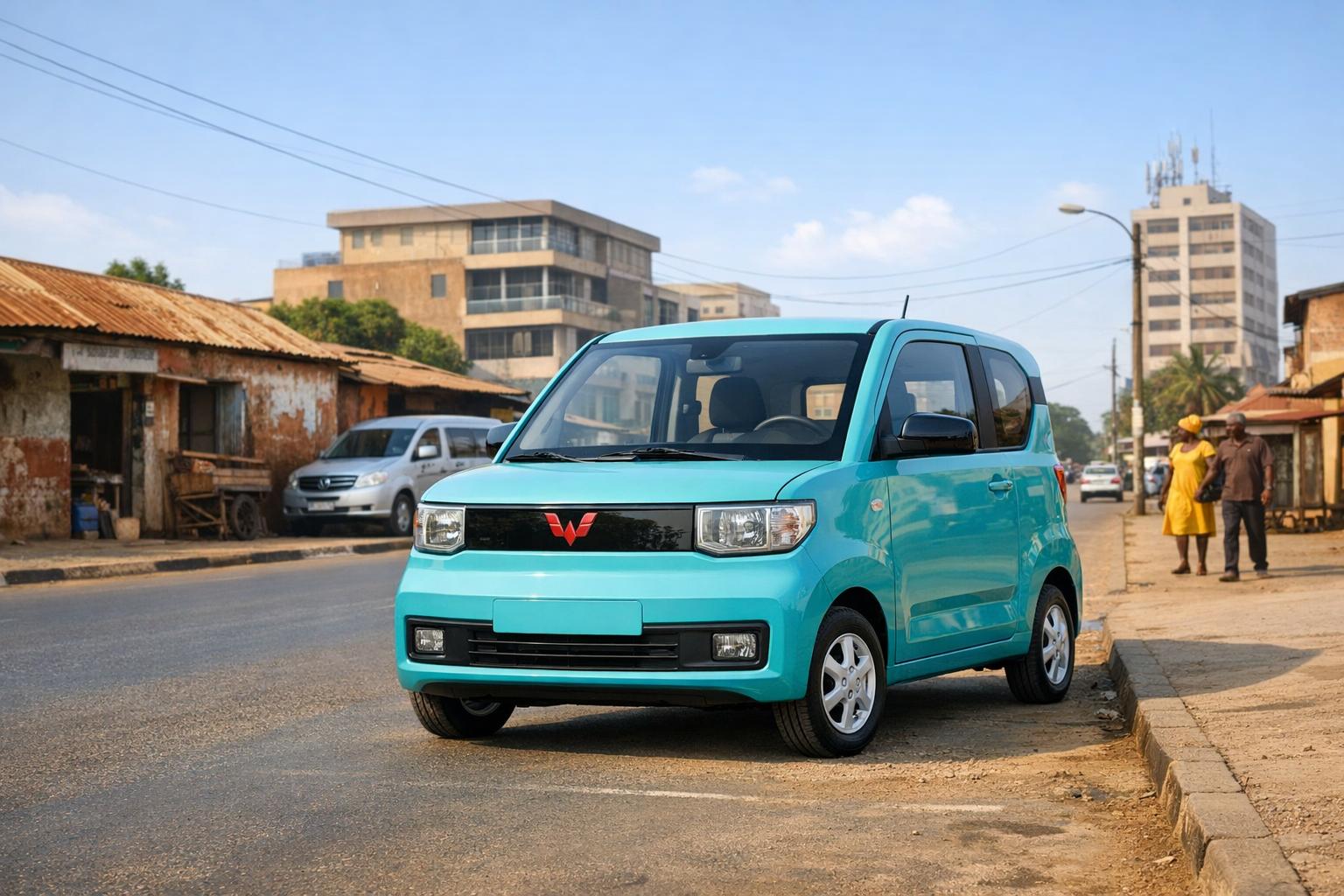
The Wuling Mini EV is one of the cheapest electric cars globally, starting at around $4,389. Its compact size, low maintenance costs, and simple design make it ideal for city commutes. However, import duties in Africa can significantly increase its price, limiting its accessibility. With a range of 75–186 miles depending on the battery, it’s a practical option for urban drivers but lacks fast-charging and advanced safety features.
If you’re comparing alternatives, the BYD Dolphin offers better range and features but at a much higher price (up to $25,000+). The Leapmotor T03, priced under $10,000, strikes a middle ground with more space and functionality.
Quick Comparison
| Vehicle | Price (USD) | Range (Miles) | Key Features | Limitations |
|---|---|---|---|---|
| Wuling Mini EV | $4,389–$6,645 | 75–186 | Affordable, compact, low maintenance | No fast-charging, basic safety features |
| BYD Dolphin | $13,000–$25,000+ | Up to 252 | Long range, fast-charging, modern design | High price, import duties |
| Leapmotor T03 | Under $10,000 | 75–186 | Spacious interior, fast-charging | Higher cost than Mini EV |
The Wuling Mini EV is a cost-effective city car, but import costs and its basic features make it less practical for many African buyers. For those needing more range or versatility, the Dolphin or T03 may be better options.
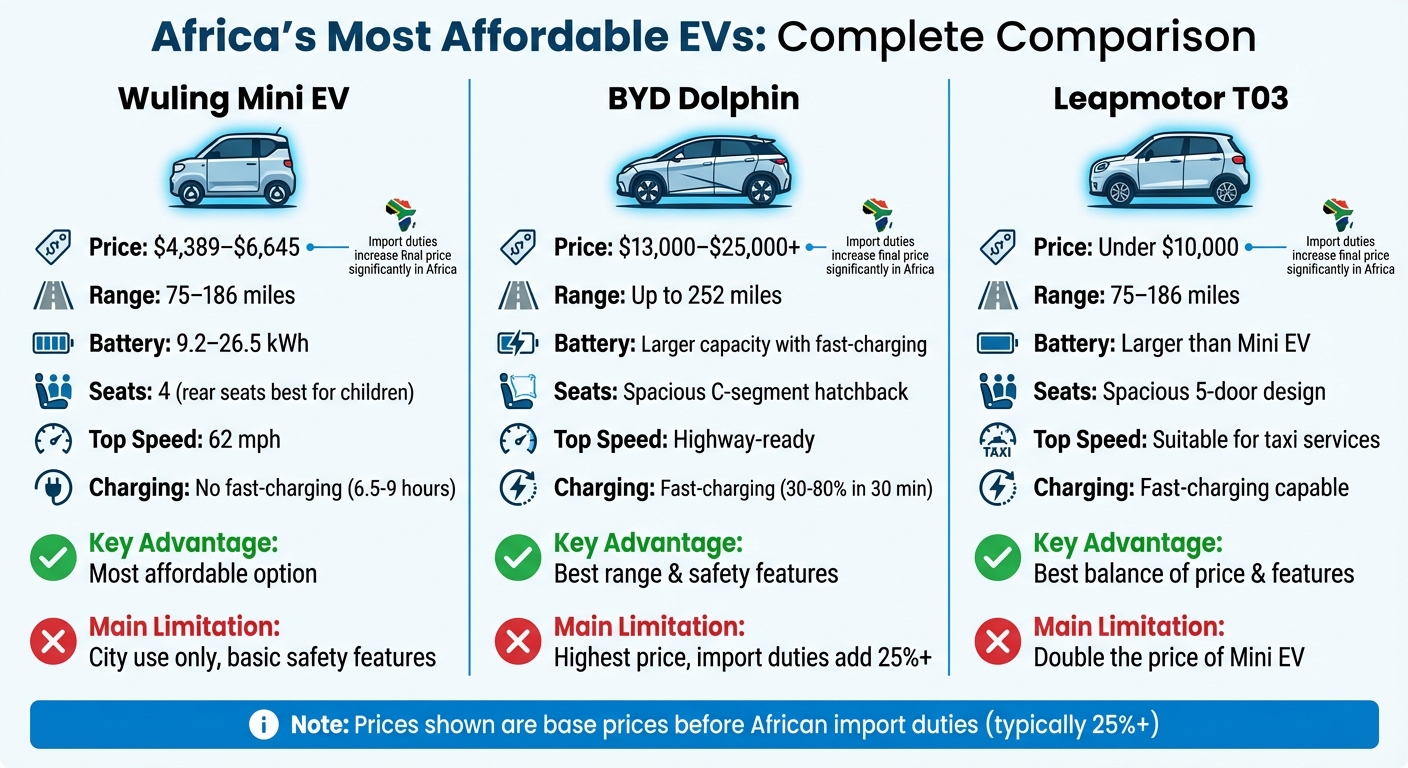
Wuling Mini EV vs BYD Dolphin vs Leapmotor T03: Price, Range & Features Comparison
1. Wuling Mini EV
Price (USD)
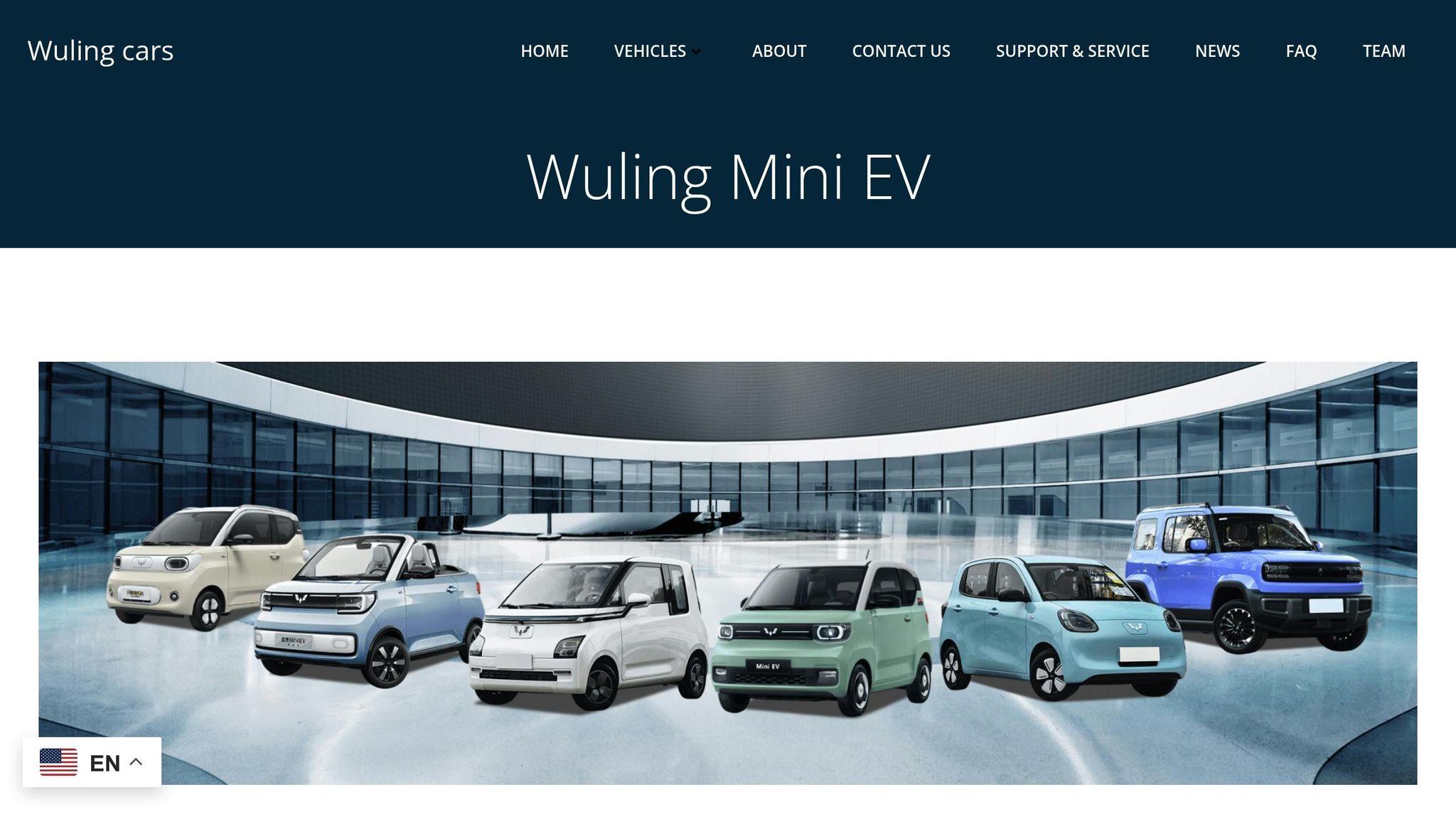
The Wuling Mini EV is one of the most affordable electric cars you can buy, with a starting price of about $4,389 for the base model. If you’re looking for something with a bit more flair, the Macaron version – with enhanced styling and features – comes in at around $6,645. On the higher end, the Wuling Air EV ranges between $8,300 and $11,000. To put this into perspective, the entry-level Nissan Leaf in the U.S. costs about $20,875 – more than quadruple the Mini EV’s base price. However, recent increases in battery costs have added approximately $1,000 to the Mini EV’s price tag.
Range (Miles)
The driving range depends on the battery configuration you choose. The base model, equipped with a 9.2 kWh battery, offers around 75 miles (120 km) per charge. Upgrading to the 13.8 kWh battery gives you about 106 miles (170 km), while the GameBoy edition, featuring a larger 26.5 kWh battery, can go up to 186 miles (300 km). While this range is sufficient for most city commutes, the lack of fast-charging capability means you’ll need to rely on a standard 220V outlet, which takes 6.5 to 9 hours to fully charge. As Mark Andrews from Wired put it:
"With no fast-charging capability, you really are stuck using the Mini EV as a city car".
This limitation reinforces the Mini EV’s role as a practical urban vehicle rather than a long-distance option.
Battery Capacity (kWh)
The Mini EV offers a range of battery options, starting with the 9.2 kWh pack in the base model and going up to the 26.5 kWh battery in the higher-performance versions. The standard 9.3 kWh and 13.8 kWh Lithium Iron Phosphate (LFP) batteries achieve energy consumption of about 8.1 kWh per 100 km. This efficiency helps keep maintenance costs to less than a third of what you’d spend on a traditional gas-powered car. These specs make the Mini EV a cost-effective choice for daily commutes.
Seats
Inside, the Mini EV is designed to seat four, though the rear seats are better suited for children due to limited legroom and the absence of proper headrests. It does include Isofix attachments for child seats, making it family-friendly for short trips. As Mark Andrews from Wired noted:
"Stuffing adults into those rear seats is not exactly comfortable… the rear seats suit children but lack proper headrests for adults".
The Mini EV’s compact size – measuring just 9.6 feet in length and weighing 1,543 lbs – makes it easy to maneuver through crowded city streets. Need extra cargo space? Fold down the rear seats, and you’ll get 741 liters of storage, enough to fit four suitcases. This flexibility adds to its appeal as a practical urban runaround.
sbb-itb-99e19e3
2. BYD Dolphin
Price (USD)
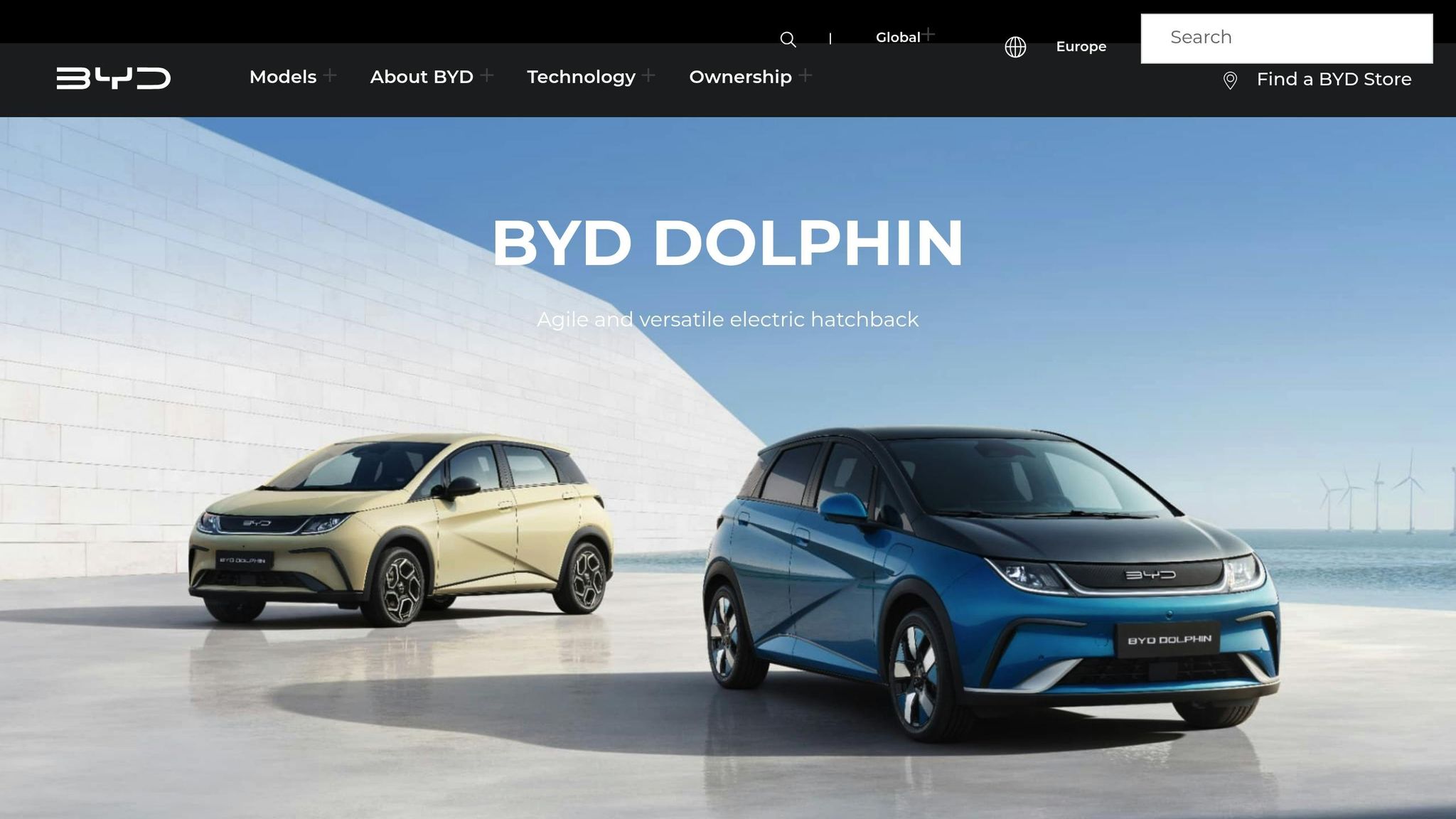
The BYD Dolphin comes with a much heftier price tag compared to the Wuling Mini EV. In China, the Honor Edition is typically priced between $13,000 and $17,000, while international export prices often climb to around $25,000 or even higher. For budget-conscious buyers in Africa, this makes the Dolphin several times more expensive than the Wuling Mini EV. However, this higher cost is accompanied by a promise of better performance and features.
Range (Miles)
Unlike the Wuling Mini EV, which is mainly designed for short urban trips, the BYD Dolphin is built to tackle a wider variety of driving conditions. It’s well-suited for not only daily commutes but also longer highway drives, making it a more versatile choice for navigating African roads.
Battery Capacity (kWh)
The Dolphin outshines the Mini EV with its significantly larger battery. While the Mini EV offers smaller options of 9.3 kWh or 13.8 kWh, the Dolphin includes a more robust battery paired with fast-charging capabilities. This means it delivers an extended range and improved performance, unlike the Mini EV, which relies on standard 220V charging.
Seats
As a C-segment hatchback, the BYD Dolphin provides ample interior space. Its roomy design ensures that even adult passengers can sit comfortably in the rear seats, making it a practical option for families and those who value comfort.
3. Leapmotor T03
Price (USD)
The Leapmotor T03 sits comfortably between the budget-friendly Wuling Mini EV and the higher-end BYD Dolphin. Priced at under $10,000, it’s about twice the cost of the Wuling Mini EV’s base price of around $5,000. While it’s not the cheapest option out there, the T03 strikes a balance between affordability and functionality.
Range (Miles)
When it comes to range, the T03 is designed for short trips, offering between 75 and 186 miles on a single charge. This range is comparable to the Wuling Mini EV, but the T03’s slightly larger size makes it more suitable for roles like taxi services in regions such as Kenya and Ethiopia.
Battery Capacity
Unlike the Wuling Mini EV, which prioritizes cost savings with a smaller battery, the Leapmotor T03 is equipped with a larger battery pack. This upgrade supports its bigger size and makes it a better fit for commercial use, especially for taxi drivers who rely on their vehicles for daily operations.
Seats
The Leapmotor T03 also stands out for its spacious interior, offering significantly more room than the Wuling Mini EV. This extra space makes it a practical choice not only for families but also for commercial drivers. Its roomier design is one of the reasons it’s becoming a popular replacement for traditional gas-powered cars in East Africa.
2025 Wuling MINI EV: How Much Electric Car Can You Really Get For $6,500?
Advantages and Disadvantages
The table below highlights the key benefits and drawbacks of each electric vehicle (EV) discussed earlier, helping you weigh your options effectively.
| Vehicle | Advantages | Disadvantages |
|---|---|---|
| Wuling Mini EV | • Starting price as low as approximately $4,400 • Extremely affordable repairs using off-the-shelf consumer parts • Compact size (115 inches long) makes it ideal for parking and city driving • Provides a safer alternative to overloading a motorbike |
• Limited to city use with a top speed of 62 mph and no fast-charging option • Rough ride quality due to small 12-inch wheels, making potholes more noticeable • Basic safety features, including only one airbag (Macaron trim) and no electronic stability control • Requires frequent maintenance due to consumer-grade parts |
| BYD Dolphin | • Impressive range of up to 252 miles (405 km) • Fast-charging capability, reaching 30–80% in just 30 minutes • Advanced safety features, including multiple airbags and a modern safety suite • Highway-ready with higher power output and speed • Premium interior with a 12.8-inch rotating touchscreen |
• Higher price point at approximately $29,254 in retail markets • Import duties increase costs significantly (25% in South Africa) • May be excessive for basic urban needs |
| Leapmotor T03 | • Affordable pricing under $10,000 • Five-door design enhances passenger convenience compared to three-door models • Spacious interior, suitable for families and commercial taxi services • Fast-charging capability supports extended daily use |
– |
Whether you’re looking for an affordable urban commuter, a highway-ready option, or a practical all-rounder, these vehicles cater to different needs. The next section will help tie these factors together to guide your decision.
Conclusion
For African buyers, the affordability of the Wuling Mini EV is more theoretical than practical. While its starting price in China hovers around $5,000, import duties in Africa – often exceeding 25% – drive the cost significantly higher. These added expenses make the Mini EV far less accessible than its base price suggests.
As a city commuter, the Mini EV shines with its compact design – measuring roughly 115 inches in length – and low maintenance needs, thanks to its simple, consumer-grade components. However, its limitations are hard to ignore: a top speed of just 62 mph, no fast-charging capability, and very basic safety features (like a driver airbag only available on higher trims). These factors make it less suited for rough roads and long-distance travel.
For those prioritizing highway performance and better safety features, the BYD Dolphin, though pricier, offers a more well-rounded alternative.
While the Wuling Mini EV could theoretically be Africa’s most affordable EV, import duties and other barriers keep it out of reach for many. As it stands, the Mini EV remains more of an appealing idea than a practical option for most African consumers.
FAQs
What are the key challenges of the Wuling Mini EV for African drivers?
The Wuling Mini EV has a clear limitation: its short driving range. Depending on the battery size – 9.2 kWh, 13.8 kWh, or 26 kWh – it can cover a maximum of around 127 miles per charge. This makes it ideal for short city commutes but less practical for longer trips. Charging the vehicle takes about 6–8 hours using a standard household outlet, and the absence of widespread rapid-charging options adds to the inconvenience for daily use. With a top speed of just 62 mph and motor power ranging from 20 to 40 horsepower, it struggles on highways or in hilly areas.
The basic design and limited support network also present challenges. Its simpler components may require more frequent maintenance, and the warranty – 3 years or 62,000 miles – falls short compared to other options on the market. The Mini EV lacks advanced safety features and modern tech, which could be a dealbreaker for some drivers. Additionally, since it isn’t sold directly in Africa, buyers must navigate extra costs like import fees, shipping, and limited after-sales support, adding complexity to ownership.
How do import taxes impact the cost of the Wuling Mini EV in Africa?
Import taxes heavily influence how affordable the Wuling Mini EV is across different African countries. While the base price of this compact EV typically falls between $4,950 and $7,000, additional costs like import taxes and shipping can significantly raise its final price.
In places like Rwanda and Malawi, where import duties on EVs are 0%, and VAT may be reduced, the Mini EV stays relatively close to its base price. Even with shipping costs ranging from $1,200 to $3,500, the overall cost remains manageable. Contrast this with South Africa, where a hefty 25% import duty adds an extra $1,250 to $1,750 to the base price, making the vehicle far less affordable.
For potential buyers, understanding the local tax landscape is crucial. Lower import taxes help keep the Mini EV a budget-friendly choice, while higher taxes can erode its appeal as an economical option.
What are the battery options for the Wuling Mini EV, and how do they affect its driving range?
The Wuling Mini EV comes with a variety of battery options to suit different needs, ranging from a 9 kWh pack to a larger 26.5 kWh pack. These batteries use two types of chemistries: lithium-iron-phosphate (LFP) and nickel-manganese-cobalt (NMC).
Battery size plays a big role in determining how far the car can go. The smallest pack delivers a range of about 75 miles, while the larger packs stretch that range to approximately 134 miles in the 2024 Macron edition. The highest-capacity version takes it even further, offering up to 174 miles. This range of options makes the Mini EV a practical choice for both short urban drives and longer journeys.