
 Thabo Nkosi
Choosing the right EV for Africa in 2025 means balancing affordability, durability, and range. African roads demand vehicles with rugged builds, high ground clearance, and reliable battery systems to handle heat and limited charging infrastructure. Here’s a quick look at the top contenders:
- BYD Atto 3: Tough build, 214–220 miles range, priced around $40,800. Ideal for rough roads with advanced safety features and a long-lasting Blade Battery.
- BYD Dolphin: Budget-friendly at $18,000–$21,200, offering 144–183 miles range. Compact and perfect for city driving with added V2L power capabilities.
- Volvo EX30: Durable and premium, with up to 296 miles range and prices starting at $44,300. Good for uneven terrain with extra protection in the Cross Country variant.
- GWM Ora 300/400: Affordable at $36,400–$42,800, offering 193–261 miles range. Great for budget-conscious buyers but less suited for rough terrains due to lower ground clearance.
- BMW iX1 xDrive30: Luxury option at $64,000 with 249 miles range. Offers premium features and all-wheel drive but struggles with bumpy roads.
Each EV offers unique strengths, from budget options to luxury picks. Below is a quick comparison to help you decide.
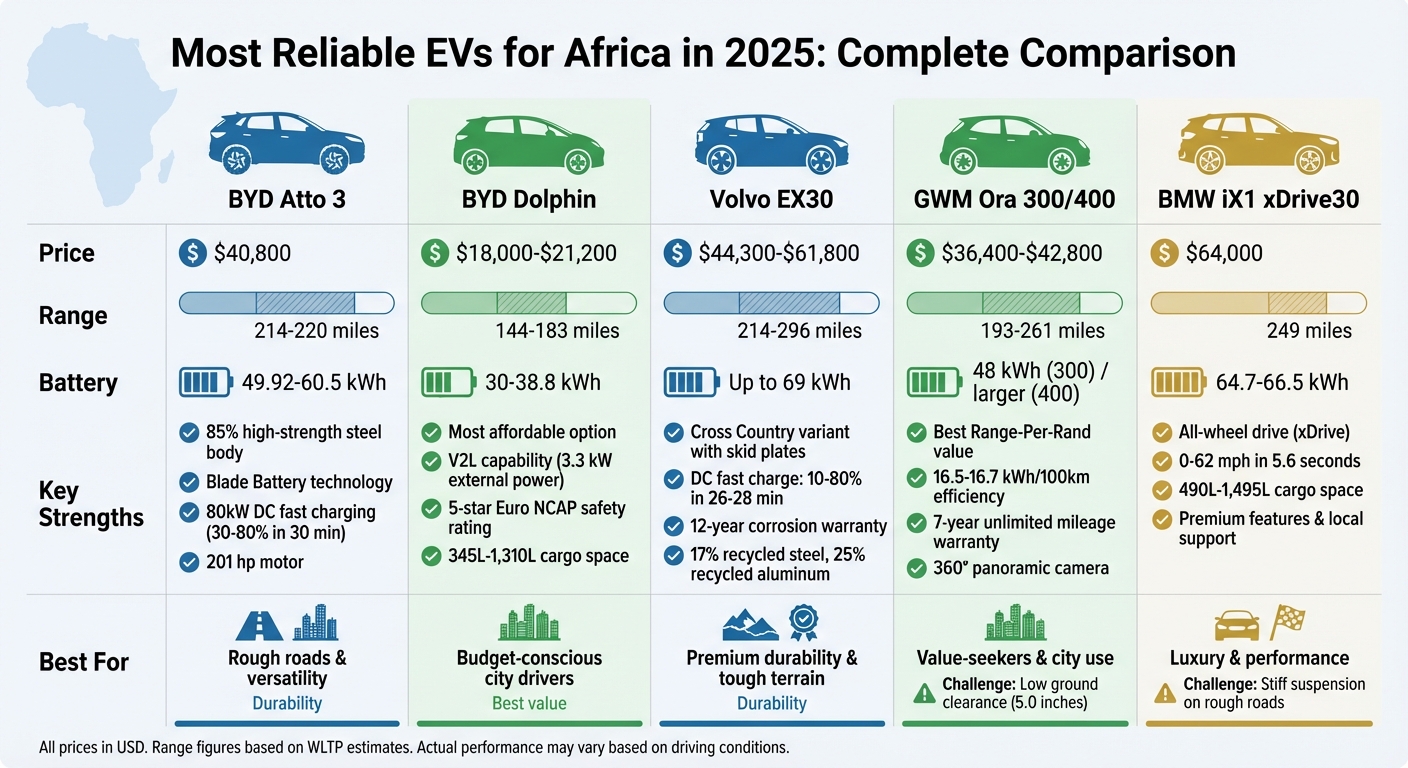
Top 5 Most Reliable EVs for Africa 2025: Price, Range & Features Comparison
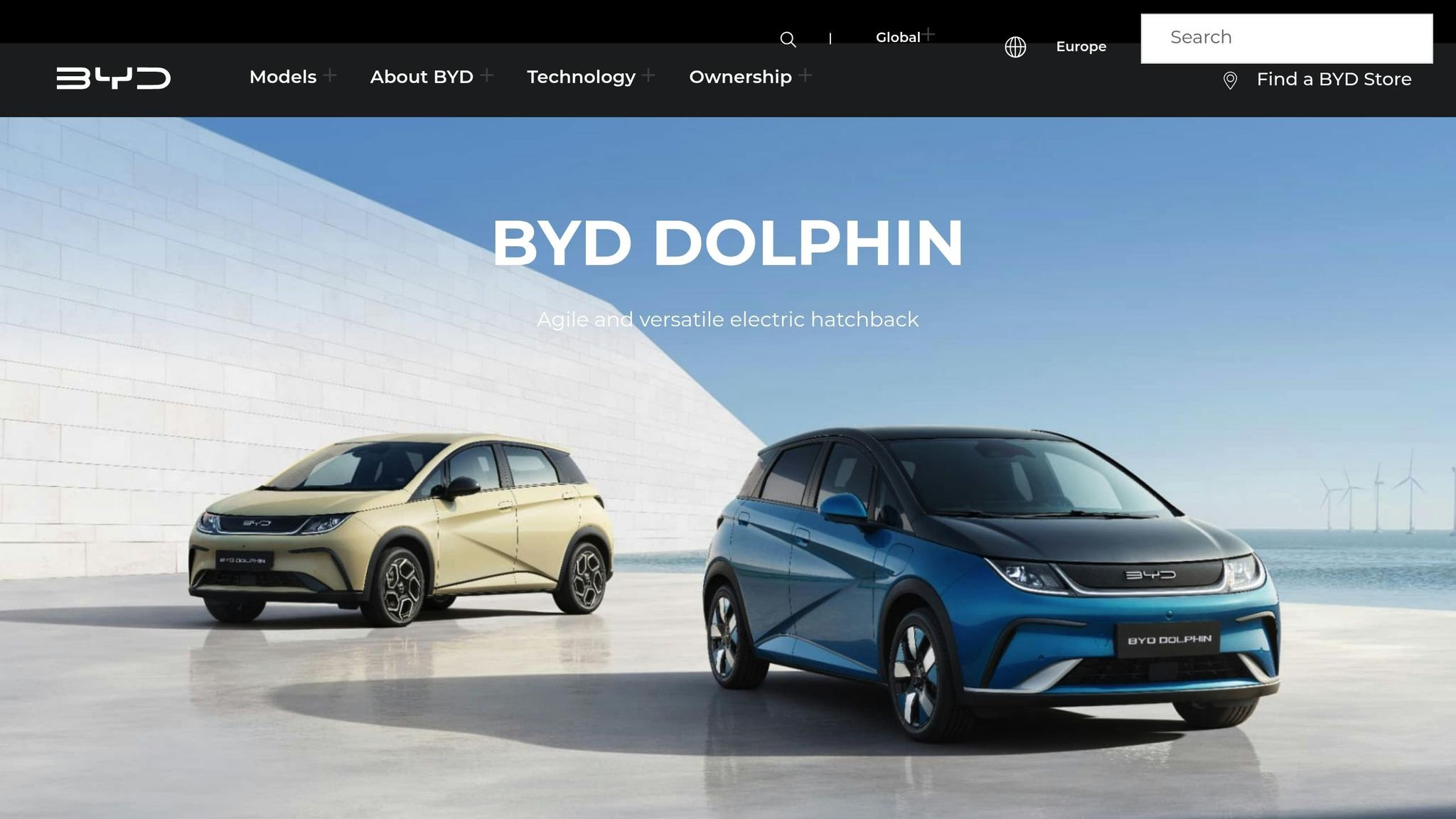
2025 BYD Dolphin Surf | New Electric Hatchback for South Africa
Quick Comparison
| Model | Price (USD) | Range (miles) | Key Features | Challenges |
|---|---|---|---|---|
| BYD Atto 3 | $40,800 | 214–220 | Durable build, Blade Battery | Higher price vs. Dolphin |
| BYD Dolphin | $18,000–21,200 | 144–183 | Affordable, V2L power | Limited range |
| Volvo EX30 | $44,300–61,800 | 214–296 | Rugged design, premium materials | Higher cost |
| GWM Ora 300/400 | $36,400–42,800 | 193–261 | Low energy use, good warranty | Low ground clearance |
| BMW iX1 | $64,000 | 249 | Luxury features, AWD | Expensive, stiff suspension |
This guide highlights the best EVs for African roads, factoring in durability, range, and cost. Whether you’re seeking affordability, performance, or luxury, there’s an option tailored to your needs.
1. BYD Atto 3
Durability
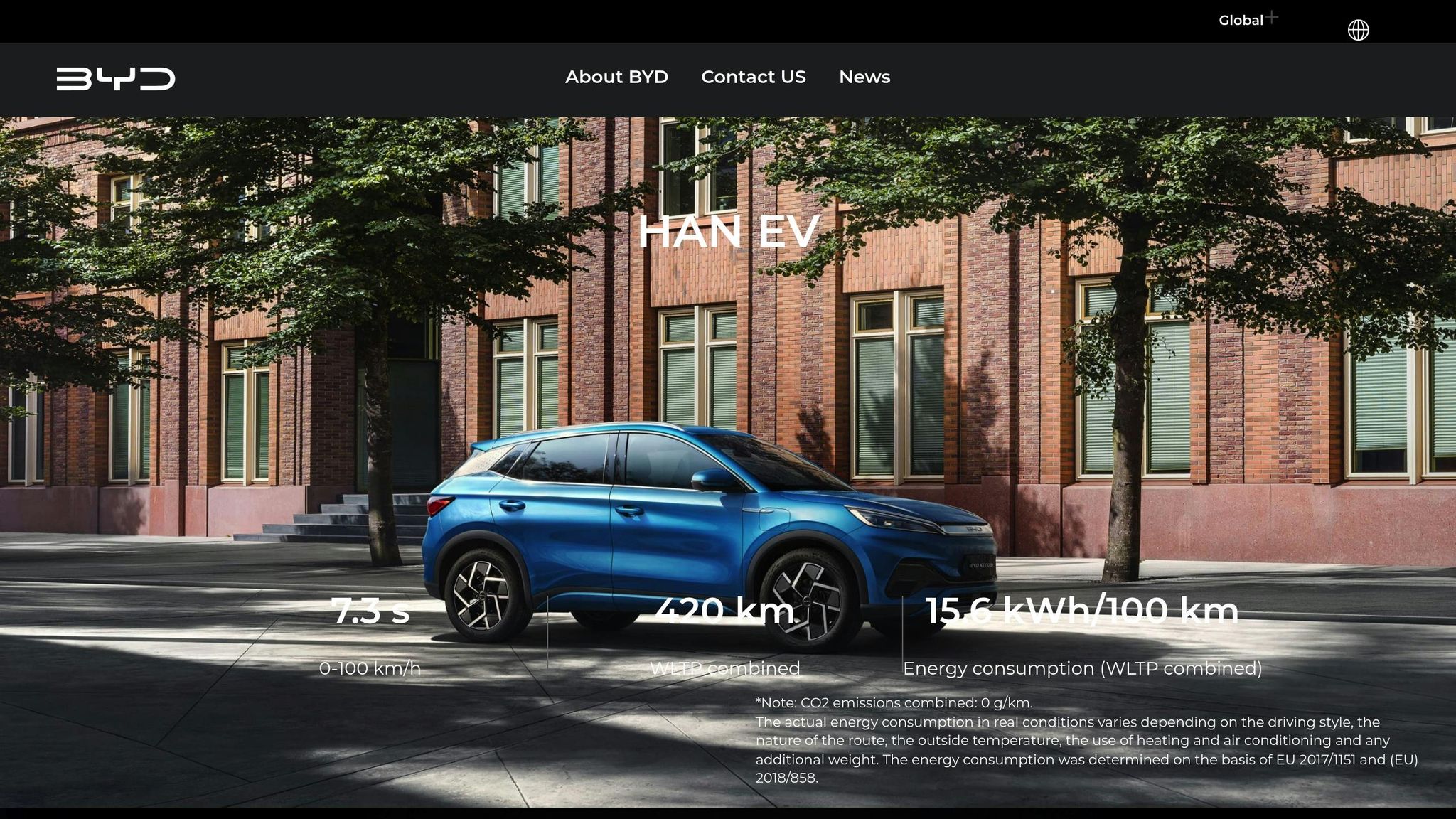
The BYD Atto 3 is built to handle the challenges of African roads, offering impressive structural toughness. Its body is made up of 85% high-strength steel, with 55% being ultra-high-strength steel. The key chassis components use hot-formed steel with a tensile strength of 1,500 Mpa. This rugged design helps the vehicle tackle potholes, unpaved roads, and uneven terrain while maintaining safety.
As WIRED observed, "BYD’s pursuit of soft-sprung comfort is a noble one… the Atto 3 copes well with our broken British roads". The soft suspension and tires with thicker sidewalls do a great job of absorbing shocks from damaged surfaces, which is a major advantage for African driving conditions. Adding to its durability, the Blade Battery, which uses lithium-iron phosphate chemistry, offers enhanced stability and is designed to prevent thermal runaway even in the event of punctures. The battery is strategically placed under the floor and surrounded by longitudinal beams that not only absorb collision energy but also shield the cells. These features combine to create a vehicle that’s both tough and reliable.
Range
The Atto 3 Standard Range is equipped with a 49.92 kWh battery, delivering a claimed range of 214 miles (345 km). For those opting for the larger 60.5 kWh version, real-world estimates suggest a range of around 220 miles . A high-efficiency heat pump system helps maintain range by recycling residual heat, which is particularly useful in extreme climates.
When it comes to charging, the Atto 3 supports 80kW DC fast charging, allowing the battery to go from 30% to 80% in about 30 minutes. For home charging, a 7kW wall box offers a practical solution, especially in areas where public charging stations are scarce. This balance of range and charging flexibility makes it a practical choice for drivers in Africa.
Affordability
In South Africa, the Atto 3 Standard Range starts at R768,000 (around $40,800) as of late 2025. While it’s priced higher than the BYD Dolphin at R539,900, the Atto 3 offers added value through cost-efficient engineering. BYD’s 8-in-1 powertrain integrates essential components like the VCU, BMS, MCU, PDU, DC-DC controller, charger, motor, and transmission into a single system, helping to keep costs under control.
The Blade Battery also boasts an ultra-long lifespan, which could lower long-term replacement costs. On the performance side, the motor delivers 201 hp (150 kW) and 310 Nm of torque, ensuring a responsive and capable drive.
Adaptability
The Atto 3’s e-Platform 3.0 provides a flat rear floor, enhancing both passenger comfort and cargo space. Inside, the cabin features durable vegan leather, designed to withstand high temperatures. A 12.8-inch rotatable touchscreen with voice control and smartphone integration (supporting Apple CarPlay and Android Auto) comes standard.
With its versatile charging options, efficient thermal management, and practical interior, the Atto 3 is well-suited to meet the diverse needs of African drivers and the region’s unique infrastructure challenges.
2. BYD Dolphin
Affordability
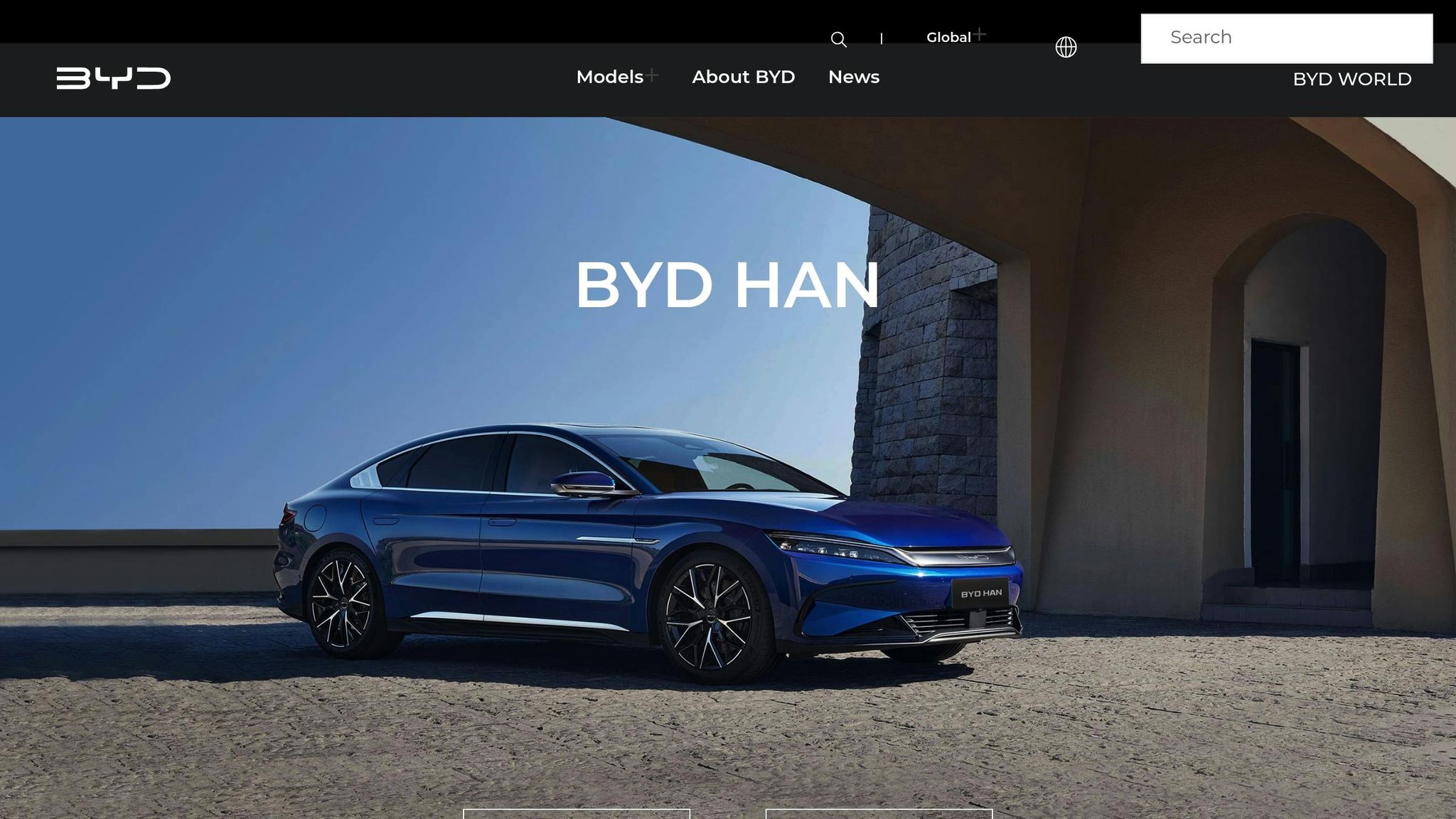
The BYD Dolphin Surf is making waves as South Africa’s most budget-friendly electric vehicle, with a starting price under R400,000 (around $21,200). The Dolphin Surf Comfort is priced at R339,000 ($18,000), while the Dolphin Surf Dynamic comes in at R389,900 ($20,700). Both models include a 7kW wall charger as standard. This pricing is aimed squarely at first-time EV buyers and middle-income drivers who want to experience the benefits of electric vehicles without straining their wallets.
Range
The Dolphin offers two battery configurations to suit different driving needs. The Comfort model features a 30 kWh battery that provides a range of 144 miles (232 km) and supports 30 kW fast charging. On the other hand, the Dynamic model is equipped with a 38.8 kWh battery, extending the range to 183 miles (295 km) and allowing for 40 kW charging. Its 55 kW motor delivers enough power for smooth urban commuting, and the compact hatchback design makes it a perfect fit for city life. With these options, the Dolphin ensures reliable performance for everyday driving.
Practical Features
The Dolphin isn’t just about affordability and range – it’s designed with real-world usability in mind. Thanks to its vehicle-to-load (V2L) capability, the car can deliver 3.3 kW of external power, effectively turning it into a portable power source. This is particularly useful in areas with unreliable electricity, as it can power essential devices and appliances. To support EV adoption, a partnership with Eskom is expanding charging infrastructure at key locations like malls, schools, hospitals, and government buildings. Built on BYD’s e-Platform 3.0, the Dolphin combines a long wheelbase with short overhangs, offering excellent maneuverability in crowded city streets. It also provides 345 liters of trunk space, which can expand to 1,310 liters when the rear seats are folded down.
Durability
Durability is a key strength of the Dolphin, thanks to BYD’s lithium iron phosphate (LFP) Blade Battery. Known for its safety and longevity, this battery is designed to perform well even in tough conditions. The car has earned a 5-star Euro NCAP safety rating, showcasing its strong structural design. Additionally, the Dolphin supports Over-the-Air (OTA) updates via a 4G intelligent connection system, allowing software updates to be installed remotely. This feature is especially valuable in areas where service centers may not be easily accessible, ensuring the car stays up-to-date without added hassle.
3. Volvo EX30
Durability
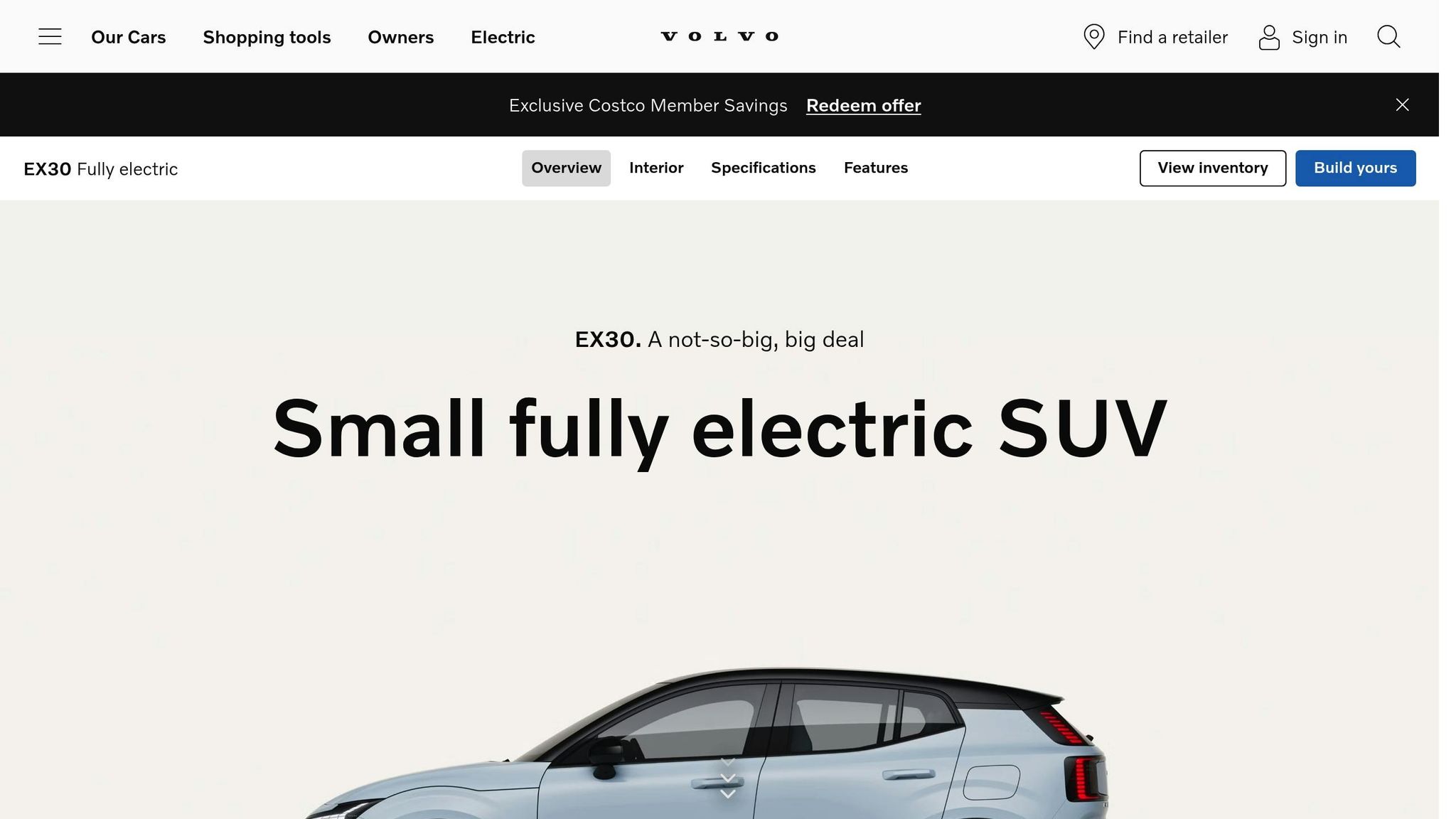
The Volvo EX30 is engineered to handle Africa’s rugged roads with ease. Its compliant suspension system is designed to absorb bumps effectively, making it ideal for the uneven terrain found across the continent. For even tougher conditions, the Cross Country variant offers additional protection with front, side, and rear skid plates, along with matte black front shields and wheel arch extensions to safeguard against debris on unpaved roads. This version also features an extra 0.5 inches (13mm) of ground clearance, making it easier to navigate obstacles and rough landscapes.
"The increased ride height gives better ground clearance, helping you to drive with confidence through tough terrain." – Volvo Cars
For coastal areas dealing with high humidity and salt exposure, Volvo provides a 12-year unlimited mileage corrosion warranty, ensuring long-term reliability. Inside, the EX30 uses materials that are both durable and environmentally friendly, such as recycled plastics, natural flax fibers, and wool blends. The structure incorporates recycled metals – 17% steel and 25% aluminum – for added strength. These thoughtful design elements also contribute to efficient power usage, enhancing the vehicle’s overall performance.
Range
The EX30’s powertrain options deliver impressive range capabilities to complement its durable build. The Single Motor variant offers a range of 214 miles (344 km), while the Single Motor Extended Range version increases this to 296 miles (476 km) with its larger 69 kWh battery. For those seeking more power, the Twin Motor Performance model provides a range of 286 miles (460 km). Charging is quick and convenient, with all models supporting DC fast charging from 10% to 80% in just 26 to 28 minutes. Plus, the battery pre-conditioning feature ensures the system is ready for optimal charging speeds when navigating to a station using the integrated Google Maps.
Affordability
Starting at R 835,500 ($44,300) for the Core trim in South Africa, the EX30 is Volvo’s most budget-friendly electric vehicle. The mid-tier Plus trim is priced at R 968,400 ($51,400), while the Ultra trim reaches R 1,080,200 ($57,300). The rugged Cross Country variant tops the range at R 1,165,000 ($61,800). In the United States, pricing is more competitive, ranging from $36,245 to $46,600, depending on the trim.
Despite its premium pricing, the EX30 offers excellent long-term value through smart design choices. By using a single central screen instead of multiple displays and reducing the overall parts count, Volvo has managed to lower production costs. Additionally, the EV’s reduced maintenance needs and lower electricity costs compared to traditional fuel vehicles make it an appealing option for cost-conscious buyers over time.
"The EX30 has the right combination of price, style, features, and utility to be a megahit." – Scott Evans, MotorTrend
sbb-itb-99e19e3
4. GWM Ora 300/400
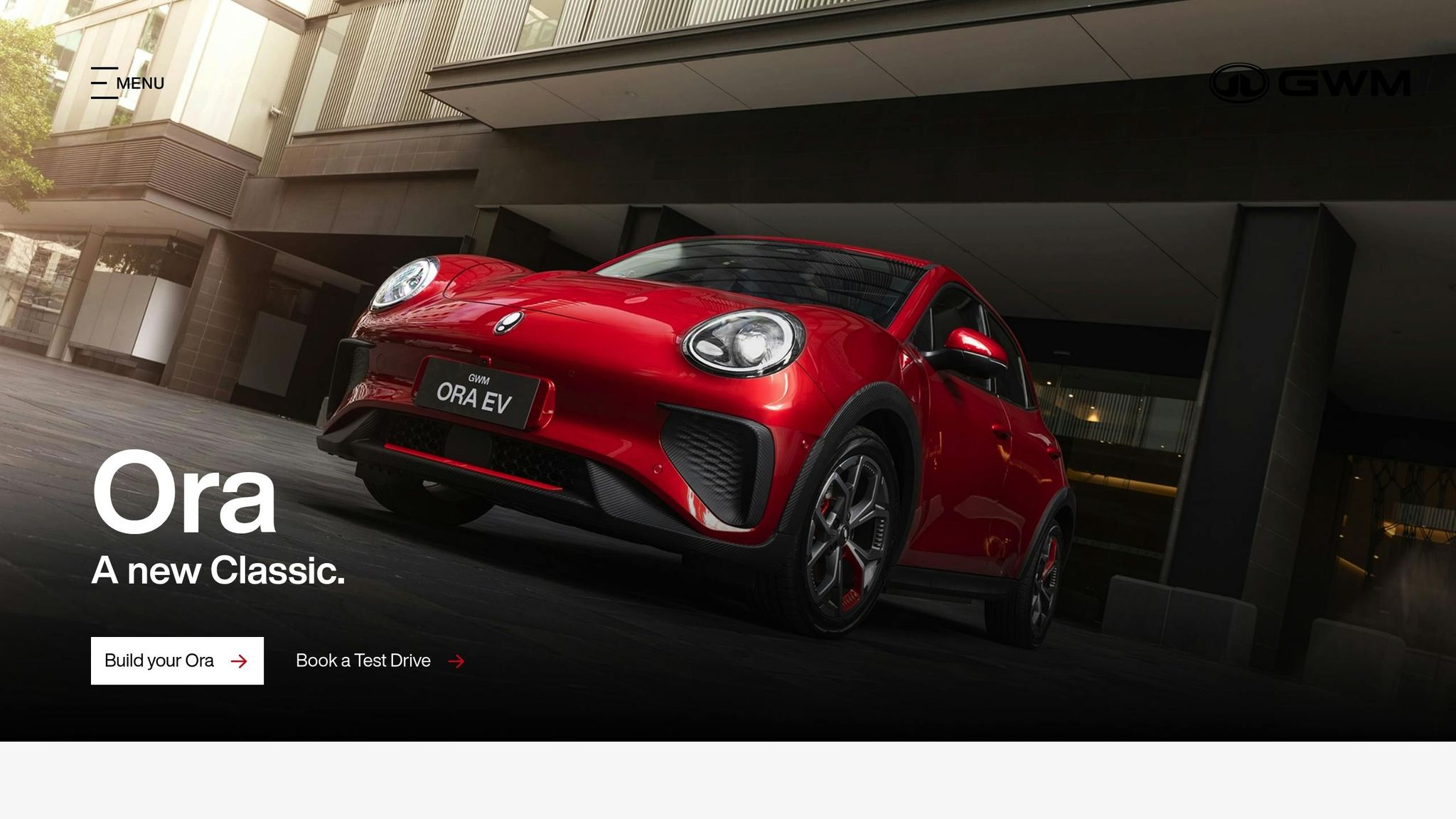
The GWM Ora series continues to make waves with its competitive pricing and thoughtful cost-saving features, appealing to buyers looking for an affordable electric vehicle option.
Affordability
For African buyers, particularly in South Africa, the GWM Ora 300/400 presents a strong value proposition. The 300 Super Luxury starts at R 686,950 ($36,400), while the 400 Super Luxury is priced at R 775,950 ($41,200), and the top-tier 400 Ultra Luxury comes in at R 805,950 ($42,800). GWM promotes the Ora as offering the "best Range-Per-Rand of any Electric Vehicle in South Africa", which makes it a compelling choice for those keeping an eye on their budget.
Beyond the sticker price, the Ora keeps running costs low with an energy consumption rate of 16.5–16.7 kWh/100 km, making it suitable for the energy-conscious driver. Maintenance is straightforward, with service intervals every 12 months or 9,320 miles (15,000 km). Buyers also benefit from a 7-year/unlimited-mileage vehicle warranty and an 8-year/unlimited-mileage battery warranty, offering long-term reassurance.
Range
The Ora caters to different driving needs with two battery options. The 300 series is equipped with a 48 kWh battery, delivering a WLTP range of 193 miles (310 km), while the 400 series features a larger battery, extending the range to 261 miles (420 km). Both models pack a punch with 126 kW of power and 250 Nm of torque.
For charging, DC fast charging takes about 50 minutes to go from empty to 80%. The Ora is also compatible with the GridCars charging network, which boasts over 350 charging points across South Africa, ensuring convenience for drivers on the go.
Adaptability
The Ora includes features designed to navigate the challenges of African roads. A 360° panoramic camera aids in tight maneuvers and avoiding obstacles, while multiple driving modes – Standard, ECO, Sport, Auto, and ECO+ – allow drivers to tailor performance to road conditions. In urban settings, the Single Pedal Mode enhances energy recovery during stop-and-go traffic. Additionally, adjustable State of Charge settings help owners manage battery health, whether for daily commutes or longer trips.
However, the Ora does face some challenges. Top Gear’s review highlighted the suspension as "crashy", which could affect comfort on uneven or unpaved roads, a common feature in many parts of Africa. The 5.0 inches (127 mm) of ground clearance may also limit its ability to handle rougher terrains, requiring extra care on rural routes. Reviews have also mentioned a "clunky" and "disconnected" driving experience, and the boot space is relatively small at 228 liters, though it expands to 858 liters with the rear seats folded.
"It’s spacious and finished well inside, but the 03 is let down by some fundamental issues [including] crashy suspension." – Top Gear Team
5. BMW iX1 xDrive30
The BMW iX1 xDrive30 introduces premium German engineering to the African electric vehicle market. Priced at R1,205,000 (around $64,000) in South Africa, it caters to buyers who prioritize performance, luxury, and cutting-edge features.
Range
This model boasts a WLTP-certified range of approximately 249 miles (400 km), powered by a battery with a capacity between 64.7 and 66.5 kWh. Its dual motors deliver 200 kW of nominal power and can peak at 230 kW, allowing the car to go from 0 to 62 mph in just 5.6 seconds. Energy consumption is efficient at about 18.3 kWh per 100 km.
Charging is convenient, too. A 130 kW DC fast charger can take the battery from 10% to 80% in just 29 minutes, while an 11 kW BMW Wallbox fully charges it in 6.5 hours. For those longer drives, the "Max Range" mode helps stretch the remaining battery life by up to 25% by capping the top speed at 56 mph (90 km/h) and cutting back on power-hungry features like climate control. Plus, the navigation system is smart enough to plan "charge-optimized routes", making road trips a breeze.
Beyond its impressive range, the iX1 is equipped with features designed to handle a variety of driving conditions.
Adaptability
The xDrive30’s all-wheel-drive system, with individual electric motors powering each axle, ensures better traction on a range of road surfaces. However, its suspension has been a point of criticism. As Carwow points out:
"The BMW struggles a little with a road that’s not smooth, particularly broken surfaces where it makes sure you know about every bump."
Weighing in at over two tonnes (2,010 kg), the car’s solid construction can make bumps on uneven roads more noticeable. On the flip side, it offers practical perks like a spacious 490-liter trunk that expands to 1,495 liters when the rear seats are folded, providing ample room for cargo.
BMW’s Proactive Care system is another highlight, keeping tabs on tire wear and service needs. The battery comes with an 8-year or 100,000-mile (roughly 160,000 km) warranty, guaranteeing at least 66.5% of its capacity during that period. Optional Adaptive LED headlights are also available, automatically adjusting to driving conditions and offering a non-glare high-beam assistant – perfect for navigating dimly lit rural roads.
Strengths and Weaknesses
Electric vehicles (EVs) are carving out their place in Africa by addressing the region’s unique driving demands. Take the BYD Atto 3 and BYD Dolphin, for example – these models are praised for their affordability and solid range performance, making them attractive options for those seeking dependable daily transportation. Meanwhile, the Volvo EX30 has earned a reputation for its combination of durability and value. It’s often described as both "strong and refined" and even considered a "bargain" compared to other vehicles in its class.
For those leaning toward luxury, the BMW iX1 xDrive30 offers an elevated driving experience packed with premium features. On the other hand, the GWM Ora 300/400 serves as a more accessible introduction to the world of electric mobility, catering to first-time EV buyers.
Zooming out from individual models, there are broader strengths and challenges to consider. High-voltage systems in many EVs help cut down charging times – a critical advantage given Africa’s limited charging infrastructure. Additionally, their sturdy construction ensures a smoother ride on uneven roads, a common scenario across the continent.
Durability is a recurring theme. The ability to handle rough terrain is essential for long-term reliability, and vehicles designed to absorb shocks effectively stand out in this regard. At the same time, cost-conscious buyers are drawn to mid-range EVs that strike the right balance between range, price, and charging speed, offering practical solutions without breaking the bank.
Conclusion
Finding the right EV for Africa comes down to aligning your needs with the strengths of each model. For budget-conscious buyers, models like the BYD Dolphin and GWM Ora 300/400 offer affordable and practical ways to step into EV ownership. This is especially important as 43% of South African consumers cite lower maintenance costs as a key reason for switching to EVs. If you’re looking for cost-effective options, these models are worth considering.
For those navigating rougher terrains or seeking robust performance, the BYD Atto 3 stands out as a versatile choice, handling both urban and rural roads with ease. Similarly, the Volvo EX30 delivers durability and solid performance, all at a competitive price point.
If luxury and reliable local support are your priorities, the BMW iX1 xDrive30 is an attractive option. With local assembly at Plant Rosslyn and technician training programs through partnerships like the one with Tshwane University of Technology, BMW ensures dependable service and support for the long haul.
FAQs
Why is the BYD Atto 3 a great choice for African road conditions?
The BYD Atto 3 is designed to take on Africa’s varied and often demanding road conditions with ease. It comes equipped with a sturdy suspension system built to handle rough terrain and a long-range Blade LFP battery that maintains dependable performance, even in extreme temperatures. Whether you’re navigating city streets or venturing into rural areas, its powerful motor and advanced safety features ensure a reliable and secure driving experience.
Thanks to its blend of toughness, efficiency, and versatility, the BYD Atto 3 is ready to tackle the unique challenges posed by Africa’s diverse infrastructure and roadways.
How does the Volvo EX30’s range compare to other electric vehicles?
The Volvo EX30 delivers an EPA-estimated range of 253 miles, with the single-motor version reaching up to 261 miles and a reported maximum of 275 miles. While this falls short of competitors like the Tesla Model Y (386 miles), BYD Tang (329 miles), Hyundai Ioniq 5 (318 miles), and Geely Geometry C (298 miles), it aligns closely with the Toyota bZ4X, which offers 252 miles.
This range makes the EX30 a solid option for urban and regional driving, particularly in parts of Africa where charging networks are still growing. Its combination of range and performance strikes a good balance for those looking for a cost-effective and practical electric vehicle.
Why is the GWM Ora 300/400 a cost-effective choice for African buyers?
The GWM Ora 300/400 is a standout option for those seeking an electric vehicle that balances cost with functionality. With a price tag of around $18,750, it delivers an impressive range of approximately 218 miles (350 km) on a single charge, making it a practical choice for everyday commutes and longer suburban trips across Africa.
Equipped with modern features and a design focused on practicality, this EV offers outstanding value for buyers ready to embrace electric mobility without overspending. Its affordable pricing and dependable range position it as a smart solution for navigating the diverse demands of the African market.