
 Younes Rabeh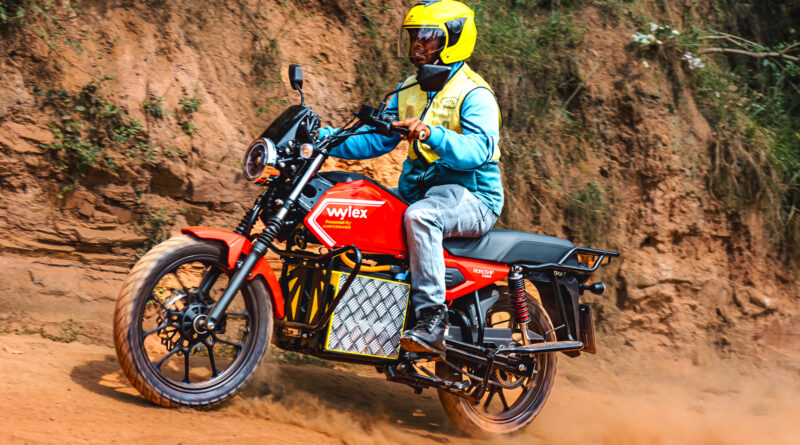
Why Battery Swapping Could Define the Future of Electric Mobility in Africa
Africa’s electric mobility market is no longer in an experimental phase. It is entering a scaling phase, where infrastructure, economics, and operational efficiency matter more than announcements.
Ampersand’s decision to open its battery-swap network to global electric vehicle manufacturers is not just industry news — it is a strategic signal about where African EV markets are heading.
Africa’s EV Growth Constraint Is Not Vehicles — It’s Energy Access
Across African markets, electric vehicles are increasingly available:
- Chinese OEMs are expanding aggressively
- Assembly plants are emerging (Kenya, Ghana, Ethiopia)
- Prices are becoming more competitive
Yet adoption remains uneven.
Why?
Because charging access, downtime, and battery cost risk remain the biggest obstacles.
Battery swapping directly addresses all three.
Battery Swapping Explained: A Model Built for African Realities
Battery swapping separates vehicle ownership from battery ownership.
Instead of charging:
- The rider or driver swaps a depleted battery in minutes
- Pays per use or via subscription
- Never worries about battery degradation
This model is particularly suited to Africa because:
- Grid reliability varies
- Home charging is not always possible
- Commercial users prioritize uptime over ownership
In short: battery swapping aligns with African mobility economics, not just technology trends.
Ampersand’s Strategic Shift: From OEM to Energy Infrastructure Leader
Ampersand’s evolution mirrors the most successful platform transitions in other industries.
Phase 1: Vehicle manufacturing
Phase 2: Vertical integration of energy
Phase 3: Opening infrastructure to third parties
By opening its battery-swap network, Ampersand becomes:
- A neutral infrastructure provider
- A standards setter
- A scale enabler for OEMs entering Africa
This reduces fragmentation and accelerates ecosystem maturity.
Why Open Networks Win in Emerging EV Markets
Closed ecosystems slow adoption:
- Duplicated infrastructure
- High capital requirements
- Limited geographic coverage
Open networks create:
- Shared investment
- Faster geographic expansion
- Better utilization rates
In emerging markets, shared infrastructure is not optional — it is essential.
Ampersand’s move acknowledges this reality.
Real-World Scale: Not a Pilot, Not a Vision Deck
Ampersand’s network already operates at meaningful scale:
- Rwanda and Kenya as core markets
- Dozens of swap stations in daily operation
- Thousands of battery swaps per day
- Millions of kilometers logged
This real-world data gives Ampersand a structural advantage over new entrants still in pilot mode.
Wylex Integration: Proof of OEM Interoperability
The integration of Wylex electric motorcycles proves that:
- Vehicle interoperability is achievable
- Standards can be enforced without slowing innovation
- Third-party OEMs can deploy rapidly
This is critical for Africa, where diverse vehicle types and price segments must coexist.
BYD LFP Batteries: Why Chemistry Matters
Ampersand’s use of BYD LFP battery cells is not incidental.
LFP chemistry offers:
- Long cycle life (ideal for frequent swapping)
- High thermal stability
- Lower fire risk
- Predictable degradation
For high-utilization commercial fleets, battery chemistry is a business decision, not just a technical one.
Electric Motorcycles: Africa’s EV Growth Engine
While global EV conversations often focus on passenger cars, Africa’s electrification curve is led by:
- Motorcycles
- Two-wheel delivery fleets
- Ride-hailing and moto-taxi services
Electric motorcycles represent:
- Lower entry cost
- Faster ROI
- Immediate fuel savings
Battery swapping unlocks scale precisely in this segment.
Implications for West Africa, Central Africa & Beyond
Although Ampersand currently operates in East Africa, the model is highly transferable:
- Nigeria, Ghana, Côte d’Ivoire
- Cameroon, Senegal
- Rwanda-like urban density patterns
As logistics, food delivery, and e-commerce grow, electric two-wheelers with swap networks could become the default solution.
EV24 Insight: Infrastructure Will Decide Africa’s EV Winners
At EV24, we see a clear separation emerging:
- OEMs focused only on vehicles
- Ecosystem players building infrastructure + partnerships
The second group will scale faster.
Battery swapping, energy-as-a-service, and open networks will likely define:
- Fleet electrification
- Urban mobility
- Last-mile logistics
Africa’s EV future will be platform-driven, not brand-driven.
Strategic Takeaways for Investors & Operators
- Battery swapping is not a niche — it’s a scaling tool
- Infrastructure ownership creates defensibility
- Open ecosystems outperform closed systems in emerging markets
- Africa is becoming a global reference market for pragmatic EV solutions
Why This Matters for the Global EV Industry
What succeeds in Africa often gets exported elsewhere:
- High-utilization use cases
- Cost-optimized models
- Infrastructure efficiency
Ampersand’s approach may well influence EV strategies in Asia, Latin America, and beyond.
Final Thought
Ampersand did not just open a network.
It opened a path to scale electric mobility in Africa.
And that may be its most important contribution yet.
🔗 Source
CleanTechnica – Ampersand opens its battery swap network to global electric motorcycle manufacturers
👉 https://cleantechnica.com/transportation/ampersand-energy-opens-its-battery-swap-network-to-global-electric-motorcycle-manufacturers/