
 Thabo Nkosi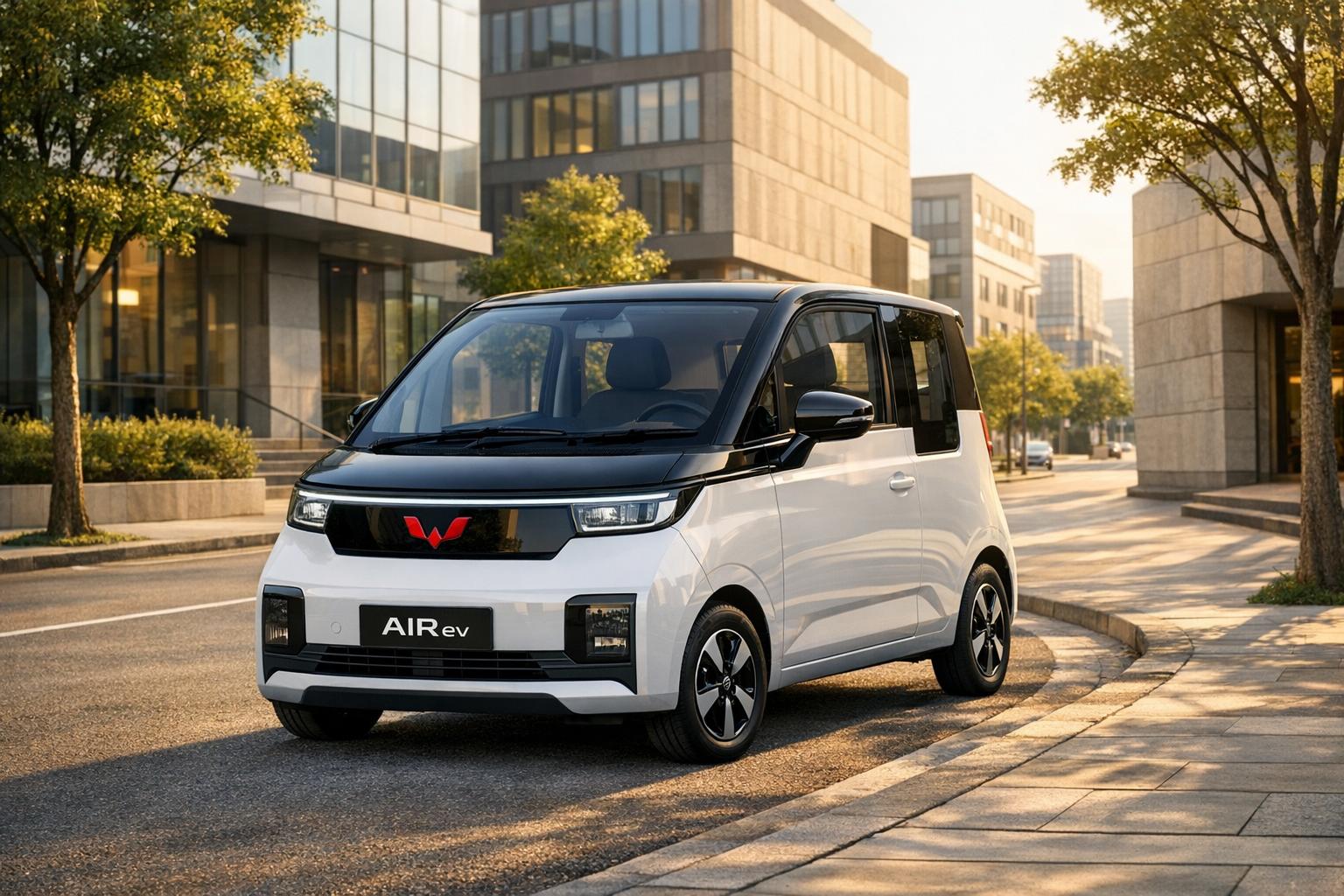
The Wuling Air EV is a budget-friendly, compact electric vehicle designed for city driving. Priced at just $9,700 in China, it offers a 186-mile range on a single charge, supports DC fast charging, and comes in 2- and 4-seat configurations. Its small size makes it easy to navigate traffic and park in tight spaces, while features like dual 10.25-inch displays and smartphone integration add convenience.
Key Highlights:
- Price: Starts at $9,700 in China, $13,500–$19,500 in Indonesia.
- Range: 124–186 miles depending on battery size.
- Charging: DC fast charging (30–80% in 45 minutes).
- Performance: 30 kW (40 hp) or 50 kW (68 hp) motor options; top speed of 62 mph.
- Interior: Dual displays, voice commands, and app-based controls.
- Limitations: Limited highway capability and smaller cargo space compared to competitors.
The Wuling Air EV excels at short commutes and urban travel but may not suit those needing higher speeds or more space. Alternatives like the BYD Dolphin and Leapmotor T03 offer more range and versatility but at a higher cost.
Quick Comparison:
| Feature | Wuling Air EV (4-seater) | BYD Dolphin | Leapmotor T03 |
|---|---|---|---|
| Price | $9,700 (China) | ~$34,800 (UK) | Higher than Air EV |
| Range | Up to 186 miles | 252 miles | 250 miles |
| Top Speed | 62 mph | Higher | Higher |
| Seating | 2 or 4 | 5 | 5 |
| Charging | DC fast charging | Yes (30 min) | Yes (30 min) |
The Wuling Air EV is ideal for urban commuters seeking an affordable, efficient, and compact electric vehicle for city life.
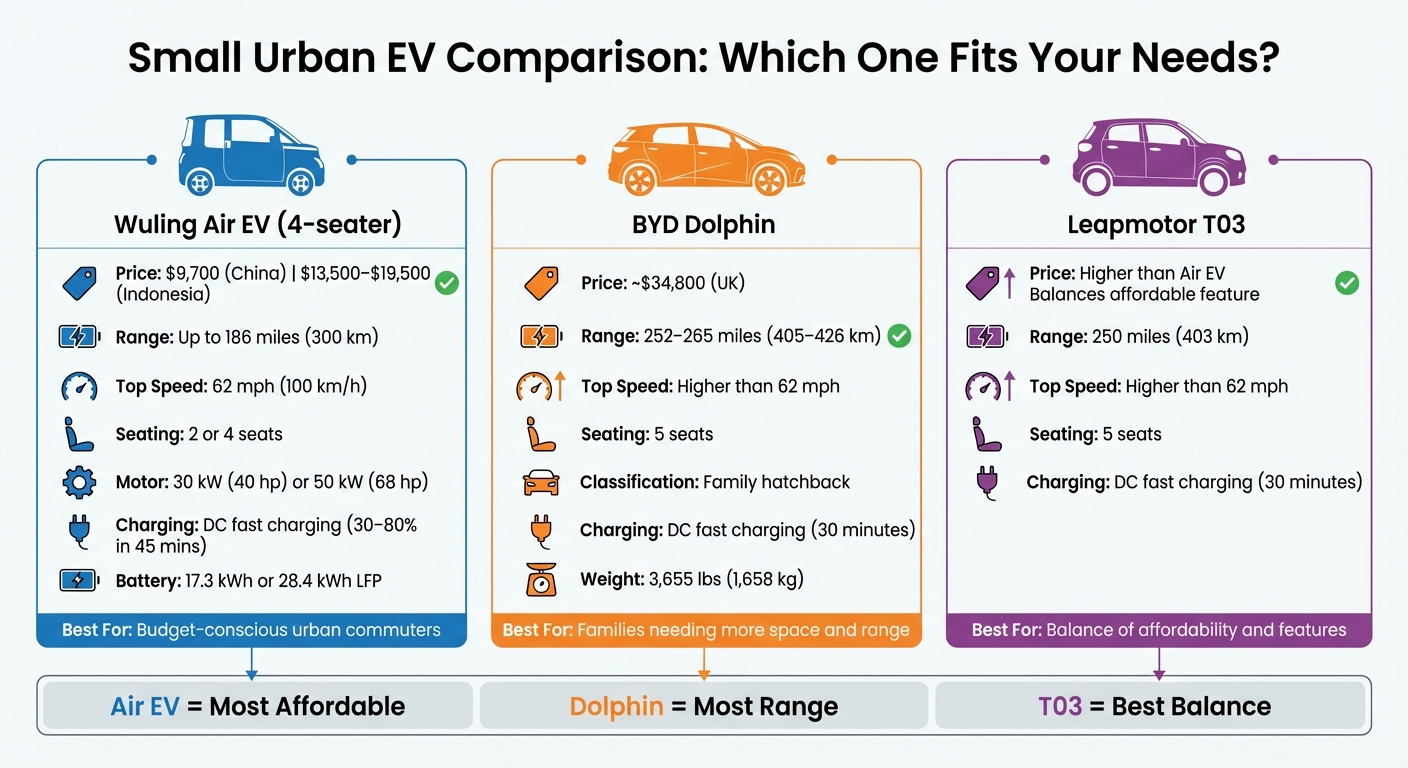
Wuling Air EV vs BYD Dolphin vs Leapmotor T03 Comparison Chart
1. Wuling Air EV
Design and Dimensions
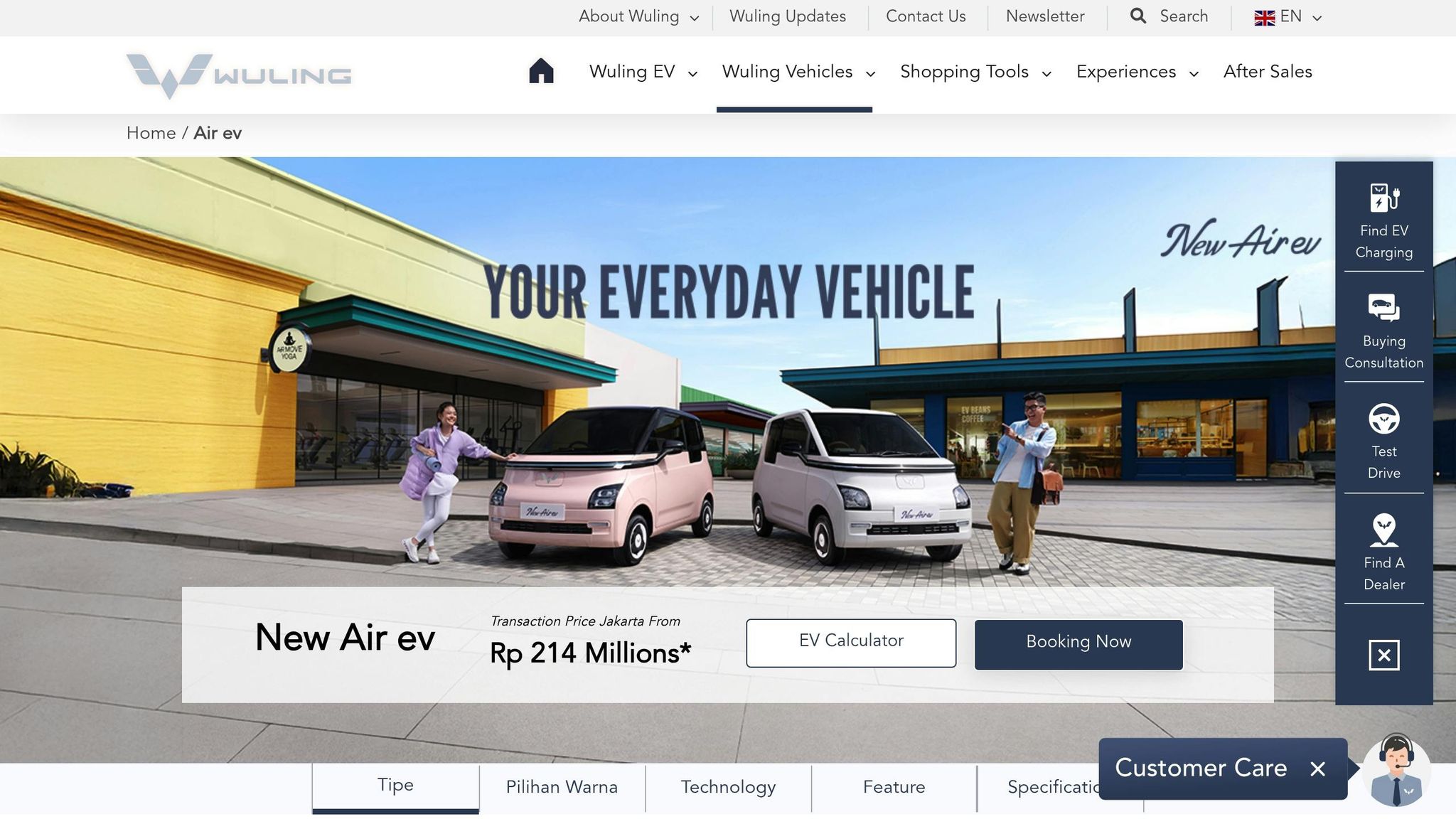
The Wuling Air EV comes in two configurations: a 2-seater measuring 102.3 inches (2,599 mm) and a slightly larger 4-seater at 117 inches (2,974 mm) in length. Both versions share a width of 59.3 inches (1,505 mm) and a height of 64.2 inches (1,631 mm), giving it a compact yet tall profile. This design is perfect for navigating crowded city streets, while the elevated stance improves visibility in busy traffic.
Built with a cage-type frame made of 62% high-strength steel, the Air EV prioritizes safety despite its small size. In the 4-seater model, folding down the rear seats opens up a surprisingly generous cargo area. The 12-inch wheels allow for easy parking in tight urban spaces, making the car a practical choice for city dwellers.
Compact yet sturdy, the Air EV is designed for the challenges of urban driving.
Performance and Range
The Air EV offers two motor options: a 30 kW (40 hp) motor for the 2-seater and a more powerful 50 kW (68 hp) motor for the 4-seater. The 4-seater accelerates from 0 to 31 mph (0 to 50 km/h) in just 4.8 seconds, making it quick enough for city driving. It also reaches a top speed of 62 mph (100 km/h), which is ideal for urban highways.
Battery options determine the car’s range. The Standard Range version, equipped with a 17.3 kWh battery, delivers around 124 miles (200 km) per charge. The Long Range model, with a 28.4 kWh battery, extends this to about 186 miles (300 km) on the CLTC cycle. In a Jakarta test, the Air EV consumed just 22% of its battery for a 38.6-mile (62.2 km) trip. With an average consumption of 10.3 kWh per 100 km, it’s impressively efficient in stop-and-go city traffic.
Interior Features
Step inside, and you’ll find dual 10.25-inch displays – one for the instrument cluster and another for infotainment. The system, powered by Ling OS, supports voice commands and smartphone integration. Using a mobile app, you can remotely control features like air conditioning, monitor the battery, and even roll down the windows. Higher-end trims include a 360-degree camera system, a lifesaver for navigating tight parking spaces.
The cabin’s minimalist design leans into a sleek "sci-fi" vibe, though some reviewers have noted a few quirks, like glare from the white trim on mirrors and the absence of a left footrest. The high seating position offers excellent forward visibility, especially handy in dense traffic, but it might feel a bit cramped for taller drivers.
Pricing and Affordability
In China, the Wuling Air EV starts at an accessible $9,700, making it one of the most budget-friendly electric vehicles available. Prices vary internationally: in Thailand, it starts at approximately $11,000 (395,000 baht), while in Indonesia, the range is $13,500 to $19,500 depending on the trim. The car has also made its way to Africa, where it’s rebranded as the Chevrolet Spark EV and used for ride-hailing services in Egypt.
| Market | Starting Price (USD) |
|---|---|
| China | $9,700 |
| Thailand | ~$11,000 |
| Indonesia | $13,500 – $19,500 |
The Air EV is powered by Lithium Iron Phosphate (LFP) batteries, which can be charged to 100% without worrying about rapid degradation. Coupled with its low energy consumption, the Air EV is a cost-effective and practical solution for urban drivers dealing with high fuel prices and limited parking options.
2. Similar Small Urban EV: BYD Dolphin
Design and Dimensions
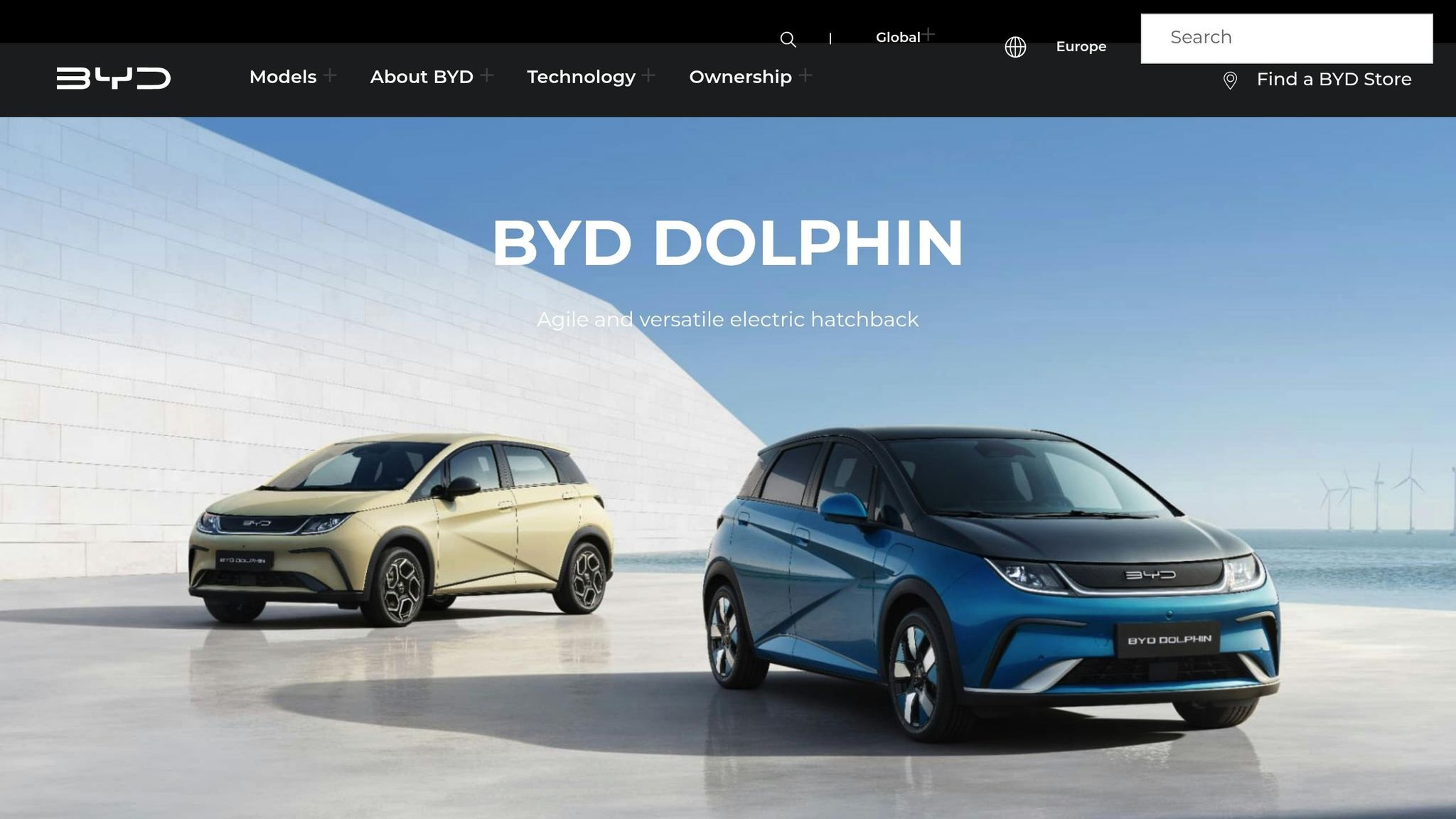
The BYD Dolphin stands out with its design as a family hatchback, offering a stark contrast to the compact nature of the Air EV. It’s larger than the Air EV’s 117-inch length but still compact enough to fit into standard parking spaces. Its size, paired with a weight of 3,655 lbs (1,658 kg) – almost double the Air EV’s 1,676–1,958 lbs (760–888 kg) – emphasizes a focus on roomier interiors. This design choice highlights the Dolphin’s appeal for those seeking more space and comfort.
Performance and Range
When it comes to range, the BYD Dolphin takes the lead with a WLTP-rated 265 miles (426 km), far exceeding the Air EV’s maximum of 186 miles (300 km). This makes the Dolphin a better option for longer drives or occasional highway use. However, for city driving, the Air EV holds its own with impressive acceleration – reaching 31 mph (50 km/h) in just 4.9 seconds in its Long Range model, matching the Dolphin’s quick response thanks to its electric torque.
Both vehicles rely on LFP batteries, which allow for full charging without significant wear over time. Charging speeds differ slightly: the Air EV supports DC fast charging, reaching 30% to 80% in about 45 minutes, while the Dolphin uses a 6.6 kW AC charger.
Pricing and Affordability
Pricing is where these two vehicles diverge further. The Air EV is one of the most budget-friendly EVs, starting at $9,700 in China and ranging from $13,500 to $19,500 in Indonesia. Meanwhile, the BYD Dolphin starts at approximately $34,800 in the UK, reflecting its larger size, extended range, and additional features.
| Feature | Wuling Air EV (4-seater) | BYD Dolphin |
|---|---|---|
| Classification | Micro-city car | Family hatchback |
| Length | 117 in (2,974 mm) | Significantly longer |
| Weight | 1,676–1,958 lbs (760–888 kg) | 3,655 lbs (1,658 kg) |
| Range | Up to 186 mi (300 km) | 265 mi (426 km) |
| Starting Price | $9,700 (China) | ~$34,800 (UK) |
2023 Wuling Air EV Long Range (INDO) (full in-depth tour review)
sbb-itb-99e19e3
Advantages and Disadvantages
The Wuling Air EV is a compact electric vehicle designed for urban living, blending affordability, practicality, and efficient charging. Starting at just $9,700, it’s a budget-friendly option that undercuts many competitors. Its small size – measuring only 117 inches (2,974 mm) in length and 59 inches (1,505 mm) in width – makes it ideal for navigating tight city streets and squeezing into limited parking spaces. Plus, its DC fast charging capability allows for quick battery top-ups, with the Lithium Iron Phosphate (LFP) battery capable of charging to 100% without significant degradation, ensuring a reliable range over time.
However, the Air EV has its limitations, particularly for highway use. Its top speed is capped at 62 mph (100 km/h), making it less suitable for long-distance or high-speed travel. In comparison, the BYD Dolphin offers a range of about 252 miles (405 km) and higher speeds, showcasing its versatility for both city and highway driving. While urban commuters might not need high speeds, this restriction highlights the Air EV’s city-focused design.
"If the Air EV is to be a four seater, the humans better don’t come with any baggage, as remaining boot capacity is only good for a couple of 1.5L bottles with the seats up".
Other design choices also reflect its urban intent. The small 12-inch wheels, while practical for city roads, can lead to a less stable ride at higher speeds. Additionally, the electric hum of the motor may be more noticeable compared to the engine noise in conventional subcompact cars.
| Feature | Wuling Air EV | BYD Dolphin | Leapmotor T03 |
|---|---|---|---|
| Starting Price | $9,700 | ~$34,800 | More expensive |
| Range | 186 mi (300 km) | 252 mi (405 km) | 250 mi (403 km) |
| Top Speed | 62 mph (100 km/h) | Higher | Higher |
| DC Fast Charging | Yes (45 min, 30–80%) | Yes (30 min) | Yes (30 min) |
| Seating | 2 or 4 | 5 | 5 |
The Air EV’s interior design comes with a few compromises. The high driving position places the driver’s eye level near the top of the windshield, which may feel awkward for some. There’s no telescopic adjustment for the steering wheel or a left footrest, which could affect comfort on longer drives. Additionally, the bright white dashboard trim can cause harsh reflections in the wing mirrors under sunlight, potentially impacting visibility and safety.
For buyers who occasionally need highway capability or more cargo space, alternatives like the BYD Dolphin or Leapmotor T03 may be worth considering, though they come with a higher price tag. Still, the Air EV shines in its intended role as a city commuter. Its range is sufficient for an entire workweek on a single charge, and its 62% high-strength steel cage structure offers better protection than traditional low-speed neighborhood electric vehicles, addressing safety concerns in mixed traffic environments. These features make the Air EV a practical and economical choice for urban mobility.
Conclusion
The Wuling Air EV is a practical solution for African city dwellers looking for an affordable and efficient electric vehicle that thrives in congested urban settings. With a starting price of $9,700, it offers features that cater to city life, including DC fast charging (charging from 30% to 80% in just 45 minutes) and a 186-mile (300 km) range – enough for several days of typical city commutes. Its compact size makes it ideal for navigating tight streets and squeezing into parking spots that larger cars can’t handle.
The Air EV’s performance in real-world conditions backs up its city-friendly design. In November 2022, General Motors introduced the Air EV to Egypt for ride-hailing services, showcasing its ability to handle the demands of African urban environments.
"The Air EV is perfectly usable as a daily car, despite the fact that it’s a pint-sized box powered by batteries." – Danny Tan, Reviewer, Paul Tan’s Automotive News
For those making short trips around the city, the Air EV provides a logical and economical choice. Its 62% high-strength steel frame and safety features like ABS and ESC ensure added protection in busy urban traffic. The option to charge the car using a standard home outlet is a significant convenience, especially in areas where public charging stations are still scarce.
Bottom line: If your daily driving consists of short city commutes – usually under 30 miles (50 km) – the Wuling Air EV is an excellent option. However, if you often need to drive at highway speeds above 62 mph (100 km) or require more room for passengers and luggage, you might want to explore alternatives like the BYD Dolphin. For affordable and efficient urban travel, the Air EV stands out as a reliable choice.
FAQs
Why is the Wuling Air EV a great choice for city driving?
The Wuling Air EV is perfectly crafted for bustling city life, blending practicality with a compact design. Measuring just under 10 feet in length, it’s a breeze to maneuver through narrow streets and squeeze into tight parking spots – ideal for urban dwellers. Despite its small size, this EV comfortably seats up to four people and provides up to 25.9 cubic feet of cargo space, making it a solid choice for daily errands, commutes, or even ridesharing.
Under the hood, the Air EV is powered by an efficient electric motor, delivering between 41 and 70 horsepower. It can reach a top speed of around 62 mph, which is well-suited for city driving. On a single charge, it offers a range of 124 to 186 miles, and its fast-charging feature can juice up the battery from 30% to 80% in just 45 minutes. Safety hasn’t been overlooked either, with features like ABS, ESC, parking sensors, and dual airbags included. Starting at an accessible price of $6,900, the Wuling Air EV is an affordable and eco-conscious option for navigating urban landscapes.
How well does the Wuling Air EV’s charging system meet the needs of city drivers?
The Wuling Air EV comes equipped with a DC fast-charging option that can take the battery from 30% to 80% in just about 45 minutes. This provides an estimated range of 150 miles, making it a great fit for urban drivers. Considering that most city commutes in the U.S. average between 20 and 40 miles daily, a quick 45-minute charge can easily keep the car ready for errands or commutes. Whether it’s during a lunch break or a brief stop at a public charging station, this feature ensures the car stays powered up without needing an overnight charge.
For those who prefer the convenience of charging at home, the Air EV’s 28.4 kWh lithium-iron-phosphate battery can also be plugged into a standard home outlet for overnight charging. This means you can wake up each morning with a fully charged vehicle, making it a practical option for city life. With minimal downtime and reliable range, the Air EV is designed to meet the needs of everyday urban driving.
What are the main differences between the 2-seater and 4-seater Wuling Air EV models?
The Wuling Air EV comes in two configurations: a 2-seater and a 4-seater, each designed with distinct features to cater to different needs. The 2-seater is compact, measuring about 102.3 inches in length, making it a great choice for tight city streets or solo commutes. On the other hand, the 4-seater stretches to approximately 117.1 inches, offering a more spacious interior and a larger trunk – perfect for families or rideshare use.
When it comes to performance, the differences are notable. The 2-seater is powered by a 30 kW motor (around 41 hp), while the 4-seater steps it up with a 50 kW motor (about 68 hp). Despite the difference in motor power, both models reach a top speed of roughly 62 mph. The 4-seater also stands out with better rear legroom, making it a more practical choice for those who prioritize passenger comfort or need extra space.