
 Thabo Nkosi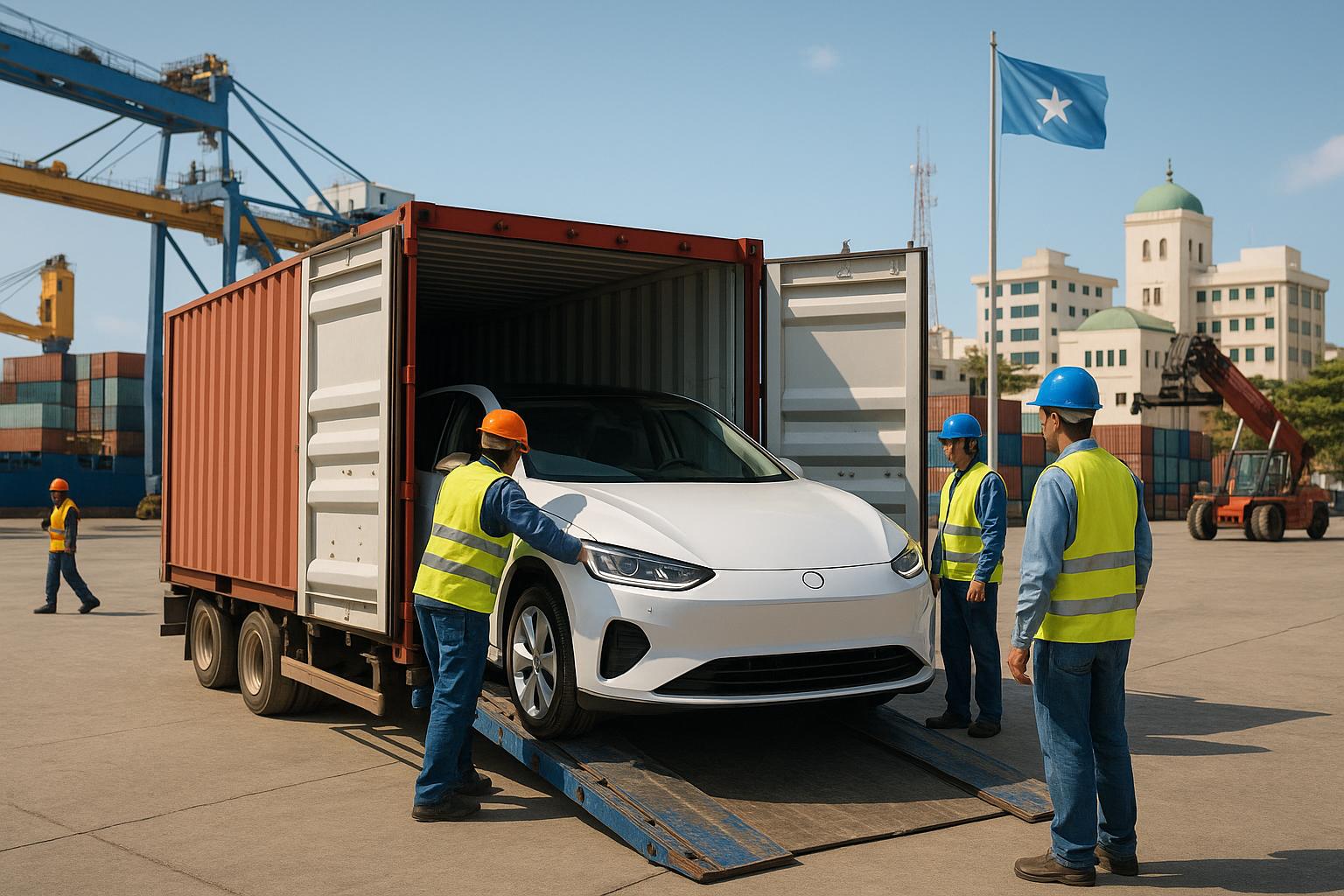
Importing electric vehicles (EVs) into Somalia in 2025 is now easier thanks to platforms like EV24.africa. These vehicles are cheaper to maintain, produce no emissions, and offer advanced features. Somalia’s government has introduced policies such as reduced import duties and faster customs processing to encourage EV adoption. Buyers can choose from a range of brands like Tesla, BYD, and Volkswagen, with prices starting at $5,880. The import process involves purchasing the vehicle, shipping it via RoRo or container, and completing customs and registration. Charging infrastructure is improving, with solar-powered solutions gaining traction, but planning for maintenance and parts availability is essential. EVs are a cost-effective and cleaner alternative to traditional cars, making them a smart choice for Somali consumers.
African governments welcome Chinese electric vehicle imports, production amid looming trade war
Import Regulations and Legal Requirements
Navigating Somalia’s import regulations is a key step in successfully bringing electric vehicles (EVs) into the country. Over the years, the regulatory framework has adapted to meet the rising demand for EVs, aiming to simplify the import process while maintaining safety standards. Below, we’ll explore the necessary documentation, recent government initiatives, and how importing EVs compares to traditional gasoline or diesel vehicles.
Somalia’s EV Import Rules and Documentation
Importing electric vehicles requires specific paperwork that differs from what’s needed for conventional cars. First, you’ll need an import license from the appropriate authority. Other essential documents include the original vehicle title or certificate of origin, a commercial invoice, and packing lists. Additionally, a valid safety inspection certificate from the country of origin is often required to ensure the vehicle complies with automotive safety standards.
For EVs specifically, you’ll also need to provide documentation confirming that the battery meets international shipping and safety standards. Don’t forget to arrange for insurance that covers both the shipping process and local use.
New Policies and Government Programs for 2025
In 2025, Somalia introduced new policies aimed at encouraging EV adoption. These measures include reduced import duties for EVs and faster customs processing times. The government has also launched incentive programs for companies importing multiple EVs, making it more attractive for businesses to invest in greener transportation. Another key regulation requires imported EVs to meet specific charging standards, ensuring they are compatible with the country’s growing network of charging stations.
EV vs Gas Vehicle Import Requirements
The import process for EVs differs in several ways from that of gasoline or diesel vehicles, reflecting the Somali government’s push toward sustainable transportation. Here’s a quick comparison:
| Import Aspect | Electric Vehicles | Gasoline/Diesel Vehicles |
|---|---|---|
| Duty Rate | Often enjoy reduced duty rates | Typically subject to standard rates |
| Age Limit | Must meet standard age restrictions | Must meet standard age restrictions |
| Customs Time | Faster processing for EVs | Processed under regular timelines |
| Required Certifications | Battery safety documentation required | Emissions and fuel quality certifications needed |
| Additional Inspections | Focus on electrical system safety | Includes engine emissions and fuel quality checks |
| Registration Fees | May qualify for reduced fees | Generally standard fees apply |
The overall process for importing EVs is designed to be more efficient than for conventional vehicles, highlighting Somalia’s commitment to fostering sustainable and eco-friendly transportation solutions.
Import Costs, Taxes, and Financial Planning
Having a clear financial plan is essential when importing a vehicle into Somalia. It helps you budget accurately and avoid unexpected expenses. Somalia calculates import duties and taxes based on the CIF (Cost, Insurance, Freight) method. This means your tax obligations are determined by the vehicle’s value combined with shipping and insurance costs.
Import Taxes and Duties for Electric Vehicles
The Somali Customs Administration oversees the import tariff system. For passenger cars, import duties typically range between 15% and 30%. The exact rate depends on factors like the vehicle’s age, model, and its environmental impact. Electric vehicles, which generally have a smaller environmental footprint, may qualify for rates at the lower end of this spectrum. However, current regulations do not provide specific incentives for EVs.
In addition to customs duties, import VAT (or GST) is calculated on the CIF value. You’ll also need to account for customs broker fees, which cover the filing of clearance documents with local authorities. These costs form the foundation of your total import expenses.
"Custom duties and taxes can be complicated, cause hold ups at customs, incur unexpected shipping costs, ruin the customer experience and have sellers lose their clients. We make sure that you know upfront how much to pay so you can avoid unpleasant surprises and shipment delays in the future." – Easyship
Calculating Your Total Import Costs
To avoid financial surprises, it’s important to calculate all costs from purchase to delivery. Here’s how you can break it down:
- Step 1: Determine Your CIF Value
Add together the vehicle’s purchase price, shipping costs, and insurance to establish the taxable base. - Step 2: Calculate Import Duties
Multiply the CIF value by the applicable duty rate, which ranges from 15% to 30%. - Step 3: Add VAT and Additional Fees
Include import VAT, which is calculated on the CIF value plus duties, and factor in customs broker fees. - Step 4: Account for Local Costs
Consider any extra charges that may apply once the vehicle arrives in Somalia.
It’s crucial to declare the vehicle’s actual value to avoid penalties. Customs authorities verify declared values, and underreporting to reduce taxes is considered tax evasion, which carries serious legal consequences.
"Not paying taxes is tax evasion, which we don’t encourage. It’s not worth risking your business getting fined. It’s best to know any customs duty rate amount that is applicable to your shipment, and be upfront with customers on pricing." – Easyship
To get a clearer picture of your total obligations, research all potential costs and use an import duty calculator. Once you’ve tallied these expenses, check for any available tax breaks to reduce your overall costs.
Tax Breaks and Import Discounts
There are opportunities to lower EV import costs in Somalia as incentives for electric vehicles begin to emerge. As a member of the East African Community (EAC) and the Common Market for Eastern and Southern Africa (COMESA), Somalia benefits from trade agreements that could lead to reduced or waived import duties on certain goods.
Additionally, imports tied to large-scale infrastructure, energy, or development projects may qualify for reduced or even exempted duties. Since environmental impact plays a role in determining vehicle tariffs, electric vehicles might be eligible for the lower end of the duty range.
For the latest updates on these incentives, refer to Somalia’s "Income Tax Regulation of 2025" (published on May 31, 2025) and the "Somali Customs Tariff 2022" report from the Ministry of Finance. These documents may include updated provisions for EV imports.
If you’re applying for tax breaks or discounts, ensure you have all necessary documentation to prove your vehicle’s environmental benefits. Proper paperwork is key to securing these financial advantages.
sbb-itb-99e19e3
Complete Import Process from Purchase to Delivery
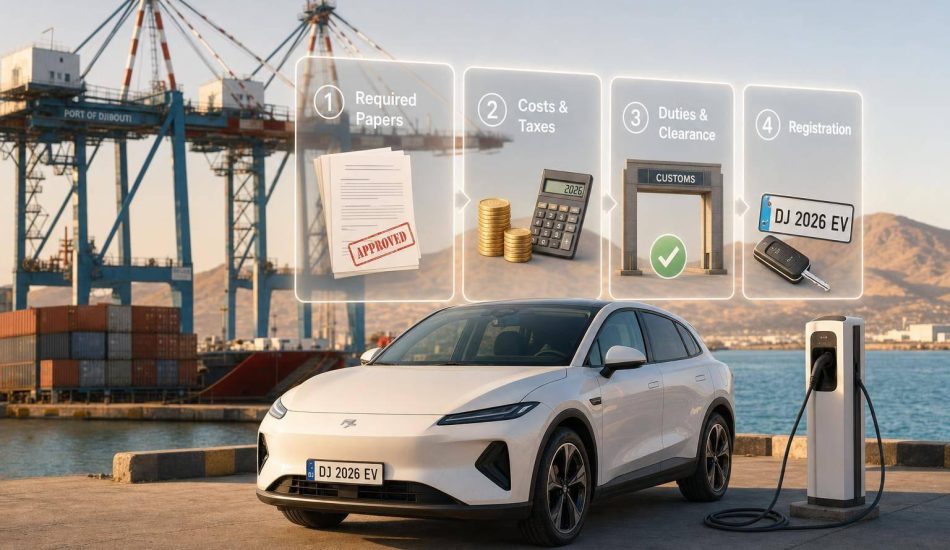
Once your financing and costs are sorted, the import process begins. It includes three key steps: purchasing your electric vehicle (EV), shipping it to Somalia, and completing customs clearance along with registration. With your financing in place, let’s break down each stage from purchase to delivery.
Finding and Buying EVs Through EV24.africa

EV24.africa simplifies buying electric vehicles with its all-in-one online marketplace. Here, you’ll find EVs from top brands, complete with essential details like driving range, transmission type, and clear pricing.
The process is straightforward:
- Step 1: Browse the inventory and compare vehicles based on your needs and budget. The platform provides upfront costs, including the vehicle price, estimated shipping fees, and any additional charges.
- Step 2: Connect with an EV24 expert via WhatsApp for personalized guidance. They can help with financing options tailored to your financial situation.
- Step 3: Finalize your purchase with transparent documentation and confirmed delivery timelines.
This streamlined approach eliminates the confusion often tied to international vehicle purchases. You’ll get detailed information about your chosen EV, including its condition, specifications, and any added features. Plus, the transparent pricing ensures there are no hidden surprises.
Shipping Options and Port Logistics
EV24.africa offers two main shipping methods to get your EV to Somalia: RoRo (Roll-on/Roll-off) and Container Shipping. Each option has its benefits depending on your priorities.
- RoRo Shipping: Vehicles are driven directly onto specialized ships and secured for transport. This is typically the more cost-effective and faster option, making it ideal for operational vehicles. However, since vehicles are exposed to the elements during transit, it may not be the best choice for premium EVs.
- Container Shipping: Vehicles are placed inside enclosed containers, offering better protection from weather and potential damage. While this option costs more, it’s a safer bet for high-value EVs or those with sensitive electronics.
You can also choose between port-to-port and door-to-door delivery. Port-to-port delivers your vehicle to Mogadishu’s main port, where you’ll handle the pickup. Door-to-door, though pricier, includes full logistics to your specified address in Somalia for maximum convenience.
Shipping times typically range from 2–4 weeks, depending on the route and method. EV24.africa provides tracking updates so you can monitor your vehicle’s journey. Once shipping is complete, the focus shifts to customs clearance and registration.
Customs Processing and Vehicle Registration
Somalia uses the SOMCAS (Somalia Customs Automated System) to manage vehicle imports, including EVs. The system ensures a consistent process for both electric and conventional vehicles, making things easier for importers.
When your vehicle arrives at the port, customs clearance begins. You’ll need to provide purchase documents, shipping papers, and proof of insurance. Customs officials will inspect the vehicle and verify its declared value. Import duties for EVs are the same as for conventional vehicles – 25% of the declared value – so tax calculations are straightforward.
Once customs clearance is complete, you’ll need to register the vehicle locally to drive it legally in Somalia. This involves obtaining Somali license plates, registering the EV with transportation authorities, and meeting national vehicle standards. Unlike conventional cars, EVs skip emissions testing, which simplifies the process further.
EV24.africa offers full support during customs clearance and registration. Their local expertise ensures all paperwork is handled correctly, avoiding delays or compliance issues. This is especially helpful for first-time importers who may not be familiar with Somalia’s specific requirements.
Getting Ready for EV Ownership in Somalia
Once your EV is registered and ready to hit the road, it’s time to focus on the practical aspects of ownership in Somalia. This includes planning for charging, understanding maintenance needs, and navigating local infrastructure. Successfully transitioning to EV ownership requires thoughtful preparation to ensure your vehicle is both functional and efficient in daily use.
Charging Options and Power Grid Access
Charging your EV at home is the most convenient solution for most owners in Somalia. While standard household outlets will get the job done, they’re slower compared to a dedicated Level 2 charger, which can significantly reduce charging times.
The state of Somalia’s power grid presents both challenges and opportunities for EV charging. Grid reliability varies across regions, but there’s progress being made. Solar-powered charging solutions are gaining traction, with solar farms being developed in several cities and towns. These projects aim to provide a sustainable and more dependable energy source for EV owners.
Charging at work is another option that’s gradually becoming available. If your workplace doesn’t yet offer this service, it might be worth discussing the idea with your employer. For longer road trips, planning routes with available charging stations in mind and carrying a portable charging cable can help ensure you’re never left stranded.
EV Maintenance and Parts Availability
After addressing charging needs, the next step is understanding how to maintain your EV.
Unlike traditional vehicles, EVs require specialized maintenance. In Somalia, most local parts shops focus on combustion engine components, so sourcing EV parts often involves ordering from international suppliers. Batteries, electric motors, and other essential components are increasingly available through these online platforms.
For routine maintenance, your best bet is to find repair shops with technicians trained to handle EVs. While standard services like tire or brake work are similar to traditional cars, high-voltage systems demand specialized skills. Some international manufacturers, such as Squad Mobility, are planning to establish local service networks in Somalia. These partnerships could make repairs, spare parts, and warranty services more accessible in the near future.
Pre-Import Planning Checklist
Before your EV officially hits the road, it’s wise to ensure everything is in place. Here are some key areas to review:
- Budget and Infrastructure: Calculate the total cost of ownership, including the price of the vehicle, import fees, charging equipment, and maintenance. If grid power is unreliable in your area, consider backup solutions like solar panels or battery storage to ensure energy independence.
- Legal Compliance: Double-check that your EV meets Somalia’s safety standards and that you can secure appropriate insurance coverage for the vehicle.
- Support Network: Identify local mechanics who are open to working on EVs and establish relationships with trusted international parts suppliers. Joining online forums or social media groups for EV owners can also be a great way to share tips and resources.
- Emergency Planning: Prepare for unexpected situations like prolonged power outages. Locate alternative charging stations and keep contact information for roadside assistance services familiar with EVs. Having a clear plan can turn potential setbacks into manageable challenges.
Moving Forward with Electric Vehicle Imports in 2025
Somalia is gearing up for a transformative change in transportation with the growing shift to electric vehicles (EVs). This move isn’t just about embracing modern technology – it’s a chance to cut down on imported fossil fuels and take meaningful steps toward cleaner energy solutions. With clearer regulations and simplified import processes, 2025 is shaping up to be the perfect time for individuals and businesses to make the leap to electric mobility.
Why consider EVs? The financial perks alone make them hard to ignore. Sure, the initial import costs might seem high, but the long-term savings on fuel and maintenance are undeniable. Plus, EVs significantly reduce air pollution and greenhouse gas emissions, aligning perfectly with Somalia’s goals to modernize its transportation sector and adopt cleaner energy sources. By relying less on diesel generators and imported fuel, EVs can also help improve urban air quality and ease the country’s balance of payments deficit. To make the switch even easier, specialized platforms are stepping in to simplify the entire import process.
These platforms offer a wide range of EVs, catering to different budgets and preferences. Whether you’re looking for something economical or a high-end option, you can choose from top brands like Tesla, BYD, Volkswagen, XPeng, Leapmotor, Changan, Wuling, Mercedes-Benz, Citroën, and Peugeot. This variety ensures that anyone looking to adopt electric mobility can find a vehicle that fits their needs.
What’s more, these import platforms go beyond just selling cars – they make the process hassle-free. From providing clear, upfront quotes to offering flexible shipping options, they handle the nitty-gritty details like customs and registration. They even extend their support after the purchase, helping with maintenance planning and sourcing parts, so you’re never left in the lurch.
On the infrastructure side, things are looking up. Investments in charging stations and solar-powered solutions are already addressing some of the long-standing challenges. Somalia’s abundant sunshine makes solar-powered charging a natural fit, offering a sustainable and reliable energy source for EV owners. With more businesses and government facilities installing charging stations, owning an EV is becoming increasingly practical. These developments are paving the way for continued progress in Somalia’s electric mobility journey.
FAQs
What documents do I need to import an electric vehicle into Somalia in 2025?
To bring an electric vehicle into Somalia in 2025, you’ll need to gather a few essential documents to streamline the process. Here’s what you’ll need:
- A valid passport
- A certificate of valuation for the vehicle
- A police clearance certificate
- The vehicle’s registration and ownership documents
- The purchase invoice
It’s crucial that all your paperwork is accurate and current to avoid any hiccups during customs clearance. It’s also a good idea to check with local authorities for any extra requirements that might apply to your specific case.
What are the import duties for electric vehicles compared to gasoline or diesel cars in Somalia?
Import duties on electric vehicles (EVs) in Somalia can differ quite a bit from those applied to gasoline or diesel vehicles. In some areas, EVs might enjoy lower tariffs or tax breaks to promote greener transportation. However, to understand the exact rates and regulations for 2025, it’s crucial to check with Somali customs authorities.
For the most accurate and current details on duties or possible exemptions for EVs, consider consulting local import specialists or directly contacting Somalia’s customs department.
What charging options are available for electric vehicles in Somalia, and how reliable is the infrastructure?
As of October 31, 2025, Somalia’s electric vehicle (EV) charging infrastructure is still in its infancy. While there have been some attempts to set up charging stations in major urban areas, the network remains sparse, creating hurdles for broader EV adoption.
The government is working on incorporating solar power and other renewable energy sources into the charging infrastructure. This approach could eventually make EV charging both more accessible and environmentally friendly. For now, though, EV owners often have to rely on private charging options and plan their routes carefully due to the limited availability of public stations.