
 Thabo Nkosi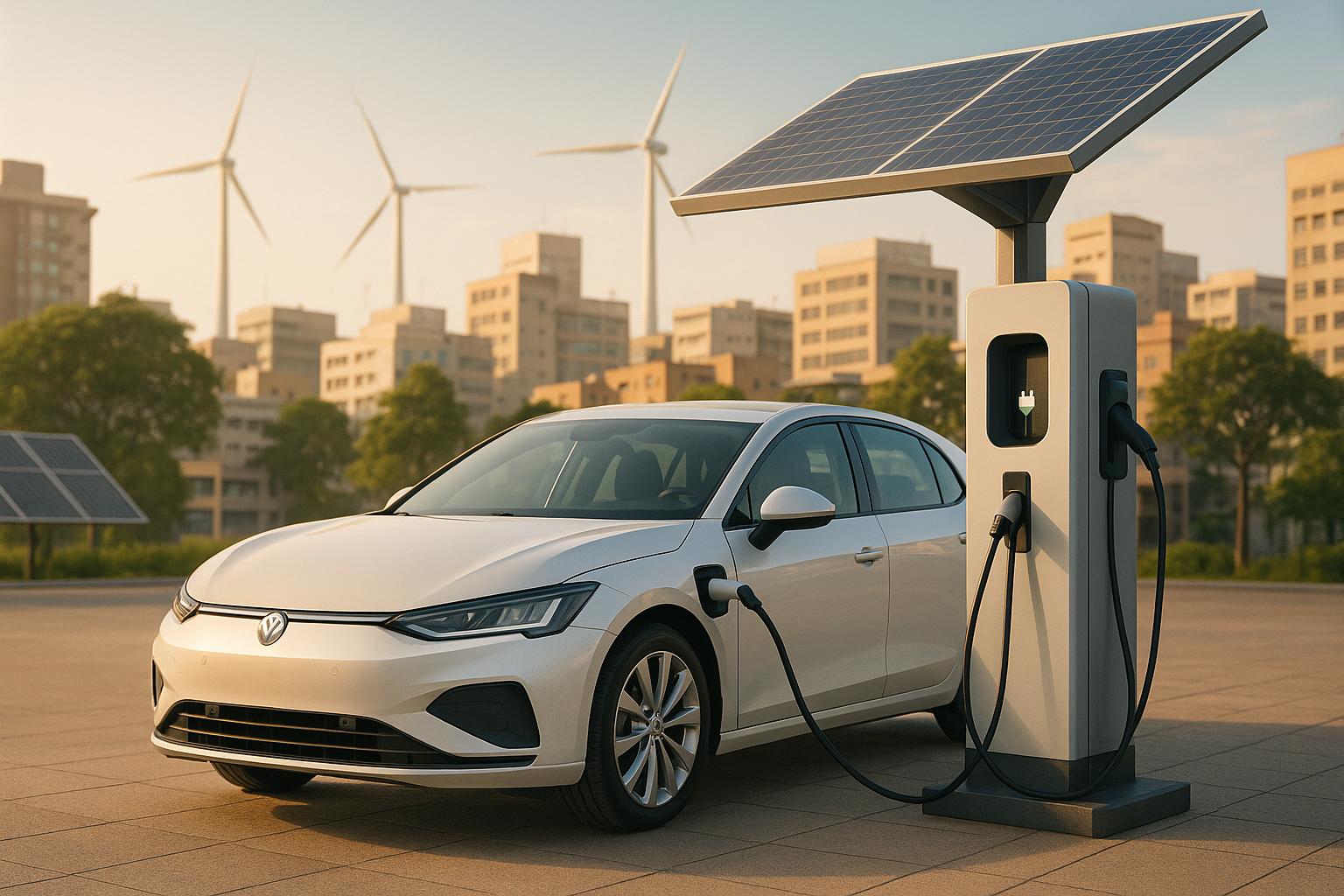
Ethiopia is transforming its auto industry by adopting electric vehicles (EVs), driven by government policies, renewable energy investments, and rising fuel costs. Here’s what you need to know:
- Key Policies: A 2024 ban on importing petrol and diesel cars, tax breaks for EVs, and incentives for local manufacturing are reshaping the market.
- Renewable Energy: Hydropower projects like the Grand Ethiopian Renaissance Dam are lowering electricity costs, making EVs more affordable to operate.
- Market Growth: Over 100,000 EVs are already on the road, with a target of 500,000 by 2030.
- Challenges: High vehicle costs, limited charging infrastructure, and unreliable power grids hinder adoption.
- Opportunities: Local assembly, expanded charging networks, and EV-specific financing could accelerate growth.
Ethiopia’s efforts are setting an example for other nations in Africa, showing how policy and renewable energy can drive cleaner transportation.
‘Sometimes there’s no power’: Ethiopia’s tricky switch to electric cars • FRANCE 24

Government Policies and Incentives for EV Adoption
Ethiopia is taking bold steps to promote electric vehicles (EVs) and create a more sustainable transportation system. From import bans to tax breaks, these measures highlight the government’s commitment to reshaping the automotive landscape.
2024 Ban on Petrol and Diesel Imports
In January 2024, Ethiopia implemented a ban on importing private internal combustion engine (ICE) vehicles. This landmark decision has significantly changed the dynamics of the new vehicle market. By October 2025, the policy expanded to include gasoline and diesel trucks. The ban aims to tackle environmental challenges, cut down on costly fuel imports, and support Ethiopia’s Climate Resilient Green Economy (CRGE) plan, which aims for carbon-neutral growth by 2030.
Tax Benefits for EVs
To complement the import ban, the government has introduced financial incentives for EV owners. These include waivers on import duties and exemptions from certain taxes. Together, these policies make EVs a more accessible and attractive option for consumers.
Ethiopia’s approach demonstrates how strategic government policies can simultaneously phase out fossil fuel vehicles and encourage the adoption of electric alternatives, driving a significant shift in the country’s automotive sector.
Infrastructure Development: Charging Networks and Energy Access
Building a reliable charging network is a cornerstone of Ethiopia’s transition to electric vehicles (EVs). However, scaling this network across both urban hubs and rural regions presents significant hurdles.
Growth of Charging Infrastructure
To address concerns about EV range, the government is prioritizing the expansion of charging stations in cities and along major transportation routes. Local businesses are also stepping up, using existing infrastructure to streamline the installation process. This effort aligns closely with Ethiopia’s renewable energy resources, creating a strong foundation for EV adoption.
Hydropower and Affordable Energy
Ethiopia’s extensive hydropower resources play a key role in reducing carbon emissions while keeping EV operating costs low. As the country continues to invest in renewable energy, it’s well-positioned to meet the growing demand for charging stations without overburdening the electrical grid.
Bridging the Urban-Rural Divide
Urban areas benefit from stable electricity grids and concentrated populations, making it easier to install charging stations. In contrast, rural regions face unique challenges, such as unreliable power and scattered communities. Addressing these issues will require targeted infrastructure improvements to ensure EV benefits reach all corners of the country.
sbb-itb-99e19e3
Market Trends and Leading EV Models in Ethiopia
By 2025, Ethiopia’s electric vehicle (EV) market has grown to include over 100,000 vehicles – representing 7% of the national fleet. This progress is largely driven by government policies and persistent fuel shortages, with urban hubs like Addis Ababa leading the charge. These developments lay a strong foundation for even more ambitious goals in the years ahead.
The Ethiopian government has set its sights on having 500,000 EVs on the road by 2030. This includes plans to convert 432,000 gas-powered vehicles, marking a significant transformation in the country’s automotive landscape.
Popular EV Brands and Models
Chinese automakers dominate Ethiopia’s EV market, offering budget-friendly options that align with local purchasing power and government incentives. This trend highlights the interplay between shifting consumer preferences and strategic support from policymakers. Among the leading brands, BYD stands out for its dependable, cost-effective models that resonate with urban drivers. Hyundai earns recognition for its reputation for reliability, while Geely caters to more budget-conscious buyers. Tesla, with its premium status and higher price tags, remains largely out of reach for most, appealing mainly to affluent buyers in Ethiopia’s larger cities.
| Brand | Typical Price (USD) | Range (miles) | Charging Compatibility | Market Position |
|---|---|---|---|---|
| BYD | $18,000–$25,000 | 186–249 | Type 2, CCS | Popular, budget-friendly |
| Hyundai | $22,000–$30,000 | 217–280 | Type 2, CCS | Reliable, urban-focused |
| Geely | $15,000–$22,000 | 155–217 | Type 2 | Affordable, Chinese-made |
| Tesla | $35,000+ | 249–311 | Type 2, CCS | Premium, limited access |
The switch to EVs has cut fuel costs nearly in half, making lower operating expenses a major draw for drivers. However, affordability remains a pressing issue, especially in a country where nearly 40% of the population lives on less than $3 per day. Platforms like EV24.africa aim to bridge this gap by offering detailed information on EV models, specs, and charging infrastructure, connecting consumers with dealers across Ethiopia’s growing EV ecosystem. Adding to these efforts, local assembly initiatives are playing a crucial role in making EVs more accessible while boosting job creation.
Growth of Local EV Assembly
The rise of local EV assembly is becoming a game-changer for Ethiopia’s automotive industry. By manufacturing vehicles domestically, costs are reduced, making EVs more accessible to a broader audience. This shift also generates employment opportunities, particularly in urban areas where EV adoption is highest, and supports the overall growth of the sector.
Government incentives, such as import duty waivers and tax exemptions, have encouraged international manufacturers to set up assembly facilities in Ethiopia. Locally assembled EVs are now better positioned to compete with traditional fuel-powered cars.
Beyond cost savings, local production fosters job creation across various stages of the automotive supply chain – from manufacturing and assembly to maintenance and parts distribution. It also simplifies logistics, enabling vehicles to reach smaller cities and rural areas more efficiently. Additionally, manufacturers can tailor their vehicles to suit Ethiopia’s unique road conditions, climate, and consumer needs, making EVs more practical and appealing to a wider audience. This localized approach is a key step toward achieving the government’s ambitious goal of 500,000 EVs by 2030.
Challenges and Opportunities in Ethiopia’s EV System
Ethiopia is making strides in the electric vehicle (EV) space, thanks to government-driven policies and investments in infrastructure. However, alongside these advancements come real-world challenges and untapped opportunities for stakeholders. While the policy framework is creating momentum, the practicalities of implementation reveal hurdles that need addressing.
Barriers to EV Adoption
One of the biggest obstacles to EV adoption is the high upfront cost of electric vehicles, which limits affordability to wealthier urban residents. Financing options for EV buyers are scarce, making it even harder for a broader audience to access these vehicles.
Another pressing issue is the country’s unreliable power grid, which makes potential buyers hesitant, especially in areas outside major cities where "range anxiety" becomes a serious concern. On top of that, the limited availability of EV-specific maintenance and repair services discourages buyers. Many service centers are still adapting to the complexities of EV technology, leaving vehicle owners worried about delays in repairs and obtaining replacement parts. Addressing these challenges is crucial to unlocking the full potential of Ethiopia’s EV market.
Opportunities for Stakeholders
Despite these challenges, there are plenty of opportunities for entrepreneurs, investors, and service providers to step in and shape the market:
- Expanding Charging Infrastructure: Existing service locations can be repurposed into EV charging hubs, particularly in underserved areas.
- Local Vehicle Assembly: With government incentives, investing in local assembly operations could reduce costs and boost accessibility.
- Maintenance and Repair Solutions: Developing specialized repair services and mobile charging options could cater to the growing market.
- Battery Swapping and Solar-Powered Charging: Innovative solutions like battery swapping systems and solar-powered charging networks could address infrastructure gaps. Platforms such as EV24.africa showcase how digital tools can connect EV owners with charging stations and dealerships.
- EV-Specific Financing: Creating tailored lending products could make EVs more accessible to a wider demographic, accelerating adoption.
Effects on Africa’s EV Market
Ethiopia’s efforts are not just reshaping its domestic EV landscape; they’re also influencing broader initiatives across Africa. The country’s policy-driven model is gaining attention as an example for other developing markets looking to accelerate EV adoption. By focusing on local assembly and infrastructure development, Ethiopia is demonstrating how strategic interventions can help overcome traditional barriers.
Neighboring countries are taking notice, with discussions emerging about replicating Ethiopia’s incentive structures to grow their own EV markets. Additionally, the potential for cross-border trade in locally assembled vehicles could bring economic benefits and support cleaner transportation practices across the continent.
Ethiopia’s journey highlights how targeted efforts in policy and investment can help developing economies tackle the usual challenges of EV adoption. For stakeholders and policymakers across Africa, the lessons from Ethiopia offer valuable guidance on building a sustainable and inclusive EV ecosystem.
Conclusion: Ethiopia’s Path Toward Clean Transportation
Ethiopia is steadily carving out a path toward cleaner transportation, blending policy-driven action with market dynamics. The nation’s transition to electric vehicles (EVs) is fueled by government-led initiatives like bans on fuel-powered vehicles, fiscal incentives, and investments in infrastructure.
By tapping into its vast hydropower resources and prioritizing local manufacturing, Ethiopia aims to cut transportation-related emissions while strengthening its domestic production capabilities. Progress in charging infrastructure, particularly in cities like Addis Ababa, highlights how well-placed investments can encourage EV adoption.
Of course, challenges remain. High upfront costs, concerns over grid reliability, and limited access to maintenance services pose hurdles. Yet, promising developments such as local EV assembly and creative financing models suggest these obstacles could be addressed sooner than expected. The potential for growth is undeniable.
Ethiopia’s approach also serves as a model for the region, offering lessons that could inspire cross-border trade and similar reforms in neighboring countries. For businesses and investors, opportunities lie in expanding charging networks and creating specialized maintenance services to meet the growing demand.
With strong government backing, abundant renewable energy, and increasing interest from the market, Ethiopia is charting a course that could help other developing economies leap directly into cleaner, more sustainable mobility solutions.
FAQs
What challenges does Ethiopia face in building EV charging infrastructure, especially in rural areas?
Ethiopia faces notable hurdles when it comes to building a reliable electric vehicle (EV) charging network, especially in rural areas. One of the biggest challenges is limited access to electricity. With only about half the population having consistent power, rural communities are often hit hardest by outages or a complete lack of grid coverage.
Another issue is the steep cost of installing charging stations, particularly in remote regions where infrastructure is already underdeveloped. On top of that, most public charging stations are currently located in urban centers, leaving rural areas without adequate support. Adding to these difficulties is the lack of a clear regulatory framework for EV charging stations, which has created uncertainty for investors and slowed the pace of development. These combined factors make expanding EV infrastructure across the country a complex task.
How does Ethiopia’s push for local EV assembly affect the affordability and availability of electric vehicles?
Ethiopia is focusing on assembling electric vehicles (EVs) locally to make them more affordable and accessible for its people. By cutting down on imports, local assembly reduces both production and shipping costs, which can translate to more competitive prices for buyers.
To support this initiative, the Ethiopian government offers tax incentives aimed at attracting manufacturers and investors to the EV industry. But even with these measures, the upfront cost of owning an EV remains a hurdle for many, as the technology is still relatively new in the market. With time, increased local production and supportive policies have the potential to close this gap and encourage wider EV adoption.
How does Ethiopia’s use of renewable energy, like hydropower, support its shift to electric vehicles, and what impact does it have on electricity costs for consumers?
Ethiopia’s move toward electric vehicles (EVs) is anchored in its strong reliance on renewable energy, with hydropower accounting for roughly 96% of the nation’s electricity supply. This clean energy backbone positions EV adoption as an environmentally friendly and financially sensible option.
Thanks to the abundance of low-cost electricity from hydropower, EVs come with significantly lower operating expenses. This affordability not only aligns with Ethiopia’s renewable energy ambitions but also makes EVs a practical option for more people, helping to expand their reach across the population.