
 Younes Rabeh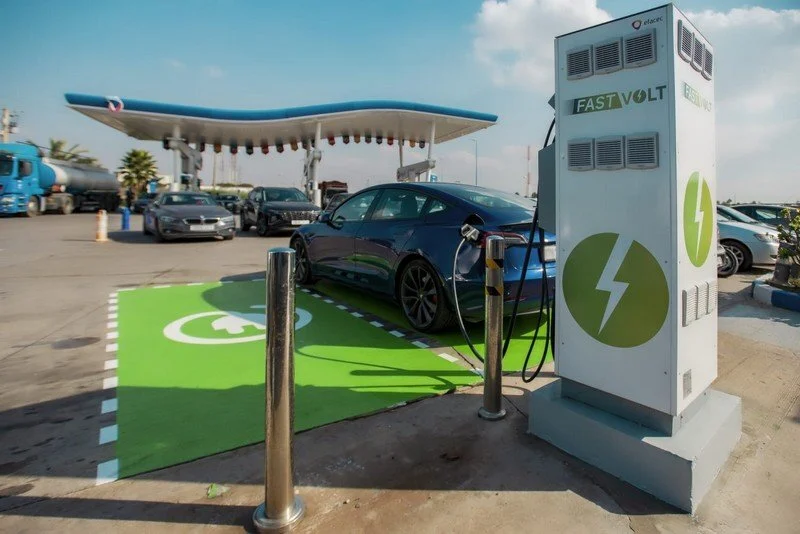
The launch of Morocco’s first 360 kW ultra-fast electric vehicle charging station represents far more than a technological achievement. It is a strategic milestone for the country and a reference case for Africa’s electric mobility transition.
By operationalizing this next-generation charger, FASTVOLT demonstrates that charging infrastructure can now match the performance of modern electric vehicles. This alignment between vehicle capability and infrastructure readiness is exactly what African markets need to unlock large-scale EV adoption.
🌍 The African EV Context: Why Infrastructure Comes First
Across Africa, interest in electric vehicles is growing rapidly. Governments, corporates, logistics operators, and private users increasingly recognize the benefits of EVs:
- Lower operating costs
- Reduced fuel dependency
- Improved energy security
- Lower emissions in urban centers
However, EV adoption cannot scale without charging infrastructure that is fast, reliable, and accessible.
Historically, charging limitations have created three major concerns:
- ⏱️ Long charging times
- 📍 Limited intercity coverage
- 🔌 Lack of confidence for fleets and long-distance travel
Ultra-fast charging directly addresses all three.
⚡ What Makes 360 kW Ultra-Fast Charging a Game Changer
🚀 Power level matters
A 360 kW charging station belongs to the highest tier of public EV charging globally. This power level is specifically designed for:
- Long-range electric SUVs
- Commercial and corporate fleets
- Highway corridors and logistics routes
- High-traffic locations with rapid vehicle turnover
At this scale, charging becomes a short operational stop, not a constraint.
⚙️ Technical Overview: A New Charging Architecture
The Moroccan ultra-fast charging station introduces a modular, intelligent architecture designed for scalability and durability.
🔌 Multi-vehicle capability
- ⚡ Up to 6 vehicles charging simultaneously
- 🔋 4 DC fast-charging connectors
- 🔌 2 AC connectors (22 kW) for complementary charging needs
🧠 Dynamic power allocation
Unlike traditional “fixed output” chargers, this station:
- Automatically distributes power based on each vehicle’s capability
- Adjusts in real time as vehicles connect or disconnect
- Maximizes station utilization without overloading the grid
➡️ This flexibility is critical for mixed EV fleets and diverse vehicle platforms.
⏱️ Ultra-Fast Charging: Comparable to Fuel Stops
One of the strongest adoption barriers for EVs has always been perceived charging time. Ultra-fast charging reshapes this perception entirely.
Modern EVs already present on the Moroccan market can now achieve exceptionally short charging sessions:
- 🚙 The XPENG G9 can recover approximately 100 km of driving range in about 5 minutes, thanks to its high-voltage architecture.
- 🚗 The ZEEKR 7X can reach 10% to 80% battery in around 10 minutes, depending on configuration.
➡️ These figures place EV charging within the same time range as refueling a combustion vehicle, a psychological and practical breakthrough for drivers and fleet operators.
☀️ Solar Integration: Charging Powered by Clean Energy
Beyond performance, this station introduces a sustainability-driven design.
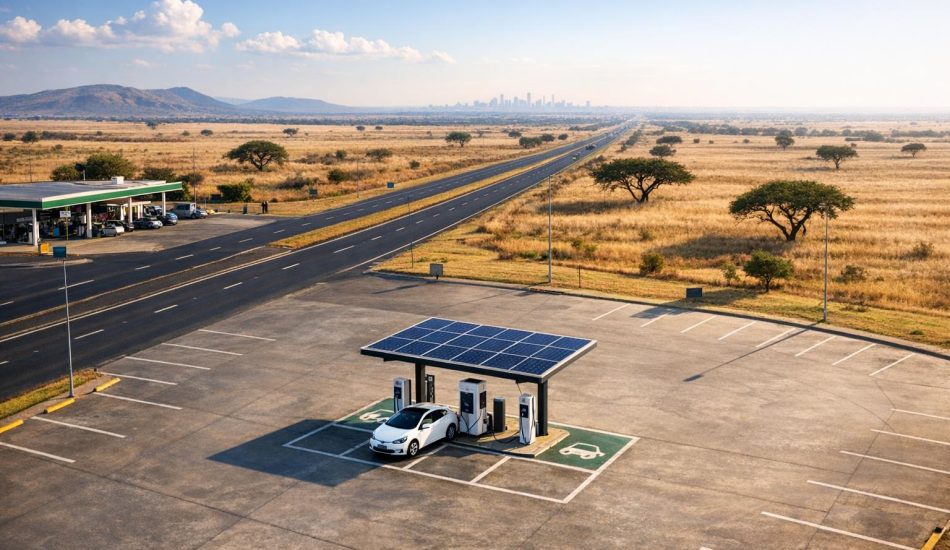
🌱 Solar photovoltaic canopy
- ☀️ 60 kWp installed solar capacity
- 🔋 Partial energy self-sufficiency during daylight hours
- 🌍 Reduced carbon intensity per charging session
- ⚡ Lower reliance on grid peak demand
This approach aligns EV charging with renewable energy generation, reinforcing the environmental benefits of electric mobility.
🏗️ Built for Reliability in African Operating Conditions
African climates and operating environments require robust infrastructure design.
🔧 Separated power unit concept
Instead of integrating the power electronics directly into the charging dispenser, this station:
- Locates the power unit up to 50 meters away
- Places sensitive equipment in a protected, controlled environment
✅ Key benefits
- 🌡️ Improved resistance to high temperatures
- 🌪️ Protection from dust, humidity, and sand
- 🚗 Reduced risk of damage from vehicle impact
- 🔄 Higher uptime and lower maintenance costs
➡️ This design philosophy is critical for long-term infrastructure performance across Africa.
🗺️ Morocco’s Expanding EV Charging Network
Ultra-fast charging is most effective when deployed within a dense and reliable national network.
Since 2021, FASTVOLT has expanded rapidly:
- 📍 Presence in all major Moroccan cities
- 🛣️ Coverage across key highway corridors
- 🔌 200+ charging connectors across 65 stations nationwide
This growing network enables:
- Intercity EV travel with confidence
- Fleet electrification for logistics and mobility operators
- Reduced range anxiety for private users
Morocco is positioning itself as one of Africa’s most advanced EV infrastructure markets.
🌍 Strategic Implications for Africa’s EV Transition
Morocco’s ultra-fast charging deployment offers a clear lesson for other African markets:
Electric mobility scales fastest where infrastructure leads, not follows.
Ultra-fast charging unlocks:
- 🚛 Logistics and delivery fleet electrification
- 🚖 Ride-hailing and corporate mobility adoption
- 🏭 OEM market entry and regional distribution hubs
- 🔋 Better utilization of next-generation EV platforms
Countries investing early in charging infrastructure will benefit from:
- Faster EV adoption
- Stronger investor confidence
- Long-term energy and mobility resilience
🔍 EV24 Perspective: Infrastructure Is the Missing Link
At EV24, we approach electric mobility as a full ecosystem, not just vehicle sales.
Our vision is built on:
- 🚗 Access to reliable, next-generation electric vehicles
- ⚡ Compatibility with fast and ultra-fast charging networks
- 🚢 Pan-African logistics and import solutions
- 🛠️ After-sales and fleet support adapted to local markets
Infrastructure initiatives like Morocco’s 360 kW ultra-fast charging station are exactly what Africa needs to move from pilot projects to mass adoption.
🔮 The Future: Ultra-Fast Charging as the New African Standard
The fundamentals are now aligned:
✅ Vehicles are ready
✅ Infrastructure is scaling
✅ Charging time is no longer a constraint
Ultra-fast charging will soon become the baseline requirement for serious EV markets across Africa.
Morocco is showing the way — and the rest of the continent is next.