
 Thabo Nkosi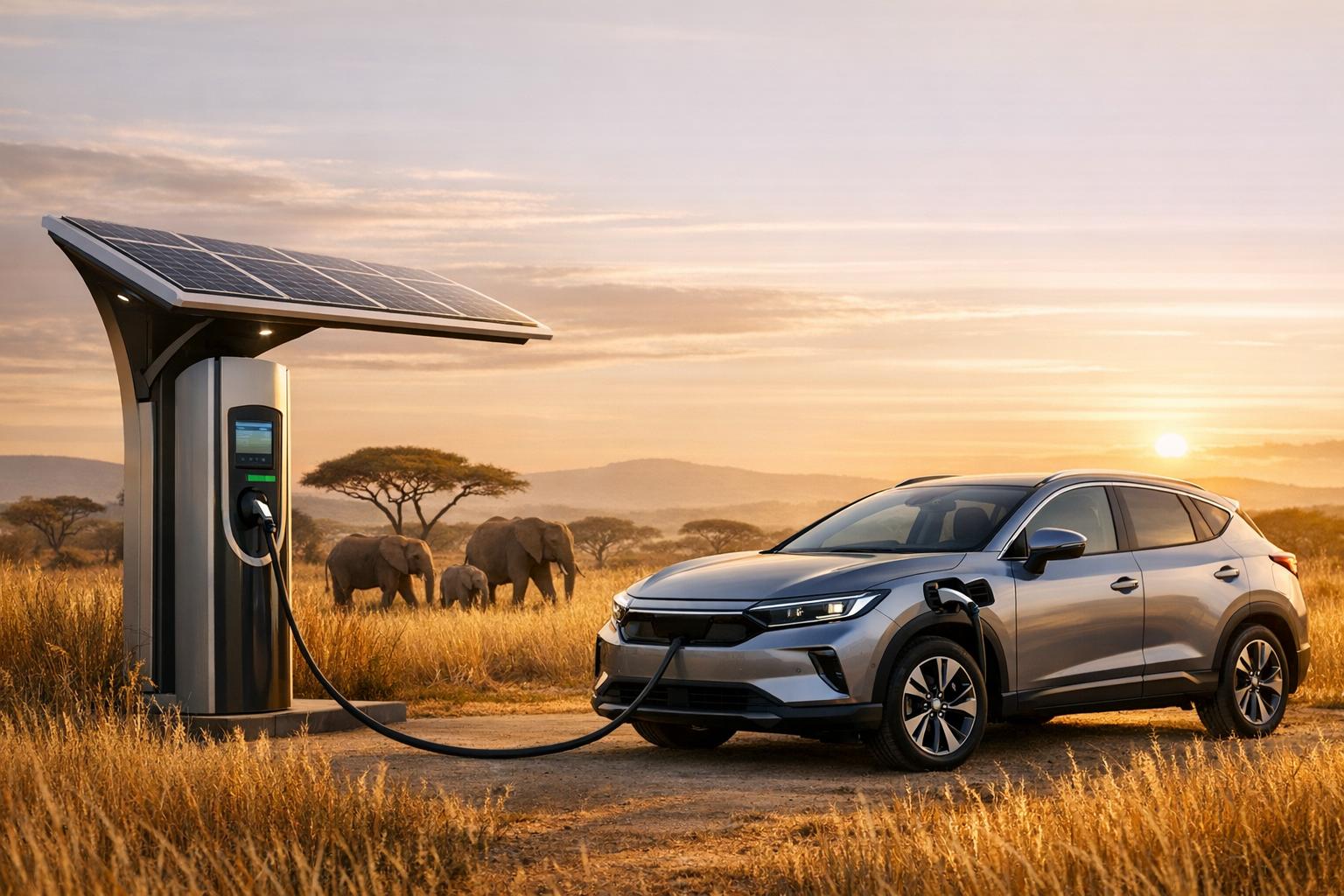
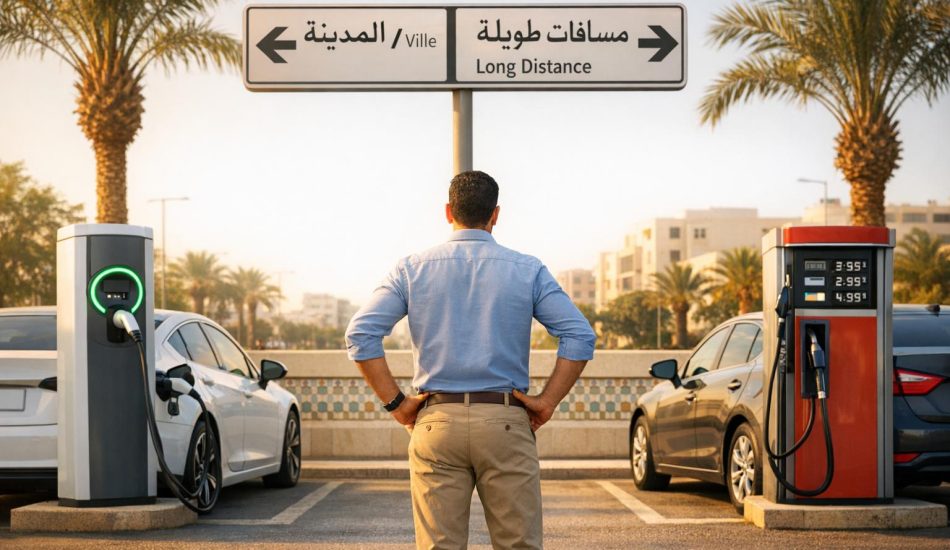
Africa’s electric vehicle (EV) market is growing fast, but myths about cost, infrastructure, and performance still hold many back. Here’s the truth:
- Cost: EVs may have higher upfront costs, but they save money long-term with lower fuel and maintenance expenses. Financing options like Pay-As-You-Drive and Battery-as-a-Service are making EVs more accessible.
- Charging: Six key countries, including South Africa and Kenya, lead with public chargers, battery-swapping networks, and solar-powered hubs, even in rural areas.
- Battery Performance: Modern EV batteries, like LFP types, handle extreme heat well and last 8–10 years. Technologies continue to improve.
- Long-Distance Travel: Newer EVs offer ranges over 600 miles, with fast charging and battery-swapping making long trips practical.
- Environmental Impact: EVs cut emissions by at least 40%, even on fossil-fuel-powered grids, and renewable energy adoption is accelerating.
EVs are proving reliable, cost-effective, and practical across Africa. Keep reading to break down these myths and see how the continent is driving change.
Common EV misconceptions debunked
Myth 1: EVs Cost Too Much for African Buyers
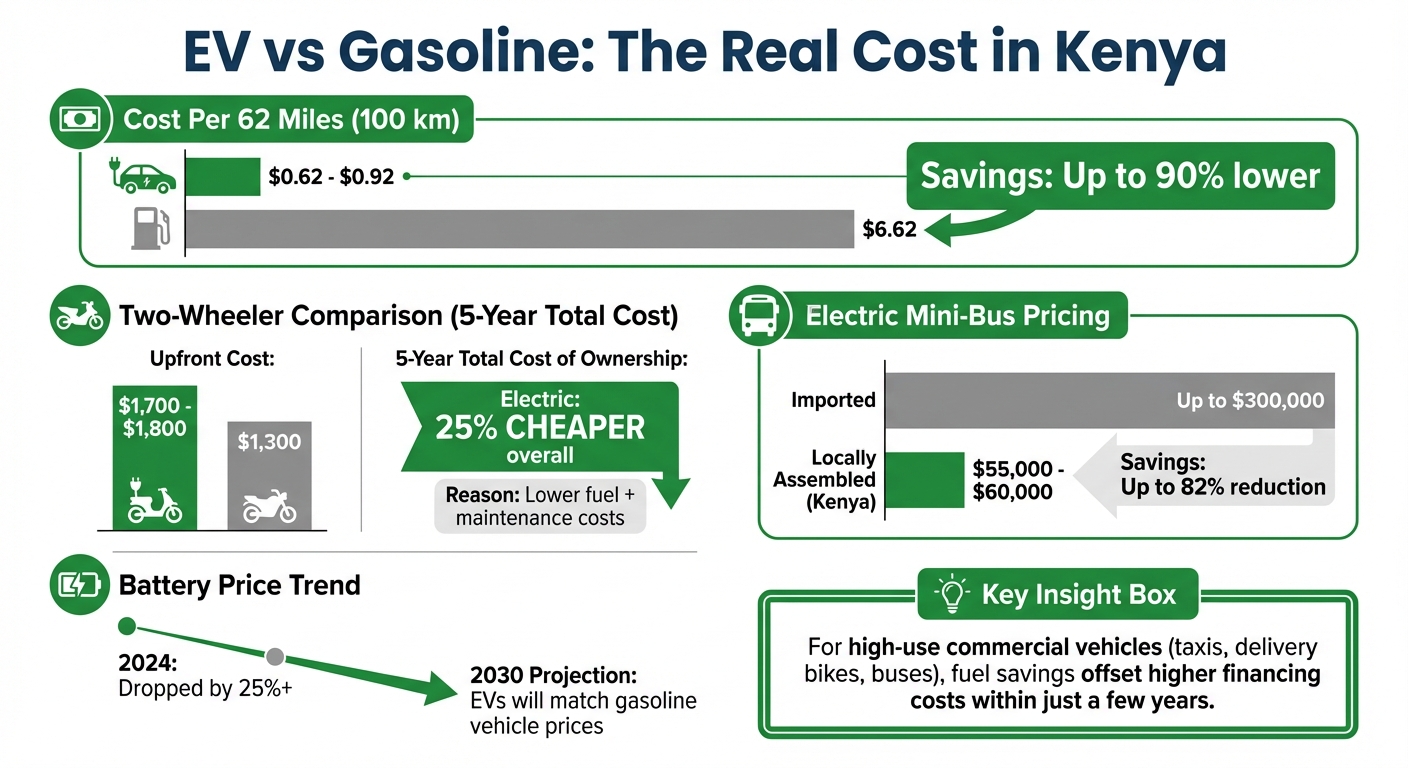
EV vs Gasoline Vehicle Cost Comparison in Kenya: 5-Year Savings Breakdown
Many believe that electric vehicles (EVs) are out of reach financially for buyers in Africa. While the upfront price tag might seem steep, the long-term savings make EVs a much smarter investment than they may initially appear. Let’s break down the numbers and explore how EVs can actually be more affordable over time.
Upfront Costs vs. Long-Term Savings
Take Kenya, for example, where the cost to drive a light-duty EV for 62 miles is just $0.62–$0.92. Compare that to $6.62 for a gasoline-powered vehicle, and the savings add up fast. The story is similar for other types of EVs, like buses and two-wheelers. An electric two-wheeler in Kenya might cost $1,700–$1,800 upfront – slightly more than a gasoline version at around $1,300 – but over five years, the EV ends up being 25% cheaper. Why? Lower fuel and maintenance costs make all the difference.
Maintenance for EVs is also less expensive. And as battery prices continue to drop – down by over 25% in 2024 alone – EVs are becoming even more accessible. By 2030, several EV segments are expected to match the cost of their gasoline counterparts. Local assembly is playing a big role in reducing costs, too. For instance, assembling electric mini-buses locally in Kenya brings their price down to $55,000–$60,000, compared to up to $300,000 for imported models. These savings are paving the way for new financing solutions to tackle the upfront cost barrier.
Financing Options for African EV Buyers
Even with operational savings, financing remains a major hurdle. High interest rates and risk premiums in African markets can push financing costs to 100–150% of a vehicle’s price. But innovative solutions are helping to bridge this gap.
"Financing is identified as the key action point for governments and global financial institutions to accelerate Africa’s transition to battery electric vehicles." – Nature Energy
Companies like BasiGo in Kenya and Rwanda are leading the way. In 2025, they secured $42 million to deploy 1,000 electric buses using a Pay-As-You-Drive battery subscription model. This approach makes the upfront cost of an EV comparable to that of a diesel bus. Similarly, Battery-as-a-Service (BaaS) programs separate the battery cost from the vehicle purchase, significantly lowering the initial price. Pay-as-you-go models are also gaining traction, allowing commercial operators to align payments with their daily income instead of taking on large loans.
Platforms like EV24.africa are expanding access with transparent pricing and financing options tailored to African buyers. They even offer delivery services across all 54 countries. Governments are stepping in as well: Rwanda has eliminated import duties on EVs, and Ethiopia charges 0% duty on Completely Knocked Down (CKD) kits for local assembly. The African Development Bank’s Green Mobility Facility is also providing early-stage grants for EV projects in seven countries.
For high-use commercial vehicles like taxis, delivery bikes, and buses, the fuel savings often offset the higher financing costs within just a few years. When you consider both the operational savings and the rise of creative financing options, it’s clear that EVs are becoming a financially smart choice for African buyers.
Myth 2: Africa Has No Charging Infrastructure
One of the most persistent myths about electric vehicles (EVs) in Africa is the lack of charging infrastructure. While it’s true that infrastructure is still evolving, the reality paints a much brighter picture. By 2026, the progress in key areas is expected to defy common misconceptions.
Expanding Charging Networks in Key Regions
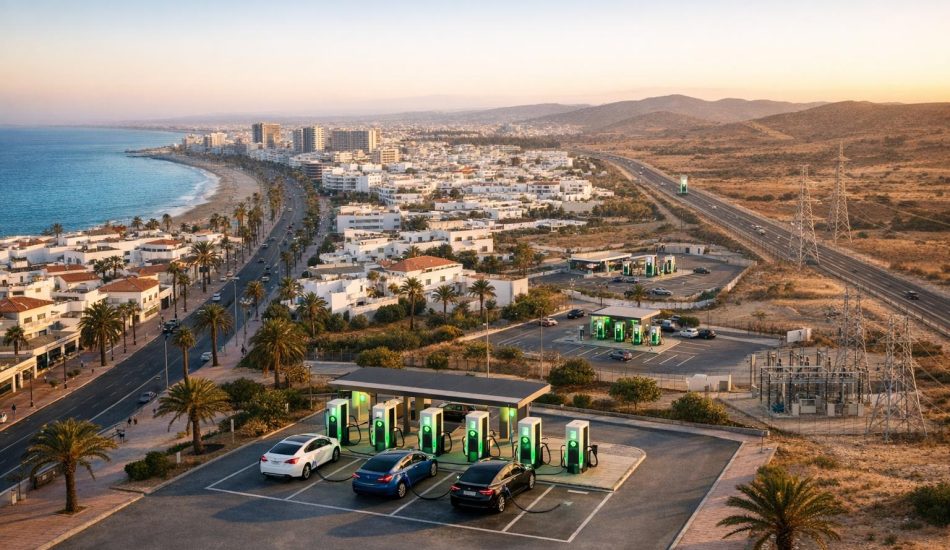
In sub-Saharan Africa, six countries – South Africa, Kenya, Rwanda, Uganda, Ethiopia, and Nigeria – lead the way, accounting for 70% of vehicle sales and serving 45% of the population. Urban areas in these markets already enjoy strong electricity access, with rates exceeding 70% in most cases and even surpassing 90% in some.
South Africa is a standout, boasting one of the highest proportions of fast chargers globally. Fast chargers make up 53% of its public charging infrastructure, making long-distance EV travel increasingly feasible. Meanwhile, in East Africa, battery swapping is emerging as a game-changer for two-wheelers. For instance, Ampersand, operating in Rwanda and Kenya, facilitates 140,000 battery swaps monthly for 1,700 customers, who collectively cover 1.4 million kilometers weekly across Kigali and Nairobi.
In 2023, Spiro, an electric two-wheeler startup, secured $60 million in funding to roll out over 1,000 battery-swapping stations in its operating regions. Companies like Roam (formerly Opibus) in Kenya are focusing on local R&D and assembly to provide electric motorcycles tailored for "boda boda" drivers, who typically travel up to 80 miles daily.
Public charging is also being integrated into existing commercial spaces such as petrol stations, shopping centers, and taxi depots. This allows minibus and taxi fleets to charge during operational downtimes. Additionally, Level 2 chargers – costing between $200 and $1,000 to install – offer 12 to 80 miles of range per hour of charging, making them ideal for workplaces and urban areas. These advancements are supported by innovative financing models that are making EVs more affordable.
Charging Solutions for Rural and Long-Distance Travel
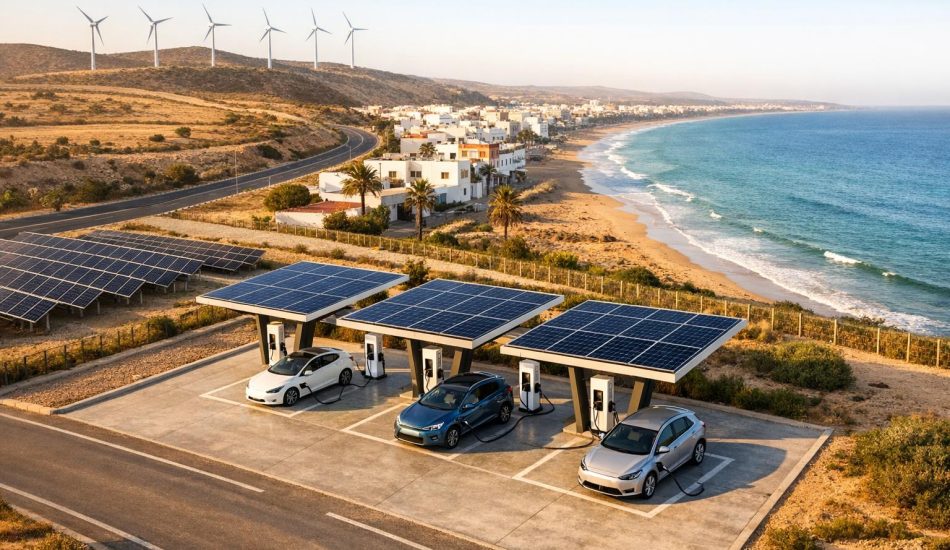
Rural areas present unique challenges, but solar-powered charging hubs are proving to be an effective solution. These systems, which include battery storage, operate independently of the grid. Modular and scalable, a solar setup for a small vehicle covering about 30 miles daily costs approximately $2,700, including installation.
In Uganda, companies like Zembo are establishing solar-powered kiosks as charging hubs in areas with limited grid access. These systems deliver 90% daily energy reliability, ensuring consistent service for users.
For long-distance travel, depot charging has become the go-to solution for commercial fleets. Electric buses and delivery trucks are charged overnight at central depots, aligning with their predictable daily routes. Opportunity charging, which uses high-power chargers at bus terminals or loading docks, allows vehicles to recharge during breaks without disrupting schedules.
In remote areas, "semi-public" chargers located at hotels, supermarkets, and tourist hubs are helping to fill infrastructure gaps. Globally, about 20% of public chargers fall into this category, offering crucial support for travelers passing through less-developed regions. Platforms like EV24.africa simplify the process by helping buyers find vehicles suited to local infrastructure and providing delivery services across all 54 African countries.
The charging infrastructure in Africa is growing rapidly, creating a solid foundation for EV adoption where it’s needed most.
Myth 3: EV Batteries Fail in African Climates
Contrary to popular belief, EV batteries are proving their reliability even in Africa’s challenging climates. Let’s break down how advancements in battery technology are handling extreme temperatures.
Battery Technology for Extreme Temperatures
Modern EV batteries are built with cutting-edge features to withstand tough conditions. Lithium Iron Phosphate (LFP) batteries, for instance, are now a popular choice for hotter climates, accounting for nearly 50% of the global EV battery market in 2024. Unlike older Nickel Manganese Cobalt (NMC) batteries, which degrade when charged beyond 80%, LFP batteries can hit a 100% state of charge without significant wear. Plus, they’re about 30% cheaper per kilowatt-hour, making them a practical solution for African markets.
Advanced thermal management systems in modern EVs ensure batteries maintain optimal temperatures, even during fast charging in extreme heat. A notable example comes from Dongfeng Motor‘s Yipai Technology, which tested a solid-state battery prototype in January 2026 that withstood 338°F (170°C) – well above the standard 266°F (130°C) – without catching fire or exploding. This technology is set for mass production by September 2026.
To avoid issues like short circuits under high stress, newer batteries incorporate multi-layer anodes that improve lithium uptake and prevent dendrite formation. On top of that, most modern EV batteries are designed to retain 70–80% of their capacity after 8 to 10 years of use, with some models lasting over 300,000 miles.
These advancements aren’t just theoretical – they’re backed by real-world performance in Africa.
EV Performance Examples from Africa
The performance of EVs in African conditions is no longer up for debate. Electric buses, for example, have seen a 44% year-over-year growth rate, showcasing their success across the continent.
In Kenya, BasiGo operates electric buses daily in Nairobi’s heat and heavy traffic, proving the durability of modern EV batteries in urban settings. Electric paratransit vehicles, or matatus, in Nairobi cover between 120 and 220 km (75 to 137 miles) per day, often requiring multiple charges during the day.
In Rwanda and Kenya, Ampersand has introduced battery-swapping stations for electric motorcycles, ensuring commercial drivers maintain high uptime despite the tropical climate. Similarly, Moove runs EV ride-hailing fleets in Nigeria, South Africa, and Ghana, demonstrating that electric cars can handle high-heat urban environments. Meanwhile, Zembo in Uganda supports electric motorcycles with solar-powered charging kiosks, sidestepping unreliable grid power while preserving battery health.
Kenya has also implemented strict quality measures, banning the import of EVs with less than 80% battery health. And when EV batteries eventually degrade, they’re finding a second life as storage for solar energy in countries like Kenya, Rwanda, and Nigeria, contributing to a circular economy.
These examples highlight how advanced battery technology, combined with innovative infrastructure and policies, is making EV adoption both practical and cost-effective across Africa.
sbb-itb-99e19e3
Myth 4: EVs Can’t Handle Long African Journeys
The belief that electric vehicles (EVs) aren’t suitable for long trips across Africa is becoming outdated. Thanks to advances in battery technology and growing infrastructure, long-distance EV travel is now more practical than ever.
How Newer EV Models Tackle Range Issues
Range anxiety is quickly becoming a thing of the past. In January 2026, Dongfeng Motor’s Yipai Technology started testing a solid-state battery prototype capable of delivering over 620 miles (1,000 km) on a single charge, with mass production slated for September 2026. Toyota is also stepping up, with plans to launch EVs offering more than 600 miles of range by 2026, doubling what was possible before 2024. Meanwhile, CATL‘s 2024 battery technology can add 186 miles (300 km) of range in just 5 minutes of charging. BYD‘s Super-e platform, introduced in 2025, takes it even further, providing 249 miles (400 km) of range in the same 5-minute charging window using 1,000V architecture. These advancements bring EV charging speeds closer to the convenience of refueling a traditional car.
In Kenya, EVs are proving to be cost-efficient, with the expense of traveling 62 miles (100 km) being 47% to 83% lower than using a conventional vehicle. BasiGo, for instance, has successfully deployed 100 electric buses in Kenya as of May 2025, serving thousands of passengers daily and demonstrating that long-distance electric transit is not just feasible but thriving in East Africa. These developments make planning and executing long journeys in EVs increasingly straightforward.
Tips for Long-Distance EV Travel
Preparation is key. Use EV trip planning apps to locate Level 3 DC fast chargers along your route and check their availability in real time. Opt for Fast or Ultra-Fast chargers to minimize stop times, reserving slower AC chargers for overnight charging.
Make the most of opportunity charging. Take advantage of natural breaks at hotels, supermarkets, or rest stops to charge your vehicle while you eat or rest. In countries like Rwanda and Kenya, battery-swapping networks such as Ampersand allow you to get a full charge in just 5 minutes. Ampersand currently performs 140,000 battery swaps per month for over 1,700 customers.
For more remote areas, stick to routes with solar-powered off-grid charging hubs, which cost about $2,700 to install and operate independently of unreliable national grids. Aim to reach charging stops with 15–20% battery remaining to account for unexpected detours. Also, save your route and charging locations offline in case you encounter poor cellular connectivity.
Myth 5: EVs Don’t Help the Environment in Africa
When it comes to affordability, performance, and infrastructure, EVs already offer plenty of advantages. But their environmental benefits are just as compelling. Even when EVs rely on grids powered by fossil fuels, they reduce carbon emissions by at least 40%. And when powered entirely by renewable energy, they achieve zero operational emissions. Transportation is responsible for 10% of Africa’s total greenhouse gas emissions, and widespread EV adoption could reduce that figure by 20% to 25% annually by 2040.
Lifetime Emissions: EVs vs. ICE Vehicles
The environmental edge of EVs becomes even more evident when you look at their entire lifecycle. Across Africa, battery electric vehicles (BEVs) generate significantly lower greenhouse gas emissions over their lifespan compared to internal combustion engine (ICE) vehicles – even in areas where electricity grids are heavily reliant on fossil fuels. For perspective, in Europe, life-cycle emissions for EVs are already 65% to 85% lower than those of ICE vehicles, and similar trends are expected in Africa as the continent’s power grids increasingly adopt cleaner energy sources.
Solar off-grid (SOG) charging systems are another game-changer. These standalone solar setups, costing about $2,700 to install, allow EVs to operate independently of carbon-intensive electricity grids, achieving near-zero operational emissions. By 2040, the cost of cutting emissions through EVs in Africa is projected to be "negative", meaning the transition will not only reduce pollution but also save money. These long-term benefits highlight why EVs are a smart environmental and economic choice.
Renewable Energy and EV Adoption
Africa’s renewable energy sector is growing at an impressive pace. In 2019, clean energy made up 30% of the continent’s electricity generation, and this share is expected to climb to nearly 50% by 2040. Countries are taking bold steps to accelerate this shift. For example, in January 2024, Ethiopia became the first nation to ban all imports of internal combustion engine passenger vehicles, capitalizing on its massive hydroelectric projects like the Grand Ethiopian Renaissance Dam (GERD). Similarly, Rwanda plans to ban ICE motorcycles in Kigali by 2025 to encourage electric two-wheelers. These policies are driving both economic and environmental progress, boosting the momentum for EV adoption across the continent.
Commercial fleets are leading the way in this transition. In Kenya, BasiGo operates a fleet of 100 electric buses – serving thousands of passengers daily on a grid powered largely by renewable energy. Meanwhile, Uganda’s Zembo has introduced solar-powered battery-swapping kiosks for two-wheeler taxis (boda bodas), ensuring these high-mileage vehicles run on clean energy.
"Battery electric vehicles with solar off-grid chargers will have lower costs and negative greenhouse gas abatement costs well before 2040 in most countries and segments".
Conclusion: Making Informed EV Decisions in Africa
The shift to electric vehicles (EVs) in Africa is no longer hindered by outdated myths. The narrative has changed, and EVs are proving to be a practical and reliable option across the continent. Early adopters are already showcasing how electric mobility can thrive in diverse African settings.
When you dig into the Total Cost of Ownership, the financial benefits become clear. While the initial purchase price of an EV may be higher, the overall savings from lower running costs, improved battery performance, and accessible financing options make them a smart choice. Projections suggest that by 2030, many passenger EV models will match the cost of traditional vehicles, making the decision even easier.
Charging infrastructure is also advancing quickly. Whether you’re in a bustling city with growing networks or in rural areas utilizing solar-powered off-grid systems – priced at approximately $2,700 – solutions are becoming more accessible. And with 98% of U.S. passenger trips covering less than 75 miles, a pattern similar to many African cities, concerns about range limitations for everyday use are largely unfounded.
Platforms like EV24.africa are helping to simplify the transition to EVs. By offering transparent pricing, detailed specifications, and integrated financing options, they’re breaking down barriers like upfront costs. Buyers can explore a variety of trusted brands and make decisions based on accurate data rather than outdated misconceptions. With these tools at hand, Africa is well on its way to embracing an electric future.
FAQs
Are electric vehicles (EVs) more cost-effective than traditional gas-powered cars in Africa?
While electric vehicles (EVs) might come with a higher price tag upfront compared to gas-powered cars, they often save money in the long run. Why? For starters, electricity costs much less than gasoline. Plus, EVs have fewer moving parts, which means lower maintenance expenses. On top of that, many areas offer perks like tax breaks or reduced registration fees for EV owners.
Research from Africa shows that over five years, owning an EV – including costs like fuel, maintenance, and depreciation – can be 20-30% cheaper than sticking with a gas or diesel vehicle. And with battery prices dropping and charging networks growing, EVs are becoming an even smarter investment for buyers across the continent.
What charging options are available for EVs in rural Africa?
Rural parts of Africa face a noticeable shortage of charging stations compared to urban areas, but creative solutions are starting to close the gap. One promising approach involves solar-powered chargers set up in communal areas like farms and market squares. These chargers are often paired with small batteries to keep them running even during cloudy days. South Africa, for instance, has introduced entirely off-grid charging stations that rely on solar panels and on-site batteries.
Beyond fixed solar stations, mobile charging units and battery-swap stations are becoming popular in remote regions. Portable solar chargers can be easily transported to villages, offering flexibility, while battery-swap kiosks – widely used in Rwanda’s motorcycle market – let users quickly trade out empty batteries for charged ones. Some areas are also developing mini-grids powered by local solar farms, which not only support EVs but also meet other energy demands. While rural charging infrastructure remains in its early stages, these off-grid and mobile options are helping make EVs a practical choice even in hard-to-reach areas.
Can electric vehicle batteries handle Africa’s extreme heat and cold?
Today’s EV batteries come equipped with sophisticated thermal-management systems that ensure reliable performance, even under extreme temperatures. In hot regions where temperatures often soar above 95°F, these systems work to regulate the battery’s temperature. This prevents overheating, safeguards the battery’s internal chemistry, and preserves charging efficiency. Because of this, drivers in warmer climates typically notice only a slight drop in their vehicle’s driving range compared to those in cooler areas.
On the other hand, colder conditions can impact EV battery performance more noticeably. When temperatures dip below 32°F, driving range may decrease by about 15-30%. To combat this, many EVs feature built-in heating systems and pre-conditioning options, which warm the battery before use and help minimize performance loss. These advancements make modern EVs adaptable to Africa’s varied climates, whether it’s the intense heat of the Sahara or the brisk temperatures of the highlands.