
 Thabo Nkosi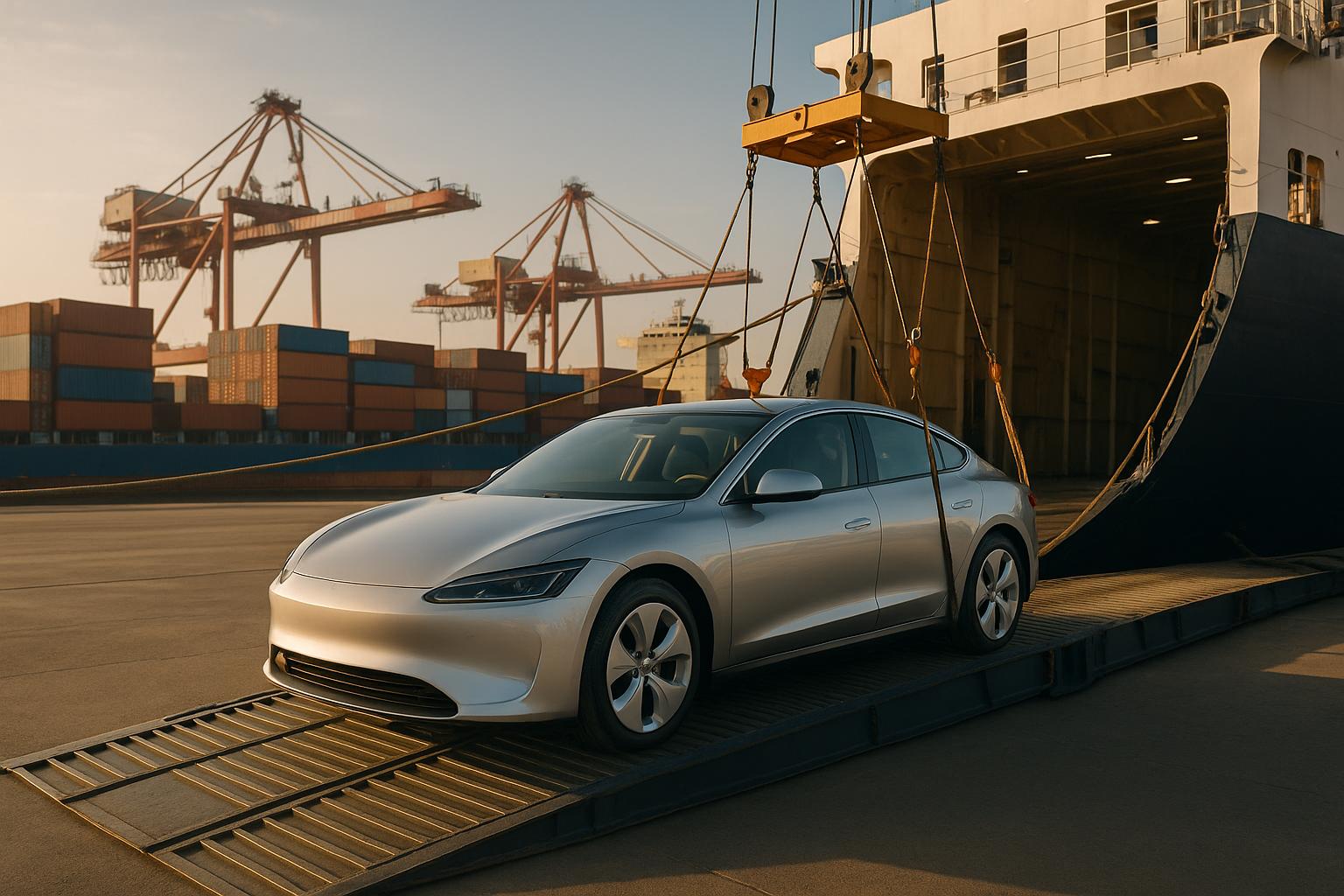
Importing electric vehicles (EVs) from China to Mauritania in 2025 offers a cost-effective way to access modern EVs. Here’s what you need to know:
- Key Benefits: China leads in EV production with competitive prices and advanced technology. Mauritania’s 10-year vehicle age limit and straightforward import policies make it easier to bring in EVs.
- Costs: Expect import duties (10%), VAT (12.5%), and potential vehicle-specific taxes. A mid-range EV priced at $22,000 could cost around $48,458 after taxes and fees.
- Steps: Research models, arrange shipping (RoRo or container), and ensure all required documents are in order. Hire a customs broker for smooth clearance and registration.
- EV Features to Prioritize: High-capacity batteries, heat-resistant designs, and compatibility with Mauritania’s charging infrastructure are crucial.
- Supplier Options: Choose between direct manufacturers, independent exporters, or platforms like EV24.africa for bundled services and local support.
Quick Tip: Finalize imports before January 2026 to avoid potential delays from China’s new export policies. For businesses, the Nouadhibou Free Trade Zone offers tax perks like duty-free imports and profit tax exemptions.
How to Import Electric Cars from China?
Mauritania’s Import Policies and Regulations for Electric Vehicles
Mauritania has established straightforward import policies that can help you save both time and money when bringing in electric vehicles (EVs). It’s crucial to understand these regulations before starting the import process. Below, you’ll find details on vehicle restrictions and compliance requirements.
Allowed Vehicles and Import Restrictions
Mauritania enforces strict rules, including a 10-year age limit on all vehicle imports. Any vehicle older than 10 years is prohibited from entering the country. This makes it essential to confirm the manufacturing date of any used EV you plan to import.
For electric vehicles, specific shipping and safety standards must be met. These include:
- A battery that is intact, undamaged, and leak-free.
- A visible windshield label showing the VIN (Vehicle Identification Number) and propulsion type.
- Proper classification as IMO cargo, accompanied by a Material Safety Data Sheet (MSDS).
Additionally, you must notify both your transporter and Customs about the shipment in advance to ensure a smooth process.
Required Documents and Compliance
To import vehicles into Mauritania, registration in the Central Importers Register is mandatory. However, if your imports exceed US$86,000 annually or your business capital is over US$1 million, further registration steps are required. The 2025 Investment Code aims to simplify these procedures.
Government Incentives and Tax Breaks for Electric Vehicles
Currently, Mauritania applies a 10% import duty and 12.5% VAT on all vehicles, including EVs, with no specific tax benefits for electric models. However, the Investment Code provides duty exemptions under certain conditions, which will expand further in 2025.
For businesses operating within the Nouadhibou Free Trade Zone (ZFN), there are additional perks, including:
- Duty-free imports.
- Re-export rights.
- A five-year exemption from profit taxes.
- Full relief from customs duties.
It’s worth noting that EVs are not classified as part of a priority sector in Mauritania. As a result, they are subject to the same import duties as traditional gas-powered vehicles.
How to Choose the Right Electric Vehicle and Supplier
Once you’re familiar with Mauritania’s import regulations, the next step is picking the right electric vehicle (EV) and a reliable supplier. These decisions will directly affect how well your vehicle performs and how smooth your import process is.
What to Look for in an Electric Vehicle
Mauritania’s climate and road conditions demand EVs with specific features. With temperatures often exceeding 95°F (35°C) and a mix of paved and unpaved roads, you’ll need a vehicle that can handle these challenges. Aim for models with a verified range of 150–250 miles (240–400 km) and active liquid cooling systems to manage high temperatures. For taxis or fleet use, opt for higher-capacity batteries to reduce charging downtime.
Road conditions in Mauritania also mean that vehicles with higher ground clearance and durable suspensions are better suited for the terrain. Standard sedans with low clearance may struggle on sandy or uneven roads common in the region.
When it comes to batteries, choose wisely. Lithium iron phosphate (LFP) batteries are better at handling heat and have a longer lifespan in hot climates, though nickel manganese cobalt (NMC) batteries offer slightly better range. Always check test reports for thermal performance to ensure the battery will function reliably.
Charging options are another critical factor. Since Mauritania’s charging infrastructure is still developing, pick models that can charge on single- or three-phase AC power at home or work. Verify compatibility with locally available wallboxes, and ensure the vehicle can handle occasional voltage fluctuations if the grid is unreliable. Fleet operators might prefer models that support moderate DC fast charging to minimize downtime, while private users can usually rely on overnight AC charging if power is stable.
Also, consider motor power and torque. The vehicle should be powerful enough to operate fully loaded on inclines and in high temperatures. Check that its components, like the battery and electronics, are dust- and water-resistant (look for IP ratings). Lastly, make sure that maintenance parts like tires and brakes are easily available in Mauritania to avoid long delays.
Once you’ve identified the right EV features, it’s time to evaluate suppliers who can meet your needs.
Finding Reliable Suppliers
A trustworthy supplier can make all the difference in your EV import experience. Start by verifying their business credentials, including licenses, ISO certifications, and a track record of exporting to African markets. For added assurance, consider third-party inspections from organizations like SGS or Bureau Veritas to confirm the vehicle’s condition and compliance with your contract.
After-sales support is another key consideration. Check if the supplier has spare parts warehouses that serve West Africa and if they offer clear warranty claim processes. A low purchase price won’t matter if you can’t get replacement parts or technical support when needed.
Pre-shipment inspections are essential. Organizations like SGS or Bureau Veritas can verify the vehicle’s condition, battery health, odometer accuracy, and contract compliance. This step not only aligns with Mauritania’s requirements for used vehicles but also protects you from receiving a misrepresented product.
Platforms like EV24.africa simplify the entire process by connecting you with pre-vetted suppliers and offering bundled logistics. They provide standardized technical specs, comparison tools, and advice tailored to African conditions. Instead of researching multiple factories, you gain access to reliable suppliers with proven export records. EV24.africa also handles logistics, including shipping and customs documentation, making it especially useful for first-time importers.
"At EV24.africa, we simplify the process of importing and buying electric vehicles in Africa. Our expertise ensures a seamless, transparent, and stress-free experience, so you can focus on driving the future of mobility."
The platform also negotiates group pricing and pre-agreed warranty and after-sales terms with manufacturers, offering buyers more leverage than they’d typically have on their own. With customer support available in local languages and time zones, communication barriers are minimized, making the process even smoother.
Comparing Procurement Channels
There are three main ways to source EVs from China: buying directly from manufacturers, working with independent exporters, or using specialized platforms like EV24.africa. Each option has its pros and cons.
- Direct manufacturers often offer the lowest prices and the most control over specifications. However, they usually require larger minimum order quantities (MOQs) – typically 5–10 units – making this option less practical for small buyers. You’ll also need to handle shipping, insurance, and customs independently.
- Independent exporters are more flexible with smaller orders and mixed models. Many handle logistics and documentation for you, but reliability can vary. Without proper vetting, there’s a risk of misrepresented vehicle conditions or poor warranty support.
- Specialized platforms like EV24.africa provide a middle ground. They connect you with pre-vetted suppliers, coordinate logistics, and offer localized support. While there may be platform fees, these are often offset by reduced risks and bundled services.
Here’s a quick comparison:
| Procurement Channel | Advantages | Risks/Limitations | Best For |
|---|---|---|---|
| Direct Manufacturer | Lowest prices; factory warranty; full control over specs | High MOQs; complex paperwork; buyer handles logistics | Large fleets, dealers buying in bulk |
| Independent Exporter | Small orders; flexible model mix; bundled logistics | Variable reliability; weaker warranty; risk of misrepresentation | Small importers needing flexibility |
| Specialized Platforms | Pre-vetted suppliers; bundled logistics; local customer support | Platform fees; less direct control over specs | First-time buyers, small businesses |
When choosing a procurement channel, consider factors like minimum order quantities, logistics handling, warranty quality, payment security, and language support. For Mauritanian buyers, prioritize suppliers familiar with West African customs processes and logistics.
For example, an EV with a factory price of $18,000 might cost $18,500–$19,000 through a platform that bundles warranty, after-sales support, and shipping. The slightly higher cost is often worth it for the reduced risk and convenience.
Experts working on EV projects in Africa recommend starting with simple, durable models that can handle rough roads and challenging conditions. Focus on pilot programs for taxis, company fleets, or delivery vehicles where mileage and charging can be closely monitored. Planning for service and spare parts from the outset – such as training local mechanics and stocking essential parts – will help ensure long-term success. Partnering with platforms or consultants familiar with African import processes and infrastructure can significantly improve your results.
sbb-itb-99e19e3
Import Process from China to Mauritania: Step-by-Step
Bringing an electric vehicle from China to Mauritania involves three key stages. Each step requires careful planning, proper documentation, and attention to local regulations to prevent delays or unexpected costs.
Step 1: Research and Vehicle Selection
Start by identifying your specific needs. For instance, a taxi operator in Nouakchott may prioritize durability and passenger capacity, while someone using the vehicle for personal errands might value efficiency and compact size. Compare performance features and specifications to find the right fit.
Create a budget that accounts for the vehicle’s price, shipping costs, import duties, registration fees, and a cushion for any unexpected expenses. Once you’ve chosen potential models, ask for detailed specifications and a proforma invoice. This document should clearly list the vehicle’s details, price, shipping terms, and payment conditions. Confirm the delivery timeline with your supplier.
Make payments securely, following the agreed terms, and use trade assurance programs for added security. Before shipping, arrange a pre-shipment inspection to ensure the vehicle matches the agreed specifications. A thorough inspection report will simplify the customs clearance process later on.
Once everything is confirmed, proceed with shipping arrangements.
Step 2: Shipping and Customs Clearance
Choose a shipping method that suits your situation. For a single vehicle, roll-on/roll-off (RoRo) shipping is often cost-effective. If you’re importing multiple vehicles or additional equipment, container shipping provides extra protection. Your supplier or freight forwarder will handle export documentation, including the commercial invoice, packing list, bill of lading, and certificate of origin. Make sure you receive copies of these documents for customs purposes.
Track your shipment regularly, as transit times can vary. Before the vehicle arrives, gather the necessary customs paperwork: the bill of lading, commercial invoice, certificate of origin, inspection report, and proof of payment. If you’re importing a used vehicle, check for any additional documentation required under local regulations.
Hire a licensed customs broker to handle duties, submit the required paperwork, and coordinate inspections. Pay all applicable fees and keep receipts, as these will be needed for vehicle registration. Once customs clearance is complete, you can move on to delivery and registration.
Step 3: Delivery and Registration in Mauritania
After customs clearance, arrange for the vehicle’s transport from the port. Depending on its condition, you may be able to drive it yourself or need alternative transport. Ensure the vehicle is handled carefully during this stage.
Register the vehicle with the local registration authority by submitting all necessary import and purchase documents. Double-check that the paperwork correctly identifies the vehicle as electric, as this may impact taxes or eligibility for any available incentives.
Finally, secure insurance and set up a charging station at home or a commercial location to ensure easy and efficient charging. It’s also wise to locate mechanics with experience in maintaining electric vehicles. Keep all documents organized for future reference.
Import Costs and Financing Options
When importing a vehicle, understanding the full cost and financing options is just as important as knowing the regulations and selecting the right supplier. The total cost goes far beyond the factory price, so let’s break it down.
Complete Cost Breakdown
Let’s take a mid-range electric SUV priced at $22,000 FOB (Free on Board) from China as an example. Here’s how the costs stack up from the factory to your driveway.
- Factory price: This $22,000 covers the vehicle and any chosen options.
- Ocean freight and insurance: Shipping to Nouakchott via RoRo (Roll-on/Roll-off) typically costs around $2,200 for similar routes. Adding this brings the CIF (Cost, Insurance, Freight) value to $24,200.
- Customs duties: Mauritania applies import duties based on the CIF value. At 10%, this adds $2,420.
- VAT (Value-Added Tax): With the duty included, the VAT base becomes $26,620, and at 12.5%, VAT adds $3,328.
- Vehicle-specific taxes: For new vehicles, taxes can be as high as 78% of the car’s factory price. In this case, that’s $17,160. However, EVs may qualify for reduced rates if incentives are introduced by 2025.
- Additional fees: These include port and handling charges ($600), customs broker services ($250), inland transport and local insurance ($300), and registration costs like license plates and inspections ($200).
Total estimated on-road cost:
- CIF value: $24,200
- Import duty: $2,420
- VAT: $3,328
- Vehicle tax: $17,160
- Port, handling, and local fees: $1,350
Grand total: approximately $48,458
This estimate assumes the highest applicable tax rate. If Mauritania introduces EV-specific incentives – such as reduced duties or exemptions from certain taxes – the total cost could be much lower. To avoid surprises, request a customs pre-assessment for your specific vehicle before finalizing any purchase.
Tax and Duty Comparison: EVs vs Gas-Powered Cars
Electric vehicles often enjoy tax advantages over traditional gasoline or diesel cars. While new cars in Mauritania are generally taxed at around 78% of their value (and used cars at about 50%), EV-focused policies could lead to significantly lower rates for electric models.
Here’s a hypothetical comparison using a $22,000 CIF value (a $20,000 vehicle plus $2,000 shipping and insurance). The table contrasts potential EV incentives with standard tax schedules for gas-powered cars:
| Cost Component | New EV (with incentive) | New ICE Car (standard) |
|---|---|---|
| CIF value | $22,000 | $22,000 |
| Import duty | 5% = $1,100 | 10% = $2,200 |
| VAT base | $23,100 | $24,200 |
| VAT rate | 10% | 12.5% |
| VAT amount | $2,310 | $3,025 |
| Vehicle tax | 40% = $8,000 | 78% = $15,600 |
| Total taxes & duties | $11,410 | $20,825 |
| Effective tax rate | 51.9% of CIF | 94.7% of CIF |
This example highlights how EV-friendly policies could nearly halve the tax burden. The actual rates in 2025 will depend on whether Mauritania adopts EV incentives and how your vehicle is classified. Make sure your import documentation clearly identifies the vehicle as electric and includes the correct HS code to qualify for any benefits.
Remember, vehicles older than 8 years cannot be imported into Mauritania. Additionally, factors like battery size and vehicle condition can affect costs – larger batteries raise the factory price (and taxes), while damaged vehicles may lead to extra inspection or storage fees.
Payment and Financing Options
Now that you understand the costs, let’s talk about how to pay for your imported EV.
Paying upfront for an imported vehicle isn’t always an option, but there are several financing methods that can make the process more manageable. Here are some common options:
- Bank loans: Local banks in Mauritania may offer loans for vehicle imports. Terms and interest rates vary, so it’s worth shopping around to find the best deal.
- Leasing arrangements: Some suppliers or third-party financiers provide leasing options. These typically involve a down payment followed by monthly installments, spreading out costs and preserving cash flow. This can be especially useful for businesses looking to build electric taxi or delivery fleets.
When evaluating financing, consider the total borrowing costs against the savings you’ll gain from lower fuel and maintenance expenses. EVs are cheaper to run than gas-powered cars, so calculating your break-even point is key to ensuring the financing makes sense.
For businesses importing multiple vehicles, negotiating volume discounts or exploring fleet financing packages can further cut costs. Lenders may even offer better terms for commercial EV purchases, recognizing the operational savings and environmental benefits.
Finally, always prioritize secure payment methods and verify your supplier’s credentials before transferring funds. Keep all payment receipts and financing agreements organized – not only for customs clearance and registration but also for potential tax deductions or resale in the future.
Conclusion
Main Points Summary
Importing electric vehicles from China to Mauritania in 2025 offers a chance to access modern, competitively priced transportation options. However, it’s crucial to comply with Mauritania’s import regulations. The government continues to encourage EV adoption by providing incentives like reduced taxes on electric vehicles, which can lower overall costs compared to traditional gas-powered cars.
To manage your expenses effectively, take the time to analyze all available incentives and tariffs thoroughly.
One key factor to keep in mind for 2025: China is introducing stricter export policies starting January 1, 2026. These include export permits and a mandatory 180-day waiting period. Finalizing your imports before these policies take effect can save you from potential delays.
This summary serves as a foundation for launching your import journey.
Getting Started with Your Import
With these insights in hand, you’re ready to streamline your import process. Earlier sections of this guide provide detailed breakdowns of costs and regulatory requirements to help you plan effectively.
Start by researching the electric vehicle models that meet your needs and identifying reputable suppliers. Collect the necessary documentation early, and connect with local customs brokers to get a pre-assessment of duties and taxes before making your purchase.
Explore financing options, including bank loans and leasing arrangements. If you’re importing fleets, consider negotiating volume discounts or customized financing packages that reflect the long-term savings EVs can offer.
Platforms like EV24.africa simplify the process by offering detailed listings of EVs from top brands such as Tesla, BYD, Leapmotor, and Geely. They also provide transparent pricing and delivery services across Africa, making supplier verification and vehicle selection much easier.
As Mauritania embraces the shift to electric mobility, importing EVs from China places you at the forefront of this transformation. By planning carefully, staying compliant with regulations, and managing costs wisely, you can successfully navigate the import process and reap the environmental and financial rewards of electric vehicle ownership.
FAQs
What should I consider when selecting an electric car for Mauritania’s climate and roads?
When selecting an electric vehicle for Mauritania, it’s crucial to focus on how well it can handle the country’s intense heat and varied road conditions. Opt for models equipped with efficient cooling systems to ensure they perform reliably in high temperatures. Features like all-wheel drive are also essential for tackling uneven or sandy terrain.
It’s equally important to choose a vehicle with a dependable range and sturdy build, as these factors are key for covering long distances and enduring tough environments. Look for models that have demonstrated strong performance in similar climates to ensure they meet the demands of Mauritania’s unique conditions.
What are the benefits of importing electric vehicles through the Nouadhibou Free Trade Zone in Mauritania?
Importing electric vehicles via the Nouadhibou Free Trade Zone comes with some notable perks for businesses. One major benefit is the tax incentives and reduced tariffs, which can cut down import costs significantly. On top of that, the zone offers streamlined customs procedures, helping to speed up and simplify the entire import process.
Another advantage is its strategic location. The zone is well-placed for access to key shipping routes, which can help minimize logistical hurdles. These combined benefits not only make importing more cost-effective but also allow businesses to tap into Mauritania’s rising demand for electric vehicles, boosting their profit potential in the process.
What financial incentives or tax benefits are available for importing electric vehicles into Mauritania in 2025?
In 2025, bringing electric vehicles (EVs) into Mauritania could become more affordable thanks to several financial perks. These may include reduced customs duties and VAT exemptions, aimed at making EVs a cost-effective alternative to traditional gas-powered cars.
For example, customs duties on EVs might see a significant reduction, potentially cutting import fees by thousands of dollars. On top of that, tax breaks could further decrease the overall expense, making the switch to cleaner transportation more appealing. To make the most of these opportunities, it’s essential to stay updated on Mauritania’s latest import policies and regulations.