
 Thabo Nkosi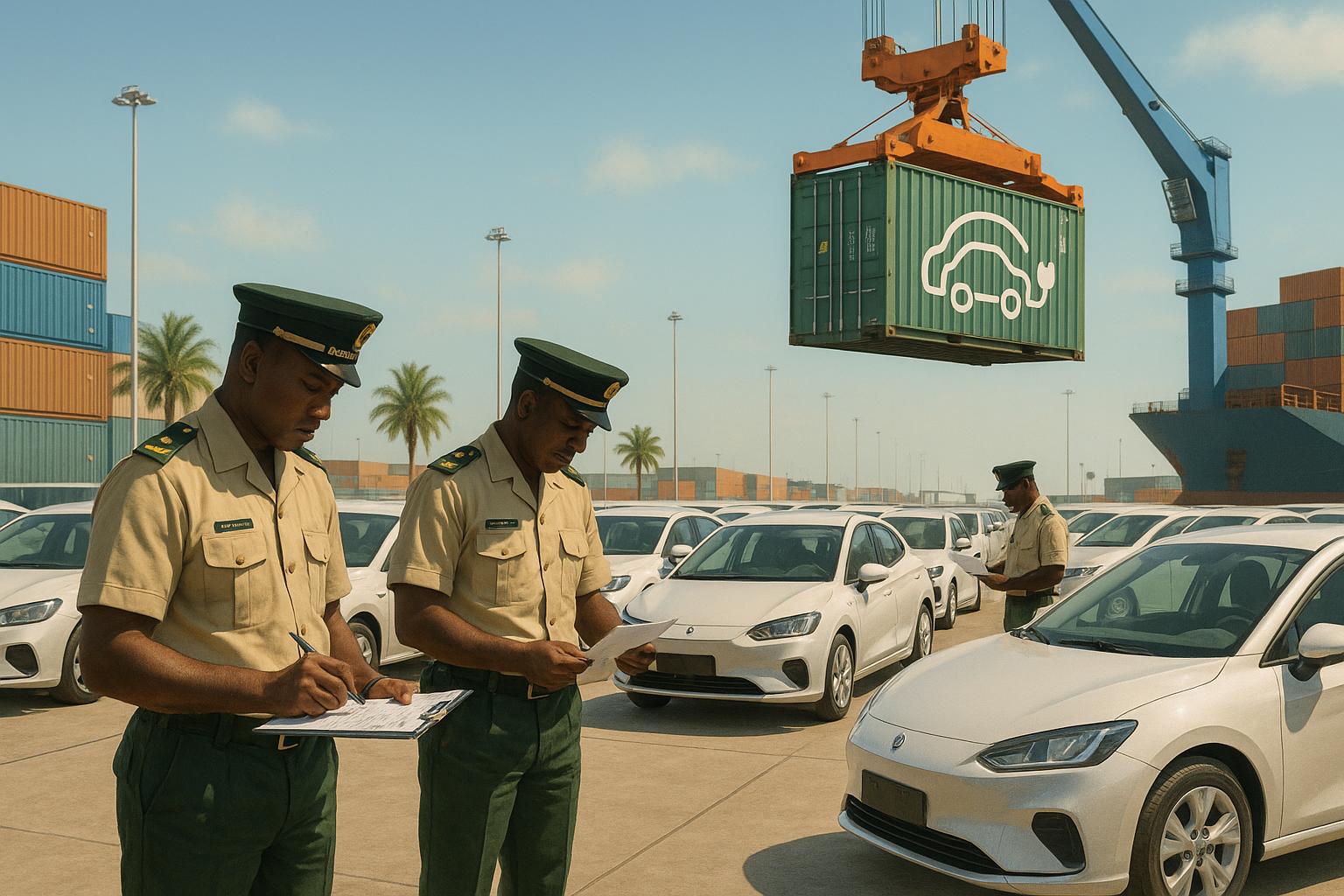
Senegal has introduced eight new regulations for importing electric vehicles (EVs) in 2025. These changes aim to support EV adoption while addressing safety, compliance, and cost concerns. Key updates include:
- Battery Safety Standards: New rules focus on battery safety and hazardous material management.
- High Import Duties: EVs face a 58% import duty, with no clear exemptions yet.
- Vehicle Age Rules: Older passenger vehicles can now be imported, but EV-specific exemptions remain unclear.
- Potential Duty Exemptions: Hints of import duty relief for battery electric vehicles, though details are pending.
- Technical Inspections: Updated inspection and environmental standards are in development.
- Electronic Customs Documentation: E-invoicing is now mandatory for imports.
- Port Clearance Overhaul: Digital customs processes replace traditional paper-based methods.
- Post-Import Compliance: Vehicle registration must align with electronic invoicing rules.
These changes reflect Senegal’s push toward reducing dependence on fossil fuels. However, the lack of clarity in some areas requires businesses and importers to stay informed and prepare for evolving requirements.
Senegal embraces electric cars to fight pollution in Dakar • FRANCE 24 English
1. Battery Safety and Hazardous Materials Compliance
Senegal’s 2025 framework sets the stage for mandatory rules around battery safety and the management of hazardous materials in electric vehicles. This move marks an important effort in promoting environmentally friendly transportation. While the specifics regarding compliance and documentation are still in development, upcoming guidelines will outline the required verification processes. These plans were highlighted in official statements.
In July 2025, Minister of Infrastructure and Land and Air Transport Malick Ndiaye reaffirmed the government’s dedication to advancing sustainable electric mobility.
Importers should keep a close eye on updates as the final details and procedures are released.
2. New Import Duty Structure for Electric Vehicles
In Senegal, a flat 58% import duty is applied to the CIF (Cost, Insurance, and Freight) value of all vehicles, including electric vehicles (EVs). This uniform rate significantly impacts the overall cost of importing EVs.
For example, if an electric vehicle has a CIF value of $25,000, the import duty alone would amount to $14,500, bringing the total cost to approximately $39,500. This highlights the lack of preferential treatment for EVs compared to other types of vehicles under Senegal’s import regulations.
Importers also face additional requirements. These include verifying the integrity of the battery system, attaching a VIN label that specifies the propulsion type, providing a Material Safety Data Sheet (MSDS) for the battery, adhering to International Maritime Organization guidelines for shipment, and notifying Senegal Customs in advance.
For businesses entering the EV market, the 58% duty is a critical factor to incorporate into financial planning. Without specific incentives for EVs, companies may need to explore other areas to optimize costs and maintain competitiveness.
3. Vehicle Age Limits and EV Exemptions
Senegal has decided to raise the age limit for importing passenger vehicles, a move aimed at supporting the Senegalese diaspora and stimulating economic activity. By allowing older vehicles into the market, this policy is expected to increase the availability of vehicles within the country.
This updated framework also touches on electric vehicles (EVs), though the specifics regarding age exemptions for EVs remain unclear. The Minister of Infrastructure and Land and Air Transport has expressed strong support for the initiative, emphasizing the government’s dedication to promoting electric mobility.
For importers, the extended age limit offers greater flexibility in sourcing vehicles. However, since the criteria for EV exemptions have not yet been fully outlined, it’s important for importers to stay updated. Monitoring new guidelines and confirming details with Senegal Customs will be crucial as further information becomes available.
4. Import Duty Exemptions for Battery Electric Vehicles
The 2025 framework hints at potential import duty exemptions for battery electric vehicles (EVs). However, the government has yet to provide detailed criteria for which EVs might qualify for these benefits. This lack of clarity leaves importers and businesses in a tough spot as they try to align with Senegal’s push toward electric mobility. Clear guidelines will be critical as companies prepare for the changes expected in 2025.
Currently, general duty exemptions are limited to humanitarian and infrastructure-related imports. For vehicles, only those originating from ECOWAS (Economic Community of West African States) member countries may benefit from reduced tariffs, pending the release of specific EV-related criteria.
This unclear policy landscape contrasts with other markets that have already implemented EV-specific import duty frameworks. Take India, for example: under its New Electric Vehicle Policy 2025, companies investing in local manufacturing can import up to 8,000 fully built EVs annually at a reduced duty rate of 15%. Senegal has yet to announce a similar initiative.
As Senegal moves toward sustainable mobility, businesses should plan for full import tariffs until specific exemptions for battery electric vehicles are officially introduced. To navigate this uncertainty, importers should budget conservatively and maintain close communication with Senegal Customs. Monitoring government announcements will also be essential for staying informed about any upcoming EV incentive programs.
As 2025 approaches and regulations become clearer, keeping an eye on official updates will help businesses identify cost-saving opportunities and ensure compliance with any new requirements.
5. Technical Inspection and Environmental Standards
Senegal is moving forward with plans to establish technical inspection and environmental standards for imported electric vehicles (EVs). On July 15, 2024, Minister of Infrastructure, Land and Air Transport Malick Ndiaye announced the government’s commitment to creating these regulations, with support from the UK-based company Manufacturing Africa. This effort aims to set clear guidelines for EV imports, ensuring both safety and environmental compliance.
Minister Malick Ndiaye emphasized the importance of this initiative, stating:
"With the help of Manufacturing Africa, we will look for ways and means to provide our country not only with a regulatory framework, but also with the necessary mechanisms to encourage Senegalese people to use electric vehicles."
The Senegalese Association of Normalization (ASN) will play a pivotal role in shaping these standards. As a public–private organization responsible for national standardization, ASN has already issued 555 norms, including 58 focused on environmental compliance. The organization works closely with technical committees from key ministries, making it well-positioned to contribute to the EV regulatory framework.
While the specific technical and environmental requirements for EV imports in 2025 are still under development, importers are advised to prepare for potential regulations regarding vehicle inspections, emissions standards, and battery disposal practices. Until the final guidelines are released, importers should follow standard vehicle inspection protocols and stay updated on announcements from ASN and the Ministry of Infrastructure. Given ASN’s expertise, the finalized standards are expected to align with international benchmarks for battery safety, vehicle performance, and environmental protection.
For businesses involved in EV imports, early collaboration with ASN and its technical committees will be essential. Proactively engaging with these bodies can help importers navigate compliance requirements and minimize delays as Senegal works to streamline its EV import processes throughout 2025.
sbb-itb-99e19e3
6. Customs Documentation and Vehicle Identification
Senegal is making strides in modernizing its customs procedures for imports, including electric vehicles, by rolling out mandatory electronic invoicing (e-invoicing) requirements starting in 2025. Part of this update includes standardizing vehicle identification details to improve tracking and streamline the process. In December 2024, Senegal’s General Directorate of the Budget introduced the draft Finance Bill 2025, which mandates that importers issue, send, and receive invoices electronically for all transactions, including vehicle imports. This initiative is part of a broader effort to reshape regulations surrounding Senegal’s electric vehicle market.
Non-compliance with these requirements comes with a significant penalty: 25% of the VAT invoiced (or that should have been invoiced), with fines capped at XOF 5 million.
7. Port of Entry and Clearance Procedures
Senegal is gearing up for a major overhaul in its port clearance procedures for electric vehicles, set to take effect in 2025. As part of a broader push toward digital customs operations, the Finance Bill 2025 introduces mandatory electronic invoicing requirements for importers. This aligns with recent efforts to modernize customs processes, a move strongly supported by Minister of Infrastructure and Land and Air Transport Malick Ndiaye in Dakar.
Under the new rules, importers must ensure their digital invoicing systems are fully functional before the vehicles arrive at the port. Any failure to comply could result in customs delays, as officials will need to verify that all electronic documentation meets the updated standards. This shift leaves little room for error, making preparation critical.
The penalties for non-compliance, outlined in the Finance Bill, are steep and could significantly impact businesses managing frequent shipments. Importers handling regular vehicle imports should factor these potential costs into their operations and ensure their systems are ready to avoid unnecessary financial strain.
Adjusting to these changes may present challenges, particularly during the initial rollout. Both customs officials and businesses will likely face bottlenecks as they adapt to the new processes. To minimize disruptions, importers should establish clear communication lines with customs brokers. Ensuring that all documentation is accurate and compliant before vehicles arrive at the port will be key to avoiding delays caused by last-minute corrections.
It’s also worth noting that this transition marks the end of traditional paper-based workarounds. The new digital framework demands full compliance upfront, leaving no space for manual fixes at the port. Importers accustomed to resolving issues on-site will need to embrace this more structured, technology-driven system to navigate the clearance process smoothly.
8. Registration and Post-Import Compliance
As part of the broader digital reforms in customs processes, the registration phase now emphasizes electronic compliance. Once a vehicle clears customs, it must adhere to post-import compliance rules. Under the upcoming 2025 framework, vehicle registration will be directly linked to mandatory electronic invoicing, as detailed in the draft Finance Bill 2025. Failing to comply with these requirements can result in a penalty of 25% of the VAT invoiced (or owed), with a maximum fine of XOF 5 million (approximately $8,200) per violation.
To stay compliant, importers are required to maintain accurate records from the moment of customs clearance through to the registration process. Importantly, any delays in registration do not exempt importers from these obligations. This final step solidifies adherence to Senegal’s 2025 framework for importing electric vehicles.
Comparison Table
Senegal’s 2025 regulations introduce a clear distinction between the import processes for electric vehicles (EVs) and those for traditional internal combustion engine vehicles (ICEVs). A fresh regulatory framework has been established as part of the reforms, alongside financial guidelines outlined in Senegal’s Finance Law for the Year 2025 (Law No. 2025-02). The table below provides a concise comparison of the updated rules for EV imports and the existing standards for ICEVs:
| Category | Battery Electric Vehicles (BEVs) | Internal Combustion Engine Vehicles (ICEVs) |
|---|---|---|
| Regulatory Framework | Governed by newly introduced EV-specific policies in 2025 | Operate under pre-existing vehicle regulations |
| Financial Provisions | Subject to revised duties and exemptions under the Finance Law | Remain under the traditional import duty framework |
| Compliance Requirements | Must meet updated safety, technical, and documentation standards | Follow established compliance and documentation procedures |
| Environmental Objectives | Supports Senegal’s goal of reducing greenhouse gas emissions by 5% under its Nationally Determined Contribution | Not directly addressed by the new EV policies |
These reforms are designed to reduce dependence on liquid fuels and expand access to electricity. As the 2025 regulations are implemented, importers should stay informed about updates to ensure compliance and take advantage of potential incentives that promote the adoption of electric vehicles.
Conclusion
Senegal is setting the stage for a significant shift toward electric mobility with eight regulatory updates planned for 2025. These changes aim to make electric vehicles (EVs) more accessible while addressing both environmental challenges and economic goals. By simplifying the import process, reducing costs, and revising safety and technical standards, the country is taking concrete steps to cut greenhouse gas emissions and lessen its dependence on fossil fuels.
The reforms go beyond simplifying imports – they’re reshaping the market itself. By reducing import costs and giving preferential treatment to zero-emission vehicles, Senegal is creating financial incentives to drive EV adoption. Minister of Transport H.E. Mr. Malick Ndiaye has also urged private sector players to submit technical and financial proposals for EV charging infrastructure, signaling the government’s openness to public-private partnerships in this growing sector.
For businesses and importers, this is the time to act. The updated regulations provide a clear roadmap for entering and thriving in Senegal’s evolving EV market. However, success will require careful compliance with new standards, including stricter battery safety measures, improved documentation processes, and enhanced technical inspections. For consumers, these changes promise lower transportation costs and better access to environmentally friendly vehicles. The government has emphasized its commitment to "green growth" and reducing pollution, with preferential rates for mass transit systems and an intra-governmental task force ensuring smooth implementation.
Whether you’re an importer, investor, or consumer, aligning with these regulations could unlock new opportunities. Senegal’s proactive approach positions it as a leader in sustainable transport within the region, paving the way for long-term environmental and economic progress.
FAQs
What tax exemptions will apply to electric vehicle imports in Senegal starting in 2025, and when will the specific requirements be announced?
Starting in 2025, Senegal will offer VAT and customs duty exemptions for fully electric vehicles (EVs) imported into the country. This move is set to make EVs more affordable for both importers and consumers, potentially encouraging wider adoption.
Specific eligibility requirements and detailed guidelines for these exemptions will be introduced in 2025. These will outline the steps businesses and individuals need to follow to benefit from the reduced costs.
What impact will the new electronic customs and invoicing rules have on importing electric vehicles to Senegal?
The new regulations are set to simplify the electric vehicle (EV) import process by implementing electronic customs documentation and invoicing requirements. This shift is anticipated to cut down on delays and make compliance easier, particularly for small and medium-sized businesses (SMEs).
If you’re importing an EV, you’ll need essential paperwork like the vehicle title, an invoice, and completed customs forms. These updates aim to reduce penalties for mistakes and streamline the process, aligning with Senegal’s push toward electric mobility.
What do importers need to do to meet Senegal’s new safety and hazardous materials requirements for EV batteries?
To align with Senegal’s revised safety and hazardous materials standards for electric vehicles, importers need to take two important steps:
- Submit a Material Safety Data Sheet (MSDS) for the lithium-ion batteries used in the vehicle.
- Affix a label on the front windshield that includes the Vehicle Identification Number (VIN) and clearly indicates the vehicle is electric.
These requirements are crucial for adhering to the 2025 regulations and facilitating a hassle-free import process.