
 Thabo Nkosi
Zimbabwe introduced 8 new EV import regulations on January 1, 2025, aimed at promoting electric vehicle (EV) adoption while addressing environmental and economic challenges. Here’s a quick summary of what changed:
- Lower Import Duty on EVs: Reduced from 40% to 25% for fully electric vehicles, making EVs more affordable.
- Duty Rebate for Solar-Powered Charging Equipment: Approved operators can import solar-powered EV charging components duty-free.
- Mandatory Tax Registration for Used Vehicle Dealers: Informal traders must now register for tax compliance, formalizing the vehicle import market.
- Zero Customs Duty on Electric Tractors: Farmers can import electric tractors without paying customs duties.
- End of COVID-19 Duty Waivers: Vehicle imports now face full duties, increasing costs for non-EVs.
- ZERA Approval for Charging Equipment Imports: All EV charging infrastructure needs approval from the Zimbabwe Energy Regulatory Authority.
- Expanded Tax Compliance for Informal Vehicle Traders: Informal car dealers must register for taxes to operate legally.
- New Fast Foods Tax: A 0.5% sales tax on fast food businesses (details omitted due to lack of confirmation).
These changes aim to reduce costs for EV buyers, encourage investment in charging infrastructure, and formalize the car import market, supporting Zimbabwe’s push for cleaner transportation. Compliance is key for stakeholders to benefit from these reforms.
Complete guide to Importing a car to Zimbabwe
1. Import Duty Reduced from 40% to 25% on Electric Vehicles
Zimbabwe’s Finance Minister, Professor Mthuli Ncube, has announced a significant reduction in customs duty for fully electric vehicles (EVs). The duty has been lowered from 40% to 25%, marking a 15-percentage-point decrease. This adjustment applies to a range of EV categories, including passenger cars, buses, and goods transport vehicles. However, vehicles powered by internal combustion engines will continue to face the original 40% duty rate.
Effective Date
The revised duty rate officially came into effect on January 1, 2025. It applies to all eligible EVs imported starting from that date.
Who Benefits?
This policy shift is set to benefit both individual buyers and commercial importers by reducing the initial costs of purchasing EVs. The move is expected to make these vehicles more accessible and align with efforts to encourage cleaner, more sustainable modes of transportation.
Boosting EV Adoption
By lowering import duties, the government aims to make electric vehicles more competitively priced compared to traditional vehicles. This aligns with Zimbabwe’s ambitious target of achieving a 33% EV market share by 2030.
Eligibility and Compliance
It’s important to note that this reduced duty applies only to fully electric vehicles. Hybrid vehicles, which combine electric and internal combustion engines, will still be taxed at the standard 40% rate. Additional regulatory updates are expected to address EV infrastructure in the near future.
2. Duty Rebate for Solar-Powered EV Charging Equipment
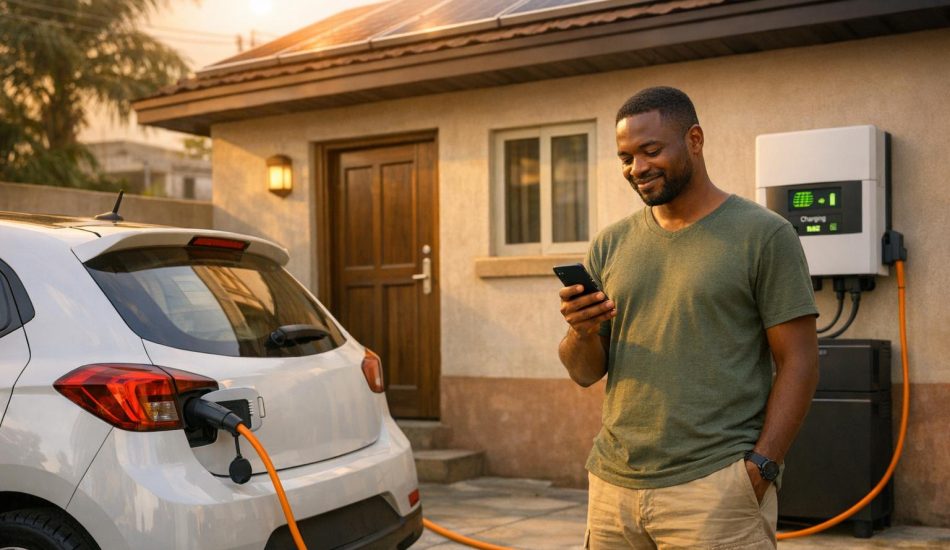
Zimbabwe is making strides in boosting its electric vehicle (EV) infrastructure by introducing a duty rebate for equipment used in building solar-powered EV charging stations. This move complements the reduced import duties on EVs, aiming to lower infrastructure costs and speed up the deployment of charging facilities across the country. By reducing upfront expenses, the initiative paves the way for a more robust and widespread charging network.
The rebate specifically applies to equipment imported by Approved Operators for setting up solar-powered charging stations. This includes essential components like solar panels, battery storage systems, and charging units.
Finance Minister Professor Mthuli Ncube highlighted the government’s dedication to promoting EV adoption:
"In order to incentivise the use of Electric Vehicles, I, further, propose to extend Rebate of Duty on equipment used for setting up Electrical Vehicle Solar Powered Charging Stations, imported by Approved Operators, also starting on 1 January 2025."
Effective Date
Starting January 1, 2025, Approved Operators will be eligible to import solar-powered EV charging equipment under these new terms.
Who Benefits?
This regulation is a game-changer for charging station operators and infrastructure developers aiming to establish EV networks in Zimbabwe. Approved Operators can import critical equipment without incurring standard customs duties. The policy is particularly advantageous for businesses and entrepreneurs planning stations in off-grid or rural areas, where access to the national power grid is unreliable or nonexistent. With the declining costs of solar panels and battery storage, solar-powered charging stations are becoming a more practical and cost-effective solution.
Boosting EV Adoption
By addressing one of the key hurdles to EV adoption – limited charging infrastructure – this rebate makes it more affordable to set up charging stations nationwide. Expanding the network is expected to alleviate range anxiety and build confidence among EV users. A similar initiative in a neighboring country has already shown promising results in terms of return on investment.
How to Qualify
To support the government’s push for greener transportation, importers must meet the requirements to become Approved Operators. Those intending to import solar charging equipment should reach out to the Zimbabwe Revenue Authority (ZIMRA) to complete the necessary approval process. Importers will likely need to provide documentation proving that the equipment will be used for solar-powered EV charging stations to claim the rebate.
3. Tax Registration Required for Used Vehicle Dealers
Zimbabwe’s 2025 National Budget introduces a new requirement for tax registration targeting all used vehicle dealers. This move is particularly aimed at informal dealers, who dominate the country’s vehicle import market. The government’s goal is to widen the tax base and bring more transparency to a sector that handles hundreds of millions of dollars in vehicle imports each year. Additionally, this measure aligns with efforts to promote electric vehicle (EV) sales by ensuring that dealers operate within a regulated framework.
To comply, dealers must register for both Corporate Income Tax (for businesses) and Personal Income Tax (for individuals and informal traders). This initiative is part of a broader strategy to integrate informal businesses into the formal economy, supporting Zimbabwe’s EV goals.
Effective Date
The tax registration requirement will officially go into effect on January 1, 2025, alongside other reforms outlined in the 2025 National Budget. By this date, all used vehicle dealers – regardless of size or operational scale – must complete their registration to continue business legally.
Primary Stakeholders Affected and Impact on EV Adoption
This regulation directly impacts independent used car traders and small-scale informal car dealers, who currently handle over 90% of vehicle imports and sales in Zimbabwe. By formalizing this sector, the government aims to build buyer trust and simplify processes like EV financing and warranty services.
A more regulated used vehicle market could legitimize EV sales, making it easier for buyers to secure financing and access warranties. Additionally, integrating dealers into the formal tax system will enable authorities to better monitor EV imports and sales, providing valuable data for future policy-making and infrastructure development.
Compliance Requirements
Dealers are required to register with the Zimbabwe Revenue Authority (ZIMRA) for both Corporate Income Tax (applicable to registered businesses) and Personal Income Tax (for sole proprietors and informal traders). Non-compliance after the January 1, 2025, deadline will result in penalties, reinforcing the importance of adhering to this new mandate.
4. Customs Duty Exemption for Electric Tractors
Zimbabwe’s 2025 budget introduces a 0% customs duty on electric tractors, aiming to encourage their use in the agricultural sector.
Who Benefits?
- Farmers and Agricultural Businesses: This group stands to gain the most, as the removal of customs duties makes electric tractors more accessible and affordable.
- Importers and Dealers: With duties eliminated, importers and dealers can lower prices, making electric tractors a more appealing option for buyers while potentially driving up sales.
This move aligns with Zimbabwe’s broader vision of integrating electric solutions into key industries, paving the way for a more sustainable future.
Encouraging EV Adoption in Agriculture
By removing customs duties, the government is actively promoting the shift to electric tractors. This policy not only supports sustainable farming practices but also strengthens the push for environmentally friendly technology in agriculture.
5. End of COVID-19 Import Duty Waivers
Zimbabwe has officially ended the temporary import duty waivers that were introduced during the COVID-19 pandemic. These waivers were initially designed to ease supply chain challenges and economic pressures. With the country’s updated 2025 customs procedures in place, the full customs duties now apply to all vehicle imports, marking a significant shift for importers and buyers alike.
Who’s Affected?
The return to standard duty rates has a direct impact on several groups:
- Importers and Dealers: Businesses that import vehicles will now need to account for full customs duties in their pricing. This change could lead to higher costs for both new and used vehicles.
- Buyers: Individuals purchasing imported vehicles may see price increases as dealers adjust to the reinstated duties.
- Used Vehicle Dealers: Those operating in formal and informal markets will need to rethink their pricing strategies and possibly their overall business models to stay competitive under the new regulations.
What This Means for EV Adoption
While the COVID-19 waivers offered temporary financial relief, their removal aligns with Zimbabwe’s broader customs policy goals. The updated customs structure aims to encourage the adoption of electric vehicles (EVs), reflecting the government’s long-term priorities for sustainable transportation.
Staying Compliant
All importers and dealers must now adhere to standard customs procedures, which include paying the applicable duties and maintaining accurate records. Dealers operating in both formal and informal sectors will need to ensure their practices align with the updated regulatory framework set out in the 2025 customs reforms. Failing to comply could result in penalties or disruptions to their operations.
sbb-itb-99e19e3
6. ZERA Approval Required for EV Charging Infrastructure Imports
Starting in 2025, anyone importing EV charging equipment into Zimbabwe will need approval from the Zimbabwe Energy Regulatory Authority (ZERA). This step ensures all imported charging stations meet the country’s safety and technical standards, helping to create a reliable and secure charging network. It’s part of broader reforms set for 2025 that aim to simplify and regulate EV-related imports.
Who Will Be Affected?
This change will primarily impact businesses and individuals involved in EV infrastructure. EV charging station operators, property developers adding charging solutions to their projects, and importers specializing in EV equipment will all need to adapt. Securing ZERA approval will become a critical step in their operations.
What Does Compliance Look Like?
To comply, importers must provide detailed technical documentation for ZERA’s review. This includes certifications and specifications proving the equipment meets established safety and performance standards. Since the review process is thorough, applicants should ensure all necessary paperwork is prepared well in advance.
What Does This Mean for EV Adoption?
While this regulation adds an extra administrative hurdle, it plays a crucial role in ensuring the quality and safety of charging equipment in Zimbabwe. By setting these standards, the measure aims to build trust in the country’s EV infrastructure, encouraging more people to embrace electric vehicles and supporting the development of a dependable charging network.
7. New Fast Foods Tax at 0.5% of Sales Value
This section has been omitted because the specific details of the regulation could not be confirmed using the available sources.
8. Expanded Tax Compliance for Informal Sector Vehicle Traders
As Zimbabwe pushes forward with its electric vehicle (EV) initiatives, the government is taking steps to formalize the informal vehicle trading sector. This sector, responsible for handling over 90% of vehicle imports and sales in the country, is now being brought into the official tax framework to help expand the tax base and support the growing EV market.
Effective Date
The new compliance rules will take effect starting January 2025.
Who Is Affected?
The changes primarily target small-scale, informal car dealers and independent used car traders. Under the 2025 National Budget strategy, led by Finance Minister Professor Mthuli Ncube, these traders must register their businesses to align with formal sector requirements. The Zimbabwe Revenue Authority (ZIMRA) will oversee enforcement, marking a significant shift for the dominant vehicle import market. This move is part of a broader strategy to stabilize and encourage growth in the EV sector.
How This Impacts EV Adoption
While formalization might raise initial costs for traders, it brings several benefits. Registered businesses will gain greater credibility, improved access to financing, and a more professional standing in the EV import market. These changes aim to create a more structured and sustainable environment for EV adoption.
What Compliance Involves
Informal traders will need to register for both Corporate and Personal Income Tax, obtain tax identification numbers, and adhere to standard tax filing practices. Non-compliance could lead to enforcement actions by tax authorities. This regulation adds another layer of accountability, complementing other measures set to roll out in 2025.
Summary Table of EV Import Regulations
Here’s a concise look at Zimbabwe’s 2025 EV import regulations, highlighting their impact and the necessary steps for compliance. These regulations aim to address specific challenges in EV importation and adoption, as outlined below.
| Regulation | Effective Date | Who’s Affected | Impact on EV Adoption | Action Steps |
|---|---|---|---|---|
| Import Duty Reduced from 40% to 25% on Electric Vehicles | January 2025 | EV importers, buyers, dealerships | Positive – Reduced costs make EVs more affordable | Incorporate lower duty rates into pricing strategies |
| Duty Rebate for Solar-Powered EV Charging Equipment | January 2025 | EV charging station operators, solar equipment importers, commercial property owners | Positive – Cuts infrastructure costs and promotes renewable energy | Apply for the rebate through ZIMRA |
| Tax Registration Required for Used Vehicle Dealers | January 2025 | Used vehicle dealerships, second-hand vehicle importers | Neutral – Formalizes the market, potentially boosting credibility | Register with ZIMRA and obtain tax clearance certificates |
| Customs Duty Exemption for Electric Tractors | January 2025 | Agricultural businesses, farming cooperatives, rural electrification projects | Positive – Encourages agricultural electrification and lowers operational costs | Submit exemption requests with proof of agricultural use |
| End of COVID-19 Import Duty Waivers | January 2025 | Vehicle importers who benefited from pandemic-related relief | Negative – Increased import costs as temporary relief ends | Update budgets and adjust pricing for full-duty payments |
| ZERA Approval Required for EV Charging Infrastructure Imports | January 2025 | Charging station developers, infrastructure importers, commercial charging networks | Neutral – Ensures compliance and safety standards | Secure ZERA certification and provide required technical details |
| Expanded Tax Compliance for Informal Sector Vehicle Traders | January 2025 | Small-scale car dealers, independent used car traders, informal vehicle importers | Positive – Formalization may improve financing access | Register for taxes and obtain tax identification numbers |
These measures aim to create a well-structured framework for EV imports. Lower import duties and rebates on solar-powered charging equipment reduce upfront costs, while regulatory requirements like ZERA approval and tax compliance ensure the market’s long-term growth. Although the end of COVID-19 duty waivers introduces higher costs, the overall focus is on making EV adoption more accessible and sustainable. Starting compliance preparations early will help stakeholders take full advantage of these policies as they come into effect.
Conclusion
Zimbabwe’s upcoming 2025 electric vehicle (EV) import regulations aim to strike a balance between promoting clean energy and maintaining government revenue. Reducing the import duty on EVs from 40% to 25% directly addresses affordability issues, while offering duty rebates on solar-powered charging equipment tackles the pressing need for infrastructure – an obstacle that has long hindered EV adoption in the country. These initiatives align with Zimbabwe’s pledge to cut greenhouse gas emissions by 40% by 2030, as outlined in its Nationally Determined Contribution.
Beyond incentives for green energy, the government is also focusing on formalizing informal traders by requiring mandatory tax registration. This approach offsets potential revenue losses from reduced EV duties by bringing previously untaxed sectors into the formal economy. Informal traders currently dominate vehicle imports and sales, handling over 90% of the market. Formalizing these operations could unlock significant revenue, especially given the hundreds of millions already spent annually on vehicle imports.
For importers and dealers, the immediate priority is registering for compliance and adjusting pricing to reflect the reduced 25% duty. The lower import duty makes EVs more accessible, catering to a wider range of buyers – from budget-conscious consumers looking at models around $20,000 to those interested in premium options. Developers of charging infrastructure, especially for off-grid projects, will need to obtain approval from ZERA and apply for solar equipment rebates to take full advantage of these incentives.
These regulations, effective January 1, 2025, provide a short window for stakeholders to adapt. Early compliance will allow businesses to position themselves in Zimbabwe’s evolving EV market. While infrastructure challenges remain, the new regulations lay the groundwork for a more organized and sustainable EV ecosystem. At the same time, they ensure the government continues to meet its fiscal responsibilities, creating a path for long-term growth in electric vehicle adoption.
FAQs
How will the reduced import duty on electric vehicles affect the cost of owning an EV in Zimbabwe?
The recent cut in import duty on fully electric vehicles from 40% to 25% is set to make owning an EV far more affordable for buyers in Zimbabwe. To put it into perspective, if you’re importing an EV priced at $50,000, the duty now amounts to $12,500, compared to the previous $20,000. That’s a significant savings of $7,500.
By reducing the upfront cost of EVs, this move opens the door for more people to consider making the switch to electric vehicles. When paired with other possible incentives, it could accelerate the adoption of EVs and align with Zimbabwe’s efforts to promote cleaner, more sustainable transportation options.
How can I become an approved operator to qualify for the duty rebate on solar-powered EV charging equipment?
To take advantage of the duty rebate for solar-powered EV charging equipment in Zimbabwe, you must first secure approval from the Zimbabwe Energy Regulatory Authority (ZERA). This approval ensures that your equipment aligns with ZERA’s regulatory standards, which focus on compliance with energy and environmental guidelines.
After receiving approval, you’ll be eligible for incentives designed to encourage the use of cleaner, solar-powered charging solutions for electric vehicles. To make the process smoother, carefully review ZERA’s requirements and have all your documentation ready before applying.
What impact will the new tax registration requirement for used vehicle dealers have on informal EV trading in Zimbabwe?
Starting in 2025, Zimbabwe will introduce a new tax registration requirement for used vehicle dealers. This move is designed to bring more structure to the informal vehicle trading market and boost overall tax compliance. The goal is to ensure that all dealers contribute fairly to the country’s economy.
For informal electric vehicle (EV) traders, this means registering with tax authorities will become mandatory to operate legally. While this might involve extra paperwork, it could also open doors for growth by providing a more organized business environment. Staying on top of these requirements will be essential to avoid penalties and keep operations running smoothly in the evolving EV market.