
 Thabo Nkosi
When choosing an electric vehicle (EV) for Africa, range matters. With limited charging infrastructure and long distances between cities, EVs with over 500 km (310 miles) of range are ideal. Here’s a quick look at 10 models that meet these needs, including their standout features and pricing:
- Tesla Model 3 Long Range: WLTP range of 750 km, practical range ~620 km. Starts at $61,900.
- Tesla Model Y Long Range: WLTP range of 568 km, practical range ~527 km. Starts at $50,380.
- BYD Seal Long Range: WLTP range of 520 km with fast charging and durable Blade Battery. Available in South Africa.
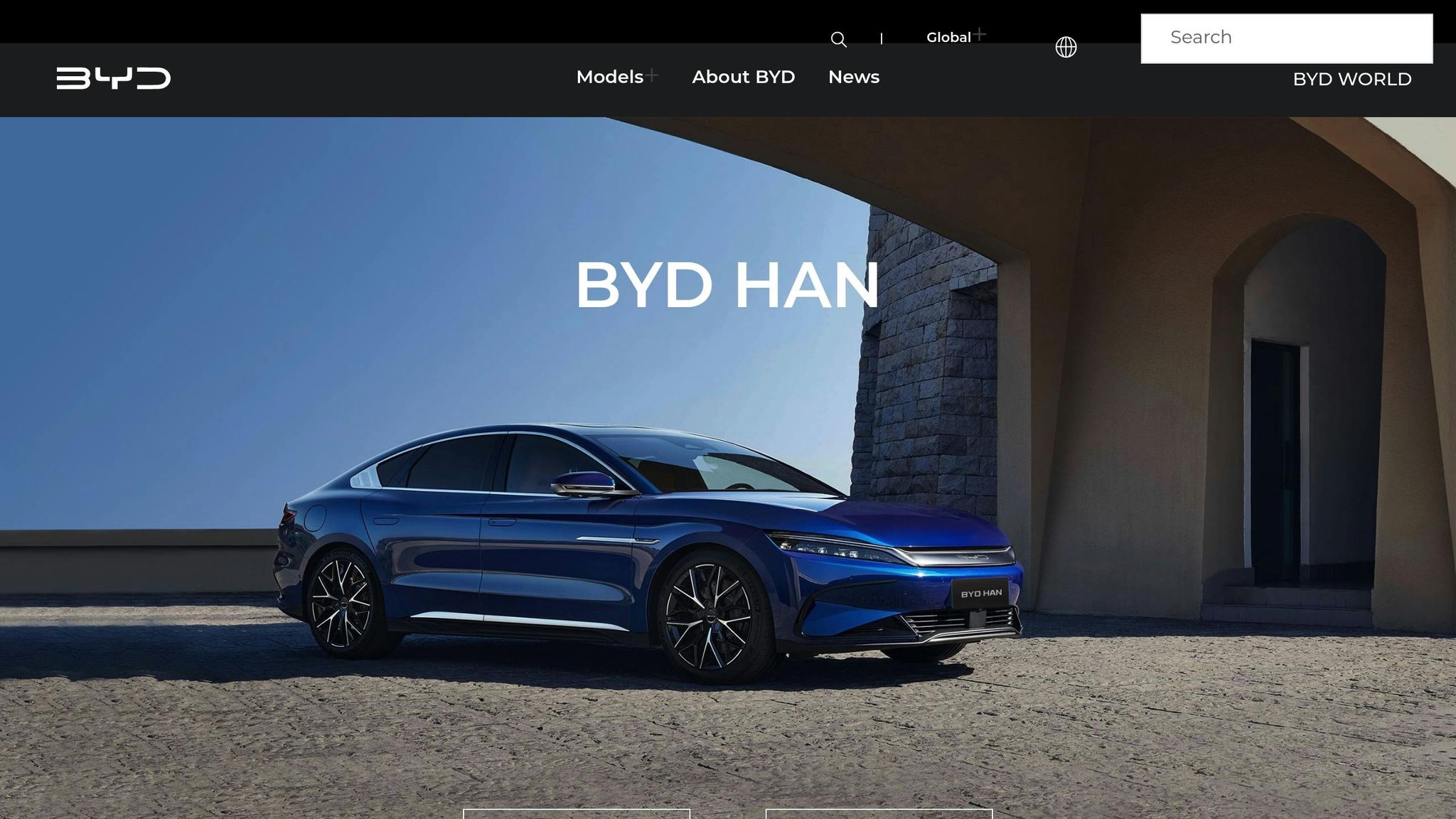
- BYD Han EV: WLTP range of 521 km, real-world ~475 km. Known for safety and V2L functionality.
- Hyundai Ioniq 6 Long Range: WLTP range of 614 km, real-world ~495 km. Ultra-fast charging in 16 minutes.
- Kia EV6 Long Range: WLTP range of 582 km, real-world ~520 km. 800V charging adds 696 miles per hour.
- Mercedes-Benz EQE 350+: WLTP range of 555 km, warm-weather range up to 635 km. Luxury features and strong safety ratings.
- BMW i5 eDrive40: WLTP range of 390 miles, real-world ~361 miles. Fast charging and energy-saving modes.
- Toyota bZ4X Long Range: WLTP range of 591 km for FWD, 517 km for AWD. Rugged design with optional solar panels.
- Leapmotor C10: Range-Extended EV with 970 km total range. Combines electric and petrol generator for flexibility.
These EVs offer solutions for Africa’s unique challenges, from long distances to high temperatures. Features like fast charging, Vehicle-to-Load (V2L) functionality, and durable batteries make them practical for the region. Many models also include off-road capabilities and energy-efficient systems, ensuring reliability across diverse terrains.
Quick Comparison
| Model | Range (WLTP) | Battery Size | Charging (DC) | Starting Price |
|---|---|---|---|---|
| Tesla Model 3 Long Range | 750 km | 82 kWh | 250 kW, 34 min (10-80%) | $61,900 |
| Tesla Model Y Long Range | 568 km | 82 kWh | 250 kW, 34 min (10-80%) | $50,380 |
| BYD Seal Long Range | 520 km | 82.56 kWh | 150 kW, 26 min (30-80%) | N/A |
| BYD Han EV | 521 km | 85.4 kWh | 120 kW, ~40 min (10-80%) | N/A |
| Hyundai Ioniq 6 | 614 km | 74.0 kWh | 350 kW, 16 min (10-80%) | N/A |
| Kia EV6 Long Range | 582 km | 84.0 kWh | 350 kW, 18 min (10-80%) | N/A |
| Mercedes-Benz EQE | 555 km | 96.0 kWh | 173 kW, ~30 min (10-80%) | $66,100 |
| BMW i5 eDrive40 | 390 miles | 81.2 kWh | 205 kW, 30 min (10-80%) | $99,800 |
| Toyota bZ4X FWD | 591 km | 74.7 kWh | 150 kW, ~30 min (10-80%) | $37,900 |
| Leapmotor C10 | 970 km (total) | REEV system | 50% in 18 min (DC) | $41,800 |
These EVs are tailored for Africa’s driving conditions, offering reliability, efficiency, and long-term savings. Consider factors like range, charging options, and terrain compatibility when selecting your next EV.
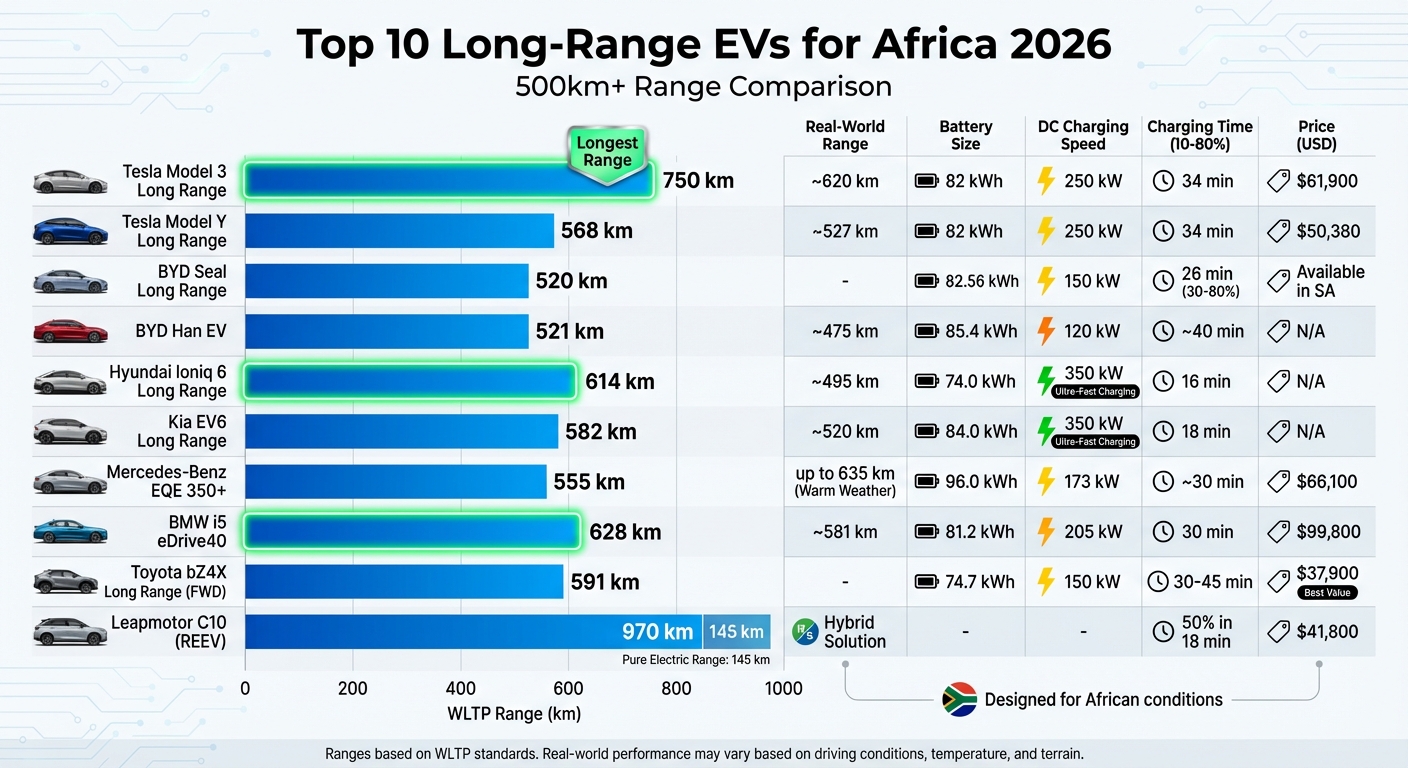
Top 10 Long-Range EVs for Africa 2026: Range, Battery & Charging Comparison
We Drove 3,000KM Across South Africa In An Electric Car – Here’s What Happened!
1. Tesla Model 3 Long Range
The 2026 Tesla Model 3 Long Range offers a WLTP range of up to 750 km (466 miles) and a practical driving range of roughly 620 km (385 miles). This makes it a great option for Africa’s vast road networks, where long distances and limited charging stations are common challenges. Here’s a closer look at what makes this model stand out.
Equipped with an 82 kWh NMC battery, the Model 3 supports 250 kW DC fast charging and an 11 kW AC charger, making it convenient for both quick on-the-go top-ups and slower home or workplace charging. Its liquid cooling system kicks in at 118.4°F (48°C), which is particularly useful in hotter climates. One thing to keep in mind is the panoramic glass roof, which can heat up the cabin under intense sun. Fortunately, pre-cooling the car through the Tesla mobile app helps address this issue.
With a ground clearance of 5.4 inches (138 mm), the Model 3 navigates paved roads comfortably but requires extra care on rough or unpaved surfaces. While its suspension effectively handles bumps and ensures a smooth ride on highways and city streets, it’s not built for off-road adventures. On the road, its acceleration is impressive, going from 0 to 62 mph (0–100 km/h) in just 5.2 seconds, delivering a confident driving experience.
For optimal range, stick with the standard 18-inch wheels, as upgrading to larger wheels can reduce the range by about 37 miles (59 km). The Model 3 also offers plenty of cargo space, with 594 liters in the rear trunk and an additional 88 liters in the front trunk. Pricing starts at approximately $61,900.
2. Tesla Model Y Long Range
The 2026 Tesla Model Y Long Range delivers an impressive WLTP range of 568 km (353 miles) and an EPA-estimated range of 327 miles, making it a solid option for long road trips.
This model is powered by an 82 kWh battery (79 kWh usable) and supports DC fast charging up to 250 kW. That means you can recharge from 10% to 80% in just about 34 minutes. For home charging, the 11 kW onboard charger can fully recharge the battery in roughly 7 hours.
The Model Y features an all-wheel-drive system with dual motors, delivering a 0 to 62 mph acceleration in just 4.3 seconds. With a ground clearance of 6.6 inches (167 mm), it’s ideal for city streets and light gravel roads, though it’s not designed for tougher off-road conditions.
To handle high temperatures, it’s equipped with a heat pump, heat-protective tinted glass, ventilated seats, and a temperature warning system. These features are designed to keep passengers comfortable even in extreme weather.
When it comes to practicality, the Model Y shines with a spacious 854-liter rear trunk and an additional 117 liters of storage in the front trunk. Pricing starts at $50,380 for the standard Long Range trim, while the Launch Series Long Range comes in at $61,380.
Additional perks include a towing capacity of 1,600 kg (3,527 lbs) and LED Matrix headlights with cornering functionality, which enhance visibility on less-lit roads. However, before setting off on long-distance trips, it’s wise to check the availability of charging stations in your area.
3. BYD Seal Long Range
The BYD Seal Long Range offers a WLTP range of 520 km (323 miles) and is now available in South Africa. It runs on an 82.56 kWh battery featuring BYD’s Blade Battery technology, which uses lithium iron phosphate (LFP) chemistry and is completely cobalt-free.
Charging is quick and convenient. With DC fast charging up to 150 kW, the battery can go from 30% to 80% in just 26 minutes. For home charging, the standard 11 kW Type 2 AC port makes overnight charging simple and practical. This combination of fast and flexible charging options complements the battery’s impressive performance.
The Blade Battery stands out for its thermal stability, a crucial feature for extreme climates. During nail penetration tests, the battery’s surface temperature remained between 86°F and 140°F (30°C to 60°C) without producing smoke or fire. It’s also built to last, rated for over 5,000 charge and discharge cycles.
The Seal’s design further enhances its driving experience. Thanks to Cell-to-Body (CTB) technology, the battery is integrated into an aluminum structure that increases the car’s rigidity. This makes it well-suited for various road conditions, from smooth highways to rougher terrains. Additionally, the Intelligent Torque Adaption Control (iTAC) system helps reduce skidding by optimizing drive torque.
Inside, the Seal offers a host of modern features. It comes with front ventilated seats, a 15.6-inch rotatable touchscreen, and a head-up display. Storage space is practical too, with 450 liters in total – 400 liters in the rear and 50 liters in the front, which is protected against moisture and dirt.
4. BYD Han EV
The BYD Han EV offers an impressive WLTP range of 521 km (324 miles), with real-world driving estimates closer to 475 km (295 miles). In milder conditions, around 73°F (23°C), the range can stretch to 545 km (339 miles). This model is available across key African markets through BYD’s Middle East and Africa division. Here’s a closer look at its battery and charging capabilities.
At the heart of the Han EV is an 85.4 kWh Blade Battery, built with LFP chemistry. This design prioritizes safety and thermal stability, making it particularly suited for hot climates. The battery supports DC fast charging at speeds of up to 120 kW, allowing it to go from 10% to 80% charge in about 36 to 44 minutes. For home charging, the standard 7 kW AC charger takes approximately 11 hours and 51 minutes for a full charge.
To maintain performance in extreme temperatures, the Han EV is equipped with a high-efficiency heat pump. This system recycles waste heat from the powertrain and the environment to regulate both battery and cabin temperatures. The all-wheel-drive system ensures real-time traction control, though its low ground clearance of 125 mm (4.9 inches) makes it less suitable for off-road adventures.
The Han EV also stands out with its Vehicle-to-Load (V2L) functionality, offering up to 3.3 kW of output power, and boasts an aerodynamic drag coefficient of just 0.233, contributing to its efficiency.
Inside, the Han EV combines luxury and technology with features like a 15.6-inch rotating touchscreen, a 12-speaker Dynaudio sound system, and 11 airbags for enhanced safety. It has earned a 5-star C-NCAP safety rating and even received the iF Design Award. And for those who love speed, its ability to accelerate from 0 to 62 mph in just 3.9 seconds ensures that performance isn’t sacrificed for comfort.
5. Hyundai Ioniq 6 Long Range

The Hyundai Ioniq 6 Long Range offers an impressive WLTP-rated range of 382 miles (614 km), with real-world tests showing it can reach 308 miles (495 km). Under mild conditions (73°F/23°C), its range improves significantly – 357 miles (575 km) for mixed driving, 444 miles (715 km) in city traffic, and 292 miles (470 km) on the highway at 68 mph (110 km/h). Its sleek design and aerodynamic drag coefficient of 0.21 play a key role in achieving this efficiency, making it an excellent option for long-distance travel, especially on Africa’s paved highways.
The Ioniq 6 is equipped with a 74.0 kWh usable battery (77.4 kWh nominal) and advanced 800V architecture, enabling ultra-fast charging. Using a 350 kW DC fast charger, the battery can go from 10% to 80% in just 16 minutes, adding 265 miles (426 km) of range. For home charging, an 11 kW AC wallbox fully charges the battery in roughly 7 hours and 10 minutes. The car also features Vehicle-to-Load (V2L) functionality, allowing it to provide up to 3.6 kW of AC power – handy for powering devices or appliances when needed.
Additional features like a heat pump and battery preconditioning system ensure consistent performance in varied climates, whether in hot coastal areas or at higher altitudes. The rear-wheel-drive model is particularly efficient, consuming just 149 Wh/km, while the all-wheel-drive version offers better traction on less stable surfaces, albeit with a slight range reduction. However, with a ground clearance of only 5.6 inches (142 mm), the Ioniq 6 is best suited for urban roads and highways rather than rough or unpaved terrain, aligning well with the infrastructure in many African cities and highways.
Safety is another strong suit of the Ioniq 6. It boasts a 5-star Euro NCAP rating with an impressive 97% score for adult occupant protection. U.S. News & World Report rated it 9.0/10, highlighting its sleek design and high safety standards. The car is backed by an 8-year or 100,000-mile (160,000 km) battery warranty, offering peace of mind for long-term ownership. However, its sloping roofline does compromise rear headroom, and the trunk space is somewhat limited at 401 liters.
6. Kia EV6 Long Range
Designed to handle Africa’s varied terrain and weather, the Kia EV6 Long Range combines efficiency with adaptability. It offers an impressive WLTP range of 362 miles (582 km), with real-world performance estimates showing about 320 miles (520 km) under mild conditions, 413 miles (665 km) in city driving, and 258 miles (415 km) on highways at 68 mph (110 km/h). The 2025/2026 model features an upgraded 84.0 kWh battery pack (80.0 kWh usable), providing additional capacity to maintain efficient climate control in hotter environments.
Charging is a breeze thanks to its 800V architecture. Using a 350 kW DC fast charger, you can go from 10% to 80% charge in just 18 minutes, adding an incredible 696 miles (1,120 km) of range per hour. For more common 50 kW DC chargers, the same charge takes about 71 minutes, while an 11 kW AC wallbox can fully charge the battery in around 7–9 hours. Plus, the Vehicle-to-Load (V2L) feature allows you to power external devices with up to 3.6 kW of electricity.
The EV6 stands out with 6.1 inches (155 mm) of ground clearance and a multi-link rear suspension, ensuring smooth handling even on uneven roads. The rear-wheel-drive model delivers 258 lb-ft (350 Nm) of torque, while the all-wheel-drive version ups the ante with 446 lb-ft (605 Nm), providing better traction on tricky surfaces. It also supports a towing capacity of up to 3,968 lbs (1,800 kg).
To enhance performance in varying temperatures, the AWD models come equipped with a heat pump and battery preconditioning. Safety is another strong suit, with a 5-star Euro NCAP rating that includes scores of 90% for adult occupant protection and 87% for safety assist. The EV6 has earned accolades like the 2022 European Car of the Year and the 2023 North American Utility Vehicle of the Year. It also received a stellar 9.5/10 rating from Car and Driver. For peace of mind, Kia backs the battery with a 10-year or 100,000-mile warranty.
sbb-itb-99e19e3
7. Mercedes-Benz EQE
The Mercedes-Benz EQE 350+ delivers an impressive combined range of around 555 km (345 miles) under typical conditions. In warmer climates, like the 73°F (23°C) temperatures often experienced in Africa, this range extends even further – up to 635 km (395 miles) combined and an impressive 785 km (488 miles) in city driving. It’s equipped with a 96.0 kWh usable battery and a standard heat pump, which efficiently manages both cabin and battery temperatures, helping to conserve range even when the climate control is in use [49, 52].
Charging is another area where the EQE shines, making it a solid choice for long journeys. It features DC fast charging with peak speeds of 170–173 kW, allowing the battery to go from 10% to 80% in just 30 to 32 minutes. For home or slower charging, the 11 kW AC wallbox takes about 9 hours and 45 minutes to fully charge the battery. An optional 22 kW onboard charger cuts that time to roughly 5 hours. Starting with the 2026 model, the EQE now includes a standard NACS adapter for greater compatibility and also gains a 27-hp boost over earlier versions [49, 50, 52, 53].
The EQE’s driving experience is tailored for diverse road conditions. Its adaptive air-spring suspension ensures a smooth, comfortable ride, even on less-than-ideal roads. For added agility, especially in urban environments, an optional 10-degree rear-axle steering system enhances maneuverability. The vehicle’s aerodynamic design also plays a big role in optimizing its range.
Safety is another strong point for the EQE. The car earned high marks from Euro NCAP, scoring 95% for adult occupants and 91% for child safety in 2022 tests. Mercedes-Benz backs the EQE’s battery with a 10-year or 155,000-mile (250,000 km) warranty, providing peace of mind for long-term ownership. In the U.S., the 2026 EQE starts at $66,100, though prices may vary depending on the region [50, 53].
For those navigating Africa’s varied terrains, the rear-wheel-drive EQE 350+ (or the updated EQE 320+ for 2026) is ideal for maximizing range. Meanwhile, the all-wheel-drive versions, with their robust 858 Nm of torque, offer excellent traction for rough or unpaved roads.
8. BMW i5 eDrive and xDrive Variants

The BMW i5 lineup includes two options tailored for African roads: the rear-wheel-drive eDrive40, boasting a range of up to 390 miles (WLTP), and the all-wheel-drive xDrive40, which offers a range of 294–361 miles (WLTP) in regions like South Africa and Egypt. Both models come equipped with an 81.2 kWh usable battery. Now, let’s dive into its charging capabilities.
When it comes to fast charging, the i5 supports DC charging speeds of up to 205 kW, allowing it to go from 10% to 80% charge in just 30 minutes. In a quick 10-minute session, you can add approximately 97 to 131 miles (156–211 km) of range. For home charging, an optional 22 kW AC charger fully recharges the battery in about 4 hours and 15 minutes. In South Africa, the eDrive40 starts at R 1,812,000, which is roughly $99,800.
To address range concerns in challenging climates, BMW offers a "Max Range" mode. This feature can extend the vehicle’s range by up to 25% by limiting the top speed to 56 mph (90 km/h) and reducing air conditioning output. Additionally, pre-cooling the cabin through the My BMW app helps conserve energy. The drive system operates with an impressive 95% efficiency, ensuring optimal use of every charge.
The xDrive variant, with its dual motors, excels in providing better traction on wet or uneven roads, making it more versatile. Meanwhile, the eDrive40 delivers a sportier driving experience, particularly on smooth, paved roads. Both variants have a ride height of approximately 59.6 inches (1,515 mm), making them ideal for highways and urban settings.
To maintain battery health, BMW recommends keeping the charge level between 10% and 80%. For further efficiency, the "Efficient My Mode" feature offers real-time feedback to help you conserve energy during your drive.
9. Toyota bZ4X and Subaru Solterra Long Range Variants
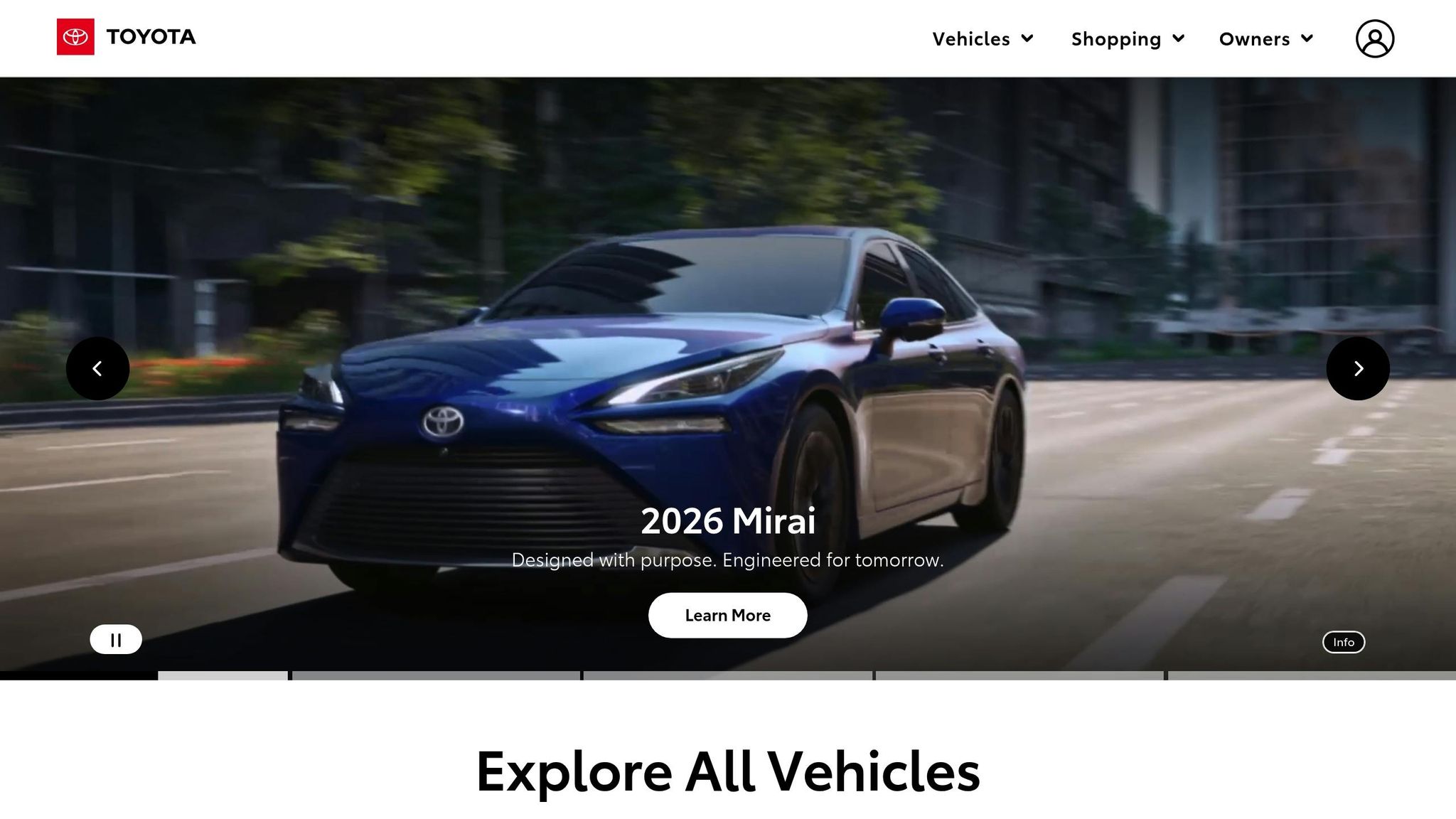
Let’s dive into two EVs that combine smart charging upgrades with features tailored for challenging terrains: the 2026 Toyota bZ4X (marketed as "Toyota bZ" in North America) and its sibling, the Subaru Solterra. Both vehicles pack a 74.7 kWh lithium-ion battery, delivering impressive range numbers. The bZ4X Long Range FWD offers a WLTP-rated range of up to 591 km (367 miles), while the AWD version reaches up to 517 km (321 miles). Toyota South Africa has also confirmed the arrival of three fully electric models, including these, in early 2026, bringing them to African buyers.
For 2026, these models feature improved charging capabilities. Both support 150 kW DC fast charging, allowing a 10% to 80% recharge in just 30–45 minutes. Additionally, the upgraded 11 kW onboard AC charger makes home charging more convenient.
What makes these vehicles stand out for African roads? Their 8.3-inch (212 mm) ground clearance is a good start. Subaru’s X-Mode system, built for Snow/Dirt and Deep Snow/Mud conditions, adds off-road versatility. The AWD variant delivers 338 hp and sprints from 0 to 62 mph in 5.1 seconds, while the Woodland version ups the ante with 375 hp and a 3,500-pound towing capacity.
Extreme weather? No problem. The 2026 models come with an upgraded heat pump and battery pre-conditioning to ensure consistent performance in harsh temperatures. Plus, an optional roof-mounted solar panel can generate enough energy to add an estimated 1,118 miles (1,800 km) of range annually – perfect for areas with unreliable charging infrastructure. These vehicles also feature Vehicle-to-Load (V2L) capability, offering up to 1,500 W of AC power at 220 V, which can run external devices or tools. All these features make them well-suited for Africa’s varied driving conditions.
In North America, the 2026 Toyota bZ XLE FWD starts at approximately $37,900, while the Limited trim is priced around $43,300. Both vehicles have earned top safety accolades, including a 5-star Euro NCAP rating and "Top Safety Pick+" status from the US IIHS for the 2025 model year.
10. Leapmotor C10 or C11 Long Range Variants

The Leapmotor C10, launched in South Africa in October 2025, offers a clever solution to Africa’s long-distance travel challenges. This Range-Extended Electric Vehicle (REEV) features a 1.5-liter petrol engine that acts as a generator to charge the battery, rather than directly powering the wheels. This setup provides a pure electric range of 145 km (90 miles) and an impressive total range of 970 km (603 miles), addressing the limited charging infrastructure in many areas [75, 76].
The rear-mounted electric motor generates 158 kW and 320 Nm of torque, allowing the C10 to accelerate from 0 to 100 km/h (62 mph) in 8.5 seconds. For charging, the C10 is well-suited to African conditions. With DC fast charging, you can recover 50% of the battery in just 18 minutes or reach 80% in 30 minutes. A full charge via AC takes about five hours, ensuring flexibility for various scenarios. Drivers can also switch between four modes – Eco, Normal, Sport, and Custom – to adapt throttle response and regenerative braking to different road conditions [75, 76].
"This is the ideal EV solution for long-distance South African conditions where the daily commute is interspersed with spread out destinations, removing range anxiety." – Stellantis
In South Africa, the C10 is offered in two trims: Style and Design. The Style trim starts at R759,900 ($41,800), while the Design trim is priced at R799,900 ($44,000). Both trims include a five-year/100,000 km warranty and service plan. The Design trim adds extra perks like power-adjustable seats with heating and ventilation, as well as a panoramic sunroof. Additionally, the vehicle supports Over-The-Air updates, so software and features can stay up to date without requiring a trip to the dealership [75, 76].
What to Consider When Buying a Long-Range EV in Africa
Advertised ranges often don’t match real-world performance, especially in Africa’s unique conditions. Factors like high temperatures, dusty roads, and hilly terrain can reduce an EV’s range by as much as 25%. While modern EVs use liquid-cooling systems to help maintain efficiency in extreme heat, these environmental challenges directly affect how far your EV will actually go. This makes understanding real-world performance crucial when evaluating your options.
Charging networks are growing but remain concentrated in major cities. Morocco leads Africa with over 400 charging stations, and Ghana boasts the highest EV adoption rates with about 17,000 units. However, most charging infrastructure is still centralized in urban areas like Nairobi, Lagos, and Johannesburg. In March 2024, Kenya introduced its National E-Mobility Policy, which includes cutting excise duty on EVs from 20% to 10% and removing VAT altogether. Kenya Power’s Managing Director, Dr. Joseph Siror, shared plans to install 45 EV charging stations across six counties within a year, emphasizing:
"Part of our plan is to create an enabling environment for players within the e‑mobility ecosystem through the provision of adequate power supply and the requisite infrastructure, such as charging stations, that will enable motorists to travel with ease".
That said, DC fast chargers, while helpful, only add about 2 km (1.2 miles) of range per minute, which is significantly slower compared to refueling a diesel car.
Lower running costs make EVs appealing in the long term. Charging an EV costs 50–70% less than fueling a petrol car, and maintenance is cheaper since EVs don’t require oil changes and experience less brake wear. For instance, a BYD Dolphin priced at $22,000 has similar five-year costs to a Toyota Vitz priced at $15,000, thanks to $5,250 in fuel savings and $1,500 in reduced maintenance expenses. Countries like Rwanda further sweeten the deal with policies like 0% VAT and no import or excise duties on EVs. However, while these savings are enticing, charging logistics remain a key consideration.
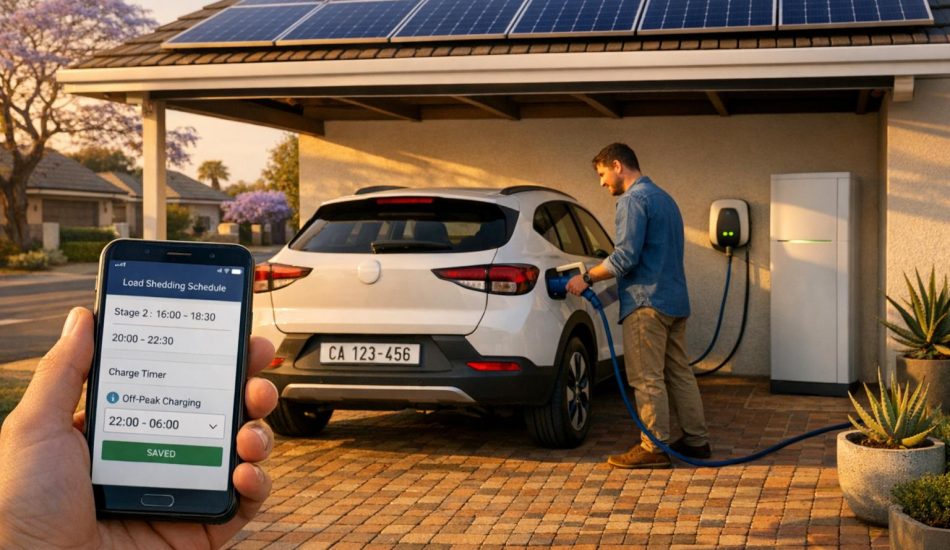
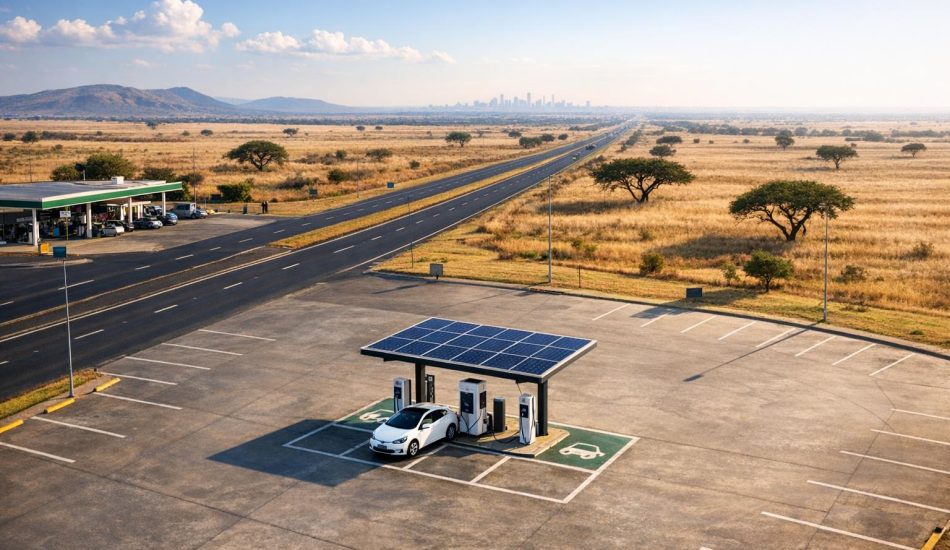
Home charging with solar backup is essential for reliability. Most EV owners charge their vehicles at home, and adding a solar backup system ensures you’re not dependent on an unreliable grid. Combining a home charger with solar panels and battery storage provides consistent power and is especially useful in areas prone to outages. For long road trips in remote regions, look for charging stations powered by independent renewable microgrids.
EV24.africa simplifies the buying process for long-range EVs. This platform makes it easier to compare models, prices, and delivery options across the continent. With transparent pricing and financing options for new and used EVs from trusted brands, EV24.africa addresses many of the challenges buyers face, including shipping, customs, and registration.
Conclusion
Long-range EVs with a capacity of over 500 km are addressing Africa’s challenge of limited charging infrastructure. Some models even boast ranges exceeding 800 km, making it possible for drivers to travel between major cities without constantly searching for charging stations. This is a game-changer, especially in regions where charging points are scarce outside urban hubs. These capabilities are helping to ease the transition toward the economic and practical benefits of EV adoption across the continent.
From a financial perspective, the case for EVs is strong. In South Africa, 75% of consumers highlight lower fuel costs as their main reason for considering EVs. Additionally, battery electric vehicles have the potential to cut average transport emissions across Africa by up to 54%. The market itself is on the rise, with projections estimating it will reach about $263 million by 2025 and grow at an annual rate of nearly 8.5% through 2030.
EVs are also well-equipped to handle Africa’s unique conditions. With fewer moving parts, they require less maintenance – a factor appreciated by 43% of African consumers. Many modern long-range EVs come with features like adjustable regenerative braking systems, which improve efficiency across various driving environments. For areas with unreliable grid access, innovations such as Vehicle-to-Load and solar-assisted home charging offer practical energy solutions, providing a level of energy independence that traditional vehicles simply can’t match.
Platforms like EV24.africa make it easy to compare and purchase these long-range EVs, offering clear pricing and delivery options across all 54 African countries. Whether you’re considering a Tesla Model 3 Long Range, a BYD Seal, or another model, it’s essential to assess your driving habits, local charging infrastructure, and total cost of ownership before making your final choice.
FAQs
What should I consider when choosing a long-range EV for Africa?
When choosing a long-range electric vehicle (EV) for Africa, it’s important to focus on price, range, and durability. Prices can vary significantly, with affordable models starting around $13,200 and high-end options climbing past $60,000. For longer journeys, especially in areas with few charging stations, a range of at least 310 miles (500 km) is essential. Many leading EVs now offer ranges exceeding 370 miles (600 km) on a single charge. Durability is another key factor – opt for vehicles designed with higher ground clearance, reinforced suspension, and heat-resistant batteries to tackle rough roads and high temperatures.
Charging options and convenience features also play a big role. Fast-charging capabilities, like reaching 80% charge in just 45 minutes, can save valuable time, while Level 2 home chargers are perfect for overnight recharging. In remote areas, features such as vehicle-to-load (V2L) ports or solar-compatible systems can be incredibly handy. Don’t forget to check for local service availability, a strong warranty, and financing plans to ensure long-term dependability and affordability. Models equipped with advanced software and driver-assist features can also boost safety, whether you’re navigating city streets or venturing off-road.
How does Africa’s charging infrastructure affect the use of long-range EVs?
Charging infrastructure is a key factor in determining how practical long-range EVs are in Africa. While the number of EVs on the continent is steadily increasing, public charging stations remain scarce and unevenly distributed, with the majority concentrated in urban areas. This uneven access makes long trips difficult, even for EVs capable of traveling over 500 km (about 310 miles) on a single charge, and fuels range anxiety among drivers.
At present, many EV owners depend on slower chargers at home or work, which can take anywhere from 6 to 9 hours to fully charge a vehicle. This is a stark contrast to the 45-minute charging times that fast chargers can deliver. However, efforts are underway by both governments and private investors to expand charging networks, particularly in high-traffic corridors and commercial centers. By improving access to fast chargers and encouraging home charger installations, the practicality of long-range EVs can be significantly improved, making them a more viable option for daily life across Africa.
What are the advantages of using a long-range EV in Africa?
Long-range electric vehicles (EVs) are a practical solution to some of Africa’s most pressing transportation challenges. With distances between cities often spanning hundreds of miles, limited charging infrastructure, and tough environmental conditions, EVs with a range exceeding 500 km (about 310 miles) are a game-changer. They enable drivers to handle most inter-city trips without the constant worry of locating a charging station – an especially valuable feature in areas where charging networks are still in their early stages. On top of that, operating costs for EVs can be up to 60% lower than those of traditional gasoline-powered vehicles, providing significant savings over time.
But the advantages don’t stop at cost. Long-range EVs deliver a smoother, quieter driving experience and require less maintenance thanks to their simpler drivetrains. Many models are built to withstand Africa’s demanding conditions, featuring heat-resistant batteries and durable suspensions that can handle high temperatures and rugged terrains. By cutting down on the need for imported fuel, these vehicles not only enhance energy security but also help pave the way for a cleaner, more sustainable future across the continent.