
 Younes Rabeh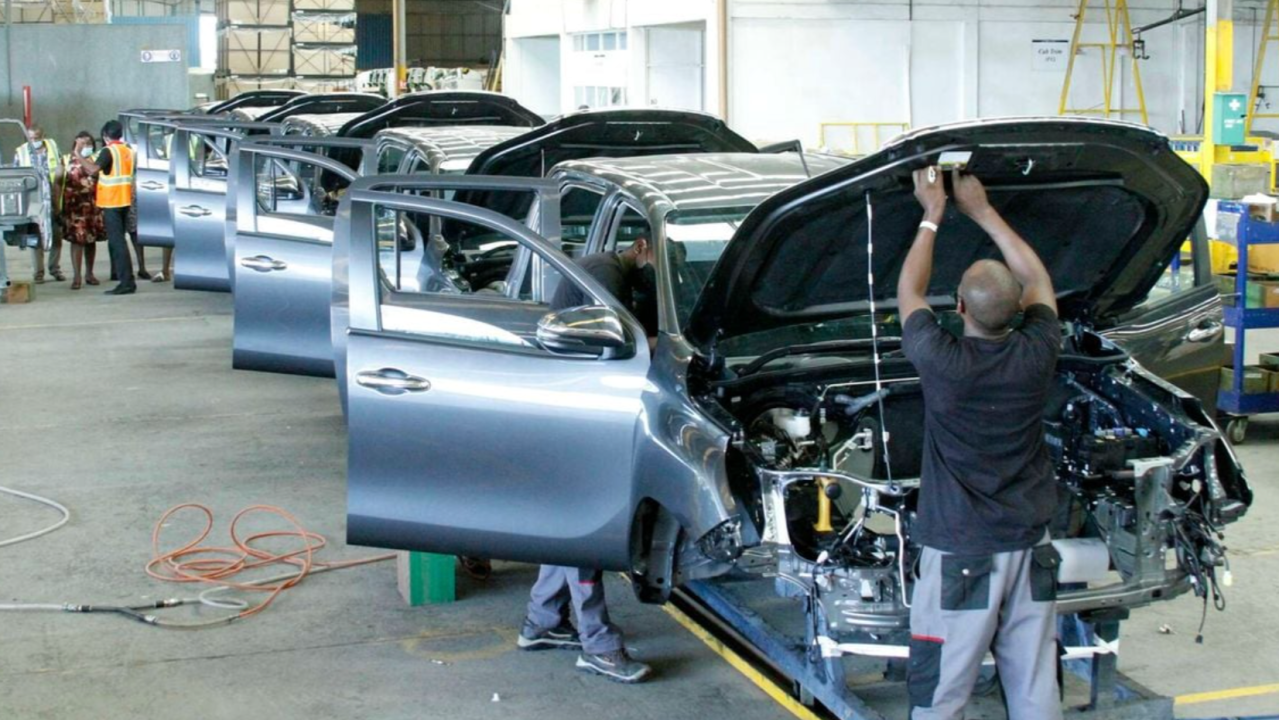
How Local EV Assembly, Battery Swapping, and Industrial Policy Are Reshaping Africa’s Electric Mobility Future
Introduction: Kenya at the Center of Africa’s EV Industrial Shift
Africa’s electric vehicle market is entering a structural transformation phase. After years dominated by pilot projects, limited imports, and fragmented infrastructure, the continent is now witnessing the emergence of real EV industrial ecosystems.
At the heart of this transformation stands Kenya.
In a matter of weeks, multiple announcements involving global OEMs, local assemblers, battery-swapping pioneers, and commercial vehicle manufacturers have confirmed a clear trajectory:
👉 Kenya is positioning itself as East Africa’s electric vehicle manufacturing and assembly hub Scan_Actualités_EV_-_15-16_Dé….
This is not coincidence. It is the result of policy alignment, market demand, logistics positioning, and industrial strategy — all converging around electric mobility.
From EV Imports to Local Assembly: A Strategic Evolution
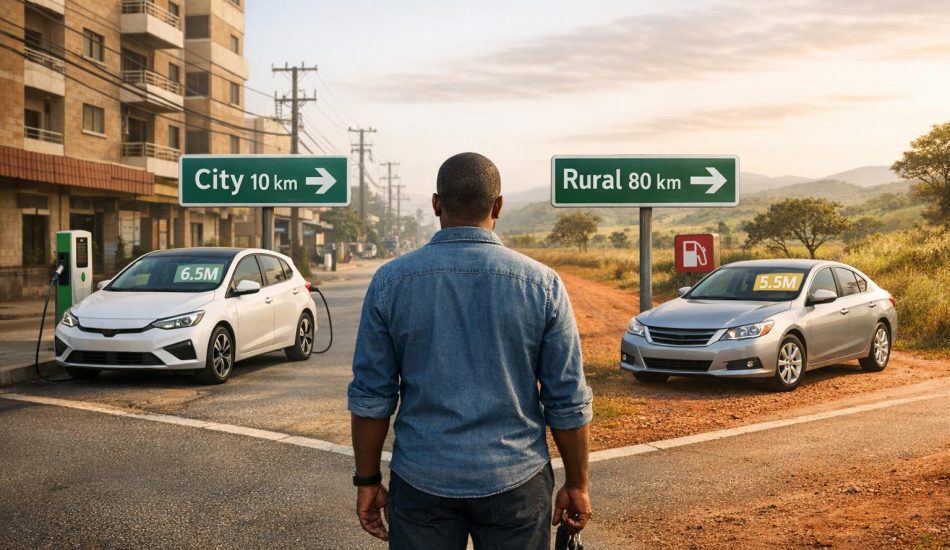
For years, Africa’s EV market relied heavily on fully built imports (CBU). While this model allowed early adoption, it also created major constraints:
- High import duties and taxes
- Limited after-sales infrastructure
- Weak local skills development
- Poor scalability
Kenya is now actively moving beyond imports toward local EV assembly, following the same trajectory that transformed the Asian and Latin American automotive markets.
Local assembly offers decisive advantages:
- Lower vehicle landing costs
- Faster market penetration
- Job creation and skills transfer
- Greater control over after-sales and spare parts
- Long-term industrial sustainability
Kenya’s current momentum reflects a strategic leap rather than incremental progress.
Dongfeng’s Entry: A Signal of Industrial Confidence
The entry of Dongfeng Motor Corporation, one of China’s largest automotive groups, represents a major validation of Kenya’s EV trajectory.
Through a partnership with ePureMotion, Dongfeng announced:
- The launch of electric passenger vehicles in Kenya
- A local assembly roadmap
- Locally supported sales and after-sales operations
- Planned expansion into light commercial electric vehicles
This move is critical for two reasons.
First, Dongfeng is not entering Kenya with a short-term import strategy. Instead, it is committing to local value creation, indicating confidence in Kenya’s market depth, regulatory stability, and regional potential.
Second, Dongfeng’s presence reinforces Kenya’s role as a regional gateway, not just a national market. Vehicles assembled in Kenya can serve Uganda, Tanzania, Rwanda, Ethiopia, and beyond, positioning the country as an EV export platform for East Africa Scan_Actualités_EV_-_15-16_Dé….
Ecosystem Convergence: The Power of Simultaneous Industrial Moves
What makes Kenya’s EV story unique is not one announcement — it is the convergence of multiple EV verticals at the same time.
Spiro: Battery Swapping at Continental Scale
Spiro has built one of Africa’s most advanced electric two-wheeler ecosystems:
- Local motorcycle assembly in Nairobi
- 300+ battery swap stations across Kenya
- Battery-as-a-Service (BaaS) business model
- Thousands of daily battery swaps
- Strong focus on local workforce inclusion
Battery swapping solves key African EV challenges:
- Limited grid capacity
- Long charging times
- High upfront battery costs
For delivery fleets, motorcycle taxis, and urban logistics, swapping offers near-instant energy access, making EVs commercially viable at scale Scan_Actualités_EV_-_15-16_Dé….
MojaEV: Local Assembly as a Cost-Reduction Strategy
MojaEV has launched a state-of-the-art EV assembly facility in Mombasa, focusing on:
- SKD (Semi-Knocked Down) assembly
- Increased local content over time
- Affordable electric cars
- Electric buses and matatus
- Public transport electrification
This approach directly addresses one of Africa’s biggest EV bottlenecks: affordability.
By assembling locally, MojaEV:
- Reduces customs duties on fully built units
- Improves price accessibility
- Builds local technical capabilities
- Creates long-term employment
This model is particularly relevant for mass-market EV adoption across African cities Scan_Actualités_EV_-_15-16_Dé….
Isuzu East Africa: Electrifying Commercial Transport
While passenger EVs attract headlines, commercial vehicles represent the biggest decarbonization opportunity in Africa.
Isuzu East Africa has launched Kenya’s first electric truck trials, focusing on:
- Payload optimization
- Battery durability
- Range performance
- Real-world African operating conditions
Commercial EVs face unique challenges:
- Heavy loads
- Long duty cycles
- Battery weight vs range trade-offs
By testing locally, Isuzu is building data-driven confidence, paving the way for electric logistics fleets, municipal services, and industrial transport Scan_Actualités_EV_-_15-16_Dé….
Policy Alignment: The Draft National Automotive Bill
Industrial transformation does not happen without policy support.
Kenya is currently engaging stakeholders on a Draft National Automotive Bill, designed to:
- Structure the automotive sector
- Promote local manufacturing and assembly
- Improve sector competitiveness
- Create a predictable regulatory environment
For EV investors and manufacturers, this bill is crucial. It sends a strong signal:
👉 Kenya is not improvising — it is institutionalizing electric mobility Scan_Actualités_EV_-_15-16_Dé….
Why Kenya’s EV Model Matters for Africa
Kenya’s approach provides a blueprint for African EV development:
- Move from imports to assembly
- Build infrastructure alongside vehicles
- Electrify commercial and public transport
- Align policy with industry needs
This model:
- Lowers EV costs
- Accelerates adoption
- Builds local ecosystems
- Reduces foreign currency pressure
- Creates skilled employment
Most importantly, it positions Africa as a producer, not just a consumer, of electric vehicles.
EV24.africa Insight: From Market Entry to Market Structuring
At EV24.africa, we operate across African markets with a 360° approach:
- EV sourcing and OEM partnerships
- CIF, DDP, and local assembly strategies
- Logistics, customs, and homologation
- Charging and energy partnerships
- After-sales and fleet deployment
Kenya’s momentum confirms a fundamental truth we see daily:
👉 Africa’s EV future will be local, structured, and industrial.
Kenya is no longer piloting electric mobility.
Kenya is building it.