
 Thabo Nkosi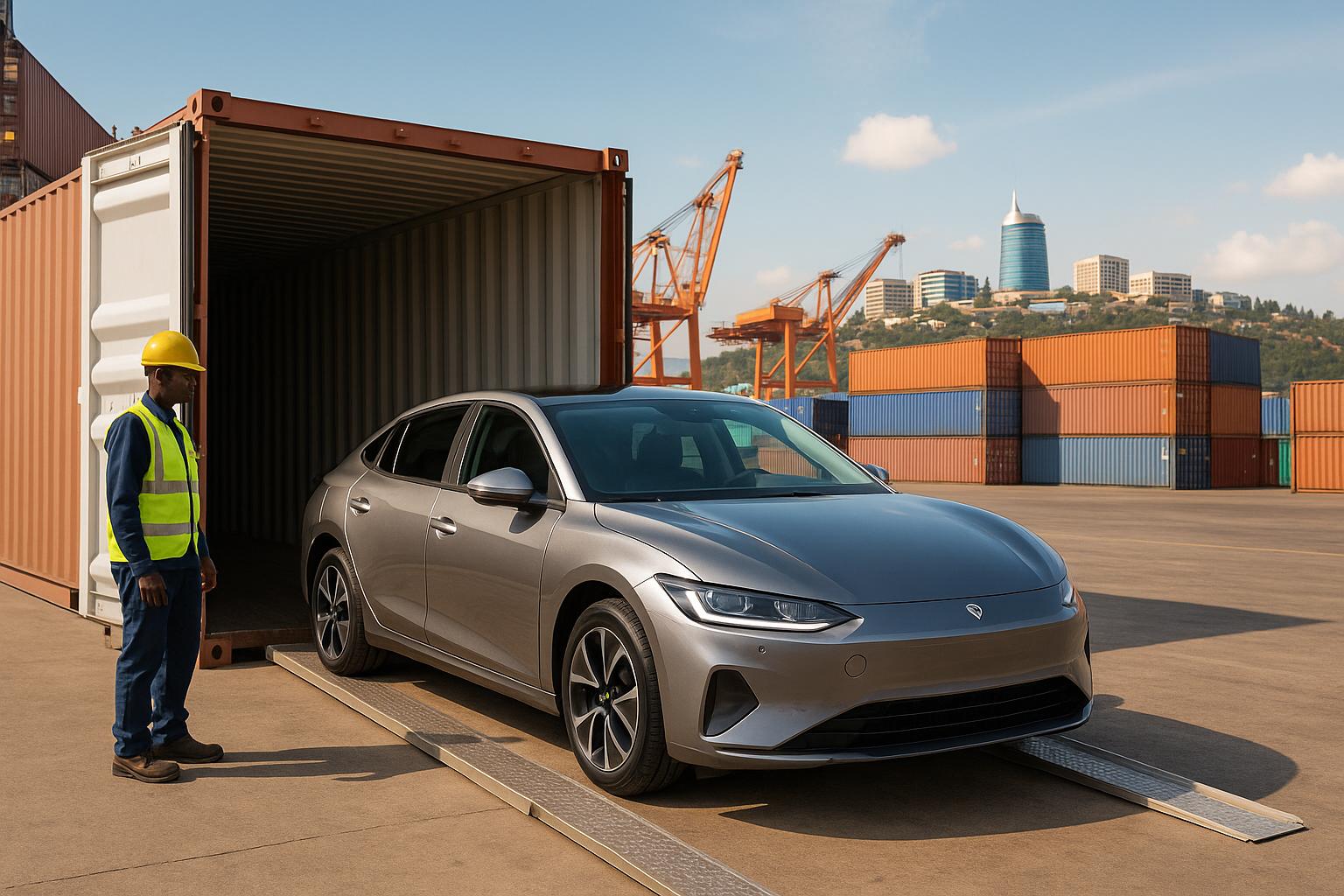
If you’re planning to import an electric vehicle (EV) to Rwanda in 2025, the process is now easier and more cost-effective thanks to tax exemptions and simplified customs procedures. Here’s a quick breakdown of what you need to know:
- Tax Benefits: Import duties, VAT, and excise taxes are waived for EVs, batteries, and charging equipment, reducing overall costs.
- Total Costs: Consider the purchase price, shipping, insurance, customs fees, and inland transport. For example, a $18,500 Nissan Leaf could cost $22,400-$23,000 by the time it reaches Rwanda.
- Reliable Suppliers: Choose trustworthy EV dealers or exporters. Ensure they provide all required documents like invoices, certificates of origin, and compliance reports.
- Customs Clearance: Use Rwanda’s online customs platform to submit documents and secure your tax exemption certificate.
- Shipping Options: RoRo shipping is cheaper but less secure, while container shipping offers better protection for high-value cars.
- Registration: After customs, register your EV with the Rwanda Revenue Authority (RRA) to get license plates and legal road use.
- Charging Infrastructure: Rwanda’s charging network is growing, especially in Kigali, making EV ownership practical.
Step 1: Learn Rwanda’s EV Import Tax Rules
If you’re planning to import an electric vehicle (EV) into Rwanda, getting familiar with the country’s import tax rules is a must. The Rwandan government has introduced a range of incentives to promote fully electric vehicles, making them more attractive compared to hybrids and traditional gasoline-powered models. Here’s a breakdown of what you need to know.
EV Import Incentives in 2025
For fully electric vehicles, Rwanda offers significant perks. These may include reduced or even waived customs duties, VAT, and excise taxes. The benefits often extend to related essentials like spare parts, batteries, and charging equipment, making EV ownership more affordable.
Tax Considerations by Vehicle Type
Rwanda’s tax policies vary based on the type of vehicle. Fully electric cars enjoy the most favorable terms, with lower tax rates compared to hybrids and conventional vehicles, which are subject to higher charges. Keep in mind that taxes are calculated based on the total import cost – this includes the vehicle’s purchase price, insurance, and freight (CIF value).
Before moving forward with your import plans, always double-check the latest policies with official Rwandan authorities. This ensures you have the most accurate information about the financial benefits and requirements for bringing an EV into the country.
Step 2: Calculate Your Total Import Costs
When importing an EV, it’s crucial to get a clear picture of your total costs upfront. The price tag you see online is just the beginning – there are several additional costs involved in getting your vehicle to Rwanda. Breaking these down beforehand can save you from any unpleasant surprises along the way.
What’s Included in Import Costs
Here’s a breakdown of the main components that make up your import costs:
- Vehicle Purchase Price: This will likely be your biggest expense.
- Shipping and Logistics: Covers the cost of transporting your EV. You’ll need to choose between container shipping, which offers better protection but costs more, or roll-on/roll-off (RoRo) service, which is more economical but less secure.
- Marine Insurance: Protects your vehicle against damage or loss while at sea. The cost is typically 1% to 3% of the vehicle’s value.
- Customs Duties and Taxes: Calculated using the CIF (Cost, Insurance, and Freight) method. This includes duties, VAT, and excise taxes based on the total CIF value.
- Clearing and Handling Fees: These fees cover customs processing, port storage, and moving your vehicle through customs. If clearance takes longer than expected, additional daily storage fees may apply.
- Pre-Shipment Inspection: Some countries require an inspection to ensure the vehicle meets safety and environmental standards before it’s shipped.
- Inland Transportation: Don’t forget to budget for transporting the vehicle from the port to your destination in Rwanda.
Let’s see how these costs add up with a real-world example.
Sample Cost Calculation
Take a used 2022 Nissan Leaf purchased from Japan as an example. Here’s how the costs might look:
- Base Vehicle Price: $18,500
- Shipping via RoRo from Japan to Mombasa (Kenya) or Dar es Salaam (Tanzania): $1,200
- Marine Insurance (2% of vehicle value): $370
CIF value = $18,500 + $1,200 + $370 = $20,070
Now, factor in Rwanda’s import charges based on this CIF value, including a residual customs fee of about 5%:
- Customs Processing (5% of CIF): ~$1,003.50
- Clearing Agent Fees: ~$300 to $500
- Port Handling and Storage: ~$150 to $250
- Pre-Shipment Inspection (if required): ~$100 to $200
- Inland Transport to Kigali: ~$400 to $600
Adding it all together, the total landed cost for this $18,500 vehicle comes to approximately $22,400 to $23,000 – around $4,000 to $4,500 above the purchase price.
For a higher-end model, like a 2021 Tesla Model 3 priced at $32,000, the costs scale up proportionally. With similar shipping expenses but slightly higher insurance and percentage-based fees, the total landed cost would be roughly $37,500 to $38,500.
These estimates take into account Rwanda’s EV tax incentives. To be on the safe side, it’s smart to keep a buffer of 10% to 15% above your calculated estimate. This helps cover unexpected expenses like currency fluctuations, extra inspections, or delays in documentation.
Step 3: Find Trusted EV Suppliers
Once you’ve set your budget, the next step is finding a reliable supplier who offers high-quality EVs with accurate and complete documentation. Choosing a supplier familiar with Rwanda’s import rules is key to avoiding customs headaches.
Where to Buy New and Used EVs
Your choice of supplier will depend on whether you’re buying a new or used EV and where you’re sourcing it from. Here are the main options to consider:
- Authorized dealerships: These are the safest choice for new EVs. Major brands like Tesla, BYD, Hyundai, and Volkswagen have dealer networks in places like China, Japan, the UAE, and Europe. They often provide manufacturer warranties and verified documentation.
- Online marketplaces for African EVs: Platforms like EV24.africa make it easy to shop for both new and used EVs. They offer transparent pricing and delivery services to Rwanda. You’ll find a range of brands, including Tesla, BYD, Leapmotor, ROX, Dongfeng, Geely, Hyundai, Toyota, and Suzuki.
- Used car exporters: Countries like Japan, the UAE, and the UK are popular sources for pre-owned EVs. Japan, in particular, is known for its well-maintained vehicles and detailed inspection reports.
- Direct purchases from manufacturers: With Chinese brands like BYD and Geely expanding into Africa, buying directly from the manufacturer is increasingly an option. This can save you money by cutting out middlemen, but it does mean handling more logistics yourself.
Before committing to a supplier, verify their credentials. Check their business registration, customer reviews, and export experience to ensure you’re working with a trustworthy partner.
Required Supplier Documents
After selecting your supplier, make sure they provide all the necessary documents to ensure a smooth customs process. Missing paperwork can lead to delays, so it’s crucial to double-check everything.
- Commercial invoice: This should include the purchase price, vehicle details, and both buyer and seller information.
- Packing list: A detailed list of the vehicle and any included items, such as charging cables, spare parts, or accessories.
- Certificate of origin: This proves where the vehicle was manufactured. EVs from COMESA member countries may qualify for reduced duties.
- Certificate of analysis or test report (for non-EAC EVs): Since Rwanda classifies EVs as "high-risk goods", this document ensures the vehicle meets health, safety, and environmental standards.
- Registration or de-registration card: For used EVs, this shows the vehicle’s ownership history in its country of origin.
- Vehicle specifications and labels: These should include details like the model, manufacturing date, manufacturer’s name and address, country of origin, and technical characteristics. Warranty information (at least one year for electronic equipment) and safety details must also be included. Translate any non-English or non-French documents.
- Authentic notified mark: For EVs from EAC partner states, ensure the vehicle has a valid mark showing it complies with EAC standards.
- Evidence of compliance with mandatory standards: This includes proof that the EV meets Rwandan and international standards for safety, health, and environmental protection. Examples include emissions certifications, battery safety approvals, and electrical system certifications.
Before making your final payment, confirm that your supplier can provide all these documents. A reliable supplier should offer a checklist of required paperwork. If they seem unsure or dismissive about these requirements, it’s best to look elsewhere.
Having all the necessary documentation in place will make customs processing much smoother in the next steps.
Step 4: Complete Customs and Documentation
Once your supplier documents are ready, it’s time to tackle customs clearance. This step can be tricky, but Rwanda’s modernized customs system makes the process smoother – if you know what to do. Being prepared with the right paperwork can save you both time and headaches.
Getting Import Permits
Good news: Rwanda doesn’t require a separate import permit for electric vehicles (EVs). Instead, you’ll follow the standard customs clearance process managed by the Rwanda Revenue Authority (RRA). Since 2012, the RRA has used the One Single Electronic Window, an online platform that simplifies import and export declarations. Through this system, you can upload key documents like certificates of origin, quality certificates, and customs declarations. It also connects with other agencies, so there’s no need to run around to multiple offices.
You’ll access this system via the Rwanda Trade Portal, which acts as the central hub for all customs-related activities. Here’s a general overview of the process:
- Work with a licensed customs clearing agent: While it’s possible to handle customs on your own, most importers hire an experienced agent who knows the system and can help resolve any issues.
- Submit a notice of arrival: Once your EV arrives at the port – often Mombasa in Kenya, with onward transport to Rwanda – your clearing agent will file this notice to kick off the customs clearance process.
- File the Import Declaration Form (IDF): Your agent will upload the necessary documents through the Rwanda Trade Portal. The system automatically routes your declaration to the relevant agencies for review.
- Secure a Duties and Taxes Exemption Certificate: EVs imported in 2025 are exempt from import duty, VAT, and excise tax. Apply for this certificate through the RRA to avoid unnecessary charges.
- Complete Rwanda Standards Board (RSB) verification: The RSB will check your certificate of analysis or test report to ensure your EV meets safety, health, and environmental standards. For vehicles from East African Community (EAC) partner states, they’ll also verify the authentic notified mark. If your documents are in order, this step is usually quick.
- Receive clearance approval: Once all agencies sign off, you’ll get electronic clearance via the portal. At this point, you can arrange for your vehicle’s collection or delivery.
Make sure to keep all your documents organized and accessible for at least three years, as you may be subject to random Post-Clearance Audits (PCA).
Required Documents Checklist
Even a single missing document can cause delays, so double-check that everything is in order before your EV arrives. After filing your online declaration, ensure your digital files meet these requirements:
| Document Type | Description | Notes |
|---|---|---|
| Air Waybill or Bill of Lading | Proof of shipment and contract between shipper and carrier | Ensure vehicle details match exactly. |
| Commercial Invoice | Details of the transaction, including value and description | Reflect the actual purchase price. |
| Packing List | Itemized list of the vehicle and any accessories | Include items like charging cables, spare parts, and manuals. |
| Import Declaration Form (IDF) | Official form declaring intent to import | Filed electronically through the Rwanda Trade Portal. |
| Tax Identification Number (TIN) | Your Rwandan tax ID | Obtain from the RRA if you don’t already have one. |
| Duties and Taxes Exemption Certificate | Proof of EV tax exemption eligibility | Key to avoiding standard vehicle import taxes. |
| Certificate of Origin | Indicates where the vehicle was manufactured | Ensure details match supplier documents. |
| Certificate of Analysis or Test Report | Confirms compliance with safety and environmental standards | Required for EVs not from EAC partner states. |
| Registration/De-registration Card | Ownership history for used EVs | Provided by the supplier in Step 3. |
| Authentic Notified Mark | Certification for EAC vehicles meeting standards | Applies to vehicles from EAC partner states. |
Organize these documents into labeled PDFs for easy uploading. Ensure details like the vehicle identification number (VIN), make, model, and year are consistent across all paperwork. Even minor discrepancies can cause delays during verification.
If any documents are in a language other than English or French, get them professionally translated beforehand. While scanned copies are submitted online, keep the originals safe – they may be requested during a physical inspection.
It’s also wise to apply for your TIN well before your EV arrives. You can complete this step online via the RRA website or at an RRA office.
Customs clearance typically takes a few business days, though delays can happen during busy periods. Once you’ve received clearance approval, you’re ready to arrange delivery and move on to registering your EV with Rwandan authorities.
sbb-itb-99e19e3
Step 5: Arrange Shipping and Delivery
Getting your EV to Rwanda involves some careful planning, particularly for shipping and inland delivery. Most vehicles imported into Rwanda arrive first at the Port of Mombasa in Kenya, before continuing their journey overland. Understanding your shipping options and the logistics of the inland route is key.
Shipping Methods: Container vs. RoRo
If you’re looking for an economical option, RoRo (Roll-on/Roll-off) shipping is the way to go. This method requires your EV to be operational, as vehicles are driven onto and off the ship. RoRo is a popular choice because it typically offers faster transit times and more frequent departures.
On the other hand, container shipping provides a higher level of protection for your EV by enclosing it during transit. This option is ideal for high-value vehicles or non-operational ones. However, it comes with a higher price tag due to the extra handling and longer processing times. If you’re importing multiple EVs, you might consider container consolidation services. By sharing container space with other vehicles, you can reduce shipping costs by up to 50%.
Keep in mind that most standard auto insurance policies don’t cover international shipping. For peace of mind, consider purchasing Cargo Damage Protection to safeguard your EV during transit.
EVs require special handling because of their lithium battery systems. Make sure your shipping provider adheres to international safety standards (UN3480/3481). Additionally, familiarize yourself with shipping terms like CIF (Cost, Insurance & Freight) and DAP (Delivered at Place), which outline who is responsible for freight, insurance, and inland transport. Don’t forget to budget for destination charges, which typically average around $400 per vehicle.
Once you’ve selected a shipping method, it’s time to plan for inland transport from Mombasa to Rwanda.
Port Clearance and Final Delivery
After your EV arrives at Mombasa, inland haulage services will handle the journey to Rwanda. Partnering with a reliable clearing agent can make this process much smoother. They’ll manage customs requirements, duty payments, and vehicle inspections upon arrival in Rwanda.
Using a Through Bill of Lading (TBL) simplifies the entire journey. This document covers the shipment from its origin to your final destination under one contract. To avoid delays and extra fees at the border, make sure to prepay IHI charges and provide accurate consignee details, including your email, phone number, and physical address.
Your clearing agent will need all the required documents well in advance of the vessel’s arrival. These include the Commercial Invoice, Packing List, and the properly endorsed Original Bill of Lading. Transit times from Mombasa to Rwanda depend on road conditions and border processing, but the overland trip typically takes several days. Keep in mind that shipping from Europe or Asia to Mombasa may take several weeks.
Once your EV arrives in Rwanda, you usually have a 24-hour window to offload and unpack. Exceeding this time frame can lead to penalties of $250 per day per truck. Additionally, avoid making changes to the import manifest after submission. Amendments can result in extra fees, such as a $70 amendment fee, $45 for new documents, $10 customs penalties, and up to $500 for additional verification. Providing incorrect or late information could also lead to detention charges, port storage fees, removal costs, and other penalties.
With your EV safely delivered and offloaded, you can move on to customs clearance and registration.
Step 6: Register Your EV in Rwanda
Once your EV has cleared customs, the next step is getting it registered for legal road use in Rwanda. This process is managed by the Rwanda Revenue Authority (RRA) and requires specific documents. Below is an overview of the procedures and paperwork you’ll need to complete the registration.
Vehicle Inspection and License Plates
To register your EV, you’ll need to submit the necessary documents to the RRA. Once your application is approved, you’ll receive a registration card and license plates, officially authorizing your EV for use on Rwandan roads.
Start by obtaining a motor vehicle registration form from the RRA. If you’re registering as an individual, you’ll need to attach a passport photo to the form. However, this step doesn’t apply to companies, NGOs, or cooperatives.
Next, secure a stamped Motor vehicle declaration form from the Customs department or DMC. This document confirms that your vehicle has successfully passed customs clearance. You’ll also need to provide a purchase invoice (EBM Invoice) from your supplier, unless you are the final user of the imported vehicle.
For identification, individual buyers should include a copy of their ID or passport. If registering under a business or organization, the required documents vary: companies must submit an RDB certificate from the Rwanda Development Board, NGOs need an RGB certificate from the Rwanda Governance Board, and cooperatives must provide an RCA certificate from the Rwanda Cooperative Agency or other applicable documents.
Here’s a quick reference table of the required documents:
| Document Required | Issuing Authority | Special Notes |
|---|---|---|
| Motor vehicle registration form | Rwanda Revenue Authority (RRA) | Passport photo needed for individuals only |
| Stamped Motor vehicle declaration form | Customs department/DMC | Issued after customs clearance |
| Purchase invoice (EBM Invoice) | Seller/Supplier | Not required if importer is the final user |
| Copy of ID/passport | Personal document | For individual buyers |
| RDB certificate | Rwanda Development Board | Required for companies |
| RGB certificate | Rwanda Governance Board | Required for NGOs |
| RCA certificate | Rwanda Cooperative Agency | Required for cooperatives |
Note: If you’re the final user of the vehicle, you may not need to provide an EBM Invoice.
Before submitting your paperwork, double-check that everything is accurate and complete. Any missing or incorrect documents could delay the registration process and prevent your EV from being legally driven.
Once registration is finalized, your EV is ready to hit the road in Rwanda. With this step complete, you can move on to preparing for long-term ownership.
Step 7: Prepare for Long-Term EV Ownership
Once your EV is registered, the next step is ensuring it performs at its best over the long haul. This means focusing on reliable charging options and staying informed about evolving policies that affect EV owners.
Charging Stations and Owner Benefits
Rwanda’s charging network is growing steadily, especially in Kigali and along major highways. Partnerships with companies like Kabisa, Societe Petroliere Ltd (SP), and Ireme Invest (through the Rwandan Green Fund) are driving this expansion. Contributions from Ampersand, Volkswagen Rwanda, and BasiGo are also playing a big role in building this infrastructure.
"We are excited to expand our network of charging stations, making EV charging more accessible to drivers across Rwanda." – Lukas Lukoschek, Co-founder, Kabisa
To keep your EV running efficiently, pay attention to battery health. For example, Kenya has banned the import of batteries with less than 80% capacity, highlighting how crucial battery condition is. In Rwanda, initiatives like those by SLS Energy are repurposing EV batteries for solar storage, which has been happening since May 2025. This approach not only extends battery life but also supports sustainability in the sector.
Stay Updated on Policy Changes
Keeping track of policy updates is equally important for long-term EV ownership. In February 2025, Rwanda’s Ministry of Finance and Economic Planning announced new taxes, including VAT, withholding tax, and excise duty on hybrid cars, while maintaining tax exemptions for pure electric vehicles. Additionally, starting January 2025, all motorbike taxis registered for public transport in Kigali must be electric, as reported by The New Times in November 2024.
For the latest updates, check official resources like the Ministry of Infrastructure (mininfra.gov.rw) and the Ministry of Finance and Economic Planning. These websites provide details on tax incentives, regulatory changes, and more. Platforms like Automag Rwanda also cover charging network developments and policy news through their website and social media.
"For the latest updates on Rwanda’s automotive industry, visit Automag Rwanda." – Automag.rw
You can also rely on national outlets like The New Times and international sources such as CleanTechnica for coverage on Rwanda’s EV policies and infrastructure developments. Occasionally, government bodies host e-mobility events to showcase new technologies and announce policy updates.
Conclusion
Navigating the process of importing an electric vehicle (EV) to Rwanda in 2025 doesn’t have to be overwhelming. By following the seven practical steps outlined in this guide, you can simplify the journey and address every important detail along the way.
Rwanda’s recent policy changes and the growing network of charging stations make EV ownership more accessible and appealing than ever. Whether you’re eyeing a high-end model or a budget-friendly option, staying updated through trusted sources like the Ministry of Infrastructure or the Ministry of Finance and Economic Planning will ensure everything goes smoothly.
This is your chance to be part of Rwanda’s move toward a cleaner, more sustainable transportation future. With the country’s evolving policies and expanding infrastructure, importing an EV in 2025 isn’t just a smart choice – it’s a step toward leading the way in sustainable living.
FAQs
What are the main advantages of importing an electric vehicle to Rwanda in 2025?
Importing an electric vehicle (EV) to Rwanda in 2025 offers some compelling benefits, largely due to government policies designed to encourage eco-friendly transportation. Until June 30, 2028, EVs, charging equipment, batteries, and spare parts are completely exempt from import duties, VAT, excise taxes, and withholding taxes. This translates to significantly lower import expenses. For hybrid vehicles, import duties are reduced, but VAT and other taxes still apply.
Rwanda is also making strides in building EV infrastructure. The government is working on a national charging station master plan, which aims to improve access to charging facilities across the country. With these incentives and infrastructure developments, 2025 presents a great opportunity to bring EVs into Rwanda and support the shift toward clean energy.
How can I verify that my EV supplier is trustworthy and knowledgeable about Rwanda’s import rules?
To make sure your EV supplier is reliable and understands Rwanda’s import rules, begin by checking the most recent import guidelines from official Rwandan government sources. This step ensures you’re working with up-to-date information. You should also request references or evidence of the supplier’s experience handling similar imports to Rwanda.
Another smart move is to collaborate with a licensed Rwandan customs clearing agent. These experts are familiar with the Rwanda Revenue Authority’s processes and can help navigate the complexities of importing. Maintaining clear communication with both your supplier and clearing agent is crucial to prevent delays or unexpected problems.
How can I prepare for changes in Rwanda’s EV import policies or tax incentives after 2025?
To stay ahead of possible shifts in Rwanda’s EV import policies or tax incentives after 2025, it’s essential to keep an eye on government updates. This includes staying informed about changes in import regulations, tax reviews, and incentives. For example, VAT exemptions for EVs are currently valid through June 30, 2028, but timelines like these can change, so regular monitoring is crucial.
Additionally, pay attention to customs duties, particularly for EVs priced at $60,000 or below, as they may benefit from reduced tariffs under East African Community agreements. To navigate these changes smoothly, consider reviewing annual updates on incentives and seeking advice from local experts. This proactive approach can help you stay prepared for any adjustments.