
 Thabo Nkosi
Importing an electric vehicle (EV) to Mali in 2025 is a multi-step process that involves understanding local regulations, selecting the right EV, arranging shipping, and preparing for customs. Here’s a quick breakdown of the process:
- Understand Mali’s Import Rules: Check compliance with Mali’s vehicle import regulations, including manufacturing year, battery specs, and required certifications.
- Choose the Right EV and Supplier: Pick an EV that suits Mali’s road conditions and verify the supplier’s reliability.
- Arrange Shipping: Ship your EV to a nearby West African port and then transport it overland to Mali.
- Prepare Import Documents: Gather essential paperwork like the commercial invoice, certificate of conformity, and customs forms.
- Calculate Costs: Mali offers tax incentives for EVs, including 0% import duties and reduced VAT (8%). Factor in shipping and broker fees.
- Clear Customs and Register: Complete customs clearance and register your EV with local authorities to make it road-legal.
- Set Up Charging and Maintenance: Install a home charging station and plan for regular maintenance to keep your EV running smoothly.
Ghana to Become West Africa’s Electric Vehicle Hub? BYD Says YES.

Step 1: Learn Mali’s EV Import Rules
Before importing an electric vehicle (EV) into Mali, it’s essential to familiarize yourself with the country’s import regulations. Ensuring your EV meets the necessary requirements will help you avoid unnecessary delays and complications during the process.
Import Rules for EVs
Mali’s vehicle import regulations apply to all types of vehicles, including EVs. To ensure compliance, confirm that your EV meets general requirements such as its manufacturing date and technical specifications. For accurate and up-to-date information, consult the relevant authorities.
Government Agencies Involved
Several government agencies play key roles in the import process:
- Mali Customs Authority: Responsible for managing import documentation, customs clearance, and duties.
- Ministry of Commerce and Industry: Oversees trade policies related to vehicle imports.
To simplify the process, consider working with a customs broker who can help navigate these agencies. For more detailed guidance, visit the Mali Trade Portal (https://tradeportal.ml) and the Mali Customs Office website (https://douanes.gouv.ml).
Check if Your EV Qualifies
To confirm your EV’s eligibility, you’ll need to verify details like its manufacturing year, make, model, battery capacity, and VIN. Contact the Mali Customs Authority or consult a customs broker for assistance. Additionally, obtain a certificate of conformity from the manufacturer or seller to ensure your vehicle meets Mali’s standards. Regularly check the Mali Trade Portal for any updates to import regulations. Once your EV’s compliance is confirmed, you can move forward with selecting a suitable model and supplier in the next step.
Step 2: Pick a Compliant EV and Reliable Supplier
Choosing the right electric vehicle (EV) and supplier is crucial, especially when navigating Mali’s challenging road conditions, extreme heat, and limited charging infrastructure. A durable vehicle and a trustworthy seller will make the process smoother while ensuring compliance with Mali’s import regulations.
Choose the Right EV Model
Mali’s roads, particularly outside major cities like Bamako, are often rough or unpaved. To handle these conditions, look for EV models with high ground clearance, sturdy suspension, and active liquid-cooling systems to manage the intense heat. Liquid cooling helps maintain the battery’s temperature, extending its lifespan and preventing performance issues in extreme weather.
Opt for EVs with a real-world range of 250–300 miles (roughly 400–480 kilometers). This range helps mitigate concerns about scarce fast-charging stations and irregular grid power. Additionally, vehicles that support portable or lower-power AC charging (220–240 V) offer greater flexibility, allowing you to charge at home or through standard commercial outlets.
Stick with brands that have a strong regional presence, such as Toyota, Hyundai, BYD, or Tesla. Having local support ensures easier access to spare parts and skilled technicians who can service the vehicle when needed.
Find Reliable Suppliers
To avoid scams and ensure accurate vehicle information, work with verified sellers. Platforms like EV24.africa specialize in EV sales across Africa, offering detailed listings with transparent pricing. They feature vehicles from well-known brands like Tesla, BYD, Leapmotor, Geely, Hyundai, and Toyota, and provide delivery services to Mali and neighboring countries.
"At EV24.africa, we simplify the process of importing and buying electric vehicles in Africa. Our expertise ensures a seamless, transparent, and stress-free experience, so you can focus on driving the future of mobility." – EV24.africa
EV24.africa also supports buyers through the entire process, from customs clearance to local vehicle registration, emphasizing trust and transparency.
When assessing any supplier, prioritize those offering clear pricing without hidden fees and accurate quotes for both the vehicle and related services. Ensure the seller is registered with local authorities or industry associations, and check for third-party reviews or trade references. Be cautious of red flags such as incomplete documentation, demands for full payment upfront, unusually low prices, or vague details about the vehicle’s history. Avoid sellers who pressure you into quick decisions or fail to provide proof of ownership and vehicle condition.
Obtain Essential Seller Documentation
Before making a purchase, ensure you gather all necessary documentation for customs clearance, registration, and your own protection. Here’s what to request from the seller:
- Vehicle identification details: This includes the full VIN, year, make, model, and trim level. Some shipping companies may require a label on the windshield displaying the VIN and propulsion type (e.g., electric or hybrid) for compliance.
- Battery specifications: Ask for details like capacity (in kilowatt-hours), chemistry type, and any available battery health reports. For used EVs, request the state of health (SoH) percentage and a history of fast-charging patterns or battery-related repairs. Shipping companies may also require the Material Safety Data Sheet (MSDS) for the battery, as EV batteries are classified under hazardous materials regulations.
- Pro forma invoice: This document should include complete buyer and seller details, the agreed price, and a full description of the vehicle. Customs authorities will use it for duty calculations.
- Title and registration documents (for used vehicles): Ensure the seller can provide proof of a clear title with no liens or outstanding loans. It’s also wise to get an independent pre-purchase inspection report, complete with photos or a video walkthrough.
- Warranty information: Confirm details about the battery and drivetrain warranty, including its duration (in years and mileage) and whether it’s transferable internationally. For used EVs, check if any remaining manufacturer warranty will still apply in Mali.
- Vehicle history report: This should detail any accidents, flood damage, or major repairs. Water damage, in particular, can pose serious risks to the battery.
- Odometer reading: Verify the mileage to ensure accuracy and rule out potential fraud.
For added security, use staged payments and secure transfer methods. Consider releasing partial payment only after receiving and verifying key shipping documents, like the Bill of Lading. Additionally, review the vehicle’s usage history, including its primary use (city or highway driving), charging habits, any battery replacements or repairs, and records of electrical issues or recalls. This will help ensure the vehicle is well-suited to Mali’s demanding conditions.
Once you’ve gathered all the necessary documentation, you’ll be ready to finalize your purchase and prepare for shipping with confidence.
Step 3: Arrange Shipping and Transport
Getting an EV to Mali involves a two-step journey: first, shipping it by sea to a port in West Africa, and then transporting it overland to its final destination. To ensure a smooth process, it’s important to work with experienced logistics providers and secure insurance to protect your investment. Let’s break down the key elements of shipping routes, logistics partnerships, and insurance.
Shipping Routes and Options
Your EV’s journey begins with its arrival at a West African coastal port, from where it will continue overland to Mali. The specifics of the route and transit times can vary depending on the port and seasonal conditions. You’ll typically have two main shipping options:
- Container Shipping: Offers a sealed and secure environment for your EV, protecting it from external elements during transit.
- Roll-on/Roll-off (RoRo) Services: A more budget-friendly option where vehicles are driven onto and off the ship, though with less protection compared to container shipping.
It’s crucial to confirm the latest routing, schedules, and pricing with your shipping provider to avoid surprises.
Partnering with Logistics Experts
Managing international shipping and navigating border crossings requires the expertise of freight forwarders and customs brokers who know the intricacies of regional imports. These professionals handle everything from arranging ocean freight to guiding you through customs documentation and coordinating with port authorities. Platforms like EV24.africa can connect you with trusted logistics partners who specialize in EV shipments.
When choosing a logistics partner, look for key features like:
- Transparent Pricing: Clear and upfront cost breakdowns.
- Reliable Tracking: Real-time updates on your shipment’s progress.
- Regional Expertise: Knowledge of local regulations and procedures to simplify the process.
A dependable logistics partner can make all the difference in avoiding delays and ensuring your EV reaches Mali efficiently.
Insurance and Delivery Considerations
Marine cargo insurance is a must when shipping an EV internationally. Make sure your policy covers the entire journey – both ocean and overland transport – and includes specific protections for risks related to lithium-ion batteries. To safeguard your investment further, consider adding an SGS re-inspection clause to your contract. This ensures the vehicle’s condition is professionally assessed upon arrival.
Delays can occur, especially at border crossings, so maintaining open communication with your logistics team is vital. Once your EV clears customs and arrives in Bamako, you’ll be ready to move on to the registration steps outlined in the next section.
Step 4: Gather Import Documents
Now that your shipping arrangements are sorted, it’s time to tackle the paperwork needed to clear your EV through Mali’s customs. Customs delays often come down to missing or incorrectly prepared documents, so this step demands careful attention. Mali requires specific documentation to verify your vehicle’s origin, value, and compliance with its safety standards.
Required Documents
Before your EV reaches Mali’s borders, you’ll need to gather several key documents. The Commercial Invoice (CI) is critical – it outlines the buyer, seller, vehicle details, value, and terms of sale. Customs officials rely on this document to calculate the duties and taxes you’ll owe.
Your shipping method will determine whether you need a Bill of Lading (BOL) for sea freight or an Airwaybill (AWB) for air shipments. The BOL serves as both a receipt from the carrier and a legal title to the goods. For sea shipments, you’ll also need the BESC (Bordereau Electronique de Suivi des Cargaisons). This document must be issued within 10 days of loading to avoid penalties, so coordinate closely with your shipping provider to meet this deadline.
The Certificate of Conformity (CoC) is another must-have. It certifies that your EV complies with Mali’s safety and regulatory standards, which is especially important for electronic goods like EVs. Additionally, a Country of Origin (COO) Certificate is required to prove where your EV was manufactured or assembled. This document impacts the tariffs and import duties you’ll be charged.
If you’re working with a customs broker to handle the clearance process, you’ll need to provide a Power of Attorney (POA) to authorize them to act on your behalf. Since EV batteries are classified as hazardous materials, your paperwork must also include compliance details specific to lithium batteries.
For businesses seeking import status in Mali, additional documentation is required: proof of official business status, proof of citizenship, and a certificate of good conduct. Fortunately, these documents can usually be obtained within a single day if you have the necessary supporting materials ready.
Once you’ve gathered all the necessary documents, ensure they’re properly formatted and meet Malian customs standards.
Document Formatting and Translation
Mali has specific formatting and translation requirements for customs paperwork. Since French is the official language, all documents must either be in French or include certified translations. Be sure to adapt dates, currency, and number formats to align with French conventions. For instance:
- Dates should follow the day/month/year format.
- Currency amounts should use commas as decimal separators instead of periods.
Although you may have paid for the vehicle in U.S. dollars ($), your customs documents should clearly show the equivalent value in West African CFA francs (XOF) to avoid confusion during duty calculations.
Before shipping your EV, review all documents with your supplier and customs broker to catch any errors. Mistakes – like incorrect vehicle identification numbers, mismatched invoice amounts, or typos in certificate dates – can lead to delays that stretch from days to weeks. If you’re using a customs broker, engage with them well in advance of your EV’s arrival to allow time for a thorough review and any necessary corrections.
When all documents are accurate and properly formatted, the customs clearance process typically takes a few days to two weeks. However, incomplete or improperly prepared paperwork can cause significant delays. Make sure your BESC is validated, translations are certified, and all details match across your entire document set. This level of preparation will save you time and headaches when you reach the customs clearance stage in Step 6.
sbb-itb-99e19e3
Step 5: Calculate Total Import Costs
Once you’ve sorted out shipping and documentation, it’s time to figure out the total cost of importing your vehicle. The price you pay your supplier is just one piece of the puzzle. You also need to include duties, taxes, shipping fees, and other administrative charges. Knowing these costs upfront helps you avoid surprises at customs and prepares you for the next step: customs clearance.
Duties and Taxes Explained
Mali’s 2025 clean transportation incentives bring significant tax benefits for fully electric vehicles (EVs). The country operates under the West African Economic and Monetary Union (WAEMU) framework, which uses a Common External Tariff (CET) system based on Harmonized System (HS) Codes. This system balances protecting local industries with generating government revenue.
Under these new incentives, fully electric vehicles (100% EVs) are now exempt from import duties, a major drop from the previous rates of 25–35%. If your EV’s motor power is under 100 kW, it’s also excise tax-free, and the Value Added Tax (VAT) is reduced to just 8%. These changes could mean savings of 30–40% compared to earlier costs.
Mali calculates import charges based on the CIF value, which includes the purchase price, insurance, and freight. If you’re importing from an ECOWAS country, you might qualify for reduced tariffs or exemptions.
Calculate Your Total Cost
To estimate your full import cost, use this formula:
Total Landed Cost = CIF Value + Customs Duties + VAT + Additional Fees
Here’s an example: Let’s say you’re importing a used BYD Atto 3 for US$18,000, with shipping and insurance adding US$2,500. This gives a CIF value of US$20,500. Since it’s a 100% EV, there’s no import duty.
- VAT: 8% of US$20,500 = US$1,640
- Miscellaneous Fees: Customs processing and broker fees, typically between US$300 and US$600. Using an average of US$450, the total cost would be:
US$20,500 (CIF) + US$0 (duty) + US$1,640 (VAT) + US$450 (fees) = US$22,590
If you need to convert this to West African CFA francs (XOF), use the current exchange rate. As of December 2025, US$1 equals 600 XOF, so the total cost would be approximately 13,554,000 XOF. Always double-check the exchange rate when preparing your documents.
For vehicles with motor power exceeding 100 kW, additional excise taxes may apply. Be sure to check your EV’s specifications to finalize your budget.
New vs. Used EV Cost Comparison
Choosing between a new or used EV can have a big impact on your import costs. One advantage of Mali’s 2025 policy is that there’s no age limit for importing fully electric vehicles, giving you the flexibility to consider older, more affordable models.
Here’s a quick comparison of factors to consider when deciding between a new or used EV:
| Factor | New EV | Used EV |
|---|---|---|
| Purchase Price | US$25,000–US$45,000+ | US$12,000–US$25,000 |
| Import Duty | 0% | 0% |
| VAT | 8% of higher CIF value | 8% of lower CIF value |
| Excise Tax | 0% (if under 100 kW) | 0% (if under 100 kW) |
| Battery Condition | Full capacity with warranty | Requires battery health certificate |
| Tax Amount | Higher due to greater CIF value | Lower based on reduced CIF value |
| Maintenance Costs | Lower initially | May be higher |
| Resale Value | Retains value longer | May depreciate faster |
While tax rates are the same for new and used EVs under Mali’s incentives, the actual tax amount depends on the vehicle’s declared value. For example, a used EV with a CIF value of US$15,000 will incur about US$1,200 in VAT, while a new EV with a CIF value of US$35,000 will face a VAT of around US$2,800.
For used EVs, the condition of the battery is a critical factor. A battery health certificate is essential, as it reveals the remaining capacity, which affects range, performance, and the likelihood of needing an expensive replacement. It’s also a good idea to get a pre-shipment inspection to confirm the vehicle’s roadworthiness and overall condition, helping you avoid unexpected repair costs or compliance issues upon arrival.
Both new and used EVs benefit from Mali’s 2025 incentives, so the choice ultimately depends on your budget, your confidence in the condition of a used vehicle, and how long you plan to keep it.
Step 6: Clear Customs and Register Your EV
Once your EV arrives in Mali, two essential steps remain before you can legally drive it: customs clearance and vehicle registration. These processes ensure your vehicle complies with Mali’s road regulations.
Customs Clearance Steps
Customs clearance is the official process of bringing your imported EV into Mali. This step is managed by the Mali Customs Administration (Direction Générale des Douanes), which verifies that all required documentation is complete and that your vehicle meets local standards.
To get started, you (or your customs broker) need to submit an import declaration along with all necessary paperwork. Customs officials will review these documents to confirm that your EV qualifies for any applicable incentives. A physical inspection of the vehicle may also be part of the process.
Working with a specialized logistics partner can simplify and speed up customs clearance. The timeline for this step depends on how well-prepared your documents are and how efficiently your broker handles the process.
Once customs clearance is complete, you can move on to registering your EV.
Register Your Vehicle
After clearing customs, the next step is to register your EV with the local transportation authorities. This registration process ensures your vehicle is legally approved for road use. While the exact requirements may vary depending on your location in Mali, registration generally involves:
- A technical inspection of the vehicle.
- Submission of required documents to the local transportation office.
It’s crucial to check the specific guidelines in your area to ensure you meet all the criteria. Once your registration is finalized and you receive the necessary documentation, your EV is officially ready for the road. Keep these documents handy, as they may be needed during routine inspections.
Thanks to Mali’s 2025 EV incentives, many of the traditional financial and administrative barriers to importing vehicles have been reduced. By preparing thoroughly and following local regulations, you can navigate customs clearance and registration smoothly, setting the stage for driving your electric vehicle in Mali.
Step 7: Set Up Charging and Maintenance
Once your EV is registered, the next step is ensuring you have a reliable setup for charging and maintaining your vehicle. Since Mali’s EV infrastructure is still growing, a bit of planning will go a long way in making ownership smooth and stress-free.
Charging Options in Mali
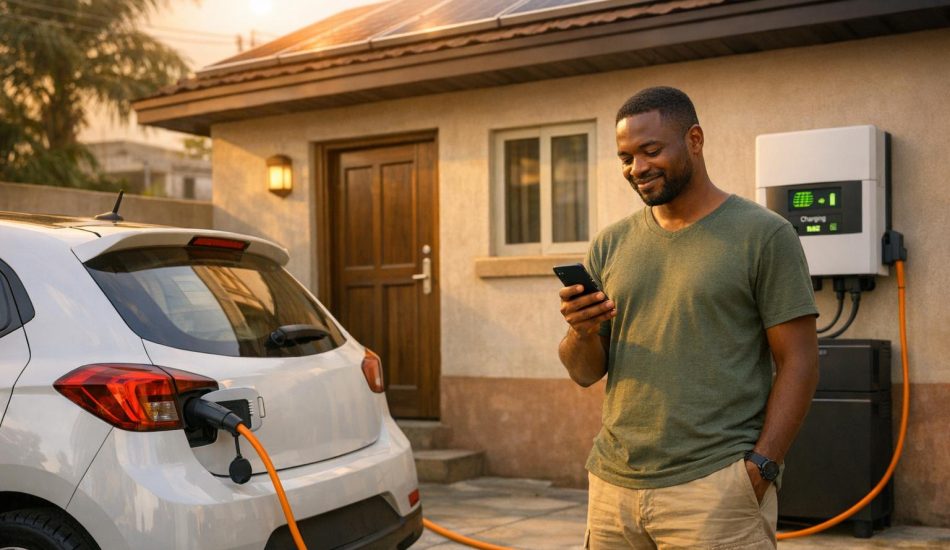
For most EV owners, home charging will be the primary option. With a dedicated charging unit installed by a qualified electrician, you can start each day with a fully charged battery. These units typically connect to a standard 220-volt outlet and can fully charge many EVs in about 6 to 8 hours.
Before installing one, check your home’s electrical capacity. In cities like Bamako, the grid tends to be more reliable than in rural areas, but you may still want to consider an upgrade if needed.
Public charging stations in Mali are still few and far between. This means you’ll need to carefully plan longer trips and ensure your EV has enough range to reach your destination. For added peace of mind, you might explore integrating solar panels with battery storage as a backup for unreliable grid power.
If you’re purchasing your EV through EV24.africa, ask about charging equipment. Some dealers might include a charging unit with your purchase or recommend trusted suppliers to help you get set up.
Taking these steps will ensure you’re ready to keep your EV powered and running smoothly.
Maintain Your EV and Battery
To keep your EV in top condition, focus on maintaining the battery and overall vehicle health. Mali’s warm climate can affect battery performance, so parking in shaded areas and keeping an eye on thermal management is key.
Here’s a quick checklist for routine maintenance:
- Tire care: Regularly check tire pressure and schedule rotations to ensure even wear.
- Brake system: Inspect brakes and keep an eye on fluid levels like coolant and windshield washer fluid.
- Software updates: Keep your vehicle’s software current, either through over-the-air updates or by visiting a service center.
It’s also essential to locate authorized service centers that specialize in EVs. Keeping detailed records of service visits, software updates, and battery health is a good habit, especially for warranty claims or when it’s time to sell.
Lastly, make monitoring your battery part of your routine. Most EVs provide battery health metrics through the dashboard or a mobile app. If you notice any unusual drops in range or charging capacity, address these issues early to avoid bigger problems later.
Conclusion
Bringing an electric vehicle (EV) into Mali in 2025 is entirely possible with proper preparation and a clear understanding of the process. The seven steps outlined here – from understanding import regulations to establishing charging infrastructure – serve as a reliable guide to navigate each stage of the journey.
Several key considerations will shape your experience. First, ensure compliance with Mali’s import rules and regulations. Next, plan your costs carefully – remember, the total expense goes beyond the vehicle’s purchase price. Duties, taxes, and shipping fees can significantly increase the final amount, so budgeting in advance is essential. Lastly, think about the long-term aspects of EV ownership, including maintenance and charging needs.
For those looking to simplify the process, platforms like EV24.africa can be a game-changer. They handle the complexities of sourcing, shipping, customs clearance, and local registration, all while ensuring adherence to Malian regulations. With transparent pricing and no hidden fees, you can plan your budget confidently. Plus, their wide selection of EV models – from brands like Tesla, BYD, Leapmotor, and Volkswagen – makes it easier to find a vehicle that suits your preferences and Mali’s import requirements.
Once your EV is imported and registered, your focus will shift to day-to-day ownership. Setting up a home charging station and planning for regular maintenance are critical steps. Since Mali’s EV infrastructure is still in its early stages, being proactive about charging and upkeep will help ensure a smooth and enjoyable ownership experience.
FAQs
What battery specifications and certifications are required to import an EV into Mali in 2025?
To bring an electric vehicle (EV) into Mali in 2025, the battery must adhere to specific safety and environmental standards. This typically includes meeting international certifications like UN 38.3, which ensures safe transportation, and IEC 62660, which addresses performance and reliability. Mali may also have its own rules regarding battery recycling and environmental considerations, so it’s essential to check with the relevant Malian authorities for any additional requirements.
Before beginning the import process, make sure all documentation related to the EV’s battery – such as test reports and certifications – is complete and up-to-date. Collaborating with a reliable supplier who understands Mali’s import regulations can help streamline the process and prevent potential delays at customs.
How can I make sure the EV I choose is suitable for Mali’s roads and climate?
If you’re considering an EV for Mali, it’s important to pick a model that can handle the country’s challenging road conditions and hot climate. Start by focusing on vehicles built for durability in high temperatures and rugged terrain. Features like reinforced suspensions and high ground clearance are essential for navigating Mali’s roads. Also, check how well the battery holds up in extreme heat, as high temperatures can reduce its efficiency.
Reach out to reliable suppliers or manufacturers to confirm whether the EV is suited for Mali’s environment. It’s also a good idea to see if the model has been tested or used in similar regions. Doing your homework upfront will ensure you select an EV that not only performs well but also stands the test of time in Mali.
How can I install a reliable home charging station for my EV in Mali?
To set up a dependable home charging station for your EV in Mali, start by securing a dedicated parking spot with access to electricity. It’s crucial to consult a licensed electrician to evaluate your home’s electrical system. This ensures it can handle the extra load safely, and you might need to upgrade your electrical panel or wiring for optimal performance.
Next, choose an EV charger from a trusted supplier. Make sure the charger is compatible with your vehicle, meets international safety standards, and works well with Mali’s power grid. Once you’ve got the right equipment, hire a professional to install it. This step ensures the installation complies with local regulations and includes proper grounding for safety.
After installation, thoroughly test the charging station to verify it works as expected and delivers the charging speed your EV requires.