
 Thabo Nkosi
If you’re looking for the best electric pickups and utility vehicles for Africa in 2026, here’s the quick takeaway:
- Changan Hunter REEV leads with a 621-mile range thanks to its range-extender tech.
- Ford F-150 Lightning and Tesla Cybertruck dominate in towing power (10,000+ lbs) and worksite versatility.
- Toyota Hilux BEV and compact utility vans shine for urban delivery with lower costs and easy handling.
- Ford Midsize Electric Pickup offers affordability with a $30,000 target price.
- Locally assembled trucks like the Changan Hunter REEV and Tembo EUV 25 provide rugged options tailored for Africa’s conditions.
Key considerations: Range, payload, towing capacity, and cost. Whether you’re managing fleets, working off-grid, or navigating city deliveries, there’s an EV for your needs.
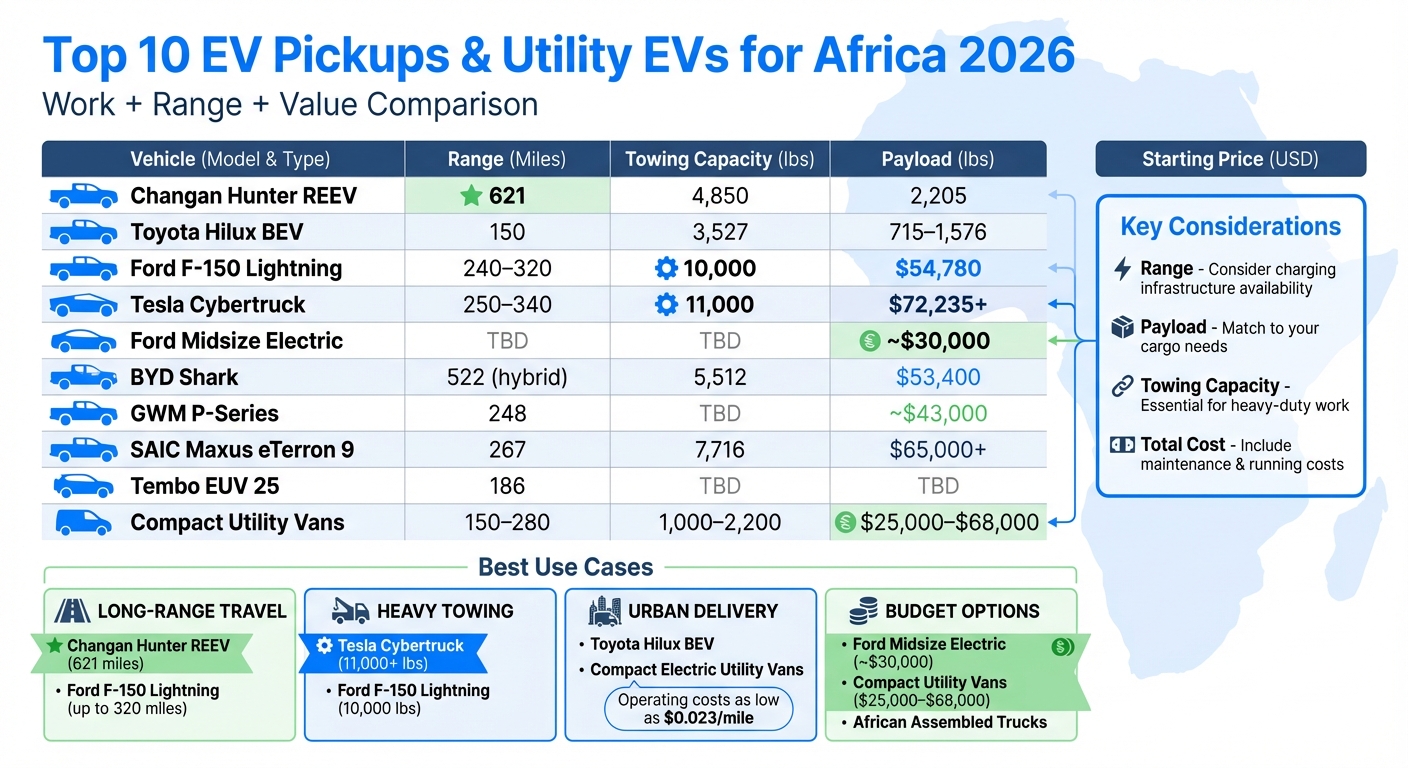
Quick Comparison
| Model | Range (Miles) | Towing Capacity (lbs) | Payload (lbs) | Starting Price (USD) |
|---|---|---|---|---|
| Changan Hunter REEV | 621 | 4,850 | 2,205 | ~$43,500 |
| Toyota Hilux BEV | 150 | 3,527 | 715–1,576 | TBD |
| Ford F-150 Lightning | 240–320 | 10,000 | ~2,000 | $54,780 |
| Tesla Cybertruck | 250–340 | 11,000 | 2,500 | $72,235+ |
| Ford Midsize Electric Pickup | TBD | TBD | TBD | ~$30,000 |
| SAIC Maxus eTerron 9 | 267 | 7,716 | 1,367 | $65,000+ |
| Compact Utility Vans | 150–280 | 1,000–2,200 | 1,000–1,433 | $25,000–$68,000 |
Choose based on your work demands, budget, and access to charging infrastructure. For off-road and long-range needs, range-extender hybrids like the Changan Hunter REEV are ideal. For urban use, compact EV vans and pickups keep costs low and efficiency high.
Top 10 Electric Pickups for Africa 2026: Range, Towing, Payload & Price Comparison
Geely Riddara Electric Pickup & MINI Electric City Car Attempt 3,200km Road Trip Across South Africa
1. Changan Hunter REEV
Touted as "The World’s First Range Extended EV Bakkie", the Hunter REEV brings a unique approach to electric vehicles. It uses a 2.0-liter turbocharged gas engine exclusively as a generator to keep the electric system running when the battery runs out. Let’s dive into its range, capabilities, durability, and cost-efficiency.
Range and Efficiency: City, Rural, and Off-Road
In city driving, the Hunter REEV offers an electric-only range of 145–180 km (90–112 miles). Once the battery is drained, the onboard generator steps in, extending the total range to over 1,000 km. Its 31.2 kWh Lithium Iron Phosphate (LFP) battery is designed to handle high temperatures with greater stability. Plus, the 70-liter fuel tank ensures the generator can keep going, even in remote areas.
Work Capacity: Payload, Towing, and Off-Roading
Built for tough jobs, this bakkie delivers serious power. Its dual-motor 4×4 system generates 200 kW (268 hp) and 470 Nm of torque. It can carry a 1,000 kg payload and tow up to 2,200 kg with ease. With 220 mm of ground clearance, a 28° approach angle, and a 27° departure angle, it’s ready to tackle rugged terrain. Features like Active Yaw Control, Trailer Sway Control, and Hill Start/Descent Assist add stability for heavy-duty tasks.
Durability and Service: Built for Tough Conditions
Changan South Africa highlights the Hunter REEV’s resilience:
"This vehicle shows that electric and hybrid technology can also serve the toughest, hardest-working vehicles on South African roads".
A 540° panoramic camera with parking assist makes navigating tight, dusty off-road spaces easier. The suspension system – double fork arm independent at the front and multilink at the rear – balances load handling with off-road flexibility. Buyers in South Africa benefit from a 5-year/90,000 km maintenance plan and an 8-year/150,000 km warranty for the battery and high-voltage components.
Price and Running Costs
Priced at R799,900 (roughly $43,500 USD) in South Africa, the Changan Hunter K50 REEV offers excellent value. It beats competitors like the BYD Shark 6 DMO in pricing while delivering a longer range. A handy 12V socket in the cargo bed lets users power tools directly at job sites, adding to its practicality. These features make the Hunter REEV a strong contender for Africa’s demanding work environments.
2. Toyota Hilux EV Concept Successor
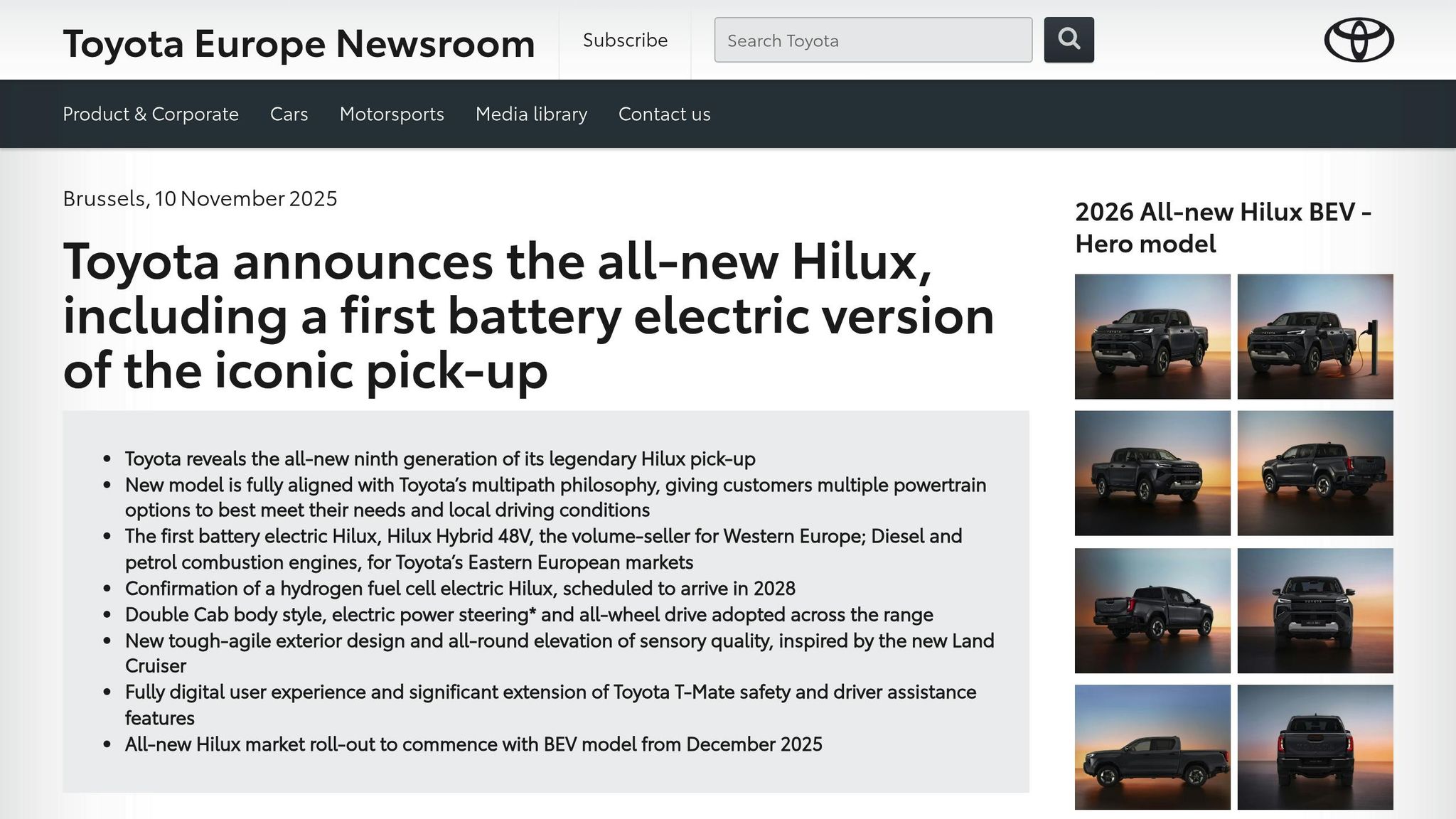
The iconic Toyota Hilux is stepping into the electric era, with its battery-powered version set to debut in early 2026. Designed with urban fleet operators and tradespeople in mind, this electric model promises dependable performance minus the diesel emissions. The 2026 Toyota Hilux BEV comes equipped with a 59.2 kWh lithium-ion battery and dual electric motors, delivering 205 Nm of torque to the front wheels and 268.6 Nm to the rear via a permanent all-wheel drive system. Let’s dive into its range, efficiency, and capabilities across various terrains.
Range and Efficiency: City, Rural, and Off-Road
For city and suburban driving, the Hilux BEV offers a WLTP range of around 240 km (149 miles). Toyota is also prioritizing fast-charging capabilities to reduce downtime, catering to the needs of commercial users. When it comes to off-road adventures, the Multi-Terrain Select system provides performance comparable to an L4 low-range setting. It also maintains the same 700 mm (27.6-inch) wading depth as its diesel counterpart, ensuring it can handle challenging conditions.
Work Capacity: Payload, Towing, and 4×4 Performance
The electric Hilux is tailored for lighter-duty jobs, offering a payload capacity of approximately 715 kg (1,576 lbs) and a towing capacity of about 1,600 kg (3,527 lbs). This makes it an excellent choice for urban maintenance, last-mile deliveries, and light construction work. Sean Hanley, Toyota Australia’s Vice President of Sales and Marketing, noted:
"It’s built with a passenger-like payload, not intended for heavy-duty applications."
This highlights its focus on practical, everyday tasks in urban and suburban environments.
Durability and Service: Heat, Dust, and Rough Terrain
Toyota put the Hilux BEV through its paces with a 12-month trial at BHP‘s Port Hedland mining operations, one of the toughest environments imaginable. These tests confirmed the vehicle’s rugged body-on-frame design and robust battery protection, proving it can withstand dusty, wet, and uneven terrains. This dedication to durability ensures the electric Hilux stays true to the model’s tough legacy, making it a reliable choice for demanding conditions.
Price and Running Costs
While pricing for Africa is yet to be announced, the 2026 diesel Hilux starts at approximately $33,990 USD in other markets. The electric version is expected to come at a higher price point. However, it’s geared toward businesses aiming to cut fuel expenses and meet emissions targets. For urban operations, where its range is well-suited to daily needs, the BEV offers a practical and cost-efficient solution. This launch underscores Toyota’s dedication to delivering reliable and economical electric utility vehicles that cater to a variety of needs across different regions.
3. Ford Global Midsize Electric Pickup

Ford is gearing up to introduce a midsize electric pickup aimed at global markets, including Africa. This truck, built on Ford’s new "Universal EV platform" by a specialized California-based team, is expected to hit the market in 2027 with a starting price of around $30,000. The platform brings a host of work-focused improvements, making it a standout option for demanding environments.
Work Capacity: Payload, Towing, 4×4, Torque
Designed with Africa’s rugged landscapes in mind, this electric pickup is built to handle tough jobs while maintaining efficiency. The truck combines a spacious cabin, a front trunk (frunk), and a full-sized pickup bed to accommodate a variety of needs. Ford CEO Jim Farley summed up its practicality:
"This new truck offers more interior space than the RAV4… but it will have a frunk, and it will have a whole pickup truck bed behind it. Ample space for five adults, bikes, surfboards, work equipment… whatever you need."
With a 0–60 mph time of under five seconds and built-in V2L (vehicle-to-load) technology, it’s equipped to power tools and devices at remote job sites. While exact payload and towing capacities haven’t been released yet, the structural battery pack provides a low center of gravity for better stability on uneven terrain. A dedicated "Off-Road" drive mode further enhances its ability to tackle challenging conditions [17,20].
Durability and Service: Heat, Dust, Rough Terrain
To ensure reliability in extreme conditions like high heat and dusty environments, Ford has chosen Lithium Iron Phosphate (LFP) batteries. These batteries are known for their thermal stability and durability, even under frequent deep discharge cycles. The structural battery pack, which doubles as the truck’s floor, adds strength and efficiency, making it well-suited for heavy-duty tasks.
Doug Field, Ford’s Chief EV, Digital and Design Officer, emphasized the platform’s efficiency:
"We can actually, compared to a typical Gen I electric vehicle, we can get the same range with a third less battery. And that’s the kind of ingenuity we need to compete with the Chinese."
The truck’s manufacturing process is also notably faster – 40% quicker than first-generation electric SUVs – thanks to 4,000 feet less wiring. This not only speeds up production but also simplifies maintenance and reduces the chances of mechanical issues. These advancements make the truck both durable and cost-effective.
Price and Running Costs
With a starting price of $30,000, this midsize electric pickup is positioned as an affordable choice in its category. Its efficient LFP batteries, rugged design, and V2L technology make it an appealing option for businesses looking to cut fuel expenses and improve productivity. Remote over-the-air updates ensure that the truck stays up-to-date with performance improvements and fixes, adding to its value. Blending affordability with tough performance, this model is tailored for work, range, and practicality in emerging markets.
4. Tesla Cybertruck (Exported to Africa)
The Tesla Cybertruck is now available as an imported option for African markets, boasting a tough stainless-steel exoskeleton. Pricing starts at approximately $72,235 for the Long Range RWD model, while the high-performance Cyberbeast trim is priced around $117,235.
Range and Efficiency (City, Rural, Off-Road)
The Cybertruck offers three configurations: the Long Range RWD, which provides a range of 335–366 miles; the AWD model with about 325 miles; and the Cyberbeast, delivering roughly 250 miles on highways at 75 mph. For city driving, the AWD model achieves an estimated 85 MPGe, dropping to approximately 72 MPGe on highways. Its 123 kWh battery can recharge between 128 and 147 miles of range in about 15 minutes using a Tesla Supercharger.
Work Capacity (Payload, Towing, 4×4, Torque)
When it comes to workhorse capabilities, the AWD and Cyberbeast trims can tow up to 11,000 lbs and handle a payload of 2,500 lbs. The AWD version generates around 521 lb-ft of torque, while the Cyberbeast delivers a more robust 740 lb-ft. With an adjustable air suspension, the truck can achieve up to 17 inches of ground clearance, a 35-degree approach angle, and a 28-degree departure angle, making it well-suited for rugged terrain. The 6-foot composite bed, which doesn’t require a liner, also features integrated 120V/240V outlets capable of delivering 11.5 kW to power tools and equipment on-site.
Durability and Service (Heat, Dust, Rough Terrain)
The Cybertruck’s stainless-steel exoskeleton resists dents and corrosion, though it requires regular cleaning to maintain its appearance. According to Elon Musk, it offers "more torsional stiffness than a McLaren P1". Its Armor Glass is designed to endure rock chips and hail, providing added durability for unpaved roads. Rear-wheel steering combined with steer-by-wire technology enhances its ability to navigate tight spaces, making it highly maneuverable. These rugged features underscore its readiness for demanding environments.
Price and Running Costs (USD)
| Model | Price | Horsepower | Towing | 0-60 mph |
|---|---|---|---|---|
| Long Range (RWD) | $72,235 | 321 hp | 7,500 lbs | 6.2 sec |
| All-Wheel Drive | $81,985 | 600 hp | 11,000 lbs | 3.9 sec |
| Cyberbeast | $116,985 | 845 hp | 11,000 lbs | 2.6 sec |
The Cybertruck offers lower running costs thanks to reduced maintenance requirements and an 8-year/150,000-mile warranty for the battery and powertrain. Its bi-directional power capability allows it to function as a backup generator, which is especially useful in regions with unreliable electricity. For those needing extra range, an optional extender priced at approximately $16,000 can add about 120 miles, though it takes up about one-third of the truck’s bed space.
5. Ford F-150 Lightning (Imported Units)
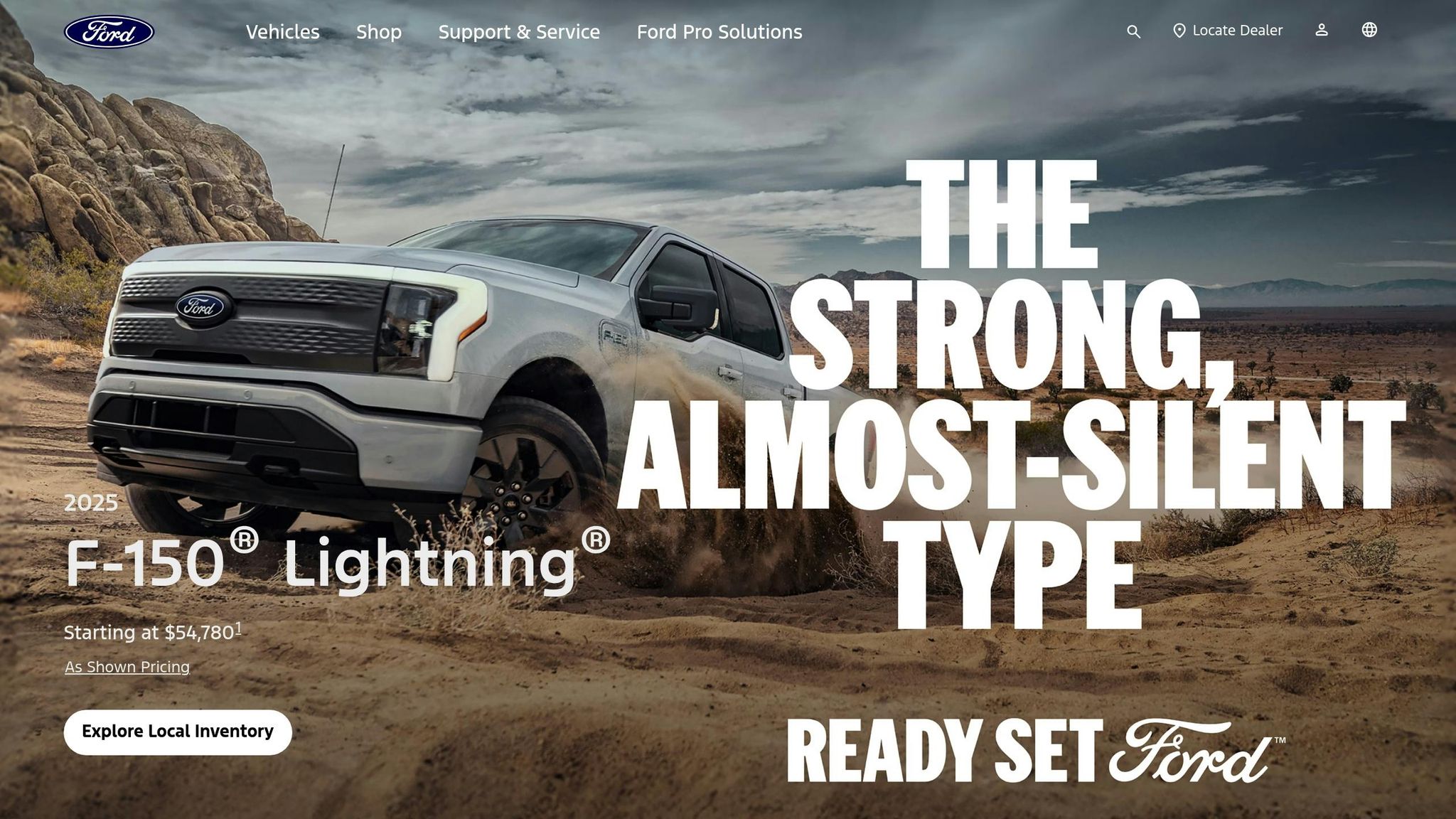
The Ford F-150 Lightning brings the iconic best-selling American pickup into the electric age. Set to arrive in Africa in 2026, the starting price for the work-oriented Pro trim is $54,780, while the premium Platinum model tops out at $87,590. It has earned an impressive 9.5/10 rating from U.S. News & World Report.
Range and Efficiency (City, Rural, Off-Road)
Staying true to Ford’s reputation for rugged performance, the F-150 Lightning offers two battery options tailored for different needs. The Standard Range battery (98.0 kWh) delivers 230–240 miles, while the Extended Range battery (131.0 kWh) pushes that to 300–320 miles. In city driving, it achieves an efficiency of 73–78 MPGe. However, a highway test of the Platinum trim at 75 mph showed a reduced range of about 230 miles. Towing a 6,100-pound trailer significantly impacts range, cutting it to approximately 100 miles. The truck supports fast charging, going from 15% to 80% in just 44 minutes at DC fast-charging stations. Looking ahead, Ford plans to release a next-generation EREV version in 2026, featuring a high-power generator and an extended range of over 700 miles.
Work Capacity (Payload, Towing, 4×4, Torque)
Equipped with dual electric motors and standard 4×4 capability, the F-150 Lightning generates a robust 775 lb-ft of torque. The Extended Range version with the Max Trailer Tow Package can tow up to 10,000 pounds, while payload capacity stands at 2,000 pounds for Standard Range models and 1,800 pounds for Extended Range models. Depending on the trim, horsepower ranges from 452 to 580, with the higher-end versions accelerating from 0 to 60 mph in under 4 seconds. The truck also features a Mega Power Frunk with 400 pounds of lockable storage and a Pro Power Onboard system that provides up to 9.6 kW of exportable electricity, perfect for powering tools at remote work sites. These features make it a strong contender for demanding jobs across diverse terrains.
Durability and Service (Heat, Dust, Rough Terrain)
Built to take on tough conditions, the F-150 Lightning features a fully-boxed high-strength steel frame and a military-grade aluminum alloy body. It has been rigorously tested over the equivalent of 7.4 million miles. With 8.4 inches of ground clearance and selectable drive modes – Normal, Sport, Tow/Haul, and Off-Road – it’s ready for Africa’s challenging landscapes. For hotter climates, Ford recommends pre-conditioning the cabin while plugged in to maintain battery performance. The truck comes with an 8-year/100,000-mile warranty on electric components, promising at least 70% battery capacity retention over that period.
Price and Running Costs (USD)
| Trim | Starting Price | Horsepower | Towing Capacity | Range |
|---|---|---|---|---|
| Pro | $54,780 | 452 hp | 7,700 lbs | Up to 240 miles |
| XLT | $63,345 | 452 hp | 7,700 lbs | Up to 240 miles |
| Flash | $69,995 | 580 hp | 10,000 lbs | 300–320 miles |
| Platinum | $87,590 | 580 hp | 10,000 lbs | 300–320 miles |
The F-150 Lightning combines impressive performance and efficiency, making it a practical choice for African markets. Over the first three years, it’s estimated to save owners about $3,788 compared to gas-powered pickups, thanks to lower maintenance costs. Buyers in January 2026 can take advantage of up to $6,000 cash back, 0% APR financing for 72 months, and a complimentary home charger (including standard installation) valued at $2,000. Additionally, over-the-air updates ensure the truck stays up-to-date, minimizing the need for service visits.
6. BYD Electric Pickup

The BYD Shark, also called the Shark 6 in South Africa, is a plug-in hybrid designed with practicality in mind, especially for regions where charging infrastructure is limited. Combining a 1.5-liter turbocharged engine with dual electric motors, it offers a solution tailored for markets with fewer charging options. With a starting price of around $53,400, the Shark debuted in South Africa on April 4, 2025, instantly becoming the most powerful pickup truck in the market. Here’s a closer look at its performance, work capabilities, and durability in tough environments.
Range and Efficiency
The Shark hybrid offers an impressive 62 miles of electric-only range, with a total combined range of 522 miles when the gas engine is included. It supports 55 kW DC fast charging, allowing a charge from 30% to 80% in just 20 minutes. Fuel consumption is rated at 7.5 L/100 km, and the truck accelerates from 0 to 60 mph in a brisk 5.7 seconds, thanks to its 430 hp dual-motor system.
Work Capabilities
Built for heavy-duty tasks, the Shark features a body-on-frame chassis capable of towing up to 5,512 pounds and carrying a payload of 1,841 pounds. The dual-motor four-wheel-drive system provides instant torque, making it well-suited for hauling and navigating rugged terrain. With 9.1 inches of ground clearance and approach and departure angles of 31 degrees and 19 degrees respectively, it handles off-road challenges with ease. Its off-road credentials were further proven in March 2025 when it won the Frontera Aventura Rally in the Dominican Republic. Additionally, the Shark includes a 6.6 kW Vehicle-to-Load feature, allowing it to power tools and equipment at remote job sites.
Durability and Comfort
The Shark incorporates a 29.58 kWh LFP Blade battery using cell-to-chassis technology, which enhances structural integrity. Instead of traditional leaf springs, it uses a coil spring double wishbone rear suspension, providing a balance between rugged off-road performance and a smoother ride. Safety is a priority, with the 2025 model earning high ANCAP safety ratings – 85% for adult occupants and 87% for child protection. Its hybrid drivetrain minimizes reliance on charging infrastructure, a critical advantage in areas with limited electricity access.
Key Specifications and Costs
| Feature | Specification |
|---|---|
| Starting Price | $53,400 |
| Total Power | 430 hp |
| Electric Range | 62 miles |
| Total Range | 522 miles |
| Towing Capacity | 5,512 lbs |
| Payload | 1,841 lbs |
The BYD Shark’s hybrid design blends electric efficiency for daily use with gas-powered range for longer journeys, making it a versatile choice for both work and adventure.
sbb-itb-99e19e3
7. Great Wall Motor Electric Pickup (Ora/Poer Based)

Great Wall Motor (GWM) is making its mark in Africa’s electric pickup market with its Ora-based P-Series platform. The company focuses on local assembly projects across the continent, like the Associated Vehicle Assemblers facility in Kenya, to ensure its vehicles are well-suited for Africa’s challenging conditions. Starting at around $43,000 for the P500 flagship model, the P-Series is built to handle tough jobs and utility tasks.
Range and Efficiency
The GWM electric pickup is powered by a 57.7 kWh Lithium Iron Phosphate (LFP) battery, offering a WLTP range of approximately 248 miles (400 km). In real-world highway driving, the range adjusts to about 194 miles (312 km), making it ideal for regional work trips and daily hauling. It consumes energy at 160 Wh/km and features a heat pump air-conditioning system, ensuring it can handle diverse African climates. Charging options include 80 kW DC fast charging and 11 kW AC charging, while the LFP battery provides better thermal stability and a longer lifespan compared to traditional lithium-ion batteries.
Work Capacity
The P-Series is designed to deliver dependable performance for heavy-duty tasks. Its electric drivetrain generates 126 kW of power and 250 Nm of torque (184 lb-ft), offering the immediate pulling strength needed for towing and transporting loads. While specific payload and towing capacities are yet to be confirmed, the P-Series is crafted as a "bakkie", a term used in South Africa for a robust utility pickup. It also includes Vehicle-to-Load (V2L) functionality, allowing it to power tools and equipment at remote worksites.
Durability and Service
Built for demanding environments like mining and agriculture, the P-Series features rugged construction to withstand tough conditions. The LFP battery technology enhances heat resistance, making it well-suited for high-temperature areas, while the simplified electric drivetrain reduces maintenance needs and minimizes downtime. This combination ensures the truck is ready for both work and the elements.
8. SAIC Maxus Electric Pickup or Utility Truck

SAIC Maxus is making waves in Africa’s electric utility vehicle market with two solid options: the T90EV, which was the first electric pickup available in South Africa, and the newer eTerron 9. While the T90EV laid the groundwork, the eTerron 9 builds on it with a dual-motor 4WD system and significantly better towing capabilities. Both models are aimed at businesses and commercial users who want to cut operating costs without sacrificing utility.
Range and Efficiency
The T90EV offers a WLTP range of 205 miles (330 km), which can stretch to 248 miles (400 km) in urban environments. However, in real-world work conditions, the range tends to fall between 155 and 174 miles (250–280 km). The eTerron 9 takes things further with a 267-mile (430 km) range, thanks to its larger 102 kWh battery pack. The T90EV consumes 25 kWh per 100 km, and both models support 80 kW DC fast charging, allowing the battery to go from 5% to 80% in about 45 minutes. Impressively, between 2023 and 2025, a fleet of five Maxus electric utility trucks covered over 203,000 miles (327,000 km) on South African roads without a single instance of running out of charge. These ranges show they’re ready for demanding work environments.
Work Capacity
The T90EV offers a 1,000 kg payload and a braked towing capacity of 1,000 to 1,500 kg. It’s powered by a 150 kW motor with torque output ranging from 310 to 375 Nm. On the other hand, the eTerron 9, with its dual-motor 4WD system, delivers a hefty 325 kW (436 hp) and a towing capacity of 3,500 kg (7,716 lb), though its payload is lower at 620 kg. The T90EV’s rear-wheel-drive setup and 7.4-inch (187 mm) ground clearance limit its off-road potential. Meanwhile, the eTerron 9 is built for tougher terrains, featuring BorgWarner differential locks, an Off-road Expert Mode, and an All-Terrain Mode with 12 settings. Both trucks come equipped with Vehicle-to-Load (V2L) functionality, and the eTerron 9 can provide up to 6.6 kW to power tools and equipment at remote sites.
Durability and Service
Durability is another strong point for these trucks. During an 18-month trial in South Africa, the T90EV showed impressive reliability, with no mechanical breakdowns or significant battery issues, even under harsh conditions. However, its low-mounted rear motor has raised concerns about its off-road suitability, as noted by George Barrow from VanReviewer. The eTerron 9 addresses these concerns with a sturdier chassis made of 73% high-strength steel, liquid-cooled thermal management for extreme temperatures, and a double-wishbone independent suspension system on all four wheels.
Price and Running Costs
The T90EV is priced at around $63,500 USD (approximately £49,950), while the eTerron 9 is available in South Africa in three different trims, each with its own price point. The T90EV operates at an estimated $0.05 per mile. For commercial users, the one-tonne payload threshold allows for VAT reclamation in some markets, adding to its financial appeal. Smaller Maxus utility models have demonstrated even lower operating costs, around $0.023 per mile (about $0.014 per kilometer or R0.26 per km). While the T90EV received a modest 4/10 rating from VanReviewer, largely due to its 4×2 limitations, Matt Saunders from Autocar highlighted its value for businesses, stating:
"This certainly isn’t a modern lifestyle pick-up… if it has a place, it’s as a tax-saving working tool – and nobody will likely warm to it more than the business owner whose money it’s saving".
9. African Assembled Electric Utility Trucks
Africa is now seeing a surge in locally assembled electric utility trucks designed to handle the continent’s unique challenges. With South Africa producing over 500,000 vehicles annually – making up more than 80% of Africa’s total vehicle output – these trucks are built to thrive in demanding environments like mining operations and remote agricultural areas.
One standout example is the Changan Hunter REEV, priced at around $44,000 USD (799,900 ZAR). It combines rugged performance with an extended range, making it well-suited for Africa’s diverse terrains and needs. These advancements underscore the growing focus on vehicles tailored to the continent’s specific requirements.
Range and Efficiency
The Hunter REEV offers an electric range of 145 km, ideal for city use, while its onboard generator extends the total range to over 1,000 km. Joining this lineup is the Tembo EUV 25, which features a 77.28 kWh battery capable of delivering a range of 300 km (186 miles). This model is designed for heavy-duty applications like mining and safari operations.
Real-world performance has been promising, with Maxus test fleets covering over 327,000 km (203,000 miles) on South African roads without any mechanical failures. These figures highlight the reliability and practicality of these vehicles in real-world African conditions.
Work Capacity
When it comes to work performance, the Hunter REEV boasts a payload capacity of 1,000 kg and can tow up to 2,200 kg. Meanwhile, the Tembo EUV 25 delivers up to 330 Nm of torque, ensuring it has the power needed for demanding tasks in industries like mining and agriculture.
Durability and Service
Local assembly plays a key role in adapting these vehicles to Africa’s rugged conditions. For instance, the Hunter REEV is equipped with features like 540° panoramic cameras and trailer sway control, making it ideal for navigating tough terrain and managing heavy loads. Changan South Africa emphasized this capability, stating:
"This vehicle shows that electric and hybrid technology can also serve the toughest, hardest-working vehicles on South African roads".
The Tembo EUV 25 offers versatile charging options, including up to 77 kW DC fast charging, which is particularly useful in industrial environments. With fewer moving parts compared to diesel engines, these electric trucks are easier to maintain and experience less downtime. Local models also come with a 5-year or 150,000 km warranty, providing peace of mind and long-term reliability.
Price and Running Costs
The Hunter REEV’s $44,000 USD price tag is offset by its lower operating costs – ranging from $0.015 to $0.031 per mile. Compared to budget diesel pickups, this can save owners $2,000–$3,000 annually for a typical 40-mile daily commute. These savings make locally assembled electric trucks an attractive option for businesses and individuals alike.
10. Compact Electric Utility Vans and Micro Pickups
For those navigating the bustling streets of African cities or tackling light-duty jobs, compact electric vans and micro pickups are proving to be a smart choice. These vehicles, inspired by compact truck designs, focus on essentials like tight turning ability, easy parking, and practical cargo space – ideal for urban environments.
Take the MAXUS eDeliver 3, for example. This vehicle has shown it can handle Africa’s demanding conditions. During a trial between May 2024 and October 2025, a fleet of five eDeliver 3 vans in South Africa logged over 327,000 km (203,000 miles) without experiencing mechanical failures or significant battery issues. Even more impressive, these vans maintained an operational range of 250–280 km and achieved operating costs as low as R0.26 per kilometer.
Range and Efficiency
Adding to the conversation about larger utility trucks, compact models shine when it comes to urban efficiency. The eDeliver 3, for instance, offers a dependable range of 250–280 km, while the MAXUS T90EV can reach up to 400 km (248 miles) in city driving and 330 km (205 miles) in mixed conditions. On the micro pickup side, the Telo MT1, which measures just 152 inches in length, is tailored for light-duty urban tasks. However, detailed range data for its use in Africa is still pending.
Work Capacity
These compact vehicles are built for light-duty operations, and they deliver. While they’re not designed for heavy hauling, their high initial torque makes them ideal for smaller jobs. Many models now come equipped with Vehicle-to-Load (V2L) technology, allowing them to power tools directly on-site. This feature eliminates the need for separate gasoline generators, especially in remote areas.
Price and Running Costs
When it comes to cost, the Telo MT1 starts at $41,520, while models like the Alpha Motors Wolf are priced at up to $68,000. In South Africa, the MAXUS fleet has demonstrated that electric utility vans are far cheaper to operate than their diesel counterparts, with costs as low as R0.26 per kilometer. Plus, with fewer moving parts, these vehicles require less maintenance, resulting in reduced downtime and lower service expenses over their lifespan.
Together with larger, rugged electric vehicles, these compact options round out the choices available for Africa’s diverse utility needs.
Comparison Table
Take a closer look at the specs to find the right vehicle for your work demands. Below, you’ll see a breakdown of drivetrain configurations, estimated ranges, battery capacities, payload limits, towing abilities, and pricing for some of the top options coming in 2026.
| Model | Drivetrain | Range (Miles) | Battery Size | Payload | Towing | Price Range (USD) |
|---|---|---|---|---|---|---|
| Changan Hunter REEV | REEV (Range Extender) | 621 | 31.2 kWh + Generator | TBD | TBD | TBD |
| Toyota Hilux BEV | Dual Motor AWD | ~150 | 59.2 kWh | 715–1,576 lbs | ~3,527 lbs | TBD |
| Ford Midsize Electric | TBD | TBD | TBD | TBD | TBD | ~$30,000 (Target) |
| Tesla Cybertruck (Exported to Africa) | BEV | 250–340 | Varies | TBD | 11,000+ lbs | $79,990–$114,990 |
| Ford F-150 Lightning (Imported Units) | Dual Motor AWD | 240–320 | 98–131 kWh | ~2,000 lbs | ~10,000 lbs | $55,000+ |
| BYD Electric Pickup | TBD | TBD | TBD | TBD | TBD | TBD |
| Great Wall Motor Electric Pickup (Ora/Poer Based) | TBD | TBD | TBD | TBD | TBD | TBD |
| SAIC MAXUS eTerron 9 | Dual Motor AWD | 267 | 102 kWh | 1,367 lbs | TBD | $65,000+ |
| African Assembled Electric Utility Trucks | Varies | Varies | Varies | Varies | Varies | Budget-Focused |
| Compact Electric Utility Vans and Micro Pickups | Rear/Front Motor | 150–280 | 52.7–84.3 kWh | 1,000–1,433 lbs | 1,000–2,200 lbs | $25,000–$68,000 |
This table highlights diverse options, each tailored to address specific needs. Based on these specs, the models naturally fall into categories that meet Africa’s unique utility requirements.
| Best Use Case | Recommended Models | Key Reason |
|---|---|---|
| Long-Range Travel | Changan Hunter REEV, Ford F-150 Lightning | The REEV system ensures extended range, while the F-150 Lightning offers up to 320 miles per charge |
| Heavy Towing | Ford F-150 Lightning, Tesla Cybertruck | Both models deliver impressive towing capabilities (10,000+ lbs and 11,000+ lbs) with high-torque electric motors |
| Urban Delivery | Toyota Hilux BEV, Compact Electric Utility Vans and Micro Pickups | Ideal for city routes with reliable service networks, adequate range, and low running costs |
| Budget Options | Ford Midsize Electric, Compact Electric Utility Vans and Micro Pickups, African Assembled Electric Utility Trucks | Affordable options under $35,000, ideal for small businesses looking to enter the electric vehicle market |
For remote work, the Changan Hunter REEV stands out with its 621-mile range. If you need heavy-duty performance, the Ford F-150 Lightning offers proven towing power, starting at roughly $55,000. For urban delivery, compact electric utility vans and micro pickups have shown exceptional efficiency in South Africa, with operating costs as low as R0.26 per kilometer during fleet trials. And if affordability is your priority, the upcoming Ford Midsize Electric targets a starting price of around $30,000, making it one of the most cost-effective ways to transition into electric utility vehicles.
Conclusion
Electric pickups and utility vehicles are transforming how work gets done across Africa in 2026. Whether you’re transporting construction materials over rugged rural terrain, managing deliveries in busy urban centers, or operating a fleet that needs to lower expenses, there’s an electric option tailored to your needs.
To recap the standout models: range-extender trucks and heavy-duty electric vehicles are leading the charge, bridging infrastructure gaps while delivering impressive towing capabilities.
When choosing the right vehicle, consider factors like charging availability, specific work demands (such as payload and towing), and the overall cost of ownership, including maintenance. As Changan South Africa highlighted with the launch of their REEV technology:
"This vehicle shows that electric and hybrid technology can also serve the toughest, hardest-working vehicles on South African roads."
In areas with reliable charging infrastructure, fully electric trucks (BEVs) offer the advantage of lower running costs. For remote locations, range-extender models or vehicles with over 300 miles of range are better suited. Don’t forget about the benefits of Vehicle-to-Load (V2L) features – these trucks can double as mobile power stations, eliminating the need for separate generators in off-grid environments.
FAQs
Why is the Changan Hunter REEV a great fit for Africa’s unique needs?
The Changan Hunter REEV is built with a range-extended electric powertrain, combining a 31.2 kWh lithium-iron-phosphate battery and a 2.0-liter turbocharged gasoline generator. This setup delivers up to 90 miles of all-electric driving, perfect for shorter trips, while the generator boosts the total range to an impressive 621 miles – a reliable solution for areas where charging stations are scarce.
Tailored for Africa’s rugged landscapes, the Hunter REEV boasts a 220 mm ground clearance, a 2,200 kg towing capacity, and a dual-motor 4×4 system. With 268 hp and 470 Nm of torque, it’s well-equipped for off-road adventures and demanding tasks. Its design prioritizes strength and versatility, making it a dependable partner in tough conditions.
Priced at $42,000, the Hunter REEV includes financing and maintenance support. It also comes with a 5-year/150,000 km warranty and a 70-liter fuel tank, offering a practical and efficient option for businesses aiming to balance electric performance with reliability.
How do range-extended EVs compare to fully electric vehicles in remote areas?
Range-extended EVs (REEVs) offer the best of both worlds: the smooth, quiet efficiency of electric driving and the reassurance of a backup gasoline generator. They’re perfect for short, everyday trips, running solely on electricity until the battery depletes. Once that happens, the generator kicks in, dramatically boosting the vehicle’s range. For example, some REEV models provide about 90 miles of electric-only driving and over 600 miles total when the generator is in use. This makes them a practical choice for areas where charging stations are few and far between.
Fully electric vehicles (BEVs), meanwhile, depend entirely on their battery capacity. Most models can travel between 200–250 miles on a single charge, but they need access to charging stations to stay on the road. In remote areas with limited charging options, this can mean extra planning, longer stops to recharge, or even relying on portable chargers – factors that might restrict their convenience. REEVs, by comparison, shine in off-grid settings, offering flexibility and extended range without the need for a dense charging network. BEVs, however, perform best in regions with dependable access to charging infrastructure.
What are the cost savings of using electric utility vehicles for urban deliveries?
Electric utility vehicles (EVs) bring considerable savings to urban delivery operations by cutting both fuel and maintenance costs. Electricity costs significantly less per mile compared to diesel or gasoline, which can translate to up to 25% lower operating expenses over a five-year period. On top of that, EVs have fewer moving parts and don’t require oil changes, reducing maintenance needs and minimizing repair-related downtime.
These advantages become even more pronounced in cities where fuel prices are high or delivery routes include frequent stops. EVs leverage regenerative braking to improve energy efficiency, which is especially useful in stop-and-go traffic. Businesses may also benefit from tax breaks or emissions credits, making EVs an appealing choice for boosting profitability while aligning with eco-friendly practices.