
 Thabo Nkosi
Africa’s vehicle market is shifting toward electric pickups, driven by the need for efficient, durable, and long-range vehicles in agriculture, construction, and transport. With over 50% of new vehicle sales in Africa being pickups, the region demands models that handle tough terrains and long distances. This article highlights five game-changing pickups for 2026, including options like range-extended electric vehicles (REEVs) and fully electric models.
Key Takeaways:
- Changan Hunter REEV: Combines a 145 km electric range with a gas generator for a total range of 1,000 km. Starting at ~$43,200.
- Toyota Hilux EV: Urban-focused with a 240 km range and 59.2 kWh battery. Pricing TBD.
- Isuzu D-Max BEV: Offers a 263 km range, 66.9 kWh battery, and strong towing capacity. Pricing TBD.
- Kia Tasman EV: Launching by 2028, optimized for off-road and urban use with a ~310-mile range. Pricing TBD.
- Chevrolet Silverado EV: High-performance with up to 492 miles of range and 12,500 lbs towing capacity. Starts at $57,095.
Quick Comparison:
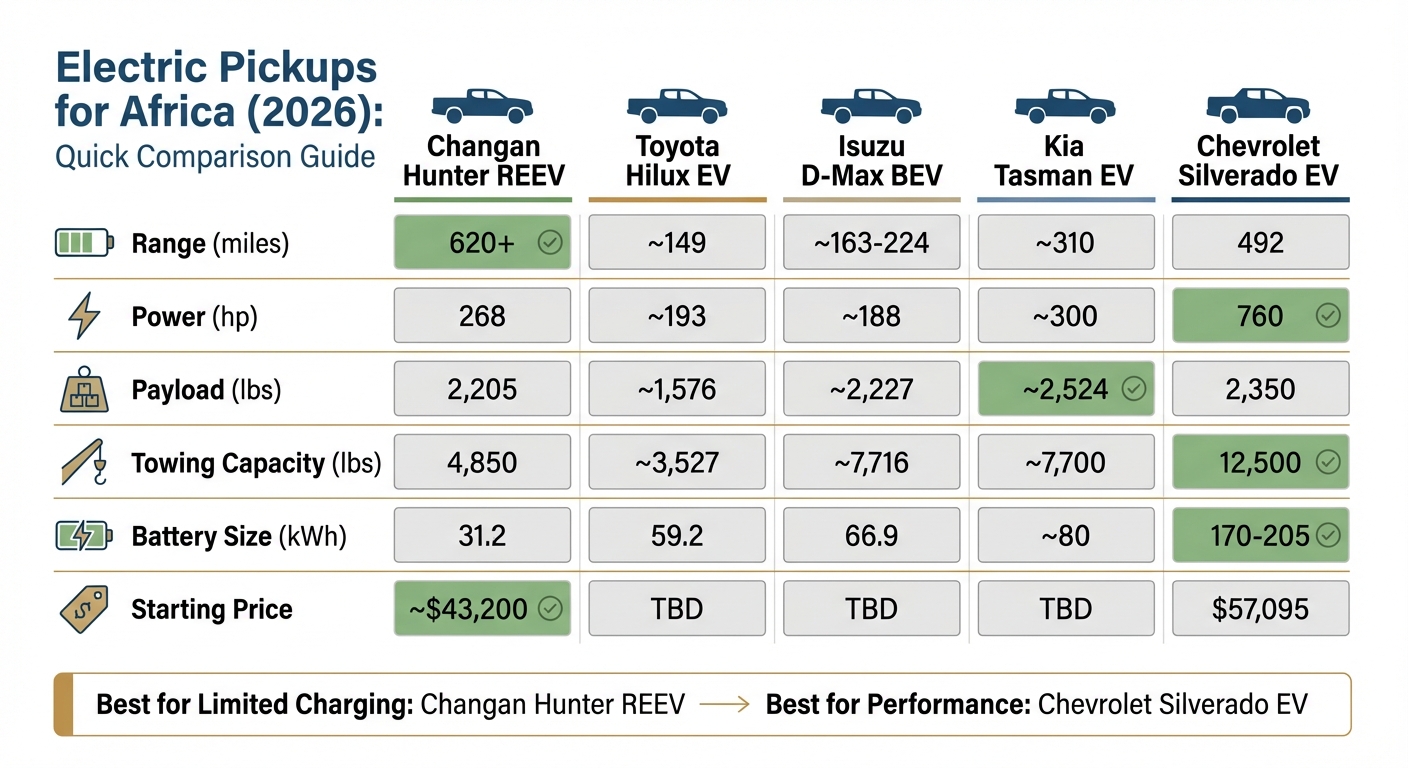
| Model | Range (miles) | Power (hp) | Payload (lbs) | Towing (lbs) | Battery Size (kWh) | Starting Price |
|---|---|---|---|---|---|---|
| Changan Hunter REEV | 620+ | 268 | 2,205 | 4,850 | 31.2 | ~$43,200 |
| Toyota Hilux EV | ~149 | ~193 | ~1,576 | ~3,527 | 59.2 | TBD |
| Isuzu D-Max BEV | ~163-224 | ~188 | ~2,227 | ~7,716 | 66.9 | TBD |
| Kia Tasman EV | ~310 | ~300 | ~2,524 | ~7,700 | ~80 | TBD |
| Chevrolet Silverado EV | 492 | 760 | 2,350 | 12,500 | 170–205 | $57,095 |
Bottom Line:
For areas with limited charging, the Changan Hunter REEV offers unmatched range and affordability. For high-performance needs, the Chevrolet Silverado EV is a standout, though it requires robust charging infrastructure. Each model caters to different needs, making Africa’s transition to electric pickups more accessible and practical.
Electric Pickup Trucks Comparison for Africa 2026: Range, Power, and Pricing
Electric Pickup Trucks In South Africa – 88kWh SAIC MAXUS T90 EV Bakkie

1. Changan Hunter REEV
The Changan Hunter REEV made its debut in South Africa in November 2025, offering a practical solution for regions with limited charging infrastructure. This range-extended electric pickup blends pure electric driving with a 2.0-liter turbocharged gas engine that acts solely as a generator. This setup ensures smooth daily commutes and stress-free long-distance travel.
Here’s a closer look at what makes it suited for Africa’s demanding roads.
Range (Pure Electric and Total)
The Hunter REEV boasts a pure electric range of 145 km (about 90 miles), making it perfect for city travel. Once the battery runs out, the onboard generator kicks in, extending the total range to an impressive 1,000 km (621 miles). Its 70-liter fuel tank ensures you can refuel in areas where charging stations are scarce – a crucial advantage in remote regions.
Power Output and Torque
Equipped with a dual-motor system, the Hunter REEV delivers 200 kW of power and 470 N.m (347 lb-ft) of torque. With a ground clearance of 220 mm (8.7 inches) and advanced suspension (double fork arm in the front and multilink in the rear), it’s built to handle rugged terrains. Features like Active Yaw Control and Hill Descent Assist further enhance its off-road capabilities.
Payload and Towing Capacity
With a payload capacity of 1,000 kg and a braked towing capacity of up to 2,200 kg, the Hunter REEV is ready for heavy-duty tasks. Whether it’s for construction, agriculture, or commercial use, this pickup is built to handle serious loads.
Battery and Charging
This vehicle is powered by a 31.18 kWh LFP battery, designed for everyday driving. The battery comes with an eight-year/150,000 km (93,200 miles) warranty. Additionally, a five-year/90,000 km (55,900 miles) maintenance plan is included. Inside, you’ll find modern integrations like a 12.3-inch HD infotainment system, a 540° panoramic camera, and the convenience of over-the-air updates.
Estimated Pricing
The starting price for the Hunter REEV Double Cab CE 4×4 is R799,900 in South Africa, roughly $43,200 based on early 2026 exchange rates. This pricing places it between standard diesel pickups, which start at about $24,500, and high-end fully electric models.
"This vehicle shows that electric and hybrid technology can also serve the toughest, hardest-working vehicles on South African roads" – Changan South Africa
2. Toyota Hilux EV
The Toyota Hilux EV represents a step forward in the brand’s move toward electrification. Production is set to begin in Thailand, with plans to launch in African markets by early 2026. This electric model is tailored for urban trade users and fleet operators, rather than heavy-duty rural tasks. To balance weight and maintain payload capacity, Toyota has equipped the Hilux EV with a 59.2 kWh battery.
Range
The Hilux EV is estimated to deliver a range of about 240 km (149 miles) under the WLTP cycle. While this range works well for city deliveries and short-distance commercial use, it could be a hurdle in regions with limited charging infrastructure.
Power Output and Torque
The vehicle features a permanent all-wheel-drive system powered by dual electric motors. Together, they generate 144 kW (193 hp) and approximately 474 Nm (349 lb-ft) of torque. Additional features include Toyota’s Multi-Terrain Select system and a wading depth of 700 mm, enhancing its versatility.
Payload and Towing Capacity
The Hilux EV is designed with urban needs in mind, offering a payload capacity of around 715 kg (1,576 lbs) and a towing capacity of about 1,600 kg (3,527 lbs). Sean Hanley, Toyota Australia‘s Vice President of Sales and Marketing, highlighted this focus:
"It’s going to be a vehicle that has a passenger-like payload, so it’s not going to be a heavy-use vehicle".
Battery and Charging
The 59.2 kWh lithium-ion battery is built into the body-on-frame construction, with added protections against water damage and physical impacts. Toyota has emphasized its "best-in-class" charging capabilities, aimed at reducing fleet downtime. However, specific charging times have not yet been disclosed.
Estimated Pricing
Pricing details for the Hilux EV are still under wraps. For context, the diesel Hilux starts at approximately $22,100 in similar markets. While the electric version will come at a higher price, its lower operating costs could help offset the initial expense.
3. Isuzu D-Max BEV
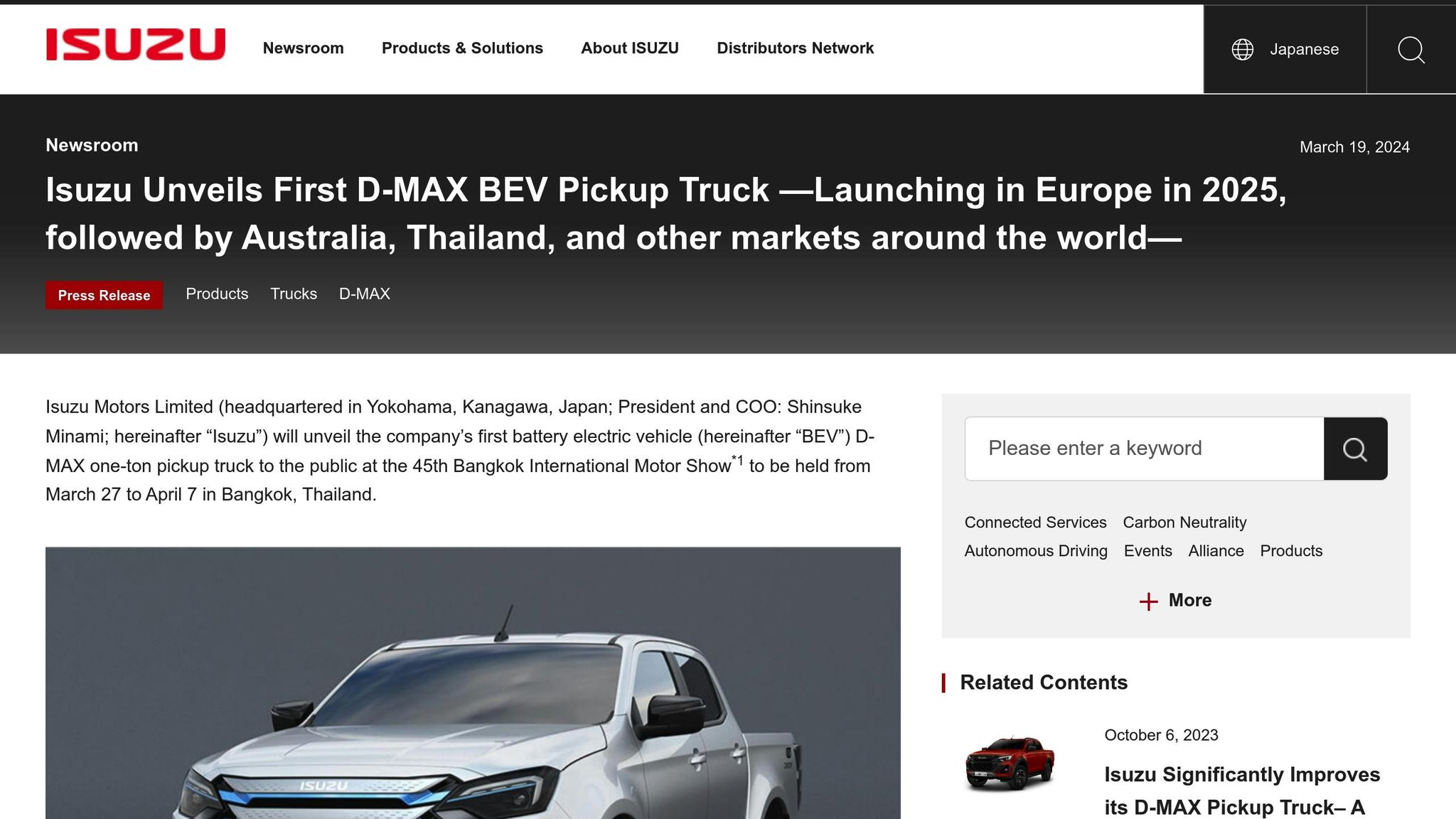
The Isuzu D-Max BEV marks the debut of Isuzu’s fully electric one-ton pickup truck. Production of right-hand drive models is set to kick off by late 2025, with sales anticipated in 2026. Manufactured in Thailand, this truck is designed to retain the rugged capabilities that have made the D-Max a reliable choice for work, while embracing an all-electric future. Yasuhiro Takeuchi, Executive Vice President of Isuzu Motors International Operations, sums it up:
"We have engineered a fully electric pick-up that truly performs in real-world working environments, offering the same towing, payload, and all-terrain capability customers expect from the D-Max."
Here’s a closer look at what the D-Max BEV brings to the table.
Range
The D-Max BEV delivers a WLTP-rated range of 263 km (163 miles). For city driving or when using Eco Mode, the range can stretch to around 361 km (224 miles), making it a practical choice for urban fleets and shorter routes. However, for extended rural trips without access to fast chargers, the range might feel limiting.
Power Output and Torque
Equipped with dual motors and full-time four-wheel drive, the D-Max BEV produces a total of 140 kW (188 hp) and 325 Nm (240 lb-ft) of torque. The front motor contributes 43 kW and 108 Nm, while the rear motor delivers 97 kW and 217 Nm. Acceleration from 0 to 62 mph takes 10.1 seconds, with a top speed exceeding 81 mph. For off-road enthusiasts, the truck includes a Rough Terrain Mode, 8.3 inches of ground clearance, and a wading depth of 23.6 inches.
Payload and Towing Capacity
The D-Max BEV matches its diesel counterpart with a payload capacity of 1,010 kg (2,227 lbs) and a braked towing capacity of 3,500 kg (7,716 lbs). To improve load handling and ride comfort, Isuzu has replaced the traditional leaf springs with a De-Dion rear suspension system.
Battery Size and Charging Compatibility
This electric pickup is powered by a 66.9 kWh lithium-ion battery pack. It supports 50 kW DC fast charging, enabling a 20% to 80% charge in about 60 minutes, and 11 kW AC charging, which takes roughly 10 hours for a full charge.
Estimated Pricing
In the UK, the D-Max BEV is expected to be priced between $75,000 and $76,300 for the Extended Cab and Double Cab versions. This is approximately $30,000 higher than the base diesel model, which starts at around $46,000.
sbb-itb-99e19e3
4. Kia Tasman EV

Kia is stepping into the electric pickup game with the Tasman EV, designed specifically for emerging markets in Africa. This fully electric pickup is expected to hit the roads by 2028, offering a solution tailored for both urban settings and Africa’s rugged terrains. Built on a specialized EV platform, the Tasman EV underwent an impressive 18,000 quality tests over four years, ensuring it can handle anything from city streets to off-road adventures.
Power Output and Torque
While Kia hasn’t released the official power specs yet, the Tasman EV is packed with advanced off-road features. Highlights include the X-Trek mode for low-speed crawling, a Ground View Monitor camera system for better visibility, and a sturdy body-on-frame chassis. These features promise to deliver performance that surpasses its internal combustion engine (ICE) counterparts.
Payload and Towing Capacity
The Tasman EV is built to handle heavy-duty tasks, boasting a towing capacity of 3,500 kg (7,700 lb) and a maximum payload of 1,145 kg (2,524 lb). The cargo bed offers 1,173 liters of space and comes with integrated side storage that cleverly doubles as a folding table – perfect for on-the-go work needs. The X-Pro trim takes things further with a ground clearance of about 9.9 inches and a wading depth of 31.5 inches, making it a reliable choice for off-road enthusiasts.
Battery Size and Charging Compatibility
Details about the Tasman EV’s battery and charging capabilities remain under wraps for now. However, Kia has hinted at maximizing interior and cargo space by strategically positioning the battery within its dedicated EV platform. This design focus aims to enhance both practicality and comfort.
Estimated Pricing
While exact pricing in U.S. dollars hasn’t been revealed, the Tasman EV is expected to be competitively priced, with similar models in the U.S. starting at under $50,000. Pricing specifics for the African market will be shared closer to the vehicle’s 2028 launch.
With its smart cargo solutions and rugged off-road capabilities, the Tasman EV highlights Kia’s commitment to addressing Africa’s unique transportation needs with electric vehicles designed for the region’s challenges.
5. Chevrolet Silverado EV
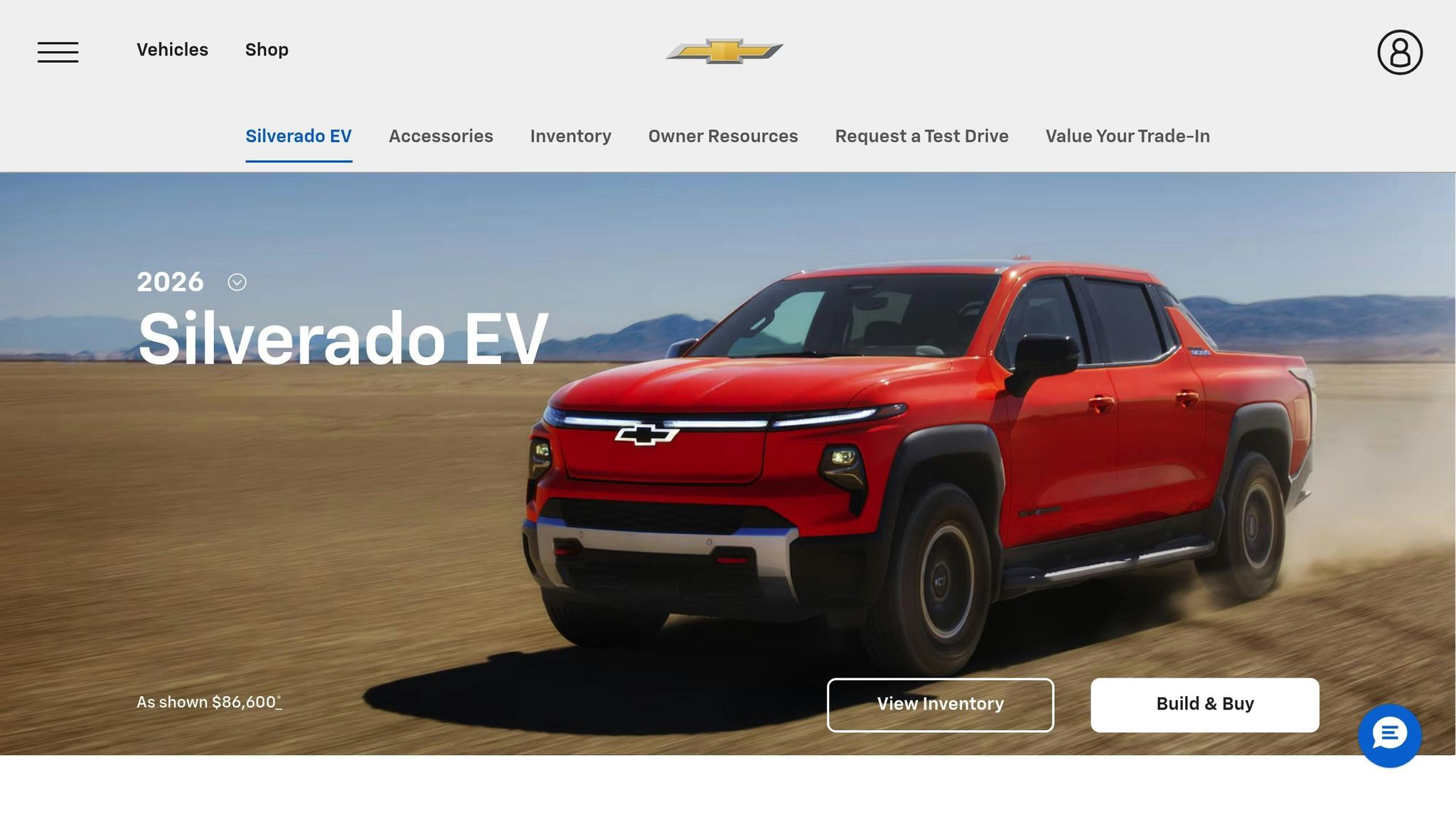
The Chevrolet Silverado EV brings the power and durability of American trucks to Africa’s electric vehicle market, blending impressive range with serious workhorse capabilities. Built on GM’s Ultium battery platform, this full-size electric pickup features a unibody design that ensures a smoother ride compared to traditional body-on-frame trucks, all while standing up to the rugged challenges of African roads.
Range (Pure Electric and Total)
The Silverado EV Work Truck equipped with the Max Range battery boasts an EPA-estimated range of 492 miles. In real-world highway tests at 75 mph, it achieved 400 miles. As Scott Bell, Vice President of Chevrolet, put it:
"Truck customers tell us range is one of the main barriers to considering an EV. The 2024 Silverado EV already was the range leader, and for this new model year we’ve set the bar even higher".
Power Output and Torque
Power levels vary depending on the trim. The base Work Truck delivers 510 horsepower and 580 lb-ft of torque, while the high-end RST trim cranks out an impressive 760 horsepower and 785 lb-ft of torque. All models come with Dual Motor 4WD, offering instant torque to tackle Africa’s diverse terrains. For off-road enthusiasts, the Trail Boss trim comes with a 2-inch factory lift, 18-inch wheels fitted with 35-inch all-terrain tires, and a unique "Sidewinder" mode that allows diagonal movement at speeds up to 20 mph, making it ideal for tight spots.
Payload and Towing Capacity
When it comes to heavy-duty tasks, the Silverado EV doesn’t disappoint. It can tow up to 12,500 pounds and haul up to 2,350 pounds. Its Multi-Flex Midgate extends the 5′11″ cargo bed to over 10 feet 10 inches, perfect for carrying long items. The front trunk adds an extra 10.7 cubic feet of secure storage. Additionally, the truck doubles as a mobile power station, offering up to 10.2 kW of offboard power through 11 outlets – an invaluable feature for remote job sites.
Battery Size and Charging Compatibility
The Silverado EV comes with two battery options: a 170 kWh Extended Range and a 205 kWh Max Range. With a 350 kW fast charger, you can add about 100 miles of range in just 10 minutes. Plus, the truck supports charging at over 20,000 Tesla Superchargers using a GM-approved NACS adapter. This combination of charging speed, range, and versatility makes it well-suited for Africa’s demanding conditions.
Estimated Pricing (in USD)
The Silverado EV offers a range of pricing options to suit different needs. The Work Truck Standard Range starts at $57,095, making it one of the more affordable full-size electric pickups. The LT trim begins at $69,100, while the Trail Boss starts at $70,000. For those seeking top-tier performance, the RST Max Range model is priced at $97,895. Car and Driver awarded the Silverado EV an 8.5/10 rating, applauding its "exceptional range" and "extremely fast charging capabilities", though noting that the lower trims may feel "spartan" for the price.
Pros and Cons
Electric pickups bring a mix of advantages and challenges to Africa’s market, with each model catering to different needs. The Changan Hunter REEV stands out for its affordability at around $44,000 and an impressive 620+ mile range, thanks to its range-extender system. This makes it a strong contender for regions with limited charging infrastructure. However, its towing capacity of 4,850 lbs might fall short for heavy-duty tasks.
On the other hand, the Toyota Hilux EV and Isuzu D-Max BEV come with smaller batteries (59.2 kWh and 66.9 kWh, respectively) and shorter pure-electric ranges, which could limit their appeal for long-distance travel. These differences highlight how each model aligns with specific use cases and preferences.
The Kia Tasman EV offers a middle ground, combining modern features with practical performance. Meanwhile, the Chevrolet Silverado EV delivers exceptional power with 760 hp, a towing capacity of 12,500 lbs, and a range of 492 miles. However, its $57,095 price tag and massive 170–205 kWh battery demand advanced charging infrastructure, which remains scarce outside major cities. According to Car and Driver, the Silverado earned an 8.5/10 rating for its "exceptional range" and "extremely fast charging capabilities", though they noted that the base trims feel "spartan" given the price.
Here’s a quick comparison of key specs for these models:
| Model | Range | Power | Payload | Towing | Battery Size | Starting Price |
|---|---|---|---|---|---|---|
| Changan Hunter REEV | 620+ mi | 268 hp | 2,205 lb | 4,850 lb | 31.2 kWh | ~$44,000 |
| Toyota Hilux EV | ~186 mi | ~200 hp | ~2,200 lb | ~7,700 lb | 59.2 kWh | TBA |
| Isuzu D-Max BEV | ~248 mi | ~180 hp | ~2,200 lb | ~7,700 lb | 66.9 kWh | TBA |
| Kia Tasman EV | ~310 mi | ~300 hp | ~2,200 lb | ~7,700 lb | ~80 kWh | TBA |
| Chevrolet Silverado EV | 492 mi | 760 hp | 2,350 lb | 12,500 lb | 170–205 kWh | $57,095 |
For businesses operating in remote areas, models with smaller batteries that can integrate with solar charging systems may offer a practical and sustainable solution.
Conclusion
The best vehicle choice ultimately hinges on local charging infrastructure and specific usage requirements. In areas where charging stations are few and far between, the Changan Hunter REEV shines with its impressive total range of over 1,000 km (about 620 miles). This is made possible by its range-extended system, which includes a backup 2.0-liter petrol generator. Add to that its 220 mm ground clearance and a 5-year/150,000 km warranty – all for approximately $44,000 – and it becomes a strong contender for regions with limited charging options.
On the other hand, for locations with reliable DC fast-charging networks and a preference for fully electric models, the Chevrolet Silverado EV is a standout. Offering up to 492 miles of range and starting at about $55,395, it provides an excellent option for those who can depend on fast-charging infrastructure. However, its reliance on charging stations might make it less ideal for rural or remote areas.
South Africa, as a major automotive producer with over 500,000 vehicles manufactured annually, offers robust local support and access to parts. This well-established service network ensures that electric and hybrid vehicles can meet the demands of Africa’s challenging environments, making these technologies increasingly practical for the continent’s toughest jobs.
As Africa’s EV market continues to grow, consumers will need to carefully weigh their options. Whether prioritizing range-extended systems for areas with sparse charging infrastructure or going fully electric in regions with reliable charging facilities, factors like ground clearance, range, and warranty coverage remain crucial for making the right choice.
FAQs
What makes range-extended electric vehicles (REEVs) a good fit for Africa’s roads?
Range-extended electric vehicles (REEVs) bring together the cost-saving efficiency of electric motors with the added convenience of a small gasoline generator. This combination allows for quiet, emission-free driving on shorter trips while providing the flexibility to recharge the battery using the generator when necessary. It’s a smart solution, especially in areas where charging stations are scarce. Drivers benefit from both electric-first operation and the ability to refuel at standard gas stations.
Take REEV pickups like the Changan Hunter, for instance. They deliver about 90 miles of pure-electric range and can cover up to 621 miles in total when the generator kicks in. This makes them well-suited for long journeys or challenging off-road adventures. With their strong torque, rugged build, and lower running costs, REEVs offer a practical alternative for both personal and commercial needs in Africa, effectively bridging the gap between traditional diesel trucks and fully electric vehicles.
How does charging infrastructure influence the choice of electric pickups in Africa?
Charging infrastructure heavily influences how buyers in Africa decide on electric pickups. With public fast-charging stations mostly concentrated in major cities, many drivers experience range anxiety when planning long trips or traveling to remote areas. To tackle this, manufacturers are rolling out range-extended models – a clever mix of battery power and a gasoline generator. These vehicles allow for all-electric driving on shorter routes but can switch to extended range when necessary, making them ideal for both urban commutes and off-grid tasks.
Fast-charging capability is another critical consideration. Pickups equipped with high-power DC charging are especially appealing to fleet operators who can set up chargers at depots or job sites. In regions with limited charging infrastructure, trucks with larger batteries or more efficient energy use tend to be the go-to choice. At the end of the day, buyers are searching for pickups that combine range, charging adaptability, and dependability to handle Africa’s challenging landscapes and sparse charging networks.
What should I consider when choosing between a fully electric and a range-extended electric pickup truck?
When choosing between a fully electric pickup and a range-extended electric vehicle (REEV), it’s essential to weigh factors like driving range, charging accessibility, and cost. Fully electric trucks, such as the Ford F-150 Lightning, typically provide ranges between 300 and 500 miles. However, they rely on charging infrastructure, which can be scarce in remote areas. On the other hand, REEVs – like the Changan Hunter REEV – offer a mix of electric driving (about 90 miles per charge) and a gasoline generator that extends the total range to over 600 miles. This makes them a solid choice for longer trips or areas with limited charging stations.
Cost is another crucial factor. Fully electric pickups often have higher upfront costs but benefit from lower operating expenses thanks to cheaper electricity and reduced maintenance. In contrast, REEVs may have slightly lower sticker prices but incur ongoing fuel costs for the gasoline engine. For instance, the Hunter REEV starts at approximately $42,000, while some fully electric models can surpass $50,000, depending on features and trim levels.
Lastly, think about your performance needs. Fully electric pickups tend to deliver greater torque and towing power, making them ideal for heavy-duty jobs. However, if you’re looking for a blend of electric efficiency and the reliability of a gasoline backup for challenging or less-served areas, a REEV strikes a practical balance.