
 Thabo Nkosi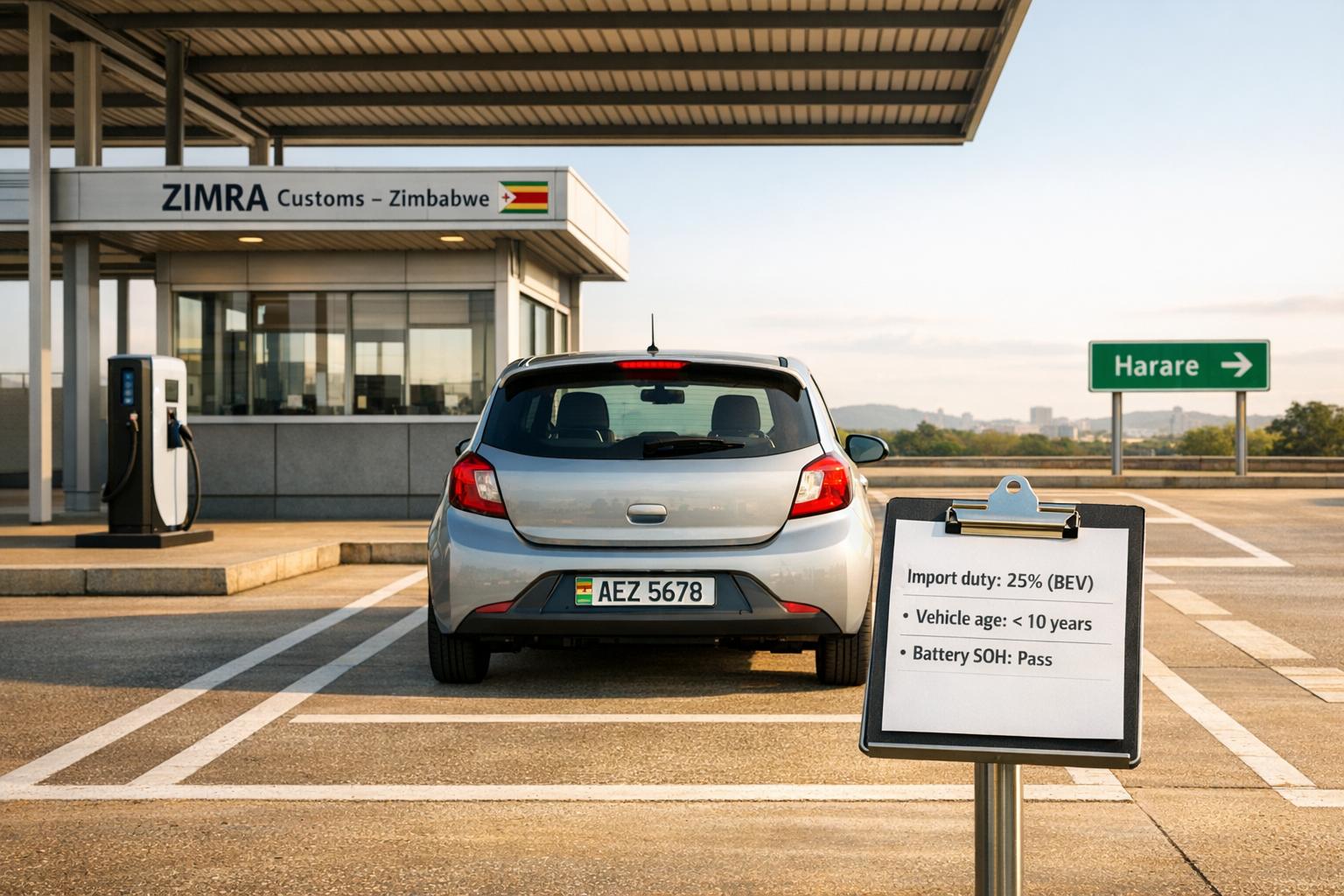
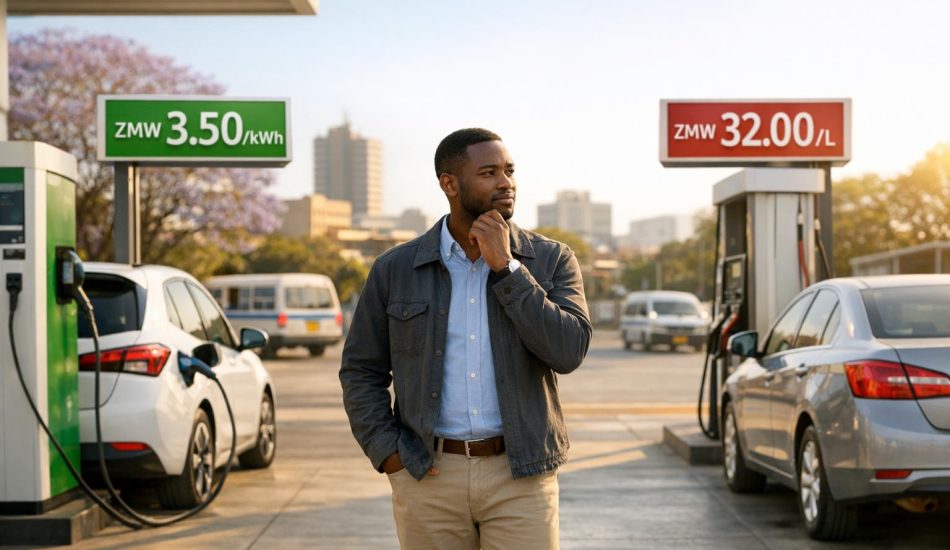
Zimbabwe is making moves to adopt electric vehicles (EVs) to address high fuel costs, currency instability, and pollution. The government has introduced incentives like reducing customs duty on fully electric cars from 40% to 25% starting January 2025. However, challenges like frequent power outages, high EV prices, and limited charging infrastructure persist. Here’s what you need to know:
- Import Costs: EVs face a 25% customs duty, 15% VAT, and additional surtax if over five years old. A used Nissan Leaf, for example, can cost $18,000–$22,000 after taxes and fees.
- Age Limits: Imported vehicles must be less than 10 years old, with a battery health above 80%.
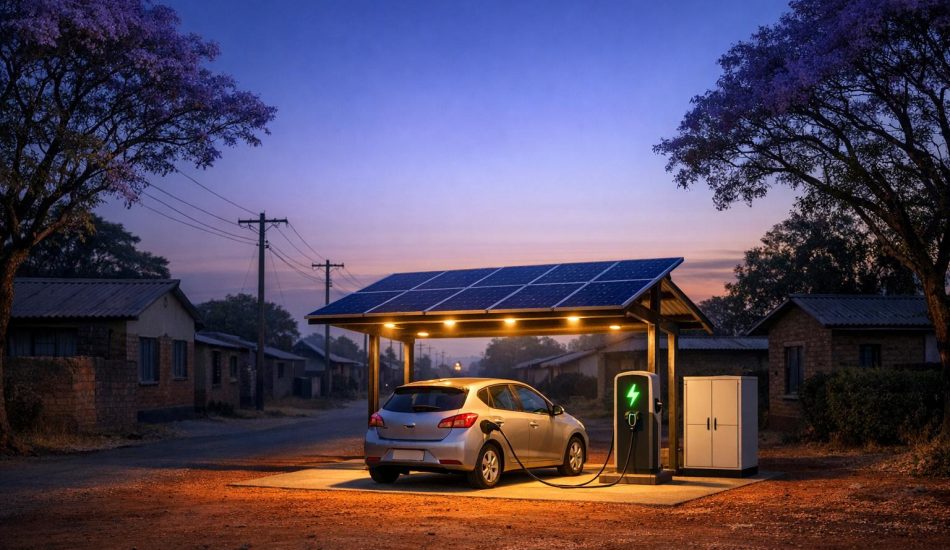
- Charging Issues: Power outages make at-home charging difficult unless paired with costly solar backup systems.
- Sourcing EVs: Popular options include imports from Japan, China, and Europe, with models like Nissan Leaf and BYD Atto 3.
- Infrastructure: Solar-powered charging stations are being incentivized with duty exemptions on equipment.
Platforms like EV24.africa simplify the process by handling import paperwork, customs clearance, and delivery, making EV ownership more accessible despite the hurdles.
Import Regulations for Electric Vehicles in Zimbabwe
Customs Duty and Tax Rates
Starting January 1, 2025, Zimbabwe reduced the customs duty on fully Battery Electric Vehicles (BEVs) from 40% to 25%. Announcing this change, Finance Minister Professor Mthuli Ncube explained:
"Cognisant of the need to promote use of eco-friendly vehicles, which will result in reduced carbon emissions, I propose to reduce Customs Duty on Electric Motor Vehicles, with effect from 1 January 2025."
This reduced rate applies exclusively to fully electric vehicles. Plug-in Hybrid Electric Vehicles (PHEVs) and standard Hybrid Electric Vehicles (HEVs) remain subject to the original 40% duty rate. Alongside customs duty, all imported vehicles incur a 15% Value Added Tax (VAT), which is calculated on the combined value of the vehicle and customs duty. Additionally, passenger vehicles older than five years are subject to a 35% surtax. These duties are based on the Cost, Insurance, and Freight (CIF) value, along with any incidental charges such as port handling and storage.
| Tax Component | Rate | Applicability |
|---|---|---|
| Customs Duty (BEV) | 25% | Fully electric vehicles only |
| Customs Duty (ICE/Hybrid) | 40% | Conventional and hybrid vehicles |
| VAT | 15% | All imported vehicles |
| Surtax | 35% | Passenger vehicles older than 5 years |
Understanding these tax rates is essential before moving on to the specific vehicle age limits and eligibility requirements.
Vehicle Age Limits and Eligibility Requirements
Zimbabwe enforces a strict 10-year age limit for all imported vehicles, calculated from the date of manufacture. For instance, a vehicle manufactured in 2015 cannot be imported in 2025, regardless of its condition. Always verify the production date before making a purchase, as this is the sole determinant of vehicle age.
The reduced 25% customs duty is available only for fully Battery Electric Vehicles. While left-hand drive vehicles are not banned, Zimbabwe’s left-side driving system makes Right-Hand Drive (RHD) vehicles a better choice for smoother insurance processing and higher resale value. Additionally, ensure the battery’s State of Health (SOH) is above 80%, as replacing a battery can cost over $6,000.
These restrictions are crucial for avoiding costly mistakes. Once you confirm the vehicle meets these criteria, you’ll need to prepare the required documentation for ZIMRA preclearance.
Required Documents and ZIMRA Preclearance

To import a vehicle, you’ll need to submit the following documents:
- Form 47
- Original invoice or sale agreement
- Vehicle registration book (for used cars)
- Shipping documents, including the Bill of Lading, freight statement, insurance statement, and packing list
- SARPCO Police Clearance Certificate (for imports from Southern Africa)
ZIMRA may reject declared values that don’t align with open market prices and could reassess the vehicle’s value based on comparable sales. To avoid errors, hire a licensed clearing agent registered with the Shipping and Forwarding Agents Association of Zimbabwe (SFAAZ). Mistakes during the clearance process can lead to audits and costly storage fees.
Post-clearance, you’ll need the following to register the vehicle:
- Customs Clearance Certificate
- Release Order
- Form 49 receipt
- Proof of residence (e.g., utility bill)
- National ID or passport
Accurate documentation is critical to avoiding delays, audits, and unnecessary expenses, ensuring a smoother import process overall.
sbb-itb-99e19e3
Chinese EVs gain ground in Zimbabwe
Logistics and Costs of Importing EVs
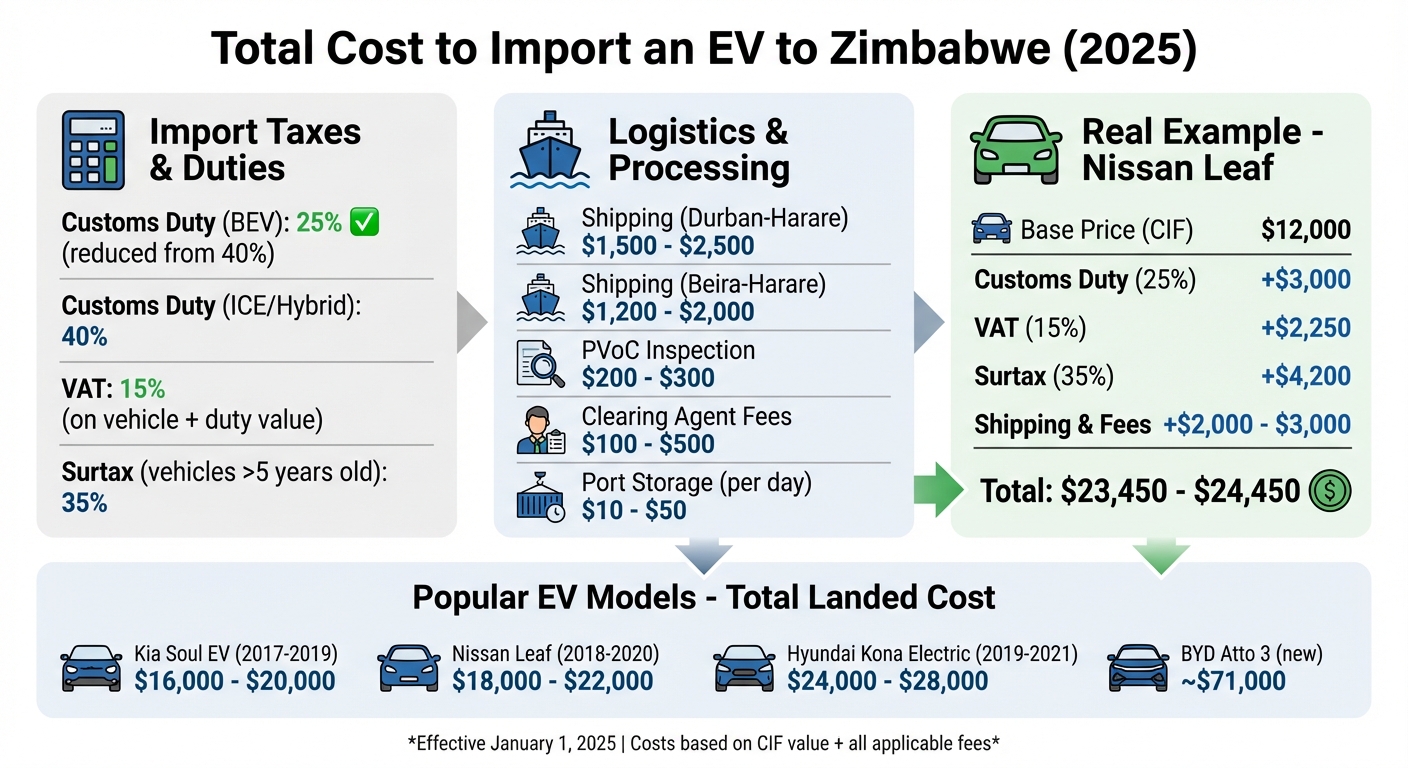
Complete Cost Breakdown for Importing Electric Vehicles to Zimbabwe 2025
Where to Source EVs: Main Import Markets
Zimbabwe primarily sources right-hand drive EVs from Japan, known for its availability of models like the Nissan Leaf and Kia Soul EV, along with a steady supply of spare parts. China has become another major player, offering newer brands like BYD, XPeng, Leapmotor, and Wuling at more competitive price points. For those seeking premium brands, Europe and the UAE provide options such as Tesla, Volkswagen, Mercedes-Benz, and Peugeot – though these typically come at higher prices.
When choosing a market, it’s critical to prioritize vehicles with right-hand drive configurations to meet local regulations. Additionally, ensure that the EVs are compatible with Type 2 or CCS charging connectors. These factors directly influence both the shipping process and overall import costs.
Shipping and Delivery Process
Most EVs destined for Zimbabwe are shipped via Roll-on/Roll-off (RoRo) vessels to the Port of Durban in South Africa, followed by overland transport on car carriers. Other entry points include Walvis Bay in Namibia and Beira in Mozambique, with Beira offering a shorter inland route to Harare. Transit times from Asia average between 24 and 34 days.
Before shipping, vehicles must pass a Pre-shipment Verification of Conformity (PVoC) inspection, conducted by East Africa Automobile Services (EAA) in partnership with JEVIC. This inspection costs between $200 and $300 and is mandatory for customs clearance. Inland transport costs vary: the Durban-to-Harare route ranges from $1,500 to $2,500, while the shorter Beira-to-Harare route costs $1,200 to $2,000. Once these logistics are arranged, importers can calculate the full cost of bringing an EV into Zimbabwe.
Total Import Cost Breakdown
The total cost of importing an EV starts with the CIF (Cost, Insurance, and Freight) value, to which additional charges are added. For example, a used Nissan Leaf priced at $12,000 CIF would incur:
- Customs Duty: 25%, approximately $3,000.
- VAT: 15% on the combined vehicle and duty value, roughly $2,250.
- Surtax (if over five years old): 35%, adding about $4,200.
Other expenses include shipping fees ($1,500–$2,500), inspection costs ($200–$300), clearing agent fees ($100–$500), and possible port storage charges ($10–$50 per day for delays).
Here’s a typical range for total landed costs:
- Kia Soul EV (2017–2019): $16,000–$20,000
- Nissan Leaf (2018–2020): $18,000–$22,000
- Hyundai Kona Electric (2019–2021): $24,000–$28,000
Be aware that ZIMRA may reassess the vehicle’s declared value if it significantly differs from market rates, potentially increasing your final tax liability.
Zimbabwe’s Electric Vehicle Market: Current State
Barriers to EV Adoption
Zimbabwe’s electric vehicle (EV) market has its fair share of hurdles. One of the biggest issues is the unreliable national grid managed by ZESA, which frequently experiences load-shedding. This makes charging EVs at home a challenge unless owners invest in expensive solar backup systems. For many, the added cost of going off-grid significantly raises the overall expense of owning an EV.
Price is another major obstacle. The BYD Atto 3, for example, costs about $71,000 in Zimbabwe – far higher than its $42,000 price tag in South Africa or $31,000 in Hong Kong. This steep markup is largely due to import duties, limited competition, and the relatively small size of the local market. Even used EVs come with hefty landed costs, making them less accessible to the average buyer.
Maintenance is also a concern. Zimbabwe lacks a sufficient number of certified EV technicians and the advanced diagnostic tools needed for repairs. Owners of European EV brands often have to fly in specialists for complex fixes. On the other hand, Japanese and South Korean EVs have better regional support networks for parts and repairs. Adding to these challenges, Zimbabwe’s high ambient temperatures can speed up battery degradation, which raises questions about the long-term costs of owning an EV.
Policy challenges further complicate the market. Although fully electric vehicles (BEVs) now benefit from a reduced 25% customs duty starting January 1, 2025, plug-in hybrids (PHEVs) and standard hybrids continue to face a higher 40% tax rate. Additionally, EVs are still subject to a carbon tax, even though they produce zero emissions.
Despite these barriers, there are signs that the market is beginning to shift in a positive direction.
Growth Opportunities in the EV Market
Zimbabwe has several factors that could help its EV market grow. For one, the country is rich in lithium, a key material for EV batteries. This positions Zimbabwe as a potential leader in battery production and EV component manufacturing within the Southern African Development Community (SADC).
Consumer interest is also on the rise, particularly among urban buyers and the diaspora. Compact EVs like the Nissan Leaf are gaining traction as they offer a way to avoid the rising costs of fuel.
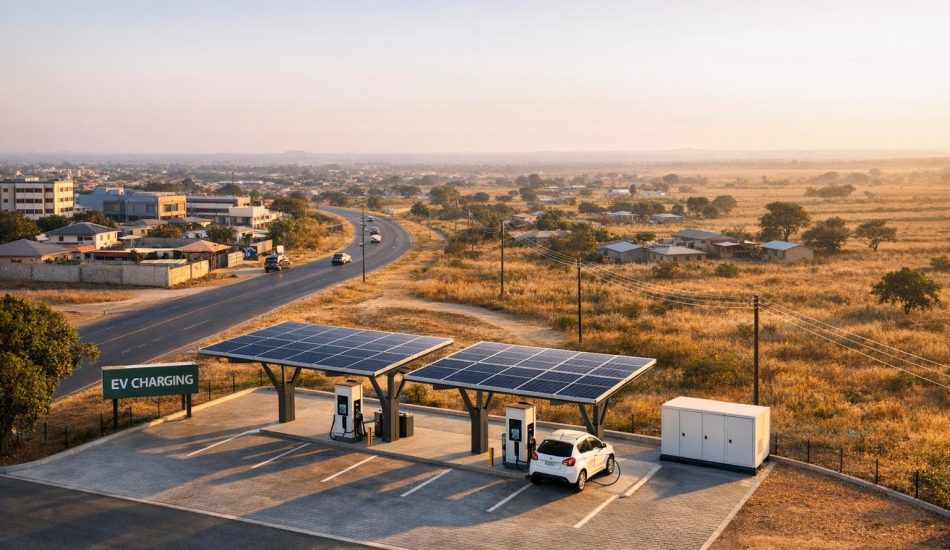
Another promising avenue is the integration of solar energy with EV charging. Zimbabwe is making strides in solar energy, with 25 out of 29 energy projects currently under development by the Zimbabwe Energy Regulatory Authority (ZERA) focusing on solar photovoltaic installations. These projects aim to add a combined capacity of 403 MW. Businesses are also exploring solar-powered DC fast-charging stations with battery storage to bypass the challenges of grid instability.
Government Incentives for Charging Infrastructure
To address the slow growth of charging infrastructure and the challenges posed by grid instability, the government has introduced new incentives. Under Statutory Instrument 35 of 2025, operators approved by ZERA can now import equipment for solar-powered EV charging stations without paying import duties. This duty rebate covers essential components such as solar panels, inverters, EV chargers, battery storage units, monitoring systems, and mounting structures.
Finance Minister Mthuli Ncube highlighted this initiative in the 2025 budget, stating:
In order to incentivise the use of Electric Vehicles, I, further, propose to extend Rebate of Duty on equipment used for setting up Electrical Vehicle Solar Powered Charging Stations, imported by Approved Operators.
The program comes with strict conditions: the imported equipment cannot be sold or transferred without prior written consent from ZIMRA, and any waived duty would need to be repaid in such cases.
Economic analyst Carlos Tadya emphasized the importance of this approach, noting:
Addressing this infrastructure gap through strategic investment in public and private charging networks, including solar-powered options in remote areas, is crucial for building consumer confidence.
With high-capacity charging stations costing around $17,000 before rebates, the duty exemption significantly lowers the financial barrier for private companies looking to invest in charging infrastructure. This could be a game-changer for the EV market in Zimbabwe.
How to Buy EVs in Zimbabwe with EV24.africa
Navigating the challenges of the Zimbabwean EV market becomes a lot easier with EV24.africa. They simplify the entire process, from selection to delivery.
Using EV24.africa to Purchase EVs
EV24.africa makes buying an electric vehicle straightforward. Start by browsing their marketplace, which features models like Tesla, BYD, Nissan Leaf, and more. Each listing includes detailed specifications, such as a battery State of Health (SOH) above 80%, ensuring you avoid expensive replacements. Once you’ve chosen your EV, you can select from two delivery options: port-to-port or door-to-door service to cities like Harare and Bulawayo.
Shipping is managed through the Port of Durban in South Africa, followed by transportation into Zimbabwe. You’ll have access to real-time tracking throughout, and delivery usually takes 4 to 8 weeks. Payment is flexible, with options like bank transfers, mobile money, and even cryptocurrency available.
Why Importers Choose EV24.africa
EV24.africa handles the tricky parts of importing, including ZIMRA preclearance, customs paperwork, and local registration. They ensure compliance with Zimbabwe’s 10-year vehicle age limit [6, 13]. For convenience, you can opt for Delivered Duty Paid (DDP) service, which takes care of everything, or Free on Board (FOB) if you want to manage part of the process yourself.
With a team of over 200 professionals across Africa, EV24.africa connects buyers with suppliers from China, Europe, North America, and Japan. Their network offers access to both new and certified pre-owned EVs from brands like Volkswagen, XPeng, Changan, Leapmotor, and Dongfeng. Additionally, their local presence in Zimbabwe means buyers receive support tailored to the region’s specific needs.
Financing and Customer Support
To make EVs more affordable, EV24.africa works with financial institutions to provide leasing and loan options for individuals and businesses. For example, a used 2020 Nissan Leaf typically costs between US$18,000 and US$27,000 after factoring in 25% duty, 14% VAT, and freight costs of US$2,500–US$4,000. These financing solutions allow buyers to spread out the cost over time.
EV24.africa also offers expert guidance beyond logistics. When browsing listings, check that the EV you’re considering uses Type 2 or CCS connectors, which are standard for Zimbabwean charging infrastructure. Each listing provides detailed specs, helping you confirm compatibility before making your purchase.
Conclusion: Electric Vehicles in Zimbabwe’s Future
Zimbabwe is taking steps toward a greener future with the reduction of customs duty on fully electric vehicles from 40% to 25%, effective January 1, 2025. While this policy makes EVs more affordable, the bigger hurdle lies in creating a dependable infrastructure. With frequent power outages and an unstable grid, many EV owners will likely need solar backup systems to keep their vehicles charged. Although the government offers rebates on solar-powered charging equipment, these additional expenses can still be significant for importers.
To avoid costly errors, importers must ensure the vehicles meet specific criteria: they should be less than 10 years old, have a battery State of Health (SOH) above 80%, and be compatible with Type 2 or CCS connectors. These measures ensure reliability and compatibility with local charging setups.
Platforms like EV24.africa make the process of owning an electric vehicle in Zimbabwe much simpler. They handle everything from sourcing vehicles internationally to managing ZIMRA preclearance and delivering the cars to key cities like Harare and Bulawayo. Their Delivered Duty Paid (DDP) service eliminates much of the complexity, and their financing options make EV ownership more accessible. With these streamlined services and growing support, Zimbabwe is steadily paving the way for a sustainable and electric future in its automotive market.
FAQs
How much will I pay total to import an EV into Zimbabwe?
The cost of importing an electric vehicle (EV) into Zimbabwe depends on several factors, including the vehicle’s value, shipping fees, and applicable duties. With a reduced import duty of 25% on fully electric vehicles, you can expect to pay about 25% of the vehicle’s CIF (Cost, Insurance, and Freight) value as import duty. Additional expenses like shipping costs and taxes will also influence the final amount. These factors combined will determine the total cost.
Can I charge an EV reliably with Zimbabwe’s power outages?
Charging an EV in Zimbabwe comes with its fair share of challenges, primarily due to frequent power outages that can stretch up to 20 hours a day. This makes relying solely on the grid for charging a tricky proposition. However, there’s some good news – government initiatives are stepping in to ease the situation. For instance, rebates for solar-powered charging stations and reduced import duties on EVs are paving the way for alternative solutions.
One practical approach to tackle grid instability is using solar panels or home-based solar systems. These setups can provide a more reliable and sustainable way to keep your EV charged, even when the power infrastructure struggles to keep up. With these solutions, EV owners in Zimbabwe can navigate the current challenges more effectively.
How do I check an imported EV’s battery health before buying?
To assess the battery health of an imported EV in Zimbabwe, start by asking the seller or importer for a comprehensive battery report. Then, have a certified EV technician conduct tests such as capacity measurements and internal resistance evaluations. It’s also important to review the vehicle’s maintenance records, paying close attention to any battery repairs or replacements. These precautions can help confirm that the battery’s condition aligns with the car’s age and usage, helping you avoid unexpected expenses.