
 Thabo Nkosi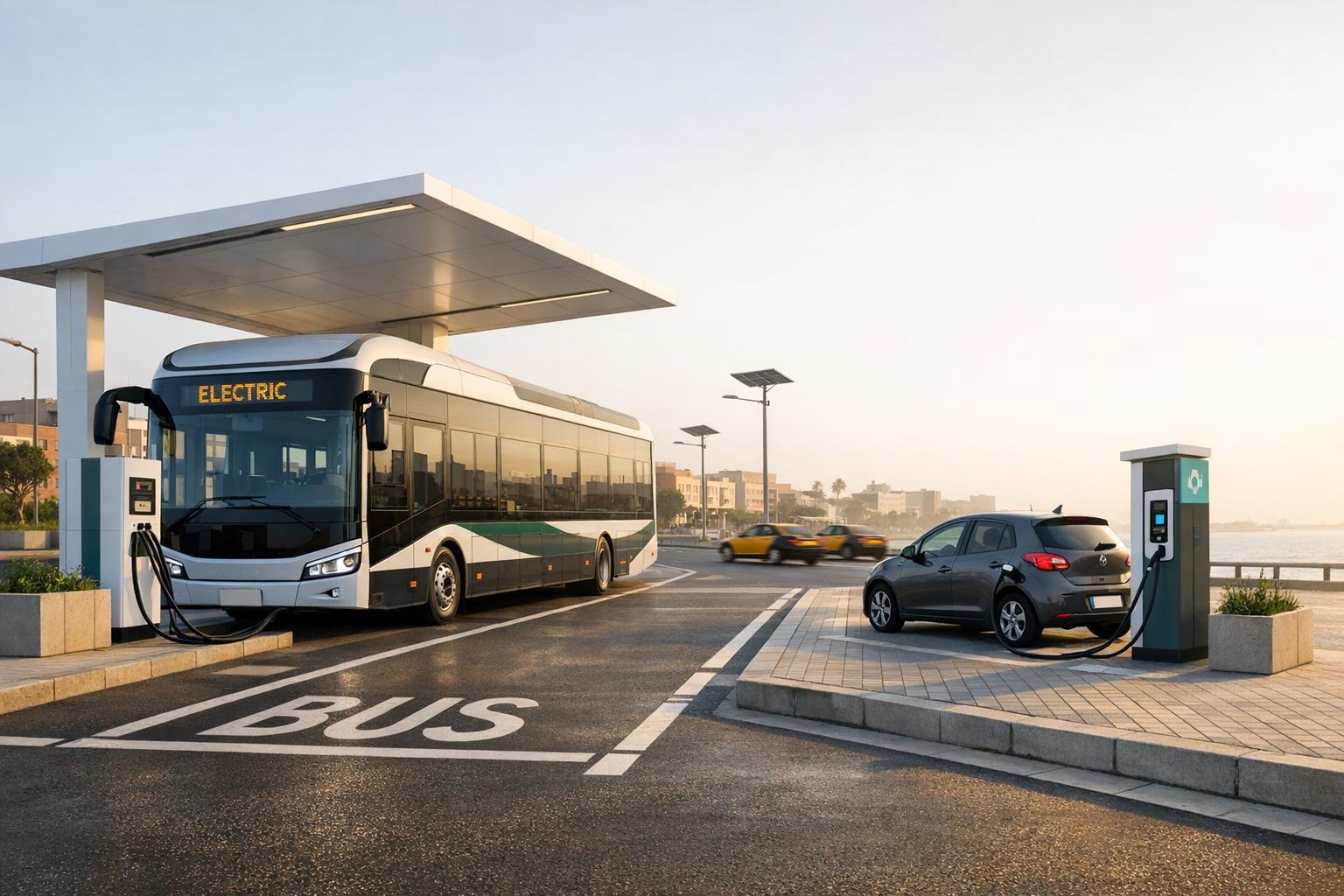
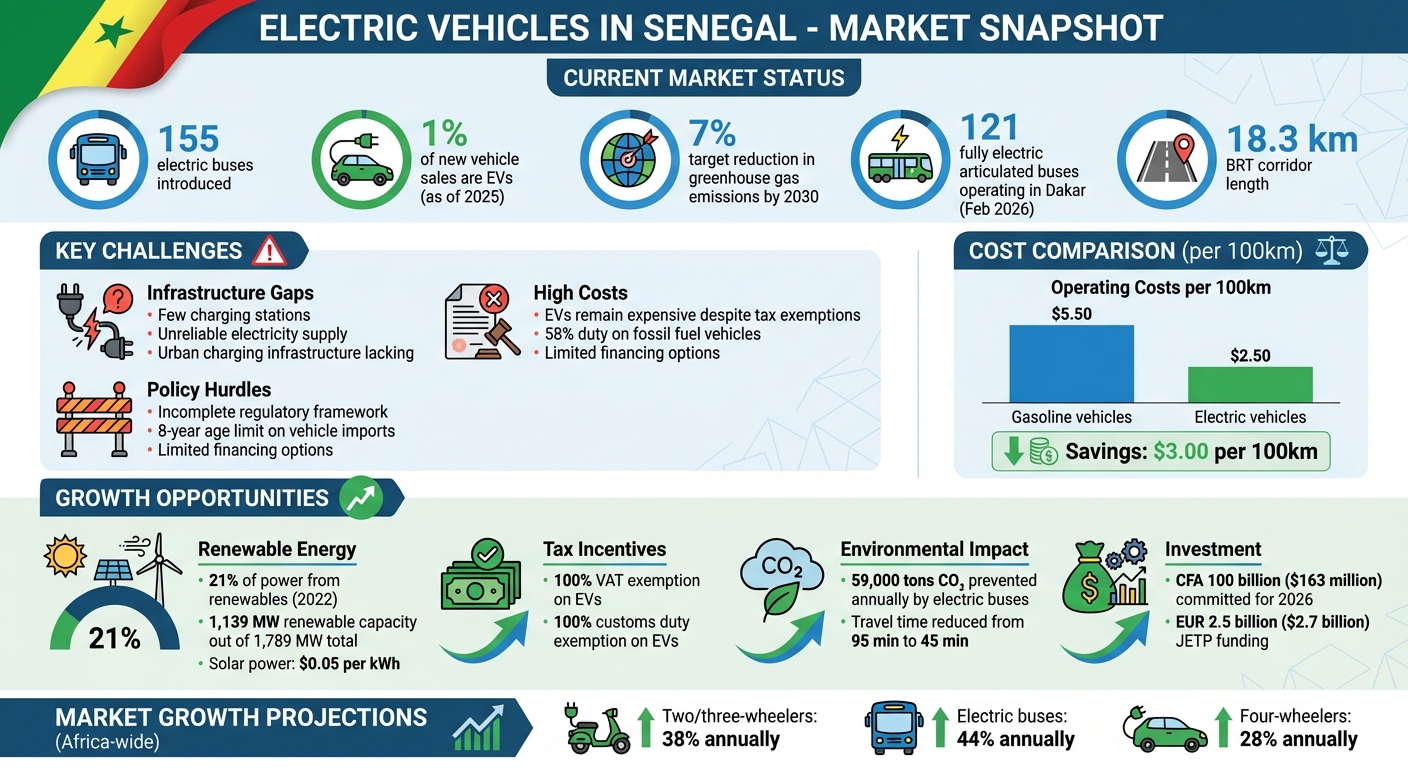
Senegal is taking early steps toward electric vehicle (EV) adoption, focusing heavily on public transit rather than private cars. The country has introduced 155 electric buses and plans an all-electric Bus Rapid Transit (BRT) system in Dakar, aiming to cut greenhouse gas emissions by 7% by 2030. However, private EV adoption remains low due to high costs, limited charging infrastructure, and an aging fleet of fossil-fueled vehicles.
Key challenges include:
- Infrastructure gaps: Few charging stations, unreliable electricity supply.
- High costs: EVs remain expensive despite tax exemptions.
- Policy hurdles: Regulatory frameworks are still incomplete.
Opportunities are emerging through:
- Renewable energy: Solar and wind power can support EV charging.
- Public transit success: Electric buses are reducing emissions and travel times.
- Tax incentives: Full exemptions on VAT and customs duties for EVs.
Platforms like EV24.africa are helping by simplifying EV imports, offering financing, and supporting adoption. Senegal’s EV market holds potential, but significant investment and policy reforms are needed to overcome barriers and drive growth.
Senegal Electric Vehicle Market Overview: Key Statistics and Challenges 2025-2030
Market Overview: Electric Vehicles in Senegal Today
Current Vehicle Fleet and Electrification Status
Senegal’s vehicle market is still largely reliant on traditional fossil-fueled cars. As of 2025, electric vehicles (EVs) make up only about 1% of new vehicle sales. High upfront costs and a lack of sufficient charging infrastructure have slowed private adoption. However, public transit electrification has become a major focus, with pilot projects aiming to test and refine solutions for the local market.
Key EV Programs and Pilot Projects
Several initiatives are paving the way for electric mobility in Senegal. One notable example is the pilot project launched in January 2022 by Mbay Mobility, co-founded by Amy Klein. This effort introduced 10 electric taxis in Dakar and tested two business models: financing EVs for traditional taxi operators and a rent-back model supported by app-based ride-hailing software. The switch from gasoline to electricity saves drivers about $14 per shift, and lifetime net revenues per vehicle are estimated between $80,000 and $200,000. Beyond individual savings, the project projected broader public benefits for Dakar, including $50 million annually – $10 million from reduced carbon emissions and $25 million from lower healthcare costs.
On the policy side, Manufacturing Africa collaborated with Senegal’s Ministry of Transport and Infrastructure in 2025 to establish a regulatory framework for EVs. Minister Malick Ndiaye led the initiative, which included a high-level workshop attended by UK Ambassador Juliette John. This effort resulted in the formation of an intra-governmental task force. Minister Ndiaye emphasized:
"With the help of Manufacturing Africa, we are looking for ways and means to equip our country not only with a regulatory framework but also with the necessary devices to influence the Senegalese to use more electric vehicles."
The government has also committed over CFA 100 billion (approximately $163 million) toward roads and urban mobility projects for 2026, partly tied to Dakar’s hosting of the 2026 Youth Olympic Games. Additionally, plans to connect 3,637 localities to the national grid by 2026 aim to provide electricity access to 1.24 million people, which could significantly expand EV charging infrastructure.
How EV24.africa Supports the Market
EV24.africa plays a crucial role in making EVs more accessible in Senegal. The platform offers a wide selection of major brands, including Tesla, BYD, Volkswagen, XPeng, Leapmotor, Changan, Wuling, Mercedes-Benz, Citroën, and Peugeot. It provides transparent pricing and detailed vehicle specifications to help buyers make informed decisions.
Beyond vehicle sales, EV24.africa handles logistics, covering everything from international sourcing to customs clearance and registration. Buyers can choose between port-to-port delivery at the Port of Dakar or door-to-door service in cities like Dakar, Saint-Louis, and Thiès. The platform also supports customers in taking advantage of Senegal’s 100% VAT and customs duty exemption for fully electric vehicles.
With a team of over 200 professionals across five African countries and partnerships spanning more than 40 nations, EV24.africa also offers financing options to tackle affordability challenges. This comprehensive approach addresses both cost and supply-chain barriers, helping to drive private EV adoption in Senegal.
sbb-itb-99e19e3
Barriers to EV Adoption in Senegal
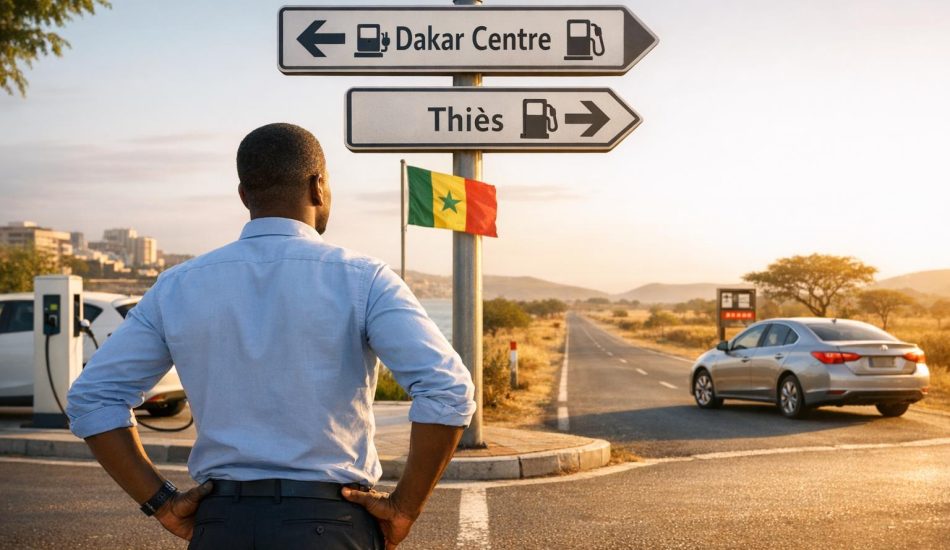
Charging Infrastructure and Power Supply Issues
Senegal’s power grid struggles to support widespread electric vehicle (EV) use, largely due to its dependence on imported fossil fuels for electricity generation. This creates a significant challenge: while EVs may reduce tailpipe emissions, they don’t necessarily cut overall emissions if the electricity powering them comes from diesel generators.
Urban areas face even greater hurdles. According to UE Energy Solution:
"The lack of charging infrastructure in most cities makes it inconvenient to charge two-wheeled and three-wheeled electric vehicles and difficult to replenish their power instantly."
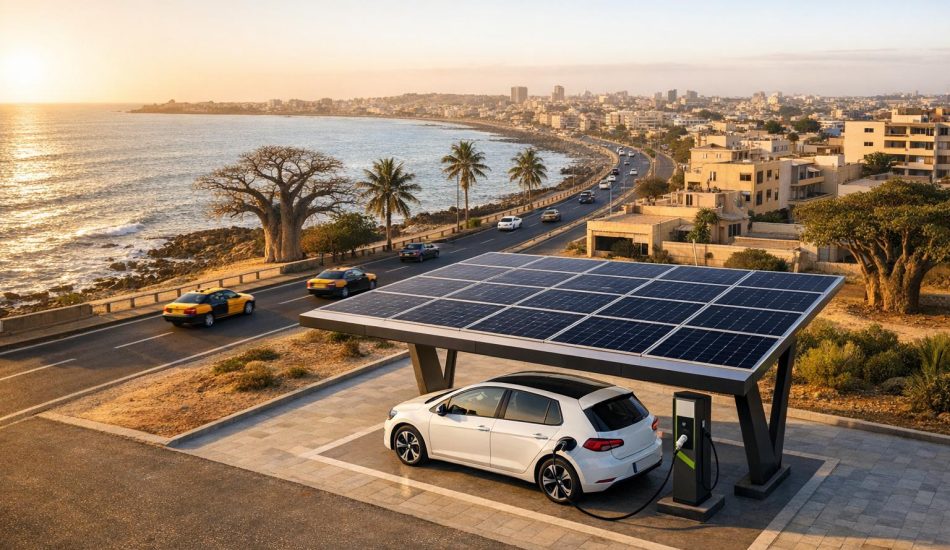
In response to these challenges, a Senegalese company led by Mr. Tijan partnered with UE Energy in November 2025 to introduce containerized solar EV charging stations. Each 20-foot unit is equipped with 18 bifacial solar panels (465W each), a 10kW off-grid inverter, and 30kWh of battery storage. These units produce 50kWh of electricity daily and cut fuel costs significantly – bringing the cost down from US$5.50 to US$2.50 per 100 kilometers. While this off-grid solution offers a glimpse of what’s possible, it underscores the need for substantial investment before conventional charging networks can be fully established. The lack of widespread infrastructure and reliable energy sources adds to the financial challenges of adopting EVs in Senegal.
Cost Barriers: Purchase Price and Ownership Expenses
The high upfront cost of electric vehicles remains a major challenge for most Senegalese buyers. Although the 2025 Finance Act removed VAT, customs duties, and internal taxes on fully electric vehicles, EVs still have a higher base manufacturing price compared to traditional cars. Meanwhile, gasoline-powered vehicles face a steep 58% duty on their Cost, Insurance, and Freight (CIF) value, which reduces – but doesn’t eliminate – the price difference.
Financing options are also limited. Banks have been slow to introduce EV-specific loans, and additional costs – such as shipping fees, the mandatory Cargo Tracking Note (BSC/CTN), and specialized inspections for lithium-ion batteries requiring a Material Safety Data Sheet – further inflate prices.
While EVs are cheaper to operate – costing about US$2.50 per 100 kilometers, compared to US$5.50 for gasoline vehicles, saving approximately US$3.00 per 100 kilometers – these savings are only accessible to those who can afford the steep initial investment.
Policy and Regulatory Shortcomings
Policy gaps also play a significant role in slowing EV adoption. While the 2025 tax exemptions for 100% electric vehicles marked progress, the broader regulatory framework remains incomplete, leaving many obstacles unaddressed.
For small and medium-sized enterprises, the reduction of non-declaration penalties from 10 million XOF to 1 million XOF has made imports slightly less risky. However, broader support remains scarce. Moreover, strict age restrictions – banning the import of vehicles older than eight years – limit access to affordable used EVs, further shrinking the market. Without targeted investments in infrastructure and clearer long-term policies, the road to widespread EV adoption in Senegal remains difficult.
Senegal Cut Traffic in Half With Electric Buses
Growth Opportunities in Senegal’s EV Market
Despite the challenges, Senegal’s electric vehicle (EV) market is showing promising signs of growth, driven by renewable energy resources, targeted applications, and supportive policies.
Leveraging Senegal’s Renewable Energy Potential
Senegal’s expanding renewable energy capacity lays a strong foundation for a sustainable EV charging network. By 2022, renewable sources like solar and wind contributed 21% of the nation’s annual power generation, with 1,139 MW of the total 1,789 MW installed capacity coming from renewables. This shift reduces dependence on imported fossil fuels while supporting clean energy solutions for EVs.
Under the World Bank‘s Scaling Solar program, Senegal achieved a milestone with solar power prices as low as $0.05 per kilowatt-hour. Between 2015 and 2019, partnerships involving FONSIS, Engie, and Meridiam led to the addition of 60 MW of solar capacity for the Kahone and Kael PV plants, backed by financing from the IFC and the European Investment Bank. More recently, the Just Energy Transition Partnership (JETP), launched in June 2023, secured EUR 2.5 billion (around $2.7 billion) to modernize the grid and support low-emission transport. These efforts address transmission challenges and strengthen the role of renewable energy in powering EV infrastructure, particularly in urban areas.
Promising Applications for Electric Vehicles
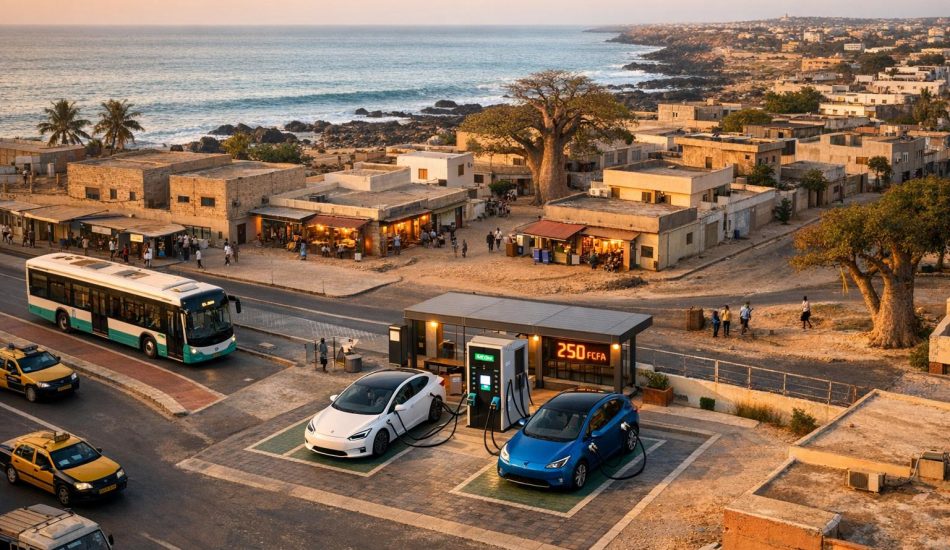
Public transportation has become a key driver of EV adoption in Senegal. By February 2026, Dakar introduced 121 fully electric articulated buses operating on an 18.3-kilometer (11.4-mile) corridor. This initiative cut travel times from 95 minutes to just 45 and is expected to prevent 59,000 tons of CO₂ emissions annually. Dr. Ibrahima Ka from École Polytechnique de Thiès emphasized:
"The question is no longer whether the country should transform its transport system, but how and at what pace".
In addition to buses, two-wheelers and tricycles – commonly used as motorcycle taxis and delivery vehicles – offer significant opportunities. These vehicles are heavily relied upon in urban areas, making them ideal for electrification. Battery-swapping stations could address charging delays, while professional fleets, such as government or corporate delivery vehicles, can benefit from centralized charging setups. Given that road transport costs, including health and environmental impacts, account for 8% to 10% of Dakar’s local GDP, these EV applications could bring both economic and environmental improvements.
Policies, Financing, and Market Evolution
Policy reforms and financial incentives are reshaping Senegal’s EV market. The 2025 Finance Act eliminated VAT, customs duties, and internal taxes on fully electric vehicles, while imposing a 58% duty on internal combustion engine vehicles. It also reduced penalties for non-declaration from 10 million XOF to 1 million XOF, making EVs more accessible and lowering financial risks for small and medium-sized enterprises. Minister Malick Ndiaye, responsible for Infrastructure, Land, and Air Transport, highlighted:
"The adoption of electric vehicles… would not only reduce costs but also positively impact the population by providing comfortable mass transportation with preferential rates".
In July 2024, a regulatory framework was introduced in partnership with Manufacturing Africa to promote EV use and establish local assembly units for electric buses. This shift from imports to domestic assembly aims to modernize fleets and create jobs. Additionally, the government is developing a master plan for multimodal transport infrastructure in Dakar. Platforms like EV24.africa are also playing a crucial role, offering services such as sourcing, customs clearance, and flexible financing options. These efforts simplify the import process and help buyers take advantage of new tax benefits.
Conclusion: Main Findings and Recommendations
Overview of Barriers and Opportunities
Senegal’s electric vehicle (EV) market stands at a critical juncture. Key hurdles include limited access to charging infrastructure, high upfront costs, and an aging vehicle fleet. However, there are real opportunities to drive growth. For instance, tax exemptions on fully electric vehicles have opened doors for broader adoption. Across Africa, the EV market is growing fast, with two- and three-wheelers expanding at about 38% annually, electric buses at 44%, and four-wheelers at 28%. Senegal has the potential to tap into this momentum, especially in areas like mass transit and commercial two-wheelers. Battery swapping and centralized charging solutions could help address infrastructure gaps. Tackling these challenges head-on will allow Senegal to fully seize the benefits of this rapid growth. These insights highlight a clear path for action by governments, businesses, and everyday consumers.
Practical Steps for Key Players
To translate these insights into action, here are some practical recommendations for key stakeholders:
Government Officials need to prioritize finalizing and implementing a robust regulatory framework. As Minister Malick Ndiaye, Minister of Transport and Infrastructure, explained:
"With the help of Manufacturing Africa, we are looking for ways and means to equip our country not only with a regulatory framework but also with the necessary devices to influence the Senegalese to use more electric vehicles."
Maintaining tax exemptions for fully electric vehicles will be essential. Additionally, setting clear standards for charging infrastructure can attract private investments and help replace 40,000 outdated vehicles within five years.
Businesses and Fleet Operators should focus on innovative financing models, such as lease-to-own arrangements, to make EVs more accessible. The Mbay Mobility project, launched in January 2026, is a great example. By combining fintech platforms with ITMO (Internationally Transferred Mitigation Outcomes) revenue, the project offers financial incentives for early adopters to reduce emissions. Businesses should also explore building public fast-charging networks and consider local assembly options to reduce costs and boost adoption.
Consumers can take advantage of tax incentives through platforms like EV24.africa, which streamline the process of sourcing, customs clearance, and financing. While the upfront cost of EVs may be higher, the lower lifetime operating costs – especially for commercial operators like taxi drivers and delivery services – make them an economically smart choice. Reduced fuel and maintenance expenses can significantly benefit these users in the long run.
FAQs
Where can I charge an EV in Senegal today?
Currently, EV charging in Senegal depends on a modest infrastructure that includes home wall outlets, private chargers, and microgrids. The country is working to expand its public charging network as part of broader efforts to improve energy and transportation systems. For now, the majority of EV owners rely on home charging as the primary solution.
How much does an EV really cost to import and own in Senegal?
Importing and owning an electric vehicle (EV) in Senegal comes with some challenges, particularly the steep initial costs. A hefty 58% import duty makes bringing EVs into the country expensive. However, recent policy changes – such as exemptions from VAT and customs duties on fully electric vehicles – are helping to ease the financial burden.
Once you own an EV, the costs are much more manageable. Electricity is priced at about $0.24 per kWh, and maintenance expenses are roughly 40% lower compared to traditional vehicles. That said, battery care is a critical consideration due to Senegal’s hot climate, which can affect performance. As policies continue to evolve, owning an EV in Senegal could become even more accessible.
Which EV types make the most sense in Senegal right now?
Hybrid electric vehicles (HEVs) and plug-in hybrid electric vehicles (PHEVs) are some of the best transportation options in Senegal right now. HEVs stand out because they don’t rely on charging stations – they run on a combination of gasoline and self-charging batteries. This makes them a practical choice, especially with the country’s limited charging infrastructure.
PHEVs, on the other hand, provide a bit more flexibility. They can handle short trips using electricity alone but switch to gasoline for longer journeys, offering a balance between efficiency and convenience.
As for fully electric vehicles (BEVs), they might become more realistic in the future, but that depends on advancements in charging infrastructure and the broader adoption of renewable energy sources in the region.