
 Thabo Nkosi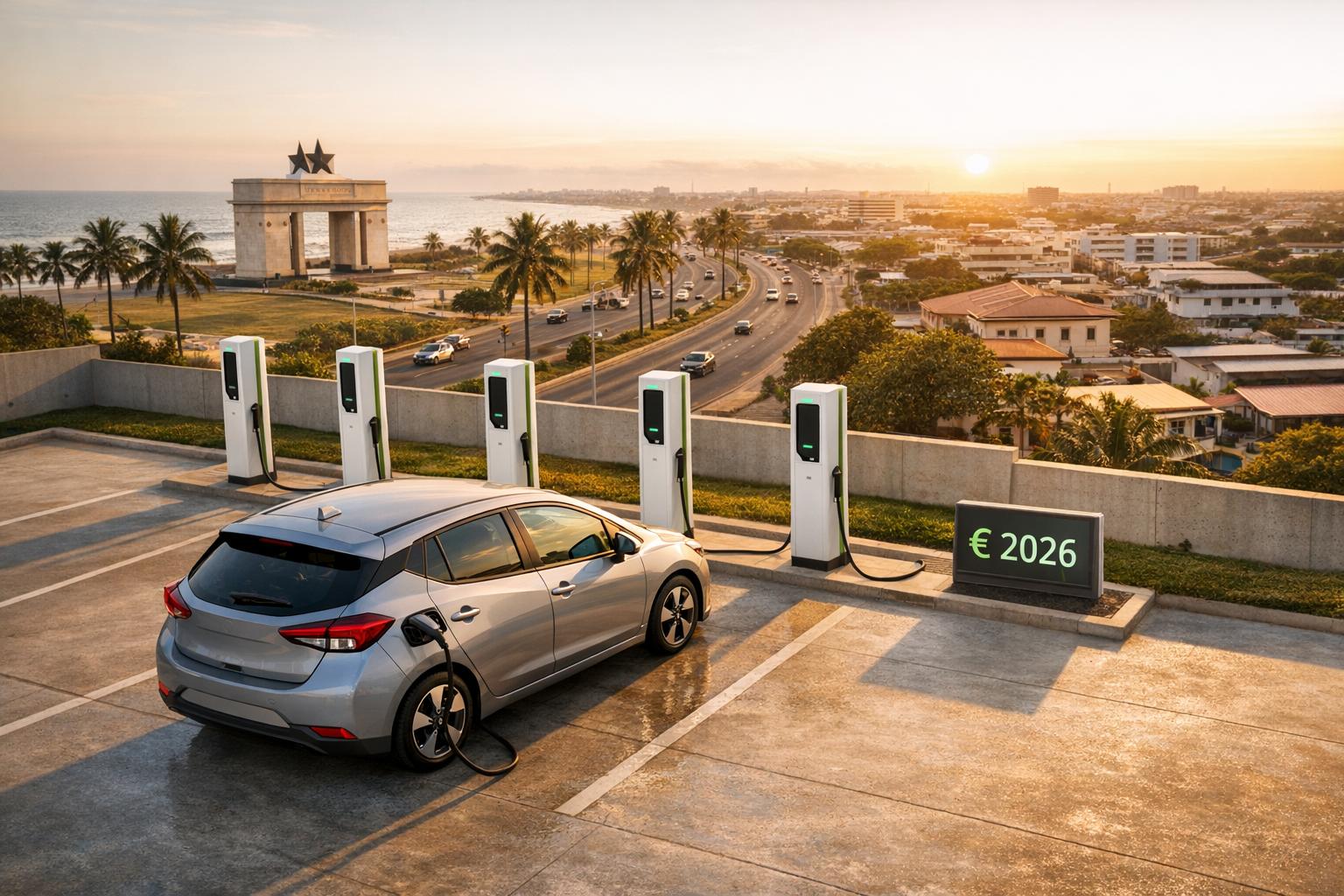
Electric vehicles (EVs) are gaining traction in Ghana, with over 17,000 EVs on the road as of early 2024. Rising fuel prices, environmental concerns, and government incentives, such as tax waivers and carbon levies, are making EVs more appealing. Charging infrastructure is expanding beyond Accra, and cost savings on energy and maintenance – up to 60% – are encouraging adoption. Here’s a quick summary:
- EV Prices: Entry-level models start at $18,000, while premium options like the Tesla Model Y exceed $60,000.
- Charging: Public stations now cover major cities, but most owners rely on home charging.
- Ownership Costs: Lower energy and maintenance expenses make EVs cheaper to operate than gas-powered cars.
- Support: Platforms like EV24.africa simplify purchasing and offer financing options.
Ghana’s EV market is growing steadily, supported by policy measures and expanding infrastructure, making these vehicles more accessible for everyday use.
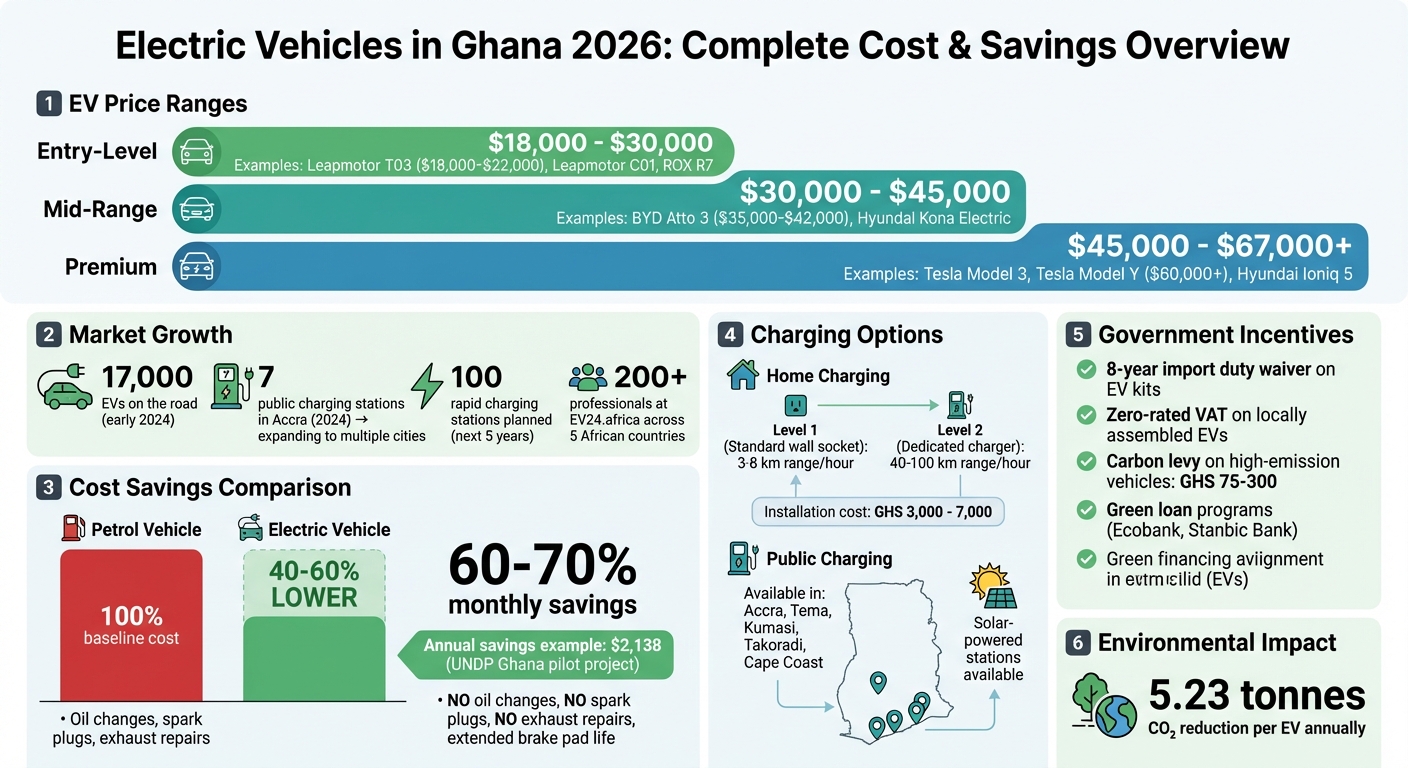
Electric Vehicle Costs and Savings in Ghana 2026: Price Ranges, Charging Options, and Operating Expenses
Electric Cars in Ghana: Is It Time to Ditch Fuel? 🚗⚡(2026 Guide)
sbb-itb-99e19e3
Electric Vehicle Availability in Ghana
Ghana’s electric vehicle (EV) market now caters to a wide range of buyers, offering options across three pricing tiers. For those with tighter budgets, entry-level models priced between $21,000 and $30,000 include the Leapmotor C01 and ROX R7. Mid-range buyers, with a budget of $30,000 to $45,000, can explore models like the BYD Atto 3 and Hyundai Kona Electric. Premium options, starting from $45,000 and going beyond $67,000, feature high-end choices such as the Tesla Model 3, Tesla Model Y, and Hyundai Ioniq 5.
Popular EV Brands and Models
Ghana’s growing EV market now boasts a variety of models from well-known global brands. Tesla remains a top choice for many, with the Tesla Model Y offering an impressive range of up to 330 miles alongside advanced Autopilot technology. BYD has also gained a foothold with its Atto 3, priced between $35,000 and $42,000, featuring the company’s Blade Battery technology for improved safety and durability. For buyers seeking affordability, the Leapmotor T03 is a standout option. This compact EV offers a range of 186 miles and is available at a landed cost of around $18,000 to $22,000, making it ideal for urban commutes. Meanwhile, local manufacturer Kantanka is expanding its lineup, supported by government incentives aimed at fostering a domestic EV industry.
Local Assembly and Import Trends
Ghana’s National Electric Vehicle Policy (2024–2026) has significantly influenced the EV market, making locally assembled vehicles more accessible. The government provides an eight-year import duty waiver for EV kits and zero-rated VAT on locally assembled EVs, reducing both production and purchase costs. Additionally, a carbon levy introduced in 2023 – ranging from GHS 75 to GHS 300 on high-emission vehicles – encourages consumers to transition from traditional petrol and diesel cars. Importing EVs remains an option, with shipping costs from the US East Coast to Tema Port averaging $1,600 for a standard sedan. However, buyers should account for customs clearance and port handling fees. These policies, combined with dedicated purchasing platforms, are making EV ownership more accessible.
How EV24.africa Makes EVs More Accessible
EV24.africa is playing a key role in simplifying EV ownership in Ghana. This online marketplace handles the entire purchasing process, offering two main options: Delivered Duty Paid (DDP), where all logistics, taxes, and duties are managed for the buyer, or Free on Board (FOB) for those who prefer to oversee the importation process themselves. With a team of over 200 professionals across five African countries, EV24.africa assists with customs clearance, vehicle registration, and ensuring compliance with local regulations. The platform provides a curated selection of both new and certified used EVs sourced from Europe, China, North America, and Japan. Buyers benefit from transparent pricing, which includes the total landed cost – covering the purchase price, shipping, and duties – offering a clear and hassle-free experience.
Charging Infrastructure in Ghana
Ghana’s charging infrastructure has been growing steadily. By 2026, the country expanded from just 7 public charging stations in Accra to a network covering multiple major cities. Still, the majority of the roughly 17,000 electric vehicles on Ghana’s roads depend mainly on home charging. Here’s a closer look at the available charging options – public, private, and home-based.
Charging Stations in Major Cities
Public charging stations are no longer limited to Accra, although the capital remains the central hub. Stations in Accra are strategically placed in high-traffic locations like the North Industrial Area, Silver Star Tower, and ANC Mall. Many of these chargers are solar-powered, ensuring they stay functional even during power outages. Beyond Accra, cities like Tema, Kumasi, Takoradi, and Cape Coast now have public chargers installed at convenient locations such as shopping malls, hotels, office complexes, and fuel stations.
Despite this progress, intercity travel remains a hurdle due to the lack of highway charging stations. To address this, the Ministry of Energy and Green Transition has pledged to install at least 100 rapid charging stations over five years, aiming to make long-distance travel more feasible.
Grace Mobility‘s Role in Expansion
Grace Mobility is playing a key role in expanding Ghana’s charging network. Their solar-grid hybrid charging stations are built to handle power fluctuations, ensuring reliable service. This expansion aligns with the government’s National Electric Vehicle Policy, which supports initiatives to strengthen the EV charging infrastructure.
Home and Workplace Charging Options
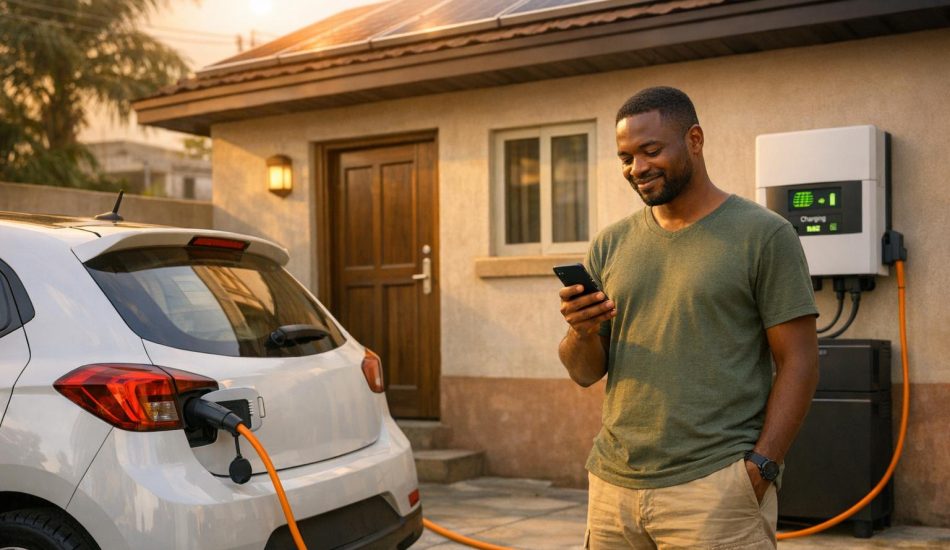
For most EV owners, home and workplace charging remains the go-to solution. Home charging typically involves either a standard wall socket (Level 1) or a dedicated wall charger (Level 2). Level 1 charging provides about 3–8 km of range per hour, while Level 2 chargers offer a much faster rate of 40–100 km per hour. Installing a Level 2 charger requires a 240-volt circuit, and it’s recommended to have a professional electrician evaluate the home’s electrical panel to ensure it can handle the extra load safely.
Workplaces are also stepping in, with more businesses installing chargers to support employees and fleet vehicles. However, home charging remains the most economical option. Billed at standard residential rates by the Electricity Company of Ghana (ECG), it allows drivers to save between 40% and 60% on energy costs compared to petrol.
Ownership Costs of Electric Vehicles
Purchase Prices: New vs. Used EVs
The cost of owning an electric vehicle (EV) in Ghana starts with the purchase price, which varies based on whether you’re buying new or used, and the "landed cost." Landed cost includes the vehicle’s purchase price plus shipping, freight, insurance, port handling, and import duties.
For new EVs, prices range widely. Entry-level models like the Leapmotor T03 start at around $18,000, while premium options such as the Tesla Model Y exceed $60,000. On the used market, a 2020 Nissan Leaf can be found for about $8,500 (FOB) or GHS 180,000 locally. Another option, the Hozon Neta N01, is priced at GHS 185,000.
Purchasing through local dealers like EV24.africa offers added benefits, including warranties and after-sales support, which aren’t typically available when importing privately. Additionally, Ghana’s eight-year waiver on import duties for EV kits brought in by authorized local assembly plants helps reduce costs further. These factors make EV ownership more accessible and pave the way for flexible financing options.
Financing Options on EV24.africa
EV24.africa simplifies the process of owning an EV by connecting buyers with financing solutions and offering assistance from vehicle selection to delivery and insurance. Many banks in Ghana now offer auto loans tailored for EVs, recognizing their lower operating and maintenance costs as a financial advantage for borrowers.
Institutions like Ecobank and Stanbic Bank provide "green loan" programs with preferential terms, helping to make EVs more affordable. While financing costs can sometimes be a hurdle – particularly in some African markets – these tailored loan products are closing the gap. To further ease the buying process, EV24.africa offers transparent listing plans (Basic, Premium, and Dealer) that include clear pricing and detailed vehicle specifications, making it easier for buyers to compare options and make informed choices.
Operating Costs: Electricity vs. Fuel
Owning an EV doesn’t just save money upfront – it also cuts down on ongoing expenses. In Ghana, EV owners report monthly energy savings of 60% to 70% compared to fueling a petrol-powered vehicle. Overall, switching to electric reduces total energy costs by 40%–60%. Even with a 30% increase in electricity costs in 2023, electricity remains a more stable and affordable option than fluctuating global fuel prices.
Maintenance is another area where EVs excel. They don’t require oil changes, spark plugs, or exhaust system repairs. Regenerative braking systems also extend the lifespan of brake pads significantly. For example, the United Nations Development Programme (UNDP) in Ghana reported saving over $2,138 annually on fuel and maintenance by adding just one EV to its fleet in a 2025 pilot project.
"The savings start rolling in almost immediately. Fuel is your biggest win… Most EV drivers in Ghana tell us their monthly ‘fuel’ bill drops by 60-70%, sometimes even more." – Younes Rabeh, African EV Market News
Prospective buyers should plan for a one-time investment of GHS 3,000 to GHS 7,000 for a Level 2 home charging unit and installation. This upfront cost quickly pays off through reduced energy and maintenance expenses.
The Future of Electric Cars in Ghana
Starting in early 2024, Ghana’s electric vehicle (EV) market is poised for substantial growth. The National Electric Vehicle Policy (2024–2026) is driving this transformation with measures like tax incentives, duty waivers, and an annual carbon levy on high-emission vehicles ranging from GHS 75 to GHS 300.
As EVs become more accessible and affordable, the country’s charging infrastructure is also expanding. Over the next five years, the Ministry of Energy and Green Transition plans to install at least 100 fast-charging stations nationwide, connecting major cities and supporting long-distance travel. These stations, powered by a solar-grid hybrid system, ensure reliability, especially with over 80% of households already having electricity access. Such developments not only enhance convenience but also contribute to economic growth.
The financial benefits of EV adoption are compelling. Each EV can cut annual CO₂ emissions by approximately 5.23 tonnes while slashing monthly energy costs by 60% to 70% compared to gasoline-powered vehicles. Local assembly projects, supported by government policies, are also lowering vehicle prices for Ghanaian buyers. Additionally, banks like Ecobank and Stanbic now offer green loan programs tailored for EV purchases.
"By encouraging local assembly and penalising high-emission vehicles, the government is actively steering the market toward a cleaner future." – EV24.africa
Platforms like EV24.africa are making EV ownership easier by offering transparent pricing, financing options, and comprehensive support – from choosing the right vehicle to delivery and insurance. Whether it’s an entry-level Leapmotor T03 priced at $18,000 or a premium Tesla Model Y, the platform simplifies the process, helping Ghana move closer to its sustainable transportation goals. These developments highlight Ghana’s commitment to affordable and environmentally friendly mobility solutions.
FAQs
Can I drive an EV between major Ghanaian cities in 2026?
By 2026, driving an electric vehicle (EV) between major cities in Ghana will be a reality. The country is actively working on EV charging regulations, expanding its public charging network, and upgrading infrastructure to support long-distance EV travel. These steps aim to make intercity journeys with electric vehicles more convenient and feasible.
How do I know if my home can support a Level 2 charger?
To figure out if your home can handle a Level 2 charger, start by reviewing your electrical panel’s capacity and layout. These chargers typically require a dedicated 240V circuit, much like the ones used for dryers or ovens. To ensure everything is safe and up to code, it’s best to have a licensed electrician inspect your panel. They can confirm whether it can manage the extra load or if any upgrades are necessary before installation.
What paperwork and fees should I expect when importing an EV into Ghana?
When bringing an electric vehicle (EV) into Ghana, you’ll need to cover shipping costs and prepare essential documents such as the invoice, Certificate of Origin, and export certificates. The process also involves customs clearance, vehicle registration, and inspection. However, Ghana offers an eight-year duty exemption for EVs, so you won’t have to pay import duties. To make the process smoother, double-check that all your paperwork is in order.