
 Thabo Nkosi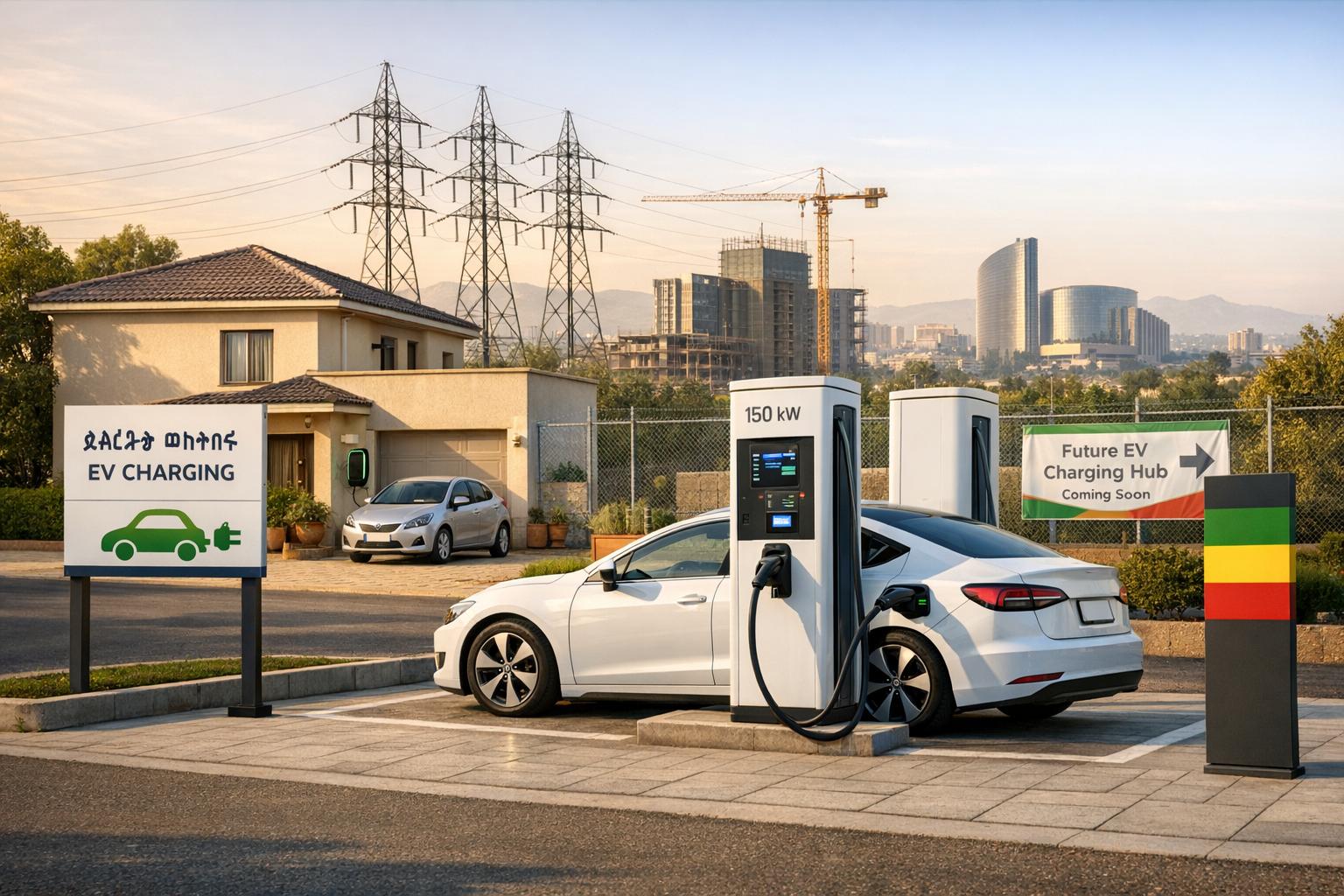
Addis Ababa is rapidly shifting toward electric vehicles (EVs), with over 115,000 EVs registered by early 2026. This growth stems from Ethiopia’s 2024 ban on internal combustion engine vehicle imports and government incentives like tax exemptions, making EVs more affordable. However, the city’s charging infrastructure is still developing to meet rising demand.
Key points about EV charging in Addis Ababa today:
- Public Charging: Concentrated along busy corridors like Bole–Megenagna and Summit–Fyel Bet, with Ethio Telecom operating hubs that serve up to 48 vehicles at once. Smart Pole chargers add emergency options.
- Private Charging: Home charging is the preferred option for most EV owners, with over 460 private setups installed by late 2025. Private networks like Eazy Power and AddisPlug also provide additional charging options.
- Challenges: Limited public stations, power outages, and delays in grid connections create bottlenecks. Range anxiety remains a concern, especially for trips outside the city.
- Future Plans: The government aims to build over 1,100 charging centers in Addis Ababa and expand the EV fleet to 500,000 within a decade.
For EV drivers, home charging remains the most reliable option, while public and private stations cater to specific needs. However, careful planning is essential as the network evolves.
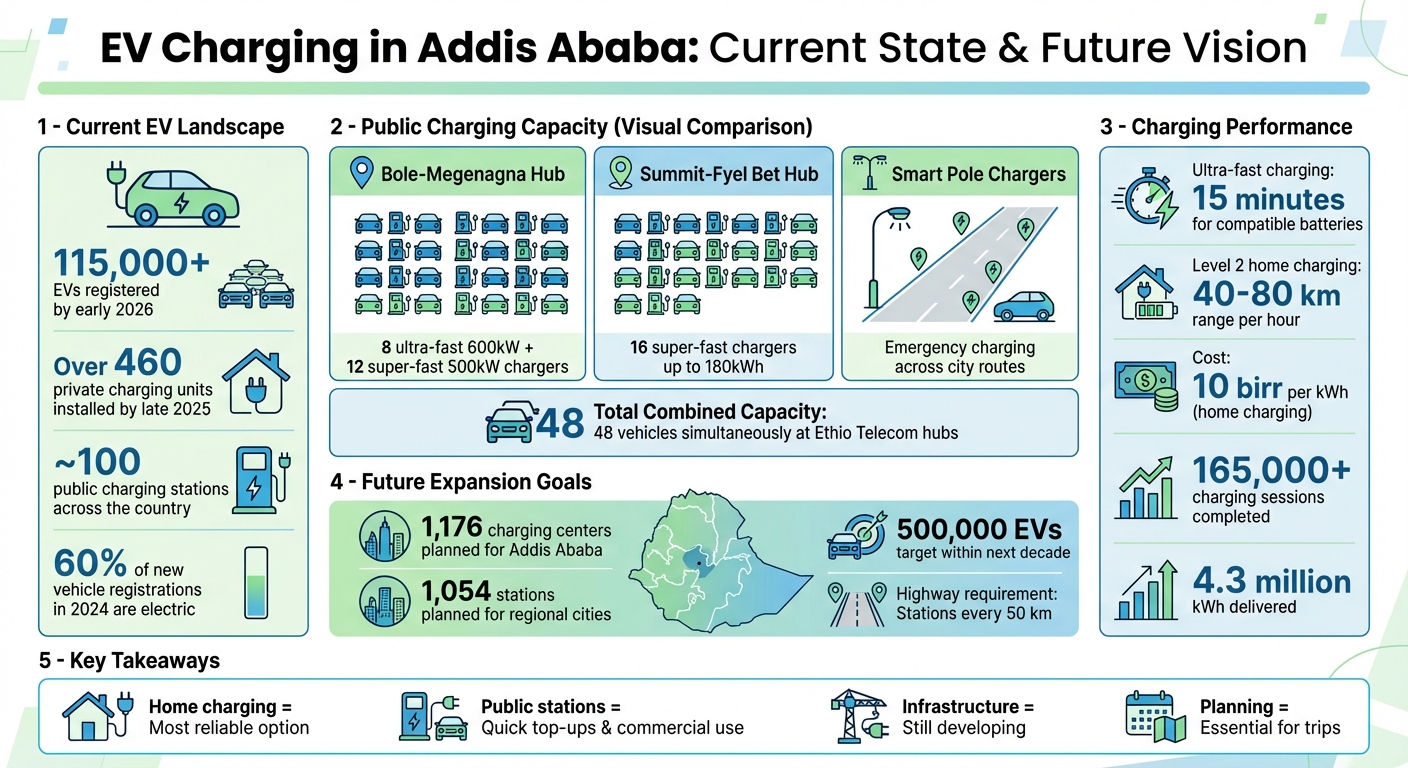
EV Charging Infrastructure in Addis Ababa: Key Statistics and Comparison
አዲስ አበባ ፈጣኑ የመኪና ቻርጀር | Electrical car charge station – 2 , Addis Ababa 🇪🇹 Ethiopia 2025
sbb-itb-99e19e3
Public Charging Stations in Addis Ababa
Public charging infrastructure in Addis Ababa is primarily concentrated along two busy corridors: the Bole–Megenagna road and the Summit–Fyel Bet area. These locations were chosen for their accessibility and heavy traffic, making them practical for both daily commuters and commercial drivers. The stations are designed to handle high demand, with the ability to charge multiple vehicles at the same time.
Ethio Telecom Superfast Charging Stations
Ethio Telecom operates two major charging hubs in the city, offering a combined capacity to serve 48 vehicles simultaneously.
- Bole–Megenagna Hub: Opened in February 2025, this hub is located on both sides of the Bole–Megenagna road. It features a mix of eight ultra-fast 600 kW chargers and twelve super-fast 500 kW chargers, accommodating up to 32 vehicles at once. These ultra-fast chargers can replenish compatible batteries in about 15 minutes, thanks to AI-powered diagnostics that match battery specifications for peak efficiency.
- Summit–Fyel Bet Hub: Inaugurated in November 2025, this station includes 16 super-fast chargers with capacities of up to 180 kWh, specifically designed to support European-standard electric vehicles.
In addition to these hubs, Addis Ababa has integrated "Smart Pole" Level II chargers along various routes as part of the city’s smart infrastructure. These chargers provide emergency top-up options for drivers who are not near a primary station. All charging stations operate 24/7 and are self-service, ensuring accessibility at any time.
| Location | Capacity | Charger Types | Key Features |
|---|---|---|---|
| Bole–Megenagna (Both sides) | 32 | 8 Ultra-Fast (600 kW), 12 Super-Fast (500 kW) | AI-powered, 24/7 access, telebirr integrated |
| Summit–Fyel Bet | 16 | 16 Super-Fast (up to 180 kWh) | European EV compatibility, NFC tap-to-charge |
| Various City Routes | N/A | Smart Pole Chargers (Level II) | Emergency charging, smart city integration |
Next, let’s explore how drivers can easily use these stations through the telebirr SuperApp.
How to Access and Pay for Public Charging
To use public charging stations in Addis Ababa, drivers need the telebirr SuperApp, Ethio Telecom’s digital payment platform. This app handles everything from starting a session to tracking progress and completing payments, offering a seamless, cashless experience.
Here’s how it works:
- Download and Fund the App: Drivers must install the telebirr SuperApp and load funds into their account before visiting a charging station.
- Start a Charging Session: Authentication is simple – either through the app or by using the NFC "tap-to-charge" feature, which activates the session with a quick tap of your phone.
- Monitor Progress: The app provides live updates on charging progress, energy consumption, and costs, ensuring transparency throughout the session.
"The charging station operates 24/7 and is fully powered by telebirr SuperApp, Ethio Telecom’s digital payment platform." – Ethio Telecom
Although specific per-kilowatt-hour rates are not publicly listed, national regulators have standardized tariffs to maintain consistent pricing across the network. For drivers with European-standard EVs, the Summit–Fyel Bet station is an ideal choice, as it’s tailored to meet their vehicle requirements.
Given the high demand, especially during peak hours, using the app’s real-time tracking feature to check charger availability can help avoid delays and make the process smoother.
Private and Home Charging Options
In Addis Ababa, most EV owners depend on private charging setups for their daily needs. By late 2025, over 460 individual charging units had been installed by vehicle assemblers and importers, far outpacing the approximately 100 public charging stations available across the country. This trend highlights the practicality of private charging for EV users.
Setting Up a Home Charging Station
Installing a home charging station typically involves hiring a qualified electrician to set up a dedicated Level 2 charger. These chargers are much faster than standard wall outlets, providing between 25 and 50 miles (40 to 80 kilometers) of range per hour. This makes them perfect for overnight charging, ensuring your car is ready to go each morning without needing a public station.
Many vehicle assemblers and importers supply compatible chargers and offer installation assistance. For example, dealerships like Hallel and Sara Car Importer provide home-style charging setups, though these are generally not fast-charging units. It’s always a good idea to check with your vehicle importer for chargers tailored to your car model.
The EV charging-system directive, implemented in early 2025, ensures safety and protects battery health. This regulation standardizes installation practices, safety measures, and tariff structures, safeguarding both your vehicle and your home’s electrical system. For most EV owners, charging at home remains the simplest and most cost-effective solution.
Some residential developers are making EV charging even more accessible. Companies like DMC and Noah Real Estate are incorporating charging facilities into parking areas in their new and ongoing projects. This approach is turning EV charging into a standard feature, particularly in upscale developments aimed at attracting EV owners.
These home charging solutions complement the city’s growing network of charging infrastructure.
Private Charging Networks
For those who need charging options beyond their home, private networks are stepping in to fill the gap. In Addis Ababa, several private charging networks have popped up, often located in busy commercial areas. For instance, Eazy Power Plc runs stations at the Hyatt Regency near Meskel Square (offering 24/7 assistance) and at OLA Energy on Africa Avenue Bole, near Dembel Roundabout (open from 7:00 AM to 10:00 PM). Master Trading Plc operates 120-volt fast chargers in the Bole-Japan area, capable of charging up to four vehicles at once.
Another major player, AddisPlug, offers a flagship station with 10 charging bays and tiered service plans. Their Economy tier includes standard charging and 12/7 customer support, while the Business tier adds fast charging, priority maintenance, and 24/7 support. The VIP tier provides additional perks like skip-the-line access, car pickup and drop-off services, and round-the-clock support. These plans cater to drivers looking for more than just a charging stop – they deliver a premium experience.
Some businesses have also installed chargers exclusively for their customers. For example, Marathon Motors, owned by Haile Gebrselassie, opened a dedicated station in 2024 to serve Hyundai EV owners. Similarly, Amore Restaurant offers charging for its patrons, although access is usually limited to customers.
Most private networks use the telebirr SuperApp for cashless payments, similar to public charging stations. However, it’s wise to check a station’s availability through mobile apps before heading out, as there can be delays between installation and grid activation. Pricing models vary, with some operators charging per kilowatt-hour (the most common method), while others use time-based fees or flat rates.
These private networks are a key part of Addis Ababa’s efforts to create a well-rounded and accessible charging ecosystem.
"As electric mobility increases, charging stations are needed for public use. Leveraging existing facilities can help expand the network more rapidly." – Sahrela Abdullahi, Director General, Petroleum and Energy Authority
Challenges and Growth Potential for EV Charging
Current Charging Infrastructure Challenges
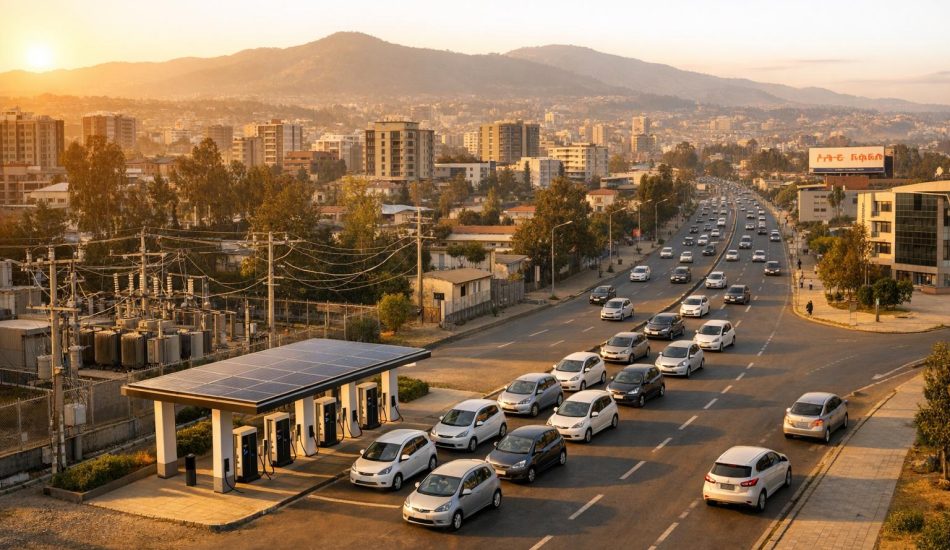
Addis Ababa’s EV charging network is struggling to keep up with the city’s rapid shift toward electric vehicles. This surge in adoption has led to bottlenecks, especially at the limited public charging stations, which frequently fail to meet peak demand.
Operational issues add to the strain. Frequent power outages disrupt charging schedules, while delays in connecting charging stations to the grid create further setbacks. Some locations – like major hotels – are even mistakenly listed on digital maps as having charging facilities when they don’t. These gaps in infrastructure contribute to range anxiety for drivers. One ride taxi driver, Million Alem, summed up the frustration:
"There are no charging stations everywhere like the petrol stations, and I can’t even travel wherever I want, especially outside of Addis Abeba".
Another significant hurdle is the lack of technical expertise. Concerns about battery life (estimated at around 10 years), the steep cost of replacing batteries – nearly half the vehicle’s original price – and the limited availability of spare parts and specialized repair facilities are common.
Despite these challenges, both the government and private sector are taking steps to address these issues.
Expansion Plans and Government Support
The Ethiopian government is moving quickly to close the infrastructure gap. Under the National E-mobility Strategy, plans are in place to build 1,176 charging centers in Addis Ababa and 1,054 stations in regional cities. New regulations require public charging stations every 50 kilometers (about 31 miles) on highways and every 120 kilometers (around 75 miles) for heavy-duty vehicles like buses and trucks. Additionally, the government has set an ambitious goal of expanding the electric vehicle fleet to 500,000 within the next decade.
Progress is already visible. In November 2025, Ethio Telecom, a state-owned company, opened its third super-fast charging hub in the Summit–Fyel Bet area. This facility features 16 AI-enabled chargers, bringing the company’s total capacity to serve 48 vehicles at once across three locations. Since launching its first two hubs in February 2025, Ethio Telecom has completed more than 165,000 charging sessions, delivering over 4.3 million kWh of energy. As Bareo Hassen, State Minister of Transport and Logistics, stated:
"This expansion reflects Ethiopia’s commitment not only to promoting clean vehicles but also to developing the infrastructure required to support their growth".
To speed up expansion, the government is repurposing existing gas station sites for EV charging. A 2024 directive from the Petroleum and Energy Authority encourages the use of these pre-existing locations for new charging stations. Private companies are stepping in too. For example, TotalEnergies opened its first EV charging station in Addis Ababa in June 2024, signaling a shift for traditional fuel providers. Meanwhile, regulations now require EV importers to install at least two charging stations near their showrooms, and vehicle assemblers must set up at least four. Together, these efforts are paving the way for a more extensive EV charging network in Addis Ababa, despite the current hurdles.
Conclusion: EV Charging in Addis Ababa Moving Forward
Addis Ababa’s EV charging network is growing steadily. The city now hosts over 100 public charging stations, including Ethio Telecom’s three super-fast hubs capable of serving 48 vehicles at once. For the roughly 100,000 EV owners in the city, Level 2 home chargers remain the go-to option for affordable overnight charging, costing just 10 birr per kilowatt-hour. For those needing speed, ultra-fast chargers can replenish compatible batteries in about 15 minutes.
That said, challenges still loom. While home charging is widely supported, the limited public infrastructure makes longer trips tricky. Many charging stations are installed but not yet connected to the grid, leaving drivers frustrated. Range anxiety is a persistent issue, especially for journeys outside the city where charging options are sparse. However, the government’s National E-mobility Strategy shows a clear intent to address these gaps.
The path forward hinges on effective execution. As discussed earlier, resolving grid connectivity delays is key to sustainable growth. Current regulations require EV importers and assemblers to contribute to building charging networks, while private companies are stepping in and former gas stations are being converted to support EVs. Still, coordinating grid connections and managing peak electricity demand remain significant hurdles.
Here are some takeaways for EV drivers navigating Addis Ababa’s evolving landscape:
- Home charging is crucial: Level 2 chargers provide a reliable and cost-effective way to keep vehicles charged overnight.
- Public stations serve specific needs: These are ideal for quick top-ups or for commercial drivers needing ultra-fast options, but the network isn’t yet robust enough for full dependence. Drivers should use the telebirr app to check station availability, as some units may still be offline.
- Connector compatibility matters: European EV owners should seek stations offering CCS2 connectors in addition to the standard GB/T chargers.
- Plan ahead: With over 60% of new vehicle registrations in 2024 expected to be electric and a national goal of 500,000 EVs within the next decade, infrastructure is expanding. However, until grid reliability and activation delays improve, careful planning is essential.
Addis Ababa’s EV journey is well underway, but there’s still a road to travel before the city’s charging network fully meets the needs of its growing EV population.
FAQs
Which chargers work with my EV in Addis Ababa (GB/T vs CCS2)?
In Addis Ababa, you’ll find chargers compatible with your EV, such as CCS2 and GB/T. The CCS2 chargers support both AC and DC fast charging, making them a popular choice for drivers looking for quicker charging times. On the other hand, GB/T chargers are usually slower, though efforts are underway to upgrade them for higher charging capacities. While both options are available, CCS2 tends to be the go-to for faster charging needs.
What should I do if a charger is listed online but isn’t active?
If the platform allows, check the charger’s real-time availability before heading out. If the charger appears inactive, reach out to the station operator or service provider for updates. Alternatively, use the app or map to locate nearby charging stations. Some chargers might be offline or undergoing maintenance as the infrastructure continues to expand.
How can I plan longer trips outside Addis with limited charging?
To organize extended trips beyond Addis Ababa, take advantage of Ethiopia’s growing EV charging network, which now includes ultra-fast charging hubs capable of powering up vehicles in roughly 15 minutes. Plan your route carefully by identifying charging station locations ahead of time and keeping track of any updates or new installations. However, since charging options outside Addis remain somewhat scarce, it’s wise to bring along a portable charger or explore private charging alternatives to avoid any disruptions during your journey.