
 Thabo Nkosi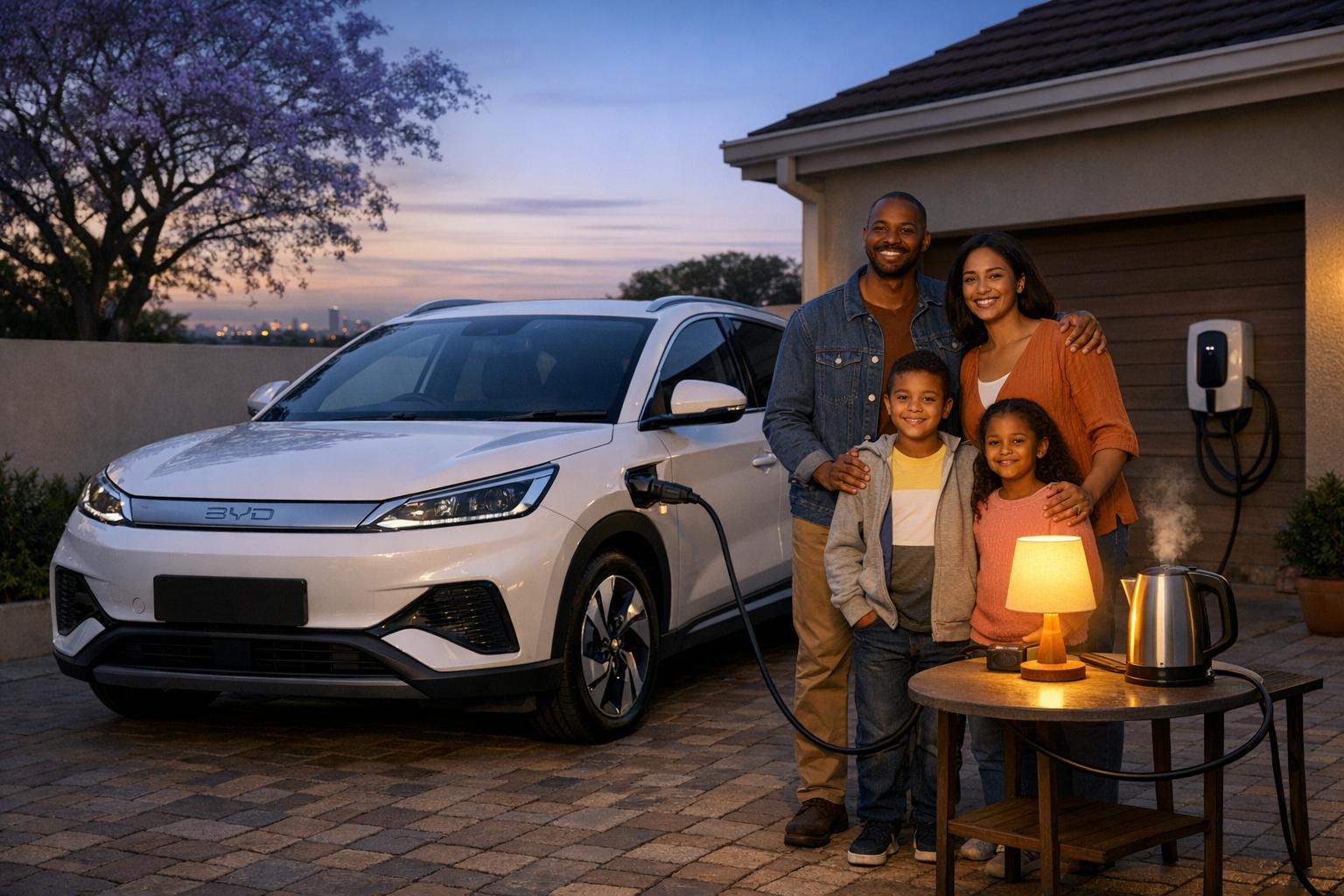
BYD is bringing affordable electric vehicles (EVs) to South Africa, targeting middle-income buyers with competitively priced models and plans to build a robust charging network. Key highlights:
- Affordable EV Options: The Dolphin Surf starts at $18,500 (R339,900), undercutting competitors by $3,300. Other models like the Dolphin and Atto 3 provide options for varying budgets.
- Charging Infrastructure: BYD will install 200–300 fast-charging stations by the end of 2026, including 1MW chargers that add 248 miles of range in just five minutes.
- Financing Support: A partnership with ABSA Bank offers tailored financing options, making EVs more accessible.
- Battery Features: Models include Vehicle-to-Load (V2L) technology, allowing the car to power homes during outages.
- EV Market Growth: South Africa’s EV sales are rising, but challenges like high upfront costs and limited charging access remain barriers to adoption.
BYD’s combination of affordable pricing, charging solutions, and financing aims to make EVs a practical choice for more South Africans.
China’s BYD Plans 200 to 300 Charging Stations in South Africa by End 2026
BYD’s Affordable EV Models for South Africa
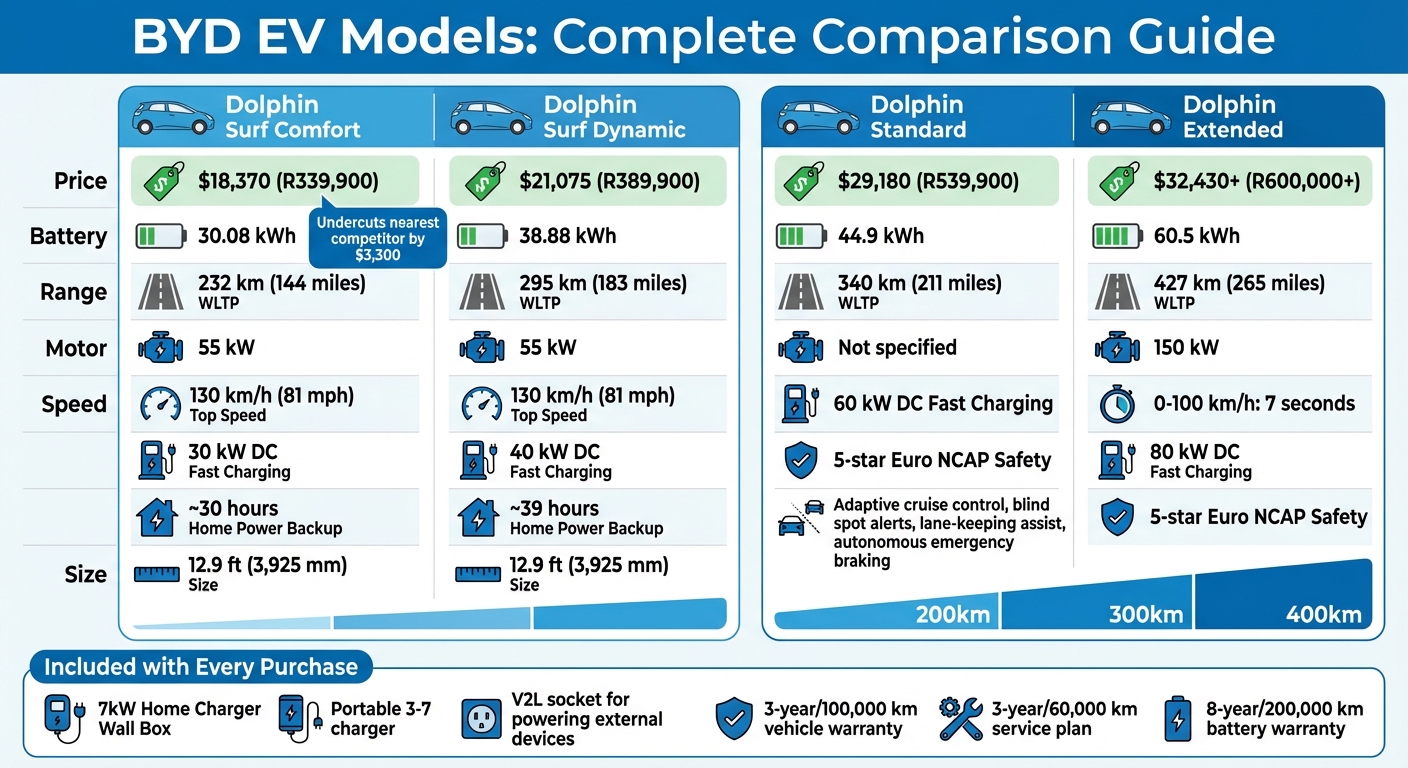
BYD Electric Vehicle Models Comparison: Pricing, Range, and Battery Specs for South Africa
Dolphin Surf, Dolphin, and Atto 3 Models
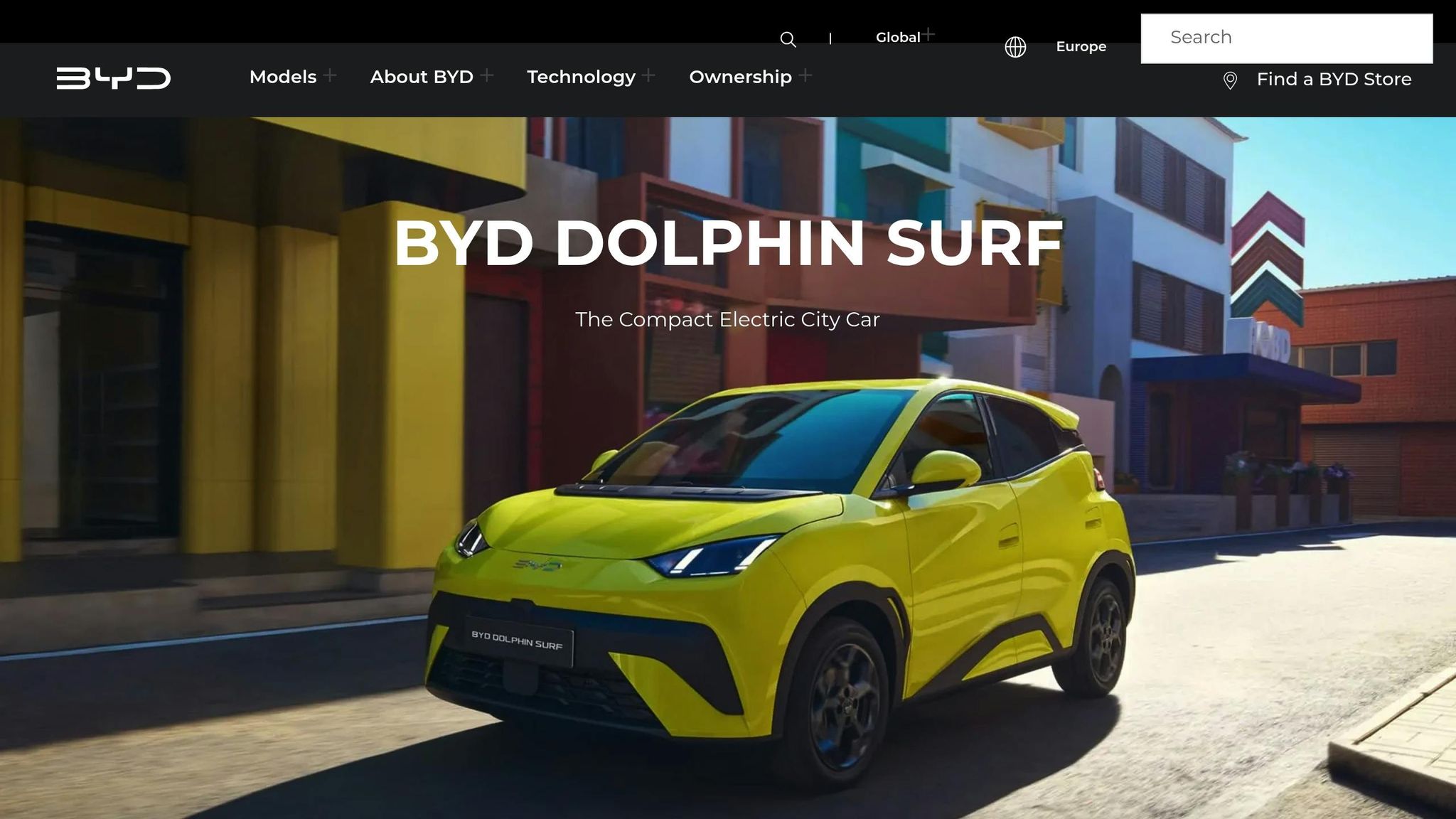
BYD offers a range of electric vehicles in South Africa, catering to various budgets and preferences. The Dolphin Surf is the most budget-friendly option, available in two versions: the Comfort model, priced at $18,370 (R339,900), and the Dynamic, which costs $21,075 (R389,900). With its compact size of 12.9 ft (3,925 mm), this model is ideal for city driving and navigating tight spaces.
The standard Dolphin steps things up with more power and an extended range. The Standard variant is priced at $29,180 (R539,900), while the Extended model starts at around $32,430 (R600,000+). This five-seater hatchback has earned a 5-star Euro NCAP safety rating and comes packed with advanced driver assistance features like adaptive cruise control, blind spot alerts, lane-keeping assist, and autonomous emergency braking. Speaking about the Dolphin Surf, Ming Xing, BYD’s Brand and Marketing Manager, remarked:
"The BYD Dolphin Surf represents our belief that sustainable mobility shouldn’t be out of reach, it should be an exciting, everyday reality for real people."
At the top of the lineup is the Atto 3, a compact SUV that marked BYD’s debut in South Africa. While its U.S. dollar pricing hasn’t been revealed, it sits above the Dolphin in terms of features and positioning.
Every Dolphin Surf purchase includes some handy extras, such as a 7kW Home Charger Wall Box, a portable 3-7 charger, and a Vehicle-to-Load (V2L) socket for powering external devices. Additionally, BYD provides a three-year/100,000 km (62,137 miles) vehicle warranty, a three-year/60,000 km (37,282 miles) service plan, and an eight-year/200,000 km (124,274 miles) battery warranty. These offerings underline BYD’s effort to make electric mobility both practical and affordable for South African drivers. Let’s take a closer look at how the battery capacities and charging options enhance the performance of these models.
Battery Range and Performance Specs
The battery sizes in BYD’s models vary, influencing both their range and charging capabilities. The Dolphin Surf Comfort comes with a 30.08 kWh battery that provides a range of 232 km (144 miles) under WLTP standards, while the Dynamic variant upgrades to a 38.88 kWh battery, extending the range to 295 km (183 miles). Both versions use a 55 kW motor, with a top speed of 130 km/h (81 mph).
The standard Dolphin raises the stakes with a 44.9 kWh battery, offering a range of 340 km (211 miles). The Extended model goes even further, featuring a 60.5 kWh battery that delivers 427 km (265 miles) of range. Performance is also enhanced in the Extended version, which boasts a 150 kW motor capable of accelerating from 0 to 100 km/h (0 to 62 mph) in just 7 seconds.
Charging speeds are tailored to the battery size. The Surf Comfort supports 30 kW DC fast charging, the Dynamic variant allows for 40 kW, the Dolphin Standard reaches up to 60 kW, and the Extended model tops out at 80 kW. The V2L feature adds another layer of utility: the Surf Comfort’s 30 kWh battery can power an average home for about 30 hours, while the Dynamic’s larger battery can stretch that to nearly 39 hours. Owners can also take advantage of BYD’s smartphone app for remote locking, preconditioning the cabin, and live tracking of their vehicle.
BYD’s Charging Infrastructure Investment
300 Fast-Charging Stations Planned
BYD is gearing up to establish an extensive charging network across South Africa, with construction expected to kick off in April or May 2026. The ambitious plan includes the installation of 200 to 300 fast-charging stations by the close of 2026. These stations will feature Megawatt Flash Chargers, capable of delivering up to 1,000 kW (1 MW) per vehicle. This means drivers could gain up to 400 kilometers (248 miles) of range in just five minutes – a game-changer for electric mobility.
The rollout is structured in three distinct phases. First, BYD will expand its dealership network from the current dozen locations to around 30–35. Next, chargers will be installed along national highways to facilitate long-distance travel. Finally, the focus will shift to high-traffic urban hubs. Stella Li, BYD’s Executive Vice President, emphasized the scale of the initiative:
"We want to cover 100% of the country."
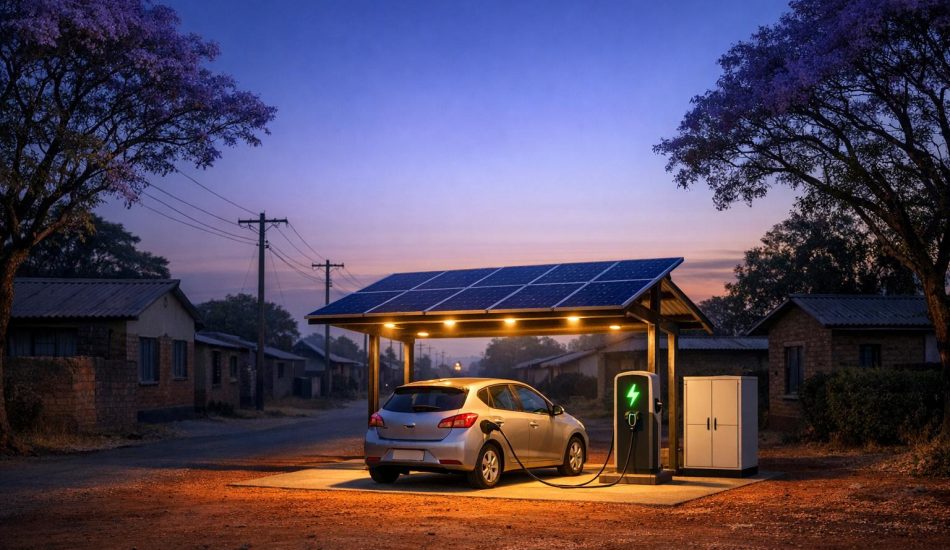
To power these stations, BYD is taking a hybrid approach, combining electricity from South Africa’s national grid with solar photovoltaic (PV) systems. This setup ensures that stations can be deployed even in remote or off-grid areas. In September 2025, BYD Auto South Africa, led by Managing Director Steve Chang, signed a Memorandum of Cooperation with Eskom, the state-owned utility, to outline the framework for powering this public charging network. Additionally, the stations will include on-site energy storage to manage demand during peak charging times. This approach underscores BYD’s effort to create a seamless EV ecosystem, while also addressing the unique challenges of underserved regions.
Solving South Africa’s Charging Access Problems
BYD’s investment in charging infrastructure directly tackles South Africa’s current gaps, where charging points are heavily concentrated in major cities, leaving smaller towns and rural areas behind. The hybrid power model, blending grid electricity with solar energy, ensures that charging stations can be set up even in areas with limited grid capacity. This dual approach bridges the urban-rural divide, reinforcing BYD’s commitment to accessible mobility for all.
Importantly, the network will be open to all EV users, not just BYD vehicle owners, contributing to the growth of South Africa’s broader EV ecosystem. As reported by EWN:
"The charging network will not only be available for BYD vehicles but will also accommodate models from other automakers."
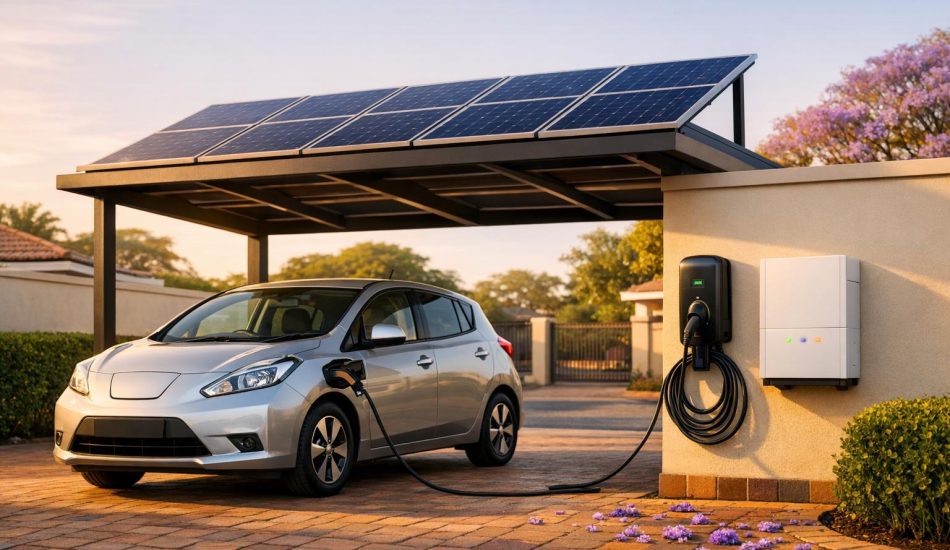
With charging times as short as five minutes – comparable to traditional fuel stops – BYD is removing a significant hurdle to EV adoption. Beyond public infrastructure, the company is also offering residential solar and battery solutions. These allow homeowners to charge their vehicles independently of the national grid, further empowering South Africans with flexible and reliable charging options.
sbb-itb-99e19e3
South Africa’s EV Market Today
EV Sales and Growth Data
South Africa’s electric vehicle (EV) market is still in its early stages, but it’s steadily gaining traction. In 2024, a total of 1,257 battery electric vehicles (BEVs) were sold – a 35% increase compared to 931 units in 2023. Even with this growth, BEVs accounted for just 0.24% of the 515,853 new vehicles sold that year. While the market saw an 85.4% surge in 2023, growth slowed to 35% in 2024, reflecting a more tempered expansion.
The first quarter of 2025 revealed shifting consumer trends. Sales of pure electric vehicles dropped by 16% year-over-year, with only 276 units sold. In contrast, plug-in hybrid (PHEV) sales jumped 75%, reaching 241 units. Traditional hybrids led the way in new energy vehicle (NEV) registrations, with 2,970 units sold – a 15% year-over-year increase. Altogether, NEVs made up 2.4% of new vehicle registrations during Q1 2025. Greg Cress, an Automotive Specialist at Accenture, highlighted the long road ahead:
"Without consumer incentives it would take until at least 2032 for EVs’ share of the SA new-vehicle market to reach 5%. With incentives, it could happen by 2029."
A notable shift in the market is the move from high-end luxury EVs to more affordable, entry-level models like the BYD Atto 1 and Dayun S5. This trend toward lower-priced options is crucial, as the most affordable EV now starts at approximately $18,500 (R339,900). For the first time, middle-income buyers are finding electric mobility within reach. Additionally, a new government tax incentive – 150% deductions for EV manufacturers – set to begin in March 2026 could further boost local production and drive prices down. These developments signal a market in transition, with a clear focus on making EVs more accessible to a broader audience.
Consumer Barriers
Despite the progress, several challenges continue to hold back widespread adoption. High upfront costs remain the primary obstacle, largely due to import duties that favor traditional combustion vehicles over EVs. While Chinese brands have helped bring prices down, the initial purchase price is still beyond the reach of many mass-market consumers without financing support.
Charging infrastructure is another major concern, particularly for long-distance travelers and those in rural areas. South Africa currently has over 450 public charging stations, giving it a ratio of one station for every 4.98 EVs – better than the global recommendation of one station per 10 EVs. However, these stations are concentrated in urban centers, leaving rural regions underserved. On top of this, frequent power outages and load shedding further deter potential buyers, as many worry about reliable charging during blackouts. This is one reason why plug-in hybrids are gaining popularity – they offer the convenience of electric driving for daily use while retaining a gasoline engine as a backup.
Manufacturers are addressing South Africa’s energy challenges with innovative solutions. For example, vehicles equipped with Vehicle-to-Load (V2L) technology can act as backup power sources during outages. The BYD Dolphin Surf, with its 30kWh battery, can provide enough energy to power an average South African household for roughly 30 hours. This feature appeals to consumers frustrated with unreliable electricity. As Naamsa emphasized:
"Support to make NEVs more affordable and attractive for the South African public is very important, as is the acceleration of decarbonisation of the vehicle market, and this cannot just be export-driven."
How BYD Stands Out in South Africa
Pricing Strategy and Value
BYD is making a bold move in South Africa by pricing its electric vehicles (EVs) to be more accessible than the competition. Take the Dolphin Surf Comfort, for example – priced at about $18,500 (R339,900), it undercuts its nearest rival, the Dayun S5, by nearly $3,300 (R60,000). This pricing strategy makes BYD the most affordable player in the EV market, giving middle-income buyers a real chance to join the electric mobility revolution.
But it’s not just about the price tag. BYD includes a range of features in its vehicles, reducing the need for costly add-ons. Ming Xing, Brand and Marketing Manager at BYD South Africa, summed it up perfectly:
"We are bringing a truly affordable and well-equipped urban electric vehicle to the mass market."
For those looking for more options, BYD offers a lineup tailored to different needs. The Dolphin Surf Dynamic, priced at $21,300 (R389,900), delivers a solid range of 183 miles (295 km). If you want more range, the standard Dolphin hatchback offers 211 miles (340 km) for $29,500 (R539,900). Beyond the competitive pricing, BYD vehicles promise long-term savings and added value.
Lower Operating Costs and Environmental Benefits
BYD EVs are designed to save you money in the long run. For instance, the Dolphin Surf’s 30kWh battery can power an average South African home for around 30 hours during load shedding, doubling as a backup power source.
The company also addresses concerns about EV durability with robust warranties. BYD offers an eight-year or 124,000-mile (200,000 km) battery warranty, a three-year or 62,000-mile (100,000 km) vehicle warranty, and a three-year or 37,000-mile (60,000 km) service plan. Steve Chang, Managing Director at BYD South Africa, highlighted the brand’s focus on delivering value:
"High-end features, efficiency, and financial stability shouldn’t be mutually exclusive."
Beyond financial benefits, BYD’s EVs are a cleaner, quieter choice for urban living. With zero tailpipe emissions and silent operation, they contribute to better air quality and a more peaceful environment. Plus, their 5-star safety ratings from both Euro NCAP and Australian NCAP testing make them a reliable choice for families. Combining affordability, reliability, and environmental responsibility, BYD is carving out a strong position in South Africa’s growing EV market.
Conclusion
BYD is reshaping access to clean transportation in South Africa with the introduction of the Dolphin Surf at $18,500 (R339,900) and plans to install 200–300 fast-charging stations by the end of 2026.
The game-changer? BYD’s 1MW Flash Chargers, which can add about 248 miles (400 km) of range in just five minutes – as fast as filling up a gas tank. Paired with their dealership expansion across South Africa, these advancements make EVs more accessible, reaching beyond urban hubs to smaller towns and rural areas.
BYD’s infrastructure upgrades are part of a larger vision. Their collaboration with Eskom to explore vehicle-to-grid (V2G) technology could play a role in stabilizing South Africa’s power grid. This holistic strategy – affordable EVs, home solar solutions, and public charging networks – tackles the country’s energy challenges head-on.
With competitive pricing and a strong focus on infrastructure, BYD is poised to drive EV adoption forward in South Africa. As Stella Li, BYD’s Executive Vice President, emphasized:
"South Africa is a very important market… It is the biggest [vehicle] market in the whole African continent, [so] we need to focus here. Once we start here, you can duplicate the story into other African countries."
FAQs
What is BYD doing to make electric vehicles more affordable for South Africans?
BYD is aiming to make electric vehicles (EVs) more accessible to middle-income buyers in South Africa by offering models at competitive prices. For instance, the Dolphin starts at about R539,900 (roughly $31,300). The company also has plans to roll out EVs in the R300,000 to R350,000 price range, putting them within reach of more everyday consumers.
Beyond pricing, BYD is focusing on building the necessary infrastructure to support EV adoption. This includes expanding charging networks, helping South Africans transition smoothly to more sustainable and budget-friendly transportation options.
What is BYD doing to improve EV charging in South Africa?
BYD is launching a new EV charging network in South Africa, aiming to make charging faster and more accessible. A key feature of this network is the 1 MW ultra-fast chargers, which can charge a vehicle from 20% to 80% in just 30 minutes – much quicker than most chargers currently available. These stations will first appear at BYD dealerships starting in mid-2026, with plans to expand along major highways for broader coverage.
Another highlight is the introduction of flash charging stations, which can provide enough energy for 250 miles of driving in just five minutes. This bold investment in charging infrastructure is designed to support South Africa’s transition to electric mobility, making it more practical and convenient for drivers nationwide.
How does BYD’s Vehicle-to-Load (V2L) technology help South Africans during power outages?
BYD’s Vehicle-to-Load (V2L) technology offers a practical answer to the frequent power outages experienced in South Africa, including load-shedding. This feature transforms an electric vehicle (EV) into a mobile power station, capable of supplying electricity to essential appliances like refrigerators, lights, and communication devices. It’s a game-changer for maintaining convenience and staying connected during power disruptions.
With V2L, EV owners can tap into their vehicle’s battery to keep critical devices running, reducing reliance on the power grid. BYD’s decision to integrate this technology into its EVs demonstrates a clear understanding of local challenges, providing not just sustainable transportation but also a reliable backup power option for everyday life.