
 Thabo Nkosi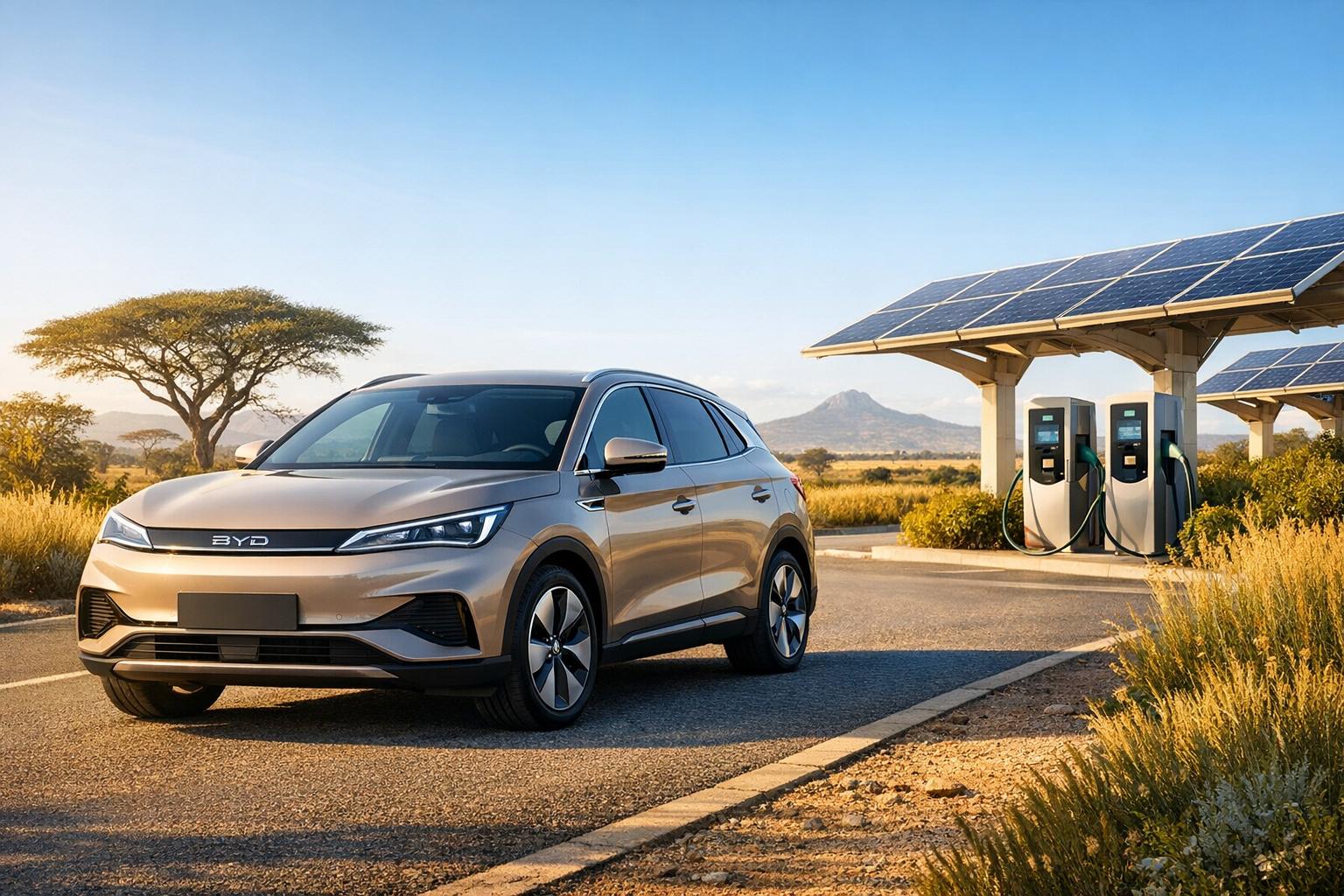
BYD is leading Africa’s electric vehicle (EV) market in 2026, operating in 17 countries. With models like the Dolphin Surf, Atto 3, and Tang EV, the company is targeting both budget-conscious buyers and premium consumers. The Dolphin Surf starts at $19,700 and is the most affordable EV in South Africa, addressing cost barriers. Meanwhile, the Atto 3 offers more range and space, priced between $47,200 and $51,300. For families or luxury seekers, the Tang EV provides high performance but comes with a premium price of approximately $72,000.
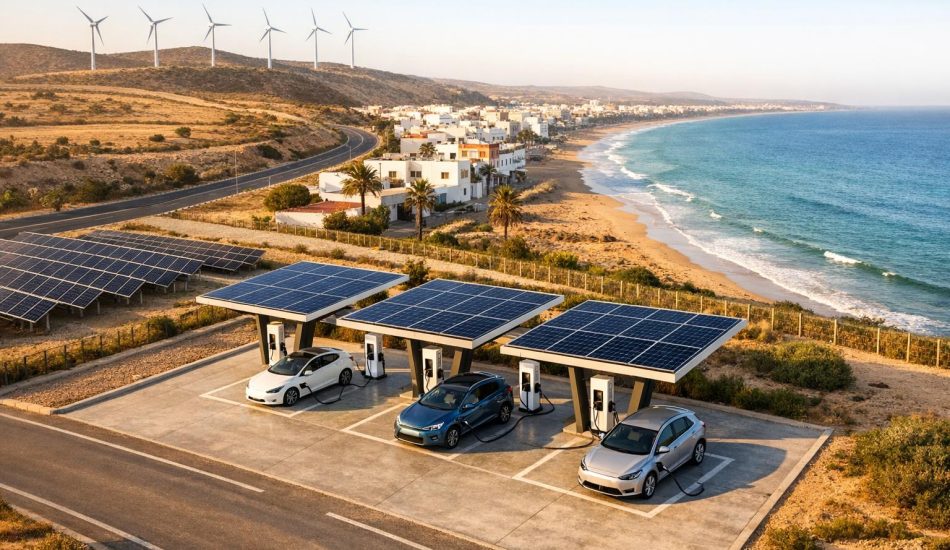
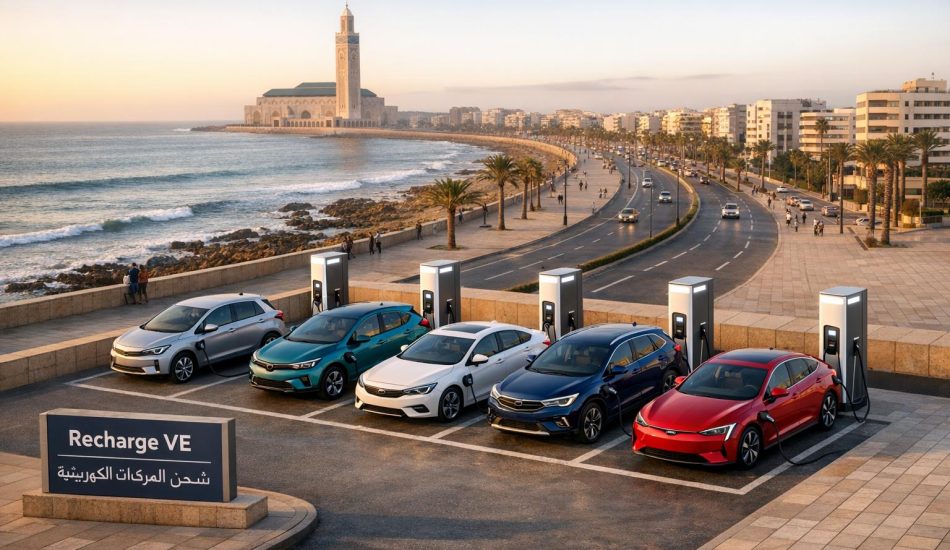
BYD is also tackling infrastructure challenges by planning 200–300 solar-powered charging stations in Africa by the end of 2026. However, high import duties (25% for EVs in South Africa) remain a hurdle for broader adoption. The African EV market, valued at $15–20 billion in 2025, is projected to grow to $30 billion by 2030, making affordability and infrastructure key to driving adoption.
Quick Overview of BYD Models in Africa 2026:
- Dolphin Surf: Compact hatchback for urban commuters; prices start at $19,700.
- Atto 3: Compact SUV with extended range; prices range from $47,200 to $51,300.
- Tang EV: Premium SUV with high-end features; priced at approximately $72,000.
BYD’s focus on affordability and infrastructure positions it as a key player in Africa’s growing EV market.
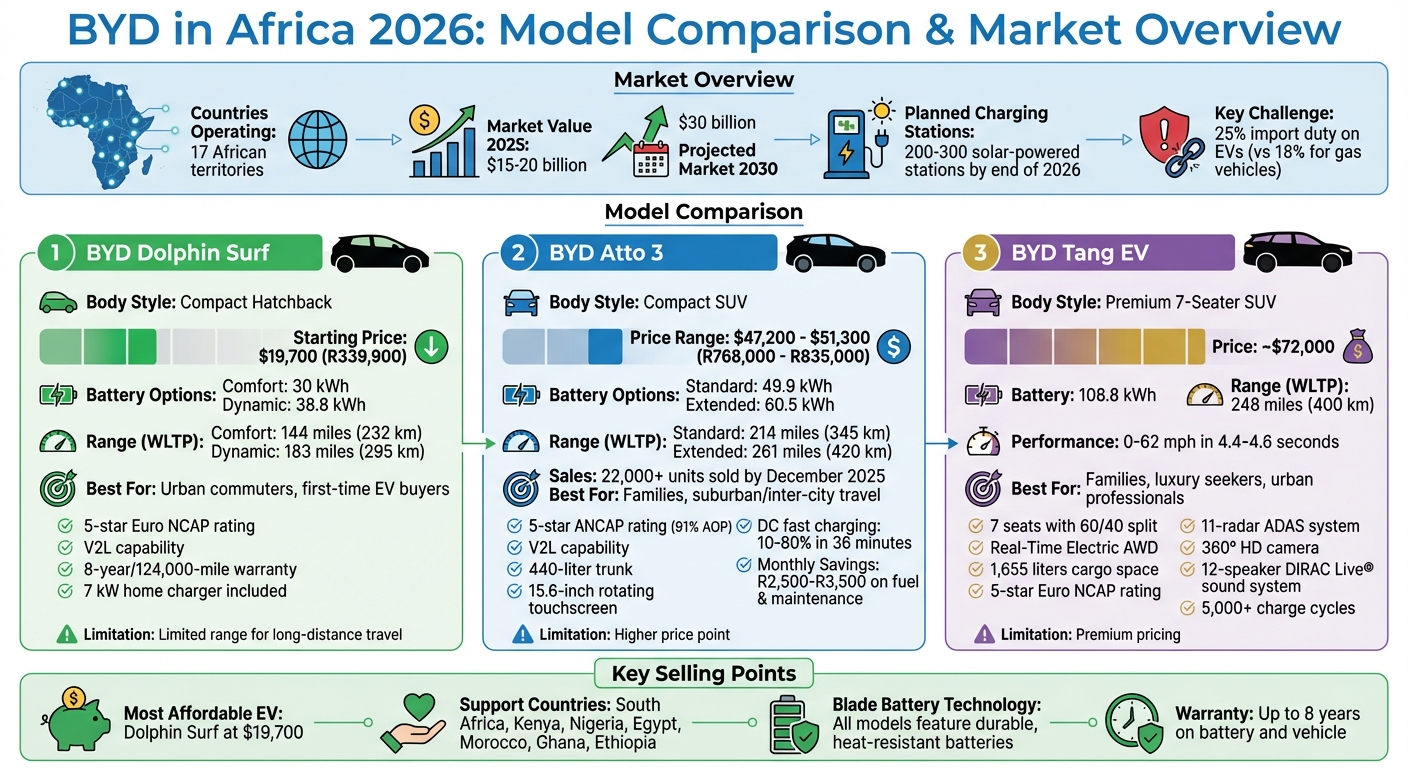
BYD Electric Vehicle Models in Africa 2026: Pricing and Specifications Comparison
1. BYD Dolphin
Popularity in African Markets
The BYD Dolphin made its debut in South Africa in late 2025, aiming to make electric vehicles (EVs) more accessible. The entry-level Dolphin Surf variant is priced at R339,900 (around $19,700), significantly undercutting the former budget-friendly option, the Dayun Yuehu S5, which was priced at R399,900. By offering a more affordable option, BYD is addressing two key challenges in the EV market: cost and accessibility.
"The BYD Dolphin Surf represents our belief that sustainable mobility shouldn’t be out of reach, it should be an exciting, everyday reality for real people, in real cities, living real lives."
This strategic pricing positions the Dolphin as a strong contender in the African EV market.
Key Features and Specifications
The Dolphin is designed with urban commuters in mind, measuring 3,990 mm (157 inches) in length – compact enough for city driving. Both trims of the Dolphin come equipped with Blade Battery technology, a 5-star Euro NCAP safety rating, and an 8-year/124,000-mile warranty.
- Comfort Trim: Features a 30 kWh battery, delivering an estimated WLTP range of 144 miles.
- Dynamic Trim: Upgrades to a 38.8 kWh battery, extending the range to approximately 183 miles.
Both variants include a standard 7 kW home wall charger and vehicle-to-load (V2L) functionality, which allows users to power external devices directly from the car’s battery. These features make the Dolphin not just a practical EV but also a versatile one, offering value beyond just transportation.
Pricing Trends and Affordability
When the original BYD model launched, it carried a price tag of R529,900 (around $30,700). However, the introduction of the Dolphin Surf at R339,900 (about $19,700) has redefined affordability in the market. The Dynamic trim, priced at R389,900 (approximately $22,600), also reinforces the brand’s commitment to competitive pricing.
It’s worth noting that EVs in South Africa face a 25% import duty, compared to just 18% for gas-powered vehicles. Despite this, experts believe that the Dolphin’s pricing could spark increased competition in the market, potentially driving prices down even further by 2026.
2. BYD Tang EV
Popularity in African Markets
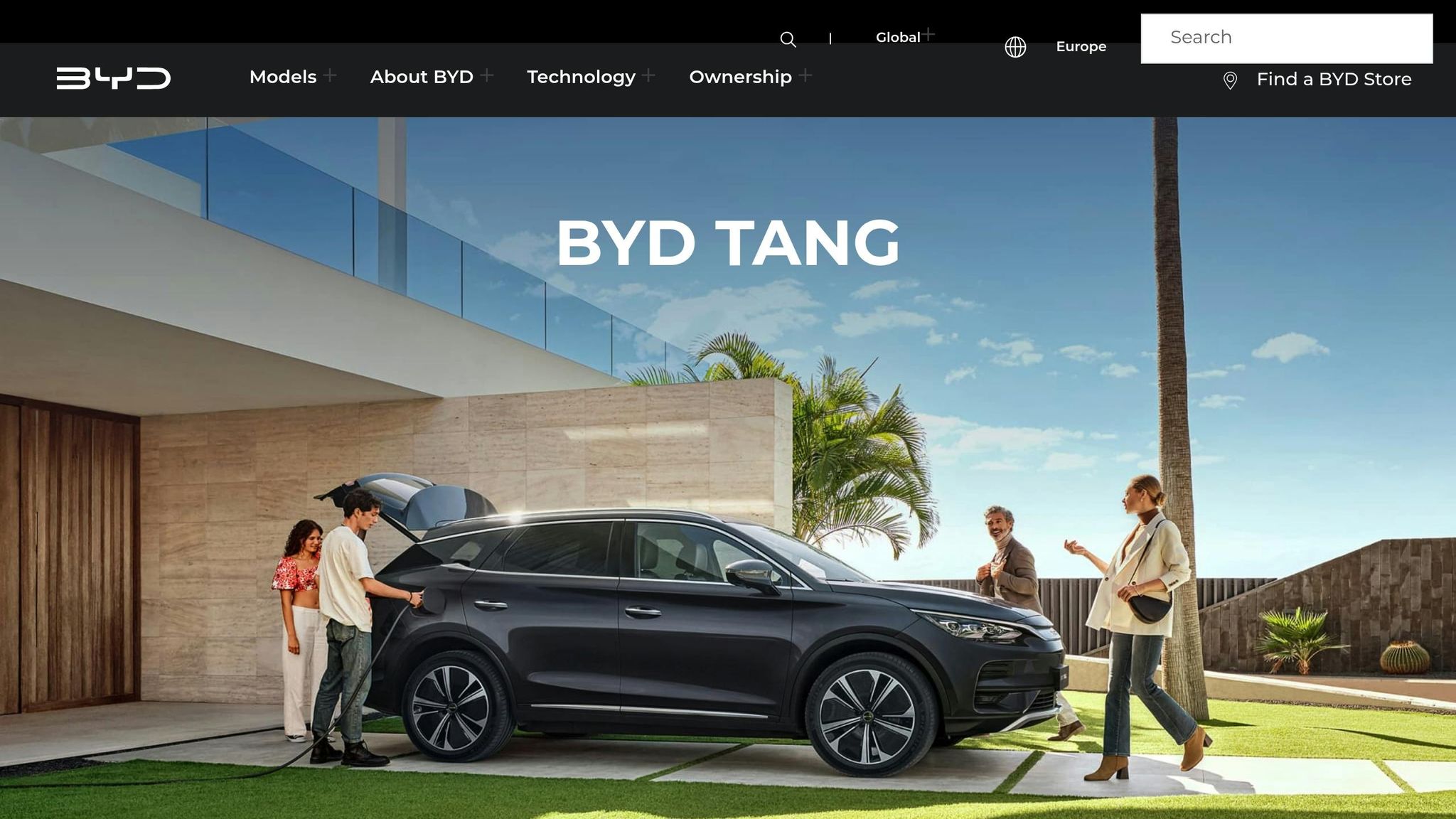
The BYD Tang EV is built for families and adventurers who need plenty of space and versatility. With seven seats and a 60/40 split, fold-flat rear design, it’s perfect for large families or group trips. Its Real-Time Electric All-Wheel Drive (AWD) system adapts seamlessly, switching to front-wheel drive for efficiency or engaging AWD for improved traction. This makes it a great fit for Africa’s varied and often challenging road conditions.
BYD offers support for Tang EV owners in countries like South Africa, Kenya, Nigeria, Egypt, Morocco, Ghana, and Ethiopia. The vehicle’s Blade Battery, known for its durability, has passed nail penetration tests under extreme heat, ensuring it performs reliably in hot climates. With a lifespan of over 5,000 charge and discharge cycles, the battery is built to last. These features reflect a thoughtful design tailored to the needs of the region.
Key Features and Specifications
The Tang EV is powered by a 108.8 kWh battery, delivering a WLTP combined range of 248 miles (400 km). It’s not just about range, though – the Tang EV accelerates from 0 to 62 mph in just 4.4–4.6 seconds, offering sports-car-level performance in a family-friendly SUV. With 1,655 liters (58.4 ft³) of cargo space behind the front row, it’s well-suited for long trips or heavy-duty use.
Safety is a top priority, with features like an 11-radar ADAS system, a 360-degree HD surround-view camera, and 25 advanced safety technologies. These earned the Tang EV a 5-star Euro NCAP rating. Its braking system can bring the car to a stop from 62 mph in just 118 feet (36 meters). Inside, passengers can enjoy a premium experience with 31-color ambient lighting and a 12-speaker sound system featuring DIRAC Live® technology.
Pricing Trends and Affordability
The Tang EV starts at around $72,000, placing it firmly in the premium SUV category when compared to BYD’s more affordable models. This price point makes it less accessible for many middle-income buyers in Africa. Adding to the cost, South Africa imposes a 25% import duty on fully electric vehicles, along with ad valorem taxes that are 7% higher than those for internal combustion engine cars.
While BYD’s other premium models, like the Seal, are priced at over $68,700 in South Africa, the company is focusing on smaller, more affordable models to appeal to a broader audience. However, the Tang EV remains a high-end choice for those who prioritize space, performance, and the capabilities of a full-size electric SUV.
3. BYD Atto 3
Popularity in African Markets
Building on the family-focused Tang EV, the BYD Atto 3 is designed with urban efficiency and practicality in mind. By December 2025, over 22,000 units of the Atto 3 had been sold. Its standout feature is the Vehicle-to-Load (V2L) capability, which lets owners power essential home appliances during outages – a game-changer for regions dealing with frequent load shedding. Additionally, its suspension system has been fine-tuned to handle local road conditions, ensuring a smoother ride over potholes and rough terrain. This makes the Atto 3 a more reliable choice for long-distance travel compared to earlier models.
Key Features and Specifications
The Atto 3 comes in two versions, catering to different needs:
- Standard Range: Features a 49.9 kWh battery, delivering a WLTP range of 214 miles (345 km).
- Extended Range: Offers a 60.5 kWh battery with a WLTP range of 261 miles (420 km). In real-world conditions, this version typically achieves 205–217 miles (330–350 km). It also supports faster DC charging at 88 kW, allowing a 10–80% charge in about 36 minutes, compared to 70 kW on the Standard Range.
Inside, the Atto 3 prioritizes family comfort with a completely flat floor that provides class-leading rear legroom and a spacious 440-liter (15.5 ft³) trunk. The 2026 model introduces a 15.6-inch rotating touchscreen with seamless wireless Android Auto and Apple CarPlay connectivity. A new "Dark Knight" black interior option adds a sleek, practical touch. On the safety front, the Atto 3 boasts a 5-star ANCAP rating and a 91% score for Adult Occupant Protection, underscoring BYD’s focus on reliability and peace of mind for drivers across Africa.
Pricing Trends and Affordability
| Model | Price | Battery | WLTP Range |
|---|---|---|---|
| Atto 3 Standard Range | $47,200 (R768,000) | 49.9 kWh | 214 miles (345 km) |
| Atto 3 Extended Range | $51,300 (R835,000) | 60.5 kWh | 261 miles (420 km) |
Both models include a 5-year/62,000-mile (100,000 km) maintenance plan and an 8-year/99,000-mile (160,000 km) battery warranty. While the Atto 3 falls into the mid-range price bracket, its operational savings make it a smart investment. Owners typically save around R2,500–R3,500 per month on fuel and maintenance. Maintenance costs average R135 compared to R600 for traditional vehicles, and off-peak charging costs roughly R121, a fraction of the over R1,200 spent on petrol for similar mileage.
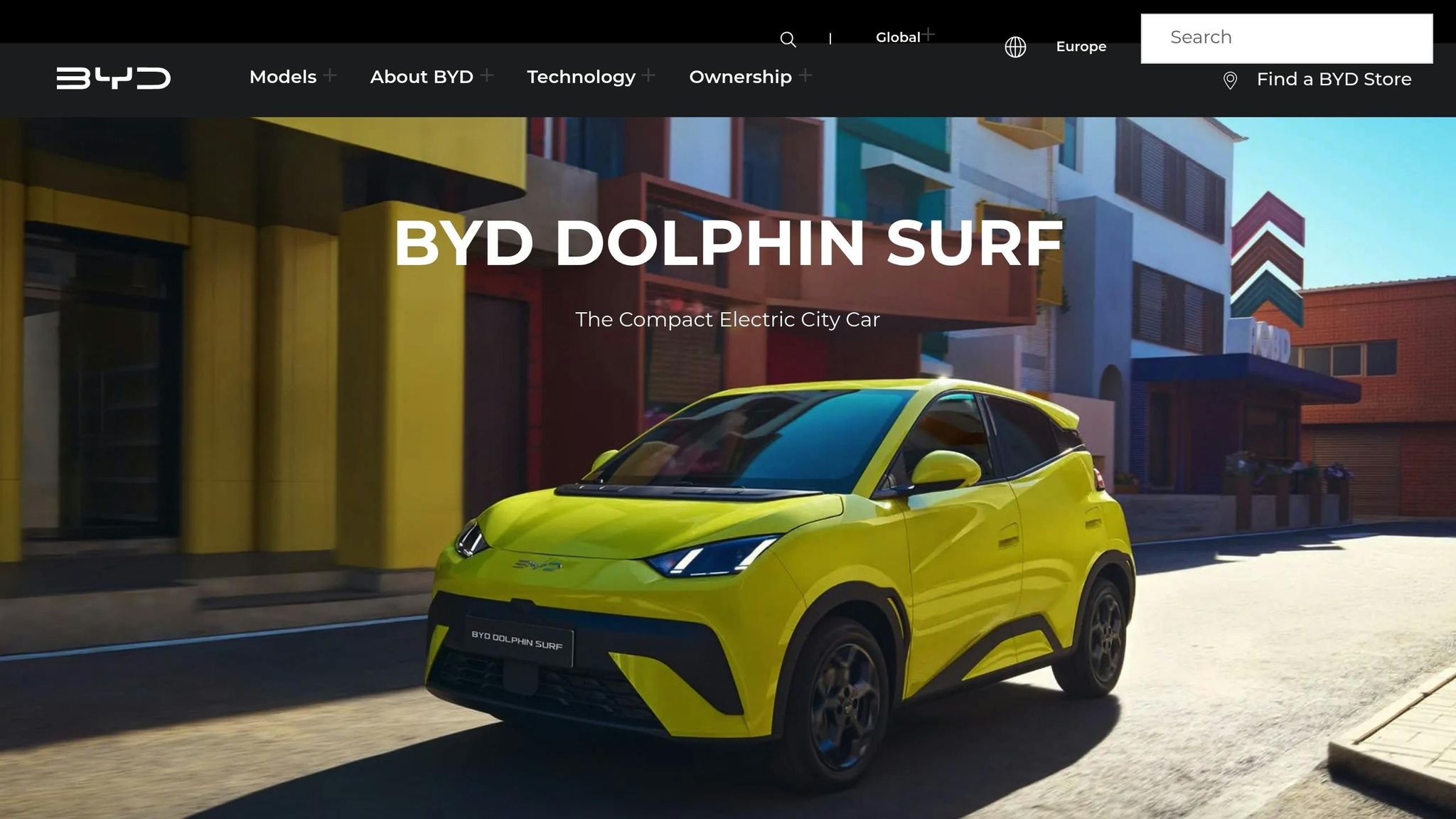
New 2026 BYD Dolphin Surf – This Affordable EV Hatchback Shocks Everyone
sbb-itb-99e19e3
Pricing Patterns and Cost Analysis
BYD’s pricing strategy in Africa reflects the challenges posed by varying import duties and tax structures across the continent. For instance, in South Africa – Africa’s largest market for electric vehicles – EVs are hit with a 25% import tariff, significantly higher than the 18% duty imposed on gasoline vehicles. On top of that, ad valorem taxes further drive up the retail prices of imported EVs.
In terms of pricing, BYD’s models in South Africa range widely, starting at under $23,200 for the entry-level Dolphin Surf and climbing to $68,700 for the high-end Seal AWD. This pricing spread highlights BYD’s aim to cater to diverse market segments. However, the elevated taxes make premium models out of reach for many buyers. The Dolphin Surf, launched in September 2025, was introduced to address affordability concerns and encourage competitors to reevaluate their pricing strategies.
To counter these cost challenges, local production is gaining traction as a way to lower expenses. Countries like Kenya are shifting from importing fully assembled vehicles to local assembly, while Ethiopia is working on creating a full value chain – from lithium mining to vehicle manufacturing. BYD has also hinted at the possibility of establishing local manufacturing in South Africa, following the example of their Brazilian plant, if market demand justifies the investment.
Meanwhile, automakers and advocacy groups are urging African governments to reform the steep import duties, arguing that such changes are essential for driving EV adoption. The African EV market, valued at $15–20 billion in late 2025, is expected to grow to $30 billion by 2030. This growth could accelerate significantly if tax barriers are reduced.
Advantages and Disadvantages
Each BYD model offers a mix of benefits and challenges tailored to African buyers. The Dolphin Surf takes the spotlight as the most budget-friendly EV option, making it the least expensive new electric vehicle in South Africa. It boasts a 5-star Euro NCAP safety rating and V2L (Vehicle-to-Load) capability, allowing it to power external devices. However, its range – about 144 miles (232 km) for the Comfort trim and 183 miles (295 km) for the Dynamic trim – might not be ideal for those who frequently travel long distances or live in areas with limited charging options.
Stepping up from the Dolphin, the Atto 3 offers more space and a longer range. This compact SUV is well-suited for families, thanks to its roomy interior and added cargo capacity. Its extended range makes it a solid choice for suburban or inter-city travel, especially with BYD’s plan to establish 300 fast-charging stations across South Africa by the end of 2026. However, its price tag of R768,000 ($44,500) may be a hurdle for middle-income buyers.
For those seeking luxury and performance, the Tang EV targets urban professionals with high-end features. While specific pricing for Africa hasn’t been disclosed, its premium positioning makes it a choice for buyers looking for advanced capabilities and comfort. However, this also places it out of reach for many due to its high cost.
Across all models, common challenges remain. Elevated import duties and uncertain resale values in Africa’s emerging EV market are notable obstacles. Ming Xing, BYD South Africa’s Brand and Marketing Manager, emphasized the company’s vision:
"The BYD Dolphin Surf represents our belief that sustainable mobility shouldn’t be out of reach, it should be an exciting, everyday reality for real people".
| Model | Body Style | Range (WLTP) | Best For | Key Limitation |
|---|---|---|---|---|
| Dolphin Surf Comfort | Compact Hatchback | ~144 miles (232 km) | Urban commuters, first-time EV buyers | Limited range for long-distance travel |
| Dolphin Surf Dynamic | Compact Hatchback | ~183 miles (295 km) | Daily city driving, occasional highway | Compact interior space |
| Atto 3 | Compact SUV | Extended range | Families, suburban/inter-city travel | Higher price point |
| Tang EV | Premium SUV | High performance | Urban professionals, luxury seekers | Premium pricing |
Conclusion
BYD has established itself as a leader in Africa’s EV market, operating in 17 territories as of late 2025. Their success stems from tackling two key obstacles to EV adoption: high upfront costs and limited charging infrastructure. Models like the Dolphin Surf and Atto 3 play a central role in this approach, offering affordability and practicality. Additionally, BYD aims to bolster its presence by installing 200 to 300 charging stations in South Africa by the end of 2026.
For buyers, finding the right EV depends on budget and lifestyle. Urban drivers on tighter budgets might lean towards the Dolphin Surf, which offers vehicle-to-load capabilities – handy during power outages. On the other hand, families needing more room and range might prefer the Atto 3. Beyond the purchase price, the potential savings from BYD’s expanding charging network are worth considering.
This buyer-centric strategy aligns with broader market dynamics. Investors should keep an eye on emerging EV hotspots outside South Africa, such as Morocco, Ghana, Egypt, Kenya, and Ethiopia, which are experiencing rapid growth. That said, challenges persist – South Africa’s 25% tariff on EVs, compared to 18% on gas-powered cars, creates a pricing disadvantage that could hinder wider adoption.
The introduction of sub-$25,000 EV models could drive competition among manufacturers, potentially accelerating adoption across the continent. Platforms like EV24.africa also make it easier for buyers to compare models, access transparent pricing, and arrange delivery across all 54 African nations.
FAQs
What is BYD doing to address high import taxes on EVs in Africa?
BYD is making strides to strengthen its footprint in Africa by rolling out popular models like the Dolphin Surf, Sealion 7, and Atto 3. To support this push, the company is also committing to infrastructure development, including plans to establish up to 300 fast-charging stations across South Africa by 2026. These initiatives aim to make owning an electric vehicle (EV) more convenient and attractive for local buyers.
At the same time, South African authorities are taking steps to boost local EV production, which could potentially ease the burden of import taxes for manufacturers that set up assembly plants in the region. Despite these efforts, BYD has yet to announce plans for local assembly facilities or agreements that might directly lower import duties. As a result, tariffs continue to play a significant role in shaping the cost of their EVs in the African market.
Why is the Dolphin Surf considered an affordable EV option for African buyers?
The Dolphin Surf is an appealing option for buyers in Africa, thanks to its price range of about $19,000 to $23,000. Its compact hatchback design, combined with a 30–38 kWh Blade battery and simple features, helps keep manufacturing costs down while ensuring everyday usability.
This combination makes the Dolphin Surf one of the most cost-effective electric vehicles available in the region, providing an accessible way for individuals to embrace electric mobility without straining their budget.
What is BYD doing to improve EV charging infrastructure in Africa by 2026?
BYD is taking steps to expand EV charging infrastructure in Africa, starting with South Africa. By mid-2026, the company plans to roll out a megawatt-scale fast-charging network. These high-power stations will be designed to charge multiple vehicles simultaneously, aiming to cut down charging times for BYD’s growing lineup of electric vehicles.
This initiative is part of BYD’s broader goal to establish a dependable charging network across the continent. The focus is on providing fast and efficient charging solutions in key African markets as the demand for electric vehicles continues to grow.