
 Thabo Nkosi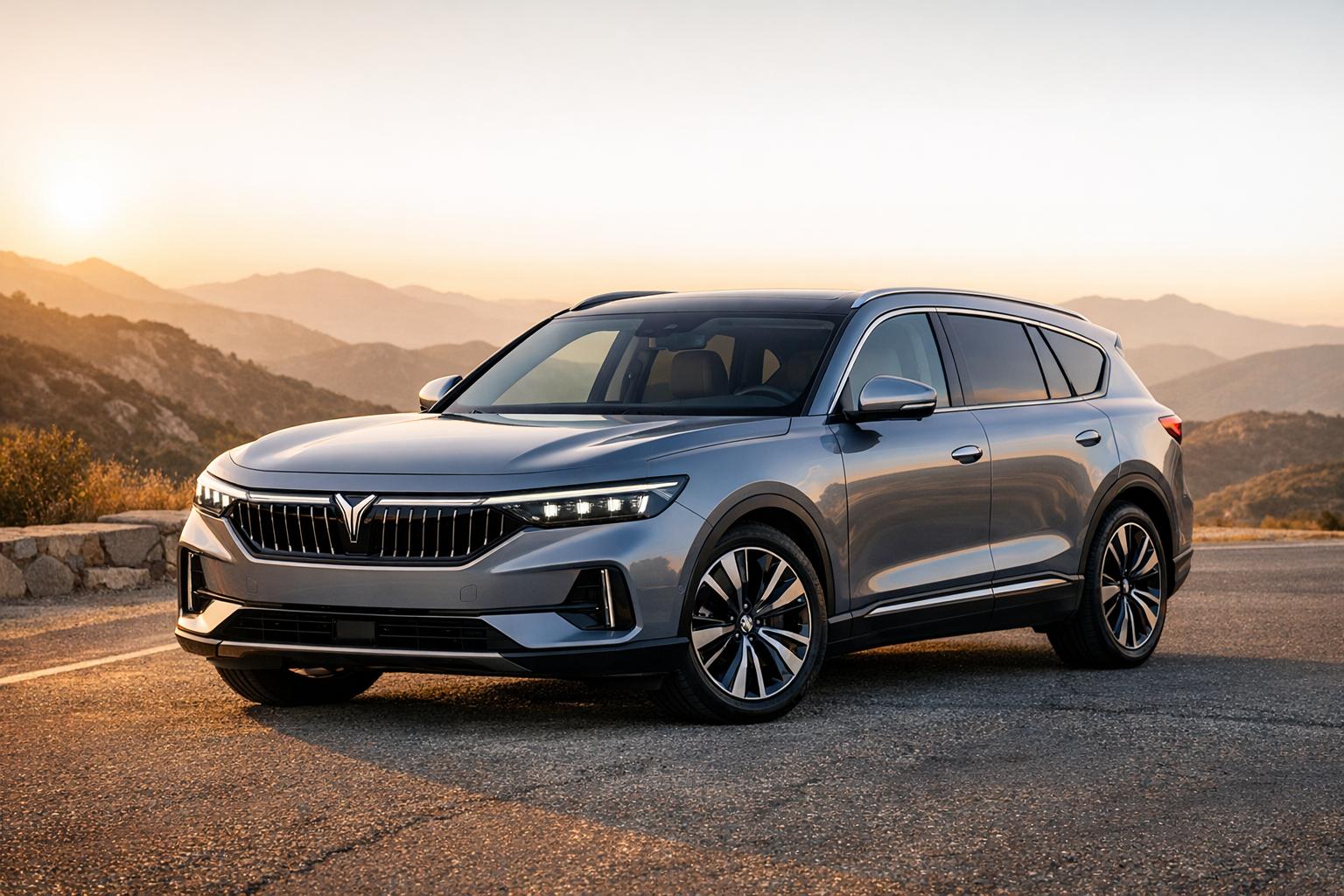
The Dongfeng Voyah Free enters the EV market with a mix of luxury, performance, and practicality. With a starting price of $50,000–$56,200, it offers features like a 694-hp AWD system, 906-mile range (EREV variant), and advanced tech like a triple-screen dashboard and night vision. Competing against models like the Tesla Model Y, BYD Tang EV, and Audi e-tron, it stands out for its Extended Range Electric Vehicle (EREV) option, making it suitable for areas with limited charging infrastructure.
Key Highlights:
- Performance: 0–62 mph in 4.4 seconds (694 hp, 1,040 Nm torque).
- Range: 906 miles (EREV) or 392 miles (pure EV) with fast charging (20–80% in 20 minutes).
- Luxury Features: Retractable triple screens, air suspension, night vision, vegan leather.
- Pricing: EREV starts at ~$46,000; pure EV ranges from ~$51,000 to $56,200.
- Challenges: Limited service network, occasional safety system intrusiveness, and infotainment lag.
Quick Comparison
| Feature | Voyah Free | Tesla Model Y | Audi e-tron | BYD Tang EV |
|---|---|---|---|---|
| Power Output | 694 hp | 514 hp | 402 hp | N/A |
| 0–62 mph | 4.4 sec | 4.8 sec | 5.7 sec | N/A |
| Range (WLTP) | 311 mi (EV) / 906 mi (EREV) | ~330 mi | 273 mi | N/A |
| Starting Price | $50,000–$56,200 | ~$47,000 | $70,000+ | ~$46,000 |
| Key Advantage | Long EREV range | Charging network | Luxury interior | 7-seater option |
| Main Drawback | Limited service | Stiff ride | Shorter range | Basic tech features |
The Voyah Free delivers strong performance and range, especially with its EREV variant, but faces hurdles like limited global service availability and some tech drawbacks. It’s an option worth considering for those prioritizing long-distance capability and luxury.
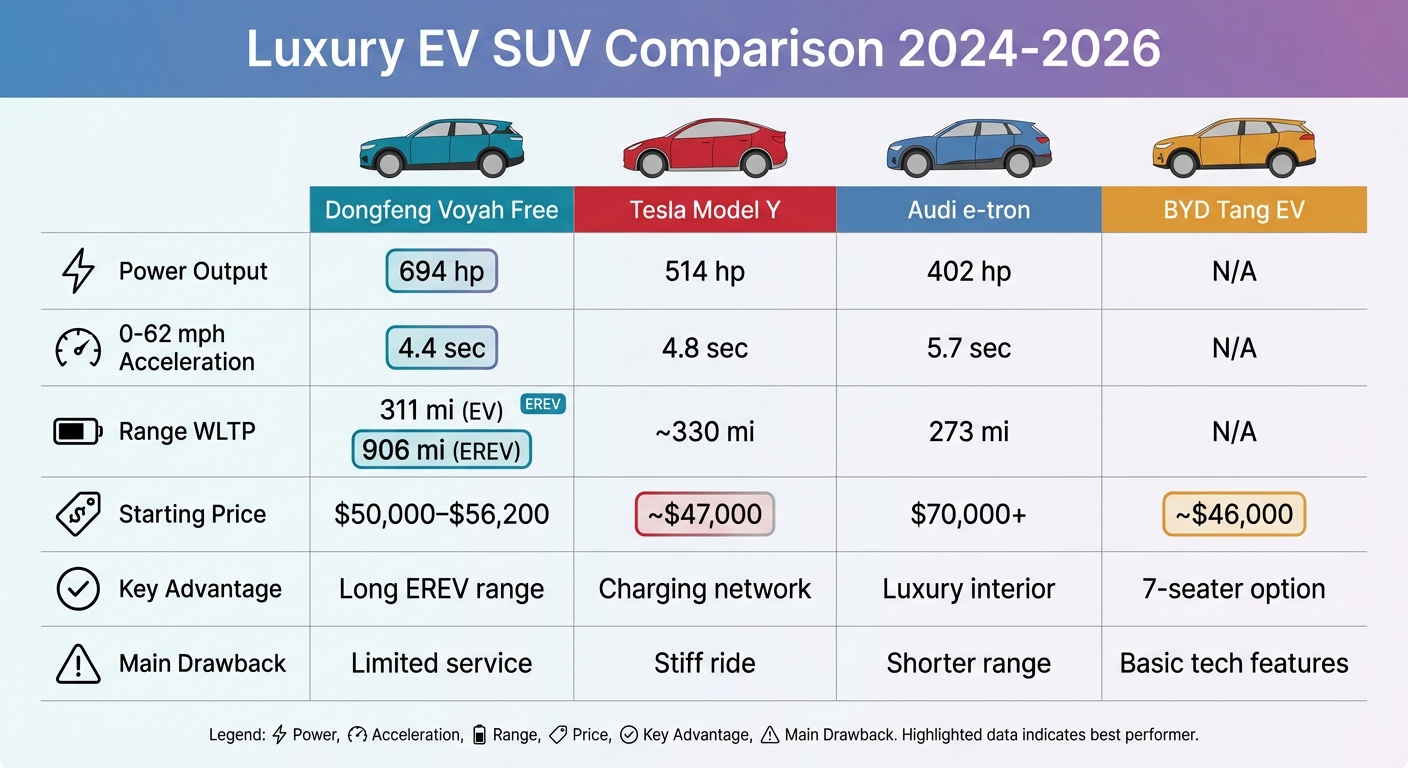
Dongfeng Voyah Free vs Tesla Model Y vs Audi e-tron vs BYD Tang EV Comparison Chart
2024 Voyah Free is a Luxury Electric SUV From China (ENG) Test Drive and Review
1. Dongfeng Voyah Free
The Voyah Free has made quite an impression with its powerful performance and cutting-edge features, positioning itself as a strong contender in the electric SUV market.
Performance and Driving Dynamics
The Voyah Free doesn’t just look bold – it performs that way too. The top-tier Voyah Free DNA variant packs a punch with 510 kW (684 hp) and 1,040 N⋅m of torque, allowing it to sprint from 0 to 62 mph in just 4.3 seconds. Even the standard EREV model is no slouch, clocking in at 4.6 seconds, which is quicker than many rivals in its price bracket.
Underneath, the vehicle is built with high-quality suspension components, including front double wishbone and rear multi-link setups mounted on all-aluminum subframes. Certain models are equipped with air suspension that automatically lowers in Sport mode, improving both aerodynamics and handling. With a drag coefficient of 0.28, it outperforms competitors like the Audi Q5L (0.30) and Li One (0.32).
According to Wheelsboy, "the vehicle drives like something that’s worth $55,000", with reviewers praising its powerful acceleration and smooth ride quality.
That said, the Level 2 driver assistance system has drawn criticism for its overly frequent steering adjustments, which can feel intrusive.
Battery and Range
The Voyah Free offers two distinct powertrain options to suit different needs. The pure EV model comes with a 106.7 kWh battery, providing a range of up to 631 km (392 miles) under the CLTC standard. Meanwhile, the EREV (Extended Range Electric Vehicle) variant uses a 1.5L turbocharged engine as a generator, pushing the total range to an impressive 1,458 km (906 miles).
The 2025 Free+ model introduces 3C fast charging, allowing the battery to go from 20% to 80% in just 20 minutes. It also includes V2L (Vehicle-to-Load) capability with a power output of up to 6 kW, which is perfect for powering tools or camping gear – especially useful in areas with unreliable electricity.
Interior and Technology
Inside, the Voyah Free feels futuristic and luxurious. Three motorized 12.3-inch screens rise from the dashboard when the car starts. For the 2025 Free+, the cabin gets a tech boost with Huawei’s HarmonyOS Cockpit 5, which features a 15.6-inch 2K central touchscreen, a 29-inch AR-HUD, and a 10.25-inch digital instrument cluster.
The interior materials include OEKO-TEX certified vegan leather, and the front seats come with massage, ventilation, and heating functions. Tech highlights include an active night vision system capable of spotting pedestrians and animals up to 492 feet (150 meters) away, a 1.78 m² dimmable panoramic roof, and a 22-speaker Huawei Sound system. The Free+ also incorporates Huawei’s ADS 4.0 autonomous driving system, which uses 29 sensors, including LiDAR, for L2-level semi-autonomous capabilities.
Market Suitability
With these features, the Voyah Free offers a lot of value for its price. In China, the 2025 Voyah Free+ EREV starts at approximately $30,650, while international prices for the pure EV models range from $51,000 to $56,200. The EREV base model is priced around $46,000. For regions with limited charging infrastructure, the EREV variant is particularly appealing, as its 43.2 kWh battery provides 196–235 km (122–146 miles) of pure electric range.
However, the infotainment system has been criticized for lagging behind competitors, and some safety alerts may feel overly intrusive. Additionally, potential buyers outside China, Norway, and the UAE should ensure that service networks are available in their area, as coverage remains limited.
2. Tesla Model Y
The Tesla Model Y stands out in the electric SUV market by blending performance, efficiency, and cutting-edge technology. Let’s take a closer look at what the 2026 Model Y brings to the table.
Performance and Driving Dynamics
The 2026 Model Y offers impressive performance across its variants. The Performance model sprints from 0 to 60 mph in just 3.3 seconds, while the Long Range AWD version completes the same in 4.8 seconds. However, it falls short when compared to the Voyah Free, which goes from 0 to 100 km/h in 4.4 seconds. The Model Y delivers 514 hp (378 kW) and 493 N⋅m of torque, making it a capable performer for most driving needs.
That said, ride comfort has been a point of criticism. Owners have reported issues like phantom braking when using Autopilot. Unlike the Voyah Free, which features adaptive air suspension with its "Magic Carpet" mode, the Model Y relies on a standard suspension setup that can feel stiff on uneven roads.
Battery and Range
Tesla’s efficiency game is strong, with the Model Y achieving 165 Wh/km thanks to its 75.0 kWh battery. While its battery is smaller than the Voyah Free’s 106.7 kWh pack, the Model Y offers a solid range. Under mild conditions (73°F), it delivers a combined range of 326 miles, with city driving pushing that figure up to 407 miles. The EPA estimates the Premium RWD trim can reach up to 357 miles.
Charging is another area where the Model Y shines. With support for up to 250 kW DC fast charging, it can add 182 miles in just 15 minutes and go from 10% to 80% in 27 minutes . This is significantly faster than the Voyah Free, which takes 45 minutes to achieve the same charge level.
Interior and Technology
Tesla has refreshed the Model Y’s interior for 2026, maintaining its minimalist design. The centerpiece is a 15.4-inch touchscreen that controls nearly all vehicle functions. The updated cabin features higher-quality materials, an optional 8.0-inch rear-seat display, and available ventilated front seats. However, heavy reliance on the touchscreen has drawn criticism for the lack of physical controls, which some find distracting while driving.
As Car and Driver notes, "The Model Y is a distinctively modern and sometimes quirky EV SUV that offers more range and quicker acceleration than many of its competitors".
The Model Y takes a practical approach, offering an optional third row for seven-passenger seating. Tesla’s proprietary Full Self-Driving (FSD) system has also been a topic of debate. Tech journalist Tim Stevens remarked:
"At best, driving with FSD on is like riding shotgun with a pimply 15-year-old with a freshly minted learner’s permit in their pocket".
Market Suitability
The 2026 Model Y is priced between $41,630 and $61,630, making it a more budget-friendly option compared to the Voyah Free, which is estimated at $70,000 . With its efficiency, competitive pricing, and Tesla’s extensive Supercharger network, the Model Y is an appealing choice for U.S. buyers. However, its firm suspension and reliance on touchscreen controls may not satisfy those seeking a more luxurious driving experience. Car and Driver gave it a 9/10 rating for 2026, commending its range and acceleration while pointing out concerns with ride comfort.
3. BYD Tang EV
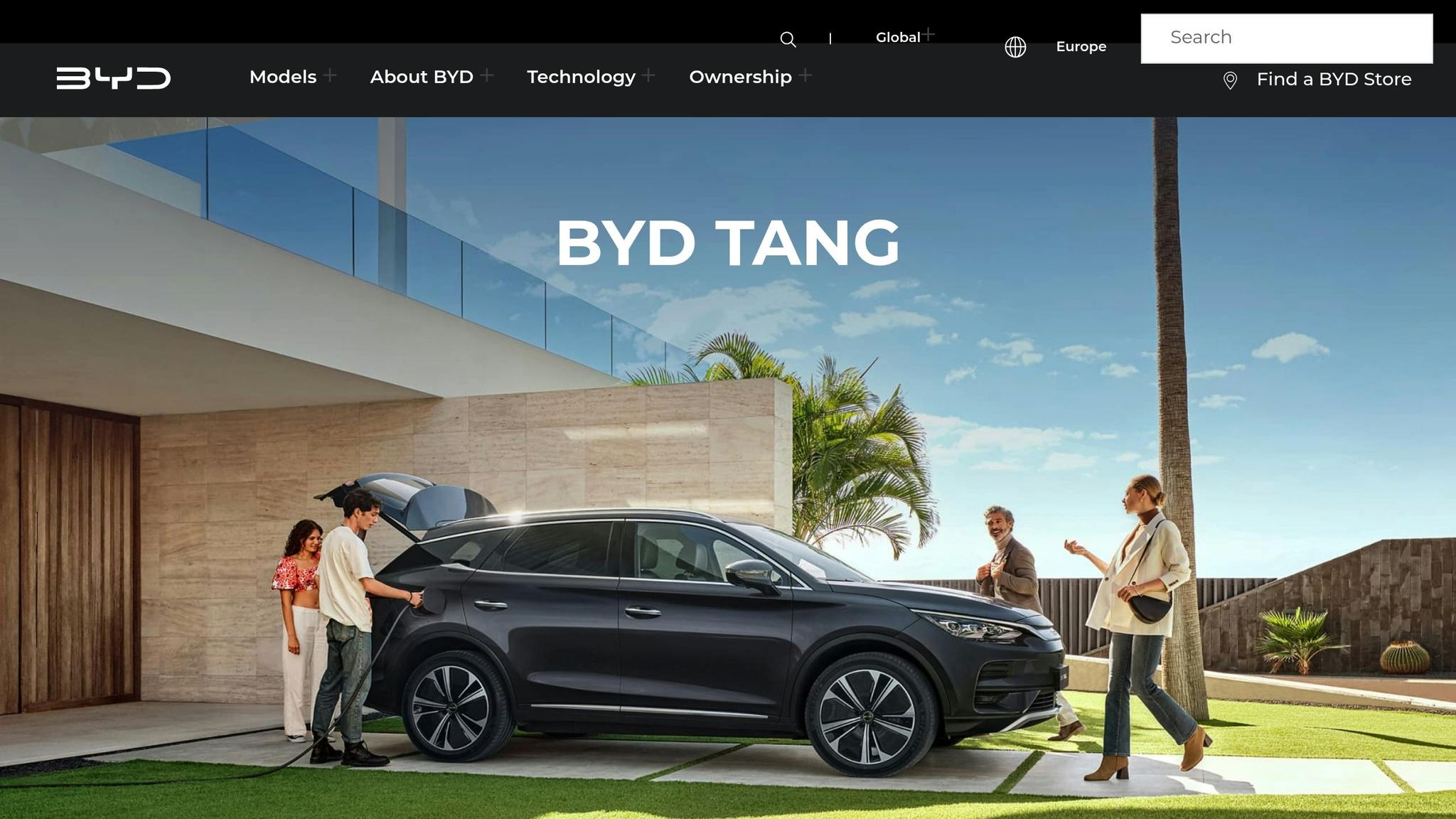
The BYD Tang EV stands out as a 7-seater family SUV, comparable in size to the Kia Sorento, designed to deliver practical electric mobility without breaking the bank. Unlike the luxury-oriented Voyah Free, the Tang EV caters to a more budget-conscious market, offering a different perspective in this comparison.
Performance and Driving Dynamics
While detailed acceleration stats for the Tang EV are hard to come by, reviewers highlight its smooth, comfort-first driving experience – a clear departure from the Voyah Free’s sporty 0–62 mph sprint. BHPian Ovais shared his impressions after riding in the Tang EV:
"I’ve had the chance to ride a Tang and the drive felt quite good. It was well‑insulated and the material used on the interior felt quite premium."
The Tang EV opts for a traditional suspension system that prioritizes stability and family comfort over the adaptive air suspension with its 3.9-inch adjustment range found in the Voyah Free.
Now, let’s take a closer look at the Tang EV’s interior and tech features.
Interior and Technology
Inside, the Tang EV features a large central touchscreen, with design elements reminiscent of Audi’s interiors. The use of quality materials creates a polished feel, but it doesn’t quite match the advanced features of the Voyah Free, such as OEKO-TEX certified vegan leather or motorized triplex screens. However, its standout feature is the inclusion of two extra seats, making it the only 7-seater BEV in its size class.
Market Suitability
When it comes to value, the Tang EV is a compelling choice. It’s priced similarly to a plug-in hybrid Kia Sorento, offering a rare 7-seater option in a segment where most BEV SUVs accommodate only five passengers. Distinguished BHPian 14000rpm summed it up well:
"The Tang is a 7 seater BEV the size of a KIA Sorento and is being sold for the same price as a PHEV KIA Sorento. All similar sized BEV SUVs are currently only 5 seaters and priced way higher."
For families seeking a practical, budget-friendly alternative in the EV market, the Tang EV delivers an attractive solution.
sbb-itb-99e19e3
4. Audi e-tron
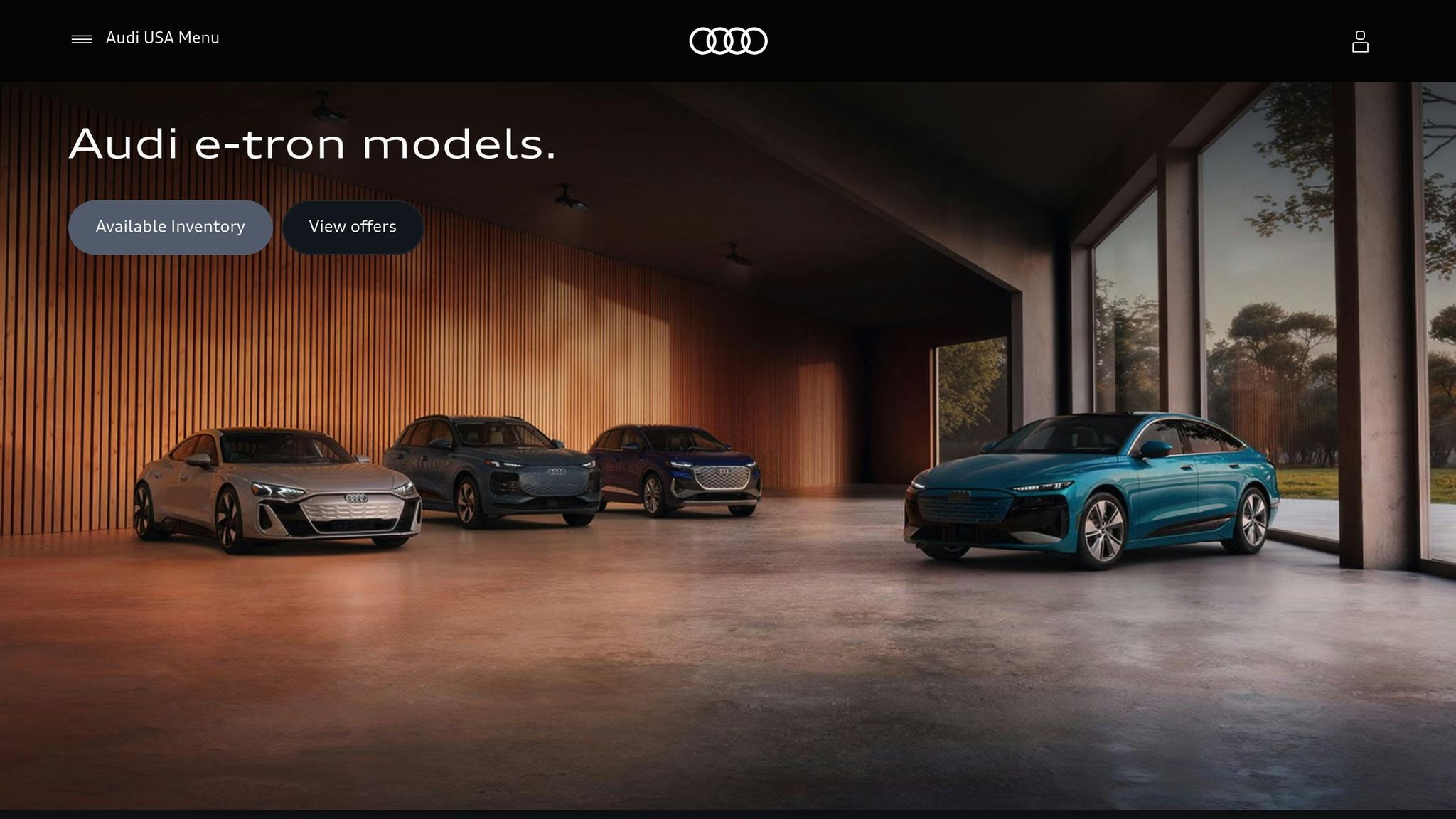
The Audi e-tron represents the pinnacle of German luxury and comfort, standing in contrast to the tech-heavy approach of the Voyah Free. With a starting price of $75,795 for the 2019 model, the e-tron clearly positions itself as a premium offering compared to the Voyah Free’s $56,200 price tag.
Performance and Driving Dynamics
True to its luxury branding, the e-tron prioritizes a smooth and comfortable driving experience. It delivers up to 402 hp in Sport mode, paired with 414–490 lb-ft of torque. Car and Driver highlights its "snappy acceleration typical of EVs." However, unlike the Voyah Free, which boasts a 0–62 mph sprint in just 4.4 seconds, the e-tron focuses on refined and quiet acceleration rather than outright speed. For those seeking more excitement, the e-tron S variant steps up with a three-motor setup producing 496 bhp, achieving 0–62 mph in 4.5 seconds. However, this enhanced performance comes at the cost of a reduced range, offering about 223 miles.
Battery and Range
The 2019 e-tron’s 95.0 kWh battery provides an EPA-rated range of 204 miles. In comparison, the Voyah Free Long Range, equipped with a larger 106.7 kWh battery, offers an estimated real-world range of approximately 341 miles (550 km). This shorter range has been a recurring critique among reviewers and may be a deciding factor for buyers prioritizing distance over luxury.
Interior and Technology
The e-tron’s interior is a testament to Audi’s commitment to luxury, blending top-tier materials with cutting-edge design. According to Move Electric, the build quality exudes a "bank vault" solidity. One standout feature is the Virtual Door Mirrors, which replace traditional side mirrors with sleek camera pods that display images on OLED screens inside the car, improving aerodynamics. The cabin also boasts Audi’s Virtual Cockpit and dual central touchscreens, though some reviewers have noted these interfaces can be tricky to use while driving.
As James Disdale from Move Electric puts it:
"The e-tron’s interior is a work of art, with a crisp modern design and more TFT displays and glossy touch screens than a large branch of PC World."
Practicality is another strength, with a spacious 660-liter trunk that surpasses competitors like the Jaguar I-Pace.
Market Suitability
The Audi e-tron has garnered strong reviews, earning an 8/10 from Car and Driver and a 4/5 rating from Move Electric. However, its shorter range and higher price may limit its appeal for buyers who prioritize performance or long-distance capability over luxury.
Advantages and Disadvantages
With a price range of $50,000–$56,200, the Voyah Free delivers luxury EV performance at a competitive cost. It comes in significantly below the Audi e-tron, saving buyers over $15,000 while packing a punch with 684 horsepower and 764 lb-ft of torque – far more than the e-tron’s 402 hp. Its quick acceleration cements its position as a strong contender in its class.
One of the standout features of the Voyah Free is its range flexibility. The pure EV version offers a solid 311-mile WLTP range, but for those who worry about running out of charge, the Extended Range Electric Vehicle (EREV) model is a game-changer, offering a combined range of up to 906 miles. Plus, the upcoming 2025 Free+ model includes 3C charging, allowing a 20–80% recharge in just 20 minutes. However, despite these impressive specs, the Voyah Free faces a few hurdles that could hinder its success in the U.S. market.
The biggest drawback is its limited service network, which currently operates mainly in China and Norway. Additionally, real-world testing of the 88 kWh variant revealed a disappointing range of less than 186 miles, falling short of its claimed 295-mile NEDC range. The infotainment system also lags behind competitors, and its touchpad interface feels outdated.
Safety features, while abundant, can be overly intrusive. Alerts from the systems are frequent, and the Level 2 driver assistance makes constant minor adjustments, which can erode driver confidence. Despite its 16.1-foot length, the vehicle’s rear cargo space is underwhelming due to a low roofline and the lack of under-floor storage.
Here’s a quick comparison of the Voyah Free with its competitors:
| Feature | Voyah Free | Tesla Model Y | Audi e-tron |
|---|---|---|---|
| Power Output | 684 hp | 514 hp | 402 hp |
| 0–62 mph | 4.4 sec | 4.8 sec | 5.7 sec |
| Range (WLTP) | 311 mi (EV) / 906 mi (EREV) | ~330 mi | 273 mi |
| Starting Price | $50,000–$56,200 | ~$47,000 | $70,000+ |
| Key Advantage | EREV range & luxury tech | Robust software ecosystem | Established German luxury |
| Main Drawback | Limited service network | Lacks traditional luxury features | Shorter range |
While the Voyah Free offers strong performance and impressive range options, its service limitations and a few design flaws might make some buyers think twice.
Conclusion
The Dongfeng Voyah Free makes a strong impression in the luxury EV market, offering a combination of powerful performance and high-end features. The high-performance AWD variant, for instance, boasts an impressive 694 horsepower and roughly 764 lb-ft of torque, allowing it to sprint from 0 to 62 mph in just 4.4 seconds. As Wheelsboy Review aptly put:
"if it looks like a premium vehicle, feels like a premium vehicle, and drives like a premium vehicle, then it’s a premium vehicle".
That said, no vehicle is without its shortcomings. In real-world testing, the 88 kWh pure electric version fell short of expectations, achieving a range of less than 186 miles – far below the manufacturer’s claim of 295 miles. This discrepancy could pose challenges for those without easy access to charging infrastructure. Additionally, the vehicle’s safety assistance and infotainment systems lack the refinement seen in some competitors, which is worth considering.
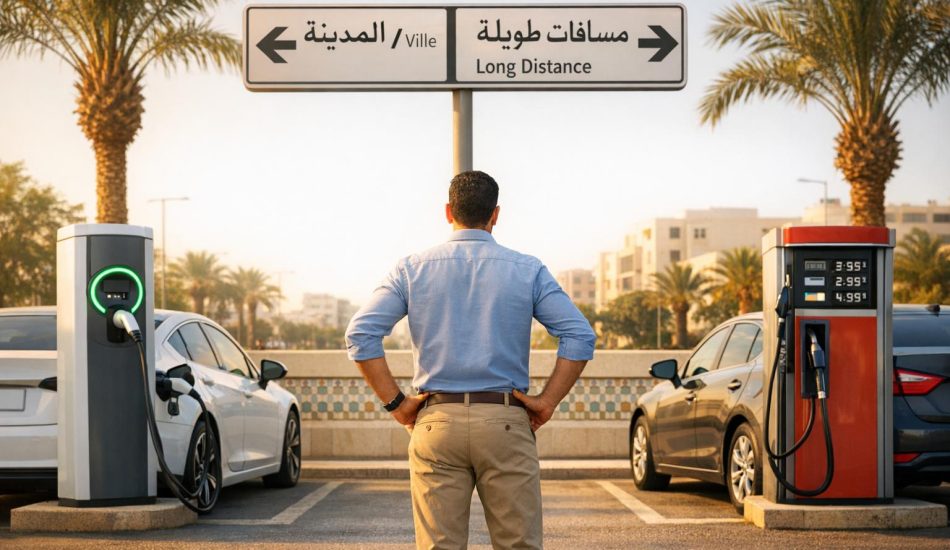
For those in search of a luxury EV that balances performance with practicality, the Voyah Free offers an intriguing option. The Extended Range Electric Vehicle (EREV) variant is particularly appealing for drivers who frequently cover long distances or live in regions with limited charging networks. With a combined range of up to 906 miles, this version is equipped with features like V2L external discharge, adaptive air suspension, and an active night vision system – amenities that are rare in this price range.
If versatility is your priority, the EREV variant stands out as the practical choice. Opting for a trim with adaptive air suspension can also enhance ride comfort on diverse road conditions. Before making a purchase, it’s wise to confirm local service availability to ensure proper support. Overall, the Voyah Free offers a compelling package for those willing to accept a few trade-offs in exchange for luxury and performance.
FAQs
Why is the Dongfeng Voyah Free’s EREV model ideal for regions with limited charging options?
The EREV (Extended Range Electric Vehicle) version of the Dongfeng Voyah Free pairs a 33 kWh battery with a 1.5-liter turbocharged generator. This combination delivers around 87 miles of all-electric driving and a total range of about 534 miles, based on NEDC estimates. This extended range means drivers can cover significant distances without needing frequent stops to recharge.
The generator works seamlessly with the battery, offering dependable performance even in areas where charging stations are scarce. This makes the EREV model a practical option for regions where charging infrastructure is still growing.
How does the Dongfeng Voyah Free balance luxury features with performance capabilities?
The Dongfeng Voyah Free brings together luxury and performance in a way that’s hard to ignore. Step inside, and you’re greeted by a Dynaudio Hi-Fi sound system for rich, immersive audio, a dimmable panoramic roof that adds elegance, and massage seats for ultimate relaxation. Safety gets a boost too, thanks to the Intelligent Active Night-Vision System. The cabin is crafted with high-end materials and features a three-screen digital cockpit, advanced climate control with air filtration, and even a fragrance diffusion system for an elevated driving experience.
When it comes to performance, this SUV doesn’t hold back. The rear-wheel-drive version delivers 347 hp and 384 lb-ft of torque, while the all-wheel-drive model takes it up a notch with 694 hp and 767 lb-ft, rocketing from 0 to 60 mph in just 4.4 seconds. Its 106 kWh battery provides a range of up to 392 miles, with an optional 139 kWh pack extending it to 597 miles. Plus, fast charging means you can juice up from 10% to 80% in roughly 30 minutes.
Blending advanced technology, refined comfort, and exhilarating power, the Voyah Free stands out as a premium choice in the electric SUV market.
What challenges might owners of the Dongfeng Voyah Free face with servicing and technology?
Owning a Dongfeng Voyah Free has its advantages, but it’s not without a few hurdles. One of the main challenges is the limited availability of service centers, as the brand’s dealer network in Africa is still in its early stages. This often leaves owners turning to online support or dealing with longer wait times for parts and repairs. Another consideration is the region’s developing charging infrastructure, which can make finding dependable charging options a bit of a hassle for some drivers.
On the tech front, the car’s advanced digital cockpit, which includes a sleek three-screen display, certainly enhances its luxury appeal. However, without strong local support, troubleshooting and software updates can become more complicated than expected. Lastly, while the manufacturer advertises an impressive range of up to 730 kilometers (about 454 miles), real-world conditions usually bring that figure closer to 550 kilometers (around 342 miles). For those planning longer trips, this could be a limiting factor. These are key points to weigh when thinking about the Voyah Free.