
 Thabo Nkosi
Switching to an EV in Africa can cut fuel and maintenance costs by about 45%, with charging being 50–70% cheaper than gasoline. This list focuses on budget-friendly, road-ready EVs available in key markets like South Africa, Nigeria, Kenya, Egypt, and Morocco. Each car is ranked based on price, range, charging speed, and suitability for African roads.
Top Picks:
- BYD Dolphin – Affordable compact hatchback starting at $18,500, with up to 295 km (183 miles) range.
- Dayun S Five – Budget SUV with a 330 km (205 miles) range, perfect for city commutes.
- Dongfeng Box – Practical hatchback with 310 km (193 miles) range, priced at $24,500.
- GWM Ora Good Cat – Stylish hatchback offering up to 420 km (261 miles) range, starting at $37,610.
- Volvo EX30 – Compact SUV with advanced safety features, offering up to 476 km (296 miles) range.
- Volvo XC40 Recharge – Family SUV with up to 515 km (320 miles) range and strong performance.
- Mini Aceman Electric – Compact crossover with a sleek design and up to 406 km (252 miles) range.
- Mini Countryman SE All Four – Premium AWD compact SUV with a 462 km (287 miles) range.
- Mercedes EQV Electric Van – Luxurious 7-seater van with a 363 km (225 miles) range.
- Nissan Leaf (2026) – Affordable crossover-style EV with up to 488 km (303 miles) range.
Quick Comparison Table:
| Model | Type | Range | Price (USD) | Key Feature |
|---|---|---|---|---|
| BYD Dolphin | Hatchback | 232–295 km (144–183 mi) | $18,500–$21,300 | Affordable with low running costs |
| Dayun S Five | Compact SUV | 330 km (205 mi) | ~$12,000 | Budget-friendly, practical design |
| Dongfeng Box | Hatchback | 310 km (193 mi) | $24,500 | Urban-friendly, compact design |
| GWM Ora Good Cat | Hatchback | 310–420 km (193–261 mi) | $37,610 | Stylish with great range |
| Volvo EX30 | Compact SUV | 344–476 km (214–296 mi) | $36,245–$61,000 | Advanced safety features |
| Volvo XC40 Recharge | Family SUV | 460–515 km (286–320 mi) | $59,500–$68,000 | Spacious and powerful |
| Mini Aceman Electric | Crossover | 310–406 km (193–252 mi) | $43,500–$48,500 | Compact with premium features |
| Mini Countryman SE All4 | Compact SUV | 462 km (287 mi) | $45,200–$51,275 | AWD for mixed terrains |
| Mercedes EQV Electric | Van/MPV | 326–363 km (202–225 mi) | $126,000 | Luxurious 7-seater |
| Nissan Leaf (2026) | Crossover | 417–488 km (259–303 mi) | $29,990–$38,000 | Affordable with improved range |
For city commutes, models like the BYD Dolphin or Dayun S Five are great options. Need more space? Consider the Volvo EX30 or Nissan Leaf. If luxury is your priority, the Mercedes EQV delivers unmatched comfort.
With Africa’s growing EV infrastructure and the rise of solar-powered home charging, now’s the perfect time to make the switch to electric.
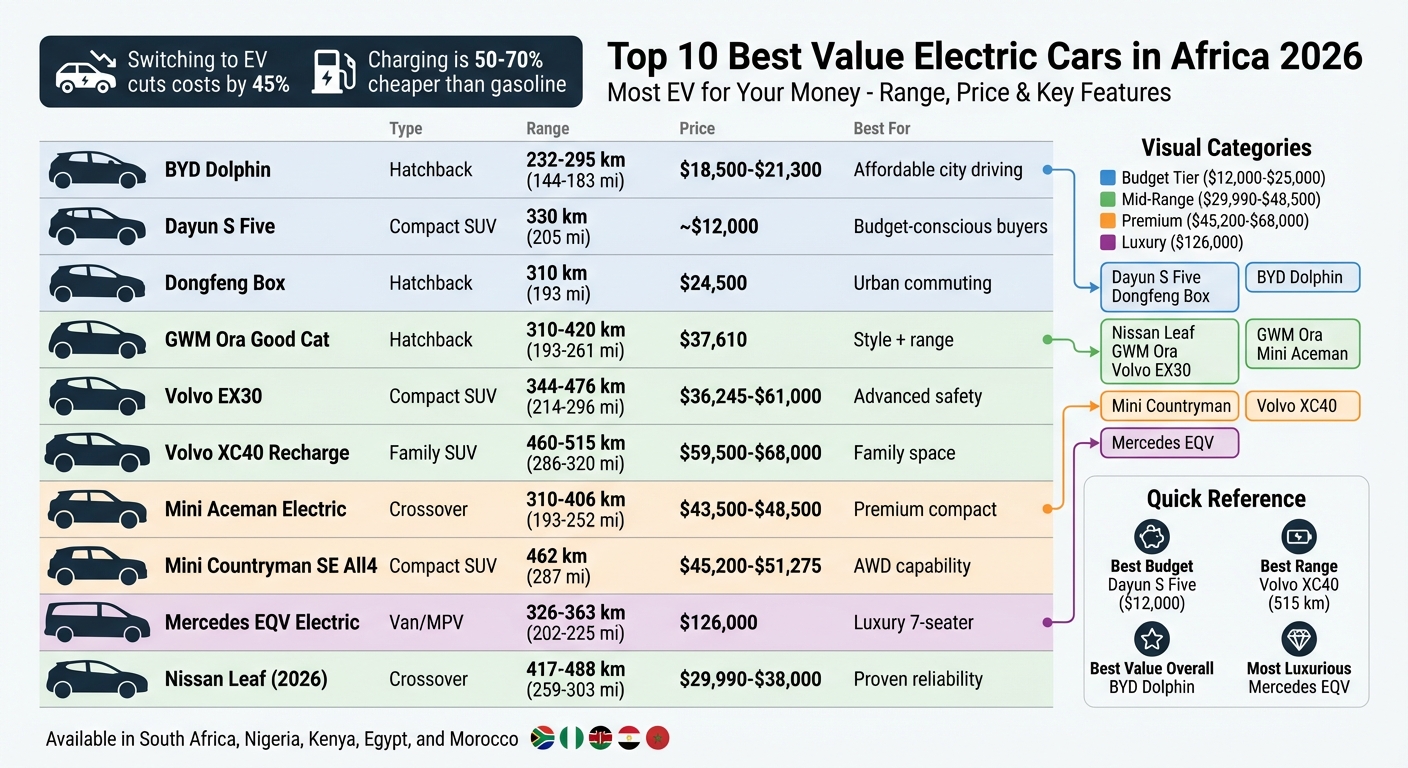
Top 10 Best Value Electric Cars in Africa 2026 Comparison Chart
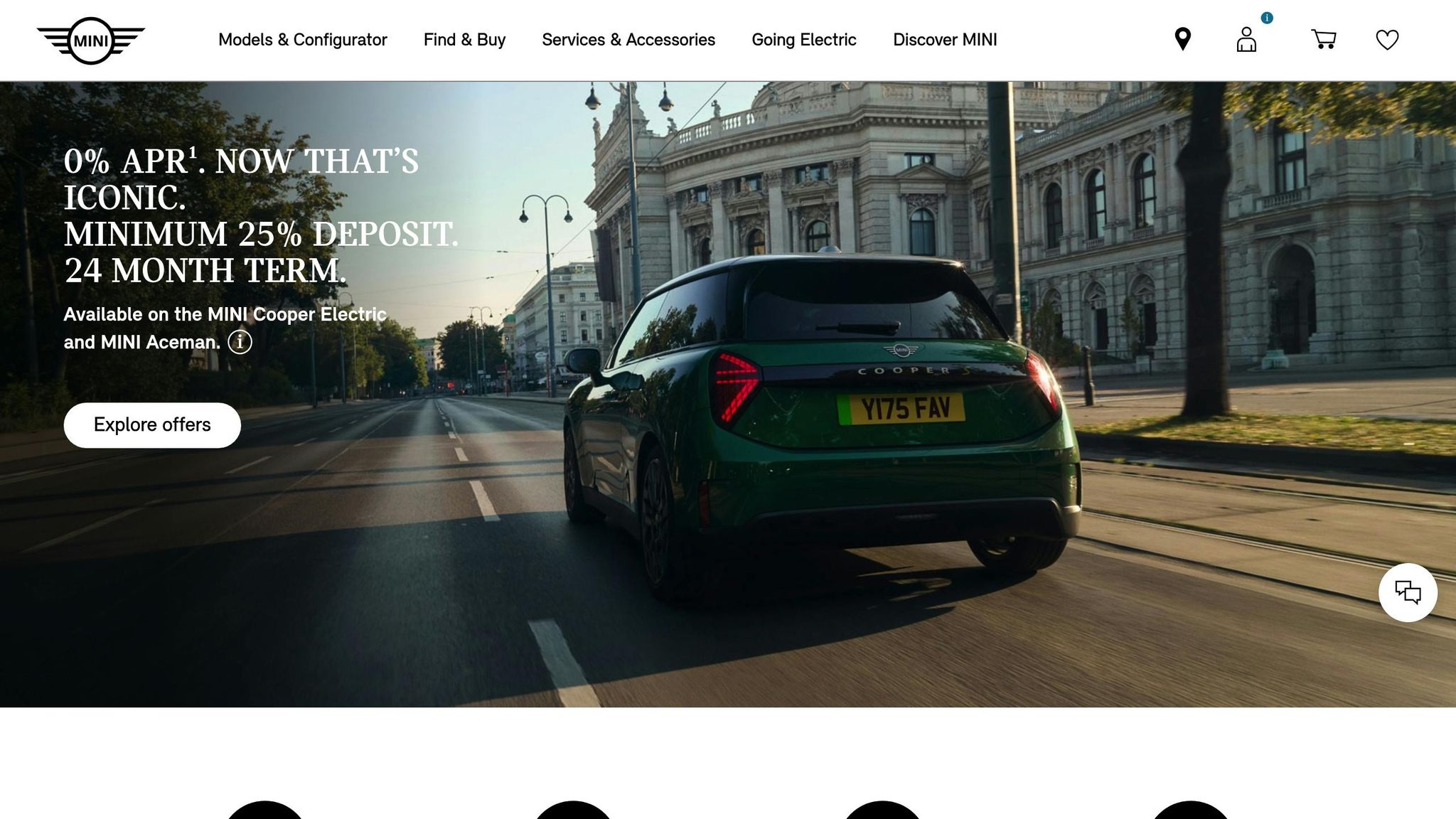
Is South Africa Ready For Electric Cars | 2025 Mini Aceman S Review | One of the best
1. BYD Dolphin
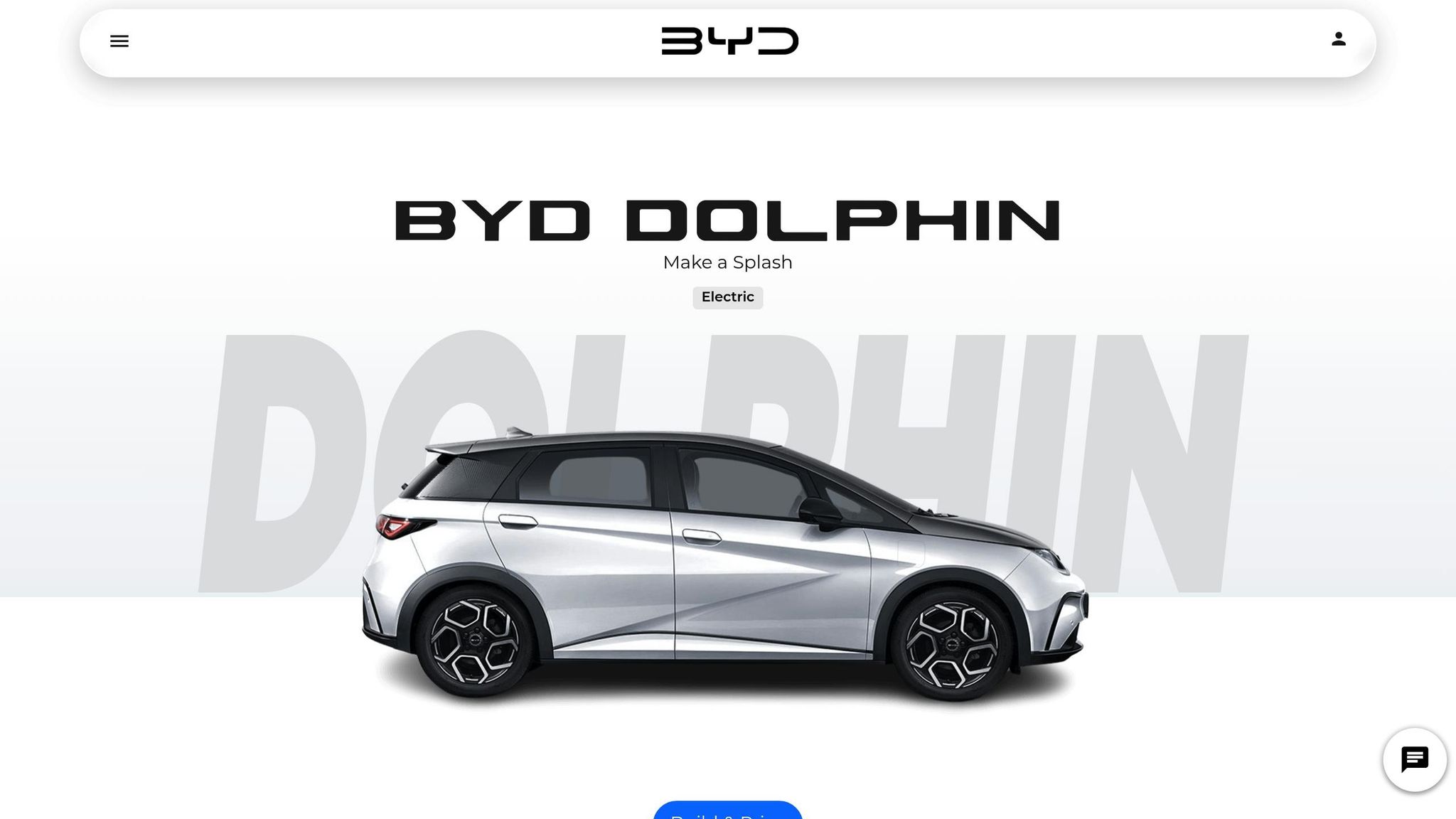
The BYD Dolphin is a standout choice for African drivers, blending affordability with performance tailored for the continent’s roads. It’s no surprise that it ranks as Africa’s best-value EV in 2026.
In South Africa, the entry-level Dolphin Surf Comfort starts at R339,000 (about $18,500.00), while the more advanced Dolphin Surf Dynamic is priced at R389,900 (roughly $21,300.00). Both models offer impressive features for their price points.
The Comfort version comes with a 30 kWh battery, providing a range of 232 km (144 miles), while the Dynamic model steps it up with a 38.8 kWh battery, delivering 295 km (183 miles). Both trims are equipped with a 55 kW motor, perfect for urban driving. Charging speeds vary, with the Comfort trim supporting 30 kW, and the Dynamic offering a faster 40 kW.
For South African buyers, cost efficiency is key – 75% of EV buyers prioritize lower fuel expenses. The Dolphin meets this need, offering significantly lower running costs compared to traditional petrol vehicles.
2. Dayun Yuehu or Dayun S Five

The Dayun S5 stands out as a budget-friendly option, aimed at buyers looking for an affordable entry into the world of electric vehicles. This compact Chinese electric SUV is designed specifically for the entry-level market in Africa.
Although exact pricing hasn’t been revealed, the S5 is promoted as the most affordable EV in its class, making it more accessible to a wider audience. Its design prioritizes practicality, focusing on features that suit the diverse and often challenging road conditions found across Africa.
Equipped with a 31.7 kWh Lithium Iron Phosphate (LFP) battery, the S5 boasts an estimated range of 330 km (205 miles) under CLTC standards. While real-world performance may vary, this range is more than sufficient for daily commutes and local trips. Importantly, the vehicle balances affordability with reliable performance.
The Dayun S5 is also built with Africa’s roads in mind, offering a ground clearance of 201 mm (7.9 inches). This feature makes it well-suited for navigating potholes, speed bumps, and uneven terrain, ensuring a smoother driving experience.
3. Dongfeng Box
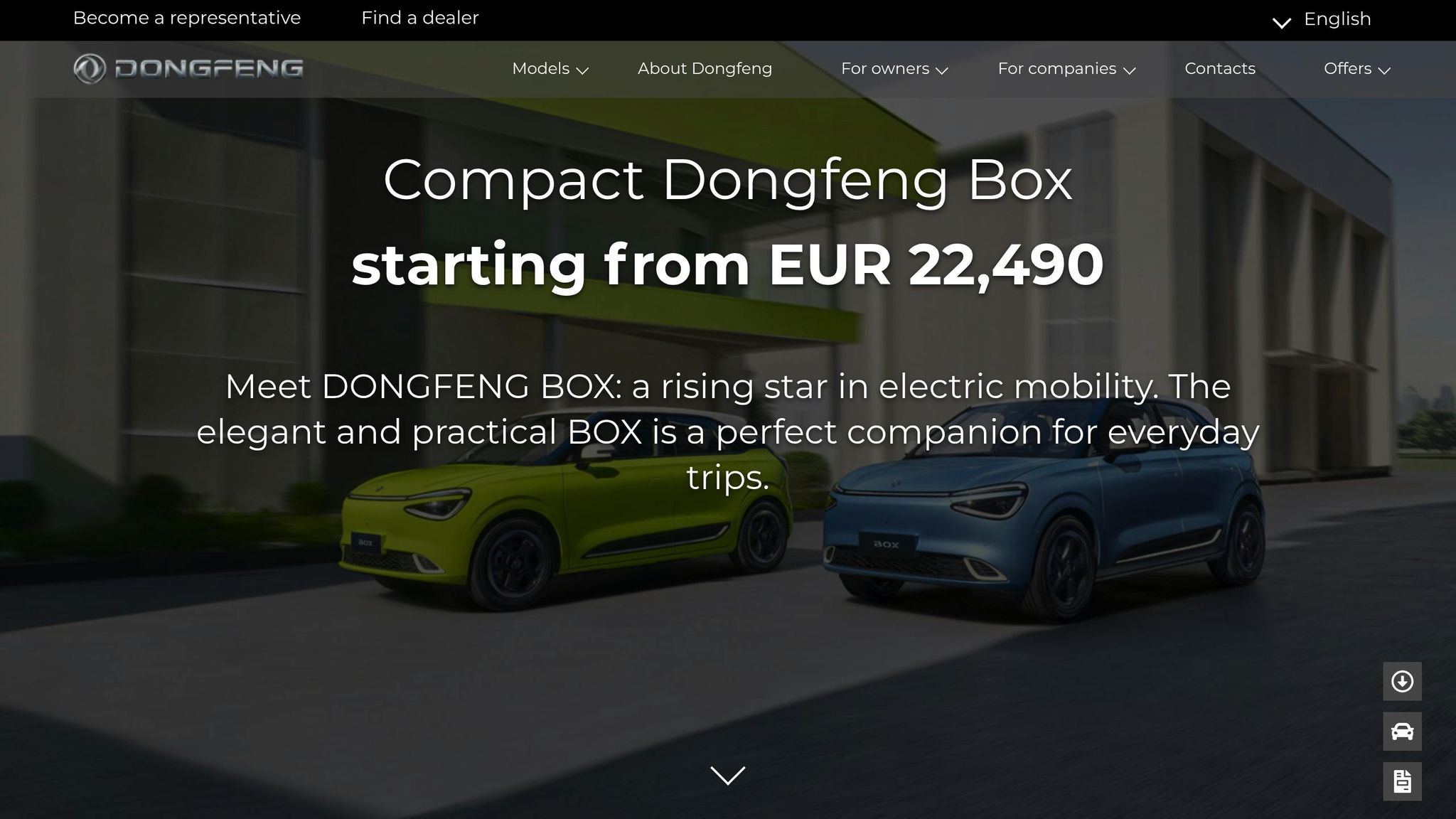
The Dongfeng Box is a compact electric hatchback designed to balance affordability and practicality for urban drivers across Africa. With a price tag of about $24,500.00 (R460,000–R480,000 in South Africa, KSh 3.8–4.1 million in Kenya, or ₦32–₦35 million in Nigeria), it’s an appealing option for navigating city streets.
This hatchback packs a 95-horsepower motor combined with a 42.3 kWh battery, offering a WLTP-rated driving range of approximately 310 kilometers (193 miles) per charge. On the outside, it boasts frameless doors, hidden handles, LED headlights, and a sleek dual-tone body. The interior is equally impressive, featuring diamond-stitched leather seats, an infotainment touchscreen, wireless charging, and a heated, ventilated driver’s seat with memory function – all built on a 2,660 mm wheelbase.
Charging convenience is also improving in African cities. For instance, Nairobi, Lagos, and Johannesburg are seeing rapid growth in charging infrastructure. Companies like LUG West Africa are stepping up, with plans to install 250 charging stations across Lagos. Plus, the Box offers a thoughtful touch for long charging stops: its front seats fold down to create a comfortable resting space.
4. GWM Ora Good Cat or GWM Ora Three
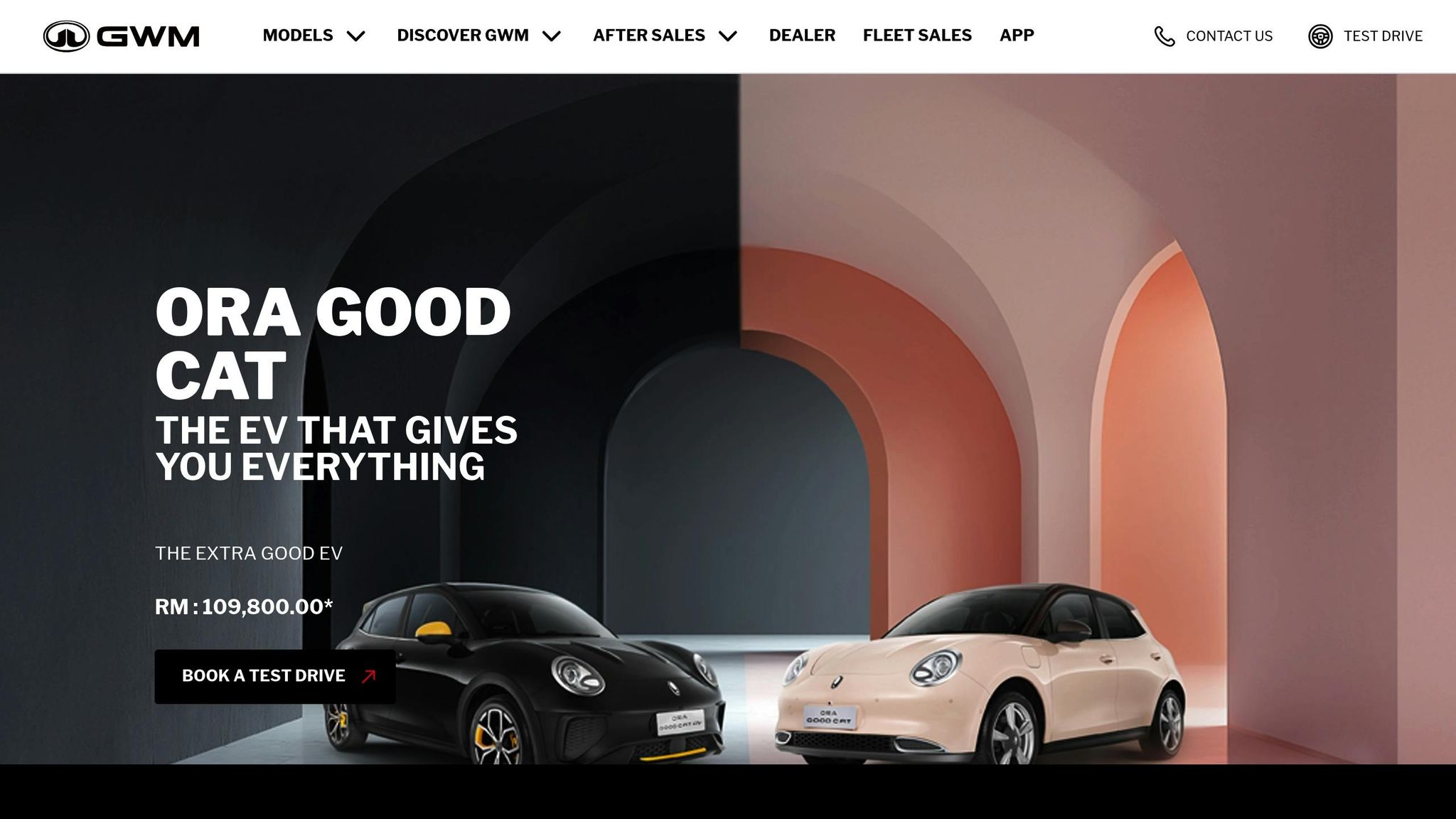
The GWM Ora Good Cat, also known as the Ora 03 in some markets, blends retro-inspired styling with a competitive price point. With a starting price of $37,610 (R686,950 in South Africa) for the 300 Super Luxury trim, it entered the South African market as the most budget-friendly EV, undercutting the Mini Cooper SE by roughly $5,000. This affordability is matched by a range of performance options across its trims.
The trim lineup offers flexibility for different driving needs. The base 300 Super Luxury trim provides a range of 310 kilometers (193 miles) with its 47.8 kWh battery, while the 400-series models extend the range to 420 kilometers (261 miles) thanks to a 63.1 kWh battery. Regardless of the trim, all models deliver 126 kW of power and 250 Nm of torque, with energy consumption rated between 16.5 and 16.7 kWh per 100 kilometers. Drivers can choose from five modes – Standard, ECO, Sport, Auto, and ECO+ – to adapt to different driving conditions and maximize efficiency.
Designed as a front-wheel-drive hatchback, the Ora 03 is perfect for city streets, and its 360° panoramic camera makes parking and navigating tight spaces a breeze. Newer models (2025/2026) are increasingly equipped with Lithium Iron Phosphate (LFP) batteries, which perform better in warmer climates and have a longer lifespan. Financing options in South Africa start at approximately R5,199 per month, making it an accessible choice, even as 72% of South African consumers indicate a preference to spend no more than R600,000 ($33,000) on an EV.
5. Volvo EX30
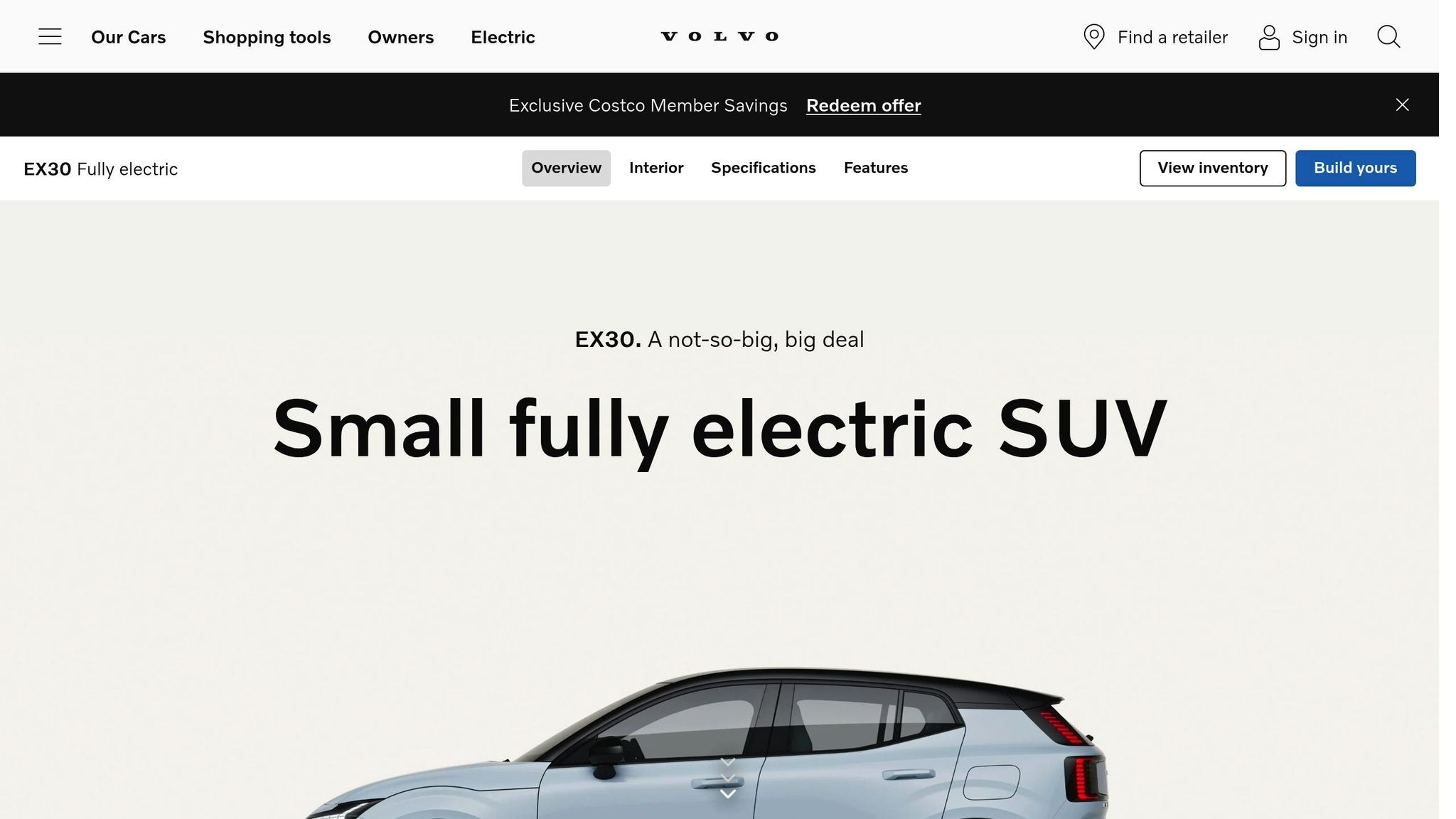
The Volvo EX30 stands out in our review as a compact SUV packed with features designed to handle African roads with ease.
As Volvo’s smallest and most budget-friendly SUV, it starts at $36,245 in the United States. In South Africa, the price ranges from R835,500 ($45,750) for the Single Motor model with a 51 kWh battery to R1,114,000 ($61,000) for the high-performance Twin Motor variant. With its sleek design, solid build quality, and advanced safety systems, it offers a lot for its price.
The Single Motor base model delivers a 344 km (214 miles) WLTP range, while the Extended Range version boosts this to 476 km (296 miles). The Twin Motor Performance variant offers 460 km (286 miles) and accelerates from 0 to 100 km/h in just 3.6 seconds. When it comes to charging, DC fast charging can take the battery from 10% to 80% in about 26 to 28 minutes, with a peak rate of 153 kW. However, real-world tests suggest an average charging speed closer to 83 kW.
For rougher terrains, the 2026 EX30 Cross Country model includes a 0.7-inch raised ride height, skid plates at the front and rear, and specially tuned suspension to handle uneven surfaces. Its 5-link rear suspension helps smooth out bumpy roads, while features like "Pedestrian, Cyclist and Scooter Steering Avoidance" and "Oncoming Lane Mitigation" add an extra layer of safety for navigating mixed-traffic conditions.
The Volvo EX30 has earned high praise, with Car and Driver giving it a score of 8.5/10 and ranking it #2 among Best Electric Subcompact SUVs. Reviewers highlight its stylish interior and rapid acceleration as standout features, though the rear-seat legroom, at just 32.3 inches, might feel a bit cramped for larger families. For home charging, a 3-phase 16A connection can fully charge the battery in about 6 to 8 hours.
6. Volvo XC40 Recharge
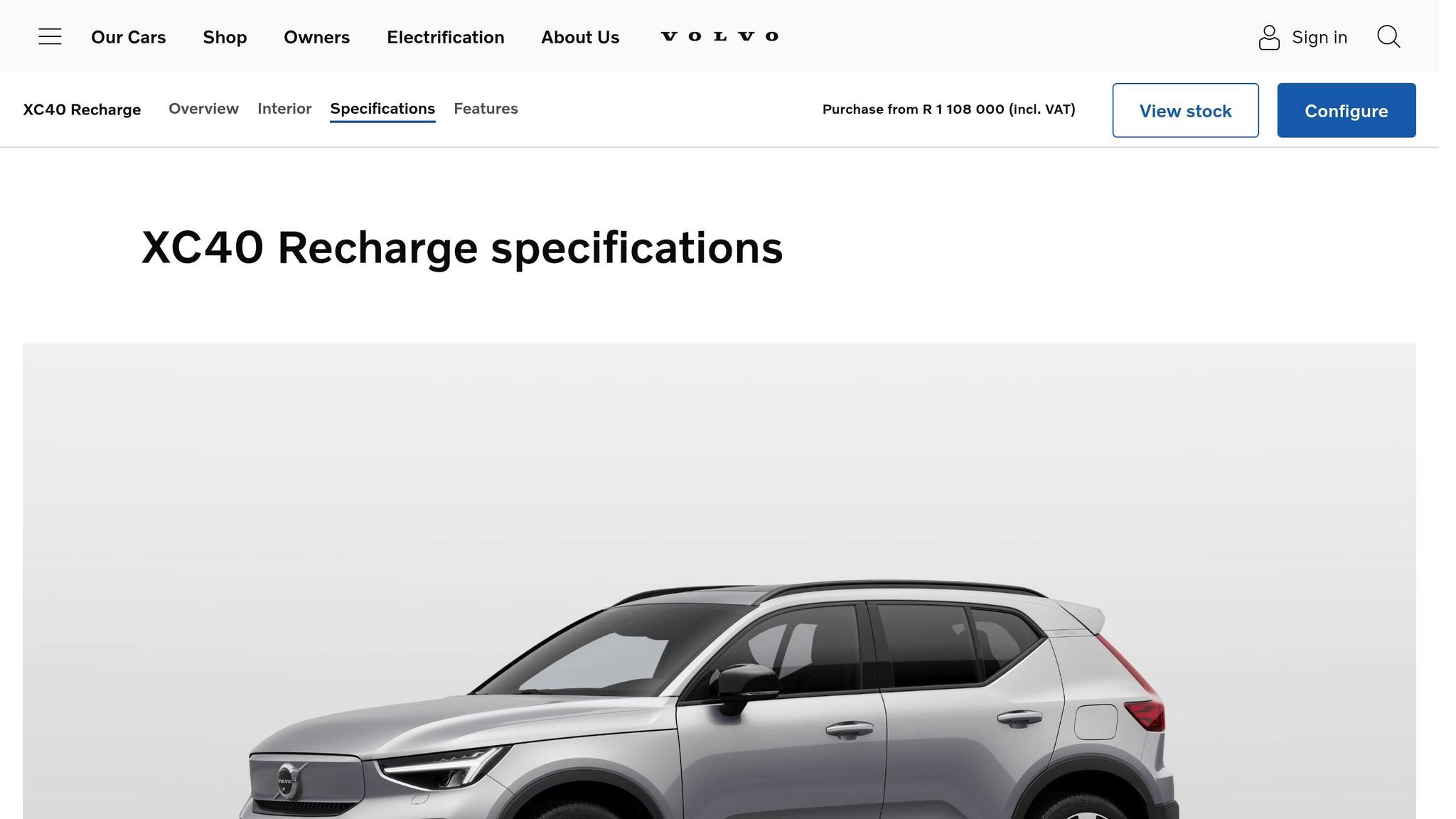
The Volvo XC40 Recharge steps into the electric vehicle market with a starting price of $59,500 in the United States. In South Africa, the Single Motor version begins at R1,108,000 (about $60,000), while the Twin Motor AWD is priced at R1,260,000 (roughly $68,000). Both models include a 5-year maintenance plan and an 8-year/160,000 km (99,400 miles) battery warranty.
The driving range depends on the configuration. The Single Motor offers between 460 and 515 km (286 to 320 miles) per charge, while the Twin Motor can reach up to 500 km (311 miles). Energy consumption is approximately 19.4 kWh per 100 km. For charging, DC fast charging (200 kW) can replenish the battery from 10% to 80% in just 27–28 minutes. Using an 11 kW home wallbox, a full charge takes about 7–8 hours.
Designed with African driving conditions in mind, the XC40 Recharge includes practical features like a 360° camera for easier navigation in tight spaces and a pre-conditioning system that adjusts the cabin temperature while charging. The Twin Motor AWD variant provides better traction on rough terrain and boasts a towing capacity of up to 1,800 kg (3,970 lbs). Additionally, the sealed, maintenance-free electric motors are a big plus for regions with limited access to specialized EV services.
South African buyers also benefit from a free wallbox installation and two years of complimentary public charging. The integrated Google Maps system adds convenience, allowing drivers to locate nearby charging stations directly from the vehicle’s display.
sbb-itb-99e19e3
7. Mini Aceman Electric

The Mini Aceman Electric comes in two trims: the Aceman E, priced at R800,000 ($43,500), and the Aceman SE, available for R892,000 ($48,500). Both models include a 5-year/100,000 km maintenance plan and an 8-year/100,000 km battery warranty for added peace of mind. Let’s dive into the performance and charging capabilities that make this electric crossover stand out.
The Aceman E offers a range of 310 km (193 miles) per charge, while the Aceman SE, equipped with a 54.2 kWh battery, extends that to 406 km (252 miles). The SE delivers 160 kW of power with 330 Nm of torque, allowing it to sprint from 0–100 km/h in just 7.1 seconds. Energy consumption sits between 13.9–14.1 kWh/100 km, making it an efficient choice. For charging, DC fast charging can take the battery from 10% to 80% in 28 minutes at 70 kW for the Aceman E or 31 minutes at 95 kW for the SE. Using an 11 kW home wallbox, a full charge is achieved in 4.25–5.75 hours. These stats highlight its capability for both city commutes and longer journeys.
Mini’s design philosophy is perfectly summarized by Stefanie Wurst, Head of Mini:
"The Mini Aceman is perfect for navigating crowded city streets, while maintaining the versatility and functionality of a crossover and the ‘Go Kart’ feeling you can expect from a Mini." – Stefanie Wurst, Head of Mini
Built with urban environments in mind, the Aceman’s compact design and tight turning radius make it ideal for maneuvering through busy streets. At the same time, its crossover proportions provide enough ground clearance for tackling uneven roads. The boot space is expandable to 1,005 liters, offering plenty of room for cargo. Features like the Mini App allow for remote climate control, making it easy to pre-cool the cabin during hot days. Additionally, the liquid-cooled battery system ensures consistent performance in extreme heat, while the "Green Mode" gives drivers real-time feedback on their range.
From its practical features to its performance, the Mini Aceman Electric is built to handle the demands of city life and beyond.
8. Mini Countryman SE All Four
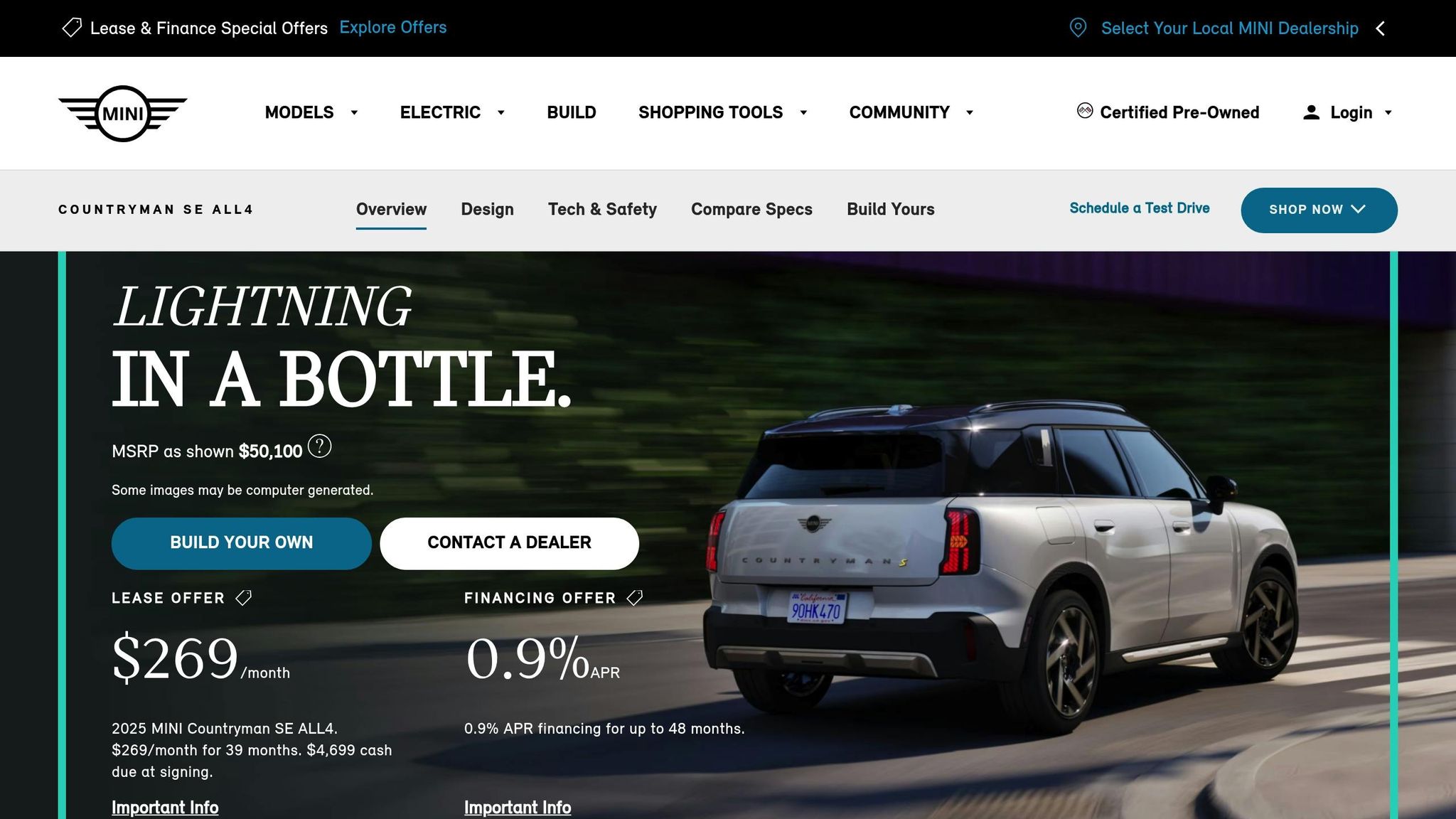
The Mini Countryman SE ALL4 combines high-end performance with practical features, making it well-suited for varied driving conditions, including those often encountered in Africa.
This premium compact electric SUV starts at $45,200, with fully equipped versions reaching $51,275. It also comes with a reassuring 8-year/100,000-mile battery warranty, offering long-term reliability for owners.
Equipped with a 64.7 kWh battery, the Countryman SE ALL4 delivers a range of up to 212 miles (341 km). Its dual-motor system generates 308 horsepower and 364 lb-ft of torque, propelling the SUV from 0 to 60 mph in just 5.4 seconds. Charging is efficient, too – a 130 kW DC fast charger takes the battery from 10% to 80% in about 29–30 minutes, while a quick 10-minute charge adds 76 miles (122 km) of range. For home charging, a 22 kW wallbox delivers a full charge in roughly 3 hours and 45 minutes.
The ALL4 Intelligent AWD system ensures better traction on both smooth highways and rugged trails. With its higher ground clearance, a towing capacity of 2,645 lbs (1,200 kg), and standard roof rails, the Countryman SE ALL4 is ready for long-distance travel with added cargo – features that are especially useful for challenging road conditions.
In heat tests conducted in temperatures reaching the mid-90s °F (about 35°C) with 80% humidity, the air conditioning proved effective, maintaining comfort while averaging 3.3 miles per kWh over a 500-mile test drive. Automotive expert Sam Abuelsamid shared his experience:
"Even after sitting in the hot sun for several hours… the air conditioning got the temperature back to a comfortable level quickly." – Sam Abuelsamid
The Mini app enhances convenience by allowing users to pre-condition the cabin while the vehicle is plugged in, helping conserve battery range on hot days. With 25 cubic feet (708 liters) of cargo space – expandable to 56 cubic feet (1,585 liters) – the Mini Countryman SE ALL4 strikes a balance between luxury and practicality.
9. Mercedes EQV Electric Van
The Mercedes-Benz EQV 300 takes the concept of an electric van to a whole new level of luxury. Designed to accommodate up to 7 passengers, this premium vehicle comes with a price tag of $126,000 (around R2,300,000 in South Africa, including VAT). It stands apart from budget-friendly options, offering the unmistakable elegance and quality that Mercedes-Benz is known for.
At its core, the EQV 300 is powered by a 90 kWh battery paired with a 150 kW motor, providing a WLTP range of 326–363 km (202–225 miles). It features Navigation with Electric Intelligence, a system that optimizes your route by considering factors like charge levels, weather conditions, and traffic. When it’s time to recharge, the EQV supports fast charging at 110 kW, allowing you to go from 10% to 80% in just 40 minutes. For home charging, an 11 kW wallbox can fully recharge the battery in approximately 10 hours.
For a smoother ride, the van offers an optional AIRMATIC air suspension, ensuring comfort whether you’re cruising on the highway or navigating rougher terrain. Inside, passengers can enjoy dual-zone THERMOTRONIC climate control, complemented by TEMPMATIC semi-automatic rear air conditioning to keep everyone comfortable, even on the hottest days.
The EQV also delivers on practicality, with a configurable cargo space ranging from 610 to 5,010 liters. On the safety front, it’s packed with advanced features like Active Brake Assist, Blind Spot Assist, Lane Keeping Assist, and a 360° camera package, making it as secure as it is luxurious.
10. Nissan Leaf Latest Generation

The 2026 Nissan Leaf has undergone a major transformation, moving away from its familiar hatchback design to adopt a crossover-style body. This shift gives it a higher ride height, similar to the Nissan Ariya, making it better suited for tackling rough or uneven roads, especially in regions like Africa [34,35]. This change not only boosts its practicality but also positions it as a strong contender in the market with competitive pricing and improved capabilities.
With a starting price of $29,990 for the S+ trim (around R550,000 in South Africa), the Leaf remains one of the most budget-friendly EVs available [34,35]. Its 75 kWh battery delivers impressive range options: 303 miles (488 km) for the S+ trim, 288 miles (463 km) for the SV+ trim, and 259 miles (417 km) for the Platinum+ trim. These figures mark a noticeable improvement from the previous model’s maximum range of 212 miles [34,35].
The battery system includes integrated thermal management, a critical feature for maintaining performance and charging efficiency in extreme heat. Charging is also straightforward, thanks to the inclusion of a NACS port for DC fast charging at speeds up to 150 kW, enabling a 10% to 80% recharge in just about 35 minutes. For home or public charging, a J1772 port supports both Level 1 and Level 2 options.
Adding to its practicality, the Leaf features a Vehicle-to-Load (V2L) system, which provides up to 1,500 watts of power through three 120-volt outlets. This is ideal for running appliances during occasional power outages, a feature particularly useful in many parts of Africa. Inside, the car offers thoughtful touches like "Zero Gravity" seats for enhanced comfort and the ProPILOT Assist system, which combines adaptive cruise control with lane-centering to reduce fatigue during long drives [34,35]. The cargo area has also been expanded significantly, offering 55.5 cubic feet of space with the rear seats folded – up from 30 cubic feet in the previous model.
The 2026 Nissan Leaf has earned high praise, being named the #1 Best Electric Subcompact SUV by Car and Driver and receiving the 2026 Best Buy Award from Consumer Guide Automotive. For buyers seeking a well-rounded, affordable electric vehicle, the new Leaf is a standout option.
Comparison Table
Below is a detailed comparison of 10 electric vehicles (EVs), covering their price, battery capacity, range, and standout features. Prices are listed in USD with approximate ZAR equivalents (using R18.35 per $1).
| Model | Body Type | Battery Size | Range | Price Range (USD / ZAR) | Key Strengths |
|---|---|---|---|---|---|
| BYD Dolphin | Compact hatchback | 44.9–60.5 kWh | 211–265 mi (340–427 km) | $15,000–$18,000 / R275,000–R330,000 | Reliable service, wide dealer network, and modern technology |
| Dayun Yuehu / S Five | Compact hatchback | 31.5–41.8 kWh | 186–248 mi (300–400 km) | $8,000–$12,000 / R147,000–R220,000 | Budget-friendly; ideal for city commuting |
| Dongfeng Box | Compact SUV | 31.4–42.3 kWh | 199–248 mi (320–400 km) | $10,000–$14,000 / R184,000–R257,000 | Higher ground clearance and practical design |
| GWM Ora Good Cat / Ora Three | Compact hatchback | 47.8–63.1 kWh | 249–311 mi (400–500 km) | $13,000–$17,000 / R239,000–R312,000 | Great range for the price and stylish design |
| Volvo EX30 | Compact crossover | 51–69 kWh | 214–275 mi (344–442 km) | $35,000–$42,000 / R642,000–R770,000 | Top-notch safety features and Scandinavian craftsmanship |
| Volvo XC40 Recharge | Family crossover | 78 kWh | 223–254 mi (359–409 km) | $50,000–$58,000 / R918,000–R1,064,000 | Spacious interior and strong performance (402 hp) |
| Mini Aceman Electric | Compact crossover | 42.5–54.2 kWh | 250–300 mi (402–483 km) | $38,000–$45,000 / R697,000–R826,000 | Premium brand appeal with agile handling |
| Mini Countryman SE All Four | Family crossover | 64 kWh | 287 mi (462 km) | $48,000–$55,000 / R881,000–R1,009,000 | All-wheel drive and distinctive styling |
| Mercedes EQV Electric Van | Large MPV/Van | 90 kWh | 213–263 mi (343–423 km) | $75,000–$90,000 / R1,376,000–R1,652,000 | Luxurious seating for up to 8; ideal for shuttles and group travel |
| Nissan Leaf Latest Gen | Compact crossover | 40–60 kWh | 150–212 mi (241–341 km) | $29,990–$38,000 / R550,000–R697,000 | Affordable, efficient, and backed by a proven track record |
The table highlights technical specs and key features. Below, we explore the pros and cons of EVs across different categories.
Budget City Cars: Pros & Cons
For urban drivers, models like the Dayun S Five, BYD Dolphin, Dongfeng Box, and GWM Ora Good Cat are excellent options. These vehicles combine affordability with practical range, making them ideal for commuting. The BYD Dolphin stands out with its reliable service and dealer network, while the Dongfeng Box offers better ground clearance for uneven roads. The GWM Ora shines with the best range in this group.
However, there are trade-offs. Some of these brands are less established, which could affect resale value. Additionally, in rural areas, charging infrastructure might still be a challenge.
Family Crossovers: Pros & Cons
Family-oriented models like the Nissan Leaf, Volvo EX30, Volvo XC40 Recharge, and Mini Countryman provide more space and features to accommodate family needs. The Nissan Leaf is a strong value option, while the Volvo models deliver advanced safety and solid performance. The Mini Countryman adds all-wheel drive for better handling on varied terrain.
On the downside, these models come with higher upfront costs. Repairs and maintenance can also be pricier compared to budget EVs. That said, they strike a balance between comfort, space, and capability for diverse road conditions.
Premium Options: Pros & Cons
For those seeking luxury or specialized features, the Mini Aceman and Mercedes EQV are worth considering. The Aceman offers a premium driving experience in a compact package with nimble handling. Meanwhile, the Mercedes EQV is perfect for large families, tourism businesses, or executive transport, thanks to its spacious interior and upscale design.
Of course, luxury comes with a price. These vehicles are expensive, and their specialized nature might limit everyday practicality. Additionally, service and parts availability could be an issue in areas with fewer dealerships. Despite the cost, these EVs cater to buyers with specific needs and a taste for premium features.
Conclusion
Africa’s electric vehicle market in 2026 offers something for everyone. Whether you’re eyeing the budget-friendly Dayun S5, the dependable Nissan Leaf, or the luxurious Mercedes EQV, there’s a model to suit your needs and wallet.
The right choice really depends on how you plan to use your EV. For daily city commutes, options like the Dayun S5 or Dongfeng Box deliver solid range without breaking the bank. Need more room or added safety? Volvo’s lineup combines practicality with sleek design. Plus, with charging costs being 50–70% lower than traditional fuel, owning an EV can significantly cut down on expenses over time.
As infrastructure continues to improve, owning an EV in Africa is becoming more practical than ever. Platforms like EV24.africa make it easier to explore the market with detailed listings, clear pricing, and delivery options across all 54 African countries. By considering your budget, lifestyle, and future needs, you’re sure to find the perfect EV to fit your journey.
FAQs
What should I consider when buying an electric car for African roads?
When selecting an electric car for African roads, cost and affordability should be your first consideration. Budget-friendly models can start at approximately $13,200, while mid-range options are closer to $28,500. Keep in mind that additional expenses like import duties, taxes, and insurance can increase the total cost by 20% or more.
Another key factor is range and battery durability. For most drivers, a range of 200–250 miles per charge works well for daily commutes and occasional longer trips. It’s also important to choose a vehicle with heat-resistant batteries and dust protection to handle the high temperatures and dusty conditions common in many parts of Africa.
Lastly, assess the car’s durability and charging options. Models with higher ground clearance (5.5–6.2 inches) and reinforced suspension are better equipped for rough or unpaved roads. Make sure to check the availability of charging stations in your area, as infrastructure can be limited in some regions. Additionally, ensure the brand you choose has local service centers and spare parts readily available. By weighing these factors, you can find an electric car that meets your needs and performs well on African roads.
Is Africa’s charging infrastructure ready to support electric vehicles?
Africa’s network of EV charging stations is still in its growth phase but is expanding rapidly to keep up with the needs of electric vehicle owners. By mid-2025, there were about 903 public charging stations across the continent. However, most of these stations are concentrated in urban centers, leaving rural areas with limited access. Because of this, many EV owners turn to home charging, which can cost approximately $826 to install in countries like Ghana. To cut electricity expenses, pairing home chargers with solar panels is becoming an increasingly popular option.
Several key factors are driving the expansion of charging infrastructure. Urban areas with modern electrical grids and renewable energy projects are seeing a rise in fast-charging stations, which makes longer journeys more practical. On top of that, dynamic pricing models, such as off-peak rates, are helping to lower charging costs. Governments are also stepping in with tax breaks and subsidies to make EV ownership more accessible. These developments are steadily building a stronger, more convenient ecosystem for EV users throughout Africa.
What are the financial benefits of switching to an electric vehicle in Africa?
Switching to an electric vehicle (EV) in Africa can lead to noticeable savings compared to driving a traditional gas-powered car. One of the biggest advantages is the lower cost of operation. Electricity is significantly cheaper than gasoline. For instance, in Angola, it costs just $0.21 per 100 km to power an EV, while a gas-powered car costs roughly $2.40 per 100 km. That’s a huge difference, especially for daily commutes or long road trips. On top of that, EVs require 30–50% less maintenance because they have fewer moving parts, no need for oil changes, and simpler braking systems. Over time, this means fewer repair costs.
Although the upfront price of EVs might seem high, the gap is narrowing. Entry-level models are now available starting at about $4,800, while mid-range options range between $23,300 and $47,500. When you consider the significantly lower running costs and incentives like tax breaks in countries such as Ethiopia and Mauritius, the overall financial benefits become clear. Even with additional one-time costs, like installing a home charging station (which averages $826 in Ghana), the long-term savings on fuel and maintenance make EVs a practical and economical choice for African drivers by 2026.