
 Thabo Nkosi
Electric SUVs are gaining traction in Africa, thanks to their practicality for diverse road conditions. In 2025, five standout models are shaping the market:
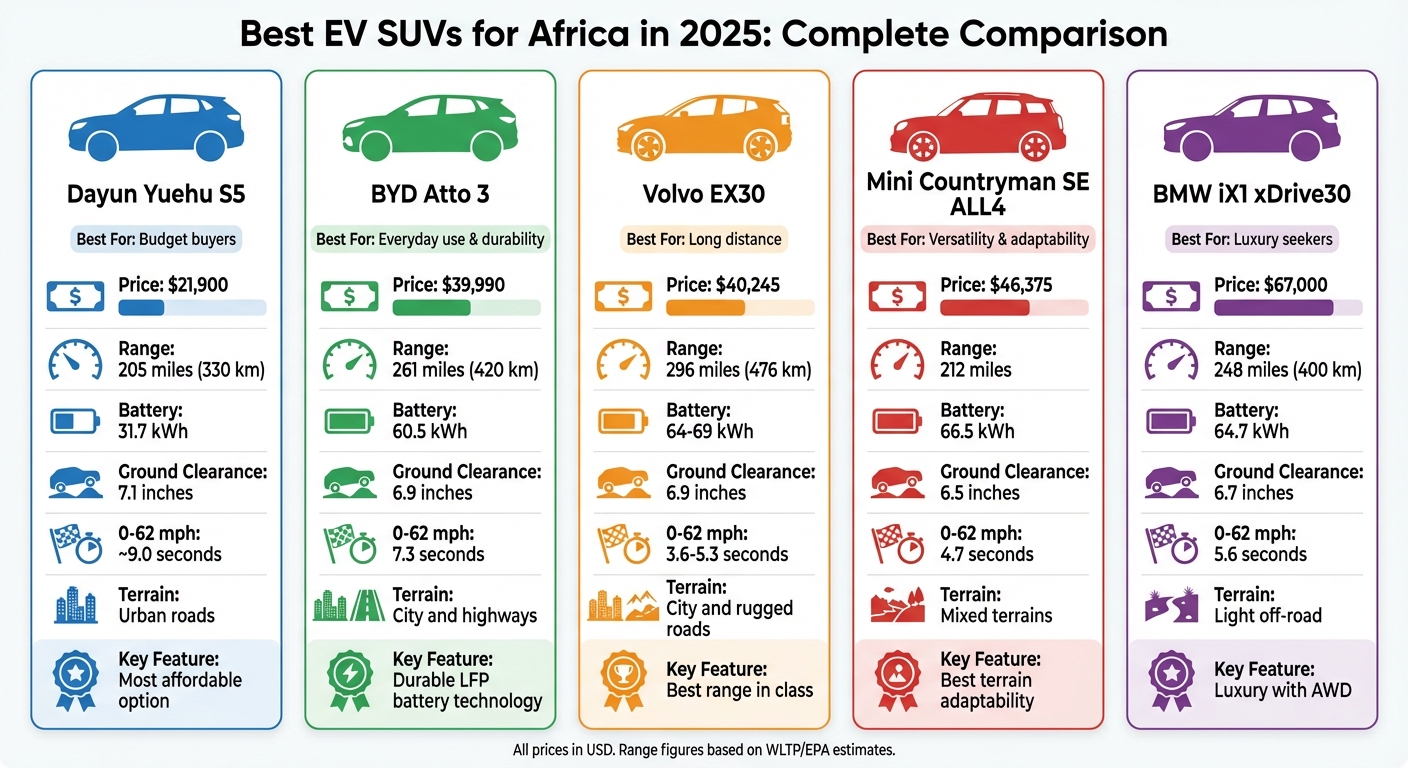
- Dayun Yuehu S5: Africa’s most affordable EV SUV at $21,900, with a 330 km (205 miles) range and urban-friendly features.
- BYD Atto 3: A mid-range option starting at $39,990, offering up to 420 km (261 miles) range and durable LFP battery technology.
- BMW iX1 xDrive30: A luxury SUV priced at $67,000, boasting a 400 km (248 miles) range, advanced features, and dual-motor AWD.
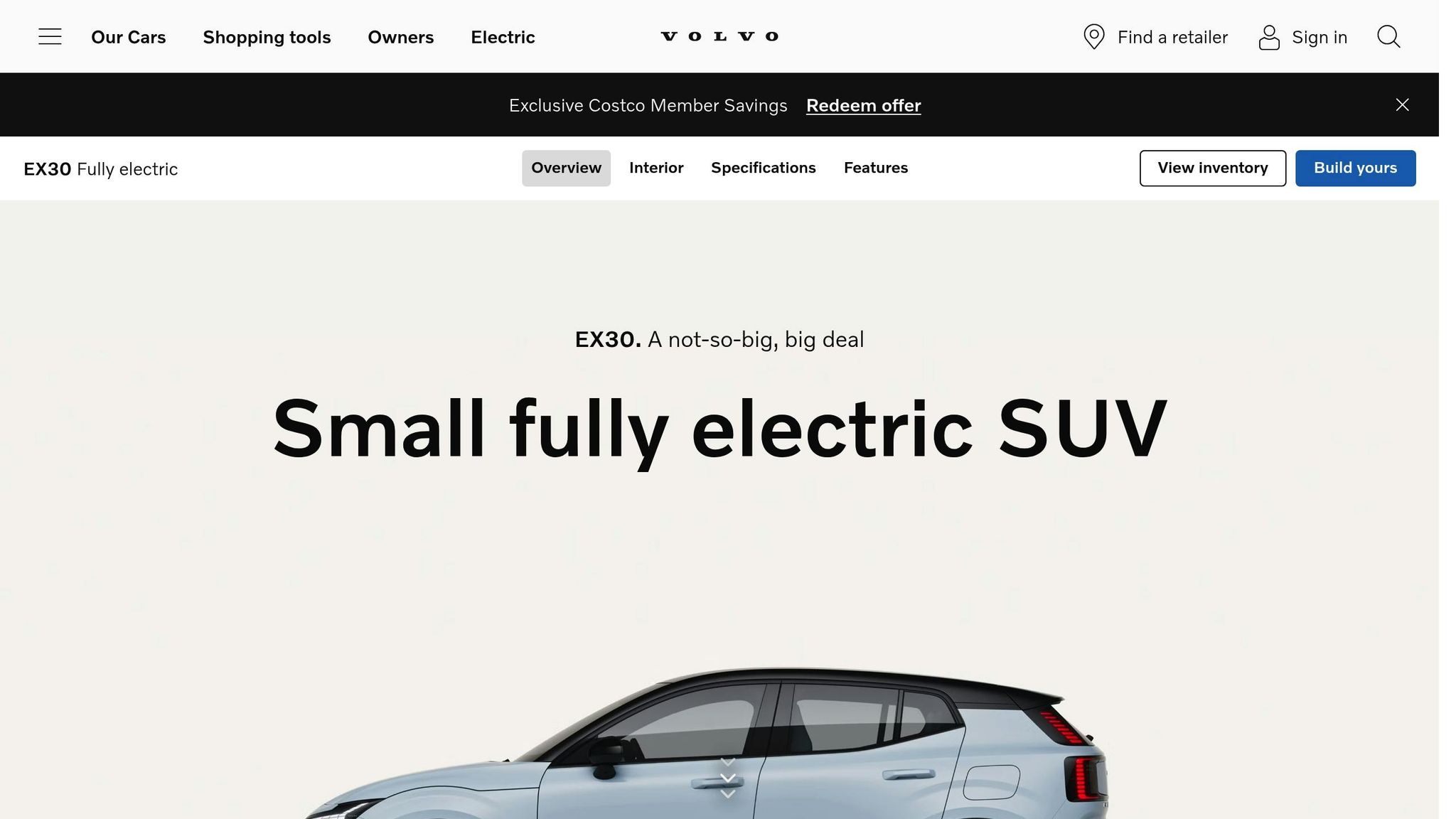
- Volvo EX30: Starting at $40,245, this compact EV provides up to 476 km (296 miles) range with a rugged Cross Country variant for tougher terrains.
- Mini Countryman SE ALL4: Priced at $46,375, it combines sporty handling, AWD, and a 212-mile range for mixed road conditions.
Each model offers unique strengths, from affordability to luxury features, making them suitable for different needs across the continent.
Quick Comparison
| Model | Price (USD) | Range (miles) | Battery (kWh) | Ground Clearance (in) | 0-62 mph (sec) | Terrain Suitability |
|---|---|---|---|---|---|---|
| Dayun Yuehu S5 | $21,900 | 205 | 31.7 | 7.1 | ~9.0 | Urban roads |
| BYD Atto 3 | $39,990 | 261 | 60.5 | 6.9 | 7.3 | City and highways |
| BMW iX1 xDrive30 | $67,000 | 248 | 64.7 | 6.7 | 5.6 | Light off-road |
| Volvo EX30 | $40,245 | 296 | 64–69 | 6.9 | 3.6–5.3 | City and rugged roads |
| Mini Countryman SE | $46,375 | 212 | 66.5 | 6.5 | 4.7 | Mixed terrains |
Whether you prioritize affordability, range, or performance, these EV SUVs cater to Africa’s growing demand for electric mobility.
Best EV SUVs for Africa 2025: Price, Range & Specs Comparison
Volvo EX30 Cross Country South Africa Review | Is This the Coolest EV in SA?
1. Dayun Yuehu S5
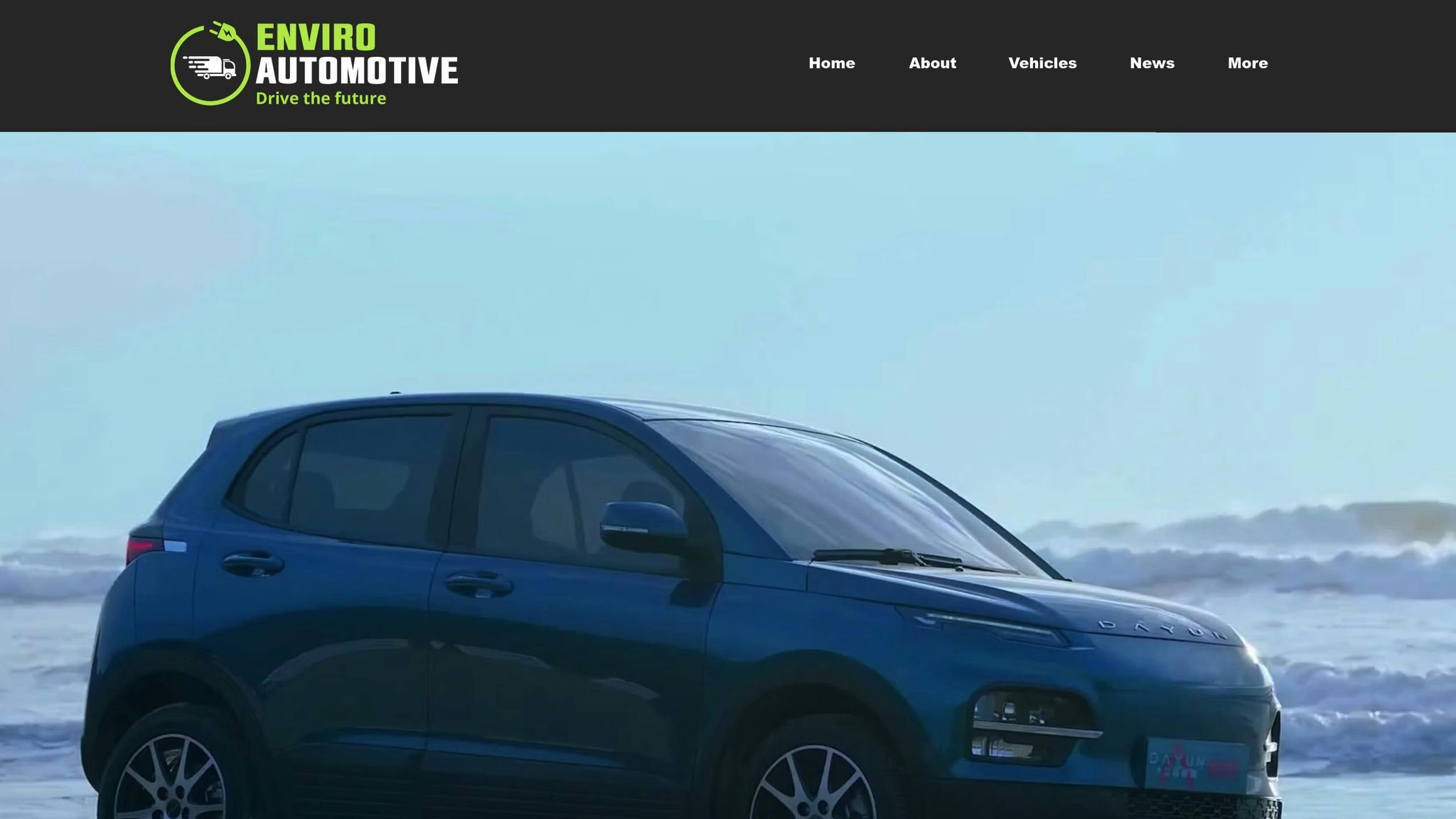
The Dayun Yuehu S5 holds the title of South Africa’s most affordable electric SUV, with the Standard model priced at $21,900 (R399,900) and the VIP version at $24,600 (R449,900). That’s about $7,700 (R140,000) less than the BYD Dolphin.
Affordable and Efficient
The Yuehu S5 keeps running costs low, using just 10.7 kWh of electricity per 100 km. Charging it at home with a standard 220V outlet takes around 4 hours, while a DC fast charger can juice it up from 20% to 80% in under an hour. It’s backed by a 3-year/60,000 km mechanical warranty and a 5-year/120,000 km battery warranty.
Gideon Wolvaardt, Managing Director of Enviro Automotive, emphasizes the vehicle’s appeal:
"The Yuehu S5 is a game-changer in South Africa’s EV market. While buyers are increasingly motivated by the desire to embrace smarter, greener solutions, the S5’s affordability, performance, and cost savings place it ahead of small petrol and diesel city cars."
Range for City Life
Equipped with a 31.7 kWh ternary lithium-ion battery, the Yuehu S5 offers a driving range of 330 km on a single charge. This range is ideal for daily city commutes but may not be as practical for long-distance travel in areas with fewer charging stations. Its compact size – just 3.70 meters long – makes it clear that this SUV is designed with urban driving in mind.
Built for Urban Roads
The Yuehu S5 is tailored for city environments, featuring Hill Start Assist, Slope Descent Control, and alloy wheels (15-inch for the Standard model, 16-inch for the VIP). These features make it a great fit for navigating busy streets and squeezing into tight parking spaces. Wolvaardt adds:
"At just 3.65 metres long, the Dayun Yuehu S5 is perfect for daily urban commutes, navigating congested city streets, and fitting into tight parking spots."
Its design and capabilities align with the needs of South Africa’s urban roadways.
Since its launch in 2017, the Yuehu S5 has sold over 35,000 units across more than 20 countries, proving its popularity among drivers making the switch to electric vehicles in Africa.
2. BYD Atto 3
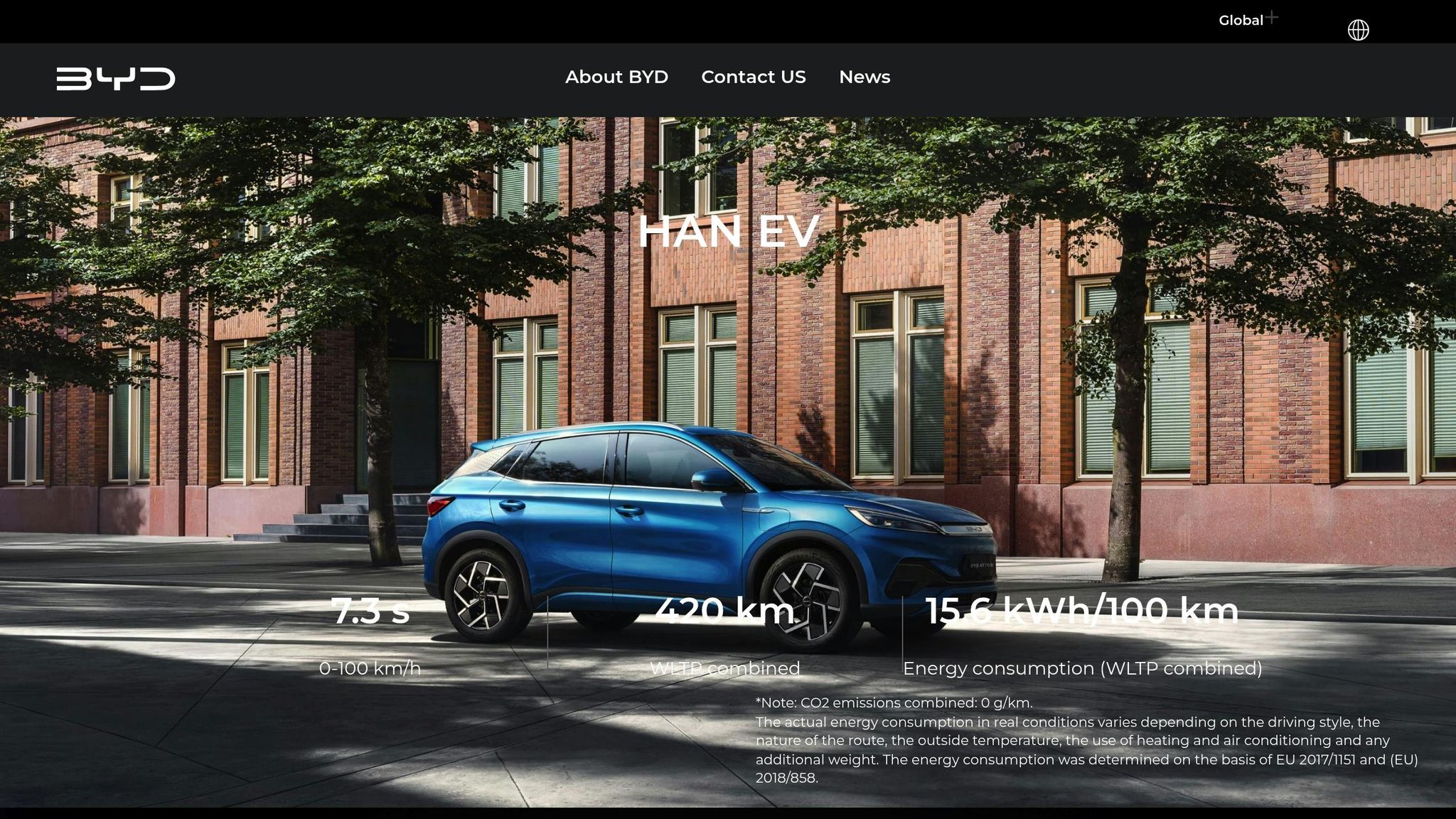
The BYD Atto 3 is a mid-range electric vehicle that offers a solid blend of features and affordability. It comes in two models: the Essential, priced at $39,990, and the Premium, starting at $44,990. With price reductions of up to $4,500 in 2025, the Atto 3 becomes over $7,000 cheaper than gas-powered SUVs like the 2025 Nissan Qashqai Ti Hybrid. Here’s a closer look at what makes this EV stand out.
Affordability
The Atto 3 comes loaded with features such as LED headlights, a panoramic sunroof, and a 360-degree camera. It also includes a 6-year/150,000 km vehicle warranty and an 8-year/160,000 km battery warranty, giving buyers peace of mind. Safety is another strong point, with a 5-star Euro NCAP safety rating and impressive protection scores – 91% for adults and 89% for children.
Range
The Atto 3 offers two battery options. The Essential model is equipped with a 49.9 kWh battery, providing a WLTP range of 345 km, while the Premium model boasts a 60.5 kWh battery, extending the range to 420 km. Both variants support DC fast charging, with the Essential charging at 70 kW and the Premium at 88 kW. This allows the battery to go from 10% to 80% in just 37 minutes. Additionally, the Atto 3 includes Vehicle-to-Load (V2L) technology, which enables it to function as a mobile power source – a handy feature for areas with limited charging infrastructure.
Durability
The Atto 3 uses BYD’s Blade Battery, which relies on Lithium Iron Phosphate (LFP) technology. This battery chemistry is cobalt-free, performs well in high temperatures, and is less prone to damage during rapid charging. As automotive expert Paul Horrell explains:
"LFP [batteries] are cheaper, more durable, and less fragile in high-temperature rapid charging. And they don’t use cobalt".
The Blade Battery is also incredibly robust, passing nail penetration tests without producing fire or smoke. It offers a lifespan of over 5,000 charge cycles. Beyond the battery, the vehicle’s structure is built with 85% high-strength steel, and a standard heat pump ensures efficient thermal management in varying climates.
Terrain Compatibility
With 175 mm of ground clearance and a suspension system designed for city driving, the Atto 3 navigates potholes and speed bumps with ease. However, its front-wheel-drive setup is less suited for off-road adventures compared to all-wheel-drive alternatives. This makes it ideal for urban roads and paved highways. As Toby Hagon from EV Central notes:
"The update to the BYD Atto 3 has succinctly addressed some of the shortcomings with the original car, chief among them tyres".
3. BMW iX1 xDrive30
The BMW iX1 xDrive30 strikes a balance between luxury and ruggedness, making it a solid choice for African roads. Priced from R1,205,000 (around $67,000) in South Africa, this compact luxury electric vehicle (EV) is designed to handle the demands of both city commutes and countryside adventures. BMW markets it as a "versatile electric companion", and it certainly lives up to that promise with its premium features and performance.
Affordability
With a starting price of R1,205,000 (approximately $67,000), the iX1 xDrive30 offers features that justify its cost. It comes equipped with adaptive LED headlights that adjust to low-light conditions, making nighttime and rural driving safer. The My BMW app adds convenience by providing proactive vehicle health monitoring, including alerts for tire wear and maintenance needs. Additionally, the vehicle offers a practical luggage capacity ranging from 490 to 1,495 liters, making it suitable for both daily use and longer trips.
Range
The iX1 xDrive30 boasts a WLTP range of 400 km, powered by a 64.7 kWh battery. It supports DC fast charging at up to 130 kW, allowing the battery to go from 10% to 80% in just 29 minutes at a compatible station. For extended trips where charging stations may be sparse, the "Max Range" function can stretch the remaining range by up to 25%. This feature limits the top speed to 90 km/h and reduces energy usage from non-essential systems, providing added peace of mind.
Durability
Durability is a key focus for the iX1. Its tires meet 50 stringent quality standards, ensuring they can handle tough conditions. The dual-motor xDrive all-wheel-drive system automatically adjusts power between the front and rear axles, enhancing traction and stability on uneven terrain. The battery is mounted low in the chassis, which lowers the vehicle’s center of gravity and improves handling on unpaved roads. However, experts advise against opting for the 20-inch wheels if you’re frequently driving on rough surfaces, as they can increase road noise and make the ride less comfortable.
Terrain Compatibility
With a ground clearance of 17.0 cm (6.7 inches) and a powerful dual-motor system delivering 200 kW, the iX1 accelerates from 0 to 100 km/h in just 5.6 seconds, making it capable of handling light off-road conditions and rugged rural roads. Top Gear described it as the "best of the bunch" in the X1 lineup, praising its "swish and accomplished electric powertrain". For added protection on debris-filled roads, the xLine trim includes black plastic cladding on the bumpers and wheel arches, which helps shield the vehicle from damage.
sbb-itb-99e19e3
4. Volvo EX30
The Volvo EX30 brings Scandinavian design and practicality to the African EV market, offering a more budget-friendly option compared to traditional luxury brands. Starting at $40,245, this subcompact SUV is Volvo’s most affordable electric vehicle to date. Car and Driver gave it an impressive 8.5/10 rating, with reviewer Austin Parsons stating:
"The Volvo EX30 is an efficient subcompact EV SUV, giving you everything you need and nothing you don’t."
Affordability
The EX30 stands out for its attractive pricing paired with thoughtful design. Buyers can choose from three powertrain options: the base Single Motor at $40,245 and higher trims like the Ultra and Cross Country, ranging from $47,945 to $49,445. For those focused on maximizing value, the Single Motor Extended Range variant offers up to 261 miles (420 km) of EPA-rated range and 272 horsepower. Despite its compact size, it boasts a practical cargo capacity, accommodating seven carry-on suitcases with the rear seats up – three more than the Hyundai Kona Electric.
Range
The Single Motor Extended Range model delivers up to 476 km (WLTP) or 261 miles (EPA), making it a reliable option for areas where charging infrastructure is still developing. On highways, the range decreases slightly to around 257 km (160 miles) at sustained speeds. Charging is quick and convenient – using a 153 kW DC fast charger, the battery goes from 10% to 80% in just 26 to 28 minutes. Additionally, the EX30 features battery pre-conditioning, which optimizes charging by adjusting the battery’s temperature beforehand. Integrated Google Maps enhances convenience by estimating charge levels upon arrival and pinpointing nearby charging stations.
Durability
Durability is another standout feature of the EX30. The 2026 Cross Country variant is specifically designed for tougher terrains, offering an additional 0.7 inches of ride height over the standard 6.5-inch ground clearance. It also includes softer suspension tuning and optional 18-inch all-terrain tires. Protective elements like skid plates, flared overfenders, and matte black panels shield the vehicle from debris. As Consumer Reports noted:
"The EX30 has a compliant suspension that absorbs bumps well. That’s especially impressive for such a small car."
Terrain Compatibility
The standard EX30 is well-suited for city driving and light off-road conditions, but the Cross Country model takes things further with its rugged build. Softer springs and a modified rear anti-roll bar ensure a smoother ride on uneven surfaces. For those seeking performance, the Twin Motor Performance variant delivers 422 horsepower, accelerating from 0–100 km/h in just 3.6 seconds – far quicker than competitors like the Hyundai Kona Electric, which takes over six seconds. The signature "Thor’s Hammer" LED headlights provide excellent visibility, with adjustable illumination and automatic high-beam switching – an essential feature for areas with limited lighting. Its towing capacity of up to 2,000 lbs adds to its versatility.
With these features, the EX30 positions itself as a strong option in Africa’s growing EV market.
5. Mini Countryman SE ALL4
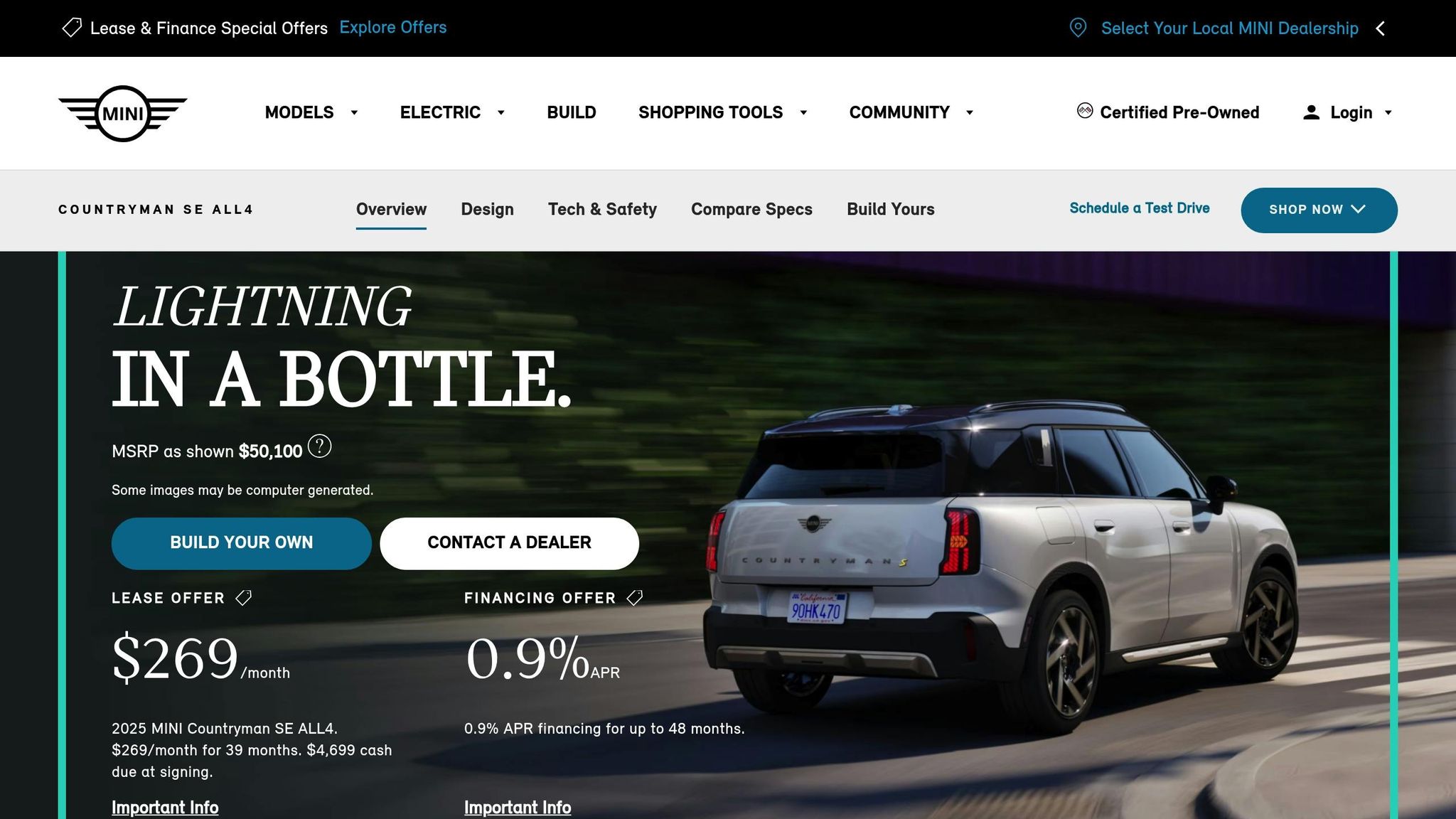
The Mini Countryman SE ALL4 clinched the 2025 Cars.co.za Electric Vehicle award with a score of 78.6%, narrowly edging out the BMW iX1. Priced from $46,375 in the United States, this subcompact electric SUV combines Mini’s playful driving dynamics with the proven engineering of the BMW iX1 xDrive30.
Affordability
At $46,375, the Countryman SE ALL4 sits above entry-level EVs like the Volvo EX30. However, it offers solid value with a 4-year/50,000-mile limited warranty and an 8-year/100,000-mile warranty for its battery and electrical components. Maintenance costs are generally lower than gas-powered vehicles, thanks to the simplicity of its electric drivetrain, which requires fewer fluids and moving parts. Buyers also get complimentary maintenance for three years or 36,000 miles. For those looking to splurge, higher trims like the Iconic, priced at $51,295, feature a roomy, upscale cabin with leather-free, sustainable materials and a 9.4-inch circular OLED display.
Range
The Countryman SE ALL4 delivers respectable range figures for its class. Its 66.5 kWh battery provides an EPA-estimated 212 miles on standard 18-inch wheels, while opting for 19-inch wheels reduces the range slightly to 204 miles. In highway testing at 75 mph, the vehicle achieved 180 miles (290 km). A built-in Mini Route Planner helps optimize trips by calculating efficient routes and necessary charging stops. When it comes to charging, the car supports DC fast charging at 130 kW, allowing the battery to go from 10% to 80% in about 29 to 30 minutes. A quick 10-minute charge can add 76 miles (122 km) of range. However, as Car and Driver’s Drew Dorian pointed out:
"Even though it’s an EV, the Countryman Electric remains true to Mini’s fun-to-drive and fun-to-own ethos but falls short on the all-important metric of range."
Durability
Designed to handle tough conditions, the Countryman SE ALL4 boasts a ground clearance of 6.5 inches (165 mm), making it adept at tackling potholes and uneven roads. In South Africa, buyers benefit from a 5-year/100,000 km maintenance plan. The dual-motor setup delivers a robust 308 hp and 364 lb-ft of torque, enabling the car to sprint from 0 to 60 mph in just 4.7 to 4.8 seconds. Despite its hefty weight of 4,572 lbs, the suspension ensures a smooth ride while preserving Mini’s hallmark handling. Additionally, the vehicle can tow up to 2,645 pounds (1,200 kg) with the optional trailer hitch. These features make the Countryman SE ALL4 well-suited for demanding environments.
Terrain Compatibility
Equipped with the ALL4 all-wheel-drive system, the Countryman SE ALL4 offers a default 50/50 power split but can shift to 100% front-wheel drive for added stability when needed. This ensures reliable traction on diverse road surfaces, making it a great fit for Africa’s varied terrains. The Trail Mode adds extra functionality, including vehicle inclination data and an on-screen compass for navigating challenging paths. Mini South Africa highlights:
"The unladen ground clearance of the MINI Countryman is 165 mm, which is optimal if you are going to do a lot of driving on bumpy roads or encounter uneven surfaces and potholes."
For buyers prioritizing range and comfort, the 18-inch wheels are a better choice than the larger options. They not only offer an EPA-estimated range of 212 miles but also provide a smoother ride on rugged or unpaved roads. These capabilities reinforce the Countryman SE ALL4’s adaptability to various landscapes.
Pros and Cons
The five models each bring their own mix of strengths and limitations to the table. The Dayun Yuehu S5 is appealing for its affordability and practical range, making it a solid choice for buyers on a budget. However, it lacks the premium features found in more established brands. The BYD Atto 3 combines dependable battery technology with competitive pricing, offering strong overall value.
For those seeking luxury and performance, the BMW iX1 xDrive30 delivers with its high-end design, powerful performance, and all-wheel-drive capability. That said, its premium price tag of around $56,600 may deter budget-conscious shoppers. The Volvo EX30, priced between $35,000 and $48,150, offers a modern and engaging driving experience, earning an 8.5/10 rating from Car and Driver. However, its tech-heavy interface might feel overwhelming for drivers who prefer a simpler setup. The Mini Countryman SE ALL4 stands out for its dynamic driving capabilities and adaptability to different terrains.
Here’s a quick look at how these models compare across key metrics:
| Model | Price (USD) | Range (miles) | 0-62 mph (sec) | Ground Clearance (in) | Battery Capacity (kWh) | Terrain Suitability (1-10) |
|---|---|---|---|---|---|---|
| Dayun Yuehu S5 | ~$25,000* | 248 | ~9.0* | 7.1 | 60* | 7 |
| BYD Atto 3 | ~$36,000* | 261 | 7.3 | 6.9 | 60.5 | 8 |
| BMW iX1 xDrive30 | $56,600 | 257 | 5.6 | 6.7 | 64.8 | 8 |
| Volvo EX30 | $35,000–$48,150 | 227–261 | 3.6–5.3 | 6.9 | 64–69 | 7 |
| Mini Countryman SE ALL4 | $46,375 | 212 | 4.7 | 6.5 | 66.5 | 9 |
*Estimated figures based on available market data
While these metrics provide a helpful overview, there are other factors to consider. For instance, electric SUVs generally average 2.8 miles per kWh, compared to the 3.6 miles per kWh often seen in compact EVs – a difference of 22% that can increase the cost of public fast-charging. Additionally, with many electric SUVs weighing over 4,500 pounds, their lower efficiency can lead to higher running costs and greater wear on components. It’s also worth noting that real-world range can vary based on factors like terrain, speed, and climate control usage, meaning EPA estimates may not always align with everyday driving experiences.
For buyers in Africa, additional considerations like affordability, range, and durability are crucial, but so are towing capacity and parking aids. Towing capacities can vary widely, from about 660 pounds (300 kg) to more than 5,500 pounds (2,500 kg), depending on the model. Larger vehicles often come equipped with parking aids such as rear cameras and blind-spot warnings, which are particularly useful for navigating challenging terrains and limited visibility areas.
Conclusion
When choosing an electric SUV for African roads, it’s essential to consider performance, range, and practicality. The Volvo EX30, with a range of 227 to 261 miles and a starting price of about $40,245, is a solid option for city commutes and regional travel alike.
For those seeking a bit more adaptability for mixed terrains, the Mini Countryman SE ALL4 stands out. Priced around $46,375, it combines urban functionality with light off-road capabilities, thanks to its 6.5-inch ground clearance, making it a versatile choice for diverse driving needs.
In areas where charging infrastructure is less developed, a longer range becomes a key factor. The Volvo EX30’s range is well-suited for most daily and regional trips, though actual performance will vary depending on driving conditions, terrain, and climate control usage.
Ready to embrace electric mobility? Visit EV24.africa to browse available models, detailed specs, and financing options across 54 African countries. With clear pricing, expert support, and reliable delivery services, finding the right electric SUV for your lifestyle and budget has never been easier.
FAQs
What makes electric SUVs a good choice for African roads?
Electric SUVs are a solid match for Africa’s varied road conditions, blending toughness with the efficiency of electric drivetrains. Thanks to their high ground clearance and ability to tackle rough terrain, they’re well-suited for unpaved roads, potholes, and even areas prone to flooding. Add in the instant torque from electric motors, and you’ve got vehicles that excel at steep climbs and off-road adventures.
On top of that, they’re much easier on the wallet when it comes to running costs. Electricity is typically more affordable than imported gas or diesel, and with fewer moving parts, maintenance is simpler and less expensive. This is a big plus, especially in regions where service centers might be scarce. Many 2025 models now offer ranges exceeding 310 miles per charge, making them a practical choice for long-distance travel, even as charging networks continue to grow.
Beyond practicality, electric SUVs contribute to cleaner air and lower greenhouse gas emissions. Their ability to pair with solar-powered charging systems fits perfectly with Africa’s growing focus on renewable energy. Whether in bustling cities or remote areas, they stand out as a smart, forward-thinking option.
How does the Dayun Yuehu S5 compare in price to other electric SUVs?
The Dayun Yuehu S5 stands out as one of the most budget-friendly electric SUVs set to hit the African market in 2025. With a starting price of just $15,000, it’s a game-changer in affordability compared to competitors like the BYD Dolphin (priced around $25,000), the Dongfeng Box (approximately $30,000), and high-end options like the Volvo EX30 ($45,000–$50,500) or the Audi Q6 e-tron (which exceeds $75,000).
This pricing positions the Yuehu S5 at 40-80% less than these alternatives, offering an incredible option for cost-conscious buyers looking for an electric SUV designed with Africa’s specific demands in mind.
What is the best EV SUV for long distances in areas with limited charging stations?
The Changan Hunter EV is a solid option for regions where charging stations are hard to come by. With a range of about 641 miles (1,031 kilometers) on a full charge, it provides the kind of dependability that long-distance drivers need.
This impressive range allows drivers to tackle remote areas and varied terrains with ease, reducing the worry of constantly searching for a charging station. It’s a practical solution for those navigating less-connected areas.