
 Thabo Nkosi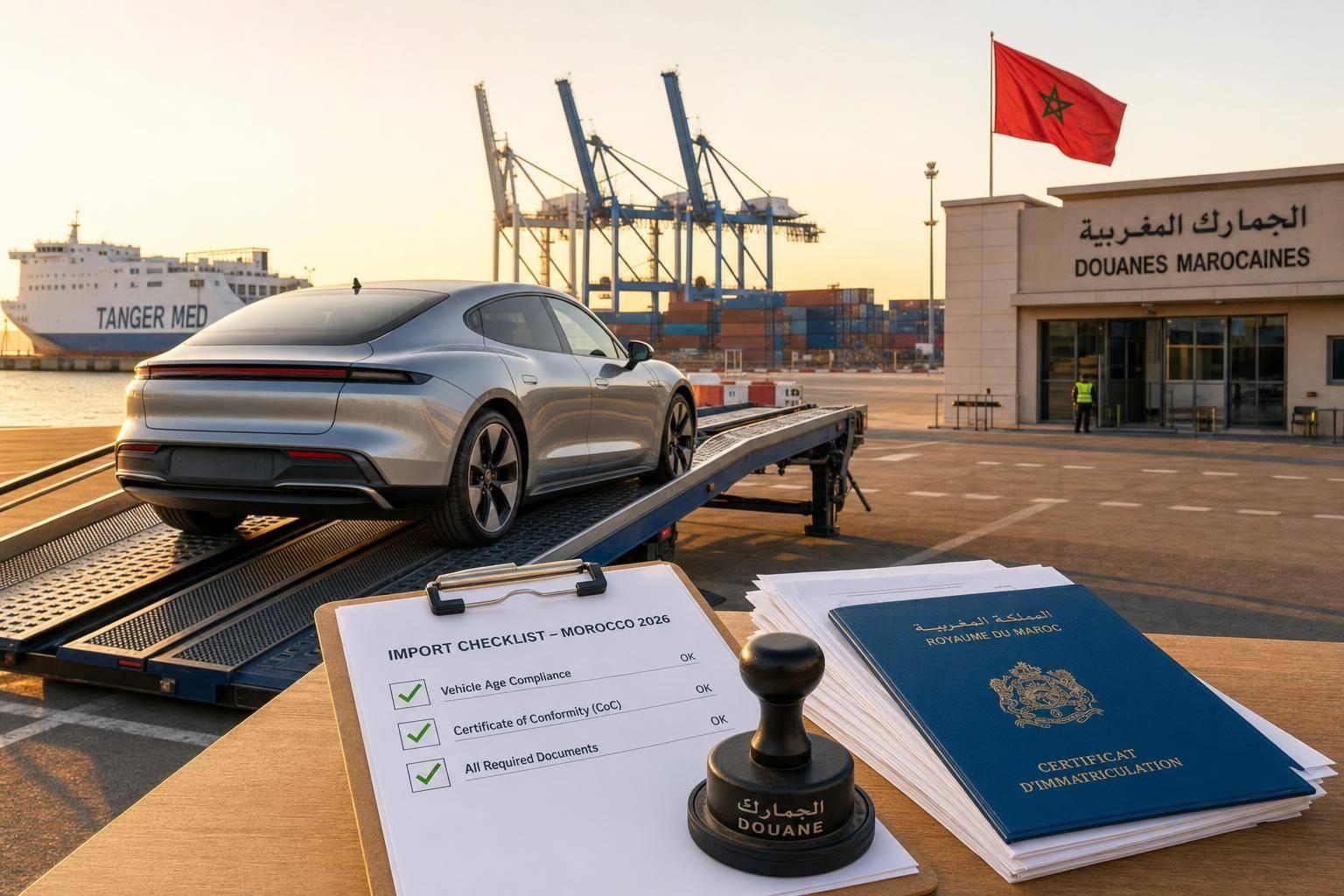
Importing a battery EV to Morocco in 2026 can be low-tax, but only if the car and paperwork fit the rules. I’d expect 2.5% customs duty, 0% VAT, and no annual vignette for a qualifying battery EV. On a $30,000 EV, that means customs duty is about $750 to $808, depending on the final CIF value.
Before I send any money, I’d check four things right away:
- The car is a full battery EV
- The age fits Morocco’s import limit
- The seller can provide the CoC and matching documents
- My import route is clear: temporary admission or permanent import
I’d also budget for more than tax alone. The full cost usually includes:
- Purchase price
- Shipping and insurance
- Port handling
- Customs broker fees
- Homologation
- Technical inspection
- Registration
- Moroccan insurance
For a rough idea, the article’s examples put a used Renault Zoe at about $15,028 landed and a Tesla Model 3 at about $35,408 landed. If I were importing as an MRE, I’d also check whether I qualify for the 90% tax reduction mentioned in the article.
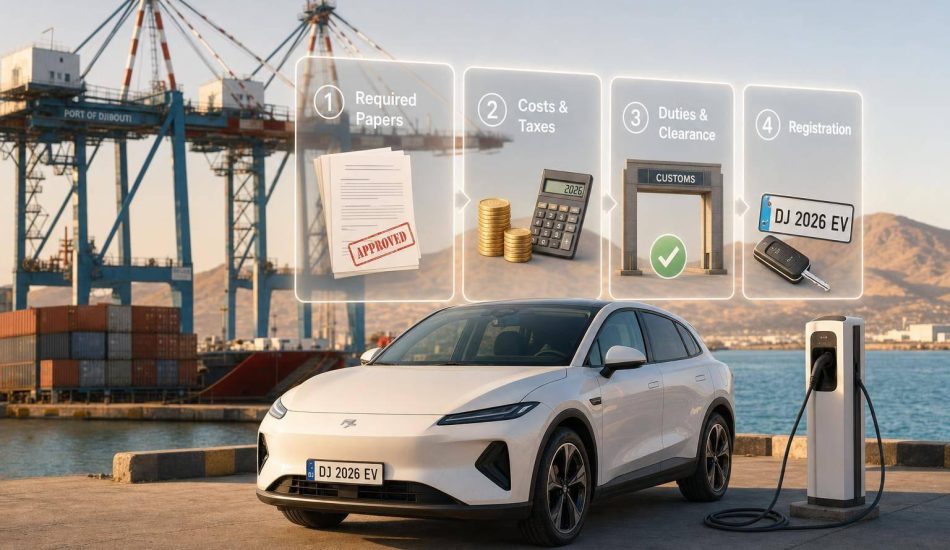
The process is simple on paper: check eligibility, gather documents before shipping, clear customs, get the quitus douanier, pass conformity and inspection, then register with NARSA. Miss one paper, and storage fees or delays can eat into the low tax rate fast.
| Item | 2026 Rule / Example |
|---|---|
| Customs duty | 2.5% of CIF |
| VAT on battery EVs | 0% |
| Annual vignette | None |
| MRE tax relief | Up to 90% reduction |
| Main risk | Missing or mismatched documents |
| Key document | Certificate of Conformity (CoC) |
If I wanted the short version, it would be this: pick an eligible battery EV, confirm the age rule, lock down the paperwork before shipping, and estimate the landed cost before the car leaves port.
Step 1: Check Whether the EV Can Be Imported to Morocco
Before you send money to a seller overseas, check three things first: the car’s age, the type of EV, and the import route.
Confirm Age, Vehicle Type, and Import Status
Start with the vehicle’s first registration date. That date matters a lot.
EVs get a 3-year age abatement for tax calculation, but for permanent import, the car still has to fit Morocco’s five-year age limit. If the vehicle is getting close to that limit, contact the Administration des Douanes et Impôts Indirects before you buy. It’s a small step that can save you a big headache.
Also check the powertrain. Only battery EVs qualify for the 0% VAT and 2.5% duty rates. If the vehicle is not a full battery electric model, those rates do not apply.
Your status as the buyer matters too. Moroccan residents, foreign residents with a residence card, Moroccans Residing Abroad (MREs), and businesses can legally import EVs. If you’re importing as an MRE, your tax bill changes.
There are two main import paths, and they do not work the same way:
- Temporary Admission (AT) allows the car to stay in Morocco for six months, with renewal possible, and without permanent import duties
- Permanent import is meant for long-term use
That choice affects both your taxes and your paperwork. For AT, you generally need the vehicle’s original registration certificate and a passport.
Choose a Model With Acceptable Paperwork
If the car clears the age and status check, move to the next gate: paperwork. A vehicle can look fine on paper at first glance and still get stuck if the documents aren’t in order.
The main document is the Certificate of Conformity (CoC). It’s a must because all imported EVs have to pass homologation through the Ministry of Industry and Commerce.
Beyond the CoC, focus on cars with a clear VIN history and traceable ownership records. That helps you avoid trouble later, especially when the file is reviewed.
A simple move here can save time: ask for the CoC before you agree to buy. If the seller doesn’t have it, check whether the manufacturer can issue one before you go any further.
Once the car qualifies, the next step is to build the purchase and shipping file before it leaves port.
sbb-itb-99e19e3
Step 2: Prepare the Purchase, Shipping, and Customs File
Put your import file together before the car leaves the seller’s country. If your name, VIN, or conformity papers don’t line up, customs clearance can slow down fast.
Documents to Collect Before Shipping
For a permanent import, the main file includes the original foreign registration certificate (carte grise), the purchase invoice, a valid technical inspection report, a certificate of non-encumbrance, an insurance certificate, and the Certificate of Conformity (CoC). On the ID side, you’ll also need your CIN or residence card, plus a passport stamped on entry.
Details matter here. Your name, VIN, trim or variant, and dates should match across every document. It’s smart to keep both paper and digital copies of everything before the car ships.
| Document | Permanent Import |
|---|---|
| Original Registration (Carte Grise) | Required |
| Purchase Invoice | Required |
| Passport (stamped on entry) | Required |
| Certificate of Conformity (CoC) | Required |
| Technical Inspection Report | Required |
| Moroccan ID / Residence Card | Required |
| Insurance Certificate | Required |
Once the file is ready, you can pick the shipping method and arrival port that make sense for your budget.
Shipping Methods, Ports, and Broker Fees
The two main shipping options are Ro-Ro (Roll-on/Roll-off) and container shipping. Container shipping is the better fit for higher-value cars, while Ro-Ro usually costs less.
The main arrival ports are Tanger Med and the Port of Casablanca. Beyond freight, plan for shipping insurance, port handling, and customs broker fees. Those costs change based on the route and the level of service you choose.
After the car arrives, customs will compare the declared value with market references.
How Customs Values the Car Before Clearance
Customs may accept the invoice or revalue the car using market references. If customs assigns a higher value, your duties go up, and so does your landed cost. The safe move is simple: declare a realistic price and make sure every document says the same thing to help avoid delays.
Step 3: Calculate Duties, Taxes, and Total Landed Cost
Once you know the CIF value, you can work out the import charges. In Morocco, battery EVs are taxed lightly.
Which Charges Apply to Imported Electric Cars in 2026
Imported battery EVs pay 2.5% duty on the CIF value, 0% VAT, and no vignette.
That’s not the whole bill, though. You should also budget for port handling, customs broker (transitaire) fees, technical inspection, homologation, and the registration card (carte grise). If you are a Moroccan Resident Abroad (MRE), you may qualify for a 90% reduction on total import taxes. And if you’re buying a used EV, the 3-year age abatement can lower the taxable value before the 2.5% duty is applied. It’s smart to verify the current rules before you buy, because paperwork and tax treatment can shift.
Use these charges to estimate your port-side total before you add final shipping and clearance costs.
Landed-Cost Examples: Used Renault Zoe and Tesla Model 3
The basic formula is simple: CIF value + duty + port, broker, compliance, and registration fees = landed cost.
Example 1 – Used Renault Zoe (standard resident buyer)
| Cost Item | Amount |
|---|---|
| Purchase price | $12,000 |
| Shipping (Ro-Ro, Europe to Tanger Med) | $800 |
| Port handling | $200 |
| Customs broker fee | $300 |
| CIF value (purchase + shipping + insurance) | ~$13,100 |
| Import duty (2.5% of CIF) | ~$328 |
| Technical inspection | $100 |
| Homologation | $150 |
| Registration (carte grise) | $150 |
| Total landed cost | ~$15,028 |
Example 2 – Tesla Model 3 (standard resident buyer)
| Cost Item | Amount |
|---|---|
| Purchase price | $30,000 |
| Shipping (container, Europe to Tanger Med) | $1,500 |
| Port handling | $300 |
| Customs broker fee | $400 |
| CIF value (purchase + shipping + insurance) | ~$32,300 |
| Import duty (2.5% of CIF) | ~$808 |
| Technical inspection | $100 |
| Homologation | $150 |
| Registration (carte grise) | $150 |
| Total landed cost | ~$35,408 |
These examples give you a practical ballpark. The Renault Zoe lands at about $15,028, while the Tesla Model 3 comes in at about $35,408 before any buyer-specific tax relief.
Cost Comparison by Origin and Buyer Profile
Before you lock in the deal, check the origin-specific paperwork. The car’s origin can affect both the documents you need and how duty is handled. If a trade-agreement document might apply, confirm that before sending payment.
After pricing the car, move on to customs release and homologation.
Step 4: Clear Customs, Complete Homologation, and Register the Car
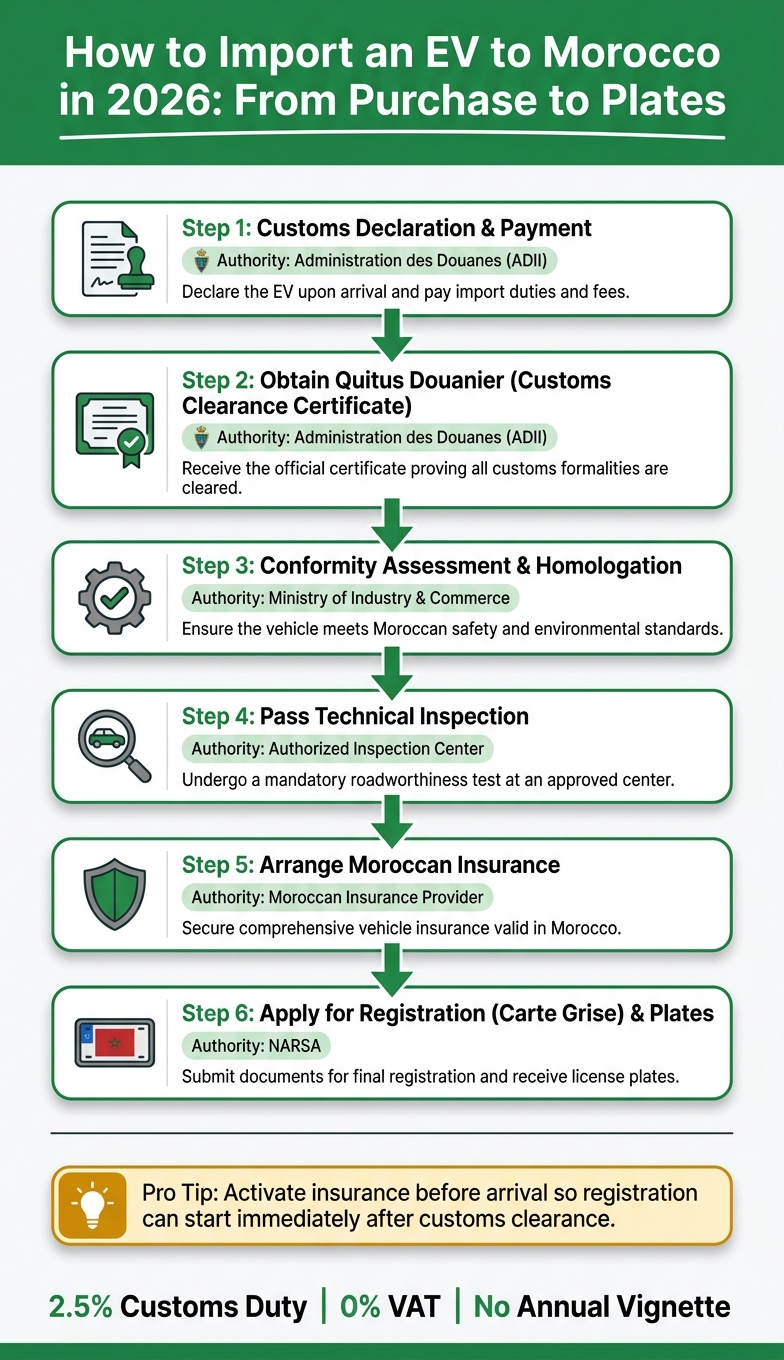
How to Import an Electric Car to Morocco in 2026: Step-by-Step Process
Once you have your landed-cost estimate, the last part is mostly paperwork. The main thing is to handle each step in the right order so your car doesn’t get stuck at the port.
Customs Clearance and Release Documents
At this stage, your broker can file the customs declaration based on your landed-cost estimate. You’ll need to submit the final customs file with these documents: carte grise, invoice, passport entry stamp, CIN or residence card, attestation de non-gage, technical inspection report, insurance, and CoC.
After the Administration des Douanes checks the file and you pay the assessed charges, they issue the quitus douanier. This customs clearance certificate is a must-have for the registration steps that come next, so store it carefully.
Homologation and Technical Inspection for an Imported EV
Once customs release is done, move on to homologation through the Ministry of Industry and Commerce. After that, file for registration through NARSA. NARSA handles the registration only after conformity approval is in place.
Registration, Plates, and Insurance
Here’s how the process usually flows:
| Step | Action | Authority |
|---|---|---|
| 1 | Customs declaration and payment | Administration des Douanes |
| 2 | Obtain quitus douanier | Administration des Douanes |
| 3 | Conformity assessment and homologation | Ministry of Industry / NARSA |
| 4 | Pass technical inspection | Authorized Inspection Center |
| 5 | Arrange Moroccan insurance | Moroccan Insurance Provider |
| 6 | Apply for registration (carte grise) and plates | NARSA |
For the final registration application at NARSA, bring the quitus douanier, original foreign carte grise, purchase invoice, attestation de non-gage, technical inspection report, CIN or residence card, and proof of Moroccan insurance.
One practical move: activate insurance before arrival so registration can start right after clearance.
Before pickup, double-check the charging connector, cable, and navigation and infotainment support Morocco.
Conclusion: Budget Carefully and Follow the Steps in Order
Importing an EV to Morocco in 2026 is fairly simple if you check eligibility first: the car’s age, its import status, and whether it has a valid Certificate of Conformity (CoC). If the vehicle passes those checks, make sure the paperwork is complete before it ships.
Your document file can save you a lot of trouble. Have the full set ready ahead of time. Missing papers can lead to delays and storage fees. It also helps to keep digital backups, so a lost document doesn’t turn into an extra bill. Once the file is in good shape, the next job is to estimate the landed cost.
Battery EVs still get 2.5% duty and 0% VAT, which means the CIF value plays a big role in what you’ll pay. After you price the import, you move on to customs release and registration.
The last stretch follows a set order: customs clearance and the quitus douanier, then homologation, technical inspection, insurance, and NARSA registration. Follow that order and the car moves from purchase to plates with fewer delays.
Before you commit, check the latest rules with ADII and NARSA, since fees and requirements can change.
FAQs
What if the EV is older than Morocco’s import limit?
Morocco generally doesn’t allow the permanent import of vehicles that are more than five years old.
There is one key exception: EVs may qualify for an extension of up to 10 years.
There’s also a special rule for Moroccan Residents Abroad (MREs) who are returning for good. They may receive a one-time three-year age reduction when duties and taxes are calculated.
Before you import anything, check your vehicle’s eligibility with the Department of Commerce.
How long does the full import and registration process usually take?
The full process usually takes about 30 days. That said, shipping by itself often takes 4 to 8 weeks, so timing can stretch beyond that.
Once the vehicle arrives and clears customs, the last step is registration. This includes the technical inspection and the issuance of the Carte Grise. That part usually takes 30 to 60 days, though admin backlogs can slow things down. You’ll also need valid insurance during this period.
Can I import an EV without a Certificate of Conformity?
No. A Certificate of Conformity (CoC) is required to show that the EV meets Morocco’s national safety and technical standards.
Without the CoC, and without proof that the vehicle complies with local rules, you can’t clear customs or register the vehicle for road use in Morocco.