
 Thabo Nkosi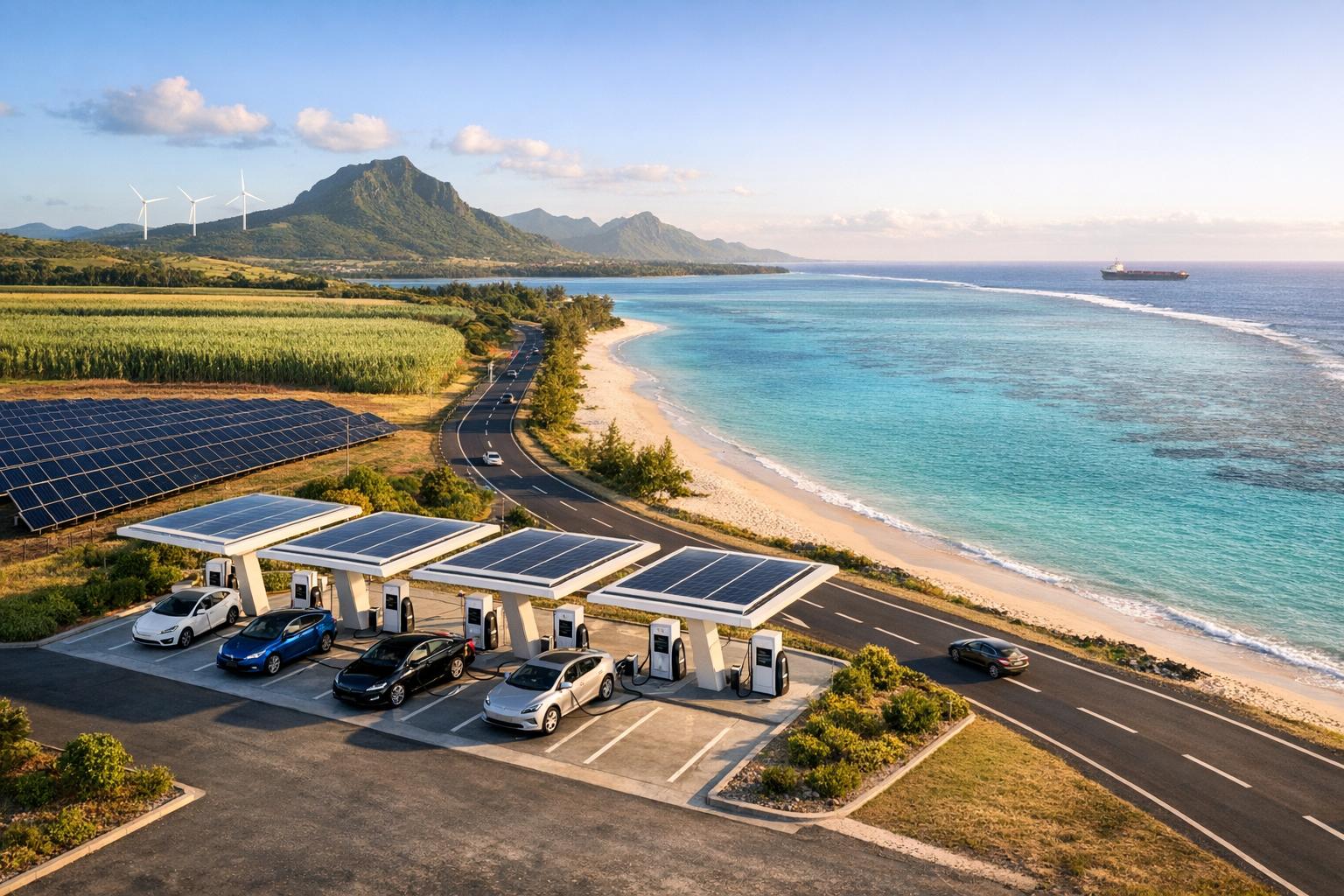
Mauritius is emerging as a regional hub for electric vehicles (EVs). Here’s why:
- Compact Size: EVs are ideal for Mauritius, where short travel distances eliminate range anxiety.
- Environmental Challenges: Rising greenhouse gas emissions (3.3% annually) and reliance on fossil fuels (79% of energy) drive the need for cleaner solutions.
- Government Policies: Tax exemptions, subsidies, and charging infrastructure requirements make EV adoption more accessible.
- Geographic Advantage: Located between Africa and Asia, Mauritius is positioned to facilitate EV trade and distribution.
- Renewable Energy Goals: By 2030, the country aims for 60% of electricity from renewables, supported by $1.6 billion in investments.
- Global Partnerships: Collaborations with brands like Tata and MG bring tailored EV models to the local market.
Mauritius is combining location, policy, and renewable energy to shape a future-ready EV ecosystem.
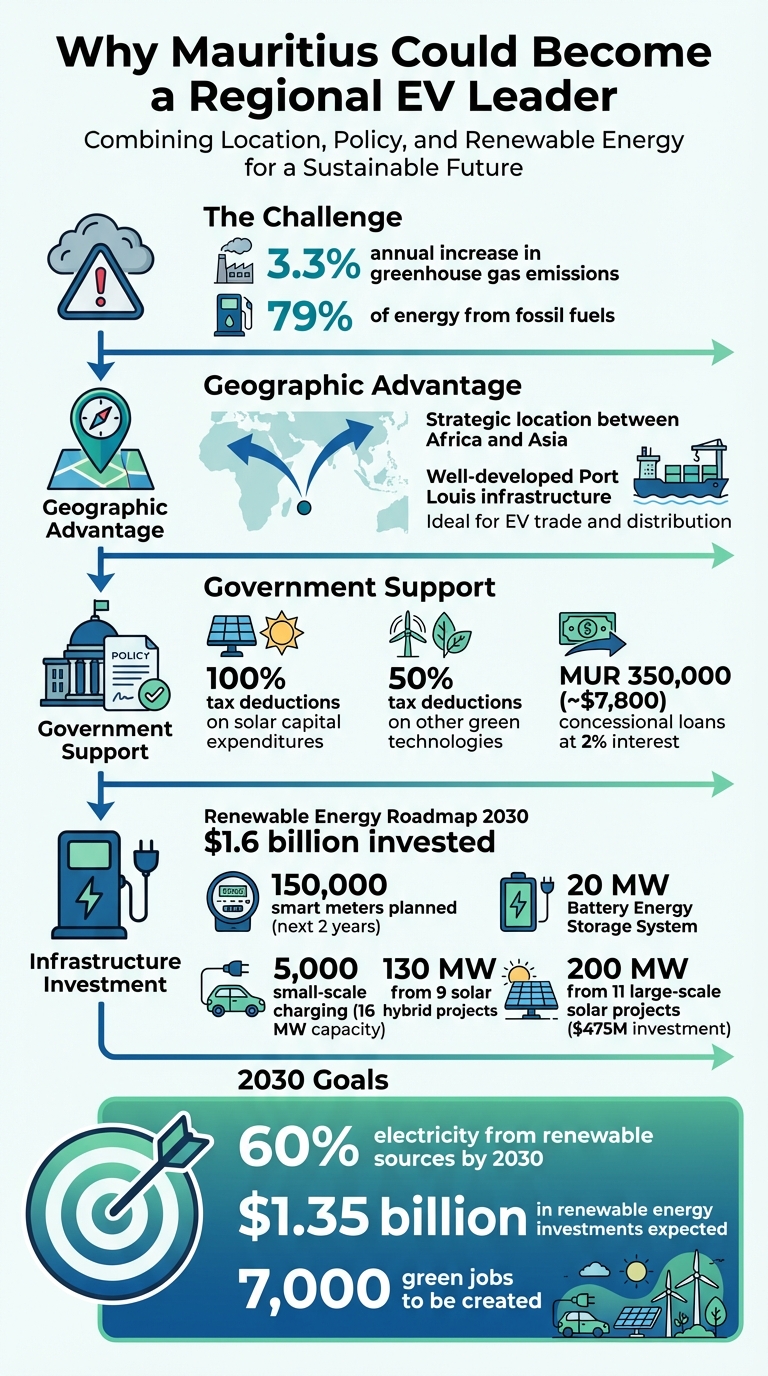
Mauritius EV Leadership: Key Statistics and Goals for 2030
How Location Supports Regional EV Growth
Geographic Benefits
Mauritius’s location in the Indian Ocean makes it a natural hub for electric vehicle (EV) distribution between Africa and Asia. Its well-developed port infrastructure has already demonstrated its ability to handle large cargo volumes between these regions. This geographic advantage, combined with its strategic position, supports efficient EV trade and distribution, particularly through Port Louis.
Current Trade Relations
Mauritius leverages its modern port facilities at Port Louis to support its logistics network, simplifying the import and distribution of EVs and their components across the region. These facilities strengthen its role as a central point in the growing EV supply chain, helping to connect Africa’s emerging EV market with broader global networks.
Government Policies Supporting EV Adoption
Tax Incentives for EV Buyers
While specific tax incentives for electric vehicle (EV) buyers haven’t been finalized, policymakers are actively exploring ways to make EV ownership more affordable. Potential measures could include adjustments to import duties, reductions in registration fees, or other cost-cutting initiatives. These steps would aim to lower the upfront financial barrier for individuals and businesses, aligning with broader goals to promote green energy solutions.
Green Energy Regulations
In addition to financial considerations, Mauritius is laying the groundwork for a cleaner energy future. Although concrete policies are still under development, the direction is clear: integrating renewable energy with EV adoption. Possible regulations may include setting renewable energy targets or requiring new developments to incorporate EV charging facilities. These efforts aim to ensure that the shift to electric mobility is powered by sustainable energy sources, creating a more environmentally friendly infrastructure for the future.
EV Infrastructure Investments
Mauritius is making strides in building its EV charging infrastructure, reflecting a well-thought-out plan to support its growing electric vehicle market. These efforts not only aim to meet local demand but also position the country as a regional leader in sustainable transportation.
Charging Network Expansion
The Central Electricity Board (CEB) has introduced three key regulatory frameworks to expand the EV charging network. In November 2021, it launched a Solar PV Scheme to encourage EV charging at homes and small businesses. Then in March 2022, a corporate scheme was introduced to help businesses transition their fleets to electric vehicles. By April 2022, the "Scheme for Service Providers offering Public Charging of Electric Vehicles" was initiated, marking a shift from pilot projects to full-scale public charging operations.
Advancements in charging technology are also playing a critical role. For example, modular chargers like the ABB Terra 360 can deliver up to 360 kW of power, allowing up to four vehicles to charge simultaneously. This innovation significantly reduces wait times at public charging points. Moreover, Vivo Energy Mauritius (which operates under the Shell brand) partnered with the University of Mascarene in 2022 to study EV charging patterns. This collaboration includes a demonstration station that collects data on battery performance when charged using solar energy.
Mauritius has also embraced decentralized solutions, with around 5,000 small-scale projects now providing 16 MW of capacity. This approach ensures that charging infrastructure extends beyond urban areas, making EVs a practical choice for more residents.
At the same time, Mauritius is integrating renewable energy sources to power its growing charging network.
Renewable Energy Integration
The expansion of EV infrastructure is closely tied to Mauritius’ renewable energy goals. The nation has allocated $1.6 billion toward its Renewable Energy Roadmap 2030, aiming for 60% of its electricity to come from renewable sources by the end of the decade. As part of this plan, nine solar hybrid projects with a combined capacity of 130 MW are replacing coal-fired power plants. These projects combine solar panels, battery storage, and stabilization technologies to ensure a steady power supply, overcoming the usual challenges of renewable energy intermittency.
Additionally, 11 large-scale solar projects, totaling 200 MW, are in various stages of development. These initiatives represent an investment of $475 million. Commercial and industrial solar projects have also secured agreements with the CEB at a rate of 9 cents per kWh, making renewable-powered charging stations more economically attractive. To streamline these efforts, the government has set up a multi-layered coordination system involving the CEB, the Mauritius Renewable Energy Agency (MARENA), and a fast-track committee led by the Prime Minister. This shift is expected to create around 7,000 green jobs by 2030.
These combined efforts are paving the way for Mauritius to attract partnerships with global EV manufacturers, further strengthening its position in the sustainable energy landscape.
sbb-itb-99e19e3
Partnerships with Global EV Manufacturers
Mauritius has become a hub for global electric vehicle (EV) manufacturers looking to enter the African market. Thanks to forward-thinking government policies and a clear push toward green mobility, major automotive brands are forming strategic partnerships within the country.
Partnership Agreements
In March 2025, TATA.ev, a subsidiary of Tata Motors, teamed up with Allied Motors, one of Mauritius’ leading automobile distributors, to introduce three electric vehicle models: the Tiago.ev, Punch.ev, and Nexon.ev. This partnership, spearheaded by Yash Khandelwal, Head of International Business at Tata Passenger Electric Mobility, and James Ngan, Managing Director of Allied Motors, marked a significant milestone as Tata rolled out its first full EV range in Mauritius.
"With the government’s strong commitment to sustainable mobility, Mauritius holds strategic importance in our EV journey." – Yash Khandelwal, Head International Business, Tata Passenger Electric Mobility
"The partnership with TATA.ev is a game-changer for Mauritius, bringing a range of electric vehicles to a country that is ready to embrace sustainable and innovative mobility solutions." – James Ngan, Managing Director, Allied Motors
In 2024, MG Motor Mauritius launched the MG E-ZS SUV, a model specifically designed and certified for Mauritian road conditions. This vehicle boasts 110 kW of power and offers a range of 325 km. Meanwhile, Hino Motors partnered with BYD Company Ltd to develop commercial battery electric vehicles tailored for the region.
These collaborations highlight a growing trend of customizing EV technologies to meet local needs and preferences.
Market Adaptation
Global EV manufacturers are taking steps to align their offerings with the unique demands of Mauritius. For example, the MG E-ZS features a 44.5 kWh water-cooled lithium-ion battery, delivering a range of 325 km – perfectly suited to the island’s conditions.
Efforts also extend to integrating renewable energy into EV charging solutions. In 2024, the University of Mauritius joined forces with private companies to launch the "Green Charging of Electric Vehicles" project. This initiative focuses on using solar energy to power EVs, supporting the country’s broader goal of transitioning to a low-carbon economy. By collaborating with local stakeholders, global manufacturers are not only introducing cutting-edge EVs but also contributing to sustainable energy solutions designed for Mauritius’ renewable energy infrastructure.
What Other African Nations Can Learn
Mauritius has created a blueprint that other African nations can adapt to accelerate their electric vehicle (EV) markets. By aligning its natural advantages, government policies, and infrastructure investments, Mauritius has built a system where energy, finance, housing, and regulatory bodies work together seamlessly. This centralized coordination ensures that policies complement each other and projects move forward efficiently.
Policies and Incentives That Work
A standout feature of Mauritius’ approach is its financial incentive program. The government provides 100% tax deductions on capital expenditures for solar energy units and 50% for other green technologies. Additionally, individuals can access concessional loans of MUR 350,000 (around $7,800) at a 2% interest rate, while industrial users benefit from preferential rates of 3%.
These incentives are designed to support both households and businesses. Through Small and Medium Distributed Generation (SDG/MDG) systems, people can generate solar power for their EV charging needs and sell any surplus energy back to the grid. African nations could replicate this by introducing dedicated loan programs and establishing clear power purchase agreements. This would allow renewable energy developers to test and scale their solutions while contributing to national grids.
Such policies not only promote renewable energy adoption but also align seamlessly with the infrastructure upgrades needed for EV growth.
Strengthening Infrastructure
Mauritius has taken a two-pronged approach to infrastructure: expanding EV charging networks and integrating renewable energy sources. Over the next two years, the country plans to install 150,000 smart meters to modernize its grid. It is also implementing a 20-Megawatt Battery Energy Storage System (BESS) to address the challenges of renewable energy intermittency. These measures are critical as Mauritius phases out coal and aims for renewable energy to make up 60% of its electricity mix by 2030.
Public-private research partnerships are another key driver of progress. For instance, the University of Mauritius launched the "Green Charging of Electric Vehicles" project in April 2025, focusing on optimizing solar energy for EV charging. Additionally, standardized feed-in tariffs – such as agreements for solar projects at approximately 9 US cents per kWh – further encourage private investment in charging infrastructure.
The results are promising: Mauritius expects to attract $1.35 billion in renewable energy investments and create 7,000 green jobs by 2030. This demonstrates how thoughtful infrastructure planning can fuel economic growth while advancing sustainable transportation goals.
Conclusion
Mauritius showcases how a well-planned approach can drive electric vehicle (EV) adoption, blending its strategic location with smart policies and focused investments in infrastructure. The key to its progress lies in synchronizing EV adoption with renewable energy strategies. As Dr. Raj Daliah pointed out, aligning vehicle electrification with significant improvements in the energy mix has been a cornerstone of this success.
This integrated strategy doesn’t just address transportation – it tackles broader issues like economic stability and public health. By cutting reliance on imported oil, Mauritius shields its economy from price swings while reducing air pollution that contributes to premature deaths. The country’s approach to grid management, including incentives for off-peak charging and the use of battery storage, offers a practical guide for other utilities facing similar challenges across the continent.
Mauritius’s efforts also ripple outward, with its companies expanding electric mobility services to neighboring regions. By combining energy policies, financial incentives, and infrastructure development, the nation provides a clear path for other African countries looking to reduce emissions and embrace cleaner, more sustainable transportation.
FAQs
Can Mauritius’s power grid support widespread EV charging?
Mauritius is taking a closer look at its power grid to determine how well it can handle the rising demand for EV charging. A 10-year Electric Vehicle Integration Roadmap has been developed, focusing on continuous assessments of the infrastructure and grid capacity needed to accommodate the increasing number of EVs. The goal is to ensure the grid is prepared to meet future energy demands efficiently.
How quickly will public chargers spread beyond Port Louis?
Public charging stations in Mauritius are set to gradually extend beyond Port Louis over the next ten years. This expansion aligns with the country’s 10-year plan for integrating electric vehicles (EVs) and the continued investments in renewable energy and EV infrastructure detailed in government initiatives. These steps are designed to encourage wider EV adoption throughout the island.
Can other African countries copy Mauritius’s EV incentive model?
Mauritius has rolled out a series of measures to boost electric vehicle (EV) adoption, setting an example for other African nations. By implementing tax incentives, integrating renewable energy into the EV ecosystem, and creating supportive government policies, Mauritius offers a practical framework for fostering EV growth. These strategies could serve as a guide for neighboring countries looking to expand their own EV markets and encourage sustainable transportation solutions.