
 Thabo Nkosi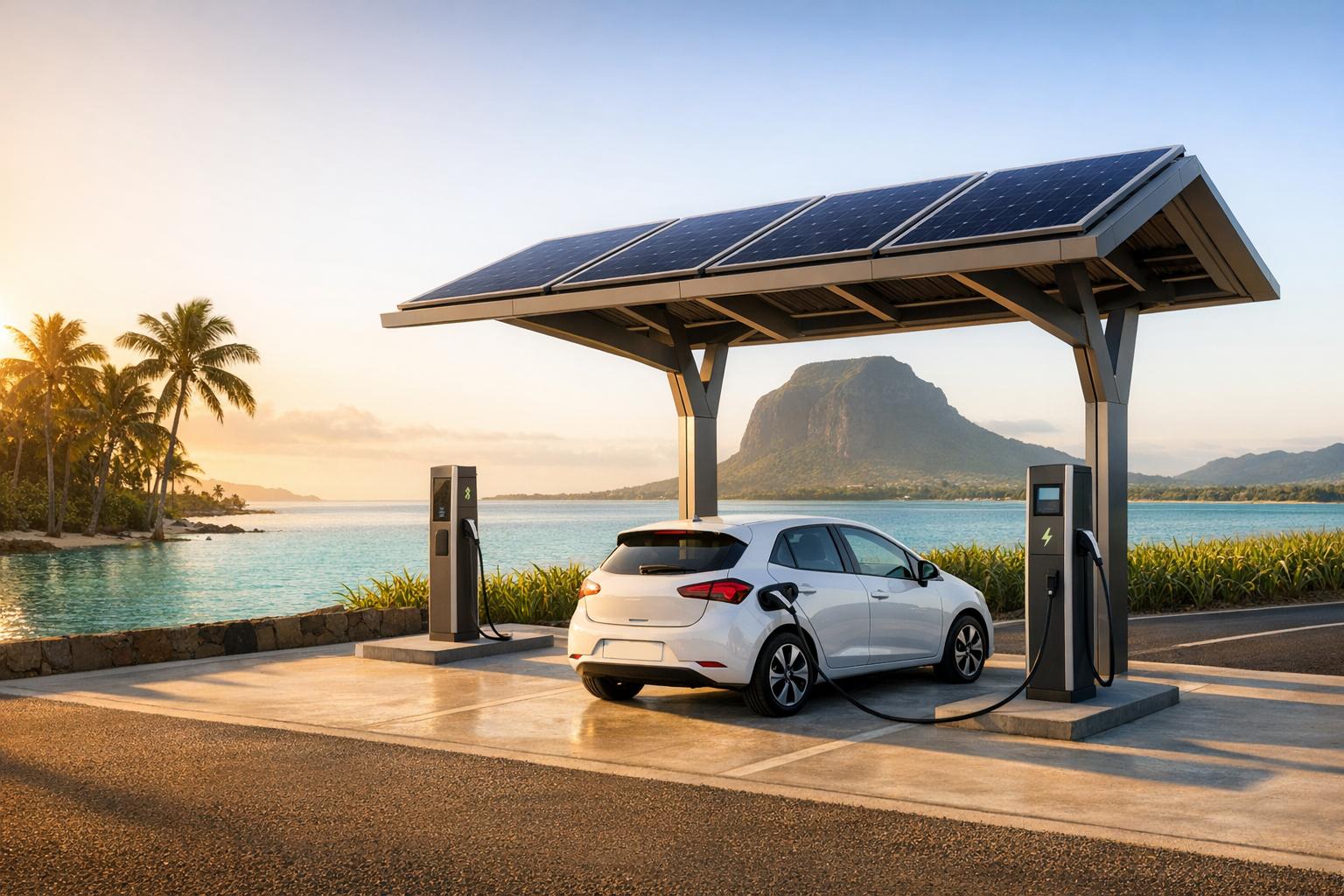
Mauritius is positioning itself as a leader in Africa’s electric vehicle (EV) transition. Here’s why:
- Top Ranking: Mauritius secured a leading spot in the 2025 Africa EV Readiness Index, thanks to its stable power grid, tailored policies, and compact geography.
- Strong Market Growth: Global brands like Kia, Toyota, and MG are actively introducing EVs, with models like the MG E-ZS offering ranges ideal for the island’s small size.
- Supportive Policies: The government has revamped tax incentives, introduced reduced import duties for EVs, and implemented a 10-Year EV Integration Roadmap to expand infrastructure and encourage adoption.
- Solar-Powered Charging: Mauritius integrates renewable energy into EV charging, with initiatives like solar PV schemes, green loans, and public solar-powered charging stations.
- Regional Influence: Mauritius is not just adopting EVs but also driving regional growth, with frameworks inspiring expansions into other African nations like Zimbabwe.
Mauritius is proving that a mix of smart policies, renewable energy integration, and partnerships can accelerate EV adoption while addressing infrastructure needs. This approach positions the island as an example for other countries aiming to transition to electric mobility.
EV Adoption in Mauritius Today
Market Growth and Available EV Models
Mauritius is seeing a rise in its EV market, with several well-known global brands now offering models locally. Among the key players are Kia Mauritius, Jaguar Mauritius, MG Motor Mauritius, Toyota Mauritius, Carclub Ltd, and Leal Energie Ltd.
One standout model is the MG E-ZS, a fully electric vehicle equipped with a 44.5 kWh water-cooled lithium-ion battery. It delivers 110 kW of power and offers a WLTP range of 202 miles, making it an ideal choice for the island’s commuting needs. This range capability ensures that drivers can navigate daily routes without the typical concerns about running out of charge.
Beyond passenger cars, Mauritius is also advancing in the commercial EV sector. For instance, the partnership between Hino Motors Ltd and BYD Company Ltd highlights a broader commitment to electrification. These developments reflect a growing market and a noticeable shift in consumer preferences toward EVs.
Consumer Adoption Trends
As more EV models become available, consumer interest in Mauritius is growing steadily. Two key factors driving this shift are fuel cost savings and a growing sense of environmental responsibility. With global fuel prices on the rise, EVs are appealing due to their lower running costs compared to traditional combustion-engine vehicles.
Convenience is another major appeal. About 75% of EV owners in Mauritius charge their vehicles at home, a setup that aligns well with the island’s residential infrastructure. This ease of home charging reduces the reliance on public charging stations, making EV ownership more practical for everyday use. Additionally, many owners follow the 80/20 charging rule – keeping their battery charge between 20% and 80% – to reduce wear and extend battery lifespan.
sbb-itb-99e19e3
Government Policies and Incentives for EVs
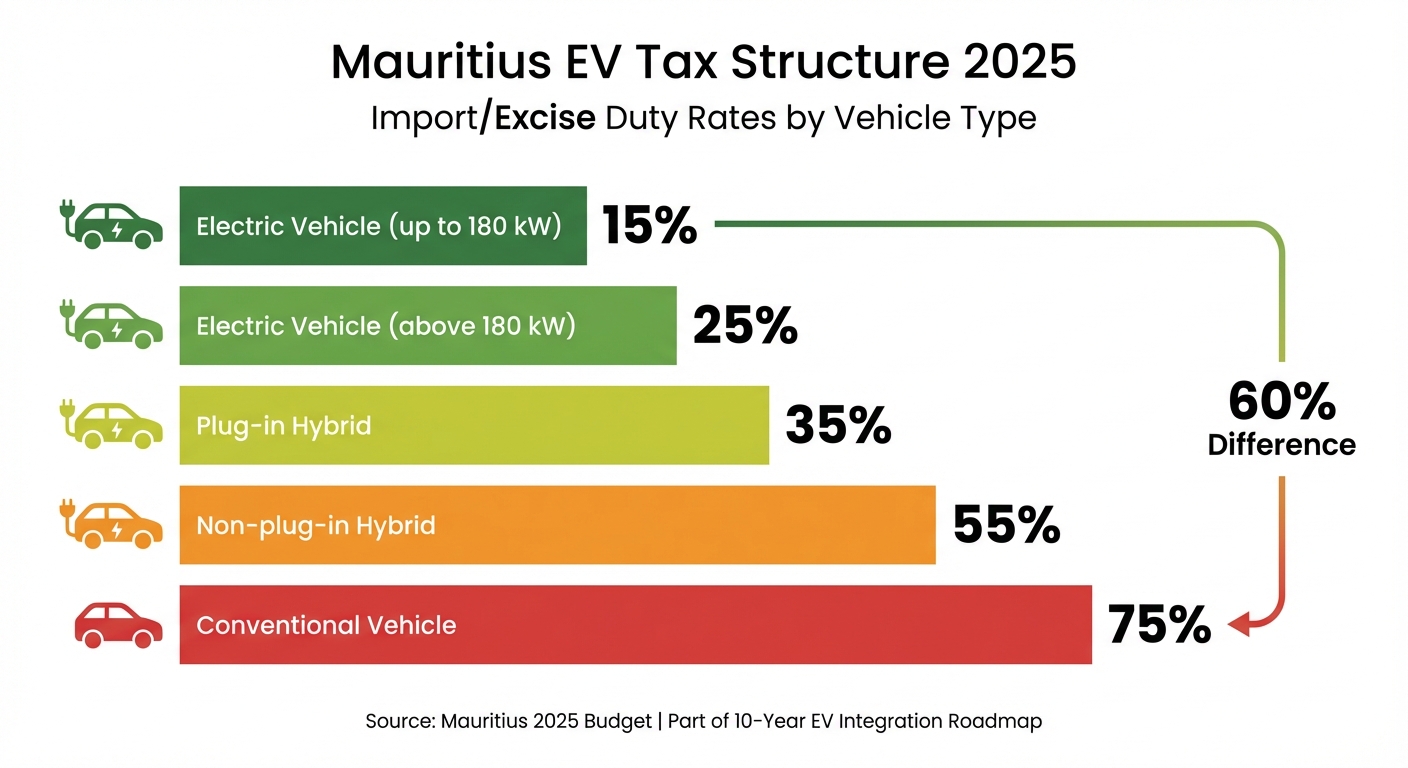
Mauritius EV Import Duty Rates by Vehicle Type 2025
Tax Exemptions and Subsidies
Mauritius has revamped its approach to promoting electric vehicles (EVs), moving away from direct rebates to a tiered excise tax system. In the 2025 budget, the government discontinued the "Negative Excise Duty Scheme", which had previously offered a Rs 200,000 rebate on EV purchases. Instead, the new system introduces significantly reduced import duties for EVs compared to the hefty 75% rate applied to conventional vehicles. Here’s a breakdown:
| Vehicle Type | Import/Excise Duty Rate |
|---|---|
| Electric Vehicle (up to 180 kW) | 15% |
| Electric Vehicle (above 180 kW) | 25% |
| Plug-in Hybrid | 35% |
| Non-plug-in Hybrid | 55% |
| Conventional Vehicle | 75% |
However, the government has removed the 50% discount on license fees that EVs and hybrids previously enjoyed, meaning these vehicles now pay the same licensing fees as gasoline-powered models. To encourage activity in the secondary market, registration duties for locally sold pre-owned vehicles have been waived, but first-time registrations now come with a 30% duty increase.
These changes are part of a broader strategy to align tax policies with the goals of the 10-Year EV Integration Roadmap.
The 10-Year EV Integration Roadmap
Mauritius has laid out a detailed 10-Year EV Integration Roadmap to complement the updated tax policies. This plan shifts the focus from direct subsidies to a structured tax framework aimed at keeping EVs accessible while reducing the fiscal strain on the government. Key elements of the roadmap include:
- Expanding Charging Infrastructure: Ensuring widespread availability of EV charging stations to support growing adoption.
- Grid Stability: Implementing measures to handle increased electricity demand from EVs.
- Strengthening the Secondary Market: Waiving registration duties on pre-owned vehicles sold locally to make EV ownership more affordable.
- Administrative Improvements: Establishing a new Vehicle Registration and Transfer Centre in Phoenix to streamline the registration and transfer process for EVs.
These initiatives aim to foster long-term growth of the EV market while addressing infrastructure and administrative challenges.
Charging Infrastructure and Renewable Energy
Public and Home Charging Options
Mauritius is making strides in expanding its EV charging infrastructure, supported by government incentives. This network includes both public charging stations and systems for home use, with a strong focus on making overnight home charging convenient and accessible.
To promote renewable energy for EVs, the Central Electricity Board (CEB) has launched a solar PV scheme specifically for EV charging. This initiative allocates 10 MW of capacity for domestic, commercial, and industrial customers who want to install solar systems of up to 10 kWp DC. To participate, customers must be connected to the CEB low-voltage network and either own or plan to install a charger for a four-wheel EV.
For homeowners, the government has introduced green loans and low-interest financing options. The Development Bank of Mauritius offers loans with a 2% interest rate, up to MUR 100,000 (about $2,240), to help with solar installation costs. Additionally, the Solar Energy Investment Allowance allows eligible users to fully deduct the cost of their solar PV systems from their income tax, though a small registration fee of MUR 2,000 (approximately $45) applies.
Public charging is also being integrated with solar power, complementing home-based solutions and aligning with Mauritius’s renewable energy goals.
Solar-Powered Charging Stations
Solar-powered charging stations play a key role in Mauritius’s renewable energy plans. The country is working toward generating 35% of its electricity from renewable sources by 2025 and increasing that to 60% by 2030. By the end of 2021, Mauritius had already installed approximately 83 MW of grid-connected solar capacity.
To simplify solar integration, the CEB operates a gross metering system. This allows all electricity generated by solar installations to be exported directly to the grid, removing the need for costly home energy storage. EV owners benefit from an export tariff of MUR 3.73 per kWh (around $0.083) under a 20-year agreement established during the 2021–2022 fiscal year. This setup enables households to produce clean energy during the day and use grid electricity for charging at night, ensuring efficient energy use. The CEB has also announced plans to introduce time-of-use tariffs for non-commercial users of solar-linked EV systems, which will help lower charging costs even further.
What Makes Mauritius Ready for EVs
Industry Partnerships
In addition to government initiatives and infrastructure development, strategic collaborations with industry leaders are accelerating Mauritius’s transition to electric vehicles (EVs). One standout example is the partnership between TATA.ev (a subsidiary of Tata Motors) and Allied Motors, Mauritius’s top automobile distributor. Announced in March 2025, this alliance introduced a variety of EV models, including the Tiago.ev, Punch.ev, and Nexon.ev, catering to a broad spectrum of consumer needs. This collaboration builds on Mauritius’s established policies and infrastructure, further solidifying its position as a market primed for EV adoption.
"With the government’s strong commitment to sustainable mobility, Mauritius holds strategic importance in our EV journey."
- Yash Khandelwal, Head International Business, Tata Passenger Electric Mobility
"The partnership with TATA.ev is a game-changer for Mauritius, bringing a range of electric vehicles to a country that is ready to embrace sustainable and innovative mobility solutions."
- James Ngan, MD, Allied Motors
This partnership highlights how international EV expertise can seamlessly integrate with local readiness, creating a comprehensive ecosystem that includes vehicle availability and service networks. It also serves as a blueprint for other African nations looking to develop their own EV markets. Up next, we’ll explore how Mauritius’s unique geography and infrastructure further enhance its EV potential.
Conclusion: Mauritius and Africa’s EV Future
Mauritius demonstrates that the path to electrification lies in accessible financing and supportive policies rather than dramatic technological shifts. As Christian Moretti and Bessie Noll, Senior Researchers at ETH Zürich, explain:
"In lower-risk countries such as Botswana, Mauritius and South Africa, the financing conditions today are already close to making costs the same for electric and fossil fuel cars".
This positions Mauritius as a benchmark for the continent, showing how managing macroeconomic and institutional risks can enable electric vehicles to achieve cost parity with traditional vehicles. This approach not only drives domestic progress but also strengthens Mauritius’s influence across the region.
In 2025, VAYA Africa used Mauritius’s framework to expand electric vehicle services into Zimbabwe, highlighting the island’s role as a regional leader. This cross-border success underscores Mauritius’s potential to serve as a financing hub, where private companies can pool vehicle loans from both stable and higher-risk markets to attract global investment. With Africa’s EV market valued at $17.4 billion in 2025 and expected to grow to $28 billion by 2030, Mauritius’s blend of tax incentives, solar-powered charging infrastructure, and strategic partnerships offers a model that other African nations can adapt. By prioritizing renewable energy integration, the country ensures that its EV transition is powered by clean energy from the outset.
Through its financial strategies, infrastructure development, and policy-driven approach, Mauritius is positioning itself as more than an early adopter of electric vehicles – it’s becoming a leader in sustainable mobility for Africa. By tackling financing challenges, fostering collaboration between public and private sectors, and implementing well-timed incentives, Mauritius illustrates how African nations can transition directly to electric mobility while building transportation systems that are both economically viable and environmentally responsible. Its approach provides a practical roadmap for advancing sustainable transportation across the continent.
FAQs
How much cheaper is it to own an EV in Mauritius vs a gas car?
Owning an electric vehicle (EV) in Mauritius tends to be easier on the wallet compared to a gas-powered car. This is largely thanks to lower running costs, including savings on fuel and maintenance. On top of that, government policies and ongoing infrastructure developments make EV ownership even more appealing. However, exact figures on the cost differences aren’t provided in the available information.
Can Mauritius’s power grid handle lots more EV charging?
Mauritius’s power grid is well-equipped to handle the growing demand for EV charging, but success hinges on thoughtful planning. A detailed 10-year roadmap for EV integration underscores the importance of expanding infrastructure and developing energy strategies that can sustain growth over time. Research also highlights the critical need to synchronize grid upgrades with decarbonization goals, ensuring the grid can meet future energy demands efficiently and responsibly.
Is solar charging at home worth it for EV owners in Mauritius?
Absolutely. For electric vehicle owners in Mauritius, setting up solar charging at home is a smart move. The country has rolled out rooftop solar programs aimed at encouraging both residential and commercial photovoltaic (PV) installations. These programs make it simpler and more accessible to power EVs using solar energy.
This approach fits perfectly with Mauritius’s broader efforts to adopt sustainable energy solutions. By taking advantage of the island’s plentiful sunshine, EV owners can significantly cut long-term charging expenses while contributing to a greener future.