
 Thabo Nkosi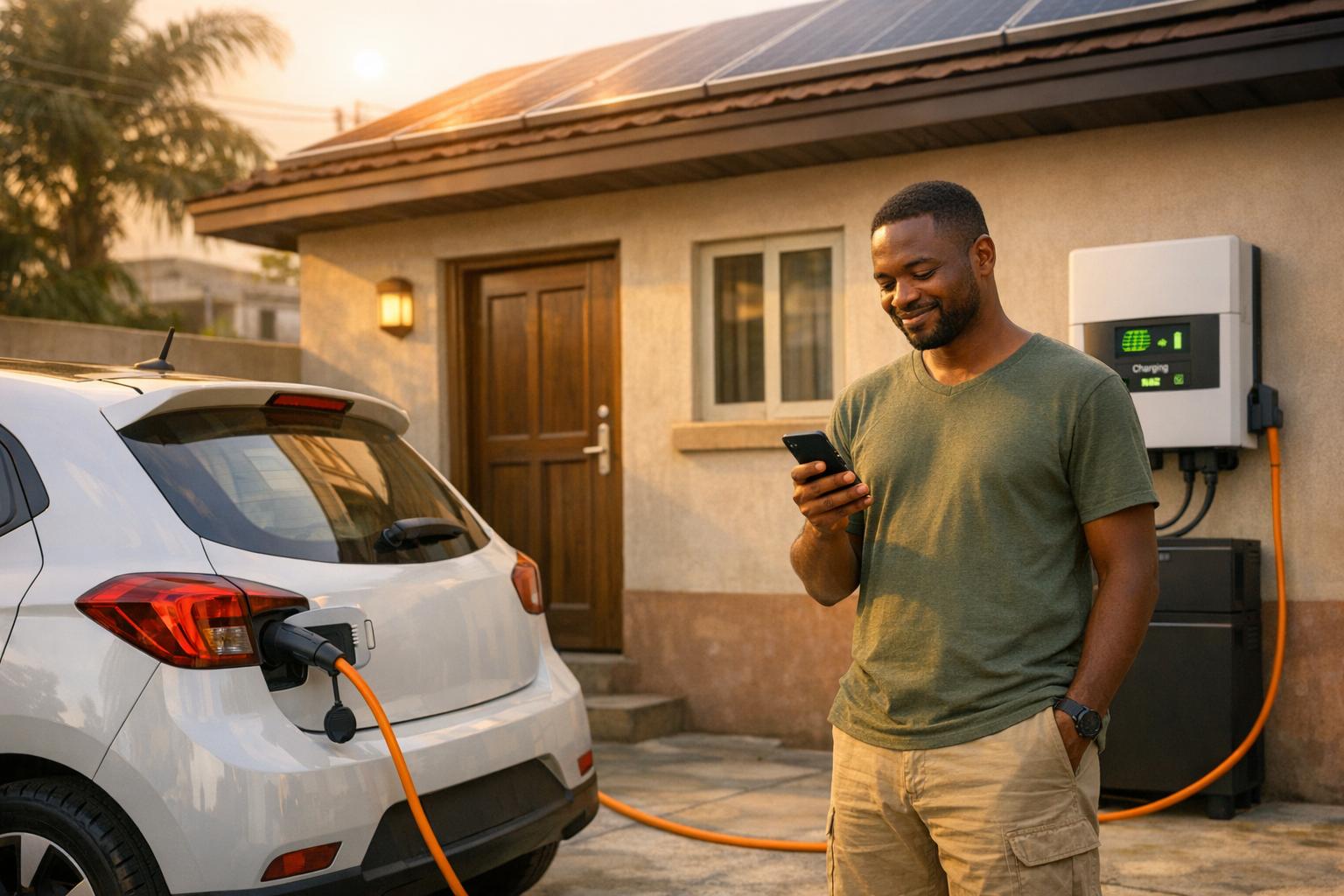
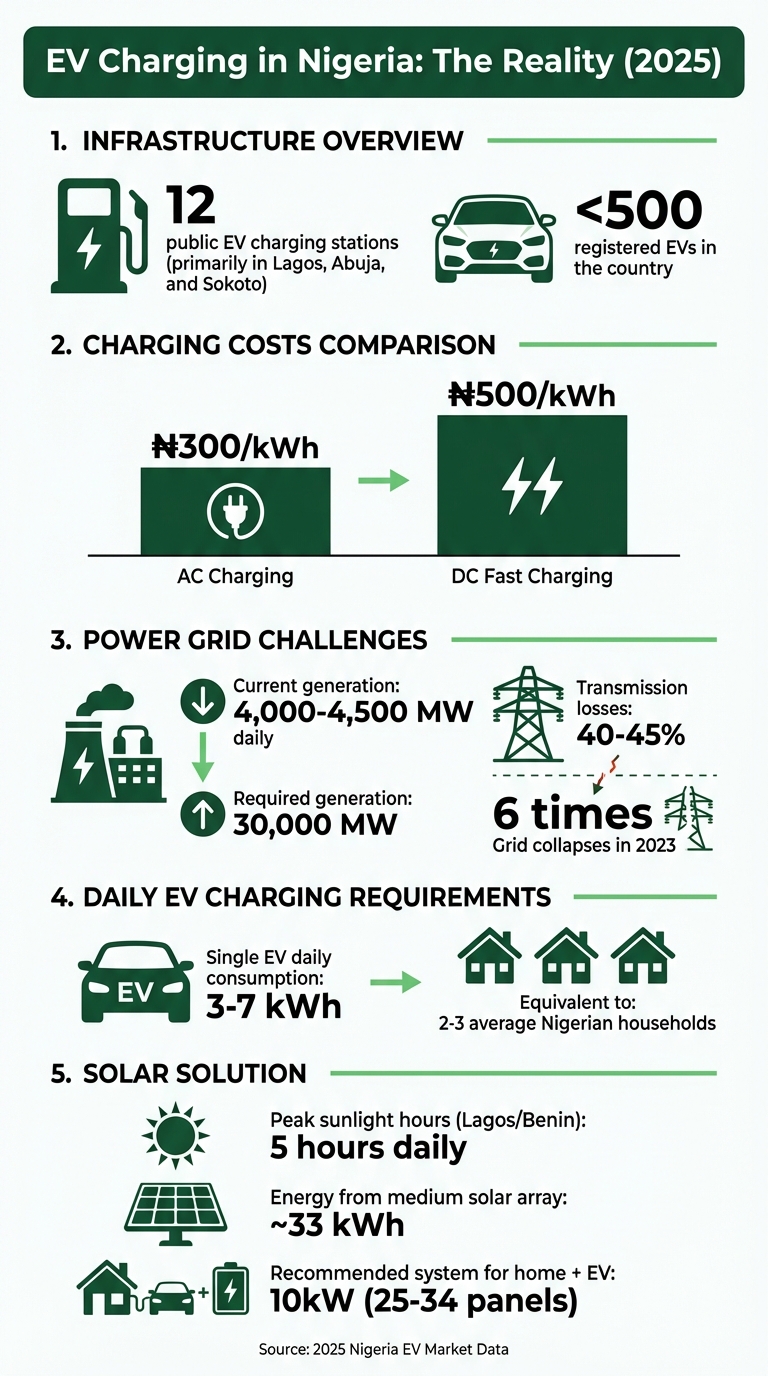
Charging an electric car in Nigeria is challenging due to limited charging stations, an unreliable power grid, and high electricity costs. As of late 2025, Nigeria had only 12 public EV charging stations, primarily in Lagos, Abuja, and Sokoto, with fewer than 500 registered EVs in the country. Here’s how EV owners manage:
- Home Charging: Most rely on 220V outlets or install Level 2 chargers for faster charging. Solar panels are common for supplementing power during outages.
- Public Charging: Limited to urban areas, with costs ranging from ₦300/kWh (AC) to ₦500/kWh (DC fast charging). Availability is scarce outside major cities.
- Workarounds: Solar inverter systems, careful trip planning, and apps like PlugShare help locate stations and manage range anxiety.
While these methods help, Nigeria’s energy issues – like frequent grid collapses and high tariffs on EV components – make EV ownership costly and complex. Addressing these barriers will require major infrastructure investments and policy changes.
EV Charging in Nigeria: Key Statistics and Costs 2025
Main Challenges of Charging Electric Cars in Nigeria
Scarce Public Charging Stations
Public charging stations for electric vehicles (EVs) are hard to find in Nigeria, especially outside Lagos and Abuja. By July 2025, the country had fewer than 500 registered EVs and only a small number of charging stations, mostly concentrated in these two cities. This limited infrastructure restricts EV usage to urban areas, making long-distance travel nearly impossible.
The few existing stations are located in high-traffic business areas and wealthier neighborhoods. In Lagos, for instance, Qoray Mobility runs stations at locations like 20 Marina Road, the Sheraton Hotel in Ikeja, and Adeola Odeku in Victoria Island. Their charging rates are ₦300/kWh for AC charging and ₦500/kWh for DC fast charging. Outside these commercial zones, EV owners face range anxiety, forcing them to carefully plan every trip. This uneven availability reflects broader energy challenges across the country.
Several factors contribute to this scarcity, including high setup costs, weak policy enforcement, and the absence of standardized charging protocols. Transport economist Lanre Bakare summarized the issue succinctly:
"We cannot talk about electric vehicles in a country where many households still struggle to get four hours of electricity per day".
To make matters worse, customs officials often impose full tariffs on EV components, despite policies meant to exempt them from such duties. This discourages potential investors from developing the needed infrastructure.
Unstable Power Grid
Nigeria’s power grid is notoriously unreliable, with six grid collapses recorded in 2023 alone. The country generates only 4,000–4,500 MW of electricity daily, far short of the estimated 30,000 MW needed. Compounding this, transmission losses of 40–45% further weaken the system. These issues make grid-dependent charging stations highly unreliable unless equipped with expensive backup systems.
For most EV owners, home charging becomes the default option, but even this comes with challenges. Charging a single EV requires 3–7 kWh of electricity daily, roughly the same amount needed to power 2–3 average Nigerian households. Many owners charge their vehicles overnight, during peak residential usage hours, which can overload local transformers. As a workaround, some have turned to solar inverter systems or generators to ensure their vehicles stay charged.
High Electricity Costs
Charging an EV in Nigeria is far from affordable, largely due to the country’s energy problems. At DC fast charging stations, the cost is ₦500/kWh, making it more expensive than fueling a small petrol car – unless subsidies are introduced. Even the cheaper AC charging rate of ₦300/kWh adds up quickly for daily use.
The situation worsens for those relying on private generators. With only 55% of the population connected to the national grid and high transmission losses, electricity remains both costly and unreliable. For EV owners, this translates to higher monthly expenses and often necessitates investing in alternative power solutions like solar panels to make EV ownership financially feasible. These challenges have pushed many to explore creative ways to keep their vehicles charged despite the high costs and unreliable grid.
sbb-itb-99e19e3
The Reality of Driving an Electric Vehicle in Nigeria: Prices, Batteries, chargers | EV World Africa
How Nigerian EV Owners Charge Their Cars
In Nigeria, most electric vehicle (EV) owners rely on home charging rather than the sparse public infrastructure. Charging habits often depend on factors like budget, urgency, and the reliability of the local power supply. Overnight charging is the most common approach, as it aligns with the country’s electricity patterns and lifestyle needs. Here’s a closer look at the main charging methods used by Nigerian EV owners.
Standard 220V Outlet Charging
The simplest and most accessible option is charging through a standard home outlet, known as Level 1 charging. Nigerian homes typically have a 240V, 50Hz supply, with outlets rated at 5A or 13A. Most EV owners use portable Electric Vehicle Supply Equipment (EVSE) that works with Type D or Type G plugs. However, this method is slow – adding just 1–2 kWh per hour. Charging enough for a 200 km trip (around 33 kWh) can take over 16 hours.
One EV owner captured the challenges of this method:
"In Nigeria we use 240v, 50Hz electricity ratings. Supply ranges from 8 to 14 hrs per day. Some days no power (for days!). I support national grid with solar power."
- tumininuadebambo, Forum Member, Chevy Bolt EV Forum
The biggest advantage of this setup is its simplicity – no extra equipment is needed. However, its effectiveness hinges on having a stable and extended power supply, which is often unpredictable. To work around outages, many owners pair this method with solar inverters. While cost-effective, the slow charging speed often pushes users to explore faster solutions.
Home AC Charging Stations
For those seeking quicker charging, dedicated Level 2 systems are a popular choice. These wall-mounted units typically operate at around 22 kW, allowing EVs to charge fully in just a few hours instead of overnight. Installing these systems requires professional expertise and higher-amperage circuits (32A or 40A compared to the standard 13A).
Level 2 chargers are especially appealing to committed EV owners who plan their charging schedules around the hours when grid power is available. In some cases, these units are installed at workplaces to make use of daytime electricity. However, the upfront costs and the scarcity of skilled electricians – especially outside cities like Lagos and Abuja – remain significant obstacles.
DC Fast Charging
For those in urgent need of energy, DC fast charging offers the quickest solution. These chargers can deliver a substantial charge in about 30 minutes. For example, operators like Qoray Mobility run 60 kW fast charging stations at locations such as the Marriott Hotel in Ikeja, Lagos. Similarly, the Energy Commission of Nigeria operates a hybrid solar/grid station in Garki, Abuja, capable of fully charging an EV in roughly half an hour.
While DC fast charging is ideal for quick top-ups or emergencies, it comes at a cost – approximately ₦500 per kWh. This makes it significantly more expensive than grid-based options. Additionally, the limited number of stations, mostly concentrated in high-traffic areas of Lagos and Abuja, means that fast charging is used sparingly by most EV owners. For now, it remains a convenient but less frequent choice for Nigerian drivers.
Practical Solutions for Consistent EV Charging
Nigerian EV owners are finding clever ways to maintain battery health, reduce reliance on the grid, and plan their journeys around available charging options.
How to Maintain Battery Health
Keeping an EV battery in top condition doesn’t require complicated steps – just a few consistent habits. Charging the battery between 30% and 80% helps reduce wear and tear, ensuring it retains capacity over time.
Nigeria’s hot climate presents its own challenges. Prolonged exposure to direct sunlight can harm battery performance, so parking in shaded or covered areas is a smart move. While driving, easing off rapid acceleration and managing air conditioning usage carefully can also help preserve the vehicle’s range.
In addition to these battery care practices, renewable energy solutions are offering reliable alternatives for charging.
Charging with Solar Panels
Solar energy has become a game-changer for many Nigerian EV owners, especially in regions prone to extended grid outages. Solar setups typically consist of 250–350W panels paired with 200Ah batteries. These systems can generate enough power to support daily commutes of 10–20 km even during prolonged blackouts. Cities like Lagos and Benin enjoy around 5 hours of peak sunlight daily, which translates to roughly 33 kWh of energy from a medium-sized solar array.
For those aiming to power both their home and EV, a 10kW solar system is ideal. This setup, requiring 25–34 panels depending on wattage, can handle a household’s monthly energy needs (around 600 kWh) as well as the demands of a Level 2 EV charger (approximately 648 kWh per month). Using an MPPT charge controller ensures the solar panels operate efficiently by matching their voltage to the battery’s requirements. Scheduling EV charging during daylight hours maximizes the use of solar power directly, easing the load on battery banks.
Apps and Tools for Finding Charging Stations
While home charging remains the primary solution, digital tools are helping EV owners navigate the limited public charging infrastructure. Apps like PlugShare allow users to locate charging stations, but it’s always a good idea to confirm their availability before setting out. The most reliable stations are found in Lagos, Abuja, and Sokoto, making careful route planning essential for trips outside these areas. This approach ensures home charging remains the mainstay, with public stations acting as convenient top-up options for longer journeys.
Conclusion
Charging an EV in Nigeria requires some creative problem-solving due to infrastructure limitations. With a lack of widespread EV charging stations, most owners depend on home charging setups. These range from standard 220V outlets to dedicated AC chargers, often paired with solar panels to counter frequent grid outages. While these solutions help bridge the gap, they highlight broader challenges.
The hurdles are undeniable. Nigeria’s unreliable power grid and significant transmission losses make EV charging difficult, and the high cost of charging adds another layer of complexity. Still, many EV owners have found ways to keep their vehicles running smoothly by combining strategies like solar power, off-peak charging, and careful battery management. This adaptability has allowed them to navigate the country’s challenging energy landscape. As transport economist Lanre Bakare aptly put it:
"Until we solve power, EVs will remain luxury toys for the elite, not a mass-market solution".
The future of EV adoption in Nigeria likely depends on decentralized renewable energy solutions and thoughtful planning.
Despite these challenges, the determination of Nigerian EV owners stands out. If you’re exploring the idea of going electric, platforms like EV24.africa can help. They offer a wide range of new and used electric vehicles from brands like Tesla, BYD, Hyundai, and Toyota, complete with detailed specifications, transparent pricing, financing options, and delivery services across all 54 African countries. Whether you’re looking for a vehicle with a liquid-cooled battery system for hot climates or need advice on charging options, EV24.africa offers tailored solutions for the African market.
The journey toward electric mobility in Nigeria is progressing step by step – through solar panels, home chargers, and informed decisions. Be part of the growing movement embracing electric vehicles.
FAQs
How much does it cost to charge an EV in Nigeria per mile?
Charging an EV in Nigeria typically costs around ₦48–₦56 per mile (approximately $0.11–$0.13). This range depends on variables such as local electricity rates and the efficiency of the vehicle. It provides a useful benchmark for EV owners to estimate their driving costs.
What solar setup do I need to charge an EV at home reliably?
To charge your EV at home using solar power, you’ll typically require 450–600W solar panels, a 200Ah battery bank, and a 3–5 kVA inverter. Including an MPPT charge controller can boost efficiency. For added reliability, especially during power fluctuations, consider a hybrid system that combines solar with grid power. Make sure to tailor your setup to match your EV’s battery size, how far you drive each day, and the amount of sunlight your area receives to maintain consistent charging.
Can I take an EV on long trips in Nigeria today?
Traveling long distances with an electric vehicle (EV) is possible, but it takes some careful planning. The limited availability of charging stations and occasional power outages can make things tricky. Many EV owners tackle these challenges by mapping their routes to include accessible charging points, using solar-powered setups, or carrying portable chargers.
One common hurdle is range anxiety – the fear of running out of battery before reaching a charging station. However, with proper preparation, this can be managed. Long trips in an EV often require alternative power solutions and well-timed, strategic stops to ensure a smooth journey.