
 Thabo Nkosi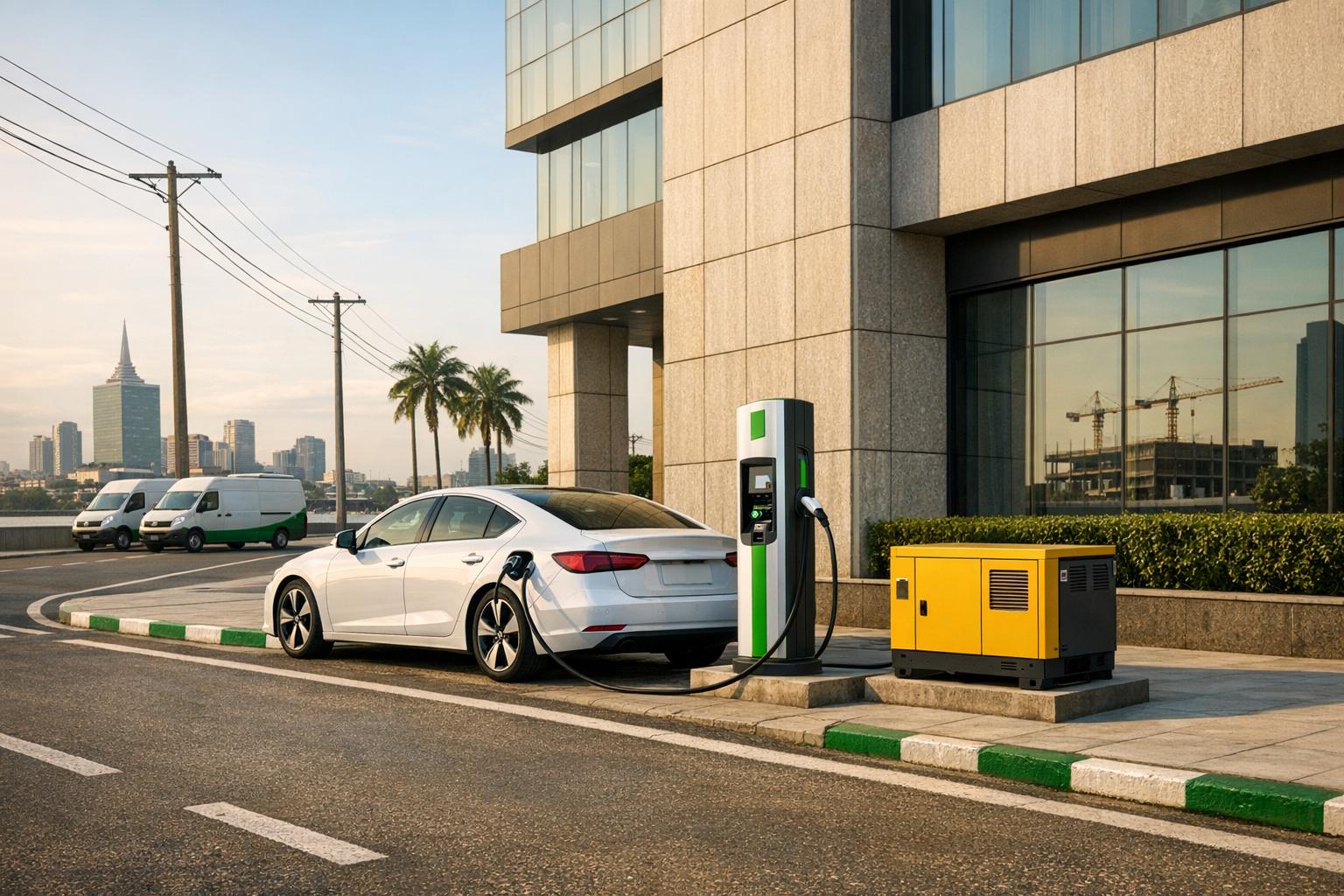
Electric vehicles (EVs) are gaining traction in Nigeria, but the country faces critical challenges that could slow widespread adoption. Here’s a quick snapshot of the current state:
- Government Push: Nigeria signed a deal with South Korea to produce 300,000 EVs annually and create 10,000 jobs. Policies like the 2025 Electric Vehicle Bill aim to boost local production and adoption.
- Adoption Trends: EVs now make up 0.5%-1% of Nigeria’s vehicles, with cities like Lagos and Abuja seeing the most growth, especially for commercial fleets.
- Key Barriers:
- Power Supply: The electricity grid operates at just 30% capacity, with only 55% of the population connected.
- Charging Infrastructure: Only 12 public charging stations exist nationwide as of late 2025.
- High Costs: EV prices start at ₦24 million ($16,000), far out of reach for most Nigerians.
- Solutions in Progress: Solar-powered charging stations, local assembly plants, and financing options like "pay-as-you-drive" plans are emerging to address these issues.
While EV growth is promising, Nigeria’s infrastructure and affordability challenges must be addressed for mass adoption.
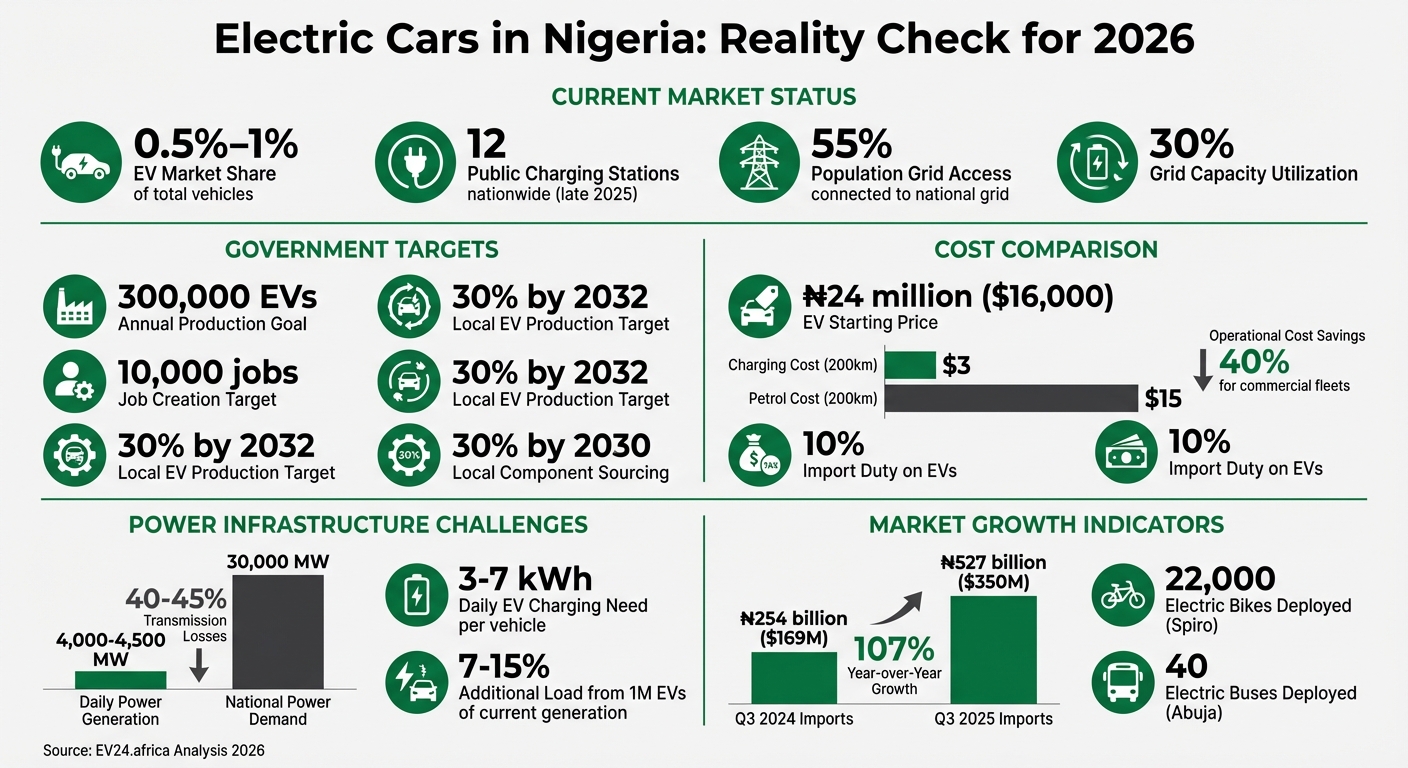
Nigeria EV Market 2026: Key Statistics and Challenges
The EV Market in Nigeria Today
Adoption Numbers and Trends
Nigeria’s electric vehicle (EV) market is gaining traction, though it’s still in its early stages. Most of the growth is happening in urban areas like Lagos, Abuja, and Port Harcourt, where EVs are being used primarily for commercial fleets, public transport, and two- or three-wheelers. Ride-hailing platforms such as LagRide and Bolt have started introducing EV fleets, reporting up to 40% savings in operational costs. As part of a broader clean mobility initiative, the Presidential Initiative on Compressed Natural Gas (PiCNG) rolled out 40 electric buses in Abuja in December 2025.
Interest in EVs has surged, with inquiries more than doubling in 2025. Many experts believe 2026 could mark a pivotal year for the industry.
"If Nigeria can sustain the tempo and the Electric Vehicle Bill is handled with speed, I see a boom in migration in 2026."
This optimism was shared by Dr. Kaycee Orji, Chairman of Roxettes Group.
The shift toward EVs in Nigeria isn’t just about reducing emissions – it’s also about cutting costs. With the removal of fuel subsidies and rising petrol prices, businesses are taking notice.
"When you compare the running and maintenance costs of electric vehicles to petrol-powered alternatives – especially now – businesses are doing the math and switching."
This perspective comes from Olabisi Ajayi, CEO of an EV distribution company. Charging an EV for 124 miles (200 km) costs about $3, while the same distance in a petrol-powered vehicle costs over $15.
While the market is showing promise, there are still hurdles to overcome. However, growing collaborations within the industry and increasing competition among brands indicate a bright future for Nigeria’s urban EV market.
Top EV Brands Available in Nigeria
Chinese automakers are leading the way in Nigeria’s EV market, thanks to their affordability and aggressive export strategies. One standout is BYD, which officially entered the Nigerian market in March 2025. Through CFAO/LOXEA Nigeria, BYD opened a showroom in Lagos equipped with full service capabilities. The brand’s cost-effectiveness and reliability in emerging markets have made it a preferred choice for early adopters.
Another rising player is Leapmotor, catering mainly to businesses looking for budget-friendly fleet options. Local assembly is also gaining momentum. Companies like NEV Electric, SAGLEV, and Innoson are setting up plants to take advantage of reduced import duties on parts compared to fully assembled vehicles. In September 2024, Innoson Vehicle Manufacturing introduced the "IVM Fox," Nigeria’s first locally produced electric car, and announced plans for a dedicated EV production facility in Anambra.
In the two-wheeler segment, Spiro has made a significant impact. By April 2025, the company had shipped 22,000 electric bikes and raised $50 million in debt financing to expand its operations across Africa, including Nigeria. For three-wheelers, Qoray Mobility’s "Teak" showcased its durability by setting a Guinness World Record in 2025, traveling 216 miles (347 km) in 12 hours across Lagos.
Passenger car imports also reflect the growing interest in EVs. In Q3 2025, imports totaled ₦527 billion ($350 million), more than double the ₦254 billion ($169 million) recorded in Q3 2024. Fully built EVs currently benefit from a reduced import duty of 10%, making them more accessible than traditional vehicles. Meanwhile, the government is pushing for local assembly, aiming for 30% of vehicles produced in Nigeria to be electric by 2032.
sbb-itb-99e19e3
Barriers to EV Adoption in Nigeria
Unreliable Power Supply
Nigeria’s electricity grid is struggling to keep up with demand, producing just 4,000–4,500 MW daily for a population of 218 million. Meanwhile, the actual demand is closer to 30,000 MW. Only about 55% of Nigerians have access to the national grid, leaving over 85 million people reliant on generators for 40% of their energy needs. To make matters worse, transmission losses are between 40% and 45%, meaning nearly half of the generated power never reaches consumers. The grid’s instability is a major hurdle for electric vehicles (EVs), especially since a single EV requires 3–7 kWh of electricity each day – equivalent to the daily consumption of 2–3 average households. Adding just one million EVs would demand an additional 3,000–7,000 MWh daily, which is roughly 7–15% of Nigeria’s current total power generation.
"We cannot talk about electric vehicles in a country where many households still struggle to get four hours of electricity per day. Until we solve power, EVs will remain luxury toys for the elite, not a mass-market solution."
– Lanre Bakare, Transport Economist
Most EV charging happens at night, during peak residential hours, which would put extra pressure on already overburdened transformers and distribution systems. Even fast-charging stations, which start at 50 kW, can destabilize the grid and cause voltage issues. To address these challenges, Nigeria needs to modernize its grid and explore decentralized solutions like solar microgrids and battery-swapping stations.
| Metric | Current Status (2025/2026) | Impact of 1 Million EVs |
|---|---|---|
| Daily Generation | 4,000–4,500 MW | Requires an extra 3,000–7,000 MWh/day |
| Grid Access | 55% of population | Worsens urban–rural disparity |
| Transmission Losses | 40%–45% | Higher risk of transformer failures |
| National Demand | 30,000 MW (Estimated) | EVs add 7%–15% to current load |
Limited Charging Infrastructure
Adding to the grid’s challenges is the severe lack of charging stations. While Nigeria has around 27,000 fuel stations spread across its 195,000 km (121,000 miles) road network, public EV charging infrastructure is nearly nonexistent. As of August 2025, only 12 EV charging and battery-swapping sites exist nationwide, along with five after-sales facilities. Most of these are concentrated in Lagos and Abuja. This scarcity fuels "range anxiety", where drivers worry about running out of battery before finding a charging point.
There have been some early efforts to improve access. In 2021 and 2023, the National Automotive Design and Development Council (NADDC) launched solar-powered EV charging stations at the University of Lagos and the University of Nigeria Nsukka. In 2024, a startup called Possible EVS opened Nigeria’s first public fast-charging station in Abuja, offering free charging for the first six months.
"EVs are critical to diversifying Nigeria’s energy mix, reducing long-term transport costs, and cutting emissions. However… significant barriers persist."
– Dr. Mukaila Oseni, Director of Operations, NMDPRA
The lack of public charging stations, combined with the grid’s limitations, makes it difficult to scale EV adoption. Projections suggest that West Africa could host nearly 9.9 million EVs by 2050, requiring an estimated $20 billion in infrastructure investment. For Nigeria, leveraging existing fuel stations as potential charging sites and incorporating solar mini-grids could help improve reliability.
High Purchase Costs
The high upfront cost of EVs is yet another major obstacle. Locally assembled or imported EVs like the Jet EV minibus and Hyundai Kona start at ₦24 million (approximately $16,000). Meanwhile, used "Tokunbo" vehicles dominate the market, accounting for about 90% of road users due to their affordability.
"When over 60% of Nigerians live below the poverty line… buying an electric vehicle remains impractical for most Nigerians."
– Babatunde Yusuf, CEO of Mapleby Autos
Further complicating matters are unclear tariff classifications. Customs officials often apply full duty rates despite NADDC’s zero import duties for EV components. Additionally, there are no concrete tax incentives for EV buyers or manufacturers. Since most EVs and their parts are imported, prices are highly sensitive to foreign exchange rates and high logistics costs. Combined with the expense of private charging solutions, these factors make EV ownership financially out of reach for most Nigerians.
Government Support and Industry Partnerships
Government Policies and Regulations
Nigeria’s Electric Vehicle Transition and Green Mobility Bill 2025 is setting the groundwork for the country’s EV industry. This bill, which passed its second reading in November 2025, outlines specific requirements to guide EV adoption and industry growth. One key provision mandates that foreign automakers collaborate with local companies and establish domestic assembly plants within three years. Additionally, manufacturers must secure a license demonstrating a production capacity of at least 5,000 EVs annually.
The bill also pushes for 30% local sourcing of EV components by 2030, aiming to develop the domestic supply chain and create jobs. To support these goals, the government offers a range of incentives, including VAT waivers, import duty exemptions for critical EV parts like batteries and motors, and tax holidays ranging from 5 to 10 years for new assembly plants. Furthermore, all existing fuel stations are required to install EV charging stations, with tax benefits provided to ease this transition into dual-use energy hubs.
Non-compliance comes with hefty penalties. Importing unlicensed EVs can lead to a ₦500 million fine and vehicle confiscation, while failing to meet local content rules may result in fines of up to ₦250 million. Leading by example, the Federal Executive Council approved ₦58 billion in December 2025 to purchase 200 electric buses for public transportation.
"This bill is at least 30 years overdue. In the 1970s, Nigeria had functioning assembly plants… Today, we have over 60 licensed manufacturers, but barely six are active."
– Sam Faleye, CEO, SAGLEV
These measures are designed to attract investment and drive significant industry transformation.
Major Partnerships and Investments
With the regulatory framework in place, Nigeria is actively pursuing partnerships to scale up its EV industry. On January 30, 2026, the country signed a major agreement with South Korea’s Asia Economic Development Committee (AEDC) to build a large-scale EV manufacturing plant. Spearheaded by Senator John Enoh, Minister of State for Industry, and AEDC Chairman Yoon Suk-hun, this project aims for an annual production capacity of 300,000 vehicles. Beyond assembly, the plan includes eventual local production of key components like batteries, creating jobs and advancing local expertise.
"This is not just about building a factory. It is about creating jobs, transferring technology, empowering Nigerian engineers, and positioning the country for the industries of the future."
– Senator John Owan Enoh, Minister of State for Industry
China is also making moves, announcing plans in May 2025 to establish EV factories in Nigeria. With its status as Africa’s largest automotive market and a key player in West African trade, Nigeria is an attractive destination for such investments. Additionally, a ₦20 billion (about $12 million) consumer credit scheme was introduced in December 2024 to make locally produced EVs from companies like Innoson, Nord, Jet Motor Company, and SAGLEV more accessible to Nigerian consumers.
These collaborations signal a shift from small-scale initiatives to large-scale industrialization. By leveraging its position under the African Continental Free Trade Area (AfCFTA), Nigeria is not only working to become a regional manufacturing hub but also aiming to cut down its $10 billion annual expenditure on imported refined petroleum products.
How EV24.africa Supports EV Adoption
New and Used EV Selection
EV24.africa serves as a marketplace connecting Nigerian buyers with a wide range of electric vehicles, aiming to support the country’s transition to cleaner transportation. The platform offers a curated selection of both new and used EVs from brands like Tesla, BYD, Leapmotor, ROX, Dongfeng, Geely, Hyundai, Toyota, and Suzuki. This variety ensures buyers have access to trusted EV technologies that suit their needs.
Each vehicle listing includes clear pricing details, comprehensive specifications, and integrated nationwide delivery services. By providing this level of transparency, EV24.africa helps potential buyers understand the full cost of ownership, an essential factor as interest in EVs continues to rise.
In September 2025, EV24.africa joined forces with Jubaili Bros (experts in power infrastructure) and illigo (a tech company) to create a complete EV ecosystem. This partnership combines vehicle sales with charging hardware and cloud-based management systems, addressing the infrastructure challenges that have slowed EV adoption in the region.
To make the switch to EVs even easier, the platform also provides flexible financing options.
Financing Options
The high upfront cost of EVs often deters buyers in Nigeria. EV24.africa tackles this issue with customized financing plans and a tiered seller structure. The platform offers three main seller plans:
| Plan Type | Target User | Key Features |
|---|---|---|
| Basic Listing | Individual Sellers | Standard visibility |
| Premium Listing | Featured Sellers | Improved placement with priority in search |
| Dealer Plan | Professional Dealerships | Tools for managing bulk inventory and operations |
This structure ensures the marketplace caters to both private sellers making the transition to EVs and dealerships handling larger inventories, creating opportunities for a broader range of users to participate in the EV movement.
What to Expect by 2026
Expected Market Growth
Nigeria’s EV market is set for steady progress rather than a rapid transformation. The shift will likely begin with government fleets and commercial operators, especially in Lagos and other major cities. The proposed Electric Vehicle Transition and Green Mobility Bill, 2025, is a key driver here. It mandates government agencies to prioritize locally assembled EVs for their fleets, creating the initial demand necessary to attract private investment in charging infrastructure.
Commercial fleets, including taxis and delivery services, are leading the shift to EVs. Rising fuel prices and the removal of subsidies are making traditional vehicles less affordable. A significant milestone is the January 2026 Memorandum of Understanding (MoU) between Nigeria’s Federal Government and South Korea’s Asia Economic Development Committee. This agreement aims for an annual production capacity of 300,000 vehicles, once fully operational, and is expected to generate around 10,000 direct jobs.
"If Nigeria can sustain the tempo and the Electric Vehicle Bill is handled with speed, I see a boom in migration in 2026."
These words from Dr. Kaycee Orji, Chairman of Roxettes Group, highlight the potential for growth if current efforts are maintained.
By the end of 2026, several thousand EVs are projected to be on Nigerian roads, with Lagos, Abuja, and Port Harcourt seeing the highest concentration. The government’s goal of having 30% of locally produced vehicles be electric by 2032 suggests a gradual but consistent increase in adoption. However, addressing existing challenges will be critical to sustaining this momentum.
Solutions to Current Problems
To support market growth, companies are introducing creative solutions to tackle the unreliable power grid. In January 2026, LUG West Africa, led by Managing Director Imran Oladimeji Hamzat, announced plans to install over 250 EV charging points across Lagos by the end of the year. Their innovative system uses seven monocrystalline solar panels integrated into existing solar street lighting infrastructure, delivering the 240 volts required for EV charging. This approach takes advantage of Lagos’s 50,000 solar-powered streetlights, reducing the need for additional land and cabling costs.
Local assembly is helping to lower EV prices. In February 2026, Saglev – a partnership between Nigeria’s Stallion Group and China’s Sokon Motor – began assembling 18-seater electric passenger vans in Lagos using kits from Dongfeng Motor Corp.
"CEO Olu Falaye confirmed the company plans to produce 2,500 vehicles annually while simultaneously installing dedicated solar-powered charging stations."
This phased strategy starts with assembly and gradually transitions to full local production and component manufacturing.
New financing models are addressing affordability issues. Companies are rolling out "pay-as-you-drive" plans (about $0.20 per kilometer) and lease-to-own programs (approximately $18 per day for taxi operators). These options make it easier for commercial operators to manage the high upfront costs that have traditionally hindered EV adoption. Combined with a reduced 10% import duty on fully built EVs, the total cost of ownership is becoming more competitive. Charging costs, for example, average just $3 for 124 miles (200 km), compared to over $15 in fuel costs for the same distance.
Nigeria Wants to Build Electric Cars, Is This the Right Time?
Conclusion: Nigeria’s EV Readiness in 2026
Nigeria is at a pivotal moment in its journey toward electric mobility. The January 2026 Memorandum of Understanding (MoU) and the Electric Vehicle Transition and Green Mobility Bill, 2025, set the stage for the country’s budding EV market. Together with the Nigeria Tax Act 2025, which eliminates VAT on EVs, these initiatives provide a strong legislative foundation for growth. The MoU outlines ambitious goals, including an annual production capacity of 300,000 vehicles and the creation of 10,000 jobs.
Infrastructure development is taking a creative approach to overcome power supply challenges. For instance, LUG West Africa is incorporating 250 solar-powered charging points into Lagos’s street lighting system. Similarly, the National Automotive Design and Development Council has established solar-powered charging stations at major universities like UNILAG and UNN. These efforts demonstrate how innovative solutions can make EV infrastructure more accessible.
Local assembly programs are also gaining traction. Senator Natasha Akpoti-Uduaghan’s "Operate & Own" initiative, which trains 100 participants in Kogi, is a great example of how such efforts can expand market accessibility while supporting livelihoods.
Adding to these advancements, EV24.africa simplifies the EV adoption process by centralizing information and offering expert support through WhatsApp. This platform helps consumers navigate technical issues, discover new models, and explore financing options. Together, these initiatives highlight a promising, albeit challenging, path toward widespread EV adoption in Nigeria by 2026.
FAQs
Can I realistically charge an EV at home in Nigeria?
Yes, you can charge an EV at home in Nigeria, but there are hurdles to overcome. The country faces challenges like limited charging infrastructure and frequent power outages, which can make home charging unreliable. To tackle these issues, many EV owners turn to solar power systems or other alternative energy sources to ensure they have a consistent and dependable way to charge their vehicles.
How far can an EV go between charges in Nigeria right now?
Electric vehicles (EVs) in Nigeria generally cover around 150 to 200 miles (240 to 320 km) on a single charge. However, this range can vary depending on the specific model and driving conditions, such as terrain and speed. Another challenge is the limited availability of charging stations, which means EV drivers need to carefully plan their routes and charging stops to avoid running out of power.
Will EV prices in Nigeria drop by 2026?
Yes, the cost of electric vehicles (EVs) in Nigeria is likely to drop by 2026. This shift is expected due to government-backed policies, tax breaks, and an increase in local manufacturing efforts. These measures are designed to tackle the steep initial costs of EVs, making them more accessible and promoting widespread use.