
 Thabo Nkosi
Cairo’s electric vehicle (EV) scene is growing fast, but charging an EV in the city comes with challenges. Here’s what you need to know:
- Costs: Charging at home is the cheapest option. A 270-mile trip costs about $1.80 compared to $11.50 for a gas-powered SUV. Public charging, however, is more expensive, with rates jumping to $0.48 per unit by late 2025.
- Infrastructure: Egypt now has 200 stations with 700+ charging points across 16 governorates. Most chargers are slower than global standards, leading to longer wait times.
- Home Setup: Installing a Level 2 charger at home costs $500–$2,500 and is the most practical solution for daily use. Solar-powered options can further reduce costs.
- Apps and Tools: The Infinity EV app helps locate chargers and manage sessions, but some users report occasional glitches.
- Future Plans: Major expansions are underway, including 3,000 twin chargers along key highways, making long-distance EV travel more feasible.
While Cairo’s EV charging network still has room to grow, careful planning and smart tools make EV ownership manageable and cost-effective.
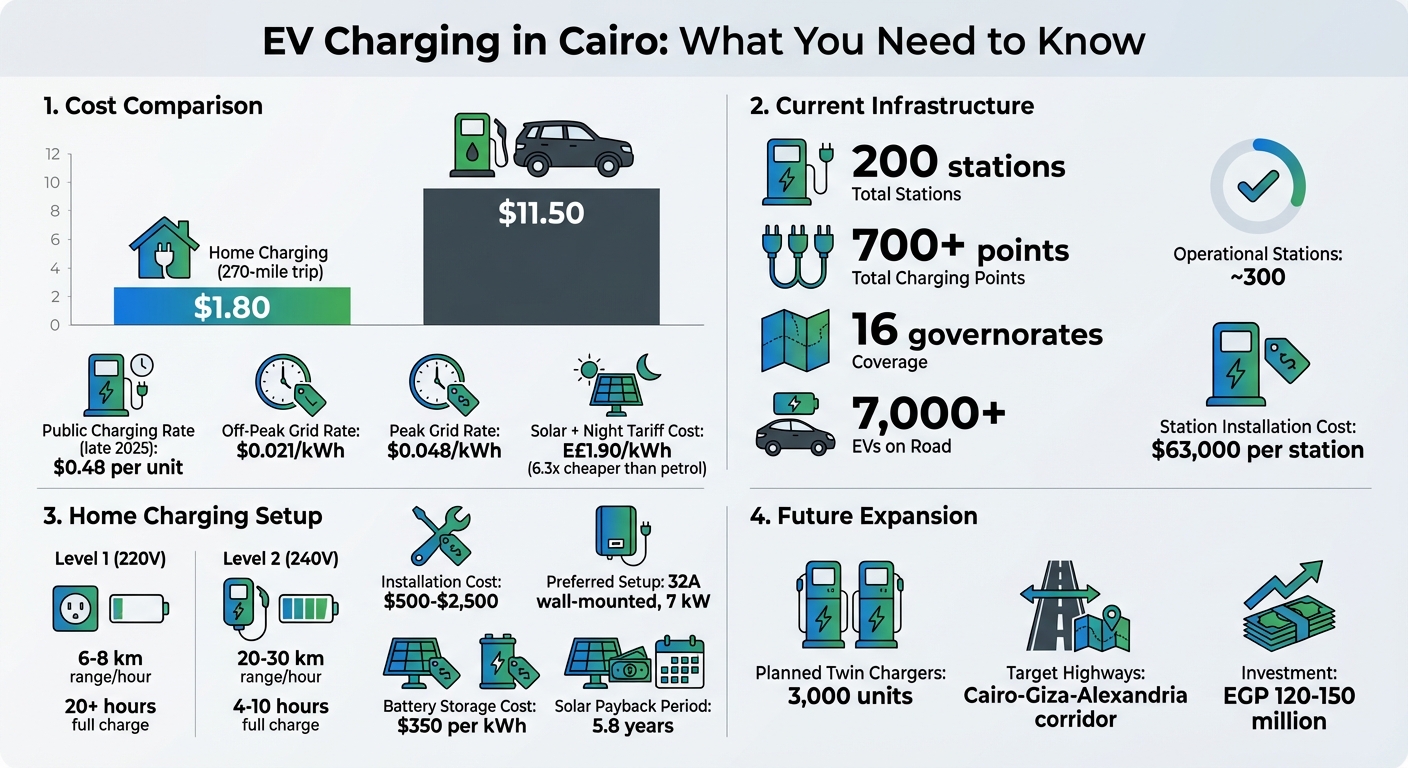
EV Charging Costs and Infrastructure in Cairo: Key Statistics
Main Challenges for EV Charging in Cairo
Few Public Charging Stations
Despite EV sales doubling in 2023, Egypt only has about 300 operational charging stations – far from enough to meet the needs of over 7,000 EVs on the road. This mismatch creates frustrating bottlenecks, especially during peak hours when demand surges.
The issue isn’t just the number of stations. Installing a single charging station in Egypt comes with a hefty price tag of around $63,000. This high cost discourages private companies from investing, particularly without clear financial incentives. On top of that, high-power DC fast chargers often require upgrades to transformers and substations, which adds even more expense. Cairo’s crowded urban layout complicates things further, as retrofitting city-center locations for charging bays often involves disruptive and costly excavation to install new electrical conduits.
These challenges are compounded by Cairo’s aging power grid, which struggles to keep up with rising electricity demands.
Power Grid Issues and Outages
Egypt’s electricity grid is already under pressure, with demand increasing by about 7% annually. Adding EV charging to the mix could push peak loads up by more than 20% by 2040. This is particularly problematic during evening hours when most drivers plug in, further straining the system.
Cairo’s extreme summer heat – often exceeding 104°F (40°C) – makes matters worse. High temperatures accelerate lithium-ion battery degradation by 25% to 30%, meaning EVs need to be charged more frequently. Additionally, grid instability and voltage fluctuations can damage sensitive charging equipment if proper surge protection isn’t in place. These factors make reliable charging in urban areas even harder to achieve.
City-Specific Problems for EV Owners
Cairo’s urban environment adds unique challenges to the EV charging experience.
Heavy traffic is a constant issue. A quick trip to a charging station can easily turn into a long ordeal, especially after 1 p.m., when the city’s streets become gridlocked. As architect and researcher Zeina Elcheikh explains:
"Traffic challenges make the daily routine a stressful experience, and prevent one from enjoying many leisure in the city."
Parking is another major headache. With minimal regulation, cars often occupy sidewalks, vacant lots, and even spaces under bridges. For EV owners, finding a parking spot with a functional charger is tough enough; finding one that isn’t blocked by a gas-powered vehicle is even harder. Cairo’s dense network of roads and buildings leaves little space for new charging infrastructure without causing major disruptions, and the limited speeds of available chargers only add to the congestion woes.
sbb-itb-99e19e3
Public Charging Stations in Cairo: Current Options
Where to Find Public Chargers
Public charging options in Cairo are gradually becoming more accessible, with stations strategically placed in busy areas. For example, shopping malls like City Center Almaza, Mall of Egypt, and Downtown Mall (Road 90) now host EV charging points, providing convenience for shoppers. Residential compounds such as Palm Hills, New Giza, and SODIC also feature charging stations, catering to both residents and visitors. Additionally, gas stations like ChillOut, Wataneya, Misr Petroleum, and Gastec, along with recreational spots like Gezira Club and District 5 Marakez, have joined the list of locations offering EV charging services.
Most of these stations are equipped with Type 2 AC and CCS2 DC fast charging connectors, which are compatible with modern EVs. Standard setups usually include 22kW AC double-socket chargers and 50kW DC fast chargers, capable of charging at least two vehicles simultaneously. Larger installations can accommodate up to six vehicles, making them suitable for high-demand areas.
To make locating and using these chargers easier, drivers can use the Infinity EV app. This app provides real-time updates on station availability, navigation tools, and digital wallet payment options. Some stations may require an Infinity charging card, which can be obtained through their website or app.
These advancements reflect a growing commitment to building a reliable charging network, supported by strategic partnerships within the industry.
Companies Expanding Charging Access
One of the most notable collaborations in this space emerged at the EGYPES conference in Cairo. A partnership between Infinity EV, Hassan Allam Utilities, Misr Petroleum, and Gastec aims to leverage existing fuel station networks to quickly expand EV charging infrastructure across the city.
Infinity CEO Nayar Fouad highlighted the significance of this collaboration:
"This partnership marks a transformative step in accelerating the adoption of EVs in Egypt. By joining forces with industry leaders, we are not only expanding charging infrastructure but also laying the groundwork for a more sustainable mobility ecosystem."
Infinity EV, already Egypt’s largest EV charging network, launched with over 40 stations and 150 chargers. The company has committed $19 million since 2021 to grow its network to over 300 stations nationwide. A major milestone in this expansion is the Alexandria EV Charging Hub, which opened in early 2025 and includes 50 chargers.
Hassan Allam Utilities CEO Dalia Wahba also shared her perspective:
"This partnership reflects our commitment to investing in sustainable infrastructure that supports Egypt’s energy transition. By joining forces with industry leaders, we are taking a major step toward building an integrated EV ecosystem."
These collaborations are a critical step toward creating a more seamless and dependable EV charging network in Cairo, ensuring the city is better prepared for the growing shift to electric mobility.
Home Charging Options for Cairo Residents
Setting Up a Home Charger
With limited public charging infrastructure in Cairo, installing a home charger is often the most practical solution for EV owners.
To get started, a professional electrical assessment is essential. This ensures your breaker box can handle the added load and verifies that proper earthing is in place.
There are two main charging levels to consider:
- Level 1 Charging: This uses a standard 220V outlet and adds about 6–8 km of range per hour. However, it takes over 20 hours to fully charge most EVs.
- Level 2 Charging: A dedicated 240V circuit powers this option, adding 20–30 km per hour and cutting full-charge times to just 4–10 hours [16,23].
Most residents in Cairo prefer Level 2 setups, typically opting for 32A wall-mounted chargers rated at around 7 kW. These installations cost anywhere from $500 to $2,500, which includes the charger, permits, and professional installation. Local companies like Sha7en and Polygon EV specialize in these services [16,24].
Abdullah Sallam, CEO of Madinet Masr, shared his positive experience with a home charger installation:
"Impressed with the charger and the team that installed it. Everything went smoothly, and they even helped fix things around like the earthing I had at home – really made a big difference".
For those looking to go a step further, solar-powered charging offers an eco-friendly alternative.
Solar-Powered Charging at Home
Cairo’s sunny climate makes solar-powered charging a practical and environmentally friendly option. By combining photovoltaic panels with battery storage, you can charge your EV using solar energy during the day and rely on stored energy during peak hours. This setup not only lowers operating costs but also reduces CO₂ emissions by over 75% compared to grid-only charging.
Here’s a breakdown of the costs:
- Solar Panels: Around $850 per kW.
- Battery Storage: Approximately $350 per kWh.
While the upfront investment is steep, the average payback period is about 5.8 years. Over time, this can bring the levelized cost of energy down to $0.346/kWh.
To further optimize costs, you can program your charger to use grid power during off-peak hours – when rates drop to roughly $0.021/kWh – and rely on solar power during peak hours, where rates can hit $0.048/kWh. For example, a grid-tied solar system combined with night tariffs allowed one EV owner to drive a 2024 Tesla Model 3 Long Range from Cairo to El Gouna (434 km) for just E£90.
Once your energy source is sorted, the next step is ensuring your charger is compatible with your EV.
Matching Chargers with Your EV Model
In Cairo, home chargers need to accommodate a variety of EV models and charging protocols. Here’s what to keep in mind:
- European Models: Typically use Type 2 connectors.
- Chinese Brands: Often require GB/T compatibility.
- American Imports (e.g., Tesla): May need specific adapters.
Many modern chargers are versatile, supporting multiple connector types (Type 1, Type 2, GB/T, Tesla) and offering advanced features like CCS adapters and WiFi connectivity [24,25,26]. Most also come with 5-meter cables, ensuring they can reach your parking spot without causing tripping hazards or power loss.
When choosing a charger, make sure it’s compatible with popular EV models available on EV24.africa, such as Tesla, BYD, and Hyundai. This ensures a seamless charging experience tailored to your vehicle.
Apps and Tools for Finding Chargers in Cairo
The Infinity EV App
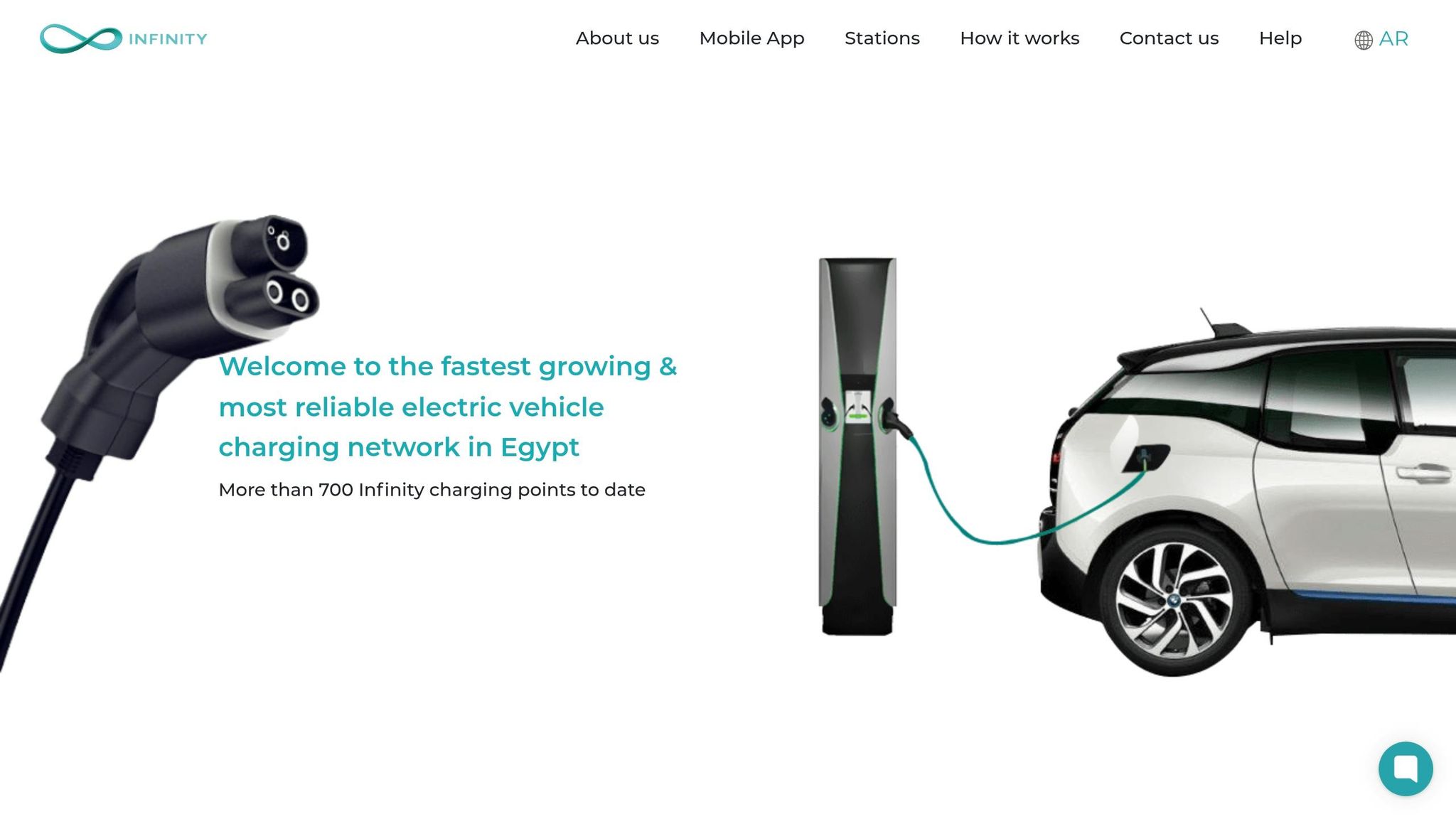
The Infinity EV app, with over 50,000 downloads as of February 2026, is a go-to tool for EV drivers in Cairo. It helps users locate nearby Type 2 AC and 50 KW DC fast chargers while providing real-time availability updates. The app also offers features like remote session control, digital payments, transaction tracking, and GPS navigation to major commercial areas across the city.
Shams Abdel Ghaffar, Managing Director of Infinity’s EV Division, highlighted the company’s progress:
"We have already established the largest EV charging network in the country and expect to continue growing this network over the next few years."
The app has a user rating of 3.4 out of 5 stars from 234 reviews. While many users describe it as "useful, accurate, and easy to use", some have reported occasional technical issues, such as the app redirecting to a browser when starting a charging session.
Before heading to a charging station, it’s wise to check the charger’s availability in real-time and ensure your digital wallet is loaded for a smooth experience.
While the Infinity EV app focuses on streamlining access to public chargers, EV24.africa is a handy platform for those looking to buy EVs that align with Cairo’s charging infrastructure.
EV24.africa for Charging-Ready Vehicles
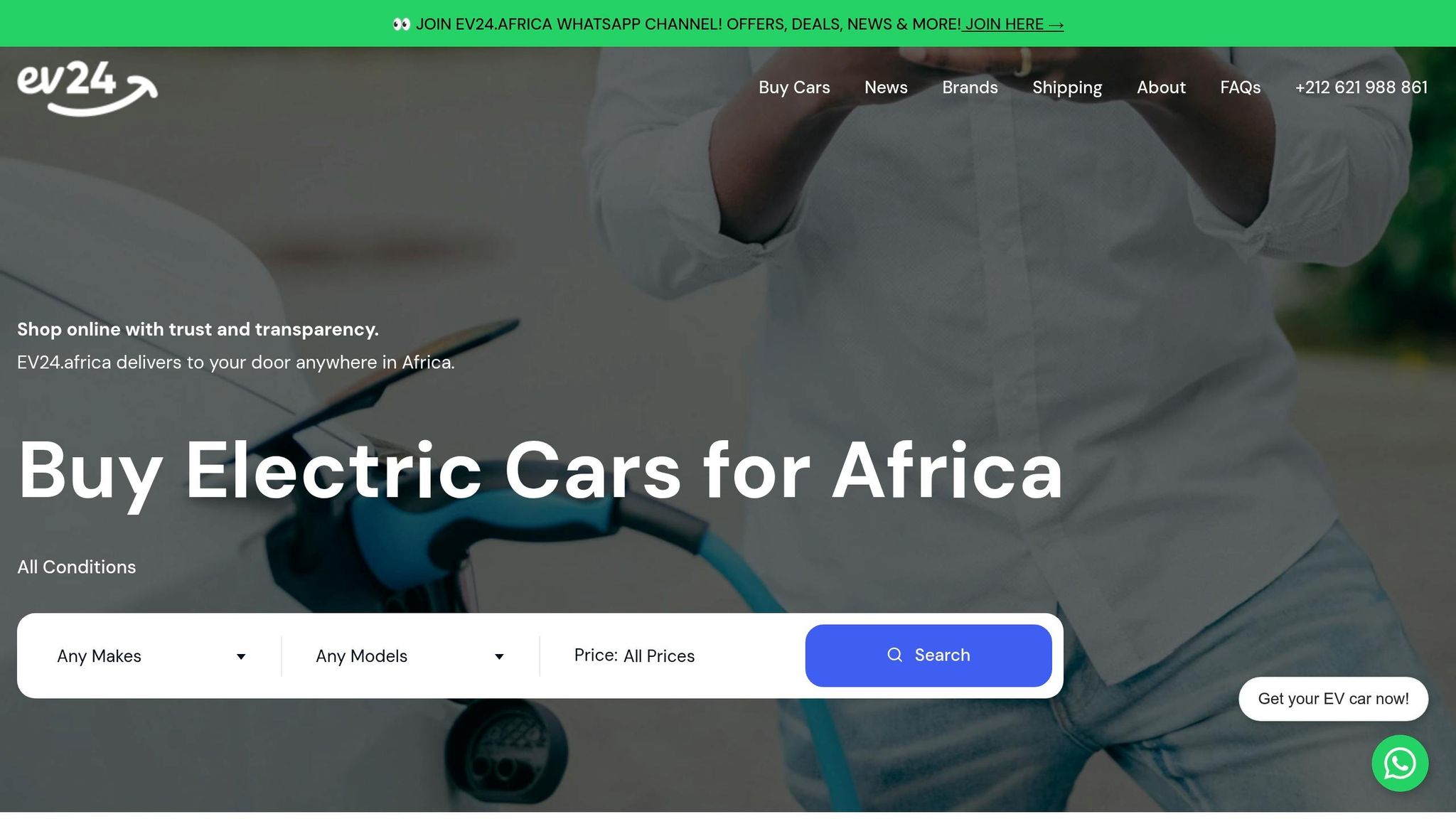
EV24.africa makes it easier to choose EVs that are compatible with Cairo’s charging network. The platform provides detailed listings for well-known brands like Tesla, BYD, and Hyundai, offering clear specifications to help users avoid compatibility issues with local chargers.
Beyond vehicle compatibility, EV24.africa simplifies the buying process with transparent pricing, financing options, and delivery services across Egypt. This one-stop platform ensures a hassle-free EV ownership experience, covering everything from selecting the right car to managing daily charging needs.
Future Plans and Practical Advice for EV Charging in Cairo
Planned Charging Network Growth
Cairo’s charging infrastructure is on track for a major expansion, thanks to a partnership launched in early 2026. Infinity, Hassan Allam Utilities, Misr Petroleum, and Gastec have teamed up to install charging stations across Egypt’s extensive gas station network. This initiative focuses on equipping high-traffic areas and filling stations with both DC fast chargers and AC standard chargers.
One of the standout projects involves the deployment of 3,000 twin chargers along key highways connecting Cairo, Giza, and Alexandria. The investment for this effort is estimated at EGP 120 million to EGP 150 million. Overseeing this ambitious rollout is the Egypt Electric Vehicle Charging Stations Company, a joint venture between the Sovereign Fund of Egypt and Hassan Allam Group. These developments mark a big step toward creating a more connected EV ecosystem, aiding Egypt’s transition to cleaner energy and advancing the adoption of electric transportation.
As these upgrades take shape, EV drivers in Cairo can follow some practical advice to make their charging experience hassle-free.
Practical Tips for Charging Your EV in Cairo
- Check station availability in real-time: Use the Infinity EV app before heading out, especially for long trips. For routes like Cairo to the Red Sea, identify backup charging hubs. For instance, 50 kW DC chargers are available at ChillOut (km 102) and Ras Gharib (km 295).
- Confirm connector type and charging speed: Most public chargers in Cairo use CCS2 for DC fast charging and Type 2 for AC charging. Verify whether the station offers 50 kW DC fast charging or the slower 22 kW AC option to plan your time accordingly.
- Drive efficiently to conserve energy: Use cruise control and maintain speeds around 110 km/h to save 5–7% of battery energy. This can be especially helpful in desert conditions. For highway travel, plan for a consumption rate of about 15 kWh/100 km to maintain a safety buffer.
- Precondition your battery: Before arriving at a DC fast charger, precondition your battery for 30 minutes to enhance charging performance. For home charging, take advantage of off-peak hours or night tariffs, which can bring costs down to as low as E£ 1.90/kWh, a more affordable option compared to traditional fuel.
- Map your route along key highways: Focus on the Cairo-Giza-Alexandria corridor, where many of the new twin chargers are being installed. Currently, Infinity operates 200 stations with over 700 charging points across 16 governorates. With the planned expansion targeting major highways, long-distance EV travel is becoming more practical than ever.
Conclusion
Cairo has come a long way in making electric vehicle (EV) charging a practical option. Once limited by sparse infrastructure, the city now offers solutions that support both daily commutes and longer trips. Modern EVs have proven their capability, with real-world tests showing that a 270-mile drive from Cairo to El Gouna can be completed on a single charge, even leaving a safety buffer for peace of mind.
Owning an EV in Cairo is all about preparation and understanding your charging options. Home charging stands out as the most affordable choice, particularly when paired with solar panels and off-peak electricity rates. At just about E£1.90 per kWh, it’s roughly 6.3 times cheaper than fueling a similar petrol SUV. For those without access to home charging, public stations are available at strategic points, spaced every 110–125 miles along major highways. These stations offer both 50 kW DC fast chargers and 22 kW AC units, catering to different needs. Digital tools, like real-time apps, further simplify the process by providing up-to-date information on charger availability and locations, reducing guesswork and easing range concerns.
Driving habits also play a role in maximizing efficiency. For instance, using cruise control at speeds of 68–70 mph can improve energy usage by 5–7% – a simple adjustment that goes a long way.
While future expansions will improve access even more, Cairo’s current infrastructure already makes EV ownership reliable and practical. Whether navigating the city or heading out on a road trip, electric driving is not only possible but also cost-effective with the right planning.
FAQs
Can I rely on public charging in Cairo without home charging?
Public charging in Cairo is becoming a practical choice for electric vehicle (EV) owners. Right now, Egypt has approximately 300 charging points, with an ambitious plan to grow that number to over 3,000 by 2027. This expansion includes the installation of fast chargers along major highways, making it easier for EV drivers to recharge during longer trips. The increasing availability of these stations is steadily improving accessibility and convenience for EV users across the region.
Which plug type does my EV need in Cairo (Type 2, CCS2, or GB/T)?
In Cairo, your EV will usually need a Type 2 plug. This is the most commonly used standard for AC charging across Egypt, making it compatible with most charging stations in the region.
How can I avoid long waits and charger outages?
To cut down on wait times and prevent outages in Cairo, it’s smart to plan ahead. Use reliable charging networks and look for fast charging stations to save time. Take advantage of apps that show real-time station availability, so you’re not left guessing. Whenever you can, charge your vehicle at home to lessen your dependence on public stations. Also, keep an eye on updates about Egypt’s growing charging infrastructure – this can help you map out your trips more efficiently and make charging hassle-free.