
 Thabo Nkosi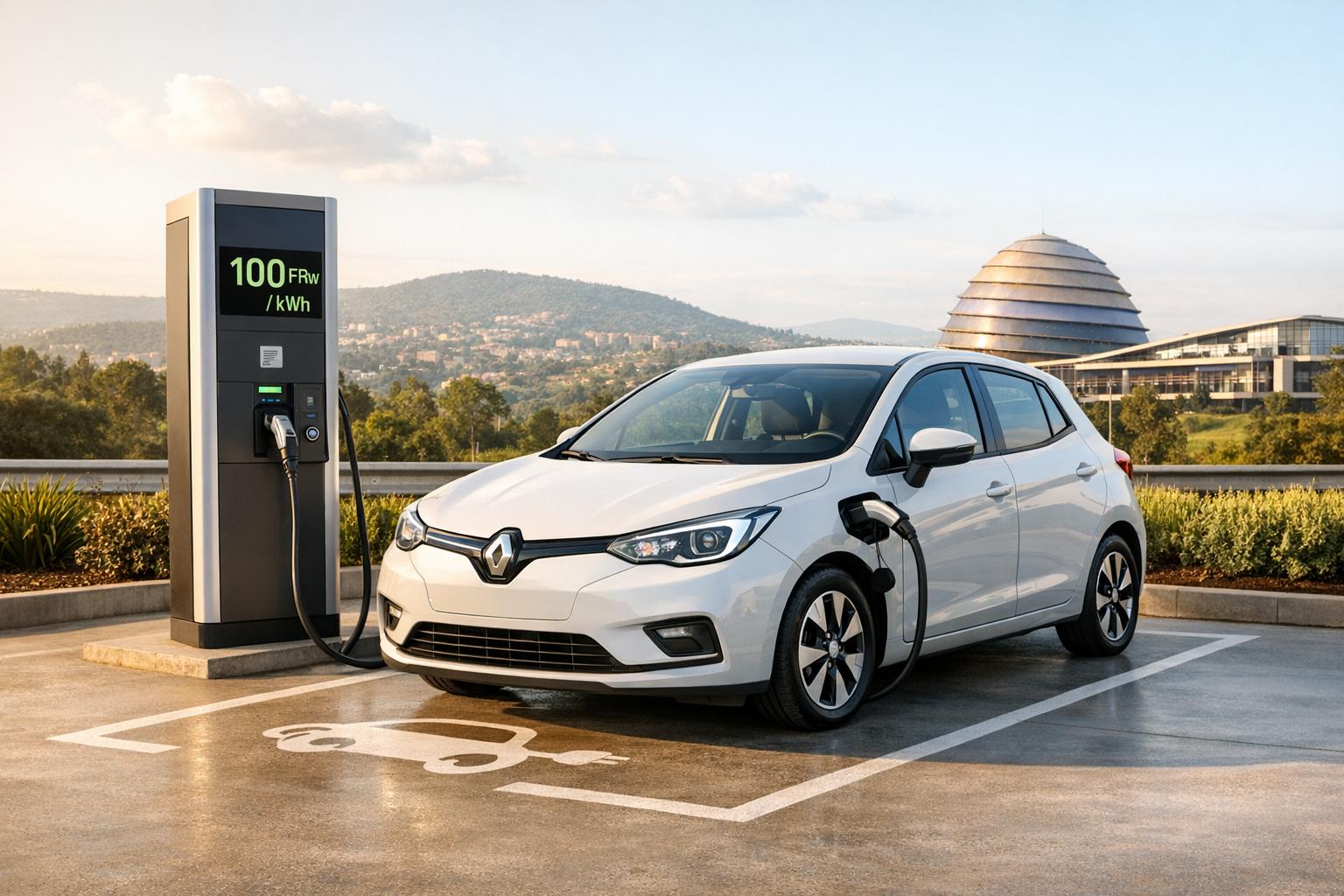
Electric cars (EVs) in Rwanda are proving to be a cost-effective alternative to gasoline vehicles, thanks to lower energy costs, reduced maintenance, and comprehensive tax exemptions. Here’s why:
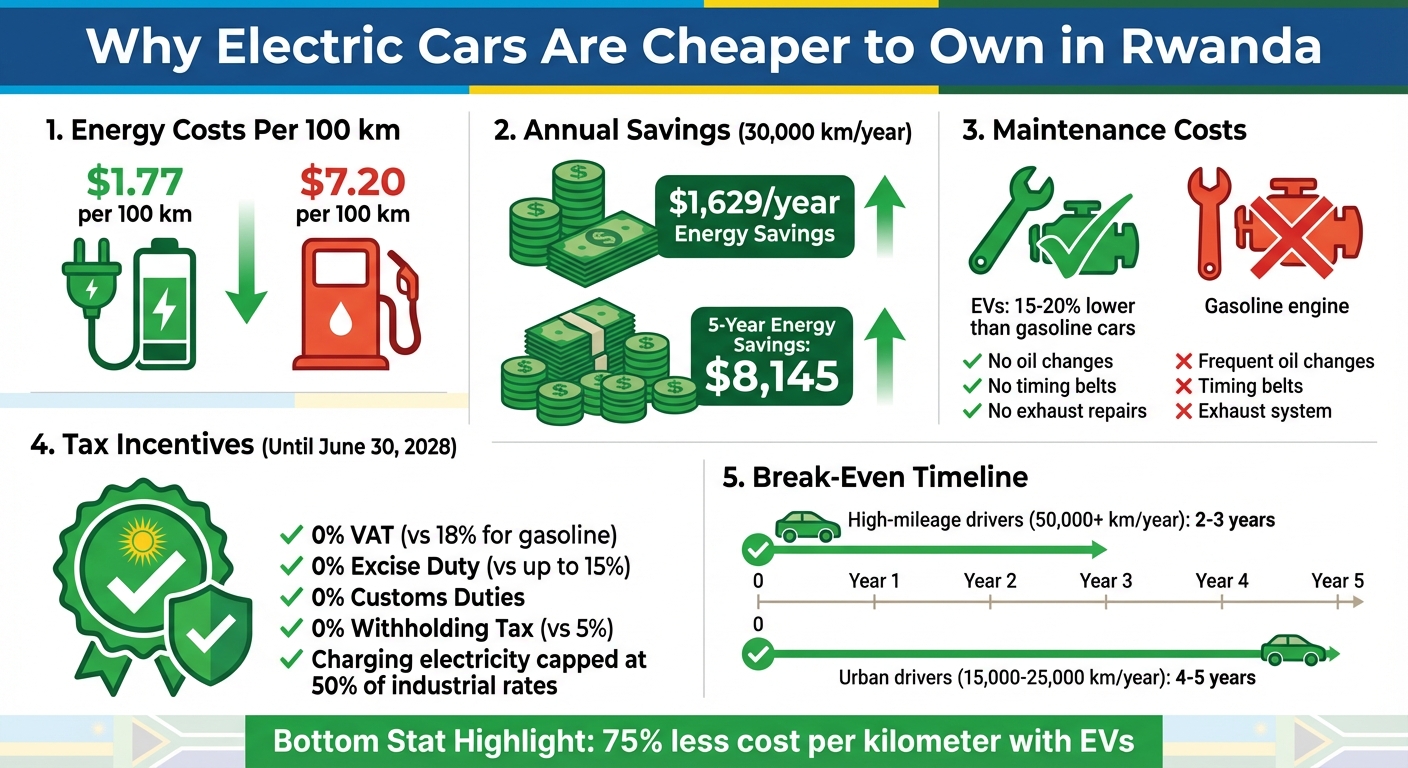
- Energy Savings: Charging an EV costs just $1.77 per 100 km, compared to $7.20 for gasoline cars. Over a year, this can save drivers around $1,629 if they drive 30,000 km.
- Maintenance Costs: EVs have fewer moving parts, eliminating expenses like oil changes and timing belt replacements. Regenerative braking also extends the lifespan of brake components.
- Tax Incentives: EVs, batteries, and charging equipment are exempt from VAT, customs duties, excise taxes, and withholding tax until June 30, 2028. This significantly lowers upfront and ongoing costs.
- Government Support: Electricity for EV charging is capped at 50% of standard industrial rates, and EV-specific policies reduce corporate taxes for businesses investing in electric fleets.
- Long-Term Savings: Over five years, EVs can save drivers thousands of dollars compared to gasoline cars, making them a financially smarter choice for both individuals and fleet operators.
Rwanda’s push for green mobility, combined with its affordable electricity rates and tax breaks, makes owning an EV not just affordable but also a practical option for daily use or high-mileage driving.
5-Year Cost Comparison: Electric vs Gasoline Cars in Rwanda
Lower Energy Costs: Electricity vs. Fuel Prices in Rwanda
Rwanda’s Electricity Rates for EV Charging
In Rwanda, electricity for electric vehicle (EV) charging is priced at approximately $0.118 per kWh, offering an affordable energy source for EV owners. To encourage more people to switch to EVs, the government has implemented a policy that caps charging station electricity rates at 50% of the standard industrial tariffs. This measure not only lowers the cost for public charging stations but also ensures that drivers who charge their vehicles at home enjoy predictable and manageable monthly energy expenses.
Carcarbaba, a Rwandan EV dealer representing Dongfeng models, emphasizes this affordability in its marketing, highlighting that electricity tariffs in Rwanda are "significantly lower than petrol prices." For EV owners, charging overnight at home can cost just a fraction of what they would spend on gasoline. This pricing difference creates a compelling case for the cost efficiency of EVs compared to traditional vehicles.
Cost Per Mile: EVs vs. Gasoline Cars
When comparing operating costs, EVs clearly have the edge. Charging an EV at home in Rwanda costs about RWF 54–60 per kilometer (around $0.04–$0.05), while driving a gasoline-powered car costs roughly RWF 120–160 per kilometer (approximately $0.09–$0.12). A study conducted by the Student Energy and Clean Technology Hub on EV adoption in Africa found that switching to EVs in Rwanda can result in a 20–25% reduction in fuel costs.
For drivers covering long distances – such as those in logistics, taxi services, or other fleet operations – these savings add up quickly. The lower per-kilometer energy costs, combined with more predictable monthly expenses, are driving many commercial operators to adopt EVs early. These financial advantages make EVs an increasingly appealing choice for both individual and business use.
Home Charging Installation and Long-Term Savings
Setting up a home charging system involves some upfront costs, but the long-term savings are undeniable. Thanks to Rwanda’s tax exemptions on EVs, batteries, and charging equipment – covering import duties, VAT, and withholding tax – drivers benefit from reduced initial costs. These policies further enhance the economic appeal of owning an EV.
Once installed, home charging becomes the most cost-effective way to power an EV. By charging overnight, when electricity demand is lower, drivers can cut costs even further. According to the World Bank, affordable retail electricity rates and tailored EV tariffs are key to making EVs cheaper to operate than traditional internal combustion engine vehicles. Rwanda is exploring additional options like bundled charging packages and dedicated EV tariffs to bring down per-kilometer costs even more. As charging infrastructure expands beyond Kigali and into rural areas, these cost benefits will become accessible to a broader range of drivers across the country.
Lower Maintenance Costs: Why EVs Need Less Service
Fewer Parts Mean Fewer Repairs
Electric vehicles are built with a streamlined design, avoiding many of the high-maintenance components found in traditional gasoline cars. Say goodbye to oil filters, timing belts, and exhaust systems – EVs simply don’t need them. With over 85% operational efficiency and far fewer moving parts, they demand less frequent servicing. This means no oil changes, no belt replacements, and no exhaust system fixes. The result? Fewer trips to the mechanic and more predictable ownership costs.
On top of that, EV owners benefit from government incentives. Until June 30, 2028, EV spare parts and batteries are fully exempt from the standard 18% VAT, excise duties (up to 15%), customs duties, and withholding tax.
"EVs are fully exempt from VAT, customs duties, excise duty, and withholding tax… Charging equipment, batteries, and EV spare parts are also included in the exemption." – Automag.rw
This combination of reduced maintenance needs and tax breaks makes owning an EV even more cost-effective.
Regenerative Braking Reduces Brake Wear
Another standout feature of EVs is regenerative braking. This system slows the vehicle by using the electric motor to convert kinetic energy into battery power. In places like Kigali, where stop-and-go traffic is common, regenerative braking significantly reduces the strain on brake pads and rotors. The result? Brake components last longer, and you spend less on replacements.
Battery Warranties and Lifespan
Modern EV batteries are built to last, and manufacturers back them with strong warranties. These advances in battery durability are being bolstered locally in Rwanda by companies like Ampersand, which plans to produce 18,000 batteries to improve accessibility and affordability. With the added benefit of tax exemptions on batteries, EV owners can enjoy lower long-term costs while having confidence in the lifespan of their vehicles.
All these factors make EVs an appealing option for those looking to save on maintenance without sacrificing reliability.
Government Incentives: Tax Breaks and Policy Benefits
Import Duty and VAT Exemptions
Rwanda has taken significant steps to make electric vehicles (EVs) more affordable by removing key taxes. Starting July 1, 2025, EVs will be entirely exempt from VAT, customs duties, excise duty, and withholding tax – a policy set to last until June 30, 2028. This means buyers won’t face the 18% VAT, up to 15% excise duty, or the 5% withholding tax typically applied to gasoline and diesel vehicles. The exemptions also cover charging equipment, batteries, and EV-specific spare parts, helping to reduce both upfront and ongoing costs. For EVs priced at $60,000 CIF or below, these tax benefits apply in full, directly reducing the financial burden on buyers.
Annual Road Tax Differences
When it comes to yearly costs, EV owners in Rwanda benefit from predictable and lower expenses. Annual road taxes are set at FRW 50,000 (around $36) for cars and jeeps, while trucks and larger vehicles are taxed between FRW 100,000 and 150,000 (approximately $73–$109) per year. Combined with the elimination of fuel costs and tax-free spare parts, EV ownership becomes significantly more manageable over time.
Rwanda’s Green Mobility Strategy
Rwanda’s efforts go beyond tax cuts, aiming to support a cleaner, low-carbon future. These incentives are part of the country’s Vision 2050, which includes a goal of achieving 20% electric public transport by 2030. To encourage this shift, the government offers rent-free land for EV charging stations and limits electricity tariffs for charging to just 50% of standard industrial rates. Additionally, registered e-mobility companies enjoy a reduced corporate tax rate of 15% and a seven-year tax holiday for investments exceeding $50 million.
"This seems like we are encouraging the purchase of old vehicles, yet it comes with other issues, including environmental pollution." – Godfrey Kabera, Minister of State for National Treasury
The impact of these policies is evident: between 2020 and 2024, EV imports rose from just 19 units to 512, while hybrid imports skyrocketed to over 6,600 units. These figures highlight how government initiatives are driving growth in Rwanda’s EV market.
sbb-itb-99e19e3
Total Cost of Ownership: EVs vs. Gasoline Cars in Rwanda
5-Year Cost Comparison
Over a five-year period, electric vehicles (EVs) in Rwanda prove to be less expensive to own than gasoline-powered cars, even though their initial purchase price is higher. According to an analysis by Dongfeng/Carcarbaba, "the total cost of ownership tells a very different story", with EVs becoming "more cost-effective within three to five years".
This cost advantage comes from three key factors. First, energy costs are significantly lower – EVs cost just $1.77 per 100 km compared to $7.20 for gasoline-powered cars. Second, EVs have 15–20% lower maintenance costs. Finally, Rwanda’s tax incentives make a big difference. The government has eliminated VAT, import duties, excise duty, and withholding tax on EVs, batteries, and charging equipment, reducing both upfront costs and ongoing expenses.
For a driver who covers 30,000 km annually, these savings add up quickly. Energy savings alone amount to about $1,629 per year, totaling $8,145 over five years. Combined with reduced maintenance and tax costs, EVs clearly offer a more affordable ownership experience over time.
Best Use Cases: Urban Drivers and Fleet Operators
These cost savings make EVs particularly appealing to certain groups. Urban drivers in Kigali are well-positioned to benefit because charging infrastructure is concentrated in the city, and typical daily driving distances are easily within an EV’s range. For someone driving 15,000 km per year, the five-year energy savings come to approximately $4,072.50.
Fleet operators and taxi drivers, who typically cover 40,000 to 60,000 km annually, see even greater benefits. Fuel and maintenance costs, which form a major part of their operating expenses, are areas where EVs excel. A fleet vehicle traveling 50,000 km per year saves about $2,715 annually on energy alone, or $13,575 over five years. Additionally, charging station electricity tariffs are capped at 50% of industrial rates, making depot charging even more cost-effective for fleets. According to Student Energy’s Africa EV study, Rwandan EV users experience 20–25% lower fuel costs and 15–20% savings on maintenance compared to gasoline vehicles.
When EVs Pay for Themselves
Thanks to these savings, EVs can reach a break-even point surprisingly quickly. High-mileage drivers – those covering 50,000 km or more annually – can recoup their initial investment in just two to three years. For moderate urban drivers clocking 15,000–25,000 km per year, the break-even point typically falls within four to five years, with continued savings beyond that.
Fleet operators and businesses also enjoy additional financial benefits through incentives like a reduced 15% corporate tax rate and potential seven-year tax holidays. These measures further improve the economics of operating electric fleets in Rwanda’s growing e-mobility market.
Inside KABISA: Rwanda’s EV Revolution | WIB Documentary
Conclusion: The Financial Case for EVs in Rwanda
In Rwanda, the financial advantage of electric vehicles (EVs) is hard to ignore. Operating an EV costs 75% less per kilometer compared to gasoline-powered cars. To put that into perspective, energy costs for EVs are just $1.77 per 100 km, while conventional vehicles rack up $7.20 for the same distance. On top of fuel savings, EVs cut out ongoing expenses like oil changes, timing belt replacements, and exhaust system repairs.
Rwanda’s tax policies further sweeten the deal. EV buyers enjoy zero VAT, excise duties, and customs duties, while electricity tariffs for EV charging are capped at 50% of industrial rates. Add in the reduced maintenance costs, and the financial case for switching to EVs becomes even stronger.
These savings aren’t just for individuals in Kigali – they’re a game-changer for fleet operators who clock higher annual mileage. Over time, the cost benefits stack up significantly. And with Rwanda pushing toward a low-carbon economy under its Vision 2050 strategy, the advantages are set to grow as the current network of 24 public charging stations and 49 battery swap locations expands.
FAQs
How much does it cost to charge an EV at home in Rwanda?
Charging an EV at home in Rwanda costs approximately $0.10 per kWh, thanks to subsidized electricity rates. This makes home charging a more budget-friendly option compared to public charging stations, allowing EV owners to cut down on energy expenses.
What EV taxes are waived in Rwanda, and until when?
Electric vehicles (EVs) in Rwanda benefit from a complete exemption on VAT, customs duties, excise duties, and withholding taxes. These tax breaks are in place until June 30, 2028, making EV ownership more accessible and promoting their adoption across the country.
How soon does an EV break even versus a gasoline car in Rwanda?
Electric vehicles (EVs) in Rwanda can offset their initial costs and match the expenses of gasoline cars within just 1–2 years. This quick turnaround is largely thanks to lower operating costs and government incentives that reduce upfront expenses. For instance, electricity is far cheaper than fuel, with monthly fuel savings averaging around Rwf50,000 (approximately $50), while electricity costs hover at about Rwf10,000 ($10). Over time, these savings make owning an EV a much more cost-effective choice.