
 Thabo Nkosi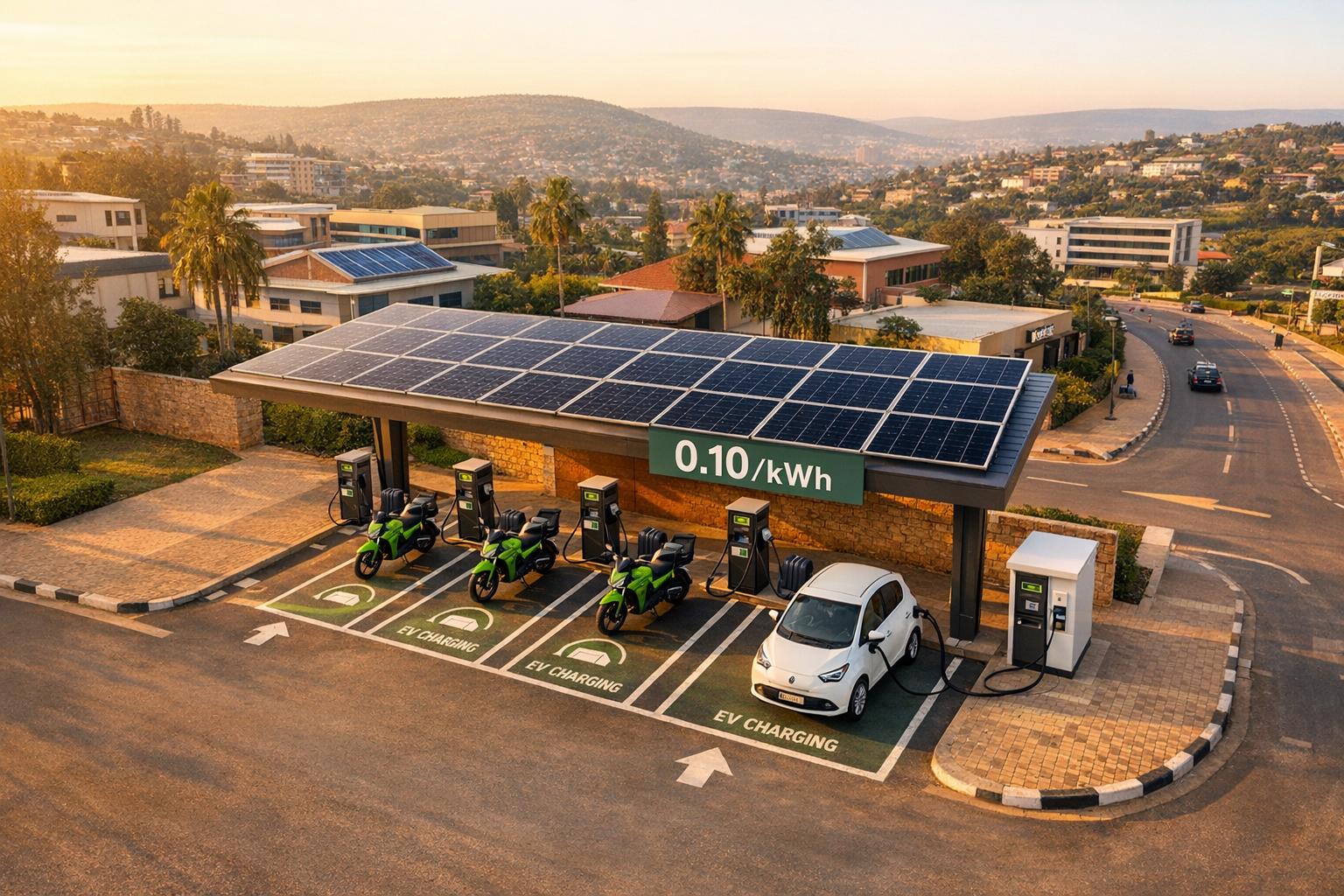
Rwanda is transforming its transportation system with a clear focus on electric mobility. By 2025, the country increased its electric and hybrid vehicle registrations from just 19 in 2020 to over 7,000. This growth is driven by government incentives, improved infrastructure, and private sector investments. Key highlights include:
- Policies and Incentives: Zero import duties, VAT exemptions, and reduced corporate tax rates for e-mobility investors. EV owners also enjoy perks like free parking and congestion fee exemptions.
- Infrastructure: Nearly 200 charging stations in Kigali, subsidized electricity rates ($0.10/kWh), and solar-powered charging hubs.
- Economic Impact: Electric motorcycles save $22 million annually on fuel imports, while EVs offer lower ownership costs compared to gasoline vehicles.
- Environmental Goals: Aiming to electrify 20% of buses, 30% of motorcycles, and 8% of cars by 2030, contributing to carbon neutrality by 2050.
Rwanda’s approach offers a model for other nations, blending smart policies with public-private collaboration to accelerate electric mobility adoption.
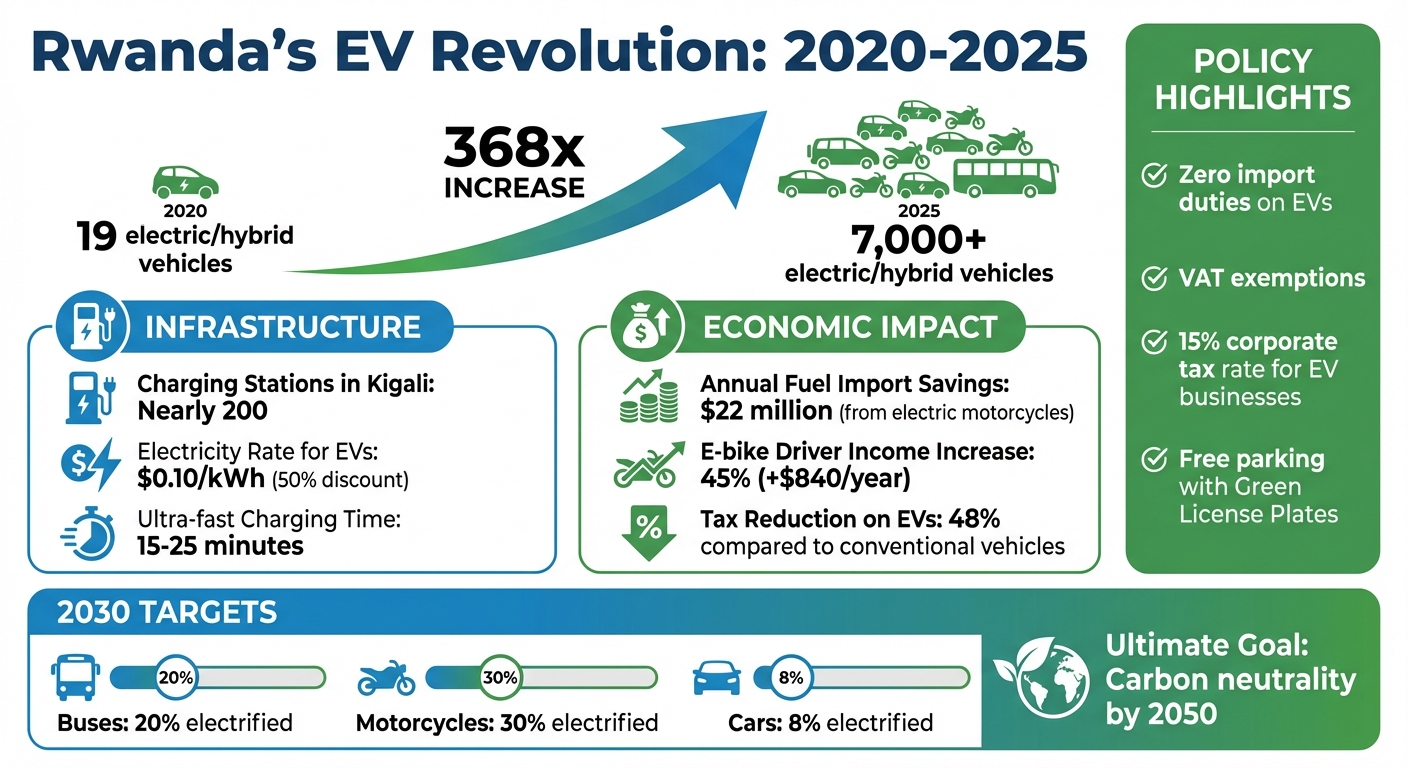
Rwanda’s Electric Vehicle Growth and Economic Impact 2020-2025
Government Policies Supporting Electric Mobility in Rwanda
National Climate Goals and EV Targets
Rwanda is making electric mobility a cornerstone of its plan to achieve carbon neutrality by 2050. As part of its updated Nationally Determined Contributions (NDCs), the country identifies electric vehicles (EVs) and stricter vehicle emission standards as critical tools to reduce emissions. With road transport contributing 13% of Rwanda’s overall greenhouse gas emissions – and buses alone accounting for 40% of those emissions – the move toward electrification isn’t just a choice; it’s a necessity.
To tackle emissions from older vehicles, Rwanda now requires all used vehicle imports to meet Euro 4 emission standards or higher. This approach combines stricter emission controls with a broader push for electrification. For example, the country’s e-bus initiative is projected to cut 72,000 tonnes of CO₂ from the atmosphere.
Tax Breaks and Financial Support
Rwanda has introduced financial incentives to make EVs more affordable and attractive. These include zero-rated import duties and full VAT exemptions on EVs, batteries, spare parts, and charging equipment. Together, these tax breaks reduce the total tax burden on EVs by 48% compared to conventional vehicles. Such measures aim to make clean transportation more accessible, aligning with the country’s emission-reduction goals.
Businesses in the EV sector benefit too. Companies involved in EV manufacturing or assembly enjoy a reduced corporate income tax rate of 15% and can qualify for seven-year tax holidays. Eng. Alfred Byiringiro, Director General for Transport at the Ministry of Infrastructure, highlighted the importance of these incentives, stating, "The incentives will also play a role to mobilize investment into the e-mobility sector which has fast emerged as a top sector on demand".
Additional policies further encourage EV adoption. The government offers rent-free land for charging station development and subsidizes electricity for EV charging at $0.10/kWh – half the standard rate. EV owners also benefit from Green License Plates, which come with perks like free parking and exemption from congestion zone fees.
In March 2025, Rwanda shifted its focus away from hybrid vehicles by reinstating an 18% VAT on hybrids and introducing age-based excise duties – 5% for vehicles under three years old, 10% for those aged three to eight years, and 15% for vehicles older than eight years. This policy change reflects data showing that from 2020 to 2024, only 512 of the 7,172 imported hybrid and electric vehicles (about 7%) were fully electric, with 45% of hybrids being 10–14 years old.
"When these hybrid cars get very old, they only operate using the fuel-powered part. As a result, we are not fully achieving our goal of promoting e-mobility."
- Godfrey Kabera, Minister of State for National Treasury
These financial policies are further bolstered by streamlined certification and licensing processes, making it easier for EV-related businesses to thrive.
Simplified Certification and Licensing
Rwanda has simplified the certification and licensing processes for EVs, complementing its financial incentives. Factory-built, battery-based EVs are exempt from motor vehicle taxes, and ownership transfers for these vehicles incur no tax either. However, vehicles converted from fossil-fuel engines to electric do not qualify for these benefits.
The government has also updated building codes to require EV charging station provisions in new construction projects. To further encourage private investment, Rwanda launched Ireme Invest, a green investment facility under the Rwanda Green Fund (FONERWA). This facility provides funding and credit guarantees to companies developing e-mobility infrastructure.
Rwanda’s Electric Mobility Infrastructure Development
Growing EV Charging Station Network
Rwanda is steadily building up its network of electric vehicle (EV) charging stations. The Ministry of Infrastructure (MININFRA) has created a national plan to ensure that no EV is more than 31 miles (50 kilometers) away from a charging station. Using geospatial analysis, 226 potential sites have been identified, prioritizing busy areas, existing gas stations, and commercial properties.
By late 2024, the country had 24 public charging stations, 4 direct motorcycle chargers, and 49 combined charging and battery-swapping facilities. February 2025 marked a milestone with Kabisa launching Rwanda’s first ultra-fast charging hub at the SP Kanombe station in Kigali. This hub includes 240 kW chargers across six bays, allowing trucks and buses to charge in just 15–25 minutes – significantly faster than traditional stations, which take over an hour. Pophia Muhoza, Managing Director of Kabisa Rwanda, highlighted the significance of this development:
"We’re proud to welcome all EVs to the first Kabisa Supercharger and see it as an important step in our progress towards an ultra-fast, convenient network across the entire region".
To encourage private operators, the government has capped electricity tariffs for charging stations at about $0.10/kWh, which is half the standard rate. Additionally, land for charging station development is offered rent-free. These incentives, combined with the growing network, pave the way for integrating renewable energy into EV infrastructure.
Powering EVs with Renewable Energy
Rwanda is aligning its electric mobility push with clean energy sources. In October 2025, the Nyabugogo multi-modal transit hub underwent a $7.7 million upgrade, which included 18 chargers, an 800-kW rooftop solar photovoltaic system, and battery storage. This setup reduces dependency on the grid while ensuring public transport is powered by renewable energy.
In April 2025, Kabisa introduced the EV House in Kigali, in partnership with Meshpower. This facility features solar panels that enable customers to charge their vehicles off-grid using solar power. This model is especially useful in areas with limited grid access, showcasing how solar energy can support EV infrastructure. By incorporating solar power into charging stations, Rwanda is creating an energy ecosystem that prioritizes sustainability over merely swapping one energy source for another.
Smart Grid Technology for EV Charging
To complement its infrastructure and renewable energy initiatives, Rwanda is implementing smart charging strategies to manage the growing demand for electricity as EV adoption rises. Kigali’s peak power demand is expected to increase by 64% by 2030, and in 2024, line loading had already exceeded safe limits, reaching 136%. Smart charging helps mitigate these challenges by scheduling EV charging during off-peak times and aligning it with periods of solar energy availability.
A World Bank analysis suggests that such strategies can reduce stress on Rwanda’s power distribution networks by up to 15%. Tarek Keskes, a World Bank ESMAP Energy Specialist, emphasized:
"Our analysis shows that Rwanda can achieve its goals if smart charging, cost-reflective tariffs, and integrated planning are prioritized".
The government is also developing real-time, data-driven systems to monitor EV adoption and charging patterns. These tools will enable better grid management as the country continues to expand its electric mobility infrastructure. Together, these efforts highlight Rwanda’s determination to lead the way in Africa’s electric mobility transformation.
How Private Companies Are Advancing Electric Mobility
Partnerships with International EV Brands
Rwanda’s private sector is making strides in electric mobility by teaming up with international EV giants. For instance, in June 2024, Kigali-based Ampersand partnered with Chinese manufacturer BYD to source advanced battery cells. This collaboration aims to produce 40,000 electric motorcycles by the end of 2026. Ampersand’s CEO, Josh Whale, highlighted the importance of this partnership:
"BYD’s world-leading battery cells and manufacturing scale, combined with Ampersand’s deep customer insight and technical product knowledge will help fast track the electrification of Africa’s commercial motorcycles".
Earlier in January 2024, CFAO Mobility Rwanda opened the country’s first dedicated BYD dealership in Kigali. This dealership introduced the BYD Atto 3, priced at approximately $38,000 and backed by an eight-year warranty. Officially inaugurated by Fidele Abimana, Permanent Secretary of the Ministry of Infrastructure, the dealership also features an ecosystem that includes solar panels and maintenance services. Local financial incentives further enhance its appeal.
These partnerships are creating integrated platforms that simplify the EV purchasing journey and promote adoption.
EV24.africa‘s Marketplace for Electric Vehicles
EV24.africa is reshaping how electric vehicles are bought and sold across the continent. The platform connects buyers with a variety of EVs, including both new and used models from brands such as Tesla, BYD, Leapmotor, and Geely. It offers detailed vehicle specifications, transparent pricing, customer reviews, and competitive financing options. With delivery services available to all 54 African countries, EV24.africa makes it easier for individuals and businesses to embrace electric mobility.
Supporting Local Electric Mobility Startups
Local startups are also playing a key role in transforming the EV landscape. One example is SLS Energy, led by CEO Léandre Berwa, which has partnered with Ampersand to give used EV batteries a second life. In May 2025, this collaboration resulted in the launch of a 120kWh mini-grid in Zambia, powered by repurposed batteries from Ampersand’s motorcycle fleet.
Meanwhile, the Rwanda Green Fund (Ireme Invest) is providing essential funding for private sector projects. This includes Kabisa’s efforts to expand its charging network, showcasing how public and private sectors can work together to build EV infrastructure.
These initiatives from private companies complement Rwanda’s broader efforts to create a cleaner, more sustainable transportation future.
sbb-itb-99e19e3
What Other African Countries Can Learn from Rwanda
Implementing Similar Policies and Incentives
Rwanda’s approach to e-mobility offers a practical example for other African nations aiming to accelerate their transitions. The country has implemented tax exemptions and incentives that make electric vehicles (EVs) more accessible. For instance, Rwanda eliminates import and excise duties for EVs, spare parts, batteries, and charging equipment, while also treating these items as zero-rated for Value Added Tax (VAT). Investors in the e-mobility sector enjoy a reduced corporate income tax rate of 15% and can qualify for tax holidays lasting up to seven years. These measures contributed to the rapid growth of Rwanda’s EV fleet, which expanded from just 19 vehicles in 2020 to over 7,000 by 2025.
Other nations can take inspiration from Rwanda’s phased policies, such as Kigali’s planned 2025 ban on new petrol-powered commercial motorcycles. By targeting high-emission vehicles first, this strategy provides a manageable transition period for consumers while nudging the market toward cleaner alternatives. With road transport responsible for 13% of Rwanda’s greenhouse gas emissions, shifting to electric motorcycles is expected to save around $6.6 million annually by cutting fuel imports.
Beyond financial incentives, Rwanda uses non-monetary measures to encourage EV adoption. Green License Plates, which grant perks like free parking, access to congestion zones, bus lane priority, and government fleet privileges, are one example. Additionally, Rwanda integrates EV infrastructure requirements into building codes, ensuring that new developments include provisions for charging stations.
Building EV Infrastructure Across Africa
Policy changes alone won’t drive e-mobility – strong infrastructure is key. Rwanda’s infrastructure model prioritizes affordability and accessibility for EV users. The government caps EV charging rates at $0.10/kWh, significantly lower than the standard $0.20/kWh. This pricing structure makes EVs a cost-effective alternative to traditional vehicles. For example, while a liter of petrol costs about $1.30 and covers 22 miles, an electric charge costs roughly $1.25 and covers 37 miles.
Rwanda’s use of innovative charging solutions, such as Kabisa’s EV House model, shows how infrastructure can evolve. These ultra-fast chargers, powered by solar energy, can fully charge a vehicle in just 15 to 25 minutes – much faster than conventional stations that take over an hour. Kabisa Managing Director Pophia Muhoza highlighted the progress during the launch of their facility:
"It’s a blessing to see so many customers, supporters, partners, and friends gathered in our new space, an exciting physical representation of the progress we are making – but we’re truly only getting started."
Rwanda is also exploring ways to extend the life cycle of EV batteries. In early 2025, SLS Energy and Ampersand partnered to establish a 120 kWh mini-grid in Zambia using repurposed EV batteries. This system can power over 100 rural homes for two days on a single charge. As CEO Léandre Berwa explained:
"This system can power more than 100 rural African homes for two days on a single full charge… This creates the missing link for a sustainable adoption of electric mobility."
To support private operators, Rwanda provides rent-free land for charging stations. Collaborating with existing fuel retailers to host EV chargers can also maximize solar energy use and leverage established networks.
With a solid infrastructure in place, private platforms are stepping in to make EVs more accessible.
Expanding Private Sector Platforms Continent-Wide
Platforms like EV24.africa are playing a significant role in expanding electric mobility across Africa. By connecting buyers with a range of EVs from top brands, the platform offers features like detailed specifications, transparent pricing, customer reviews, financing options, and delivery services to all 54 African countries. This model helps overcome geographic challenges and broadens access to EVs.
Rwanda’s success highlights the importance of public-private partnerships in scaling infrastructure. For example, the Rwanda Green Fund (FONERWA), through its "Ireme Invest" initiative, partnered with Kabisa to develop 35 car-specific charging stations across Kigali. In early 2025, Kabisa also collaborated with fuel distributor SP (Société Pétrolière) to open an ultra-fast charging station at Kanombe, equipped with six charging bays and a 240 kW capacity.
For other African nations to replicate Rwanda’s achievements, creating investment frameworks that reduce risks for private operators is essential. Training programs for mechanics and technicians will also be critical to addressing the skills gap. Rwanda’s integrated approach – combining government incentives, infrastructure development, and private sector innovation – shows that a continent-wide shift to electric mobility is possible.
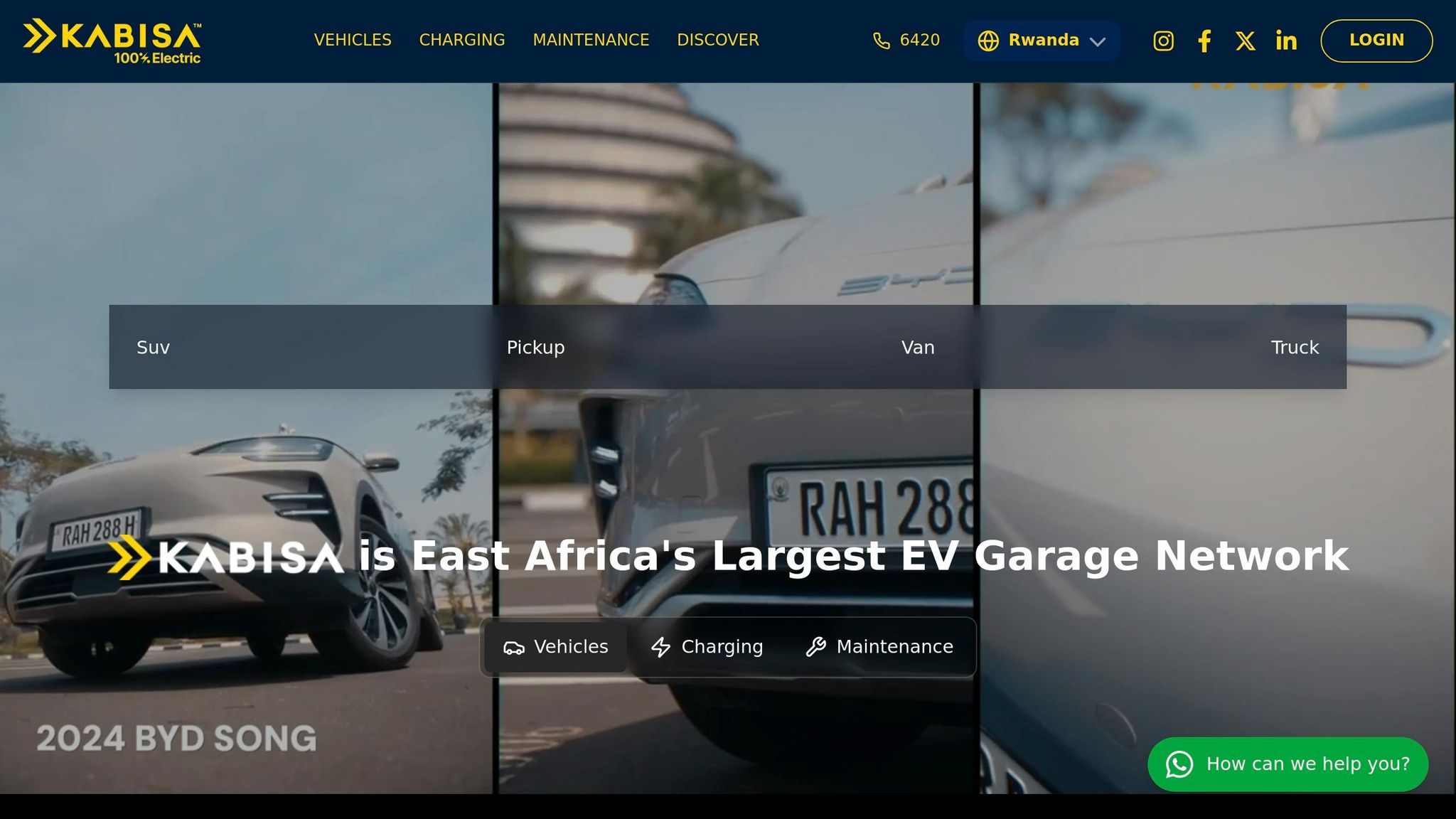
Inside KABISA: Rwanda’s EV Revolution | WIB Documentary
Conclusion
Rwanda’s shift to electric mobility highlights the impact of smart policies, strategic investments, and private sector innovation. Between 2020 and 2024, the country’s electric vehicle (EV) fleet expanded from just 19 to over 7,000 – a remarkable leap for a developing market. Key initiatives, such as zero import duties on EVs and charging equipment, combined with a subsidized electricity rate of $0.10/kWh for EV charging, have been instrumental in driving this change.
The benefits of this transformation are striking. Electric motorcycles alone could save Rwanda $22 million annually on fuel imports, while e-bike users enjoy a 45% increase in their take-home pay – around $840 more each year. As Teddy Mugabo, CEO of Rwanda Green Fund (FONERWA), put it:
"The transformation is real. Electric mobility is not just an environmental choice but also an economic one".
This economic impact underscores the importance of forward-thinking policies.
Rwanda’s decision to ban new petrol motorcycle registrations starting January 2025 is another bold step to speed up the transition. Investments like the $7.7 million Nyabugogo multi-modal hub, which integrates solar power with battery storage, show that Rwanda is building a comprehensive EV ecosystem – not just installing charging stations.
For other African countries, Rwanda’s approach offers a clear and actionable blueprint. Measures like tax exemptions, subsidized charging rates, rent-free land for private operators, and partnerships that lower investment risks are strategies that can be replicated. Platforms like EV24.africa further amplify Rwanda’s model by connecting buyers across Africa’s 54 countries with transparent pricing, financing, and delivery options.
Electric mobility is more than an environmental solution – it strengthens economies, reduces dependency on imported fuel, and creates jobs. Rwanda has shown what’s possible, and now it’s up to other nations to take the next step.
FAQs
Are EVs in Rwanda actually cheaper to own?
Electric vehicles (EVs) in Rwanda are generally less expensive to own compared to traditional fuel-powered cars. Here’s why:
- Lower running costs: Electricity in Rwanda costs about $0.20 per kWh, whereas fuel prices are around $1.30 per liter. This significant difference makes charging an EV much cheaper than refueling a gas-powered car.
- Government incentives: The Rwandan government offers incentives that cut upfront costs by nearly 48%, making EVs a more budget-friendly option for buyers.
These factors combine to make EV ownership a more economical choice in the long run.
How easy is it to find a charger outside Kigali?
Finding a charger outside of Kigali can be tough because Rwanda’s EV infrastructure is still growing. In rural areas, charging stations are scarce. However, the government is making efforts to expand the network, aiming to make it easier for EV users to access charging points across the country.
What can other African countries copy from Rwanda first?
Rwanda’s strategy offers a blueprint for other African nations aiming to embrace greener transportation. By prioritizing policy frameworks, infrastructure development, and targeted incentives, countries can make significant progress. For example, introducing tax breaks for electric vehicles, expanding charging station networks, and setting clear goals – like electrifying 20% of buses by 2030 – can drive meaningful change.
One standout move by Rwanda is its plan to ban petrol-powered motorcycles for commercial use in Kigali by 2025. This bold step underscores the country’s dedication to cutting emissions and enhancing urban air quality.