
 Thabo Nkosi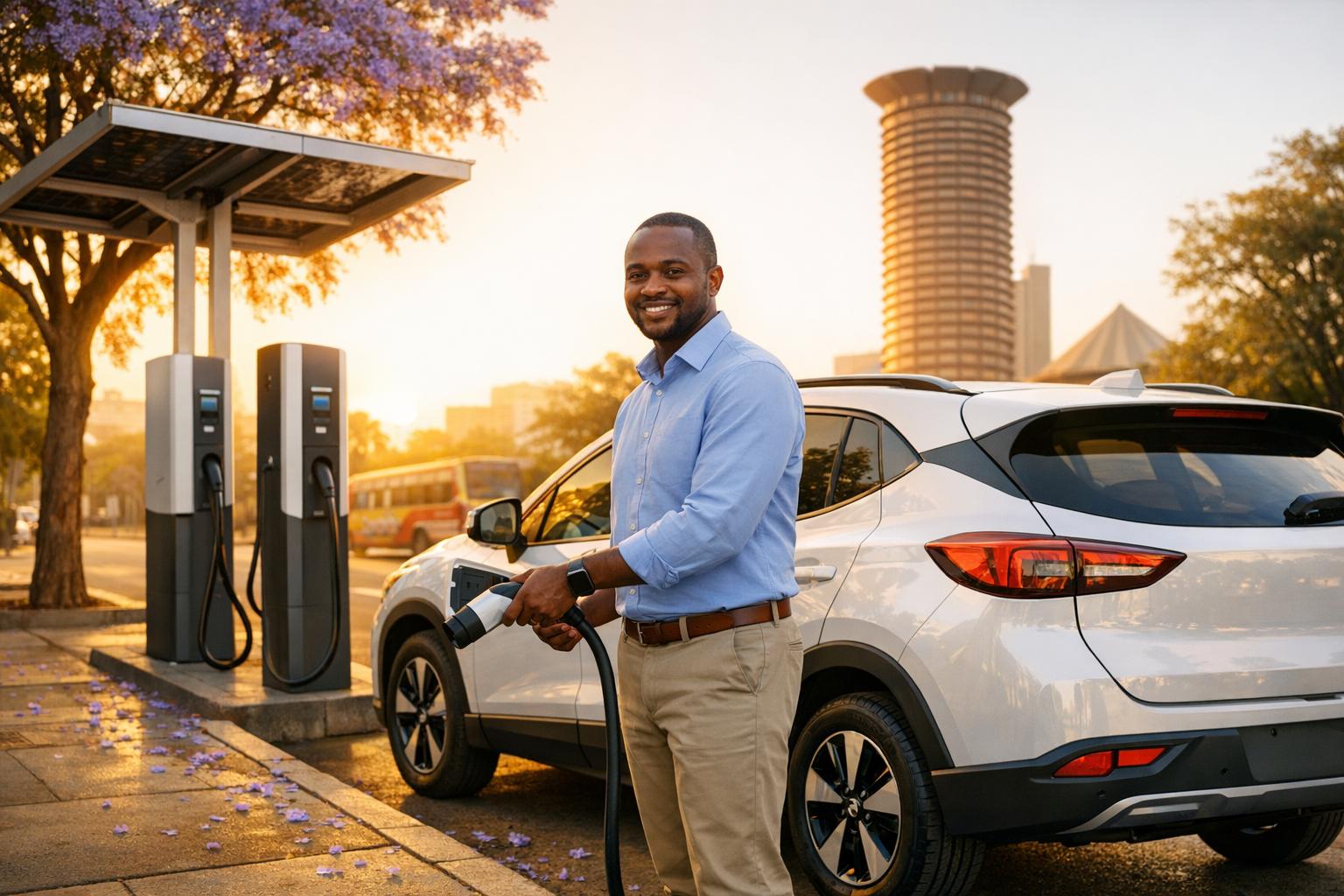
Electric cars are becoming a viable option for daily use in Kenya, especially in urban areas like Nairobi and Mombasa. With over 35,000 registered EVs by early 2026 – mostly motorcycles – Kenya is embracing electric mobility thanks to its 90% renewable energy grid and new incentives like reduced taxes and lower charging tariffs. However, challenges like limited rural charging infrastructure, high upfront costs, and road conditions remain.
Key Takeaways:
- Cost Savings: Charging off-peak costs KSh 1.20–1.60/km, much cheaper than petrol (KSh 10–20/km).
- Charging Network: 135 public stations (42 in Nairobi), but rural areas are underserved.
- Upfront Costs: Used EVs like the Nissan Leaf start at KSh 1.2M; new models like Hyundai Kona cost KSh 3.5M+.
- Road Challenges: Low ground clearance on some EVs and battery range limits are concerns.
- Government Support: Reduced import duties, zero VAT on EVs, and plans for 10,000 charging stations by 2030.
While EVs are practical for city commutes and offer long-term savings, rural drivers face hurdles. Choosing models with higher ground clearance and extended range, installing home chargers, and leveraging off-peak tariffs can help address these challenges.
Challenges of Daily Electric Car Use in Kenya
Charging Infrastructure Gaps
Kenya has made strides in expanding its EV charging network, now boasting 135 public charging stations across 15 counties as of February 2026. However, these stations are heavily concentrated in urban areas. Nairobi leads with 42 charging points, followed by Mombasa with 18 and Kisumu with 12. This leaves rural areas and long-distance routes underserved, creating uncertainty for drivers venturing outside major cities.
For those living or working outside these urban hubs, reliable public charging can be a major challenge. Adding to the complexity, Kenya experienced 12 major power outages in 2023, which disrupted charging services and left some drivers stranded. Younes Rabeh from African EV Market News highlighted the importance of building a dependable infrastructure:
This rapid expansion is about more than just numbers; it’s about building a resilient ecosystem. Every new station that comes online chips away at range anxiety.
These infrastructure gaps, combined with Kenya’s diverse road conditions, amplify the challenges of adopting electric vehicles for daily use.
Range Concerns and Road Conditions
Kenya’s road conditions and terrain often reduce an EV’s effective range compared to its advertised performance. Factors like Nairobi’s stop-and-go traffic, frequent air conditioning use, and navigating hilly areas such as the Rift Valley all contribute to faster battery drain. EV24.africa explains:
An EV’s advertised range is almost always based on perfect, lab-like conditions. Here in the real world, things like Nairobi traffic, blasting the air conditioning, and tackling hilly terrain reduce the effective range.
To address this, drivers are encouraged to choose models with extended range capabilities.
Ground clearance is another critical consideration. Many imported EVs, such as the Nissan Leaf, have low ground clearance, making them prone to damage from road obstacles common in Kenya. Experts recommend a minimum clearance of 150mm (about 6 inches) for navigating these conditions. On the other hand, SUV-style EVs like the Hyundai Kona Electric or BYD Atto 3 are better equipped to handle Kenya’s roads. Additionally, battery cooling systems play a vital role in maintaining performance. Vehicles with liquid-cooled systems fare better in Kenya’s warm climate, as air-cooled systems can lead to faster battery degradation.
Tackling these technical and environmental challenges is essential to making EVs a practical choice for everyday use in Kenya.
High Purchase Prices and Limited Model Selection
Cost remains one of the biggest hurdles to EV adoption in Kenya. The upfront price of an electric vehicle is significantly higher than that of traditional petrol cars. For example, a used petrol car like a Toyota Vitz or Mazda Demio typically costs between KES 600,000 and KES 800,000 ($4,600 to $6,200), while a used Nissan Leaf starts at around KES 1.2 million ($9,200). New EVs are even pricier, ranging from KES 4 million to over KES 10 million ($30,800 to $77,000+), with a Tesla Model 3 costing upwards of KES 10 million, more than twice its price in Europe.
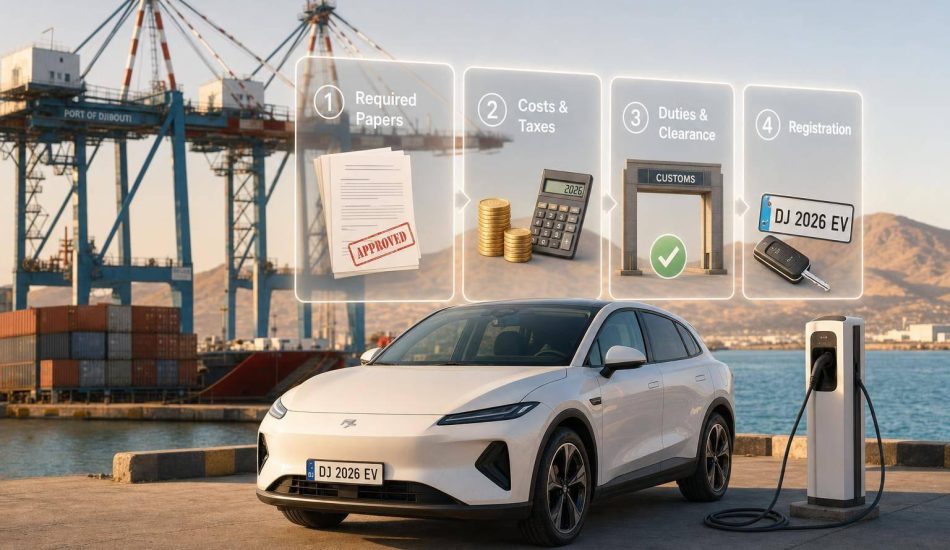
Although the government has reduced excise duty on EVs from 20% to 10%, the 25% import duty remains in place, keeping prices high. Additionally, limited local inventory forces many buyers to import directly from countries like the UK or Japan. This process takes 4 to 8 weeks and involves navigating customs and KEBS inspections.
The upfront cost remains a significant deterrent, and unless more affordable EV models enter the market, mass adoption will remain elusive.
Battery replacement costs add another layer of expense. Replacing a battery pack can cost between KES 800,000 and KES 1.5 million ($6,200 to $11,500), which is roughly the price of a used petrol car. This makes battery health a critical factor, particularly for used imports that may already show signs of degradation. The lack of specialized mechanics and local spare parts further complicates maintenance, leading to higher repair costs and longer wait times.
Addressing these financial and logistical barriers will require a mix of government incentives and creative financing solutions to make EVs more accessible to the average Kenyan buyer.
sbb-itb-99e19e3
How to Overcome These Challenges
Kenya Power‘s E-Mobility Tariff and Renewable Energy
In March 2023, Kenya Power introduced an e-mobility tariff with rates of Sh8 per kWh during off-peak hours and Sh16 per kWh during peak hours, significantly lowering daily charging expenses. For context, charging overnight results in running costs of KSh 1.20 to KSh 1.60 per kilometer, compared to KSh 10 to KSh 20 per kilometer for petrol vehicles.
Charging at home is straightforward. You can start with a standard three-pin outlet or invest in a 7kW Level 2 charger, which can fully charge most EVs in 4–8 hours. Modern EVs in Kenya predominantly use the Type 2 (Mennekes) and CCS2 charging standards. To save even more, schedule your charging during off-peak times, typically late at night or on Sundays.
Kenya’s electricity grid is another major advantage. With about 90% of its energy coming from renewable sources, EVs in Kenya are genuinely eco-friendly. Dr. (Eng.) Joseph Siror, Managing Director and CEO of Kenya Power, highlighted this:
"Already, over 90% of the energy we procure and dispatch is sourced from renewable sources. To complement this milestone, we are actively driving the uptake of e-mobility and e-cooking solutions."
The combination of affordable energy pricing and renewable energy sources makes EVs not only economical but also environmentally responsible.
Affordable EV Models on EV24.africa
Cost savings from reduced operating expenses make used EV models an appealing option. Platforms like EV24.africa feature popular models such as the Nissan Leaf and Hyundai Kona Electric, both of which are well-suited for daily commutes under 70 kilometers, even with Kenya’s unpredictable traffic and road conditions.
When choosing a used EV, ensure the battery’s State of Health (SoH) is at least 85%. This will ensure the vehicle can handle daily trips without the need for frequent recharging. For Kenya’s roads, SUV-style EVs like the Hyundai Kona Electric or BYD Atto 3 are particularly practical. Their higher ground clearance helps navigate speed bumps and potholes more effectively than lower-profile models like the Nissan Leaf.
Government Support and Incentives
Beyond lower running costs and accessible vehicle options, government initiatives are further driving EV adoption. The National Electric Mobility Policy introduced in February 2026 reduced EV import duties to 10% and zero-rated VAT on electric buses, bicycles, motorcycles, and lithium-ion batteries. These measures aim to make EV ownership more attainable.
Infrastructure is also expanding rapidly. A Sh6 billion charging station rollout plan aims to establish 10,000 charging stations nationwide by 2030. By September 2025, the number of public charging stations had grown from 67 in 2023 to over 300. Kenya Power has also installed chargers at its offices in Stima Plaza, Donholm, Ruaraka, Electricity House, and Ragati, with additional stations planned for Voi, Mombasa, Nyeri, Nakuru, and Eldoret.
On top of this, the Energy and Petroleum Regulatory Authority (EPRA) is reviewing the e-mobility tariff to eliminate the 15,000-unit monthly consumption cap, which could encourage larger fleet operators to invest in charging infrastructure.
These combined efforts – lower operating costs, a growing selection of EV models, and strong government support – are effectively addressing the barriers of infrastructure, pricing, and range that once limited the practicality of EVs in Kenya.
How practical is having an electric car in Kenya?
Pros and Cons of Daily Electric Car Use in Kenya
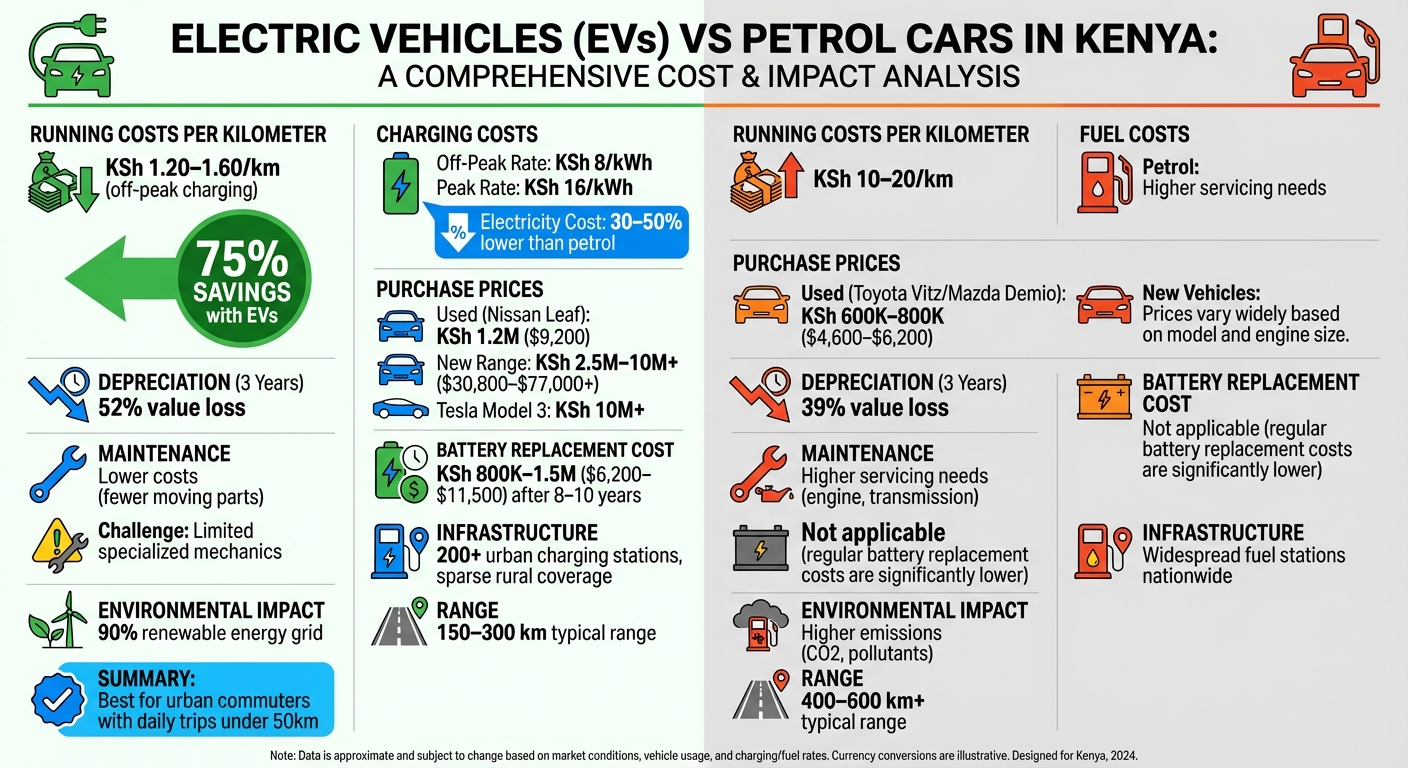
EV vs Petrol Car Cost Comparison in Kenya: Running Costs, Purchase Prices & Savings
Cost and Benefit Comparison
When considering the daily use of electric vehicles (EVs) in Kenya, it’s essential to weigh the financial and practical benefits against the challenges. On the positive side, EVs offer significant savings – electricity costs are about 30–50% lower than petrol, and maintenance expenses are reduced due to fewer moving parts. Additionally, Kenya’s largely renewable energy grid means charging your EV significantly cuts down on emissions.
However, the initial investment is steep. New EVs start at approximately KSh 2.5 million, while used models range between KSh 1.2 million and KSh 1.7 million. Depreciation is another downside, with EVs losing about 52% of their value in three years compared to 39% for petrol cars. Insurance costs are also higher, driven by the complexity of battery repairs. Below is a detailed breakdown of these factors.
| Aspect | Advantages | Disadvantages |
|---|---|---|
| Cost Savings | Electricity costs 30–50% lower; off-peak rate of Sh8/kWh | High upfront costs (KSh 1.2M–4M); faster depreciation (52% in three years) |
| Environmental Impact | Over 90% renewable energy grid reduces emissions | Challenges with battery production and disposal |
| Maintenance | Fewer moving parts mean lower servicing needs | Limited access to specialized mechanics and parts |
| Infrastructure | Over 200 urban charging stations | Sparse rural coverage; occasional grid blackouts |
| Range and Road Conditions | Suitable for urban commutes (150–300 km range) | Long trips require careful planning due to limited range |
Infrastructure is another mixed bag. While urban areas benefit from over 200 charging stations, rural regions lag behind. The typical EV range of 150–300 km works well for city commutes but can be limiting for longer trips, requiring thoughtful planning. Battery lifespan is another factor – most last 8–10 years or around 160,000 km, after which replacement can be costly.
Conclusion: Can You Use an EV Daily in Kenya?
Main Points to Remember
Electric vehicles (EVs) are a practical option for daily use in urban areas of Kenya. By May 2025, Kenya had registered 9,047 EVs, with e-mobility electricity consumption increasing by 188%. For urban commutes, typically ranging between 12 and 31 miles (20–50 km), EVs with ranges of 93–250 miles (150–400 km) are more than sufficient. They also offer notable cost savings. With over 200 charging stations in cities and Kenya Power’s off-peak tariff of KSh 8–9 per unit, charging is both accessible and affordable.
However, rural drivers face unique challenges. Outside urban hubs like Nairobi and Mombasa, charging infrastructure is limited, making long-distance travel more difficult. Additionally, while EV maintenance is generally simpler than that of petrol vehicles, finding mechanics skilled in EV repairs is still a hurdle. Battery replacement costs after 8–10 years and the upfront price – ranging from KSh 1.2 million to over KSh 4 million – remain significant barriers.
What You Should Do Next
If you’re considering an EV, start by exploring affordable models on platforms like EV24.africa. Options include used Nissan Leafs starting at about KSh 1.2 million or locally assembled models like the Autopax Air Yetu for roughly KSh 1.7 million. These platforms handle everything from sourcing to customs clearance, with delivery times of 4–8 weeks. When buying a used EV, always ask for a battery health report showing at least 85% State of Health to ensure good performance.
Installing a home charger is another smart step. By charging between 10 p.m. and 4 a.m. at Kenya Power’s e-mobility tariff of KSh 8–9 per unit, you can cut fuel costs by up to 75% compared to petrol. A Level 2 wall charger can fully recharge your EV overnight (in 4–8 hours), so you’re ready to go every morning. For longer trips, plan your route using the fast-charging stations available along major highways.
To make the initial cost more manageable, look into financing options. EVs also benefit from reduced import duties of just 10%, compared to the 25–35% levied on petrol vehicles. With the government aiming for 10,000 charging stations by 2030 and new building codes requiring EV charging spaces in developments, EV infrastructure in Kenya is set to expand. These steps align with Kenya’s broader goal of fostering a cleaner, more sustainable future for transportation.
FAQs
Will an EV work for trips outside Nairobi or Mombasa?
Kenya’s charging network is expanding, but it’s still concentrated in urban areas. For instance, long trips such as the 345 km journey from Kisumu to Nairobi have been completed successfully, but they require careful planning due to the lack of charging stations outside major cities. Many electric vehicle (EV) owners depend on home charging or overnight options to keep their cars powered. As the infrastructure continues to grow, traveling long distances in an EV across Kenya will become much easier.
How do I charge at home in Kenya (and what do I need)?
To charge your electric car at home in Kenya, you’ll need a suitable home charger and the correct electrical setup. Level 1 chargers (120V) are slower and ideal for short commutes, while Level 2 chargers (240V) offer faster charging and are better suited for daily use. Make sure your home is equipped with a 40-amp circuit, and consider charging during off-peak hours to reduce electricity costs. Be prepared for potential power interruptions, such as load shedding, and plan accordingly.
What should I check before buying a used EV in Kenya?
Before buying a used electric vehicle (EV) in Kenya, it’s important to evaluate a few key aspects to avoid potential headaches. Start with the charging infrastructure – make sure there are accessible charging stations near your home or workplace. Next, assess the battery health by checking its range and ensuring it hasn’t suffered significant degradation over time. Also, inspect the vehicle’s overall condition, paying close attention to maintenance history and any signs of wear.
Don’t forget to review the legal documentation to confirm ownership and ensure the car complies with Kenyan standards. If the EV was imported, verify its import records to avoid any legal complications. Taking the time to thoroughly check these factors will help you make a smart and confident purchase.