
 Thabo Nkosi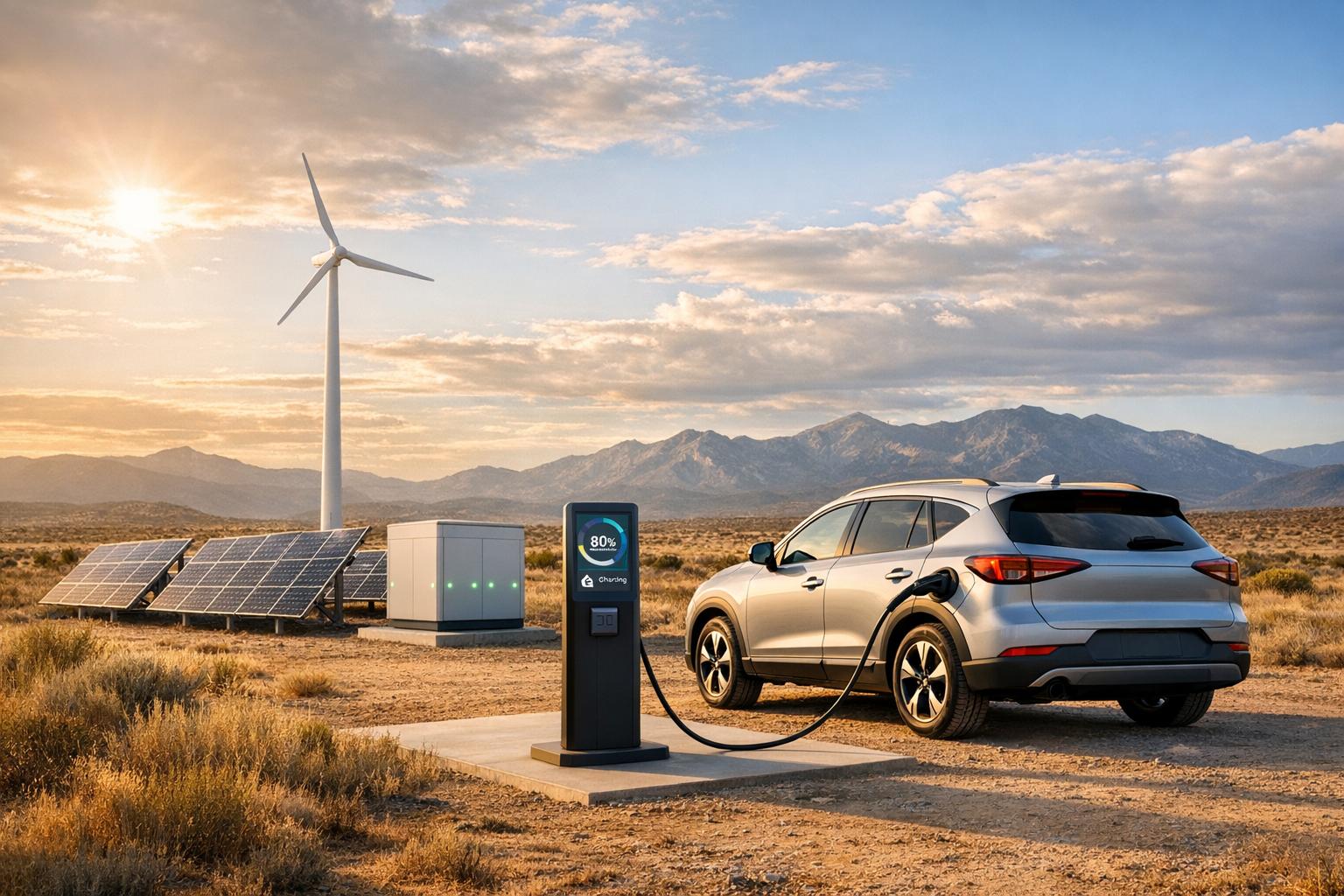
Off-grid EV charging is a self-sustained system that operates without relying on the utility grid, often using solar or wind power stored in batteries. While this setup offers independence and a cleaner energy alternative, it comes with significant challenges. Here’s a quick breakdown:
- Energy Storage Issues: Renewable energy sources are inconsistent, leading to battery depletion during high demand or low generation periods.
Solution: Combine solar and wind energy, use backup systems, and implement smart charging systems. - Expansion Difficulties: High costs, varying site needs, and regulatory hurdles make scaling to new locations complex.
Solution: Use modular designs and partner with local utilities or organizations. - High Upfront Costs: Solar panels, batteries, and DC fast chargers require substantial initial investment.
Solution: Spread costs through financing programs, forecast EV adoption, and right-size equipment. - Equipment Durability: Extreme climates lead to faster wear and tear on batteries, panels, and chargers.
Solution: Use durable materials, remote monitoring systems, and regular maintenance. - Uncertain Demand: Predicting EV charging needs is tough in areas with low EV adoption.
Solution: Use smart charging systems and data collection tools to plan better.
Off-grid charging systems offer a solution for areas with unreliable grids, but overcoming these challenges requires thoughtful planning, partnerships, and innovative technology.
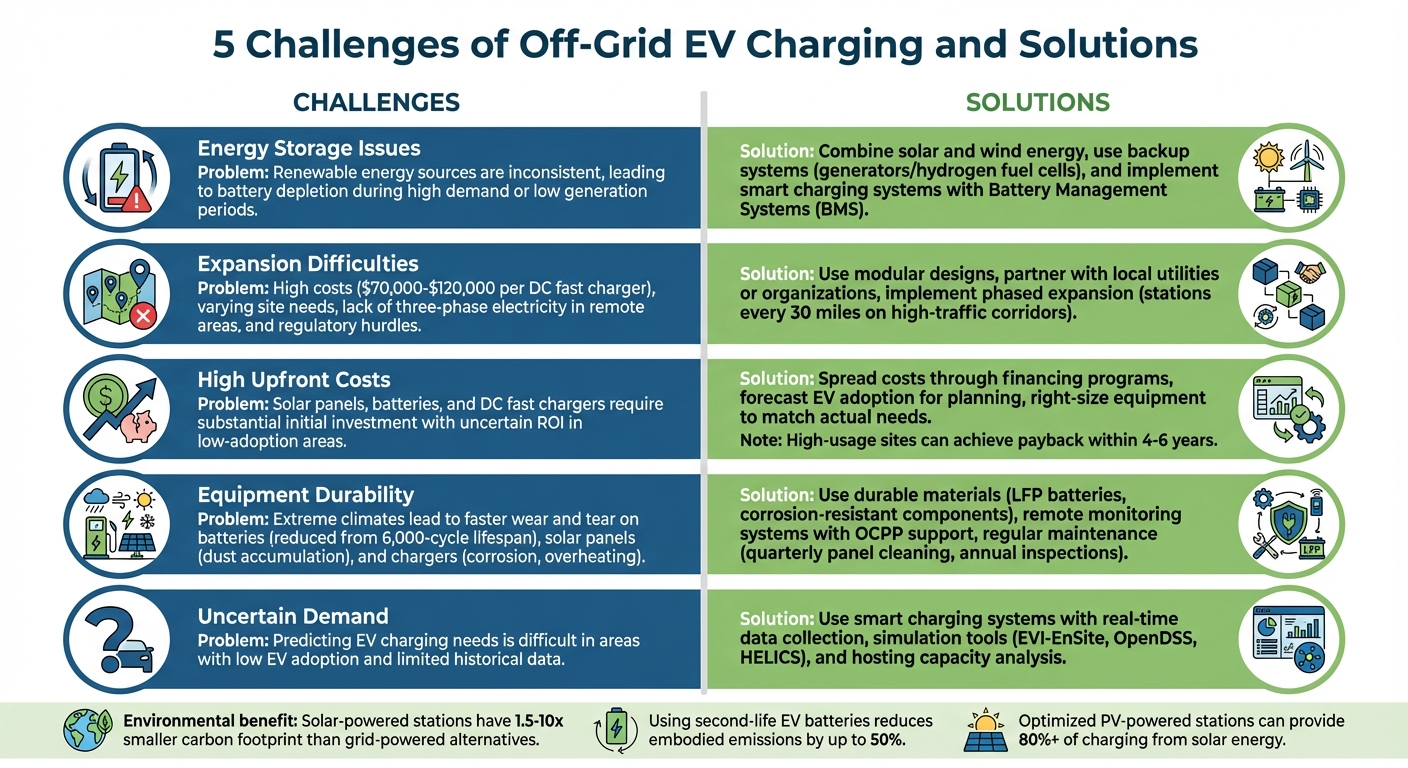
5 Off-Grid EV Charging Challenges and Solutions Overview
Overcoming Challenges to Charging an EV Off-Grid
Challenge 1: Not Enough Energy Storage
Off-grid stations depend on batteries to store energy from renewable sources like solar panels and wind turbines. Since these energy sources are naturally inconsistent – solar panels work only during the day, and wind turbines depend on unpredictable weather – charging is typically limited to peak generation times. This can lead to battery depletion during periods of high demand or low energy generation, causing station downtime.
"The main drawback of direct charging is the variability of solar energy, which may not provide a continuous and reliable charge." – Springer Review
While increasing battery capacity might seem like a straightforward fix, it’s often not practical. The high cost of Energy Storage Units (ESUs) and the need to oversize systems to handle fluctuating vehicle demands make this approach challenging. These obstacles call for smarter solutions to ensure a steady charging supply.
Solution: Combine Multiple Energy Sources
Hybrid systems offer a way forward by pairing solar power with wind energy, which can fill in during times of low solar output. This approach helps stabilize energy supply and reduces the need for oversized batteries. For added reliability, backup options like generators or hydrogen fuel cells can step in during extended periods of low energy generation.
Smart charging systems also play a crucial role. These systems adjust charging speeds based on real-time solar availability and the battery’s state-of-charge, helping to prevent total system shutdowns. Additionally, a Battery Management System (BMS) monitors battery health, ensuring longer lifespans and better overall performance.
Challenge 2: Difficulty Expanding to New Locations
Setting up charging stations in remote areas comes with a mix of technical hurdles and hefty costs. Each potential site brings unique challenges, from varying solar energy potential to differing electrical infrastructure needs. For example, areas with lower solar potential require tailored energy management solutions. On top of that, the price tag for hardware and installation of DC fast chargers ranges from $70,000 to $120,000 per unit. When stations need to be placed every 30 miles along rural highways to reduce range anxiety, these costs can skyrocket. This makes both the initial setup and long-term operation more complicated.
Another issue is the lack of three-phase electricity in many remote locations. Without this essential infrastructure, expensive electrical upgrades are often required to support new charging stations. Regulatory challenges add another layer of complexity, especially when integrating solar panels into microgrid-based stations. The absence of consistent standards for solar photovoltaic (PV) integration further complicates the process.
"Standardizing the approach to integrating PV into existing and new EV charging infrastructures [is critical] for ensuring system reliability and public confidence in PV-powered solutions." – IEA-PVPS
What works in sunny, desert-like conditions might not translate well to areas with unpredictable weather, making it hard to apply a universal design for charging stations across different regions.
Solution: Use Modular Designs and Partner with Others
One way to tackle these challenges is by using modular systems that allow for gradual scaling. Solar PV systems are naturally modular, which means you can start small – installing just a few charging units – and expand as demand grows. This approach helps keep initial costs lower. DC-microgrid-based architectures can also simplify the process by reducing power conversion stages, which cuts down on energy losses compared to traditional AC-based setups.
Building partnerships is another effective strategy. For instance, programs in Vermont and Oklahoma show how collaboration can reduce costs and make installation easier. In Vermont, Green Mountain Power offers a workplace charging program that includes Level 2 chargers, installation, and maintenance. Businesses pay for the service through a low-interest loan, with monthly charges starting at $45 added to their utility bills. Meanwhile, the Cherokee Nation in Oklahoma teamed up with a regional Clean Cities coalition to install a solar canopy. This setup not only provides free EV charging but also generates extra electricity to power nearby public buildings, maximizing the system’s value.
Phased expansion is particularly effective in underserved areas. Start by focusing on high-traffic corridors, installing Level 3 fast chargers every 30 miles. As EV adoption grows, fill in the gaps with additional stations. Working closely with local utilities early in the process can also help identify sites with sufficient grid capacity, avoiding the need for costly upgrades. By combining modular technology with strategic public-private partnerships, large-scale deployment becomes a manageable, step-by-step process.
Challenge 3: High Upfront Costs
Setting up off-grid EV charging stations comes with hefty initial expenses. Solar photovoltaic systems need to be large enough to generate sufficient energy without depending on the utility grid. To keep stations operational at night or during cloudy weather, battery storage systems are a must – but they significantly increase the startup costs. Add to that the expense of specialized power electronics and installation requirements, and the total investment can quickly become daunting.
DC fast chargers, or Level 3 chargers, further amplify the cost challenges. These units, capable of recharging an EV in just 15 to 60 minutes, are much pricier than the slower Level 1 or Level 2 chargers typically found in homes. The financial burden is even harder to justify in areas with low EV adoption. When only a few people are driving electric vehicles, station operators face a tough decision: invest heavily now without a guarantee of immediate returns or risk falling behind future demand. This lack of short-term usage makes it incredibly difficult to recover costs, creating a significant financial hurdle.
"The installation and maintenance costs of conventional charging stations, including equipment, land acquisition, and electrical upgrades, present financial challenges for both private investors and public authorities." – Springer, Discover Electronics
Solution: Spread Costs Over Time with Financing
Financing programs provide a practical way to tackle these high upfront costs. Instead of requiring full payment at the start, operators can opt for payment plans or partnerships that spread expenses over months or years. Collaboration among utilities, regulators, and EV infrastructure developers is essential to streamline processes and reduce financial strain.
Another way to address the risk is by planning infrastructure based on EV adoption forecasts. By anticipating growth rather than waiting for demand to spike, operators can secure favorable financing terms and avoid costly, last-minute upgrades. Right-sizing equipment is another smart strategy – purchasing systems that match actual energy needs rather than overspending on oversized components. This avoids unnecessary expenses while ensuring the station operates efficiently.
Microgrid-based stations powered by photovoltaic systems can also lower long-term operational costs. With optimized control systems, more than 80% of EV charging can be powered by solar energy, reducing reliance on costly grid electricity. Plus, PV-powered stations have a carbon footprint that’s 1.5 to 10 times smaller than traditional grid-powered setups. By combining modular deployment, strategic partnerships, and thoughtful planning, operators can turn what seems like an overwhelming investment into a manageable and phased financial approach.
sbb-itb-99e19e3
Challenge 4: Equipment Failures in Tough Climates
Off-grid stations located in extreme climates face a range of equipment issues that can lead to rapid wear and tear. For instance, intense heat speeds up battery degradation, making temperature control critical to maintaining the standard 6,000-cycle lifespan. Dust accumulation on solar panels in arid areas reduces energy production and obstructs ventilation, increasing the risk of overheating for inverters and chargers. Coastal regions, with their high humidity levels, accelerate corrosion, while strong sunlight can make displays difficult to read. In areas prone to severe weather, solar arrays require cyclone-rated mounting structures to withstand high winds. These challenges highlight the importance of proactive monitoring and rugged equipment to ensure reliable operation.
Solution: Install Monitoring Systems and Better Equipment
Overcoming these obstacles means investing in advanced monitoring systems and durable hardware. Remote monitoring plays a key role by identifying problems early. Supervisory Energy Management Systems (EMS) that support the Open Charge Point Protocol (OCPP) can provide real-time updates on system health, monitor battery charge levels, enable remote firmware updates, and even track solar panel soiling to schedule cleaning when necessary. As an expert from Pulse Energy noted:
"Most controllers publish data via OCPP or proprietary APIs, allowing you to log in, view state-of-charge, update firmware and sign out of your admin account for security." – Pulse Energy
Durable hardware is equally important. Lithium Iron Phosphate (LFP) batteries, known for their thermal stability, are better suited for extreme temperatures. High-efficiency hybrid inverters, with peak efficiencies exceeding 96%, generate less internal heat, reducing the risk of overheating. Additionally, robust designs that incorporate corrosion-resistant materials, proper ventilation, and sealed cable routing help protect sensitive components. Routine maintenance, such as quarterly solar panel cleanings and annual thermographic inspections, further boosts equipment reliability.
A notable example of these strategies in action occurred in February 2020, when Electrify America allocated $2 million to deploy 30 "EV ARC 2020" off-grid charging stations from Envision Solar across rural California. These units were engineered to handle high winds and flooding, featuring a 4.28-kilowatt sun-tracking solar array and 32 kWh of on-site energy storage to remain operational during blackouts. Giovanni Palazzo, President and CEO of Electrify America, highlighted the system’s dependability:
"The unique ability of EV ARC™ 2020 to operate independent of the electrical grid not only provides ease and flexibility in installation, but also makes it a reliable source of power."
Challenge 5: Uncertain Charging Demand
Predicting off-grid charging demand can feel like solving a puzzle without all the pieces, especially in areas with limited historical EV usage data. Without insights into local travel patterns or EV adoption rates, operators face tough decisions. Install too few stations, and you’ll have frustrated drivers stuck in long queues. Build too many, and you risk wasting money on underutilized infrastructure. This uncertainty also makes it tricky to size energy storage systems, decide on the number of charging ports, and justify investments.
One way to tackle this challenge is by using simulation tools. These tools, like hosting capacity analysis with real-world feeder data, help estimate future demand and guide decisions on station sizing. For example, platforms like EVI-EnSite (Electric Vehicle Infrastructure – Energy Estimation and Site Optimization Tool) allow researchers to test configurations for light-, medium-, and heavy-duty vehicles. These simulations consider factors like projected travel habits and local climate, helping operators optimize their setups. Hosting capacity analysis, on the other hand, identifies the maximum load a site can handle before upgrades are needed. By leveraging tools like OpenDSS or HELICS (Hierarchical Engine for Large-Scale Infrastructure Co-Simulation), operators can model future charging scenarios and evaluate how existing infrastructure – like transformers or power lines – will hold up as demand grows. The National Renewable Energy Laboratory (NREL) highlights this approach, stating, "Identifying and de-risking technology solutions supports the nation’s energy providers in planning for future loads and impacts". These pre-deployment evaluations are crucial for ensuring systems are ready to handle demand as it evolves.
Solution: Use Smart Charging and Collect Usage Data
Smart charging systems offer a practical way to reduce uncertainty. These systems not only manage power distribution in real time but also collect valuable usage data that can guide future planning. Smart charging adjusts demand dynamically, aligning it with periods of high renewable energy output or when vehicles are connected for extended periods. As NREL puts it, "Effective smart charging seamlessly meets the needs of EV drivers and the grid", and they emphasize that "Developing controls that leverage this flexibility will be critical to ensuring a reliable, affordable, and resilient energy system". By combining real-time management with data collection, smart charging lays the groundwork for better-informed decisions and a more adaptable energy grid.
Conclusion: Making Off-Grid EV Charging Work
Off-grid EV charging faces several hurdles: limited energy storage, slow scalability, high upfront costs, equipment reliability in harsh environments, and fluctuating demand. However, solutions like combining solar power with wind or hydrogen fuel cells ensure round-the-clock energy. Modular designs and strategic partnerships dramatically cut deployment times, while financing options make the initial costs more manageable. Advanced monitoring systems improve reliability, and smart charging systems using data insights help operators adapt and plan for future growth.
These advancements go beyond just solving technical issues – they create new opportunities in areas without reliable grid access. Off-grid systems enable the development of modern EV charging infrastructure without waiting for grid expansion. In regions rich in renewable resources, solar-powered stations reduce dependence on biomass. Plus, the environmental benefits are clear: solar-powered charging stations have a carbon footprint 1.5 to 10 times smaller than traditional grid-powered alternatives.
The economic case is equally compelling. High-usage sites can achieve payback within 4–6 years. Using second-life EV batteries for energy storage slashes embodied emissions by up to 50%. As the IEEE Open Journal of the Industrial Electronics Society highlights:
"The mass adoption of electric vehicles (EVs) in urban and rural areas of various countries lies in seamless, widespread, and fast charging solutions".
Off-grid charging offers a major advantage, sidestepping unreliable grids and lengthy connection delays. This approach allows regions like Africa to leap ahead, building decentralized, renewable-powered charging networks. The combination of emerging technologies, economic feasibility, and environmental benefits makes off-grid charging a practical and forward-thinking solution. To make it work, coordinated efforts are key: tailoring systems to local needs, adopting smart energy management, and preparing institutions for this transition. Together, these strategies can lay the groundwork for a resilient and sustainable EV future.
FAQs
What are the best ways to manage energy storage for off-grid EV charging stations?
Managing energy storage for off-grid EV charging stations requires a thoughtful mix of solar power and battery storage systems. During the day, solar panels generate electricity, and any surplus energy gets stored in lithium-ion batteries. This stored power can then be used at night or when the weather isn’t sunny. Incorporating smart energy management systems helps optimize charging cycles, avoid overcharging or depleting batteries, and ultimately extends their lifespan.
For extra dependability, hybrid setups can combine batteries with backup generators or additional renewable sources. These systems are especially useful during times of low solar output or when demand surges. The key is to size the storage capacity correctly and rely on intelligent controls to strike a balance between cost, efficiency, and scalability. This approach ensures EV charging remains consistent and reliable, even in remote locations.
How can the high upfront costs of setting up off-grid EV charging stations be reduced?
Reducing the upfront costs of off-grid EV charging stations involves a mix of smart planning and innovative solutions. One practical method is combining solar power systems with energy storage, like batteries. By tapping into solar energy, operators can cut down on long-term energy costs and reduce dependence on expensive grid connections. Pairing this setup with smart energy management systems enhances efficiency even further.
Another important step is conducting feasibility studies before starting a project. These studies can pinpoint the best designs and technologies for a specific location, ensuring resources are used wisely and unnecessary costs are avoided. On top of that, exploring government grants, forming public-private partnerships, or using creative financing models can help make off-grid EV charging infrastructure more affordable and easier to implement.
How do smart charging systems help manage unpredictable EV charging demand?
Smart charging systems are designed to tackle the unpredictable nature of EV charging demand. By leveraging real-time data and advanced algorithms, these systems fine-tune charging patterns based on key factors like driver habits, weather conditions, and the current capacity of the power grid. The result? Smarter energy use and less strain on the grid during high-demand periods.
These systems don’t just stop at optimizing energy use – they actively adjust charging rates and schedules to maintain grid stability. This adaptability also makes it easier to incorporate renewable energy sources into the mix. On top of that, smart charging helps cut down energy costs and boosts the reliability of off-grid EV charging setups. It’s a forward-thinking approach to managing energy in a way that benefits both the environment and the infrastructure.