
 Thabo Nkosi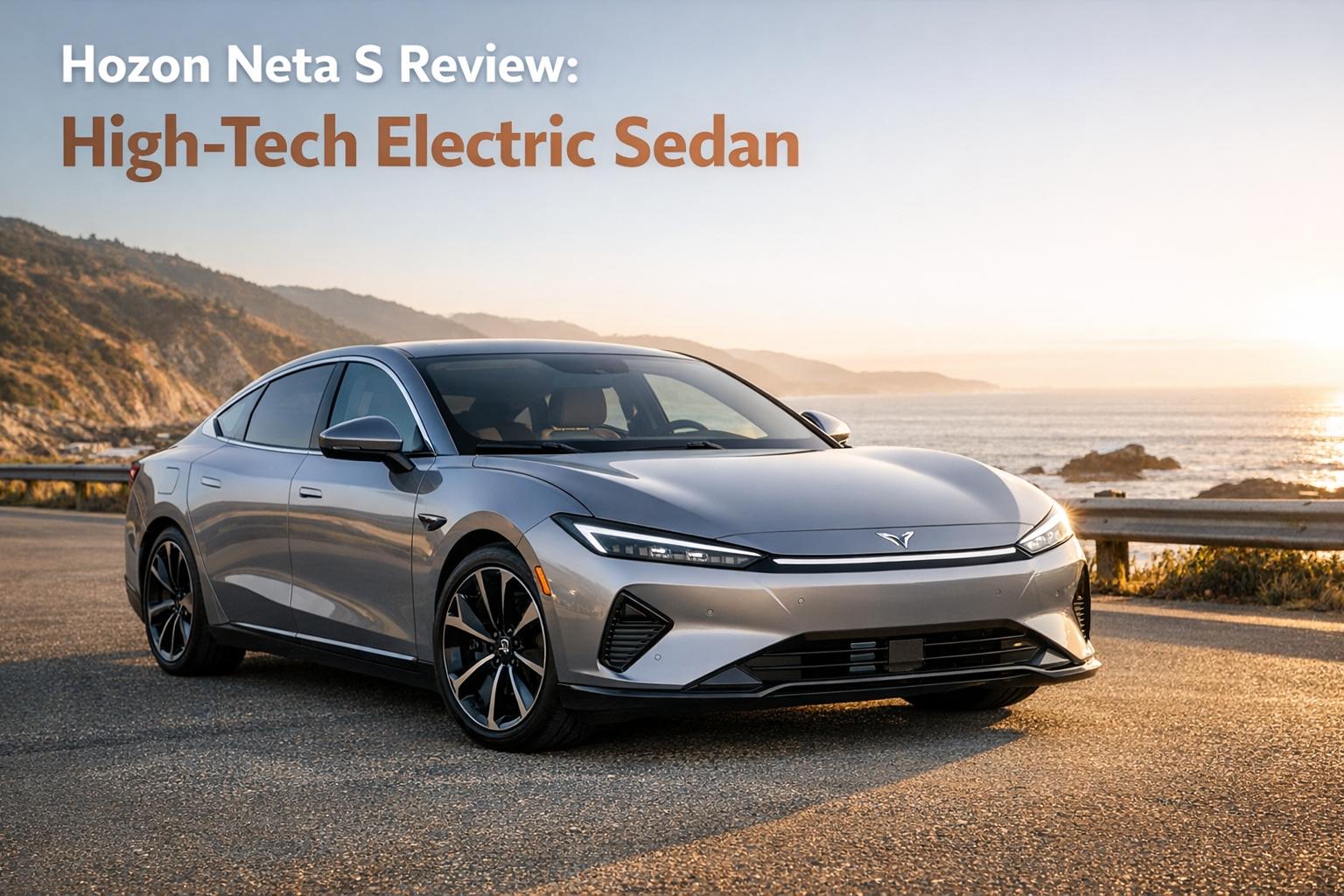
The Hozon Neta S is a feature-packed electric sedan that delivers impressive range, advanced tech, and competitive pricing. Starting at $40,150, it undercuts rivals like the Tesla Model 3 ($56,990) and BYD Seal ($61,000) while offering standout features:
- Range: Up to 404 miles (electric) or 745 miles (EREV variant).
- Performance: 0-62 mph in 3.9 seconds with 462 hp.
- Tech: 17.6-inch touchscreen, AR head-up display, and Level 4 autonomous driving hardware.
- Price Advantage: $16,840 less than the Tesla Model 3 and $20,850 less than the BYD Seal.
While the Neta S offers longer range and advanced features at a lower price, the Tesla Model 3 excels in acceleration (3.1 seconds to 62 mph) and charging speed, while the BYD Seal prioritizes comfort and interior quality. For buyers seeking affordability and cutting-edge features, the Neta S stands out.
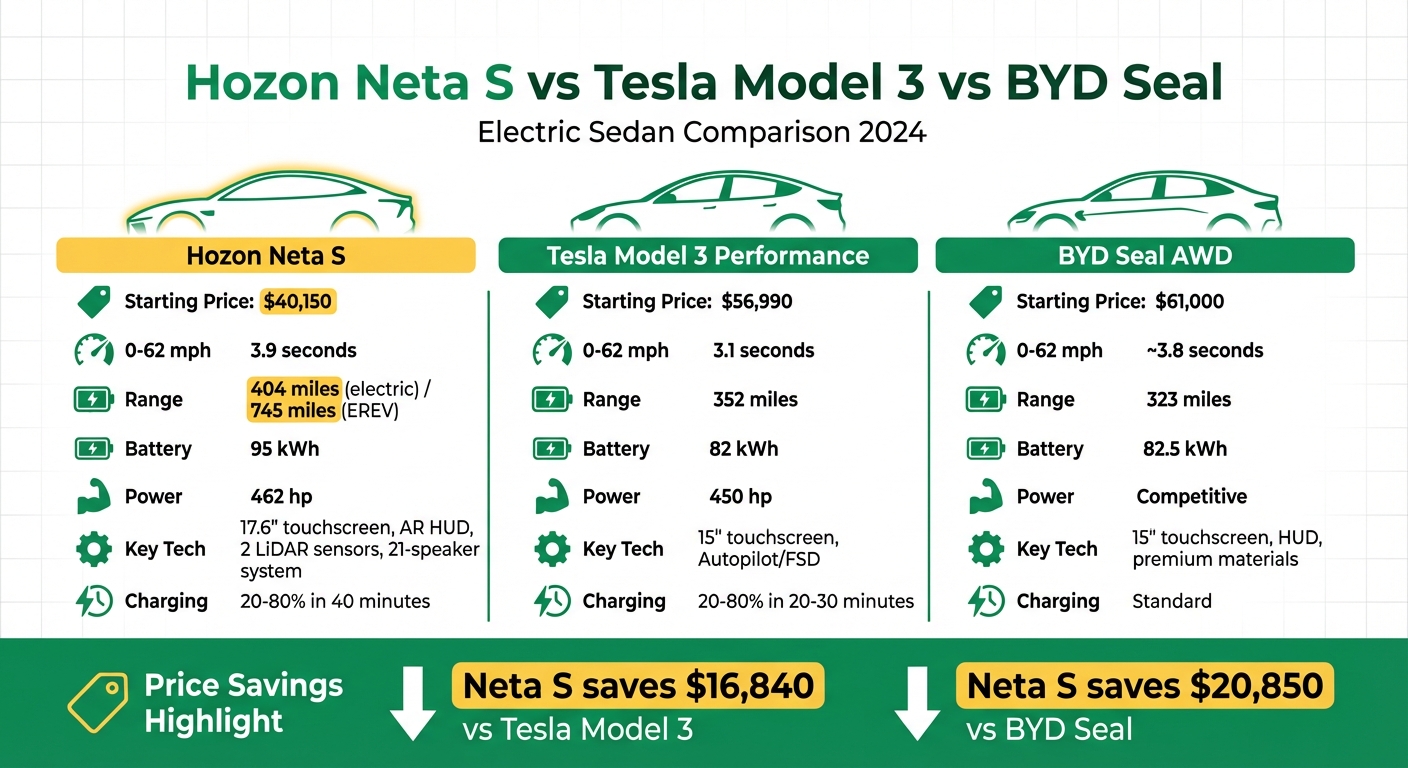
Hozon Neta S vs Tesla Model 3 vs BYD Seal: Price, Performance & Range Comparison
Neta S Driven – Is this the Best Value Chinese EV of All?
1. Tesla Model 3
The Tesla Model 3 Performance has carved out a strong position in the electric sedan market. With a starting price of $56,990, it sits at a higher price point than its competitor in this review, but it delivers a driving experience that many enthusiasts consider unmatched.
Performance
When it comes to acceleration, the Model 3 Performance goes from 0 to 62 mph in just 3.1 seconds, outpacing the Neta S, which takes 3.9 seconds. Tesla also leads in charging speed, with its battery charging from 20% to 80% in 20–30 minutes, compared to the Neta S’s 40-minute window. In terms of horsepower, the Neta S edges out slightly with 462 hp versus Tesla’s 450 hp. However, the Model 3 stands out for its handling and sporty driving dynamics. Its sharp steering and engaging ride give it an edge over the comfort-focused Neta S. As Mark Andrews from Carsales noted:
"The Neta S… is not in the same class dynamically as the BYD Seal… It’s not too bad, but just doesn’t handle as keenly and is more geared up for comfort."
Battery and Range
The Neta S features a larger 95 kWh battery, compared to the Model 3’s 75–82 kWh pack. This gives the Neta S a range advantage, offering up to 404 miles on a single charge, while the Model 3 Performance delivers around 352 miles. Additionally, the Neta S is available in an Extended Range Electric Vehicle (EREV) version, which combines electric and gas power for a total range of up to 745 miles . This makes the Neta S particularly appealing for areas where charging stations might be sparse.
Technological Features
Tesla’s tech ecosystem remains a strong selling point. The Model 3 is equipped with a 15-inch touchscreen that controls nearly all vehicle functions. Its Autopilot system offers smooth, semi-autonomous driving, including features like automatic lane changes. Tesla also includes entertainment options such as Netflix and YouTube for use during charging stops, though it lacks support for Apple CarPlay or Android Auto.
On the other hand, the Hozon Neta S boasts a larger 17.6-inch portrait touchscreen, a 12.3-inch passenger display, and hardware designed for Level 4 autonomous driving, including dual Lidar sensors . The Neta S also ups the ante with a powerful 21-speaker sound system that delivers 1,216 watts of output.
Price
The price gap between the two is considerable. The Tesla Model 3 Performance starts at $56,990, while the Neta S begins at around $40,150 – a difference of $16,840. Tesla justifies its higher price with quicker acceleration, access to its extensive Supercharger network, and more refined driving dynamics. However, for those seeking a longer range, larger battery, and cutting-edge tech at a lower cost, the Neta S is an appealing option. Next, we’ll take a closer look at how the Neta S compares to the BYD Seal.
2. BYD Seal
The BYD Seal steps into the electric sedan market as a strong contender, vying for attention in the same space as the Neta S. While both aim at similar buyers, their approaches to performance and user experience set them apart. Let’s take a closer look at what makes the Seal stand out.
Performance
The BYD Seal, like the Neta S, strikes a balance between performance and everyday practicality. Its dual-motor AWD version delivers performance on par with the Tesla Model 3, prioritizing comfort over sporty handling. On the other hand, the Neta S boasts a quicker 0–62 mph time of 3.9 seconds, powered by a 462 hp motor.
Experts have pointed out the Seal’s softer suspension as a key differentiator. As Jamie Edkins of Carwow remarked:
"The BYD Seal feels more vague and less composed than the Model 3… The softer suspension does make it more comfortable over bumps".
In terms of usability, the Seal features a more traditional setup with physical stalks and a conventional drive selector, which many drivers find more intuitive compared to the Neta S’s minimalist control layout.
Battery and Range
When it comes to range, the BYD Seal offers solid numbers. The dual-motor AWD version provides a range of 323 miles, while the single-motor RWD variant stretches slightly further to 354 miles. However, the Neta S edges ahead with its 404-mile electric range and an extended-range EREV option that pushes up to approximately 684 miles.
Technological Features
The Seal’s tech package includes a digital driver’s display, a head-up display, and a 15-inch central touchscreen. While this setup is impressive, it doesn’t quite match the Neta S’s triple-screen configuration, which features a 17.6-inch central display, a 13.3-inch driver’s screen, and a 12.3-inch passenger screen.
Additionally, the Neta S comes equipped with an advanced autonomous driving suite, complete with three LiDAR sensors, five millimeter-wave radars, and 11 cameras. In contrast, the Seal focuses on delivering a premium cabin experience with high-quality materials and a user-friendly (though occasionally complex) infotainment system. These differences highlight how the two vehicles cater to slightly different priorities.
Price
The BYD Seal’s pricing starts at around $57,600 for the RWD version and $61,000 for the AWD model, positioning it significantly higher than the Neta S, which starts at approximately $40,150. While the Seal justifies its premium price tag with refined materials and build quality, those prioritizing cutting-edge tech and longer range may find the Neta S more appealing.
sbb-itb-99e19e3
Advantages and Disadvantages
Here’s a breakdown of the key strengths and limitations to help you understand how the Hozon Neta S stacks up against the Tesla Model 3 and BYD Seal.
The Neta S shines as a cost-effective option, offering a price advantage of about $16,840 compared to the Model 3 and $20,850 compared to the Seal. Despite its lower price, the Neta S delivers an impressive 404-mile range, outclassing both rivals. It also comes packed with advanced features like a triple-screen setup (including a 17.6-inch central display), an AR head-up display, a 21-speaker audio system with 1,216W output, and cutting-edge autonomous driving hardware featuring 2 LiDAR sensors, 13 cameras, and 5 radars capable of supporting Level 4 automation.
On the other hand, the Tesla Model 3 Performance stands out for its raw speed, hitting 0–62 mph in just 3.1 seconds, compared to the Neta S’s 3.9 seconds. Tesla also boasts a well-established charging network and quicker charging times, making it a strong choice for long-distance travelers. Meanwhile, the BYD Seal distinguishes itself with a smoother ride, thanks to its softer suspension, and a more luxurious interior that uses high-quality materials.
| Category | Hozon Neta S | Tesla Model 3 Performance | BYD Seal AWD |
|---|---|---|---|
| Starting Price | ~$40,150 | ~$56,990 | ~$61,000 |
| 0–62 mph | 3.9 seconds | 3.1 seconds | ~3.8 seconds |
| Range | 404 miles | 352 miles | 323 miles |
| Battery Capacity | 95 kWh | ~82 kWh | ~82.5 kWh |
| Key Tech | 3 screens, AR-HUD, 2 LiDAR, 21 speakers | 15" screen, Autopilot/FSD | 15" screen, HUD, premium materials |
| Power Output | 462 hp | 450 hp | Competitive |
The Neta S has received a user rating of 4.40 out of 5, with reviewers praising its affordability and high-tech features. That said, some have pointed out shortcomings in its interior, such as the use of piano black plastic, which can feel less premium, and the less user-friendly capacitive window switches. Ultimately, choosing between these vehicles depends on what matters most to the buyer – whether it’s acceleration, extended range, or a more refined driving experience.
Conclusion
The Hozon Neta S delivers an impressive combination of range, advanced technology, and affordability. With a range of 404 miles and premium features at a price point that undercuts many competitors, it’s carving out a strong position in the electric sedan market. As one reviewer aptly put it:
"In the realm of range, the Neta S is the benchmark for range".
What truly sets the Neta S apart is its inclusion of cutting-edge autonomous driving features, technology often found in much pricier models.
For African markets, where charging infrastructure is still evolving, the Neta S becomes even more appealing. Its extended-range (EREV) variant, which uses a gasoline engine to recharge the battery, offers a total range of up to 745 miles. This hybrid solution makes it ideal for long-distance travel in areas where charging stations are scarce or power reliability is uncertain.
Meanwhile, competitors like the Tesla Model 3 and BYD Seal bring their own strengths to the table. The Model 3 shines with its refined software, rapid charging capabilities, and a 0–62 mph time of just 3.1 seconds. The BYD Seal, on the other hand, is praised for its smooth ride and V2L (vehicle-to-load) functionality, which adds versatility for powering external devices. Together, these options highlight the growing diversity and innovation in the electric sedan market.
FAQs
What makes the Hozon Neta S a top choice among electric sedans?
The Hozon Neta S grabs attention with its impressive driving range, modern features, and competitive pricing. With the ability to cover up to 404 miles on a single charge, it’s a great choice for those who frequently travel long distances. Its sleek, aerodynamic design, highlighted by a low drag coefficient of 0.23, not only boosts efficiency but also gives it a stylish edge.
This sedan is packed with advanced technology, including a 17.6-inch central display and Level 4 autonomous driving capabilities, delivering a forward-thinking driving experience. Starting at around $40,150, the Neta S strikes a compelling balance between performance, innovation, and affordability, making it a noteworthy option in the electric vehicle market.
What is the driving range of the Hozon Neta S compared to other electric sedans?
The Hozon Neta S makes a strong impression with its remarkable driving range. The standard model delivers around 404 miles (650 km), while the extended-range version pushes that limit to an incredible 721 miles (1,160 km). This puts the Neta S ahead of many rivals, including the Tesla Model 3, which typically offers about 358 miles (576 km).
Thanks to its extended range, the Neta S is an ideal option for long-distance journeys. It reduces the need for frequent charging stops, offering drivers greater convenience and peace of mind. This impressive range underscores its strength as a performance-focused electric sedan.
What are the standout tech features of the Hozon Neta S electric sedan?
The Hozon Neta S is packed with advanced technology aimed at boosting both performance and convenience. With a 95 kWh battery, it delivers an impressive electric range of up to 404 miles on a single charge. Thanks to its dual-motor all-wheel-drive system producing 462 horsepower, the Neta S can go from 0 to 60 mph in just 3.9 seconds – offering both speed and efficiency.
It doesn’t stop there. Select models come equipped with Level 4 semi-autonomous driving features, providing cutting-edge driver assistance for a smoother, safer experience. The sedan’s sleek, aerodynamic design, boasting a drag coefficient of just 0.23, not only enhances its visual appeal but also improves efficiency and extends its range. With these features, the Neta S is a standout option for those who value high-performance and forward-thinking electric vehicles.