

 Thabo Nkosi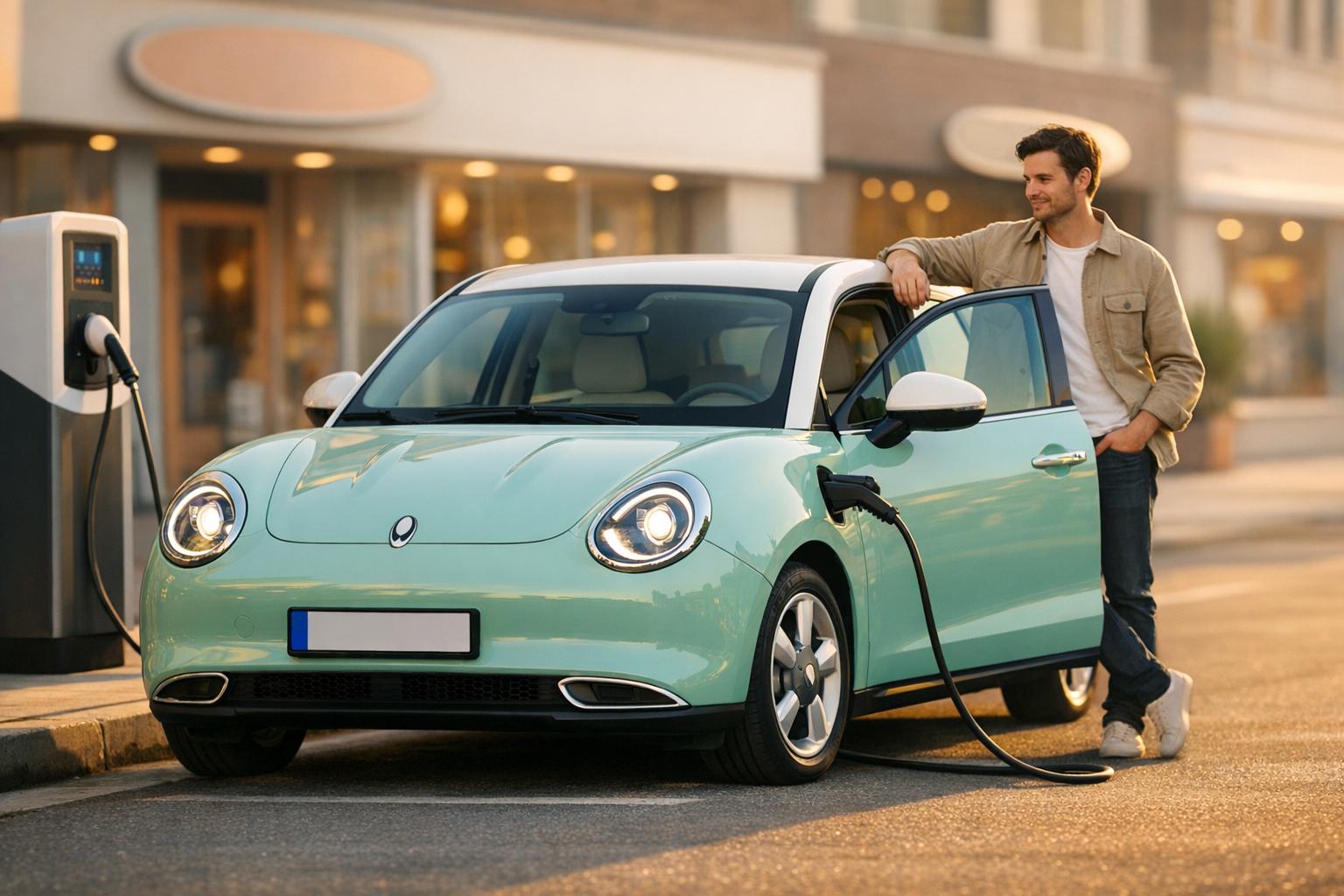
The Ora Funky Cat is a retro-inspired electric vehicle (EV) priced around $40,000. It blends vintage design with modern features, offering two battery options: a 48 kWh version with a range of 193 miles and a 63 kWh version extending to 261 miles. Both deliver 171 horsepower, 0–62 mph in 8.3 seconds, and come with a five-star Euro NCAP safety rating.
Key Highlights:
- 48 kWh Model: $40,000, WLTP range of 193 miles, charges from 15% to 80% in 42–45 minutes.
- 63 kWh Model: $4,000 more, WLTP range of 260 miles, charges in 50–60 minutes.
- Interior: Premium cabin with dual 10.25-inch screens, retro-styled details, and voice assistant.
- Warranty: 5-year unlimited mileage and 8-year/100,000-mile battery coverage.
While the Funky Cat impresses with its looks, safety, and features, charging speeds and limited trunk space (228 liters) may be drawbacks. It’s a great option for urban drivers prioritizing style and practicality.
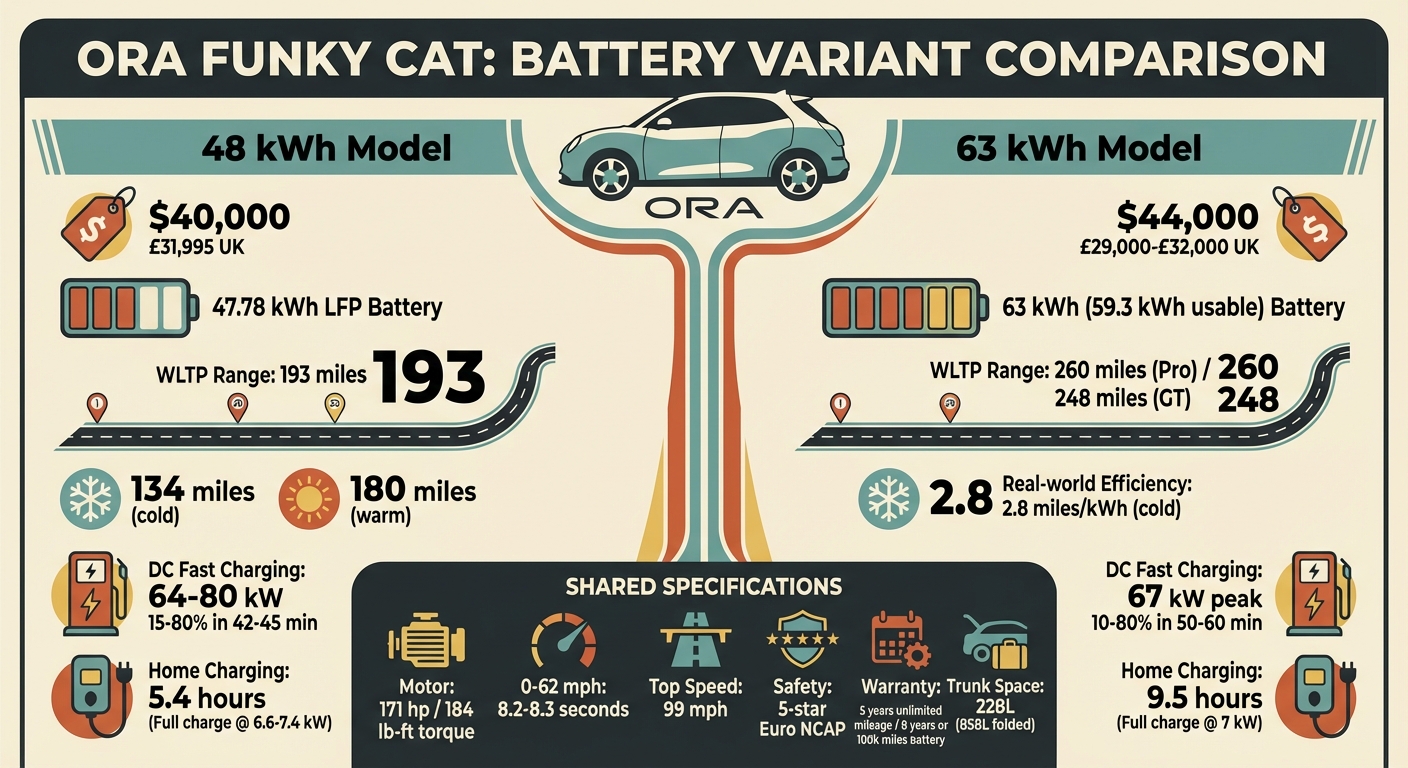
Ora Funky Cat 48 kWh vs 63 kWh Battery Comparison
1. Ora Funky Cat 48 kWh
Battery Range
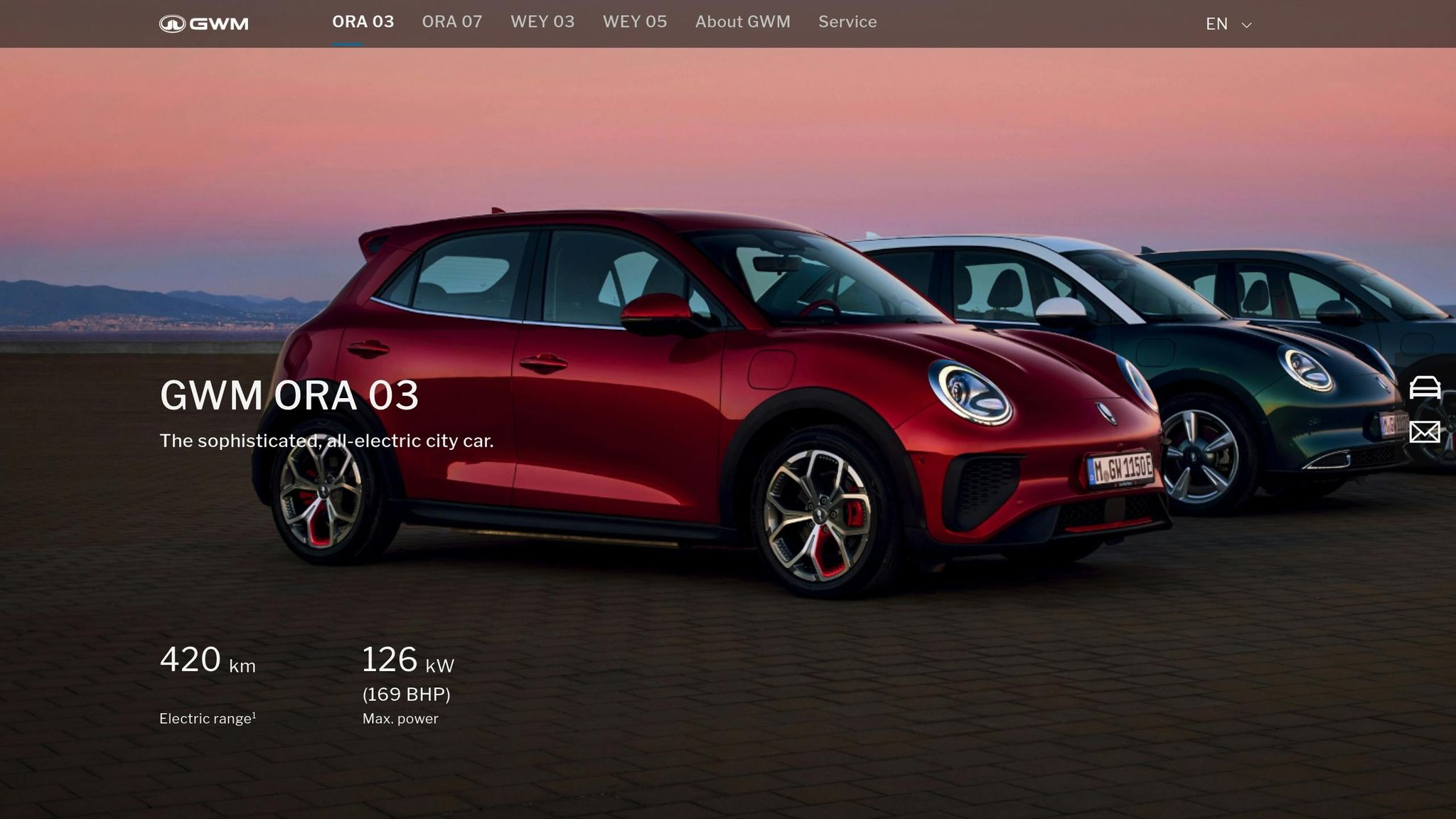
The Ora Funky Cat 48 kWh model is equipped with a 47.78 kWh lithium-iron-phosphate battery, offering a WLTP-certified range of 193 miles. However, in everyday driving conditions, the range can vary significantly – expect around 134 miles in colder weather and up to 180 miles when temperatures are warmer. This makes it a practical option for daily commutes and city driving, but longer journeys may require more frequent charging stops.
Performance
Under the hood, the Funky Cat features a front-mounted electric motor delivering 171 hp and 184 lb-ft of torque. This setup allows the car to go from 0 to 62 mph in 8.2 to 8.3 seconds, with a top speed of 99 mph. It performs well in urban settings, feeling lively and responsive at stoplights, which is ideal for stop-and-go traffic. However, the tires can struggle with the instant torque when accelerating out of junctions, causing the front wheels to lose traction. The steering, while very light and adjustable via the touchscreen, has been described as "slow" and may require extra effort for sharper turns.
Charging Speed
Charging is a bit of a weak spot for the 48 kWh variant. The car supports DC fast-charging at rates of 64–80 kW, which is slower compared to some competitors. Charging from 15% to 80% using a DC fast charger takes approximately 42–45 minutes. For home charging, the car supports 6.6 kW or 7.4 kW rates, taking about 5.4 hours to fully charge – even though it has an 11 kW AC capability. As Mike Duff from Car and Driver puts it:
One weakness is fast-charging, as the Funky Cat only supports DC fast-charge rates up to 80 kilowatts, well below punchier rivals.
Price
In the UK, the 48 kWh First Edition starts at £31,995, which is about $40,000. Meanwhile, in Australia, the 2023 run-out models were priced from $35,990 before on-road costs. The Funky Cat also comes with a five-year unlimited mileage warranty and an eight-year/100,000-mile battery warranty for added peace of mind.
2. Ora Funky Cat 63 kWh
Battery Range
The 63 kWh battery pack is a step up from the base model, offering more driving range. In the Pro trim, it delivers a WLTP-certified range of about 260 miles, while the GT trim provides slightly less at 248 miles – likely due to the added standard features in this version. The usable capacity of this battery is around 59.3 kWh, and it adds 88 lbs to the car’s weight compared to the 48 kWh version. However, colder weather can impact efficiency, especially without the GT trim’s heat pump, reducing real-world performance to around 2.8 miles per kWh. Despite the added weight, the larger battery complements the vehicle’s overall design and functionality.
Performance
The performance of the 63 kWh model remains consistent with the 48 kWh version, as both share the same motor. This means acceleration and top speed figures are identical. However, traction can be a challenge in wet conditions. The Giti tires, equipped as standard, may struggle with grip when accelerating aggressively. As Dan Trent from Goodwood Road & Racing puts it:
Mashing the throttle on a wet surface unleashes a surprising amount of wheelspin before the traction control wakes up.
Charging Speed
When it comes to charging, the 63 kWh battery supports DC fast-charging at a peak rate of 67 kW. Charging from 10% to 80% takes about 50–60 minutes, which is slower than some competitors. For home charging, using a standard 7 kW wallbox, a full charge from empty will take approximately 9.5 hours.
Price
In the UK, the 63 kWh Pro trim is priced at just under £29,000 (about $36,300), while the GT trim costs around £32,000 (roughly $40,000). In Australia, the Long Range variant is available for $48,490 to $52,403 AUD, depending on the state. It’s worth noting that the GT trim is the only one equipped with a standard heat pump, which helps maintain range during colder weather.
GWM Ora Funky Cat First Edition 2023 Review (Ora 03)
sbb-itb-99e19e3
Pros and Cons
The 48 kWh and 63 kWh versions of the Ora Funky Cat each come with their own set of benefits and drawbacks, largely influenced by their battery capacities. Here’s how they stack up:
| Feature | 48 kWh Variant | 63 kWh Variant |
|---|---|---|
| Pros | – Lower starting price, around $40,000 – WLTP range of 193 miles, perfect for city commutes – Faster charging time (about 42 minutes from 15–80%) – 5-star Euro NCAP safety rating, with a 93% score for safety assists |
– Longer WLTP range of 263 miles, great for extended trips – Premium interior and solid safety features |
| Cons | – Shorter range, requiring more frequent charging in suburban areas – DC charging limited to 64–80 kW – Small trunk space at 228 liters |
– Higher price compared to the 48 kWh version – Slightly longer charging time (roughly 48 minutes from 15–80%) – Safety systems can feel overly intrusive and difficult to turn off |
While the trunk space is compact at 228 liters, folding the seats increases storage to 858 liters, offering more room when needed for larger loads.
As Mike Duff from Car and Driver observed:
The Ora Funky Cat feels like it’s 90 percent of a car. The basics are all good, but the details still require more polish.
This highlights the car’s mix of strengths and areas that could use a bit more refinement.
Conclusion
The Ora Funky Cat comes with two battery options to suit different driving needs. The 48 kWh version, priced at approximately $40,000, is perfect for city driving, offering a range of 193 miles. Its LFP battery is cobalt-free, emphasizing durability and long-term reliability.
For those who need to cover longer distances or live in areas with fewer charging stations, the 63 kWh version is a better fit. With an extended range of about 260 miles, it provides added reassurance for suburban and inter-city travel. This upgrade costs around $4,000 more than the base model but helps reduce concerns about running out of charge on longer trips. Both battery options deliver identical performance.
The Funky Cat also boasts a five-star Euro NCAP safety rating and comes packed with generous standard features. However, potential buyers should weigh its compact 228-liter trunk space and the sometimes overbearing driver-assist systems. It’s an excellent choice for daily commutes and small families but might not suit those needing ample cargo space or a more understated approach to driver assistance.
Ultimately, your decision will depend on your driving habits and access to charging. If you’re a city driver with predictable routines, the 48 kWh model offers great value. On the other hand, if you frequently travel longer distances, the 63 kWh version’s extended range might be worth the investment. Whichever you choose, the Ora Funky Cat blends retro-inspired design with modern technology to meet a variety of driving needs.
FAQs
What’s the difference between the 48 kWh and 63 kWh versions of the Ora Funky Cat?
The 48 kWh Ora Funky Cat is fitted with a smaller battery, delivering an estimated range of around 193 miles per charge. This makes it a budget-friendly choice for those who prioritize affordability.
If you’re looking for a longer driving range, the 63 kWh model steps in with a larger battery. While the exact mileage can vary, it offers more distance between charges, though it comes with a higher price tag.
Both versions cater to urban and suburban lifestyles, combining practicality with a retro-inspired design. Deciding between the two boils down to how far you need to travel on a single charge and what fits your budget.
How fast does the Ora Funky Cat charge compared to other electric vehicles?
The Ora Funky Cat can charge from 0% to 80% in around 43 minutes when using a 100 kW DC fast charger. For those charging at home with a standard setup, a full charge takes just over 7 hours. That said, the car’s onboard DC charging tops out at 61 kW, which is slower compared to many newer electric vehicles capable of 100 kW or more.
Although its fast-charging speed doesn’t match higher-end EVs that can hit 150 kW or beyond, the Funky Cat still delivers a convenient and efficient charging experience for home use. It performs on par with other budget-friendly EVs, making it a practical option for those focused on affordability and everyday functionality.
Is the Ora Funky Cat a good choice for long road trips based on its range and charging speed?
The Ora Funky Cat provides a driving range of 160–193 miles and supports DC fast charging with a peak rate of 61 kW. These specs make it a practical choice for daily commutes or shorter trips. However, it might not be the best option for long-distance journeys, particularly in regions where charging stations are scarce. On extended road trips, the need for frequent stops and longer charging sessions could become inconvenient. This makes the Funky Cat a better fit for city or suburban driving.