
 Thabo Nkosi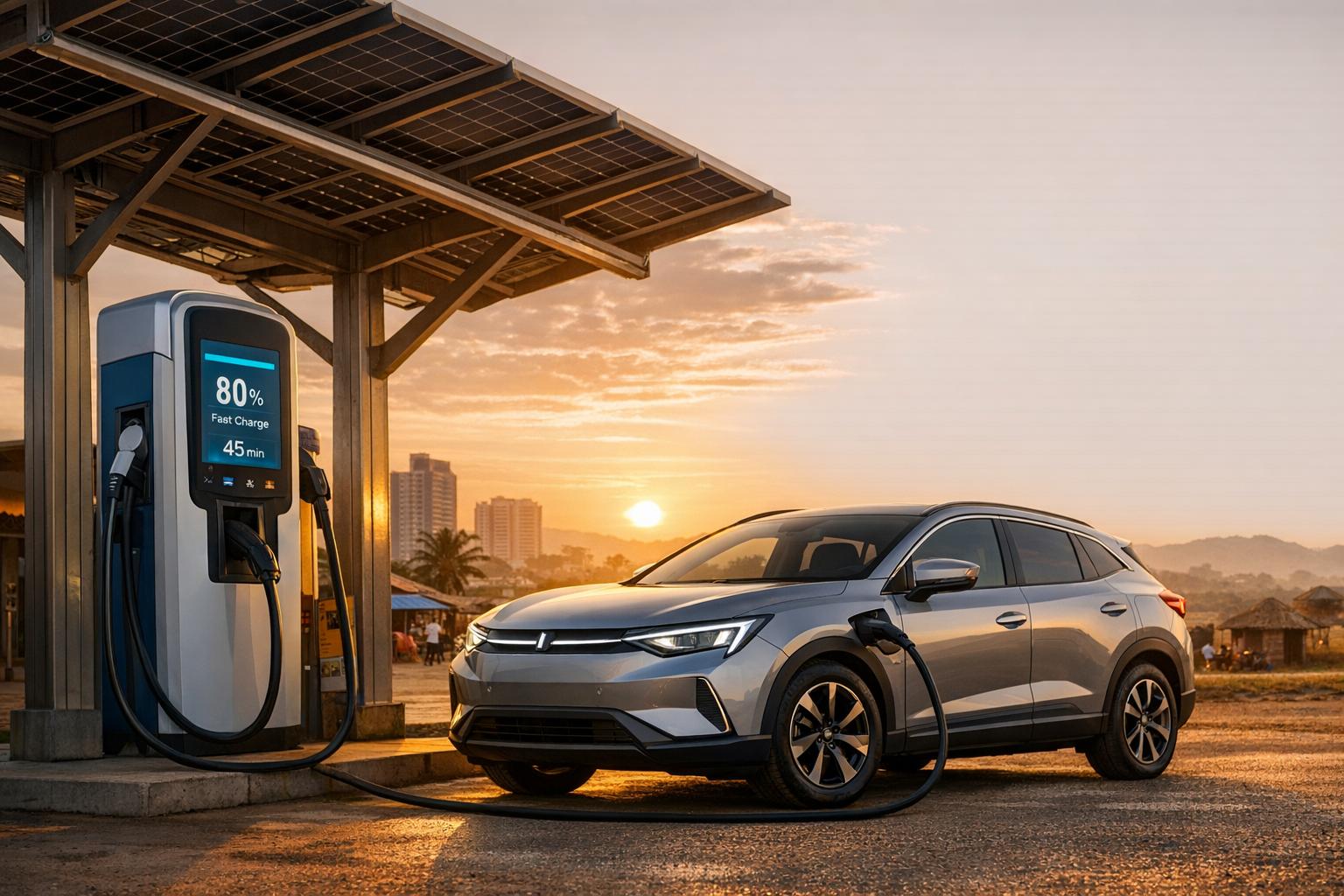
Electric vehicles (EVs) in Africa are growing fast, but buyers prioritize three key features: range, charging options, and warranties. These preferences reflect Africa’s unique challenges, like long distances between cities, limited charging infrastructure, and tough driving conditions.
Here’s what stands out:
- Range: Long driving ranges are critical to address "range anxiety", especially for commercial operators covering high-mileage routes.
- Charging: Fast and reliable charging infrastructure is essential, with solutions like DC fast chargers and backup options for areas with power instability.
- Warranty: Buyers demand strong warranties for batteries and components to ensure durability and reduce long-term costs.
Key Models in 2026:
- BMW iX3: Luxury EV with a range of 421–500 miles, 400 kW fast charging, and premium warranties.
- Chery iCar V23: Affordable EV with flexible battery sizes, a range extender option, and a 10-year battery warranty.
- EV24.africa Lineup: Includes Tesla, BYD, and others, offering ultra-fast charging and reliable technology.
Quick Comparison:
| Feature | BMW iX3 | Chery iCar V23 | EV24.africa Models |
|---|---|---|---|
| Range | 421–500 miles | 187–311 miles | 248+ miles (fast charge) |
| Charging | 400 kW fast charging | DC fast + range extender | Ultra-fast (400 km in 5 min) |
| Price | ~$60,000 | $12,350–$19,200 | Mid-to-premium pricing |
| Warranty | 8 years/100,000 miles | 10-year battery coverage | Covers key EV components |
Africa’s EV market is evolving, but addressing range, charging, and warranty concerns is key to driving adoption. Manufacturers and policymakers must focus on infrastructure, affordability, and durability to make EVs a practical choice.

Top EV Models for Africa 2026: Range, Charging & Price Comparison
1,200km Range is HERE + The £4,000 Solar EV!
1. BMW iX3
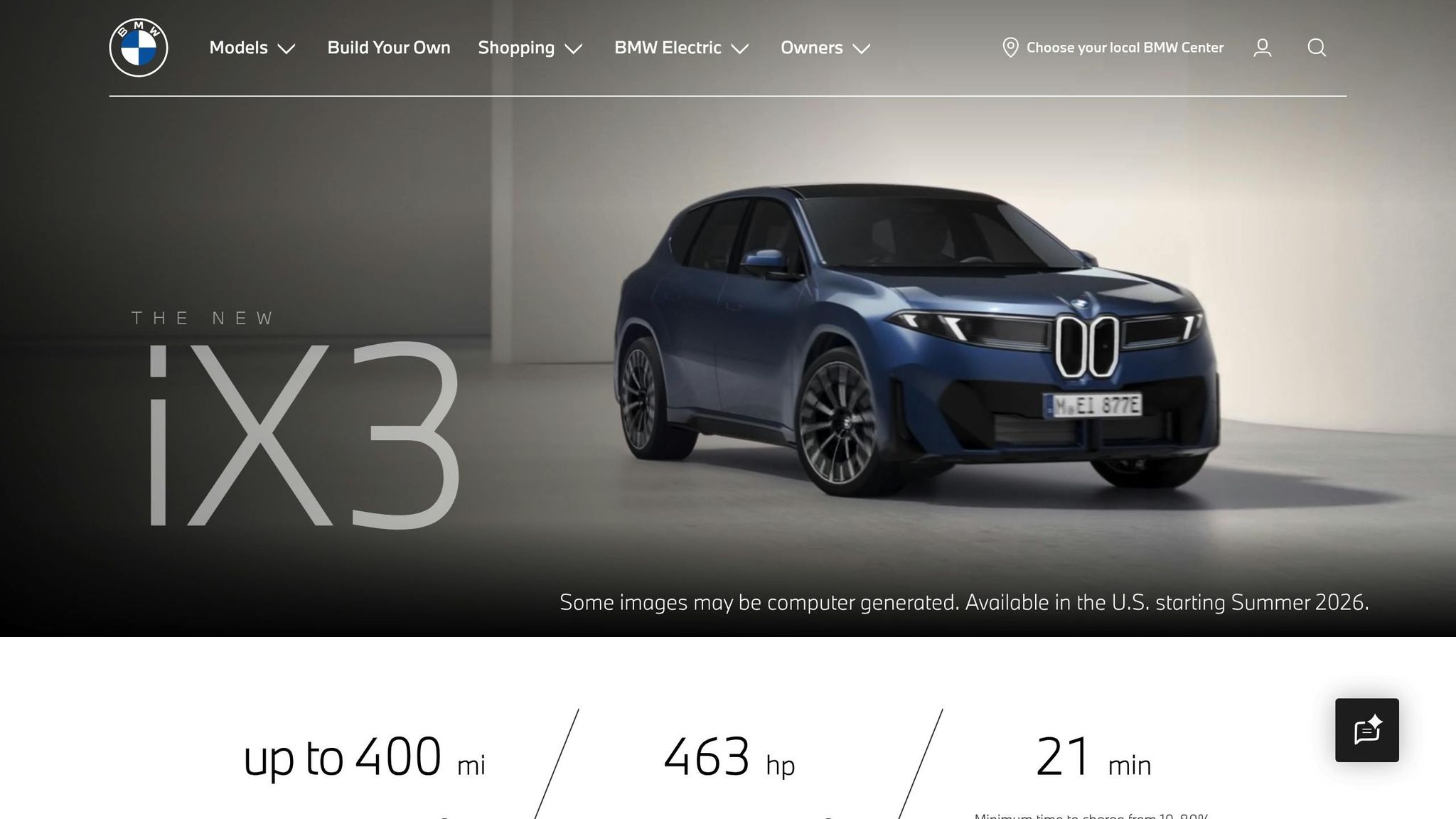
The BMW iX3 50 xDrive is designed to address key electric vehicle (EV) needs in Africa. With a WLTP electric range of 421–500 miles (678–805 km) powered by a 108.7 kWh battery, it significantly reduces concerns about running out of charge on long trips. For those moments when extra mileage is essential, the "Max Range" feature can boost the remaining range by up to 25%. It achieves this by capping the top speed at 56 mph (90 km/h) and limiting air conditioning usage. The iX3’s standout features demonstrate how it effectively tackles challenges related to range, charging, and reliability.
Driving Range
The iX3 goes beyond its impressive advertised range with advanced technology. Its sixth-generation 800-volt drive system ensures high energy density and efficient power management. The "Efficient My Mode" feature further optimizes energy use, helping to reduce consumption. In hotter regions, drivers can pre-condition the car’s interior using the My BMW App while the vehicle is still plugged in, preserving battery power for the road.
Charging Solutions
Fast and efficient charging is just as important as range. The iX3 supports 400 kW DC fast charging, allowing it to gain 231 miles (372 km) of range in just 10 minutes. A full charge from 10–80% takes only 21 minutes using high-power DC charging stations. This rapid charging capability directly addresses the challenges posed by grid instability in many parts of Africa. Additionally, the iX3 features bidirectional charging, meaning it can act as a backup power source for a home. This Vehicle-to-Home functionality requires the BMW Wallbox Professional, making it a practical solution for areas prone to power outages.
Warranty Options
BMW backs the iX3 with robust warranty coverage to ensure durability in demanding conditions. The vehicle comes with a 4-year/50,000-mile limited and powertrain warranty, while its electric components are covered for 8 years/100,000 miles. It also includes complimentary maintenance for 3 years/36,000 miles. To further enhance reliability, the "Proactive Care" service monitors the car’s status – such as tire wear and service intervals – and sends maintenance alerts through the My BMW App. Starting at an estimated $60,000 for the 2027 model, the iX3 has earned a 9.5/10 rating from Car and Driver for its impressive range and driving performance.
2. Chery iCar 03 and V23
The Chery iCar V23, known as the ICAUR V23 in Nigeria, is designed to address challenges in regions with developing charging networks by offering flexible battery options and an Extended Range Electric Vehicle (EREV) variant. The V23 comes in three battery configurations: a 47.3 kWh entry-level model with a range of 187 miles, a 60 kWh mid-range version offering 249 miles, and an 81.8 kWh flagship 4WD model that delivers an impressive 311 miles. These options are tailored to alleviate range anxiety and work around infrastructure limitations, a concern echoed by models like the BMW iX3.
Charging Solutions
For areas lacking charging stations, the V23’s EREV variant is a game-changer. It features a 1.5-liter turbocharged engine producing 154 hp, which charges the battery when traditional charging options are unavailable. With a thermal efficiency of 44.5%, this range extender allows drivers to generate electricity using existing gas stations, reducing dependence on DC fast-charging networks. For those opting for the pure electric models, the V23 supports DC fast charging at speeds of up to 104 kW. Pricing is competitive, with the EREV model starting at approximately $12,350, while the fully electric versions range from $13,700 to $19,200.
Warranty Options
To complement its charging versatility, the V23 also comes with reassuring warranty coverage. Chery offers a 10-year unlimited mileage warranty for the high-voltage battery, addressing concerns about battery lifespan and replacement costs in emerging markets. Additionally, the vehicle includes a standard 5-year/93,205-mile (150,000 km) factory warranty and 24/7 roadside assistance, ensuring peace of mind for drivers navigating areas with limited infrastructure. In Nigeria, Chery partners with Carloha Nigeria Ltd to provide the "Carloha Care 6-6-7" service plan. Safety is another strong point, as the V23 has earned a 5-star ASEAN NCAP safety rating with a score of 91.02 out of 100, thanks to its high-rigidity body made of over 70% high-strength steel.
sbb-itb-99e19e3
3. EV24.africa Models (Tesla, BYD, Leapmotor, etc.)
EV24.africa brings together a lineup of leading EV brands, including Tesla, BYD, Leapmotor, ROX, Dongfeng, Geely, Hyundai, Toyota, and Suzuki. These vehicles are thoughtfully designed to tackle the unique challenges of driving in Africa, highlighting EV24.africa’s focus on meeting the continent’s specific needs.
Driving Range
EV24.africa models are built to ease the worries of African drivers, particularly when it comes to range anxiety – a concern for over 90% of vehicle owners in countries like Kenya and Nigeria. BYD’s Super-e platform, introduced in March 2025, sets a new benchmark with its ability to deliver 248 miles (400 km) of range in just 5 minutes, thanks to its 1,000V architecture and megawatt-level charging capabilities. Tesla also impresses with its Supercharger technology, which adds approximately 62 miles (100 km) of range in 5 minutes. Moreover, Tesla’s Model S batteries maintain 80% capacity even after 150,000 km, showcasing their durability and reliability. These advancements ensure that EV24.africa’s vehicles are not only efficient but also dependable for long-term use.
Charging Solutions
EV24.africa models address charging challenges with versatile options that fit various lifestyles. For at-home or workplace charging, Level 1 outlets provide 3–5 miles (5–8 km) of range per hour, while Level 2 wall chargers can deliver 12–81 miles (20–130 km) per hour. For those in need of quick top-ups, ultra-fast chargers (150 kW+) can add about 93 miles (150 km) in just 15 minutes. However, with only 17% of African countries hosting 10 or more public charging stations, expanding infrastructure remains a priority.
To counter unreliable electricity grids – where the System Average Interruption Duration Index (SAIDI) reaches 39.30 in parts of Africa compared to just 0.87 in OECD countries – stakeholders are turning to innovative solutions. Solar-powered charging stations and Vehicle-to-Grid (V2G) technology are becoming increasingly popular, allowing EVs to supply power back to the grid during outages.
Warranty Options
EV24.africa offers warranties that cover high-cost EV components like batteries, motors, and electronics, as well as potential manufacturer defects and capacity loss. Even in regions where electricity costs exceed 20 cents per kWh, such as Kenya, the reduced fuel and maintenance expenses make EV ownership a more economical choice over time. These warranties provide peace of mind, ensuring that customers can confidently embrace the shift to electric vehicles.
Pros and Cons
When it comes to choosing the right EV for African roads, it’s all about balancing what each model offers against its drawbacks. The BMW iX3 stands out as a top contender for 2026, promising an impressive range of 300–450 miles per charge. This makes it an excellent fit for urban centers like Johannesburg or Nairobi, where fast-charging networks are growing. However, its luxury status and higher price tag might make it less appealing for buyers focused on affordability.
On the other hand, Chinese brands like Chery’s iCar 03 and V23 cater to the mass market with a focus on affordability. These models are tailored for emerging markets with limited charging infrastructure, making them a practical choice for rural areas or regions with unreliable electricity grids. That said, their range is typically shorter compared to premium EVs.
Meanwhile, EV24.africa’s lineup offers a middle ground by integrating trusted technology with solid performance. Options from Tesla, BYD, and Leapmotor deliver reliable ranges and ultra-fast charging, supported by a growing network of third-party charging stations.
Here’s a quick comparison of the key features across these options:
| Feature | BMW iX3 | Chery iCar 03/V23 | EV24.africa Models (Tesla, BYD) |
|---|---|---|---|
| Range | 300–450 miles; designed for efficiency | Modest range for emerging markets | Around 248+ miles with ultra-fast charging |
| Charging | Ideal for urban fast-charging hubs | Suitable for areas with minimal infrastructure | Ultra-fast charging (400 km in 5 minutes) |
| Price Point | Luxury and performance-focused | Budget-friendly for mass markets | Mid-to-premium with reliable OEM tech |
The BMW iX3 is all about luxury and long range, while Chinese EVs like Chery’s models focus on affordability and practicality. EV24.africa strikes a balance, offering reliable technology and versatility for the diverse conditions across Africa.
Conclusion
By 2026, the growth of electric vehicle (EV) adoption in Africa hinges on three critical factors: driving range, charging accessibility, and reliability. High-end models like the BMW iX3 cater to urban areas with established fast-charging networks, offering performance and convenience. Meanwhile, vehicles like Chery’s iCar 03 and V23 focus on affordability, targeting regions where infrastructure is still developing. EV24.africa’s lineup – which includes Tesla, BYD, and Leapmotor – strikes a balance by combining strong range, quick charging capabilities, and trusted technology from established manufacturers.
To support this shift, manufacturers must step up. Investing in local assembly and research is crucial to create EVs that can handle Africa’s challenging conditions, including high mileage demands that can reach up to 186,411 miles. Addressing durability, range, and charging remains essential. Additionally, asset financing can play a key role in making EVs more accessible, especially when considering the affordability of used internal combustion engine (ICE) vehicles, which typically range from $6,000 to $10,000.
Policymakers also have an urgent role to play. As McKinsey & Company cautions:
The continent runs the risk of becoming a dumping ground for used ICE vehicles while the rest of the world transitions to an electric transport future.
To counter this, governments should consider measures like Rwanda’s 0% import duties on EVs, enforce age restrictions on used ICE imports, subsidize the development of charging infrastructure, and update building codes to mandate EV charging points in new construction projects.
For buyers, focusing on the total cost of ownership is key. While EVs might have a higher upfront cost, their lower operational expenses – thanks to improved range and faster charging – offer significant savings over time. Commercial operators, such as taxi services and delivery fleets, stand to benefit the most, as their higher daily mileage leads to quicker returns on investment through fuel savings.
The momentum for EV adoption in Africa is already evident. By May 2025, the continent’s EV fleet surpassed 30,000 vehicles, and projections suggest that electric two-wheelers could dominate 50% to 70% of their market segment by 2040. With the right combination of vehicles, policies, and infrastructure, Africa is on track to create a more sustainable and cost-effective transportation future.
FAQs
Why is driving range so important for electric vehicles in Africa?
For electric vehicles (EVs) in Africa, driving range is a game-changer. With charging infrastructure still in its early stages and often scattered, especially in rural regions, having a longer range means less reliance on frequent charging stops. This makes it far more convenient for drivers to handle daily commutes, travel between cities, or embark on long journeys without the constant worry of running out of power.
The continent’s vast landscapes and the significant distances separating towns and cities highlight why extended range is so important. It not only helps overcome infrastructure gaps but also boosts confidence for drivers considering EVs – particularly in areas where options like home charging or solar setups are still limited.
How does the availability of charging stations affect EV adoption in Africa?
Charging infrastructure is a key factor in the growth of electric vehicles (EVs) across Africa. Right now, limited access to dependable charging stations and unreliable electricity grids are major hurdles. These issues create "range anxiety" – the fear of running out of battery without a nearby charging option – which makes EVs feel less practical and more costly. On top of that, the absence of standardized charging protocols across regions complicates cross-border travel and drives up costs for both consumers and businesses.
To tackle these problems, some innovative approaches are emerging. For example, solar- and wind-powered charging stations are being designed to sidestep the challenges of unreliable grids. At the same time, governments and private companies are collaborating to create unified charging standards. This effort aims to cut installation costs and ensure compatibility across different EV models. By expanding affordable and accessible charging networks, these initiatives can ease range anxiety, lower operating expenses, and make electric mobility a more appealing option for people across the continent.
Why are warranties important when buying an EV in Africa?
Warranties are a significant factor when it comes to buying an EV in Africa, offering buyers peace of mind while minimizing financial risks. With EVs requiring a larger initial investment compared to traditional vehicles, a well-rounded warranty provides a safety net against costly repairs, particularly for critical parts like the battery. This assurance is especially important for those purchasing their EVs through long-term financing.
In Africa, where charging infrastructure is still in its early stages and service networks can be unreliable, warranties covering batteries and other essential electric components are even more critical. These warranties not only instill confidence in potential buyers but also make EVs a more appealing choice over conventional cars. Automakers that provide extended, component-specific warranties stand out in the African market by addressing these unique challenges head-on.