
 Thabo Nkosi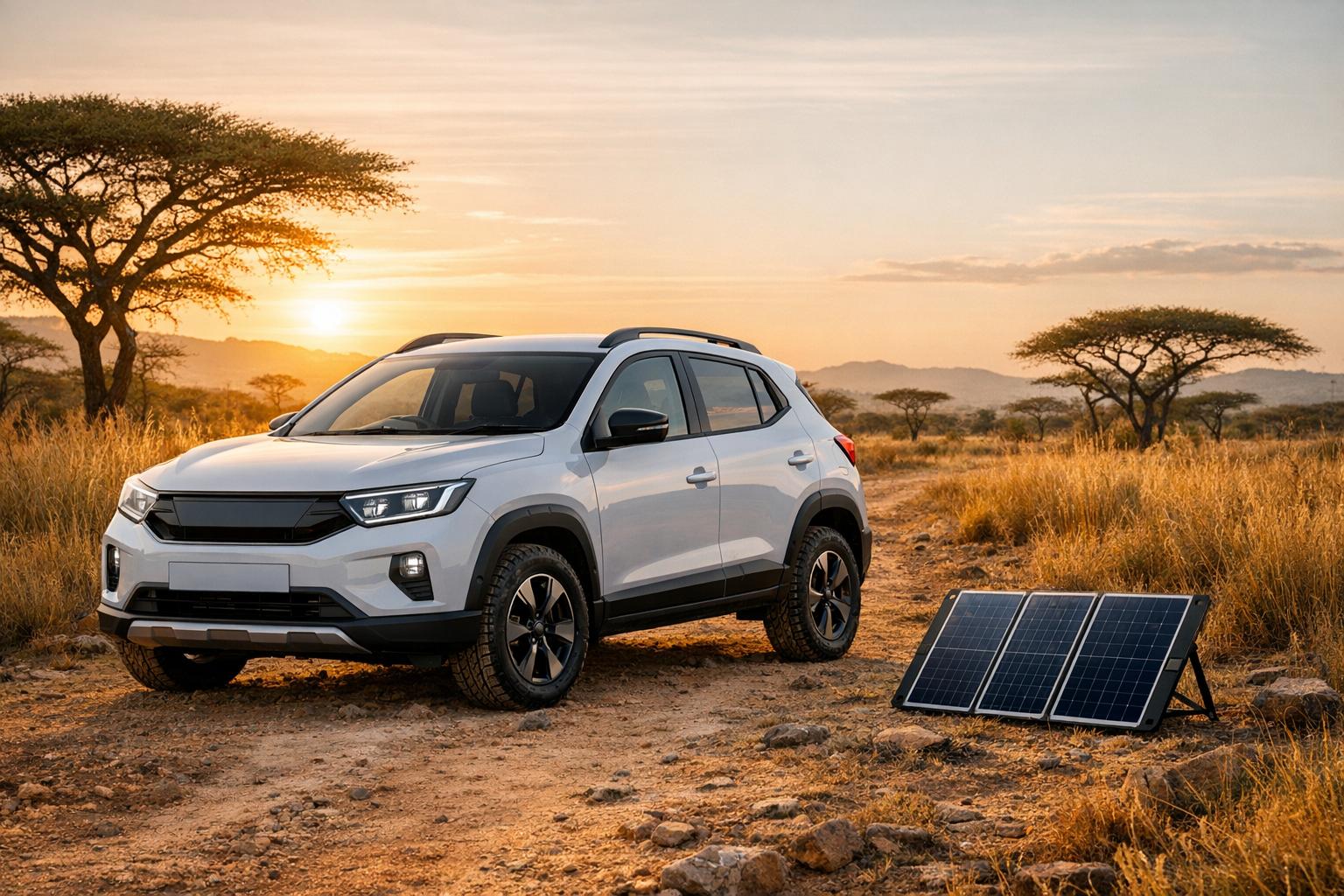
Looking for an affordable electric vehicle (EV) under $25,000 in Africa? Here’s a quick breakdown of the top options tailored for African roads, offering reliable range, low maintenance costs, and compatibility with solar charging systems. These budget-friendly EVs are built to handle urban commutes, unpaved roads, and unreliable power grids, making them practical for everyday use.
Key Highlights:
- BYD Seagull: Starting at ~$11,800, offers up to 252 miles of range with fast charging.
- Leapmotor T03: Priced at ~$10,000, delivers 250 miles of range and handles rough roads well.
- Dongfeng Nano Box: Compact at ~$9,500, with a 186-mile range and solar compatibility.
- Geely Geometry Panda: The cheapest at ~$5,880, ideal for short city commutes.
- ROX Moto (Electric Bike): Starts at ~$2,500, designed for urban and rural paths with up to 111 miles of range (dual battery).
- Suzuki e-Vitara: A rugged SUV at ~$24,000, offering 248 miles of range and off-road capabilities.
- Hyundai Inster: At $25,500, it’s slightly over budget but offers 203 miles of range and V2L (Vehicle-to-Load) capability.
Why These EVs Stand Out:
- Cost Savings: Charging costs are 50-70% lower than fueling gas cars, and maintenance costs are significantly reduced.
- Solar Charging: Many models are compatible with residential solar systems, ensuring independence from unreliable grids.
- Tax Benefits: Countries like Rwanda have removed import duties and VAT on EVs, saving buyers thousands.
- Durability: Models like the Leapmotor T03 and Hyundai Inster are built to withstand rough terrain and extreme heat.
Quick Comparison Table:
| Model | Price (USD) | Range (miles) | Battery (kWh) | Top Speed (mph) | Best For |
|---|---|---|---|---|---|
| BYD Seagull | ~$11,800 | 252 | 38.88 | 81 | City driving, rough roads |
| Leapmotor T03 | ~$10,000 | 250 | 42 | 62 | Urban/rural commutes |
| Dongfeng Nano Box | ~$9,500 | 186 | 31.5 | 62 | City and light off-road |
| Geely Geometry Panda | ~$5,880 | 124 | 17 | 62 | Short city trips |
| ROX Moto (Electric Bike) | ~$2,500 | 111 (dual battery) | 3.24 | 56 | Urban/rural paths |
| Suzuki e-Vitara | ~$24,000 | 248 | 49 | 87 | Off-road and mixed terrain |
| Hyundai Inster | $25,500 | 203 | 42 | 87 | Rugged, all-purpose use |
Each of these EVs is available through EV24.africa, a platform that simplifies the buying process by handling shipping, customs, and local registration. Combine your EV with solar panels, and you can further cut costs while staying prepared for power outages.
Choosing the right EV depends on your budget, driving needs, and road conditions. Whether you’re looking for a compact city car, a rugged SUV, or a cost-effective electric bike, there’s an option here for you.

Best Electric Vehicles Under $25,000 for Africa: Price, Range & Features Comparison
I Drove the BYD Dolphin Surf and Found the CHEAPEST EV in SA
Why Buy an EV Under $25,000 in Africa
Switching to an affordable EV can significantly cut your expenses. Charging an electric vehicle costs 50-70% less than fueling a similar petrol car for the same distance. For electric motorbike riders, the savings are even more striking – annual fuel and maintenance costs drop by about 45%, which is roughly $840. Plus, with fewer moving parts, you can say goodbye to oil changes, spark plugs, and exhaust repairs. And it’s not just about cutting costs – government policies are also making EV ownership easier and more appealing.
Take Rwanda as an example. The country has completely removed VAT, import duties, and excise duties on EVs. Considering that import duties alone can add 25% or more to a vehicle’s price, and VAT typically ranges between 15-20%, these exemptions mean thousands of dollars in savings for buyers.
Modern budget EVs are also designed with African conditions in mind. Models like the Leapmotor T03 and Hyundai Inster come with higher ground clearance to handle rough terrain, and their advanced liquid-cooling systems keep batteries safe in extreme heat. Features like regenerative braking not only improve efficiency but also extend brake pad life – an important benefit for drivers navigating dusty, unpaved roads where traditional components wear out faster. As Younes Rabeh from EV24.africa puts it:
"The big question about electric mobility in Africa is no longer if it will happen, but when and how."
Energy independence is another key advantage. Over 80% of EV charging happens at home. Combine your EV with solar panels, and you can charge even during power outages, nearly eliminating energy costs altogether. This is a game-changer in areas where the electricity grid can be unreliable.
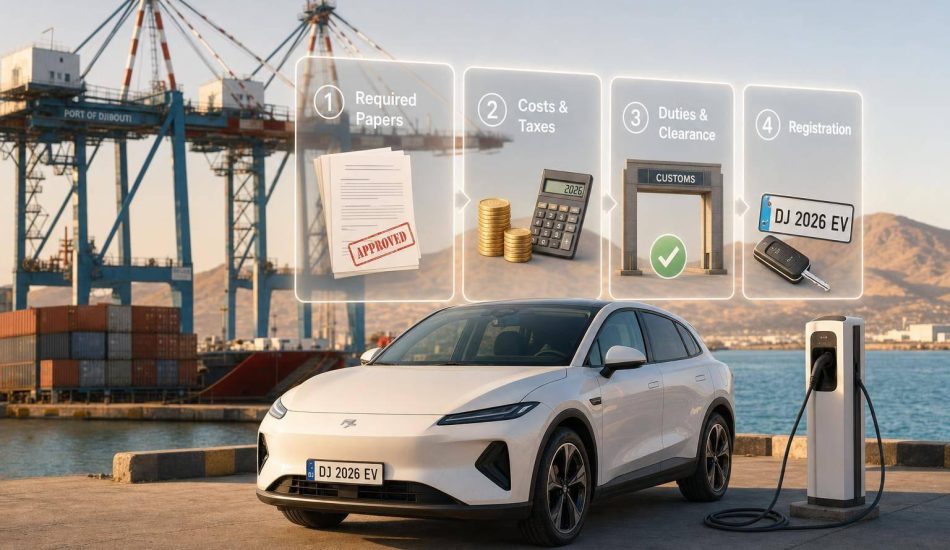
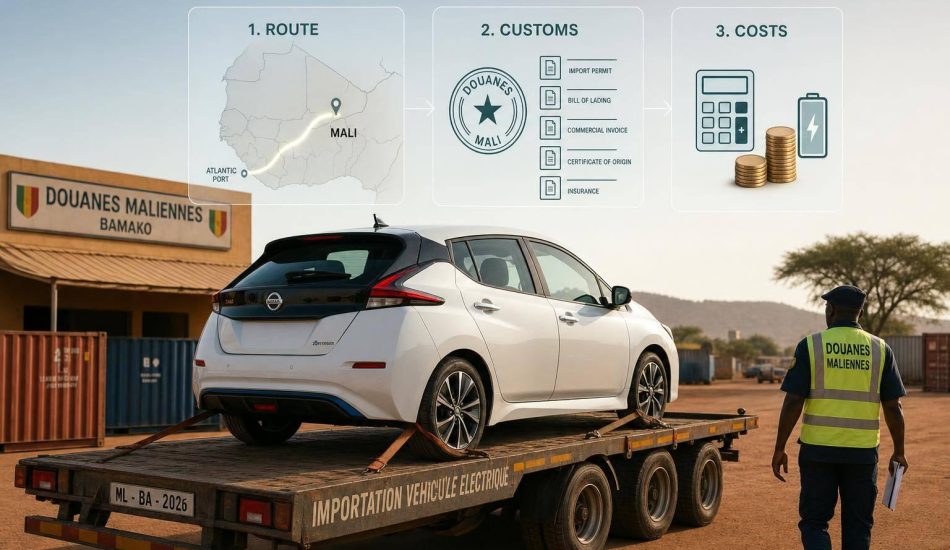
Platforms like EV24.africa are removing the hassle from buying an EV. They take care of shipping, customs clearance, and safety certifications across all 54 African countries. They also connect buyers with certified technicians for servicing and offer transparent, all-inclusive pricing – making the once-complicated process of importing an EV much simpler and more straightforward.
1. BYD Seagull
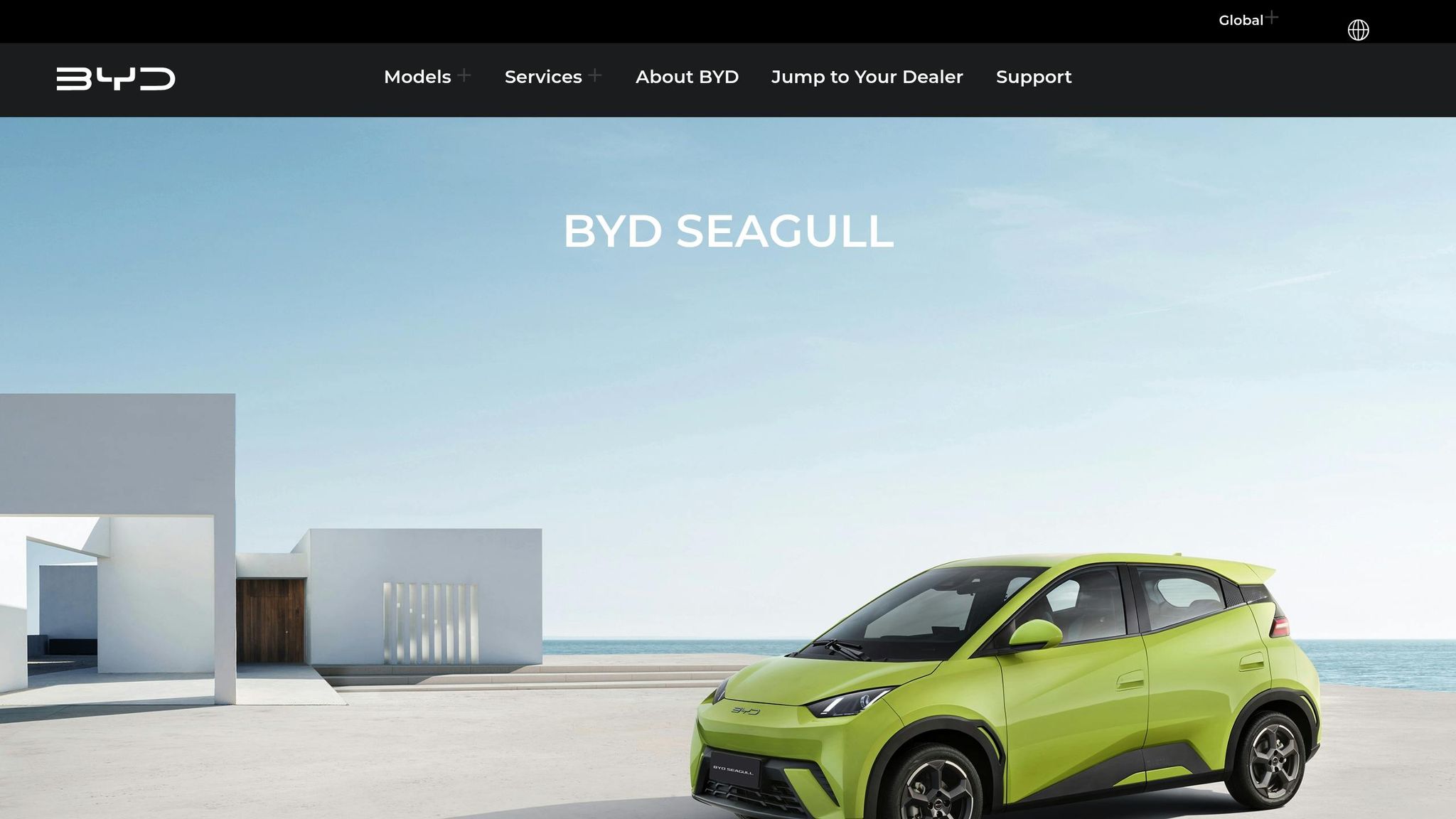
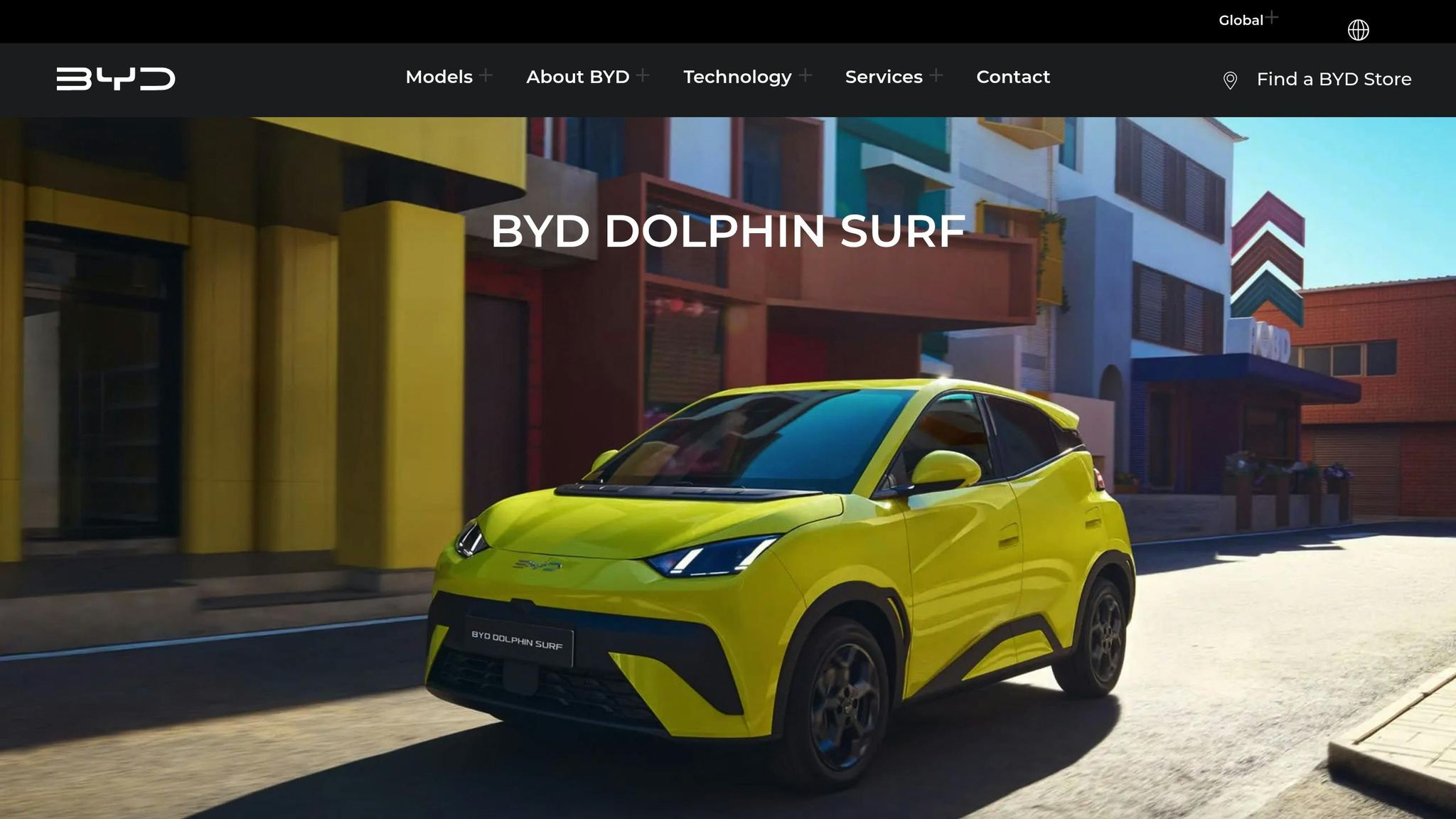
The BYD Seagull, known as the Dolphin Surf in South Africa since September 16, 2025, is one of the most budget-friendly electric vehicles in Africa, priced under $25,000. In China, it’s available for around $12,000, while Brazilian buyers pay between $20,000 and $23,000. This pricing ensures it remains accessible to many African consumers. But affordability isn’t its only selling point – its performance features make it even more appealing.
The Seagull delivers dependable range options for everyday driving. It comes with two battery choices: a 30.08 kWh pack, offering 190 miles (305 km), and a 38.88 kWh pack, which extends the range to 252 miles (405 km) based on the CLTC cycle. For urban commutes in cities like Nairobi or Lagos, this range is more than sufficient, with extra capacity for weekend getaways. Plus, its DC fast charging capability can take the battery from 30% to 80% in about 30 minutes.
The Dolphin Surf version is specially designed for tougher terrains, with a ride height of 1,590 mm compared to the Seagull’s 1,540 mm. Its build includes 61% high-strength steel and components rated above 1,500 MPa, ensuring durability. Features like electronic stability control (ESP) and rear disc brakes provide added safety and stability on challenging surfaces like gravel or dirt roads. These design elements pair perfectly with its efficient charging system.
Charging is simple and versatile. Using a standard 6.6 kW AC plug, it’s compatible with off-grid solar inverters. If you have solar panels at home, you can charge during the day, bypassing the grid entirely – a major advantage in areas with unreliable electricity. Its lightweight design, ranging from 1,160 to 1,240 kg, also helps conserve battery power, even on rough terrain.
2. Leapmotor T03
The Leapmotor T03 is an electric vehicle that stands out for its affordability, with a starting price of just $12,000 FOB. Even after factoring in shipping, duties, and taxes, the total cost remains under $25,000, making it an appealing option for budget-conscious EV buyers. Under the hood, it features a 95 HP motor paired with a 42 kWh lithium-ion battery, delivering an impressive 250-mile range. With a curb weight of only 1,030 kg, this compact EV is built for efficiency and agility.
Designed with city driving in mind, the T03 offers a practical 5-door hatchback layout. Its compact 3.62-meter length and 15-inch alloy wheels make it easy to maneuver through crowded urban streets. Fast charging is another highlight – its 50 kW DC fast charger can take the battery from 30% to 80% in just 36 minutes. Branded as a "City Smart Choice", the T03’s front-wheel-drive system and lightweight build ensure smooth performance on city roads and even light unpaved paths.
Another noteworthy feature is its 42 kWh battery’s compatibility with residential solar-plus-storage systems, making it a convenient option for areas where grid power may be unreliable.
3. Dongfeng Nano Box
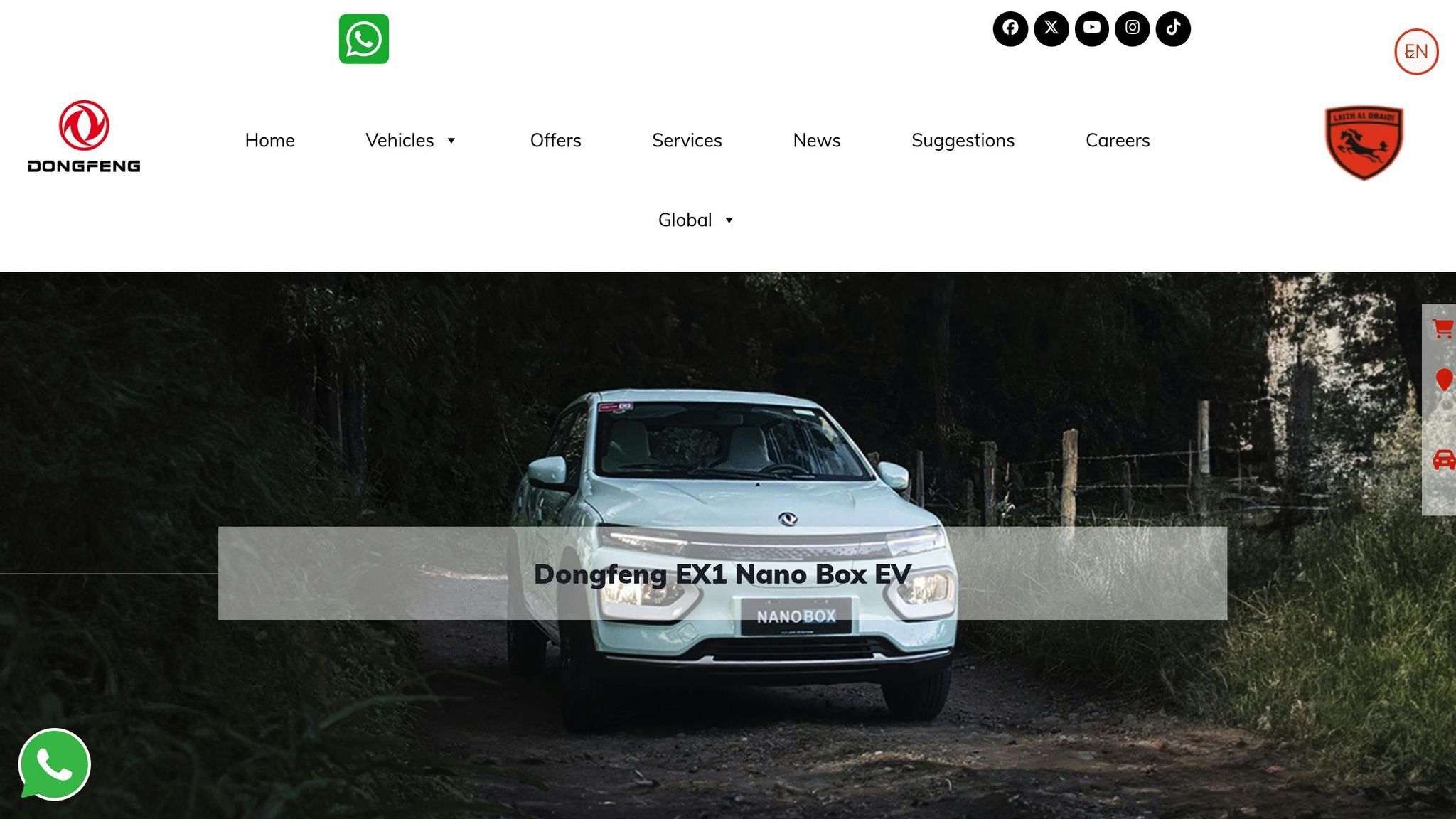
The Dongfeng Nano Box stands out in the affordable EV market with its distinctive, boxy design and a price tag that stays under $25,000 after import costs. This compact electric vehicle is designed to maximize interior space while remaining small enough to navigate Africa’s bustling urban streets with ease. Its design is practical for city driving and capable of handling the mixed road conditions often encountered across the region.
Although detailed performance data on unpaved roads isn’t widely available, the Nano Box’s compact size makes it easier to maneuver on varied surfaces. This feature aligns with the needs of drivers in areas where road conditions can be unpredictable.
One of its standout features is its compatibility with residential solar energy systems. When paired with rooftop solar panels and a Level 2 home charging station, the Nano Box offers a path to energy independence – perfect for regions where electricity from the grid can be unreliable or expensive.
Adding to its appeal, electric vehicles like the Nano Box can save drivers between $1,000 and $2,000 annually in operating costs compared to traditional gasoline cars. They also demand about 40% less maintenance. For those considering home charging, a quality Level 2 setup, including installation, typically costs between $1,200 and $2,500.
4. Geely Geometry Panda
The Geely Geometry Panda, also called the Panda Mini, is the most budget-friendly car on this list, starting at just about $5,880. This compact city car is equipped with a 17 kWh battery, offering a range of 124 miles (200 km) – perfect for daily commutes. Its straightforward design eliminates the need for common maintenance tasks like oil changes, spark plug replacements, and exhaust repairs.
Charging is simple. You can plug it into a standard household outlet, or for a full charge overnight, use a Level 2 wall box. It also comes with Multi Charge Input technology, allowing it to charge from various sources, including solar systems. If you live in an area with unreliable electricity, pairing a home charger with rooftop solar panels can keep the Panda running while reducing your reliance on the grid. This flexibility makes it a handy option for urban living.
For those in warmer climates, the Panda features a built-in battery management system that helps maintain battery health. Parking in shaded areas when possible can further extend the battery’s life.
Built for city life, the Geometry Panda thrives on crowded streets and fits easily into tight parking spaces. While its performance on unpaved roads hasn’t been widely tested, it remains an affordable and practical choice for urban transportation.
sbb-itb-99e19e3
5. ROX Moto (Electric Two-Wheeler)
The ROX Moto, designed and manufactured in Kenya, is built specifically to tackle the challenges of African roads. Its pricing starts at $1,500 for the single-battery model and $2,050 for the dual-battery version. This electric bike is tailored for both city streets and rugged rural paths.
Equipped with a 3.24 kWh battery, the single-battery model offers a range of up to 56 miles (90 km). Opting for the dual-battery setup doubles that range to 111 miles (180 km). With 185 Nm (136 lb-ft) of peak torque and a dual-shock suspension system, the bike is well-suited for climbing steep inclines and navigating unpaved roads. It can also handle a combined passenger and cargo weight of up to 485 lb (220 kg), making it a versatile choice for various needs.
Charging options are another standout feature. The bike’s removable batteries allow riders to charge them indoors or swap them at solar-powered stations. Roam also manufactures solar systems to support off-grid charging, making it a practical solution for areas with unreliable electricity.
Performance-wise, the ROX Moto reaches a top speed of 56 mph (90 km/h) and accelerates from 0 to 90 km/h in just five seconds. Riders can choose from five power modes, including a reverse option. Its lightweight metal cradle frame and offroad-ready wheels add to its durability and versatility.
"The Roam Air: designed and built in Africa, for Africans" – Roam Motors
For those in rural regions with limited access to charging stations, the dual-battery model is a smart investment, effectively doubling the bike’s range.
6. Suzuki e-Vitara (Entry-Level Variant)

The Suzuki e-Vitara is a rugged SUV designed to handle tough roads, and its entry-level 49kWh variant is priced at $31,500. However, with promotional discounts, the price can drop to around $25,000, making it an appealing choice for budget-conscious buyers. Beyond affordability, this SUV delivers solid performance, especially for those who venture off the beaten path.
Built with off-road capabilities in mind, the e-Vitara features a soft suspension system that smooths out bumps with ease. The two-wheel-drive models come with a Snow mode to improve traction in slippery conditions, while the four-wheel-drive versions include additional features like Trail mode and hill descent control, making it well-suited for unpaved roads and steep slopes.
"What is on the eVitara’s list of priorities, though, is rugged off-road ability. We tested the four-wheel drive version on a light off-road course… it coped really well with each scenario." – Oliver Young, Reviewer
The entry-level e-Vitara boasts a range of 213 miles and supports 150kW fast charging, allowing the battery to go from 10% to 80% in about 45 minutes. It also includes an 11kW AC charger, which works seamlessly with home solar systems. Buyers can count on a warranty of up to 10 years or 100,000 miles, along with strong reliability ratings, making it a dependable choice for long-term ownership.
7. Hyundai Inster

The Hyundai Inster is purpose-built to handle Africa’s diverse road conditions, offering a balance of cost-effectiveness and dependability. Starting at $25,500 for the Standard Range model, it’s priced slightly above some Chinese competitors but comes with Hyundai’s trusted reputation. Buyers are also reassured by a five-year unlimited mileage warranty and an eight-year (100,000-mile) battery warranty.
When it comes to range, the Inster is equipped to handle both city commutes and longer drives. The Standard Range model provides approximately 203 miles (327 km) on a single charge, while the Extended Range version pushes that to around 229 miles (368 km). Charging is convenient, too: a 120kW DC fast charger can take the battery from 10% to 80% in about 30 minutes, and an 11kW home charger can fully charge it in roughly four hours.
For those tackling rougher terrains, the Inster Cross variant steps up with added durability. It features rugged enhancements like flared wheel arches with black plastic edges, skid plates, and off-road-style bumpers to protect against debris. Its soft suspension, high seating position, and boxy design make it ideal for rural tracks while ensuring excellent visibility.
"The Inster’s fairly soft suspension means it’s comfy around town and on motorways. You’re very rarely thrown side-to-side in your seat, with the car staying remarkably upright over most undulations." – What Car?
A standout feature of the Inster is its Vehicle-to-Load (V2L) capability, which allows it to power external devices up to 3.6kW. This is particularly useful in areas with unreliable electricity. Combined with a home solar panel system and an 11kW charger, the Inster can even operate off-grid, potentially cutting running costs by 50–70% compared to gasoline-powered vehicles.
With its thoughtful design and practical features, the Hyundai Inster is well-suited for the unique challenges of Africa’s roads. The comparison table below highlights these features in more detail.
EV Comparison Table
Here’s a quick look at pricing, range, battery capacity, and how well these EVs handle African road conditions.
| Model | Starting Price (USD) | Battery Capacity (kWh) | Range (miles/km) | Top Speed (mph/km/h) | Suitability for African Conditions | Available on EV24.africa |
|---|---|---|---|---|---|---|
| BYD Seagull | ~$11,800 | 30.08 | 190 miles / 305 km | 81 mph / 130 km/h | Great for city use; compact size works well on urban roads | Yes |
| Leapmotor T03 | ~$10,000 | 41.3 | 250 miles / 403 km | 62 mph / 100 km/h | Handles rough roads with ease due to higher ground clearance | Yes |
| Dongfeng Nano Box | ~$9,500 | 31.5 | 186 miles / 300 km | 62 mph / 100 km/h | Compact design, ideal for city and light off-road use | Yes |
| Geely Geometry Panda | ~$5,880 | 17 | 124 miles / 200 km | 62 mph / 100 km/h | Affordable choice for short city commutes | Yes |
| ROX Moto | ~$2,500 | 3.5 | 62 miles / 100 km | 56 mph / 90 km/h | Perfect for urban and rural areas; agile two-wheeler | Yes |
| Suzuki e-Vitara (Entry-Level) | ~$24,000 | 49 | 248 miles / 400 km | 87 mph / 140 km/h | Built for mixed terrain with higher ground clearance | Yes |
| Hyundai Inster (Standard Range) | $25,500* | 42 | 203 miles / 327 km | 87 mph / 140 km/h | Soft suspension and rugged Cross variant make it versatile | Yes |
Note: While the Hyundai Inster slightly exceeds the $25,000 mark, it’s included for its strong features and compatibility with African roads. All these models are available on EV24.africa, which handles shipping, customs, and local registration for buyers in all 54 African countries.
Among these options, the Leapmotor T03 stands out for its ability to tackle unpaved or uneven roads, thanks to its higher ground clearance. If you’re looking for the most affordable option, the Geely Geometry Panda is priced at just $5,880, making it ideal for short city trips. For those considering two-wheelers, the ROX Moto offers substantial savings, cutting fuel and maintenance costs by 45% – that’s about $840 saved annually.
Since over 80% of EV charging happens at home overnight, combining any of these vehicles with a basic solar setup can help lower running costs even further. With all these options available through EV24.africa, buyers benefit from a seamless process for importation and registration. This variety highlights the flexibility and convenience of choosing an EV tailored to African roads.
Tips for Buying an EV in Africa
Buying an electric vehicle (EV) in Africa comes with its own set of challenges and opportunities. To make the process easier, start by exploring EV24.africa, a platform that lets you compare available models in one place. They handle the entire import process, including shipping, customs clearance, and homologation (certifying that the vehicle meets local safety standards). This means you can skip some of the common headaches first-time EV buyers face. The platform also provides clear, all-inclusive pricing and connects buyers to "green loans" offered by regional banks, which often come with lower interest rates than standard car loans. This setup simplifies the process and helps you make a smart investment.
Check for solar compatibility when choosing your EV. With over 80% of EV charging happening at home, pairing your car with a basic solar panel setup can save you money and help you avoid issues with grid instability. Charging during the day using solar power is essentially free, and storing extra energy in home batteries ensures you’re covered for nighttime use. Some models, like the BYD Seagull, come with Vehicle-to-Load (V2L) technology, which allows your car to act as a backup generator for household appliances during power outages – a handy feature in areas prone to blackouts.
It’s also important to research local incentives and double-check features like ground clearance and battery cooling. Many regional policies can significantly reduce the overall cost of your EV. Contact your local customs office or EV24.africa’s support team to confirm what exemptions or benefits might apply. When it comes to technical features, consider the local terrain and climate. For example, the Leapmotor T03’s higher ground clearance makes it a better choice for unpaved roads, while advanced liquid-cooling Battery Management Systems help protect batteries in hot weather. If you’re considering a used EV, always check the battery health percentage, as it directly impacts range and long-term value.
Lastly, don’t just focus on the upfront price – consider the long-term savings. Over five years, EV maintenance typically costs around $1,000 compared to $2,500 for a petrol car. Charging is also 50-70% cheaper than fueling for the same distance. Plus, modern EV batteries often come with warranties of up to 8 years or 150,000 km (93,000 miles), offering extra peace of mind. When you factor in these savings and potential duty exemptions, the total cost of owning an EV can be far lower than sticking with a petrol vehicle.
Conclusion
The electric vehicles (EVs) highlighted above showcase how accessible and reliable electric mobility can be across Africa. Models like the BYD Seagull (Dolphin Surf) and the affordable Leapmotor T03 are designed to tackle tough road conditions while delivering noticeable savings. EVs come with much lower fueling and maintenance costs compared to traditional vehicles, making them an appealing choice for many drivers. Combined with initiatives like Rwanda’s duty-free EV imports and the growing adoption of solar energy, both the upfront and long-term costs of owning an EV are becoming more manageable.
Africa is already on the path to transformation. With the number of vehicles on the continent expected to double by 2050, EVs present a cleaner and more cost-effective alternative. These vehicles, tailored for African roads, come with warranties of up to 8 years and advanced features like Vehicle-to-Load technology, which supports energy independence and flexibility.
To make the transition even smoother, EV24.africa offers a streamlined solution by managing shipping, customs clearance, and homologation for all 54 African countries. Their transparent pricing includes everything, and they provide access to green loans with competitive rates. Plus, EV24.africa allows you to compare models, check battery health, and evaluate solar compatibility, giving you the tools to make an informed decision.
The shift to electric mobility in Africa is here, and there’s never been a better time to make the switch. With EV options available for every budget, you can find one that suits your needs and lifestyle. Visit EV24.africa today to explore local incentives and discover the perfect EV for you.
FAQs
Why is solar compatibility important for EVs in Africa?
Solar-compatible electric vehicles (EVs) bring a lot to the table for African buyers, particularly in areas where the power grid is unreliable or access to electricity is limited. With rooftop or portable solar panels, owners can generate their own electricity, cutting down on fuel costs and sidestepping unpredictable price hikes. In regions with abundant sunshine – where daily solar exposure often surpasses 5 kWh/m² – solar charging can cover a large part of daily driving needs. This makes it a smart choice for rural commuters and small business owners alike.
Take models like the Geely Geometry E, for example. These solar-ready EVs allow users to charge their vehicles without relying on the grid, which not only reduces overall ownership costs but also boosts energy self-sufficiency. On top of that, these features make EVs more practical and accessible while shrinking their carbon footprint – a win-win for buyers looking for affordable and eco-friendly transportation.
Why is the Leapmotor T03 a good choice for rough or unpaved roads?
The Leapmotor T03 is designed to tackle rough or unpaved roads effortlessly. With its improved suspension system and 5.3-inch ground clearance, it offers the durability and elevated ride height needed to handle uneven terrain. These features make it a dependable choice for navigating challenging African road conditions with comfort and ease.
What government incentives can help lower the cost of buying an EV in Africa?
Government programs are helping to make electric vehicles (EVs) more affordable in Africa by offering financial incentives. Many nations are introducing tax breaks, such as eliminating value-added tax (VAT) and import duties on fully electric cars. Take Senegal, for instance – it has completely removed both VAT and import duties on 100% electric vehicles, significantly lowering their price. Ghana is another example, offering a 20% exemption on import duties for EVs, which translates to thousands of dollars in savings for buyers.
Beyond tax reductions, some governments are simplifying customs procedures and reducing penalties for small businesses importing EVs. These changes not only cut down on administrative expenses but also speed up the process of getting vehicles to market. When you factor in rising fuel costs and the growing network of charging stations, these incentives make EVs an attractive and budget-friendly option for many buyers across Africa.